
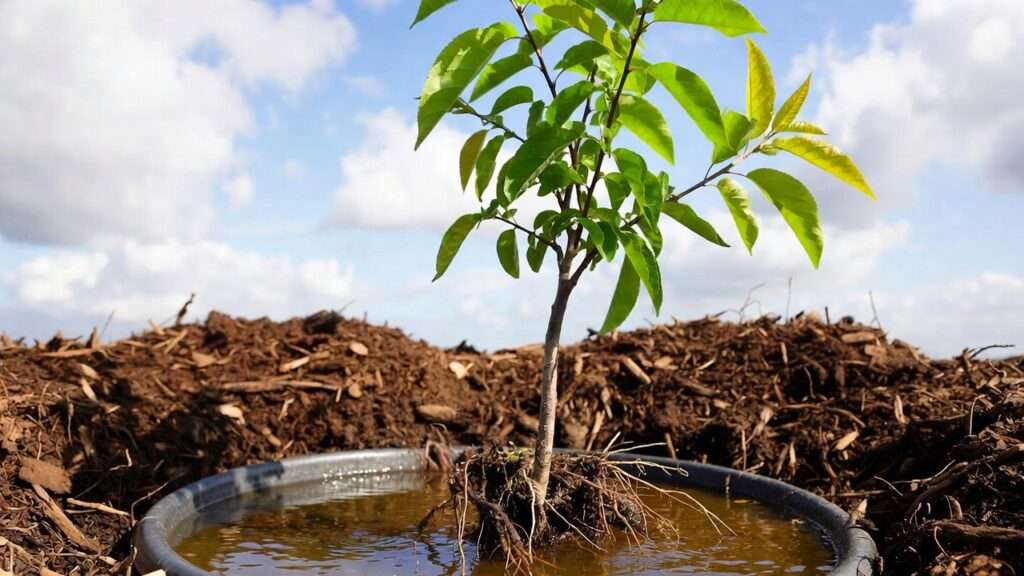
Imagine planting your dream apple, peach, or citrus tree, full of excitement for future harvests 🍎🍑… only to watch it struggle, wilt, or worse, die within the first couple of years. 😔 Sadly, this happens far too often. Studies and extension services show that improper watering causes up to 80% of young fruit tree failures during establishment. The roots simply can’t handle transplant shock, drought stress, or soggy conditions that lead to rot.
Young fruit trees (typically newly planted to 2–3 years old) are especially vulnerable. Their root systems are limited compared to mature trees, so they rely heavily on consistent, thoughtful care to develop deep, strong roots. Get the watering schedule for young fruit trees right, and you’ll promote vigorous growth, better drought resistance later, and abundant fruiting for decades. Get it wrong, and even the healthiest sapling can falter.
In this ultimate guide, we’ll cover everything: how to check soil moisture accurately, tailored schedules by phase and season, exact amounts, best techniques, common pitfalls (and fixes!), and pro tips backed by university extensions like UC IPM, UMN Extension, and experts from Stark Bro’s and Dave Wilson Nursery. Whether you’re in a hot, dry climate or somewhere with clay soil and occasional rain, you’ll find practical, adaptable advice to give your trees the best start possible. Let’s dive in and turn guesswork into confidence! 🌿
Understanding Young Fruit Trees’ Water Needs: The Basics 🌿
A “young” fruit tree generally means one that’s been in the ground less than 3 years—bare-root, container-grown, or recently transplanted. During this establishment period, the focus is root development rather than fruit production.
Several key factors influence how much and how often they need water:
- Tree age and size 🌱: A tiny 1-year-old sapling needs frequent light moisture, while a 3-year-old with spreading roots can handle deeper, less frequent soaks.
- Soil type 🏜️: Sandy soils drain fast and need more frequent watering; clay holds moisture longer but risks waterlogging; loamy is ideal.
- Climate and season ☀️❄️: Hot summers demand more; cool springs need steady supply for growth; winters often require little unless dry.
- Rainfall patterns 🌧️: Always subtract natural rain—use a rain gauge!
- Mulch usage 🌿: A 3–4 inch layer of organic mulch dramatically reduces evaporation and stabilizes soil moisture.
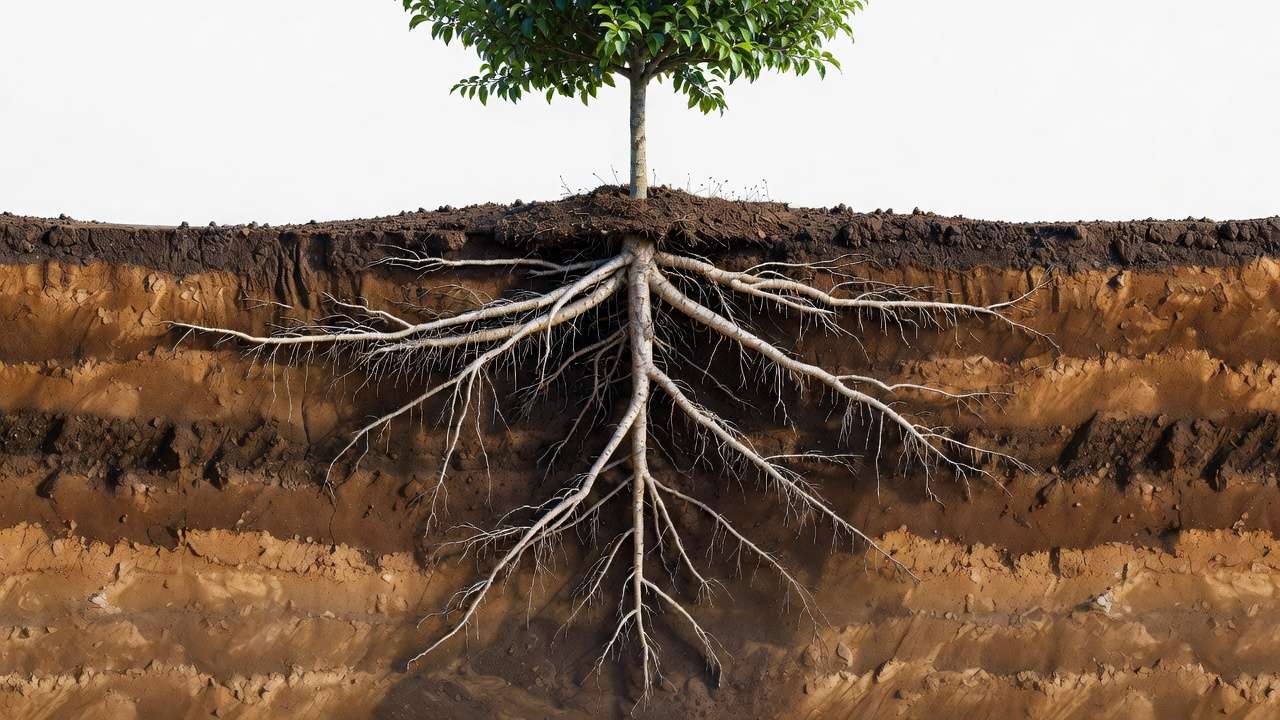
The golden rule? Deep, infrequent watering encourages roots to grow downward for stability and drought tolerance. Shallow, daily sprinkles create weak surface roots prone to drying out. University extensions like UC IPM emphasize avoiding frequent light watering that promotes shallow systems.
How to Tell When Your Young Fruit Tree Needs Water: Don’t Guess! 🔍💦
Guessing leads to over- or under-watering—the top two killers of young trees. Instead, use reliable checks:
- The finger test 👆: Stick your finger 2–4 inches into the soil near the drip line (outer edge of branches). If dry, water; if moist, wait.
- Screwdriver or probe test: Push a long screwdriver into the soil. Easy glide = moist; resistance = dry.
- Visual signs:
- Underwatering: Wilting leaves (especially afternoon), leaf curl/edge burn, slow growth, dry cracked soil.
- Overwatering: Yellowing leaves, mushy roots (if you dig carefully), fungal issues, standing water.
- Tools for accuracy:
- Cheap soil moisture meter (insert near roots).
- Tensiometer for pros (measures soil tension).
- Rain gauge to track natural input.
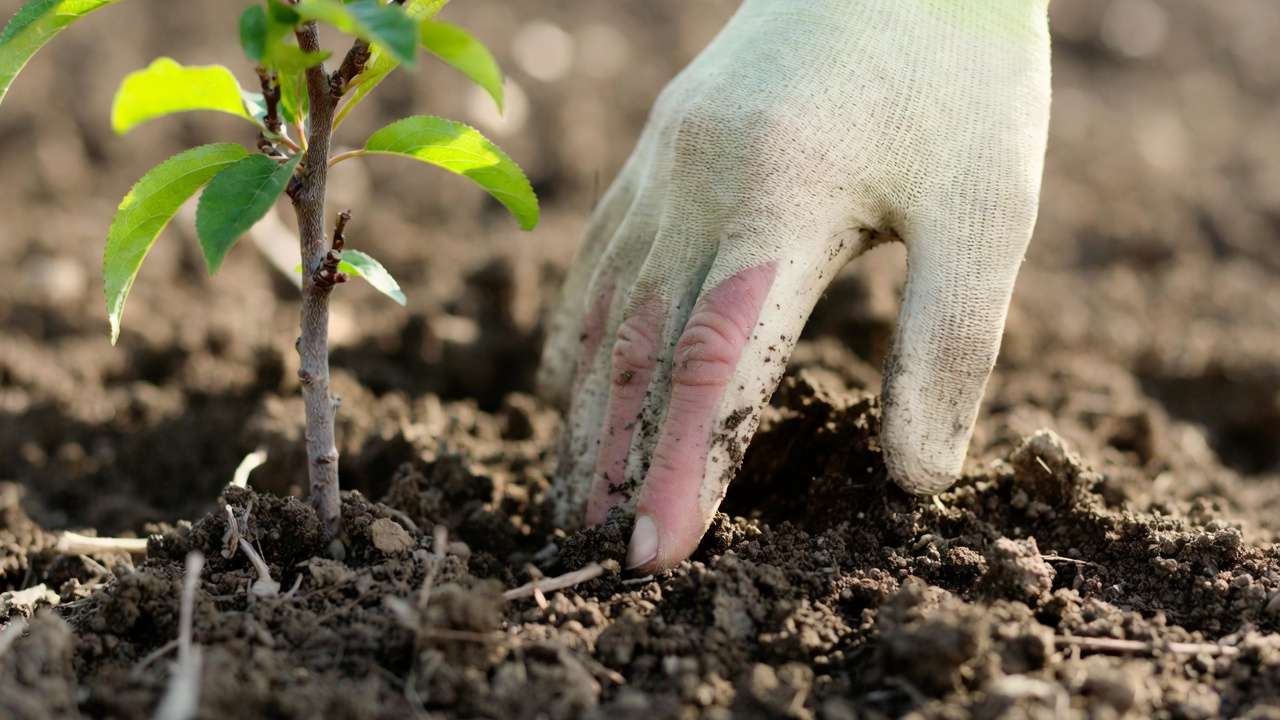
Always check at the drip line—not right at the trunk, where moisture can cause rot. Aim for soil that’s like a wrung-out sponge: moist but not soggy.
Recommended Watering Schedules for Young Fruit Trees 📅
Schedules vary by phase, but here’s a comprehensive, expert-aligned plan drawing from UC IPM, UMN Extension, Iowa State, and Dave Wilson Nursery.
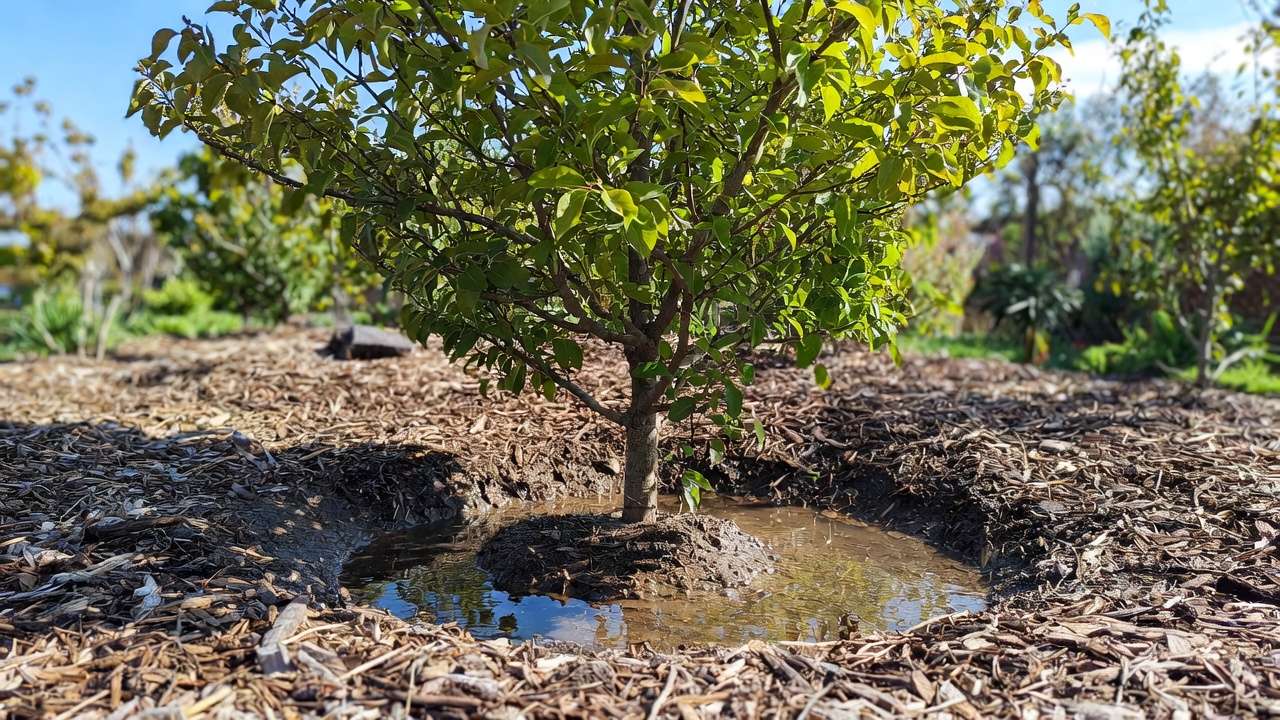
First 1-2 Weeks After Planting: Critical Establishment Phase 🚀
- Water daily or every other day.
- Amount: 3–5 gallons slowly (build a small basin around the tree to hold water).
- Goal: Keep the original root ball consistently moist without saturation. This prevents transplant shock.
Weeks 3–12 (First 3 Months): Building Roots 🌱
- Frequency: Every 2–4 days, transitioning to every 3–7 days as roots expand.
- Amount: 5–15 gallons per session (adjust for tree size and soil).
- In hot/dry weather: Up to twice weekly. Monitor closely—sandy soils dry faster.
Months 4–12 (First Full Year): Transition to Deeper Watering 🕰️
- Frequency: Weekly deep soaks.
- Amount: 10–20 gallons (or 1–2 inches equivalent over drip line area).
- Check: Water when top 6–8 inches dry out. Reduce if heavy rain occurs.
Year 2–3: Toward Independence 🌳
- Frequency: Every 7–14 days (or when top 8–12 inches dry).
- Amount: 15–30+ gallons deep soak.
- Readiness sign: Vigorous new growth, no wilting in mild dry spells. Many trees become low-maintenance here.
Seasonal Adjustments 🌦️
- Spring (bud break to fruit set): Consistent moisture supports cell division and bloom.
- Summer: Peak demand—monitor heatwaves closely 🔥. Increase if no rain.
- Fall: Taper off gradually to harden off for winter ❄️. Stop when leaves drop unless very dry.
- Winter/dormant: Rarely needed except extended dry spells (e.g., monthly soak in arid areas).
These align with sources like UMN (daily first 1–2 weeks, then every 2–3 days, weekly after), UC IPM (3–5 gallons/week young trees, deep/infrequent), and Stark Bro’s (gradual increase).
How Much Water? Quick Reference Charts & Rules of Thumb 📊
To make this super practical, here are evidence-based guidelines compiled from trusted sources like UC IPM, University of Minnesota Extension, Stark Bro’s, Dave Wilson Nursery, and Colorado Master Gardener resources.
General Rule of Thumb Aim for the equivalent of 1–2 inches of water per week during the growing season (spring through fall), adjusted for rain. For a young tree with a drip line radius of about 2–3 feet, this translates to roughly 5–20 gallons per watering, delivered deeply and slowly.
Quick Reference Table 1: Watering Frequency by Soil Type & Weather (Growing Season)
| Soil Type | Hot/Dry Weather (e.g., >85°F, no rain) | Moderate Weather | Cool/Wet Weather |
|---|---|---|---|
| Sandy/Well-drained | Every 3–5 days | Every 5–7 days | Every 7–10 days |
| Loamy/Ideal | Every 5–7 days | Every 7–10 days | Every 10–14 days |
| Clay/Heavy | Every 7–10 days | Every 10–14 days | Every 14+ days (watch for sogginess) |
Quick Reference Table 2: Approximate Gallons per Watering by Tree Age/Size (Deep soak when soil is dry 6–8 inches down)
| Tree Age/Stage | Gallons per Session | Frequency (Typical Growing Season) | Notes |
|---|---|---|---|
| First 1–2 weeks | 3–5 gallons | Daily or every other day | Focus on root ball |
| Weeks 3–12 (Months 1–3) | 5–15 gallons | Every 2–7 days | Transition to deeper |
| Months 4–12 (Year 1) | 10–20 gallons | Weekly | 1–2 inches equivalent |
| Year 2 | 15–25 gallons | Every 7–14 days | Roots expanding |
| Year 3 | 20–30+ gallons | Every 10–21 days | Toward maturity |
These numbers come from cross-referenced expert advice: UC IPM suggests 3–5 gallons/week for young trees (with more frequent in sand/hot conditions), UMN Extension recommends daily first 1–2 weeks then every 2–3 days, Stark Bro’s notes about 1 gallon every 7 days initially (scaling up), and many extensions emphasize 5–15 gallons weekly for first-year trees in normal conditions. Always adjust based on your local rainfall and soil probe tests!
Best Watering Techniques & Tools for Maximum Efficiency 🛠️💧
How you deliver water matters as much as how much.
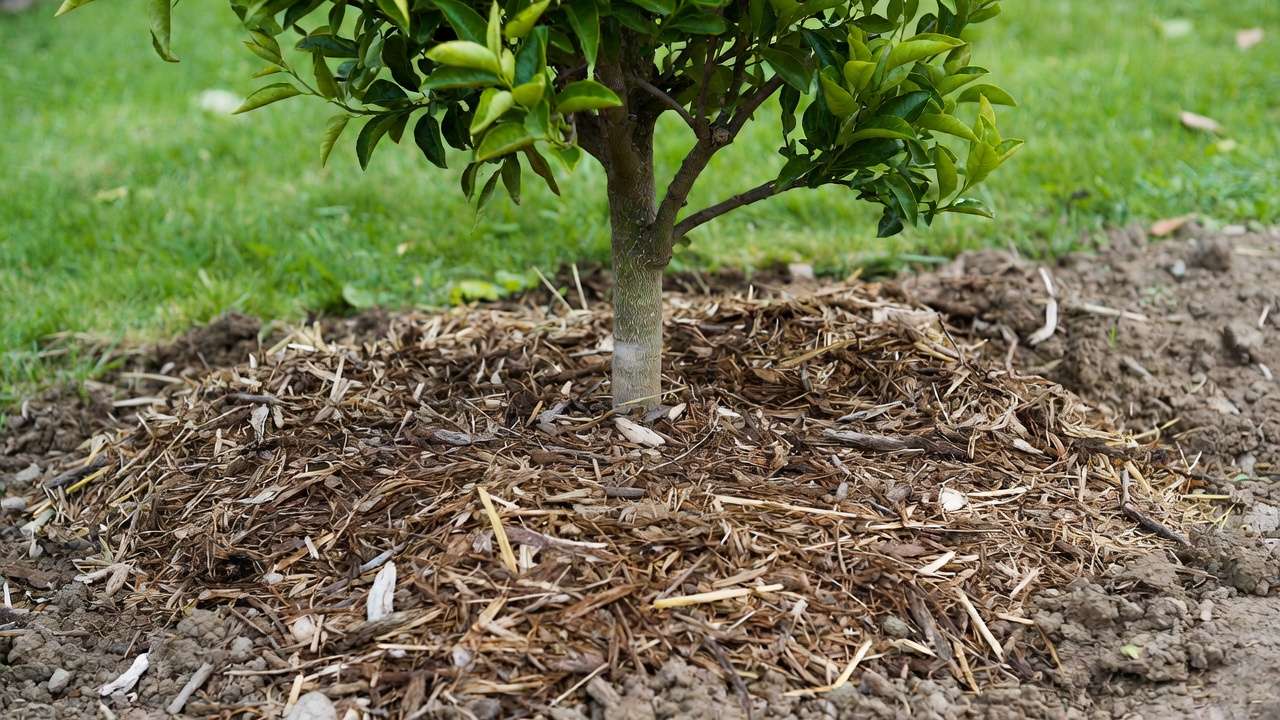
- Build a watering basin: Create a 3–4 foot wide doughnut-shaped berm around the drip line to hold water like a moat. Fill it slowly so it soaks in deeply instead of running off.
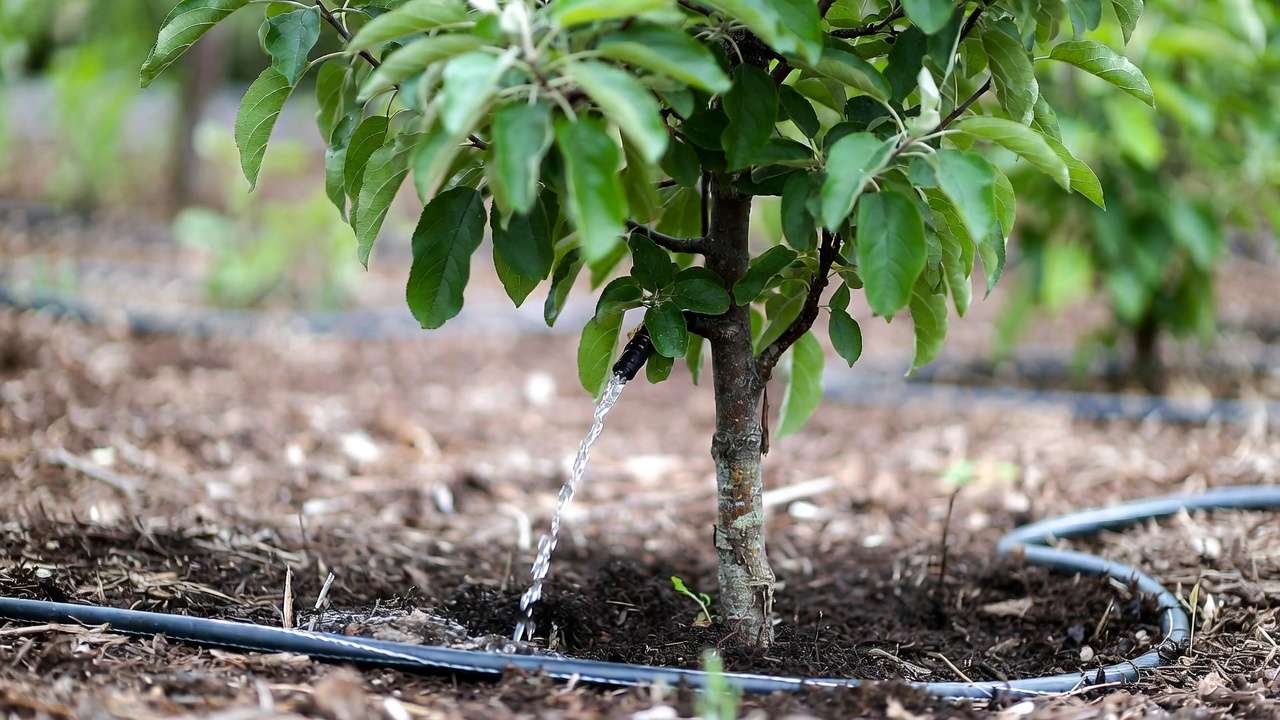
- Soaker hoses or drip irrigation rings 🌿: Place in a circle around the tree. Run for 30–60 minutes to deliver 10–20 gallons slowly. This is the most efficient method—minimizes evaporation and fungal issues.
- Bucket method for beginners: Fill a 5-gallon bucket, poke small holes in the bottom, and let it drip slowly over 1–2 hours. Rotate positions around the drip line.
- Avoid overhead sprinklers: They wet foliage (increasing disease risk like peach leaf curl) and promote shallow roots.
- Mulching magic 🌿✨: Apply 3–4 inches of organic mulch (wood chips, straw, compost) in a 3–4 foot circle, keeping it 2–3 inches away from the trunk. Mulch cuts evaporation by up to 50%, stabilizes temperature, and suppresses weeds—many experts say it halves watering needs after the first season.
Pro Tool Recommendations
- Basic: Soil moisture meter (~$10–20)
- Advanced: Drip system with timer + rain sensor
- Simple: Rain gauge to subtract natural rainfall
Common Mistakes & How to Fix Them ❌➡️✅
Even experienced gardeners slip up—here are the biggest pitfalls and solutions:
- Overwatering (leading to root rot): Soil stays soggy → yellow leaves, wilting despite moisture, fungal growth at base. Fix: Stop watering for 1–2 weeks. Improve drainage if clay-heavy. Always check soil depth before watering. Overwatering kills more young trees than drought!
- Underwatering: Wilting/curling leaves, brown tips, stunted growth. Fix: Deep soak immediately, then follow schedule. Mulch to retain moisture.
- Watering too close to trunk: Causes collar rot/fungi. Fix: Water at drip line (outer branch edge) where feeder roots are.
- Ignoring microclimates/containers: Pots dry faster; hot south-facing spots need more. Fix: Check more frequently in pots (every 1–3 days initially).
- Not adjusting after rain: Automatic overwatering. Fix: Use rain gauge; skip if >0.5 inches recent rain.
Special Considerations for Popular Fruit Trees 🍑🍏
Different types have slight preferences:
- Stone fruits (peach, plum, cherry, apricot): Higher summer needs due to fast growth and thin leaves—watch for leaf scorch in heat. Slightly more frequent in hot spells.
- Pome fruits (apple, pear): More forgiving once roots establish; tolerate brief dry periods better.
- Citrus & subtropicals (lemon, fig, avocado—if in suitable zones): Demand consistent moisture—no long dry spells, or fruit drop occurs. Mulch heavily.
- Regional tweaks: In sandy/hot areas (e.g., parts of Barisal-like climates), lean toward more frequent lighter soaks initially. In clay/heavy soils, err toward less frequent but deeper.
Expert Insights & Real-World Tips from Orchardists 🌟
From UC IPM: “Water deeply and infrequently to avoid shallow roots—young trees especially need this for long-term health.” Dave Wilson Nursery stresses: “Water only when soil is on the verge of dry—too much is worse than too little.” Stark Bro’s and permaculture growers add: Combine mulch + compost for living soil that holds water like a sponge. Train roots for drought tolerance by gradually reducing frequency after year 2—many trees thrive with just supplemental water during extreme dry spells thereafter.
One real-world tip: In variable climates, keep a simple garden journal noting dates, amounts, weather, and tree response. You’ll spot patterns fast!
FAQs: Your Watering Schedule Questions Answered ❓
How often should I water young fruit trees in hot weather? Increase frequency (e.g., every 3–5 days in >90°F with no rain) but keep deep soaks. Check soil moisture—don’t just go by calendar.
Can I use tap water? What about rainwater? Tap water is fine unless very high in salts/chlorine (let sit 24 hours). Rainwater is ideal—collect it!
What if I planted in clay soil vs. sandy? Clay: Less frequent, watch for pooling. Sandy: More frequent, smaller amounts to avoid runoff.
When can I stop regular watering? Usually by year 3–4 if roots are deep and tree shows vigor. Supplement only during prolonged drought.
Signs of overwatering vs. underwatering? Over: Yellow leaves, mushy roots, wet soil, fungal issues. Under: Wilting (recovers slowly), dry/cracked soil, leaf burn.
Conclusion: Set It and (Mostly) Forget It — Your Path to Thriving Trees 🎉
Mastering the watering schedule for young fruit trees is one of the highest-impact things you can do for long-term success. Consistent, deep watering in those critical first years builds resilient roots that power heavy fruiting for decades 🍎🌳.
Start today: Grab a screwdriver or moisture meter, check your soil, build that basin, add mulch, and follow the phased schedule. Your trees will reward you with strong growth and future bounty.
Have a young fruit tree story or question? Drop it in the comments—I’d love to hear how yours are doing! Happy planting! 😊🌿











