
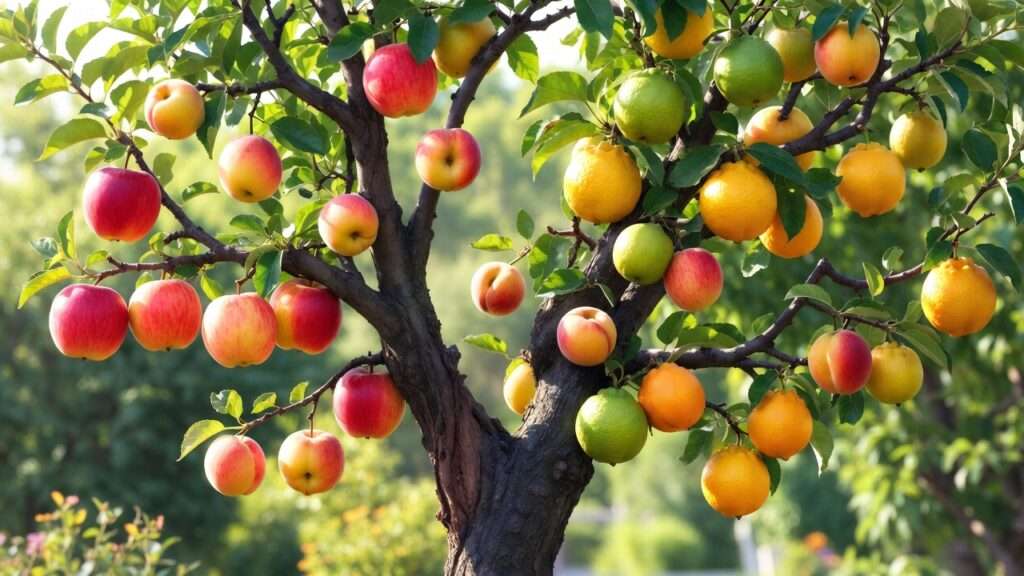
🌟 Picture this: stepping into your backyard in Khulna and picking ripe mangoes, juicy plums, and sweet citrus fruits—all from one compact tree! No sprawling orchard required, no waiting years for multiple saplings to mature. This dream becomes reality through grafting fruit trees for multiple varieties, a clever horticultural technique that lets you combine different fruit types (or varieties within the same type) onto a single sturdy trunk.
Whether you’re dealing with limited garden space in urban Bangladesh, want to extend your harvest season across months, ensure better cross-pollination, or simply love the whimsy of a “fruit salad tree,” grafting offers an efficient, rewarding solution. Home gardeners worldwide—from small patios to backyard plots—use this method to grow diverse fruits without planting extra trees.
In tropical and subtropical climates like yours, where heat, humidity, and occasional heavy rains shape growing conditions, multi-grafted trees on resilient rootstocks can thrive spectacularly. This in-depth guide draws from proven propagation practices, university extension resources, and real-world orchard experience to help you succeed. We’ll cover compatibility, step-by-step grafting methods, aftercare secrets, and troubleshooting—so even beginners can create a thriving multi-fruit masterpiece. Let’s turn your space into a productive paradise! 🚀🍊
Why Graft Multiple Varieties onto One Tree? The Real Benefits 🌈
Multi-grafting isn’t just a novelty—it’s a practical strategy that solves common gardening challenges:
- Ultimate space-saver — Ideal for small yards, balconies, or urban plots where every square foot counts. One tree replaces three or four!
- Longer harvest windows — Combine early-, mid-, and late-ripening varieties to enjoy fresh fruit from spring through fall (or year-round in warm zones).
- Natural pollination boost — Compatible varieties often bloom at overlapping times, improving fruit set without needing extra pollinators.
- Cost and maintenance savings — Fewer trees mean less watering, fertilizing, pruning, and pest management.
- Educational fun & experimentation — Inspired by famous projects like the “Tree of 40 Fruits” by artist Sam Van Aken, it’s a living science project that delights kids and adults alike.
- Enhanced resilience — Vigorous, disease-resistant rootstocks support diverse scions, helping trees adapt to local conditions like Khulna’s humid summers and monsoons.
In regions with warm climates, multi-grafts on hardy citrus or stone fruit rootstocks perform especially well, delivering abundance with minimal footprint.
Understanding Grafting Basics: Key Terms You Need to Know 📚
Master these fundamentals before picking up your knife:
- Scion — The top portion providing the desired fruit variety (e.g., a specific mango cultivar or Honeycrisp apple branch). 🌱
- Rootstock — The bottom part with established roots; it controls tree size, vigor, disease resistance, and soil adaptability.
- Cambium layer — The thin green tissue just under the bark where vascular connections form—perfect alignment is crucial for success!
- Graft union — The healed junction between scion and rootstock; a strong union ensures long-term growth.
- Interstem — An intermediate section used when direct compatibility is tricky (more advanced).
Golden rule: Always graft within the same botanical family/genus for highest success—apples with apples, stone fruits (peaches, plums) together, citrus with citrus. Cross-family grafts (e.g., mango on citrus) almost always fail. ❌
Best Fruit Trees & Combinations for Multi-Grafting Success 🌿
Success starts with smart choices. Focus on compatible groups that match your climate.
Top Compatible Groups
- Pome fruits 🍎🍐 — Apples and pears: Easiest for beginners, with excellent compatibility. Multi-apple trees (e.g., early Gala + mid-season Fuji + late Granny Smith) are super common.
- Stone fruits 🍑🍒🍑 — Peaches, nectarines, plums, apricots, and sometimes cherries (all Prunus genus). These create classic “fruit salad” or “cocktail” trees—popular 4-in-1 combos include peach + nectarine + plum + apricot.
- Citrus 🍊🍋 — Oranges, lemons, limes, mandarins, grapefruits: Thrive in warm zones like Khulna; great for year-round interest with staggered ripening.
Popular Multi-Graft Examples
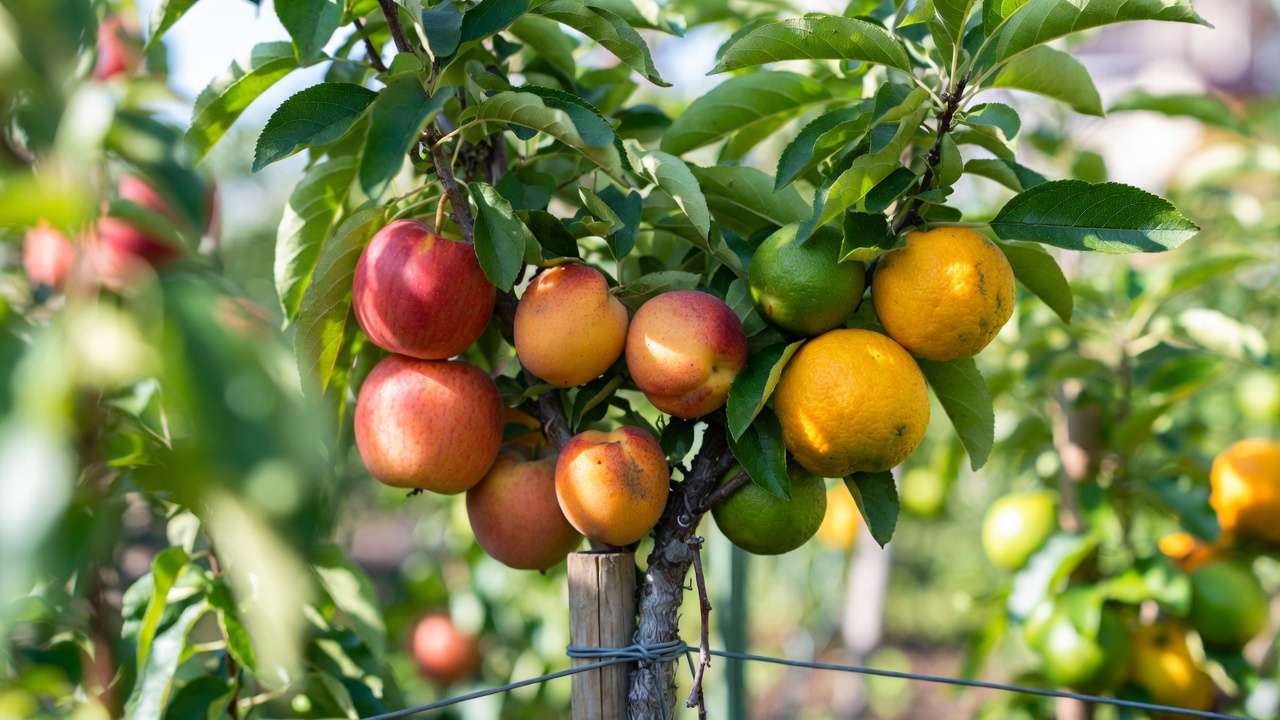
- 3-in-1 Apple: Early, mid, late-season varieties for extended picking.
- 4-in-1 Stone Fruit: Peach + nectarine + plum + apricot for colorful, diverse harvests.
- 5-in-1 Citrus: Lemon + lime + orange + mandarin + kumquat—perfect for subtropical home gardens.
Pro Tip: Match scion vigor (growth rate) and ripening times. Avoid pairing a super-vigorous variety with a slow one, or one branch may dominate and starve others. Group by harvest season or fruit color for easy identification during picking.
Compatibility Quick Guide
- High success: Apples on apple rootstock, pears on pear, citrus on citrus, stone fruits within Prunus.
- Good with care: Peaches/nectarines on plum rootstock (common in commercial multi-grafts).
- Avoid: Pome on stone (fails), tropicals like mango on temperate fruits.
In Bangladesh, consider local favorites: multi-mango grafts (different cultivars on hardy rootstock) or citrus combos for heat tolerance.
Step-by-Step Guide: How to Graft Your Multi-Variety Tree 🔧
Here’s the core how-to—detailed and beginner-friendly.
When to Graft: Best Timing by Climate
- Dormant season (late winter/early spring, Feb–March in Khulna): Ideal for whip-and-tongue or cleft grafts when trees are leafless.
- Late summer (Aug–Sept): Chip budding or T-budding works well in warm areas. Graft when sap flows for “bark slipping.”
Tools & Materials Checklist
- Sharp grafting knife (carbon steel for clean cuts)
- Pruning shears, grafting tape (stretchy, breathable), grafting wax/parafilm
- Labels (metal or plastic—permanent!), rubbing alcohol for sterilization
- Optional: small nails/staples for bark grafts
Sterilize tools between cuts to prevent disease spread.
Collecting & Storing Scion Wood
Source healthy, disease-free scions from friends, local nurseries, or trusted online suppliers. Collect pencil-thick, 1-year-old wood in winter dormancy. Cut 12–16 inch lengths, wrap in damp paper towel, seal in plastic bag, and store in fridge (not freezer!) until grafting. Label clearly! 🏷️
Top Grafting Techniques for Multi-Variety Trees
- Whip-and-Tongue Graft (best for similar-diameter matches, very strong union):
- Cut scion and rootstock at matching 45° angles.
- Make a “tongue” slit 1/3 into each cut.
- Interlock tongues, align cambium layers precisely.
- Wrap tightly with tape; seal exposed cuts with wax.
- Cleft Graft (great for adding to existing larger trees):
- Split rootstock top with knife/hatchet.
- Trim scion to wedge shape (two slanted cuts).
- Insert 1–2 scions into cleft, cambium touching.
- Seal entire area with wax.
- Bark Graft (for larger rootstocks in spring):
- Cut rootstock straight across.
- Lift bark flaps; insert flattened scion base.
- Nail or tape in place; wax heavily.
- Chip Budding (summer option for adding buds):
- Cut a chip with bud from scion.
- Match to removed chip on rootstock.
- Tape securely; remove tape after union.
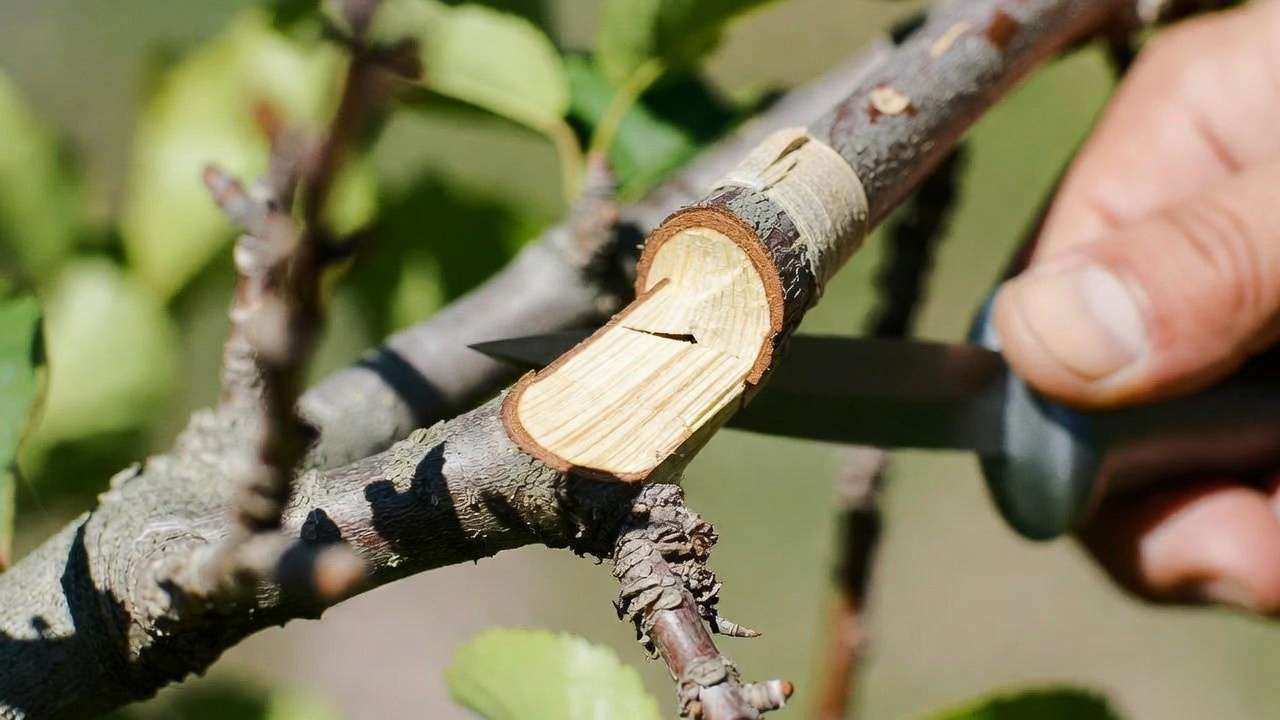
For multi-variety: Start on a young (1–3 year) tree. Add 2–4 grafts first, spacing evenly around trunk or branches. Always label each graft immediately!
Aftercare: Turning Your Grafts into a Thriving Multi-Fruit Tree 🌱💚
Success doesn’t end when the tape is wrapped—aftercare is where 50% of your effort pays off! Proper post-graft management helps unions heal fully, prevents drying or infection, and keeps all varieties balanced for years of abundant harvests. In Khulna’s warm, humid climate, focus on moisture control, gentle support, and vigilant pruning to avoid dominance issues common in multi-grafts.
- Sealing & Protection — Right after grafting, your seal (wax, parafilm, or grafting paint) prevents moisture loss and pathogen entry. In humid Bangladesh weather, check seals weekly for the first month—if cracks appear, reapply a thin layer. Use breathable tape that degrades naturally over time (remove after 4–6 weeks if it doesn’t loosen). Protect young grafts from direct midday sun with shade cloth or by placing the tree in partial shade for the first season. Whitewash trunks (organic formulas work great) to prevent sunburn, especially on exposed graft areas during summer.
- Watering & Fertilizing — Keep soil consistently moist but never waterlogged—overwatering causes rot in grafts. Water deeply 2–3 times weekly in dry spells, less during monsoons. Use a balanced, slow-release organic fertilizer (e.g., compost tea or 10-10-10 diluted) starting 4–6 weeks after grafting, but go light on nitrogen to avoid excessive vegetative growth that stresses unions. In tropical soils, add micronutrients like zinc and iron if leaves yellow. Mulch with organic matter (coconut coir, straw) to retain moisture and regulate root temperature.
- Pruning for Balance — This is critical for multi-variety trees! Never let one scion dominate more than 20–25% of the canopy, or weaker varieties may starve and fail. In the first 2–3 years (establishment phase), prune aggressively:
- Remove suckers/water sprouts from rootstock below grafts immediately.
- Tip-pinch vigorous shoots on dominant varieties to slow them.
- Direct weaker branches toward more sun (position them outward).
- Aim for an open vase or multi-leader structure with even spacing. Prune in late winter/early spring (dormant season) or light summer pruning to redirect energy. Consistent annual maintenance keeps harmony—many gardeners lose varieties simply from neglecting this! ✂️
- Support & Training — Newly grafted trees are brittle at unions for 2–3 years. Stake gently if needed (avoid tight ties that girdle). Train branches early with ties or weights for good crotch angles (45–60°) to prevent breakage under fruit load later. In windy Khulna spots, extra support prevents storm damage.
- Pest & Disease Management — Monitor for aphids, scale, or fungal issues (common in humidity). Use neem oil or organic sprays preventively. Remove diseased tissue promptly. Strong rootstocks help, but good airflow (via pruning) reduces risks.
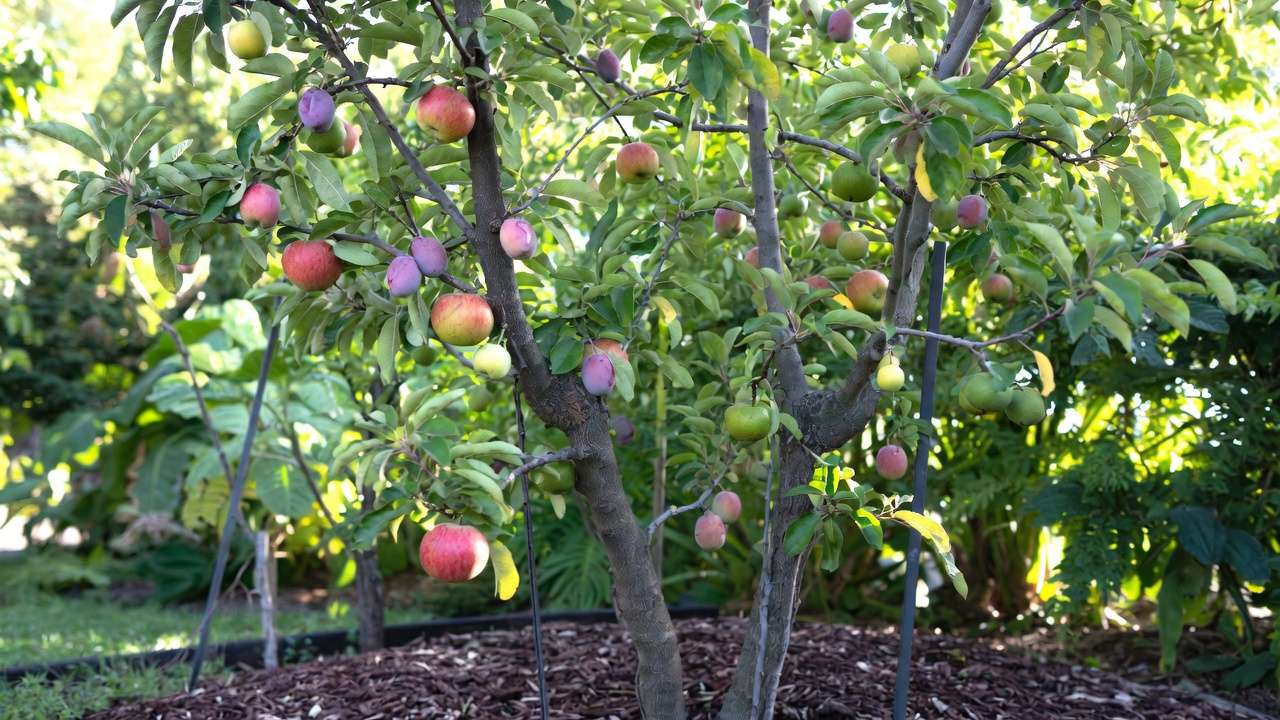
With diligent care, expect strong growth by year 2 and first fruits by year 3–4 (depending on variety and rootstock). Patience here yields a resilient, productive tree!
Common Mistakes & How to Avoid Them ⚠️
From decades of grafting experience (and many failed attempts shared by gardeners worldwide), here are the top pitfalls—and fixes:
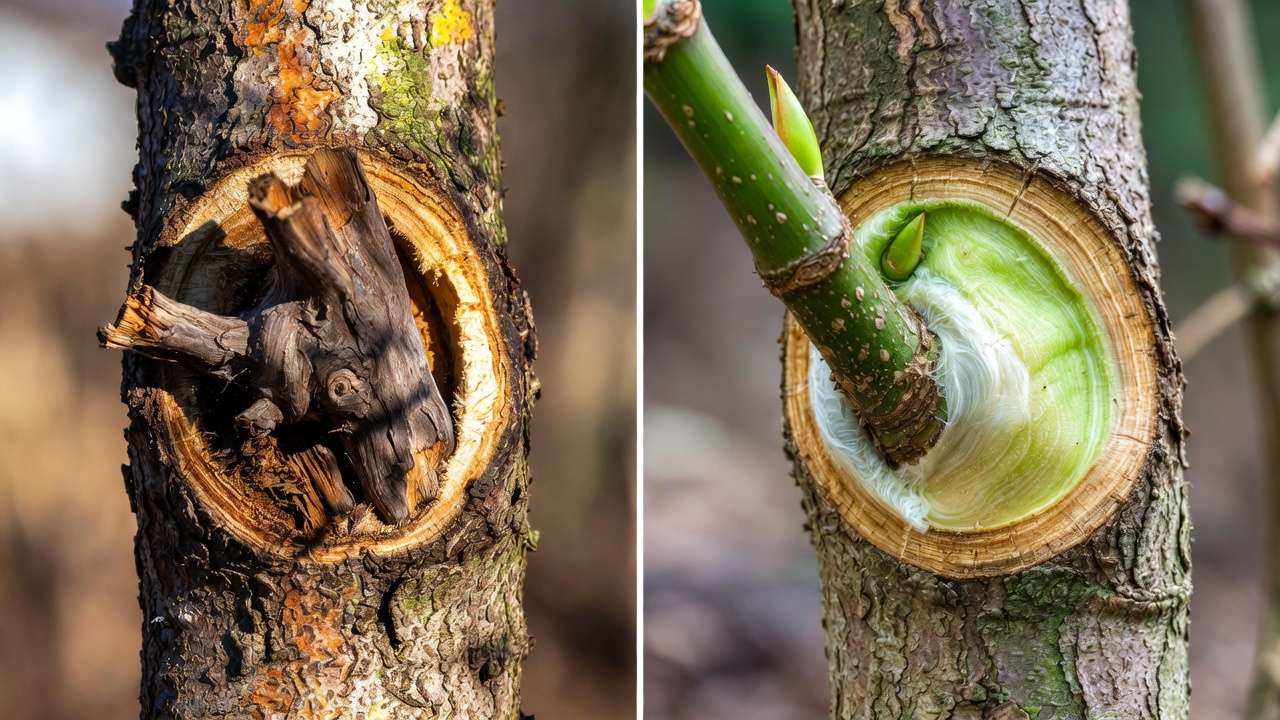
- Mismatched cambium layers — The #1 failure reason. Always align the green cambium precisely on both sides. Solution: Practice cuts on scrap wood first; use a sharp knife for clean, flat surfaces.
- Poor timing or dull tools — Grafting in extreme heat/cold or with blunt blades crushes tissue. Solution: Graft in optimal windows (late winter/early spring for most); sterilize and sharpen tools.
- Ignoring vigor differences — Fast-growing varieties overpower slow ones. Solution: Research and select similar-vigor scions; prune dominants early and often.
- Forgetting labels — Confusion at harvest time is hilarious but frustrating! 😂 Solution: Use permanent, weatherproof labels tied to each branch from day one.
- Over/under-watering or poor protection — Scions dry out or rot. Solution: Maintain even moisture; shield from sun/wind; check seals regularly.
- Allowing one variety to dominate — Common in multi-grafts; leads to weaker branches dying off. Solution: Prune for equality annually—never more than 25% canopy per variety.
- Grafting incompatible combos — Cross-family attempts almost always fail. Solution: Stick to genus rules (e.g., all Prunus for stone fruits).
Avoid these, and your success rate soars!
Troubleshooting & FAQs ❓
Real gardeners ask these often—here are expert answers:
- Why did my graft fail? Most common: poor cambium contact, drying out, infection, or incompatibility. Check alignment, moisture, and timing next attempt.
- How long until I see fruit? 2–5 years typical for multi-grafts (faster on mature rootstocks). Patience—remove early flowers to build strong structure.
- Can I graft different fruits like mango + citrus? No—stick to same family. Mango (Anacardiaceae) won’t take on citrus (Rutaceae). Try multi-mango cultivars instead!
- Best rootstocks for tropical climates like Khulna? For citrus: Rangpur lime or Cleopatra mandarin (heat/disease tolerant). For stone fruits: Myrobalan plum or Nemaguard. Mango: vigorous local seedling rootstocks. Choose semi-dwarf for easier management.
- How to prune a multi-graft tree yearly? Winter prune to balance leaders, remove suckers, open center for light/air. Summer tip-pinch dominants. Goal: even canopy distribution.
Expert Tips & Advanced Strategies 🌟
- Color/ripening grouping — Graft similar-harvest or colorful varieties together for easy spotting (e.g., red apples low, yellow high).
- Interstems for tricky combos — Bridge mild incompatibilities with a compatible middle section (advanced but useful).
- Staggered harvest “super trees” — Plan 3–5 varieties with sequential ripening for months of fruit.
- Scaling up safely — Start small (2–3 grafts), add more yearly once established. Top-work older trees via cleft/bark grafts for variety upgrades.
These pro moves take multi-grafting to the next level!
Conclusion: Start Your Multi-Fruit Adventure Today! 🎉
Grafting fruit trees for multiple varieties transforms limited spaces into bountiful, joyful gardens. You’ll save room, extend seasons, boost pollination, and enjoy the thrill of harvesting diverse fruits from one trunk—all while building gardening skills.
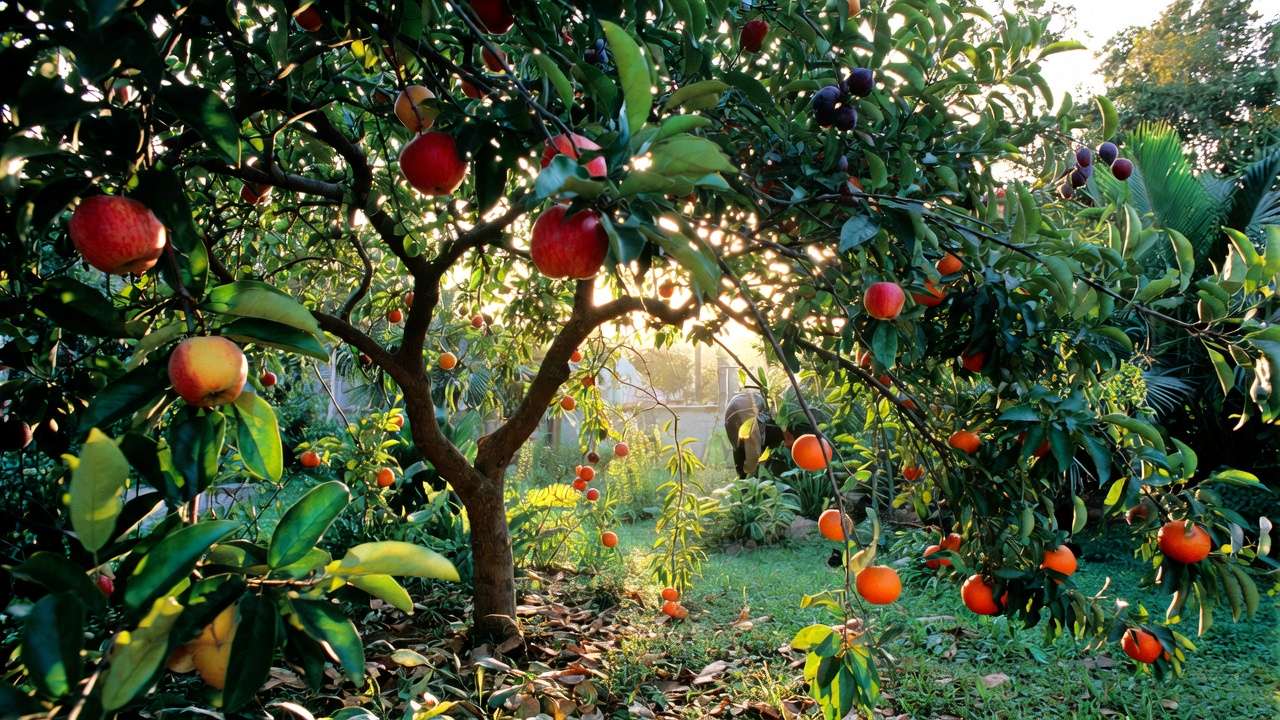
In Khulna’s favorable climate, with hardy rootstocks and attentive care, your multi-fruit tree can become a backyard showpiece producing for decades. Grab sharp tools, source quality scions, follow these steps, and watch your garden flourish!
Have you tried multi-grafting? Share your successes (or funny failures) in the comments—I’d love to hear and help troubleshoot. Happy grafting! 🌳🍎🍑🚀











