
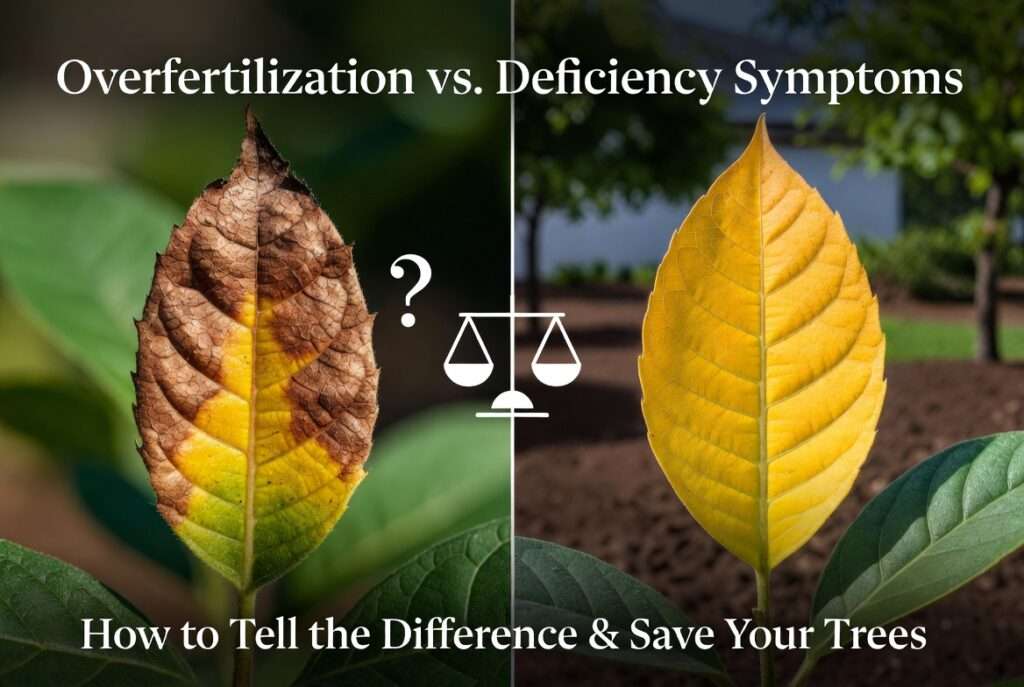
Imagine walking into your garden one morning only to find your beloved maple tree’s leaves turning crispy brown at the edges, or your favorite citrus suddenly dropping yellow leaves like confetti. Your heart sinks — is it starving for nutrients, or have you accidentally given it too much fertilizer? This exact confusion between overfertilization vs. deficiency symptoms confuses even experienced gardeners and tree lovers every season. Misdiagnosing the problem can turn a simple fix into a plant funeral.
Overfertilization (often called fertilizer burn) and true nutrient deficiencies can look shockingly similar at first glance — both cause yellowing, wilting, and poor growth. Yet treating one like the other usually makes things worse. Too much fertilizer damages roots with salt buildup, while a real deficiency starves the plant of essential elements it needs for healthy leaves and strong structure. In this comprehensive guide, you’ll get clear visual distinctions, step-by-step diagnosis methods, proven recovery techniques, and prevention strategies tailored for both garden plants and landscape trees. By the end, you’ll feel confident diagnosing issues quickly and saving your green friends. Let’s dig deep and give your trees the expert care they deserve! 🌳
Why Accurate Diagnosis Matters for Plant and Tree Health 🧪
Getting overfertilization vs. deficiency symptoms right isn’t just about aesthetics — it’s about plant survival and long-term garden success. Wrong treatment wastes time, money, and can permanently damage roots or even kill the plant.
Overfertilization creates high soluble salt levels in the soil that pull water away from roots (a process called osmotic stress), leading to scorched leaves, stunted growth, and increased vulnerability to pests and diseases like aphids that love the weak, succulent new shoots. Ironically, excess fertilizer can also lock up other nutrients, causing secondary deficiencies (for example, too much phosphorus can block iron uptake).
On the flip side, untreated deficiencies weaken trees over years, reducing drought tolerance, flowering, fruiting, and overall resilience. In urban landscapes, issues like iron chlorosis are common on alkaline soils and can lead to branch dieback if ignored.
Accurate diagnosis protects the environment too — excess fertilizer often runs off into waterways, causing pollution. By learning the real differences, you’ll apply amendments only when truly needed, saving resources while growing healthier, more beautiful plants.
Understanding Overfertilization (Fertilizer Burn) in Plants and Trees 🔥
What Causes Overfertilization?
Overfertilization happens when gardeners apply too much product, too frequently, or the wrong type — especially fast-release synthetic fertilizers high in nitrogen or during hot, dry weather when plants can’t handle the salt load. Potted plants, young seedlings, and newly planted trees are especially vulnerable because their root zones are limited.
Common culprits include:
- Doubling up on “more is better” applications
- Using lawn fertilizer (high nitrogen) around trees and shrubs
- Failing to water thoroughly after feeding
- Applying during drought or extreme heat
Soluble salts from fertilizer build up, dehydrating roots and burning foliage. University extension services repeatedly warn that over-fertilization can cause sudden weak growth with underdeveloped roots that can’t support the plant.
Key Symptoms of Overfertilization 🌿
Early signs often appear within days of application (faster with liquid fertilizers):
- Leaf tips and margins turn brown or scorched with a crispy texture, sometimes surrounded by a yellow halo.
- Leaves wilt even when the soil feels moist — classic “burn” look.
- Lower leaves yellow and drop prematurely.
- White or crusty fertilizer residue on the soil surface.
- Blackened, limp, or rotting roots when you carefully check.
- Stunted or no new growth; in severe cases, whole branches die back.
- For trees: excessive weak, succulent tip growth that attracts pests, or delayed leaf drop in autumn.
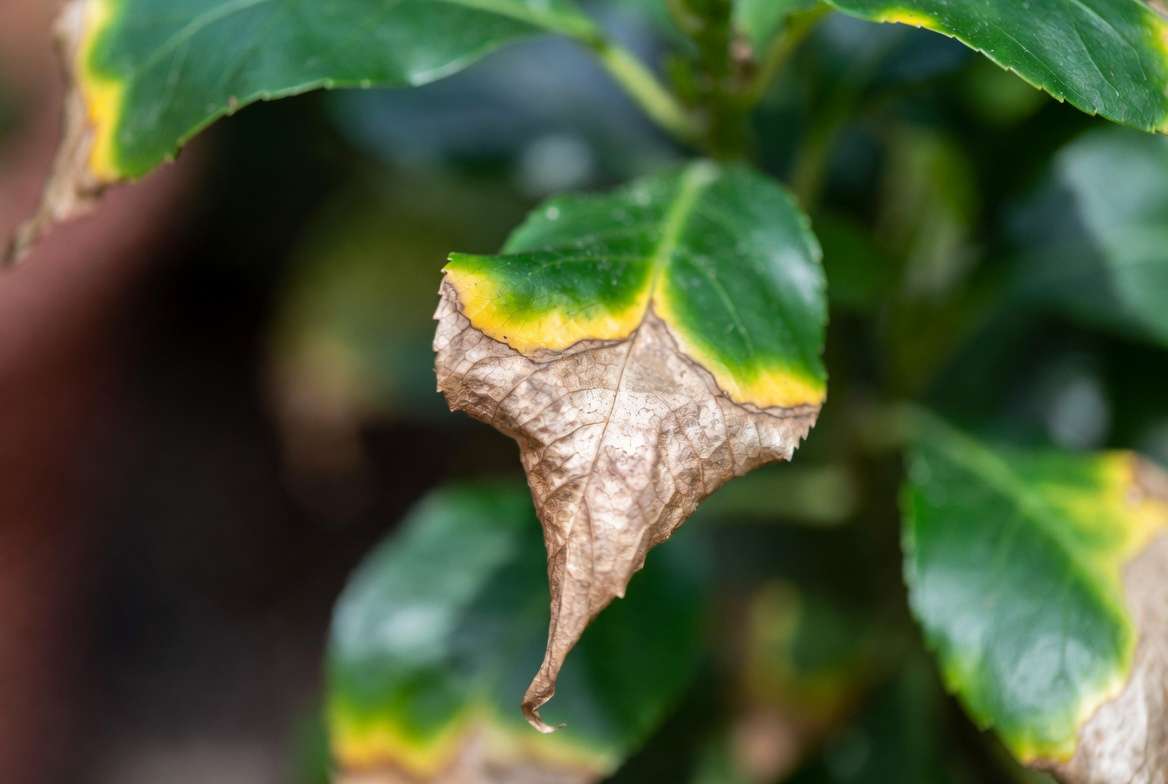
Progression is rapid: mild cases show tip burn; advanced cases lead to widespread defoliation and root death. Conifers show needle tip necrosis in a uniform pattern.
Real-life example: A newly planted fruit tree fertilized heavily in summer may show brown leaf edges within a week, while the soil smells overly rich and shows white salt crusts.
Understanding Nutrient Deficiency Symptoms in Plants and Trees 🍂
Why Deficiencies Happen
Deficiencies occur when soil lacks available nutrients due to poor soil quality, incorrect pH, compaction, overwatering, root damage, or leaching in sandy soils. High pH (alkaline) soils commonly lock up iron, manganese, and zinc, even if those elements are present.
Macronutrients (N, P, K) are needed in larger amounts; micronutrients (Fe, Mg, Zn, etc.) in trace quantities. Mobile nutrients like nitrogen move from older leaves to new growth, so symptoms appear on older foliage first. Immobile nutrients (iron, calcium) show first on new leaves.
Key Symptoms of Common Deficiencies
- Nitrogen (N) Deficiency 🌱: Uniform yellowing (chlorosis) starting on older, lower leaves. Overall pale green plant, slow or spindly growth, reduced flowering/fruiting. Leaves may drop early. Unlike burn, leaves feel soft rather than crispy.
- Phosphorus (P) Deficiency: Older leaves turn dark green to purplish-red, especially on undersides or margins. Stunted roots and poor flowering. Leaves may feel leathery.
- Potassium (K) Deficiency: Brown scorching or marginal necrosis on older leaves (similar to burn but usually without the salt crust or sudden onset). Weak stems, crinkled leaves, increased disease susceptibility.
- Iron (Fe) Deficiency (Chlorosis): Bright yellow new leaves with distinctly green veins (interveinal chlorosis). Common in pin oaks, maples, and fruit trees on alkaline soils (pH >7.0). In severe cases, leaves turn white then brown at edges.
- Magnesium (Mg) Deficiency: Interveinal yellowing on older leaves, sometimes with reddish-purple blotches. Common in acid-loving plants on sandy soils.
- Other micronutrients: Zinc or manganese cause distorted new growth or rosetting; calcium leads to blossom-end rot in fruits or tip dieback.
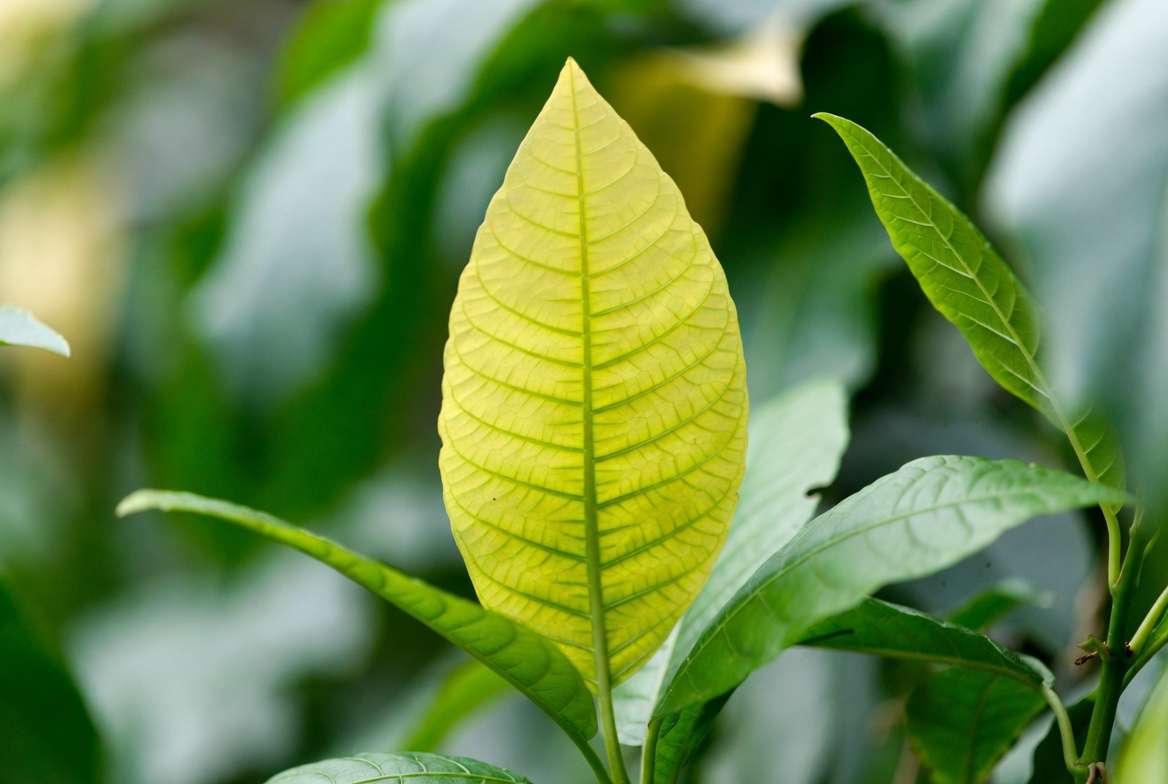
Tree-specific clues: Urban trees often show iron chlorosis on one side or scattered branches due to compacted or alkaline soil.
Progression tip: Deficiencies develop gradually over weeks or months and often affect the whole plant more uniformly, without the dramatic “burn” look.
Side-by-Side Comparison: Overfertilization vs. Deficiency Symptoms 📊
This clear comparison helps you diagnose quickly:
| Symptom | Overfertilization (Fertilizer Burn) | Nutrient Deficiency | Key Differentiator |
|---|---|---|---|
| Yellowing location | Tips & edges first, often crispy | Older leaves (N, K, Mg) or new leaves (Fe) | Burn starts at margins; deficiency follows nutrient mobility |
| Leaf texture | Dry, scorched, brittle | Soft, pale, sometimes purplish | Crispy vs. limp/soft |
| Wilting | Yes, even with moist soil | Usually only in severe cases | Overwatering won’t help burn |
| Soil signs | White/crusty salt buildup, strong fertilizer smell | No visible salts | Crust is a smoking gun for overfertilization |
| Roots | Blackened, limp, rotting | Normal color or pale, but not burned | Root inspection is decisive |
| Growth pattern | Stunted with possible weak succulent flushes | Uniformly slow or spindly | Sudden weak growth after feeding = burn |
| Onset | Rapid (days after application) | Gradual (weeks/months) | Timing relative to fertilizer use |
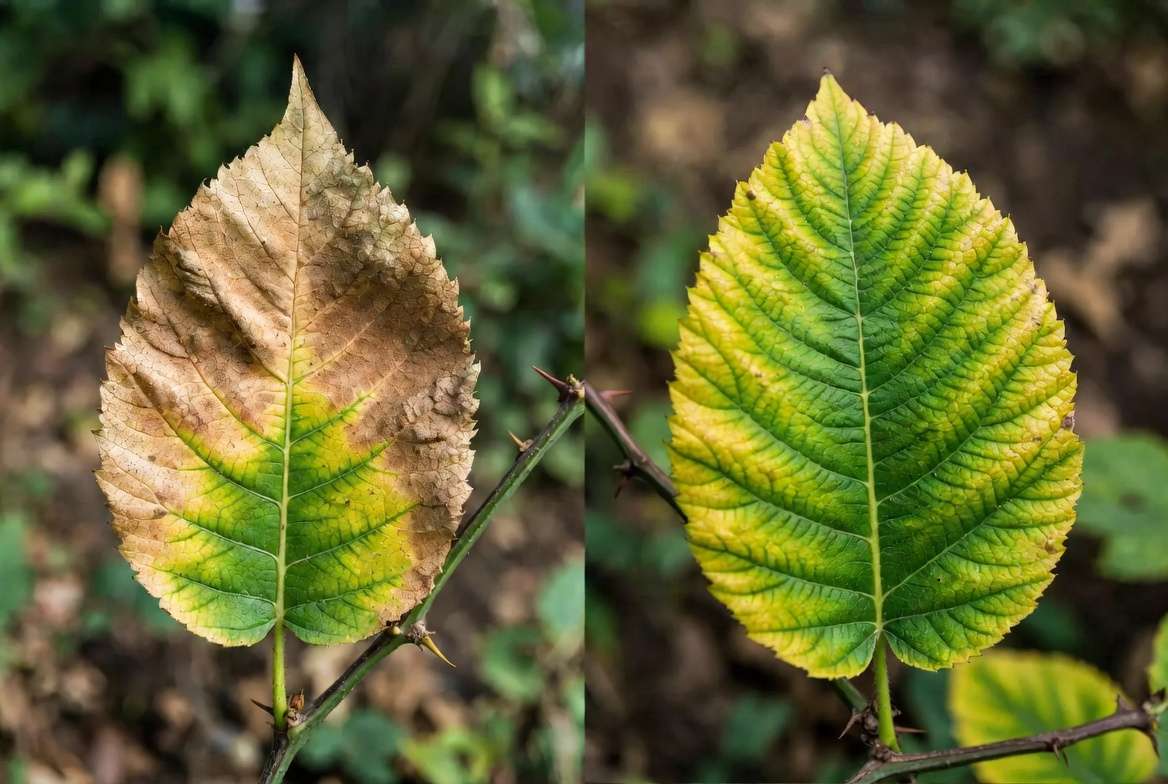
Rule of thumb: If you recently fertilized and see crispy tip burn plus soil crust, flush the soil. If no recent feeding and symptoms follow leaf age patterns with green veins, test soil pH and nutrients.
(Visual charts and labeled photos dramatically improve understanding — highly recommended for your article.)
Step-by-Step Diagnosis Guide: Don’t Guess, Test! 🔍
- Observe the pattern — Note which leaves are affected (old vs. new), location on the plant/tree, and any recent care changes (fertilizer date, amount, weather).
- Review history — Did you apply fertilizer in the last 1–4 weeks? What type and rate?
- Inspect soil and roots — Gently dig near the drip line. Look for crust, smell, and root color/texture.
- Test soil — Get a professional soil test for pH, soluble salts, and nutrient levels (most university extensions offer affordable kits). High salts point to overfertilization; high pH with low available iron suggests chlorosis.
- Consider tissue analysis — For confirmation on trees, send leaf samples mid-summer.
- Rule out other culprits — Check for pests (aphids, scale), diseases, watering issues, compaction, or herbicide drift.
Expert advice from extension services: “Test, don’t guess.” A simple soil test prevents most misdiagnoses.
How to Fix Overfertilization and Save Your Plants 🌟
Act fast — the sooner you intervene, the better the recovery.
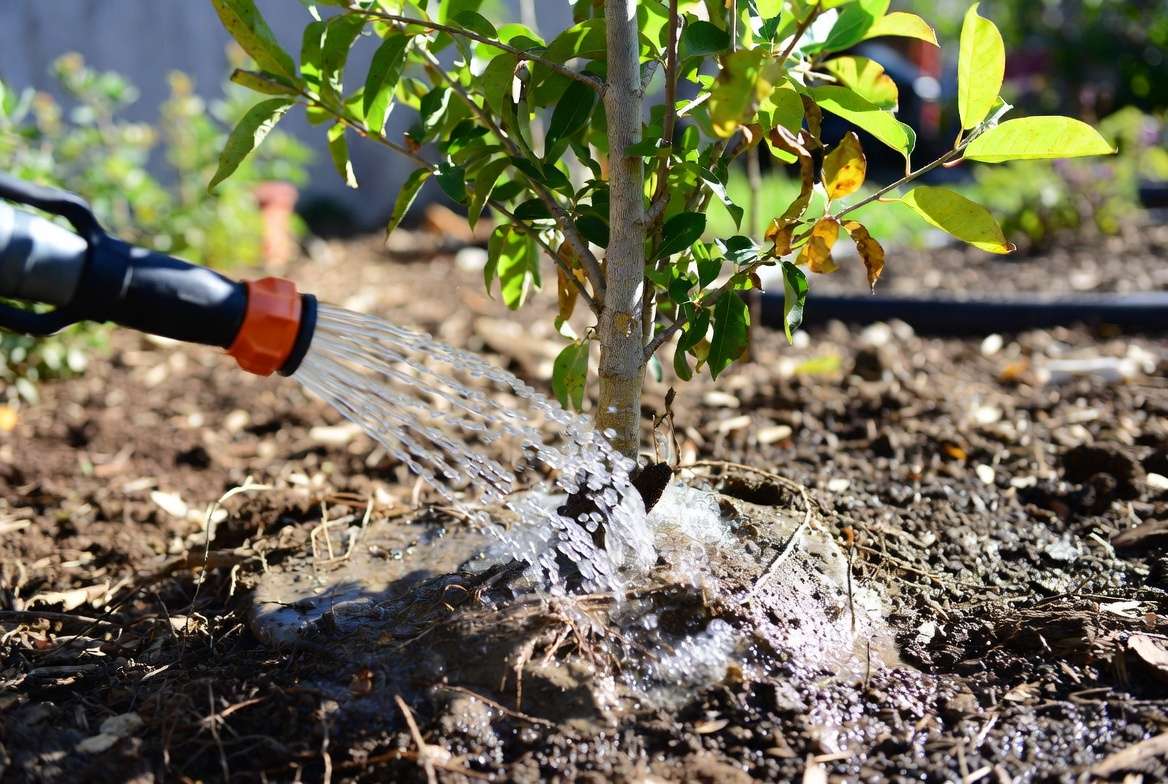
- Immediate flush: Water deeply and slowly with plain water (use a soaker hose) to leach excess salts below the root zone. For potted plants, flush until water runs clear from the bottom; repeat daily for 5–7 days.
- Remove surface fertilizer: Scrape away any visible granules or crust.
- For severe cases: Repot container plants with fresh, balanced soil. For in-ground trees, consider replacing topsoil in small areas if damage is extreme.
- Prune carefully: Remove only dead or severely burned leaves/branches once new growth appears. Avoid heavy pruning on stressed trees.
- Support recovery: Provide light shade temporarily, maintain consistent (not excessive) watering, and hold off all fertilizer for 4–8 weeks.
- Timeline: Mild cases recover in 2–4 weeks; root-damaged trees may take a full season.
Many gardeners successfully revive trees by thorough leaching in spring.
How to Correct Nutrient Deficiencies Effectively 🌱
Once you’ve ruled out overfertilization through testing and observation, it’s time to address true deficiencies with precision. The goal is targeted correction without risking secondary imbalances or salt buildup.
Start with soil pH adjustment — this is often the most critical step. Many deficiencies, especially iron chlorosis in trees like pin oaks, maples, and fruit trees, stem from alkaline soils (pH above 7.0) where iron becomes unavailable even if present. Lowering pH gradually with elemental sulfur (applied in fall for spring effect) or using acidifying amendments helps unlock existing nutrients. Always base rates on a professional soil test.
Choose the right delivery method:
- Foliar sprays for quick results: Chelated iron or magnesium sprays provide fast greening (visible in days) but are temporary. Apply in early morning or evening to avoid leaf burn. Great for immediate rescue on chlorotic new growth.
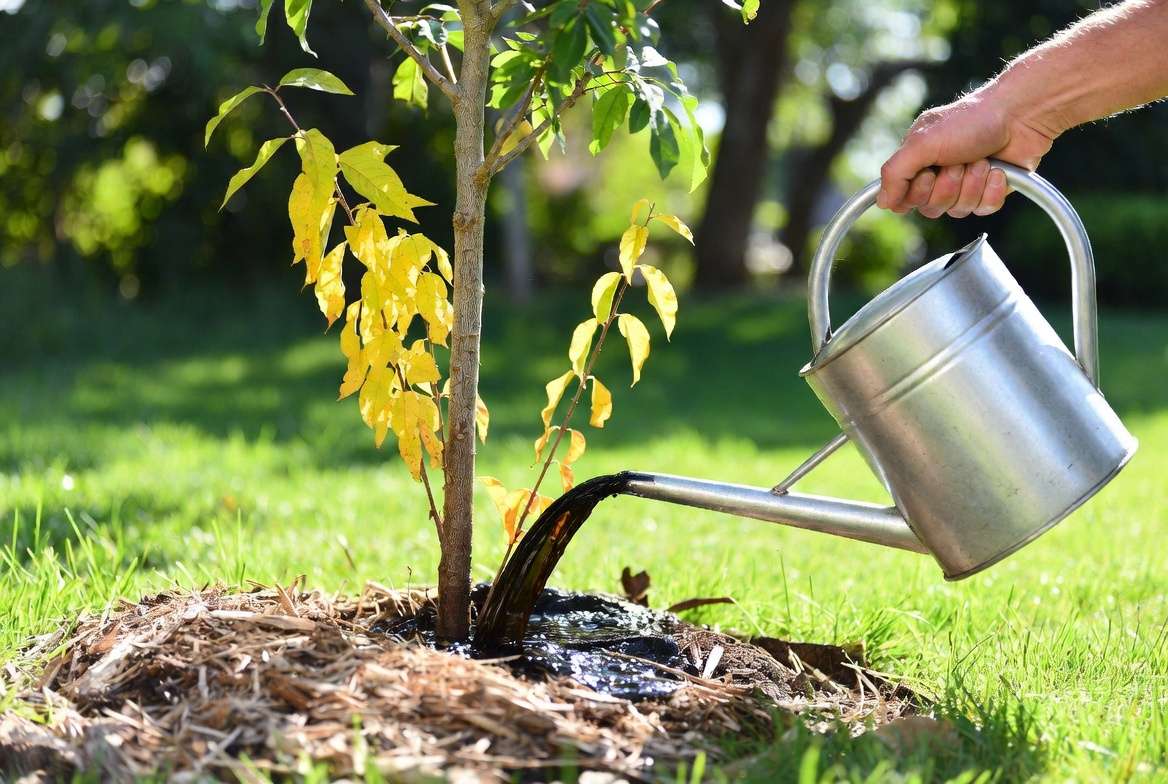
- Soil applications: Slow-release or chelated products (e.g., iron chelate) last longer. Incorporate into the root zone around the drip line, then water thoroughly.
- Deep root feeding for trees: Use specialized injectors or drill holes to deliver nutrients below the surface, bypassing compacted topsoil common in urban landscapes.
- Organic options: Compost, well-aged manure, or specific amendments like bone meal (phosphorus) or greensand (potassium) build long-term soil health without the risks of synthetics.
Nutrient-specific fixes:
- Nitrogen: Apply a balanced slow-release organic source if soil tests confirm low levels. Avoid heavy nitrogen on trees — it promotes weak, pest-prone growth.
- Iron/Manganese chlorosis: Use Fe-EDDHA chelates, which work better in high-pH soils. Trunk injections (performed by certified arborists) offer season-long relief for severe cases in valuable landscape trees.
- Magnesium: Epsom salts (magnesium sulfate) as a foliar or soil drench for quick correction.
- Potassium & Phosphorus: Use targeted fertilizers only if tests show deficiency; excess can block other uptake.
Timeline and monitoring: Expect visible improvement in 2–6 weeks depending on severity and method. Re-test soil after 3–6 months and observe new growth. For trees, full recovery can take an entire growing season as the canopy rebuilds.
Remember: Correcting deficiencies is most effective when combined with improving overall soil biology through mulching and avoiding compaction.
Prevention Tips: Keep Your Trees Thriving Without Risks 🛡️
The best way to handle overfertilization vs. deficiency symptoms is to prevent problems before they start. Healthy soil and thoughtful practices reduce the need for corrective interventions.
- Test soil regularly: Every 2–3 years (or annually for high-value trees) through university or certified labs. Tests reveal pH, nutrient levels, and soluble salts, preventing guesswork.
- Use slow-release fertilizers: These provide steady nutrition without salt spikes. Organic options or coated synthetics are ideal for trees and shrubs.
- Follow the “right rate, right time” rule: Apply only at recommended rates, during active growth (spring or early fall), and never on drought-stressed or dormant plants. Water deeply before and after application.
- Mulch generously: 2–4 inches of organic mulch around the drip line conserves moisture, moderates temperature, and slowly releases nutrients as it decomposes. Keep mulch away from the trunk to prevent rot.
- Improve soil organically: Add compost yearly to boost microbial activity and natural nutrient cycling. This builds resilience against both deficiencies and excess salts.
- Match plant to site: Choose trees tolerant of your soil pH and conditions (e.g., avoid iron-sensitive species on alkaline clay). Proper planting depth and avoiding girdling roots prevent many “deficiency-like” symptoms.
- Integrated care: Combine with correct watering (deep, infrequent), pruning, and pest monitoring. Vigorous trees resist issues better.
These habits create self-sustaining soil ecosystems, minimizing fertilizer use and environmental runoff while promoting vibrant, long-lived trees.
Common Mistakes to Avoid When Fertilizing Plants and Trees ❌
Even well-intentioned gardeners fall into these traps that blur the line between overfertilization vs. deficiency symptoms:
- The “more is better” mindset: Doubling fertilizer rates or applying too frequently causes salt accumulation and root damage faster than you expect.
- Ignoring soil pH: Adding nutrients to locked-up alkaline soil wastes money and can worsen chlorosis.
- Fertilizing stressed plants: Heat, drought, or newly transplanted trees can’t handle extra salts — wait until recovery.
- Using lawn fertilizer near trees: High-nitrogen formulas trigger weak growth and increase pest attraction.
- Applying to wet foliage or during peak heat: Causes direct leaf burn.
- Skipping tests: Assuming yellow leaves always mean “feed me” leads to repeated overfertilization cycles.
- Poor timing: Late-season heavy feeding pushes tender growth vulnerable to winter damage.
Avoiding these keeps your diagnostic skills sharp and your garden thriving.
Expert Insights and Case Studies 📖
University extension services across the U.S. emphasize “test, don’t guess” as the cornerstone of responsible plant care. For instance, iron chlorosis in urban pin oaks often stems from construction-compacted, high-pH soils rather than true iron shortage. One common case: a homeowner applies high-nitrogen fertilizer after seeing yellow leaves, only to worsen tip burn and attract aphids. Proper soil testing and pH correction with chelated iron resolved the issue within one season.
Another frequent scenario involves container plants or young fruit trees: over-application of liquid fertilizer during summer heat leads to classic fertilizer burn (crispy margins, wilting). Thorough leaching plus a switch to slow-release organics brings full recovery. Arborists report that trunk injections for severe chlorosis in mature trees can restore canopy color dramatically, often within weeks.
These real-world examples from extension resources highlight that patience, observation, and data-driven decisions outperform reactive fertilizing every time.
Frequently Asked Questions (FAQs) ❓
Can overfertilization cause nutrient deficiencies? Yes — excess salts or imbalanced nutrients (e.g., too much phosphorus) can lock up iron, zinc, or other elements, creating secondary deficiencies.
How long does it take for a plant to recover from fertilizer burn? Mild cases improve in 2–4 weeks with flushing; severe root damage in trees may require a full growing season.
Is yellowing always a sign of deficiency? No. It can indicate overfertilization (especially with crispy tips), overwatering, pests, disease, or even natural seasonal changes. Pattern and history provide clues.
What’s the best fertilizer for trees? Slow-release, balanced formulas based on soil test results. For most landscape trees, a low-nitrogen, higher-phosphorus/potassium option works well once established.
Can I use the same diagnosis methods for indoor plants and outdoor trees? Yes, core principles (leaf pattern, soil inspection, testing) apply, but containers need more frequent flushing due to limited soil volume.
Should I fertilize newly planted trees? Generally no for the first year — focus on watering and mulching. Fertilize only if a soil test shows specific deficiencies.
How do I test for soluble salts at home? While professional lab tests are best, high EC (electrical conductivity) readings from affordable meters can indicate salt buildup from overfertilization.
Is organic fertilizer safer than synthetic? Organic options release nutrients more slowly and are less likely to cause burn, but they still require proper rates and timing.
Conclusion: Become a Confident Plant Diagnostician 🌳
Mastering overfertilization vs. deficiency symptoms transforms you from a worried gardener into a confident steward of healthy plants and trees. By learning to read leaf patterns, inspecting roots and soil, testing regularly, and applying targeted fixes, you’ll avoid costly mistakes and enjoy lush, resilient greenery for years.
Remember: Healthy soil is the foundation. Test first, observe carefully, and intervene thoughtfully. Your trees will reward you with vibrant foliage, strong structure, and better resistance to stresses.
Ready to put this knowledge to work? Grab a soil test kit, inspect your plants today, and share your before-and-after stories in the comments below. For more expert tree care and plant troubleshooting guides, subscribe to our newsletter and explore related articles on soil health, proper mulching, and seasonal pruning.
Your garden (and your trees) will thank you! 🌿🌳











