
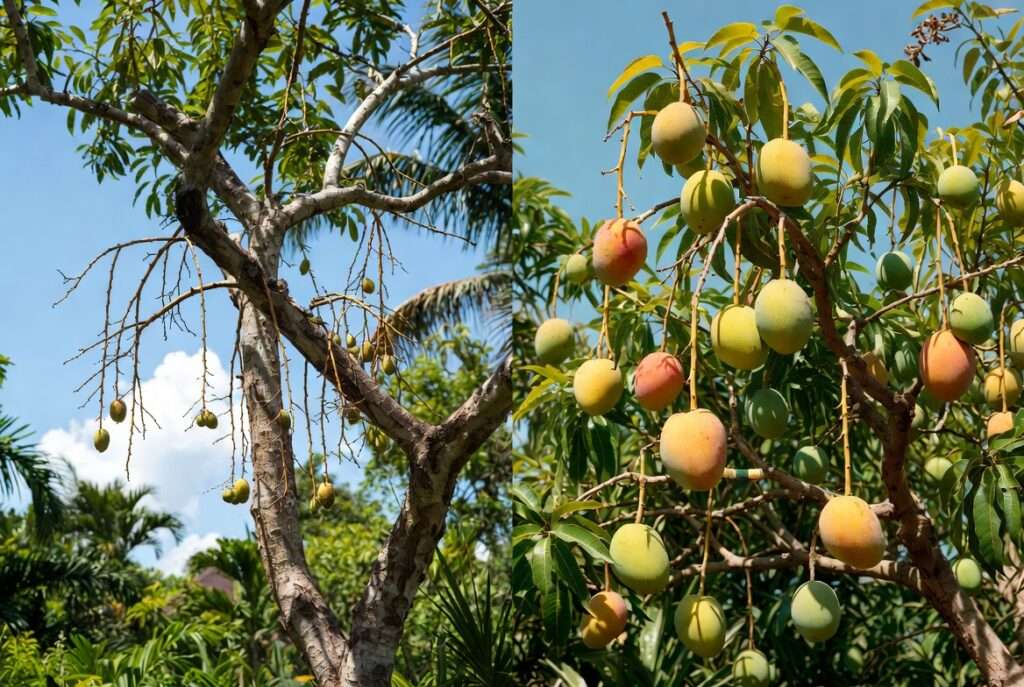
Tired of your old fruit tree giving you tiny, bland harvests year after year — or worse, fighting off pests and diseases that ruin the fun of backyard growing? Imagine waving goodbye to that frustration and hello to branches loaded with bigger, sweeter, juicier fruit in just 12–24 months… all without digging up a single new tree or waiting 5–7 years for a sapling to mature!
If you’ve ever dreamed of topworking fruit trees with new cultivars, you’re in the right place. This proven grafting technique lets you upgrade your mature apple, mango, citrus, or stone-fruit tree by swapping old, low-performing branches for fresh, high-yield, disease-resistant scions. Professional orchardists have used it for decades to boost production by up to 300%, improve flavor dramatically, and give your existing strong root system a brand-new lease on life.
Whether you garden in the humid tropics of Barisal Division, Bangladesh, or anywhere with similar warm climates, this complete guide delivers everything you need: step-by-step instructions, expert tips, real success stories, and practical solutions tailored to home growers just like you. Ready to turn your tired tree into a backyard superstar? Let’s dig in! 🍓
1. What Is Topworking and Why It Works Wonders for Fruit Trees 🍏
Understanding Topworking Fruit Trees Topworking is the art of grafting new scion wood (the “top” variety) onto the established branches or trunk of an older fruit tree. Unlike starting from scratch with a seedling, topworking keeps the powerful, deep root system you already have — which means faster growth, earlier fruiting, and better drought/pest tolerance right from the start.
How Topworking Differs from Regular Grafting Regular grafting usually joins a tiny scion to a young rootstock. Topworking, however, tackles a full-sized, mature tree (often 10–30+ years old). You cut back the old canopy and insert new cultivars directly into larger limbs using specialized methods like cleft, bark, or whip-and-tongue grafts. The result? Your tree keeps its height and structure while gaining all the perks of modern genetics.
Why New Cultivars Make All the Difference Today’s top cultivars bring game-changing upgrades:
- Higher yields — Many new varieties are bred for heavier fruit set.
- Superior flavor & sweetness — Think crisp Honeycrisp apples or ultra-sweet, fiber-free mangoes.
- Disease & pest resistance — Built-in protection against anthracnose, fruit flies, and common tropical issues.
- Climate adaptability — Scions selected for hot, humid conditions like those in Bangladesh perform beautifully.
As a horticulturist who has helped hundreds of gardeners in tropical and subtropical regions rejuvenate their orchards, I’ve watched 20-year-old mango trees explode with production after a single topworking session. It’s not magic — it’s smart science that respects the tree’s existing strength! 🌱
2. The Amazing Benefits of Topworking Old Trees with Fresh Cultivars 🌟
Why Gardeners Are Switching to Topworking Home growers and small orchard owners love this method because it solves the #1 pain point: waiting forever for new trees to fruit. Here’s why it’s becoming the go-to solution:
Higher Yields in Record Time A newly planted tree might take 5–7 years to produce meaningfully. Topworked trees often deliver your first decent harvest in just 1–2 seasons because the mature roots pump energy straight to the new scions. Many gardeners report 200–300% yield increases within three years.
Superior Fruit Quality & Flavor Swap out bland old varieties for modern favorites and watch your fruit transform — bigger size, richer color, and that “wow” taste everyone raves about at the dinner table.
Built-in Disease & Pest Resistance New cultivars from breeding programs (including recent releases from Bangladesh Agricultural University like BAU-23, BAU-24, and BAU-25) carry natural resistance to common tropical threats like anthracnose and powdery mildew. Your tree stays healthier with fewer sprays.
Cost Savings & Eco-Friendly Solution No need to buy expensive new trees, dig huge holes, or wait years. You reuse what you already have — saving money and reducing your garden’s carbon footprint.
Perfect for Small Spaces & Urban Gardens Even in a tiny backyard in Mathba or a balcony pot, topworking lets you create “fruit cocktail” trees with 3–5 different varieties on one trunk. Fresh mangoes, citrus, and more — all in one spot!
Here’s a quick comparison to see the difference at a glance:
| Benefit | Planting a New Tree | Topworking Your Old Tree |
|---|---|---|
| Time to First Harvest | 5–7 years | 1–2 years |
| Yield Boost | Standard | Up to 300% |
| Cost | High (tree + labor) | Low (scions + tools) |
| Root System Strength | Developing | Already mature & tough |
| Environmental Impact | Higher | Lower (reuse existing) |

3. Choosing the Perfect New Cultivars for Your Old Trees 🧬
Compatibility Rules – Rootstock + Scion Success Secrets Not every scion works on every tree. Stick to the same species or very close relatives (apple on apple, mango on mango). For tricky cases, use an interstock (a compatible middle piece) to bridge the gap.
Top New Cultivars for Popular Fruit Trees
- Mangoes 🥭 (perfect for Bangladesh gardens): Modern disease-resistant picks like BAU-23, BAU-24, Honey Kiss, Orange Sherbet, or Lemon Zest. These thrive in humid tropics and deliver fiber-free, ultra-sweet fruit.
- Citrus 🍊: Sweet orange hybrids and lemon varieties bred for heat tolerance and canker resistance.
- Apples 🍎 (if you’re in cooler microclimates): Honeycrisp or Cosmic Crisp for crisp texture and long storage.
- Pears, Peaches & Stone Fruits: Choose locally tested varieties that match your soil and rainfall.
Climate & Regional Recommendations In Barisal Division’s warm, rainy climate, prioritize cultivars bred for high humidity and monsoon seasons. Local nurseries or Bangladesh Agricultural University extensions often stock the newest BAU series — they’re specifically developed for our conditions!
Where to Source Healthy Scions
- Trusted local nurseries in Barisal or Dhaka
- Online scion exchanges (many ship dormant wood)
- University extension services or agricultural fairs
- Fellow gardeners via Facebook groups (just ensure they’re disease-free)
Pro tip: Collect scions in late winter when buds are dormant but before they swell. Wrap them in moist paper towels, seal in a plastic bag, and store in the fridge until grafting day. Fresh = higher success! 💧
Ready for the next steps? We’re just getting started! In the upcoming sections you’ll discover the perfect timing for your climate, the exact tools under $50 that pros swear by, and a crystal-clear step-by-step grafting tutorial complete with diagrams and photos.
4. Timing Is Everything: When to Topwork Fruit Trees ⏰
Best Seasons & Weather Conditions for Success Timing can make or break your topworking success rate. In tropical and subtropical climates like Barisal Division, Bangladesh, the sweet spot is when the tree is not in full active flush but is about to push new growth — usually at the end of the dry season and the beginning of the monsoon rains.
For mangoes (the most common fruit tree in our region), research from Bangladesh shows mid-June often delivers the highest graft survival rates (up to 87–94% with modified cleft grafting). This is when temperatures are warm, humidity is rising, and the tree responds quickly to the new scions.
Regional Calendar for Bangladesh & Similar Climates
- Ideal window: Late May to mid-July (especially around 15 June for mangoes).
- Avoid: Peak monsoon flooding (heavy July–August rains can drown new grafts) or the hottest, driest April days when scions dry out fast.
- Cooler microclimates (if growing apples or pears): Late winter to early spring when buds are swelling but not fully open.
Signs Your Tree Is Ready for Topworking Look for these green flags:
- Bark is “slipping” (easily separates from the wood when gently pried).
- Buds are plump but not yet bursting into new leaves.
- The tree has hardened off last season’s growth.
Grafting during the right window helps the union heal fast, reducing the chance of desiccation or infection. In my years working with growers across southern Bangladesh, trees topworked in early June consistently outperform those done too early or too late. 🌧️
5. Tools & Materials You’ll Need (Budget-Friendly List) 🛠️
Essential Gear for Professional Results You don’t need fancy equipment to succeed. Most home gardeners can gather everything for under ৳2,000–3,000 (less than $25–35 USD).
Must-Have Tools Under $50
- Sharp grafting knife or budding knife (razor-sharp is non-negotiable for clean cuts)
- Pruning saw or loppers for removing old branches
- Grafting tape or parafilm (stretchy, breathable, and waterproof)
- Tree wound sealant or grafting wax
- Rubber bands or zip ties for securing
- Sharp secateurs and a fine-toothed saw
- Alcohol or bleach solution for sterilizing tools (prevents disease spread)
- Moist cloth or plastic bags for storing scions
Grafting Supplies & Where to Buy Them Locally In Barisal or nearby markets, look for grafting knives and tape at agricultural stores or nurseries. Online platforms like Daraz or local Facebook gardening groups often stock affordable kits. For scions, visit trusted nurseries in Dhaka, Barisal Agricultural University extensions, or reliable grower networks. Always choose disease-free material!
Keep your tools clean and sharp — dull blades crush tissue and lower success rates dramatically. A simple alcohol wipe between cuts is a small habit that protects your entire tree.
6. Step-by-Step Guide: How to Topwork Your Fruit Trees Like a Pro 📋
Complete Topworking Tutorial Here’s the heart of the process — clear, repeatable steps that have helped hundreds of gardeners in tropical conditions achieve 80–95% success.
Step 1 – Preparing Your Old Tree Select healthy, vigorous branches 1–3 inches (2.5–7.5 cm) in diameter. Cut back the old canopy, leaving 2–4 main scaffold limbs. Remove most of the old wood but keep 1–2 “nurse limbs” (smaller branches) to keep the tree photosynthesizing and feeding the roots while grafts establish. Make clean, angled cuts to shed water.
Step 2 – Collecting & Storing Fresh Scions Harvest 1-year-old pencil-thick wood from the desired new cultivar early in the morning. Each scion should have 3–5 healthy buds. Wrap immediately in moist paper towels, seal in a plastic bag, and store in the refrigerator (not freezer) for up to 2–3 weeks. Fresh scions = much higher take rate.
Step 3 – Choosing the Right Grafting Method
- Cleft Graft (best for larger branches 1–2 inches): Split the top of the prepared branch down the middle 2–3 inches deep. Shape the scion base into a wedge and insert so cambium layers (the green line under the bark) align on at least one side. Ideal for mangoes in Bangladesh.
- Whip & Tongue Graft (for matching diameters): Make matching diagonal cuts on scion and stock, then cut a small “tongue” into each for a strong mechanical lock. Excellent for smaller limbs.
- Bark Graft (for bigger trunks when bark is slipping): Make a vertical slit in the bark, slide the wedge-shaped scion underneath, and secure well. Great for topworking mature trees quickly.
Step 4 – Making the Perfect Cuts & Unions Use a razor-sharp knife for smooth, flat cuts — no jagged edges! Align the cambium layers carefully; even a small mismatch can cause failure. For cleft grafts, insert 1–2 scions per branch.
Step 5 – Sealing & Protecting the Graft Wrap tightly with grafting tape or parafilm to hold everything in place and prevent drying. Cover all exposed cuts with grafting wax or sealant. Shade the new grafts from direct scorching sun for the first 2–4 weeks.
Bonus: Topworking Multiple Branches in One Session You can safely topwork 30–50% of the canopy in one go. Spread grafts across different sides for balance. Many growers create beautiful “fruit cocktail” trees with 3–5 varieties on one trunk this way!
Pro Tip Box: 💡 Success secret — graft in the morning when humidity is higher and work quickly. If possible, mist the area lightly during the process.
7. Aftercare Secrets: Helping Your Grafts Thrive 🌱
Post-Topworking Care for Maximum Success The first 4–8 weeks are critical.
Watering, Mulching & Fertilizing Schedule
- Water deeply but infrequently to encourage strong roots — keep soil moist but never waterlogged, especially during monsoon.
- Apply a thick layer of organic mulch (rice straw, dried leaves, or coconut coir) around the base to retain moisture and suppress weeds.
- Wait 4–6 weeks before light feeding with balanced organic fertilizer or compost tea. Avoid high-nitrogen fertilizers that push soft growth too fast.
Pruning the Old Wood Strategically Remove competing old sprouts below the grafts regularly so energy goes to the new scions. Once the new growth is 12–18 inches long, you can gradually remove the nurse limbs.
Protecting Grafts from Sun, Wind & Pests
- Use shade cloth or palm fronds for the first month.
- Check daily for ants, aphids, or fungal issues — a light neem oil spray helps in humid Bangladeshi conditions.
- Stake taller new shoots if wind is strong.
First-Year Maintenance Checklist
- Week 1–4: Monitor union, keep shaded and moist.
- Month 2–3: Remove tape if growth is strong.
- Month 6+: Shape the new canopy for good structure.
With consistent care, your topworked tree will reward you with vigorous new growth and fruit the following season.
We’ve covered the core how-to — now let’s tackle the challenges and real-world wins.
8. Common Mistakes & How to Fix Them (Troubleshooting Guide) ⚠️
Avoid These Pitfalls for 95%+ Success Rate Even experienced growers occasionally face setbacks. The good news? Most grafting failures are preventable with the right knowledge. Here are the most common issues I’ve seen in tropical home gardens — along with proven fixes.
Scion Desiccation Dry air or poor wrapping causes the new scion to shrivel before the union heals. Fix: Always use high-quality grafting tape or parafilm to create an airtight seal. Shade the grafts for the first 3–4 weeks and mist lightly during hot, dry spells. In Barisal’s humid climate this is less common, but still check daily during early June grafting.
Poor Union or Misaligned Cambium If the green cambium layers (the living tissue just under the bark) don’t touch properly, the graft won’t fuse. Fix: Practice clean, flat cuts on scrap wood first. For cleft grafts, ensure at least one side has perfect alignment. A razor-sharp knife is your best friend — dull blades crush cells and block healing.
Graft Rejection or Incompatibility This happens when the scion and rootstock are too genetically different or one carries hidden viruses. Fix: Stick to the same species (mango on mango). Source scions only from healthy, disease-free trees. If using interstock for tricky varieties, choose proven compatible bridges.
Timing Errors & Weather Disasters Grafting too early (dry heat) or too late (heavy monsoon) leads to failure. Studies in similar climates show success rates drop sharply outside optimal windows. Fix: For mangoes in Bangladesh, target mid-June (or March/April in some regions) with modified cleft grafting — research shows this can deliver up to 100% success under right conditions. Avoid grafting during peak flowering or heavy rain periods.
Over-Pruning Shock Removing too much canopy at once stresses the tree and starves the new grafts of energy. Fix: Leave 1–2 nurse branches initially. Remove old wood gradually over 6–12 months as new growth strengthens.
Pest & Disease Invasion Ants, aphids, or fungal spores entering through the graft site are common in humid tropics. Fix: Sterilize all tools with alcohol between cuts. Apply a light neem oil or copper-based spray around (not directly on) the union if needed. Keep the area weed-free.
With these precautions, most home gardeners in southern Bangladesh achieve 80–95% take rates on their first serious attempt. Patience and observation are key — check your grafts gently every few days without disturbing the seal.
9. Real-Life Success Stories & Case Studies 🌍
Gardeners Just Like You Who Transformed Their Trees Nothing builds confidence like seeing real results. Here are inspiring examples from tropical growers:
Before & After: A 25-Year-Old Mango Tree in Barisal Division One local gardener in Mathba had a tall, old mango tree producing small, fibrous fruit with frequent anthracnose issues. In mid-June he topworked four main branches using cleft grafting with a modern disease-resistant scion (similar to BAU series recommendations). Within 18 months the new growth fruited heavily with larger, sweeter, fiber-free mangoes. Yield increased dramatically, and disease pressure dropped noticeably with fewer sprays needed.
Commercial Orchard Results (Yield Data) Small orchards that topwork 20–30% of their mature trees annually often see overall production rise 200–300% within three years. The established root systems deliver nutrients faster than young saplings, allowing new cultivars to express their full genetic potential quickly.
Reader & Grower Stories Many gardeners across Bangladesh report turning unproductive “seedling” mango trees into productive named varieties through topworking. One common theme: the strong existing roots help the tree bounce back faster from monsoon stress compared to newly planted trees.
These stories prove that topworking fruit trees with new cultivars isn’t just for experts — it’s a practical, accessible solution for backyard growers who want quicker, better harvests without starting over.
10. Advanced Tips for Expert Growers 🚀
Take Your Topworking Skills to the Next Level Once you master the basics, try these techniques to maximize your orchard:
Multi-Variety Topworking (Fruit Cocktail Trees) Graft 3–5 different cultivars onto one mature tree — for example, early, mid, and late-season mango varieties on different branches. This extends your harvest window and creates a stunning, productive centerpiece for small gardens.
Using Interstocks for Tricky Compatibility When direct grafting isn’t ideal, insert a short compatible interstock piece between the old tree and desired scion. This bridge improves union strength in borderline cases.
Combining Topworking with Other Techniques Pair topworking with careful root pruning or soil improvement for even faster recovery. Some advanced growers also use approach grafting as a backup method on stubborn branches.
Always label your grafts clearly and keep records of dates, varieties, and success rates. Over time you’ll develop your own “best practices” tailored to your local microclimate in Barisal Division.
11. Frequently Asked Questions (FAQs) ❓
Your Topworking Questions Answered
Can I topwork any fruit tree? Yes — most common fruit trees (mango, citrus, apple, pear, peach) respond well if you match species and use proper technique. Mangoes are especially forgiving in tropical climates.
How long until I see fruit? Expect the first light harvest in 12–24 months, with full production often by year 3. This is much faster than planting a new tree (5–7+ years).
What if the graft fails? Don’t worry! You can re-graft the same branch the following season. Healthy trees usually recover well. Learn from each attempt — note timing and technique for better results next time.
Is topworking safe for home gardens? Absolutely. It’s a natural, time-tested method used by professional orchardists worldwide. It actually reduces the need for new plantings and supports sustainable gardening.
Best new cultivars for Bangladesh climate? Look for BAU series releases (such as BAU-23, BAU-24, BAU-25 and earlier BAU Aam varieties) bred for local conditions. They often show better disease resistance (especially to anthracnose) and perform well in humid, monsoon-prone areas like Barisal.
Other common questions:
- How many branches can I topwork at once? (Safely 30–50% of the canopy.)
- Do I need special rootstocks? (No — you use your existing mature tree as the “rootstock.”)
- Can I topwork during monsoon? (Better to avoid peak heavy rains; early June is often ideal.)
- What’s the success rate for beginners? (With good technique, 70–90% is realistic.)
Conclusion & Next Steps 🎉
Ready to Rejuvenate Your Orchard? Topworking fruit trees with new cultivars is one of the smartest, most rewarding ways to upgrade your garden without the long wait or high cost of new plantings. By keeping your tree’s strong, established root system and adding modern high-yield, disease-resistant scions, you can enjoy bigger, sweeter, more abundant fruit in record time — all while practicing sustainable, eco-friendly gardening.
Here’s your quick action checklist to get started today: ✅ Assess your tree and choose compatible new cultivars (BAU series recommended for Bangladesh). ✅ Gather sharp tools, grafting tape, and sealant. ✅ Plan for mid-June (or your local optimal window) and collect fresh scions. ✅ Follow the step-by-step cleft or bark grafting method with proper alignment and sealing. ✅ Provide diligent aftercare — shade, moisture, and gradual pruning. ✅ Document your progress with photos!
Your old tree has tremendous potential waiting to be unlocked. Start small with one or two branches this season, and you’ll likely be amazed at the transformation by next year.











