
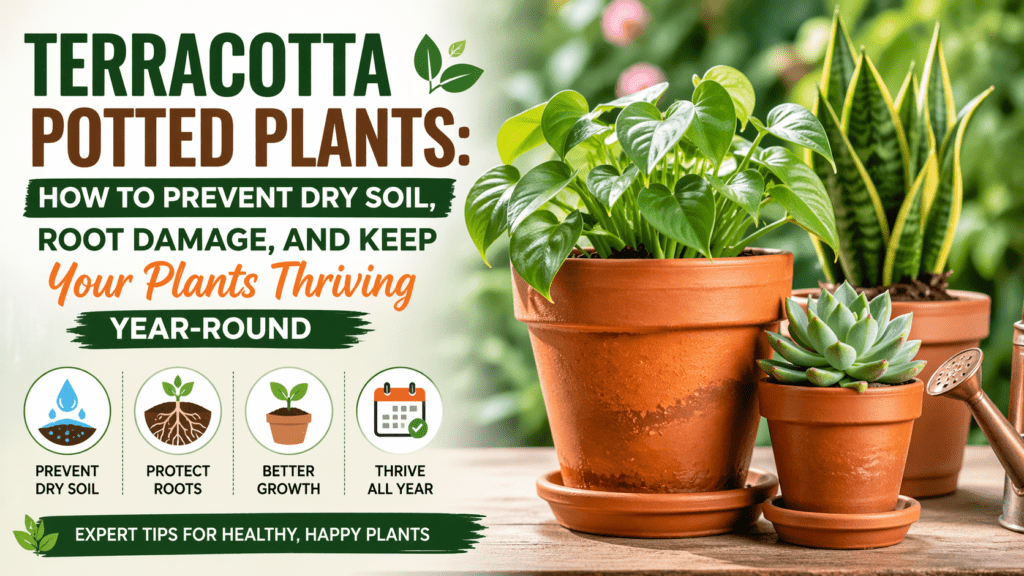
Terracotta potted plants look effortlessly beautiful — warm, earthy, and timeless. But if you’ve ever struggled with soil drying out too fast, drooping leaves, or stressed roots, you’re not alone.
In fact, terracotta potted plants are one of the most misunderstood choices in plant care. While they’re praised for their breathability and drainage, they can quietly create a harsh environment for your plants if you don’t manage them correctly. 😬
I’ve worked with hundreds of indoor and outdoor plants over the years, and one of the most common issues I see is this:
👉 Healthy plants declining simply because of improper terracotta care.
The good news? You don’t need to ditch your terracotta pots. You just need to understand how they behave — and how to work with them, not against them.
In this guide, you’ll learn expert-level strategies to:
- Prevent soil from drying out too quickly 💧
- Protect roots from hidden damage 🌿
- Choose the right plants and soil mix 🪴
- Maintain thriving, healthy greenery all year long 🌸
Let’s turn your terracotta pots into the plant-friendly environment they’re meant to be.
🪴 What Makes Terracotta Potted Plants Unique?

🌍 What Is Terracotta — And Why Gardeners Love It
Terracotta is a type of unglazed clay pottery, fired at relatively low temperatures. This gives it that classic reddish-brown color and — more importantly — a porous structure.
Unlike plastic or ceramic pots, terracotta:
- Absorbs water into its walls
- Allows air to pass through
- “Breathes” along with your plant’s roots
This natural design has made terracotta a favorite for centuries, especially in Mediterranean and arid-region gardening. 🌞
🌬️ How Terracotta Affects Soil Moisture
Here’s where things get interesting — and tricky.
Because terracotta is porous:
- Water doesn’t just stay in the soil
- It gets pulled into the pot walls
- Then evaporates into the air
This means:
👉 Soil dries out faster than in plastic or glazed pots
While that sounds like a downside, it’s actually beneficial when managed properly.
🌱 Benefits of Terracotta Pots
When used correctly, terracotta potted plants can thrive beautifully. Here’s why:
✔️ Prevents overwatering
Excess moisture escapes easily, reducing root rot risk
✔️ Improves root aeration
Oxygen can reach roots more effectively
✔️ Stabilizes plant health
Less chance of soggy, compacted soil
✔️ Perfect for drought-tolerant plants
Succulents, cacti, and herbs absolutely love it 🌵
⚠️ The Hidden Drawbacks You Must Know
But here’s the reality many guides don’t emphasize enough:
❌ Rapid moisture loss
Plants can dry out before you realize it
❌ Frequent watering required
Especially in warm climates or bright indoor spots
❌ Salt buildup
Minerals accumulate on the surface over time
❌ Root stress risk
Inconsistent watering can damage root systems
Understanding these trade-offs is the key to mastering terracotta plant care.
💧 Why Soil Dries Out Faster in Terracotta Pots

🔬 The Science Behind Moisture Loss
Terracotta works through a natural process called capillary action.
Here’s a simple breakdown:
- Water moves from the soil into the clay walls
- The porous structure spreads that moisture
- Air exposure causes it to evaporate
So instead of moisture staying available for roots, part of it escapes — silently.
☀️ Environmental Factors That Make It Worse
Certain conditions can accelerate drying dramatically:
🔥 High temperatures – increase evaporation
🌞 Direct sunlight – heats both soil and pot
💨 Airflow (fans or wind) – speeds up moisture loss
🏠 Low humidity indoors – common with AC or heaters
If you live in a hot or dry climate, this effect becomes even stronger.
🪴 Plants Most Affected by Fast Drying
Not all plants react the same way to terracotta.
Highly sensitive plants include:
- Ferns 🌿
- Calatheas
- Peace lilies
- Baby plants or cuttings
These plants prefer consistent moisture — and terracotta can make that difficult without adjustments.
🚨 Signs Your Terracotta Potted Plants Are Suffering

🍂 Visual Warning Signs
Watch for these early indicators:
- Leaves drooping even after watering
- Dry, hard soil pulling away from pot edges
- Brown or crispy leaf tips
These signs often get mistaken for underwatering — but the root cause is usually inconsistent moisture retention.
🌱 Root-Related Issues
Below the surface, things can get worse:
- Roots shrinking due to dehydration
- Reduced nutrient uptake
- Slower growth or stalled development
⚠️ Long-Term Damage If Ignored
If not corrected, terracotta-related stress can lead to:
❌ Chronic dehydration
❌ Weak root systems
❌ Increased susceptibility to pests
❌ Plant death
But don’t worry — in the next section, we’ll fix all of this step-by-step. 💪🌿
🛠️ How to Prevent Dry Soil in Terracotta Potted Plants

💦 Watering Techniques That Actually Work
Forget light watering — it doesn’t work well with terracotta.
Instead:
✔️ Water deeply until it drains from the bottom
✔️ Let excess water escape fully
✔️ Re-water only when top 1–2 inches are dry
💡 Pro Tip: Always check soil with your finger — not a schedule.
🧪 Upgrade Your Soil Mix (This Is Critical!)
Standard potting soil isn’t enough.
To retain moisture better, mix in:
- Coco coir (excellent water retention)
- Peat moss
- Compost
Avoid overly sandy mixes unless growing succulents.
🪵 Use Mulch for Moisture Control
Mulching isn’t just for outdoor gardens 🌳
Add a thin layer of:
- Bark chips
- Coconut husk
- Moss
This helps:
- Reduce evaporation
- Stabilize soil temperature
- Keep moisture consistent
🧴 Pre-Soaking Terracotta Pots (Game-Changer!)
This is one of the most overlooked expert tricks 👇
Before planting:
- Soak the pot in water for a few hours
- Let it absorb moisture fully
- Then plant as usual
✅ This prevents the pot from immediately pulling water out of your soil.
🌿 Protecting Roots from Damage in Terracotta Pots

🧬 How Dryness Affects Root Health
Roots are far more sensitive than most plant owners realize. In terracotta potted plants, rapid moisture loss can create cycles of extreme dryness followed by sudden watering — and that’s where damage begins.
Here’s what happens:
- Roots shrink when dehydrated
- Fine root hairs (responsible for nutrient uptake) die off
- Sudden watering can shock weakened roots
Over time, this leads to:
👉 Poor nutrient absorption
👉 Slower growth
👉 Increased plant stress
Consistency is everything. 🌱
🪴 Repotting Strategies for Healthier Roots
Repotting isn’t just about size — it’s about creating a stable root environment.
✔️ When to repot:
- Roots circling tightly (root-bound)
- Water runs straight through the pot
- Soil dries out extremely fast
✔️ Best practices:
- Choose a pot only 1–2 inches larger
- Loosen roots gently before placing
- Use moisture-retentive soil mix
💡 Avoid oversized pots — they can create uneven moisture zones.
🧃 Using Liners or Double Potting (Highly Recommended)
This is a professional-level trick that instantly improves terracotta performance:
👉 Place a plastic nursery pot inside the terracotta pot
Benefits:
- Slows down moisture loss
- Maintains aesthetic appeal
- Protects roots from extreme drying
Alternatively:
- Use a thin plastic liner inside the pot
- Ensure drainage holes are still functional
🌱 Root-Friendly Watering Habits
Consistency beats frequency.
✔️ Water thoroughly, then allow partial drying
✔️ Avoid letting soil become bone-dry
✔️ Adjust watering based on season and environment
💡 Golden rule: Roots prefer stable moisture, not extremes.
🌞 Best Plants for Terracotta Potted Plants (And Which to Avoid)

🌵 Plants That Thrive in Terracotta
Terracotta shines when paired with the right plants.
Ideal choices:
- Succulents (echeveria, jade plant) 🌵
- Cacti
- Herbs (rosemary, thyme, oregano) 🌿
- Snake plant
- Lavender
These plants prefer:
✔️ Fast-draining soil
✔️ Drier conditions
✔️ Excellent airflow
🌿 Plants That Struggle in Terracotta
Some plants simply don’t enjoy the dry nature of clay pots.
Be cautious with:
- Ferns
- Calatheas
- Peace lilies
- Fittonia (nerve plant)
These require:
❌ Consistent moisture
❌ Higher humidity
🔄 How to Adapt Sensitive Plants to Terracotta
If you love terracotta aesthetics but have moisture-loving plants, don’t worry — adapt instead:
✔️ Use richer, moisture-retentive soil
✔️ Add mulch
✔️ Place in lower light areas
✔️ Use double potting method
📍 Placement Tips to Reduce Moisture Loss

☀️ Indoor Placement Strategies
Inside your home:
🚫 Avoid:
- Direct sunlight near windows
- Heat sources (radiators, AC vents)
✅ Instead:
- Place in bright, indirect light
- Maintain moderate humidity
🌳 Outdoor Placement Tips
Outdoors, terracotta can dry extremely fast.
✔️ Use partial shade instead of full sun
✔️ Protect from strong winds
✔️ Group plants together to retain humidity
💨 Managing Airflow and Humidity
Simple tricks can make a big difference:
- Use humidity trays 💧
- Group plants closely 🌿
- Mist occasionally (for suitable plants)
🔄 Seasonal Care Guide for Terracotta Potted Plants

🌸 Spring & Summer Care
During active growth:
✔️ Increase watering frequency
✔️ Monitor soil daily in hot weather
✔️ Fertilize regularly
🍂 Fall Adjustments
As growth slows:
- Reduce watering gradually
- Watch for overwatering risks
❄️ Winter Care Essentials
Winter can be tricky indoors:
✔️ Lower watering frequency
✔️ Avoid placing near heaters
✔️ Protect pots from freezing outdoors
💡 Terracotta can crack in freezing temperatures — bring pots inside if needed.
🧼 Cleaning and Maintaining Terracotta Pots

🧽 Removing Salt Buildup
White crust on pots? That’s mineral residue.
Solution:
- Mix vinegar + water (1:1)
- Scrub gently with a brush
- Rinse thoroughly
🪣 Sterilizing Pots Before Reuse
Always clean reused pots to prevent disease:
✔️ Soak in mild bleach solution
✔️ Rinse and dry completely
🔁 When to Replace Terracotta Pots
Replace if:
- Cracked or structurally weak
- Excessively salt-damaged
⚡ Pro Tips from Plant Experts
🌟 Here’s what experienced growers swear by:
- Use a moisture meter for accuracy
- Rotate plants regularly for even growth
- Combine terracotta with self-watering setups
- Always test soil before watering
💡 Small adjustments = massive improvement in plant health.
❓ Frequently Asked Questions (FAQ)
💧 How often should I water terracotta potted plants?
It depends on environment, but generally more frequently than plastic pots — always check soil first.
🧴 Can I seal terracotta pots?
Yes, sealing reduces porosity — but also reduces breathability. Use cautiously.
🪴 Are terracotta pots better than plastic?
They’re better for drainage and airflow, but require more attention to watering.
🌿 Why is my plant still drying out quickly?
Likely causes:
- Poor soil mix
- Too much sunlight
- No mulch or liner
🧃 Should I line terracotta pots?
Yes — especially for moisture-loving plants. It’s a highly effective method.
🧾 Final Thoughts: Mastering Terracotta Potted Plants
Terracotta pots aren’t the problem — misunderstanding them is.
Once you learn how to manage moisture, soil, and environment, terracotta becomes one of the best tools for healthy plant growth. 🌿
🌱 Key Takeaways:
- Balance drainage with moisture retention
- Choose the right plants
- Use smart techniques like soaking and double potting
- Stay consistent with care
With these strategies, your terracotta potted plants won’t just survive — they’ll thrive beautifully all year long. 🌸











