
Imagine walking into your field in the morning, only to find once-healthy rice plants suddenly turning brown, dry, and lifeless. 😨 What seemed like a thriving crop just days ago can collapse rapidly—and in many cases, the culprit is already too far along to control.
Understanding brown plant hopper symptoms early is the difference between saving your harvest and suffering devastating losses. This tiny insect may look harmless, but it is one of the most destructive pests affecting rice crops worldwide. If left unchecked, it can wipe out entire fields through a condition known as hopper burn.
In this comprehensive guide, you’ll learn how to:
- Identify early and advanced symptoms 🔍
- Distinguish BPH damage from other issues
- Understand the root causes of infestation
- Apply proven, expert-backed control methods
Let’s dive in and protect your crops before it’s too late 🌱
🔍 What Is Brown Plant Hopper? (Quick Overview for Farmers & Gardeners)

🌱 Scientific Background and Identification
The brown plant hopper (Nilaparvata lugens) is a sap-sucking insect that primarily targets rice plants. Despite its small size, it poses a massive threat due to its rapid reproduction and ability to damage crops at every growth stage.
- Color: Brown (varies from light to dark)
- Size: About 3–4 mm
- Forms:
- Short-winged (brachypterous) – stay and reproduce
- Long-winged (macropterous) – migrate and spread infestation
Its life cycle includes:
- Eggs (laid inside plant tissues)
- Nymphs (highly active feeders)
- Adults (mobile and reproductive)
🌾 Crops Most Affected
- Primarily affects rice crops 🌾
- Occasionally impacts other grasses
Rice farmers are the most vulnerable, especially in regions with humid climates.
🌍 Why It’s a Major Agricultural Threat
- Feeds on plant sap, weakening plants directly
- Secretes honeydew, encouraging fungal growth
- Transmits viral diseases
- Reproduces extremely fast under favorable conditions
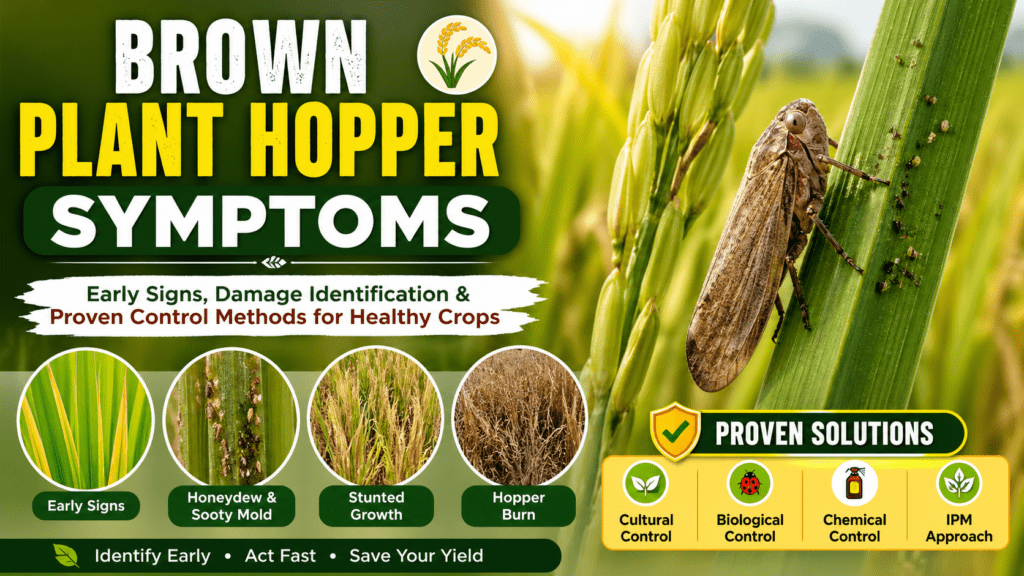
⚠️ Brown Plant Hopper Symptoms (Early to Advanced Stages)
Recognizing brown plant hopper symptoms at the right time is crucial for effective control. Below is a stage-by-stage breakdown:
🟢 Early Brown Plant Hopper Symptoms
At this stage, damage is subtle but detectable if you know what to look for:
- Yellowing of lower leaves 🍂
- Slight wilting even when water is sufficient
- Reduced plant vigor and slow growth
- Presence of nymphs at the base of plants
👉 Expert Tip: Early detection requires inspecting the base of rice plants, not just the leaves.
🟡 Moderate Infestation Signs
As the infestation grows, symptoms become more visible:
- Sticky honeydew deposits on plant surfaces
- Development of sooty mold (black fungus) 🖤
- Stunted plant growth
- Patchy appearance across the field
At this stage, yield loss has already begun.
🔴 Severe Damage Symptoms (Hopper Burn Stage)
This is the most destructive phase:
- Plants turn brown and dry rapidly 🔥
- Entire patches of crops collapse
- Leaves become brittle and lifeless
- “Hopper burn” spreads quickly across the field
⚠️ Once this stage is reached, recovery is extremely difficult.
🧪 How to Differentiate from Nutrient Deficiency or Other Pests
Many farmers misdiagnose BPH damage. Here’s how to avoid that:
| Issue | Key Difference |
|---|---|
| Nitrogen deficiency | Uniform yellowing, not patchy |
| Drought stress | Affects entire field evenly |
| Stem borers | Visible holes and dead hearts |
| BPH infestation | Insects at plant base + honeydew |
👉 Always inspect the lower stem area—this is where BPH hides.
🔬 What Causes Brown Plant Hopper Infestation?
Understanding the causes helps you prevent future outbreaks 🌱
🌦️ Environmental Conditions That Favor BPH
- High humidity 🌫️
- Warm temperatures (25–30°C)
- Dense crop canopy
These conditions create the perfect breeding environment.
🧫 Farming Practices That Increase Risk
- Excessive nitrogen fertilizer use ⚠️
- Continuous rice cropping
- Poor drainage systems
Over-fertilization makes plants more attractive to pests.
🐜 Natural Predator Imbalance
- Reduction in beneficial insects like spiders 🕷️
- Overuse of pesticides killing natural enemies
A balanced ecosystem naturally controls BPH populations.
🕵️♂️ How to Identify Brown Plant Hopper in Your Field

🔎 Step-by-Step Inspection Guide
- Walk through your field regularly 🚶♂️
- Gently separate rice tillers
- Check the base of plants
- Look for moving insects or clusters
📸 Visual Identification Tips
- Nymphs: Small, wingless, pale brown
- Adults: Darker, with or without wings
- Movement: Quick hopping behavior
⏱️ Best Time for Monitoring
- Early morning 🌅
- Late evening 🌇
These are the times when BPH is most active and visible.
💥 Damage Caused by Brown Plant Hopper
🌾 Impact on Crop Yield
- Yield losses can reach up to 60–100% in severe cases 😱
- Reduced grain quality
- Economic losses for farmers 💸
🦠 Disease Transmission Risks
BPH can spread viral diseases such as:
- Rice ragged stunt virus
- Rice grassy stunt virus
This makes the damage even more severe.
📉 Long-Term Soil and Crop Health Effects
- Repeated infestations weaken soil productivity
- Increased dependency on chemicals
- Reduced sustainability of farming systems
🛡️ Proven Control Methods for Brown Plant Hopper
This is where expert knowledge makes the biggest difference 💡
🌿 Cultural Control Methods (Eco-Friendly 🌍)
- Maintain proper plant spacing
- Avoid excessive nitrogen fertilizer
- Use intermittent irrigation
These practices reduce pest attraction naturally.
🐞 Biological Control (Natural Enemies)

Encourage natural predators like:
- Spiders 🕷️
- Ladybugs 🐞
- Dragonflies
👉 Avoid broad-spectrum pesticides that kill beneficial insects.
🧪 Chemical Control (When Necessary)
- Use selective insecticides only when threshold is exceeded
- Apply at early infestation stage
- Rotate chemicals to prevent resistance
⚠️ Always follow local agricultural guidelines.
🔄 Integrated Pest Management (IPM Approach)
The most effective strategy combines:
- Monitoring
- Cultural practices
- Biological control
- Judicious chemical use
IPM ensures long-term sustainability 🌱
🚫 Common Mistakes to Avoid When Managing BPH
- Ignoring early brown plant hopper symptoms ❌
- Overusing pesticides
- Not monitoring regularly
- Poor nutrient management
Avoiding these mistakes can save your entire crop.
🌟 Expert Tips to Prevent Brown Plant Hopper Infestation
- Use resistant rice varieties 🌾
- Maintain biodiversity
- Monitor fields weekly
- Prepare for seasonal outbreaks 📅
Consistency is key to prevention.
📊 Quick Symptom & Solution Comparison Table
| Stage | Symptoms | Action Needed |
|---|---|---|
| Early | Yellow leaves | Monitor & adjust nutrients |
| Moderate | Honeydew, mold | Introduce predators |
| Severe | Hopper burn | Immediate treatment |
❓ Frequently Asked Questions (FAQs)
🤔 What are the first signs of brown plant hopper symptoms?
Early signs include yellowing leaves, reduced growth, and presence of insects at the base of plants.
🌾 Can crops recover from hopper burn?
In most cases, severe damage is irreversible, but early intervention can save unaffected areas.
🧪 Which pesticide is most effective against BPH?
Effectiveness depends on region and resistance patterns—consult local experts.
🌱 Are there organic ways to control brown plant hopper?
Yes! Biological control and cultural practices are highly effective.
⏳ How quickly does infestation spread?
Very rapidly—within days under favorable conditions.
🧠 Final Thoughts: Protecting Your Crops from Brown Plant Hopper
Brown plant hopper is not just another pest—it’s a serious agricultural threat that requires vigilance, knowledge, and timely action.
By understanding brown plant hopper symptoms, monitoring your fields regularly, and applying integrated control strategies, you can:
- Protect your yield 🌾
- Reduce chemical dependence 🌍
- Build a more sustainable farming system











