
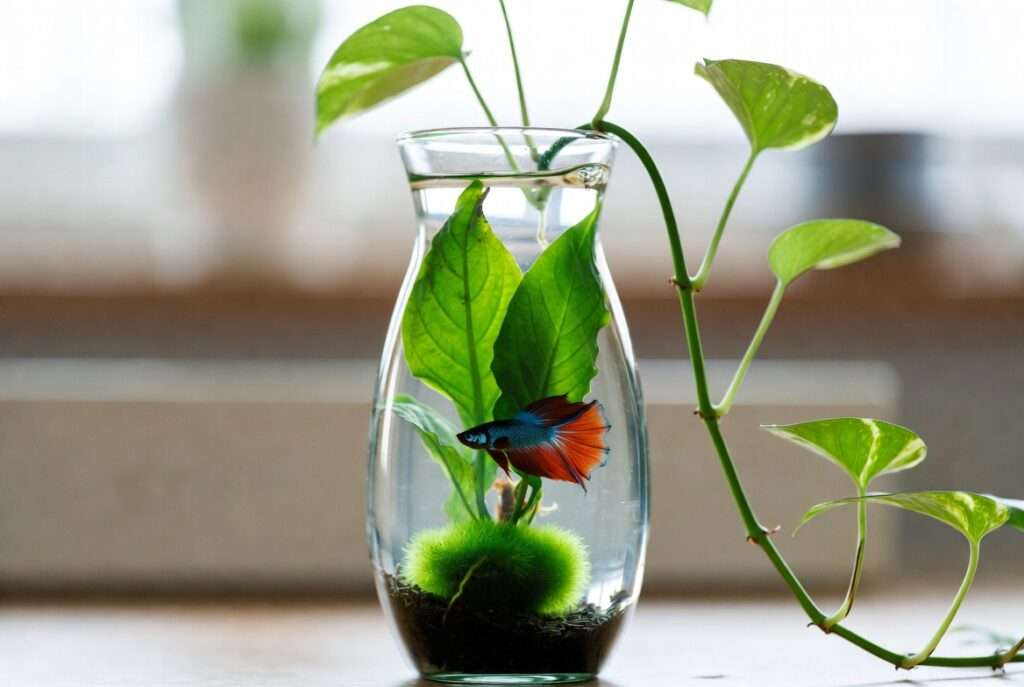
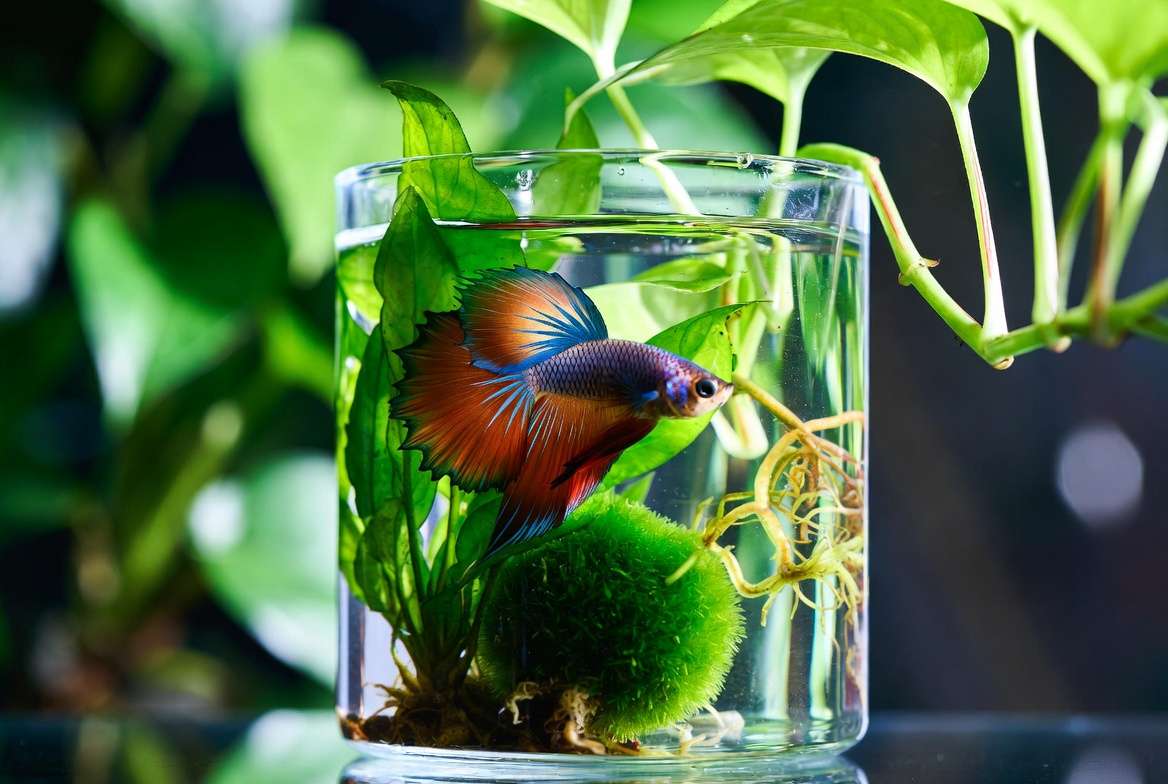
Imagine a elegant glass vase on your desk or shelf, showcasing lush green foliage above the waterline and a vibrant betta fish gracefully gliding among gentle underwater leaves below. It sounds like a perfect miniature ecosystem — serene, beautiful, and low-maintenance. Many betta enthusiasts search for the best plants for bettas in a vase to create just that: an attractive centerpiece that provides natural enrichment for their fish while adding living greenery to their home. 🌱
However, the charming “peace lily vase” trend often falls short of delivering true health and happiness for bettas. As a plant care specialist with extensive experience in both indoor gardening and simple aquascaping, I’ve tested numerous setups and seen what truly works (and what doesn’t). In this comprehensive guide, you’ll discover the most suitable low-maintenance plants that can thrive in a vase environment, how they benefit your betta, and — most importantly — the realistic care requirements to avoid common pitfalls.
Whether you’re drawn to the aesthetic of a compact planted vase or want to improve your betta’s habitat with live plants, this article solves the real problem: finding plants for bettas in a vase that are safe, easy to care for, and supportive of fish health without advanced equipment. We’ll cover top recommendations, setup steps, daily routines, troubleshooting, and honest alternatives. By the end, you’ll have the knowledge to create a more harmonious (and humane) mini-habitat. ✨
Live plants in any betta setup offer oxygenation, natural hiding spots, resting surfaces, and some nutrient uptake that helps stabilize water parameters. But vases present unique challenges due to their small water volume and lack of filtration or heating. The right plants for bettas in a vase can make a noticeable difference — but they are supplements, not substitutes, for proper care. Let’s dive in responsibly. 🐠
Why Live Plants Matter in a Betta Vase Setup 🐟🌿
Betta fish (Betta splendens) are labyrinth breathers, meaning they gulp air from the surface, but they still appreciate a enriched environment that mimics their natural shallow, vegetated habitats in Southeast Asia. Adding suitable live plants provides multiple benefits:
- Stress reduction and enrichment: Broad leaves act as “betta hammocks” where your fish can rest. Dense foliage offers hiding spots, reducing anxiety and promoting natural behaviors like exploring and flaring less aggressively.
- Improved water quality: Plants absorb nitrates and other nutrients, helping control algae and providing gentle biological filtration. They also release oxygen during the day.
- Aesthetic and psychological value: A planted vase becomes a living centerpiece, combining your love for plant care with fishkeeping. Many owners report their bettas appear more active and colorful in planted setups.
- Natural cover and shade: Floating or tall plants diffuse light, preventing stress from bright overhead lighting.
In a vase (typically 0.5–2+ gallons), plants play an even bigger role because there’s no filter or large water volume to buffer changes. However, they cannot fully replace regular maintenance. Expect to perform frequent partial water changes to keep ammonia and nitrites at zero — plants help, but small volumes pollute quickly from uneaten food and waste.
From my experience growing hundreds of houseplants hydroponically and maintaining low-tech betta setups, the best plants for bettas in a vase are hardy species that tolerate low light, don’t require substrate, and grow slowly enough to avoid rapid overcrowding. 🌿
Important Considerations Before Setting Up a Betta Vase ⚠️
Before selecting plants for bettas in a vase, prioritize your betta’s welfare. Small decorative vases are often marketed as “self-sustaining,” but this is largely a myth. Here’s what experienced keepers know:
- Minimum space: Aim for at least 1–2 gallons of water volume for better stability, though many experts recommend upgrading to a 5-gallon tank long-term for optimal health. Tiny vases (<1 gallon) lead to rapid parameter swings, stress, and shorter lifespans.
- Temperature stability: Bettas thrive at 78–82°F (25–28°C). Vases on windowsills or near vents fluctuate wildly — use a small heater if possible or place in a consistently warm room.
- Surface access: As labyrinth fish, bettas must reach the air easily. Avoid dense root masses or floating plants that completely block the surface.
- Lighting: Low to medium indirect light prevents algae blooms while supporting plant growth. Direct sunlight causes temperature spikes and excessive algae.
- No filter reality: Without mechanical filtration, rely on frequent water changes (25–50% every 2–3 days in small vases) and plants’ nutrient uptake.
- Ethical note: If your vase is too small or unstable, consider it a temporary display and plan an upgrade. Healthy, long-lived bettas deserve space to swim and explore.
Always use dechlorinated water (let tap water sit 24 hours or use a conditioner) and test parameters regularly with affordable aquarium test kits. 🧪
Best Plants for Bettas in a Vase: Top Low-Maintenance Recommendations 🌱
Here are the most reliable plants for bettas in a vase, divided into categories. These selections are based on hardiness, betta compatibility, and ease in small volumes. I’ve personally grown many of these in hydroponic and vase-style setups.
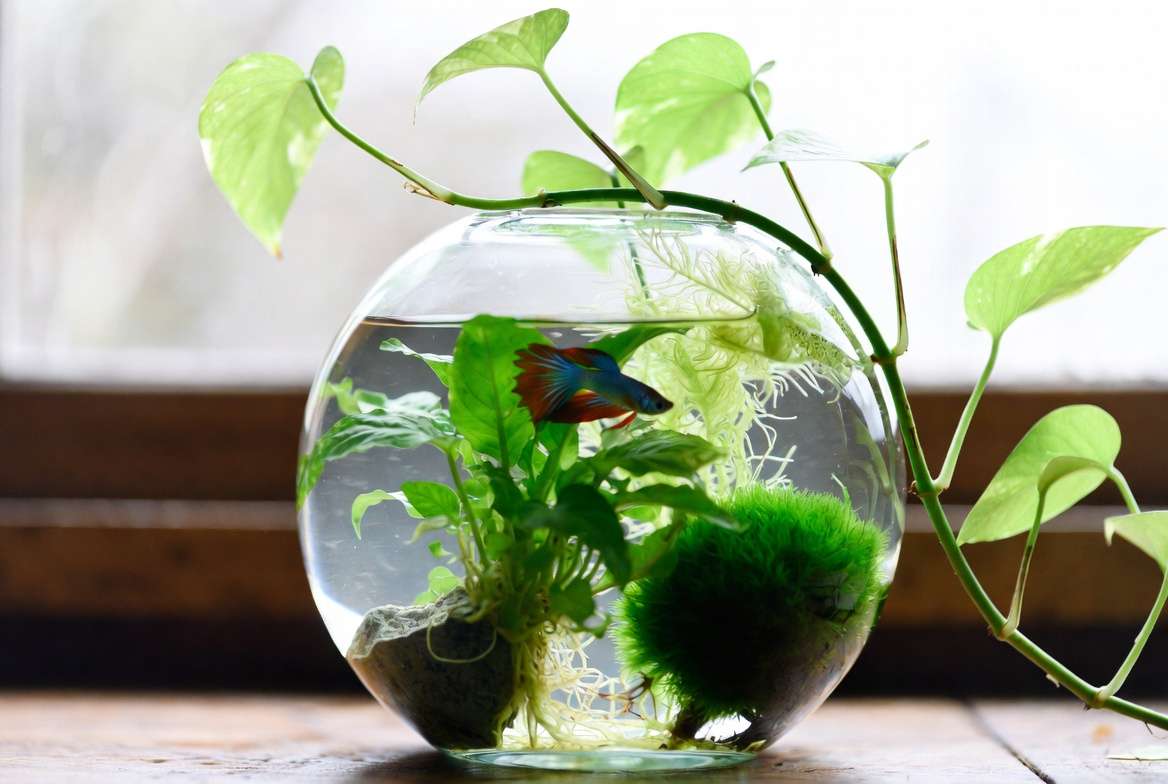
1. Top Fully or Semi-Submerged Aquatic Plants 🪴
These attach via rhizomes or grow without burying roots deeply — perfect for vases with minimal or no substrate.
- Anubias species (especially Anubias nana and Anubias barteri) 🌿 Anubias is a superstar for betta vases. Its broad, sturdy leaves make ideal resting platforms — many bettas love lounging on them like natural hammocks. Extremely low-maintenance, it tolerates low light and grows slowly. Attach the rhizome to smooth rocks or driftwood with fishing line or super glue (cyanoacrylate gel, aquarium-safe); never bury the rhizome as it will rot. Betta benefits: Excellent cover and resting spots. Vase suitability: High — stays compact and doesn’t outgrow small spaces quickly. Care tips: Wipe algae off leaves gently; thrives in 72–82°F.
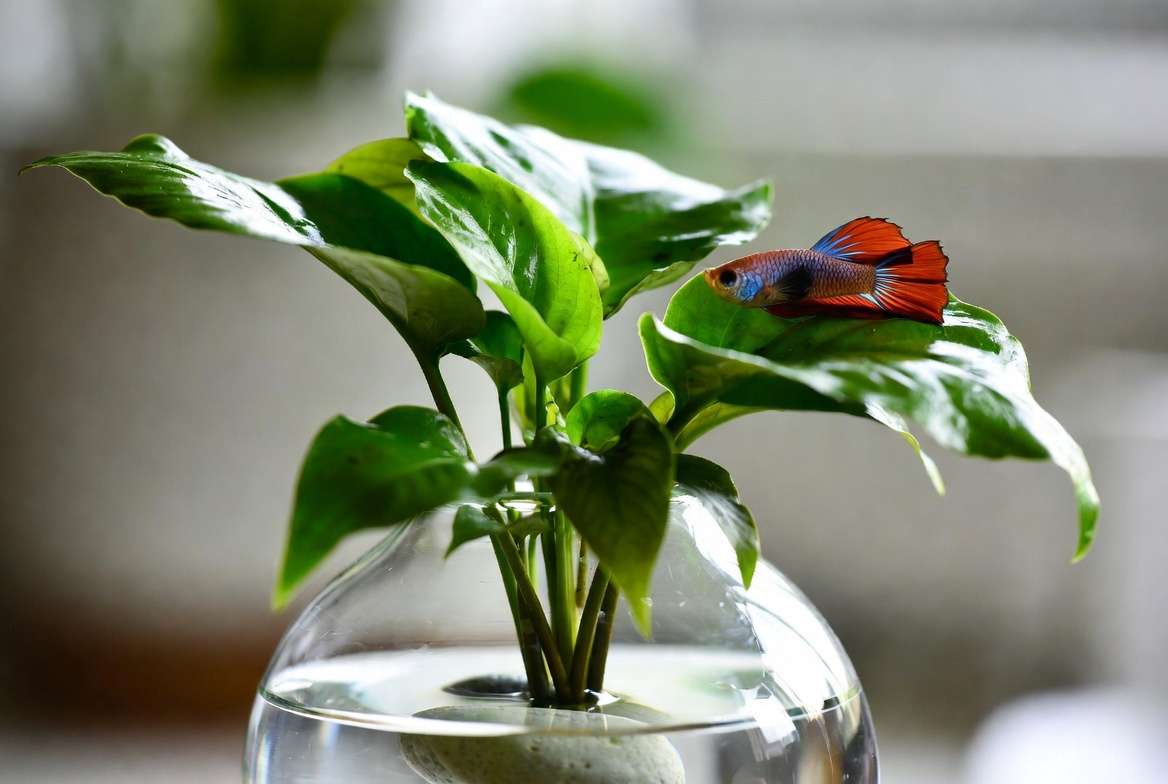
- Java Fern (Leptochilus pteropus) 🌿 Another hardy favorite with flowing, textured leaves that provide hiding places and visual interest. Like Anubias, attach the rhizome rather than planting in substrate. It propagates by growing plantlets on older leaves. Betta benefits: Bettas weave through the leaves and rest on wider fronds. Care tips: Can experience “melt” during acclimation (old leaves die while new ones grow) — be patient. Low light preferred to avoid algae.
- Marimo Moss Balls ⚽🌱 These adorable velvety green spheres are fun “moss pets.” They roll gently with water movement and harbor beneficial bacteria while absorbing nutrients. Betta benefits: Bettas push them around like toys, rest on them, and forage tiny particles. They add gentle movement and enrichment. Care tips: Rinse and squeeze weekly in clean water; they prefer cooler temps but adapt well. Multiple small balls work better than one large one in a vase.
- Other options: Java Moss (tie to decor for soft cover), small Cryptocoryne species (if using a thin gravel layer), or Betta-specific bulbs (plant halfway).
2. Popular Emergent/Hydroponic Plants (Roots in Water, Foliage Above) 🌿
These houseplants grow with roots submerged, providing excellent nitrate absorption while keeping most leaves out of the way.
- Pothos (Epipremnum aureum) — “Devil’s Ivy” One of the easiest emergent plants. Its trailing vines and heart-shaped leaves look stunning draping over the vase edge. Roots aggressively uptake nitrates, helping keep water cleaner. Safety: The roots are safe for bettas; the calcium oxalate in leaves/sap isn’t water-soluble at normal aquarium pH and won’t harm fish unless large amounts are eaten (unlikely). Care tips: Start with cuttings; it grows vigorously in bright indirect light. Trim to control size.
- Peace Lily (Spathiphyllum) The classic “betta vase plant” with elegant white flowers. Its roots help filter water, but use cautiously. Important caveats: In very small vases, dense roots can restrict surface access and swimming space. Peace lilies prefer brighter light than most vases provide indoors, and the setup is rarely self-sustaining. Better suited for larger containers or as a temporary aesthetic addition. Many long-term keepers advise against relying on it exclusively for small vases due to welfare concerns.
- Philodendron, Lucky Bamboo, and similar Similar to Pothos — hardy, attractive, and effective at nutrient uptake. Lucky Bamboo adds upright structure.
3. Floating Plants for Surface Cover & Shade ☁️
- Dwarf Water Lettuce, Amazon Frogbit, or Salvinia: These create a natural canopy, reduce light penetration (preventing algae), and provide security for shy bettas. Manage growth by thinning regularly to keep surface open for breathing.
Quick Comparison Table (for easy scanning):
| Plant | Light Needs | Maintenance | Betta Benefits | Vase Suitability | Growth Rate |
|---|---|---|---|---|---|
| Anubias nana | Low | Very Low | Resting leaves, cover | Excellent | Slow |
| Java Fern | Low-Medium | Low | Hiding, flowing texture | Excellent | Slow-Medium |
| Marimo Moss Ball | Low | Low | Play toy, gentle cleaning | Excellent | Very Slow |
| Pothos (emergent) | Medium-Indirect | Low | Nitrate absorption, aesthetics | Very Good | Medium |
| Peace Lily | Medium-High | Medium | Filtration (with limits) | Moderate | Medium |
Choose a mix: 1–2 rhizome plants + 1 emergent + optional floaters for layered habitat. 🪴
How to Choose and Set Up Plants in Your Betta Vase 🛠️
- Select the right vase: Choose a wide-mouth glass container with at least 1–2 gallons capacity for better stability. Tall, narrow vases limit swimming space.
- Substrate: Use smooth pebbles or gravel for anchoring (thin layer). Many plants (Anubias, Java Fern) need none — attach to decor.
- Plant preparation: Rinse new plants thoroughly. For rhizomes, tie or glue securely without covering the growing point.
- Positioning: Place broad-leaf plants low for resting spots. Emergent plants at the top with roots dangling. Add a small piece of driftwood or smooth rock for attachment and betta exploration.
- Lighting & placement: Position near a window with filtered light or use a low-wattage LED grow light on a timer (6–8 hours). Avoid direct sun.
- Acclimation: Add plants gradually. Monitor for the first week.
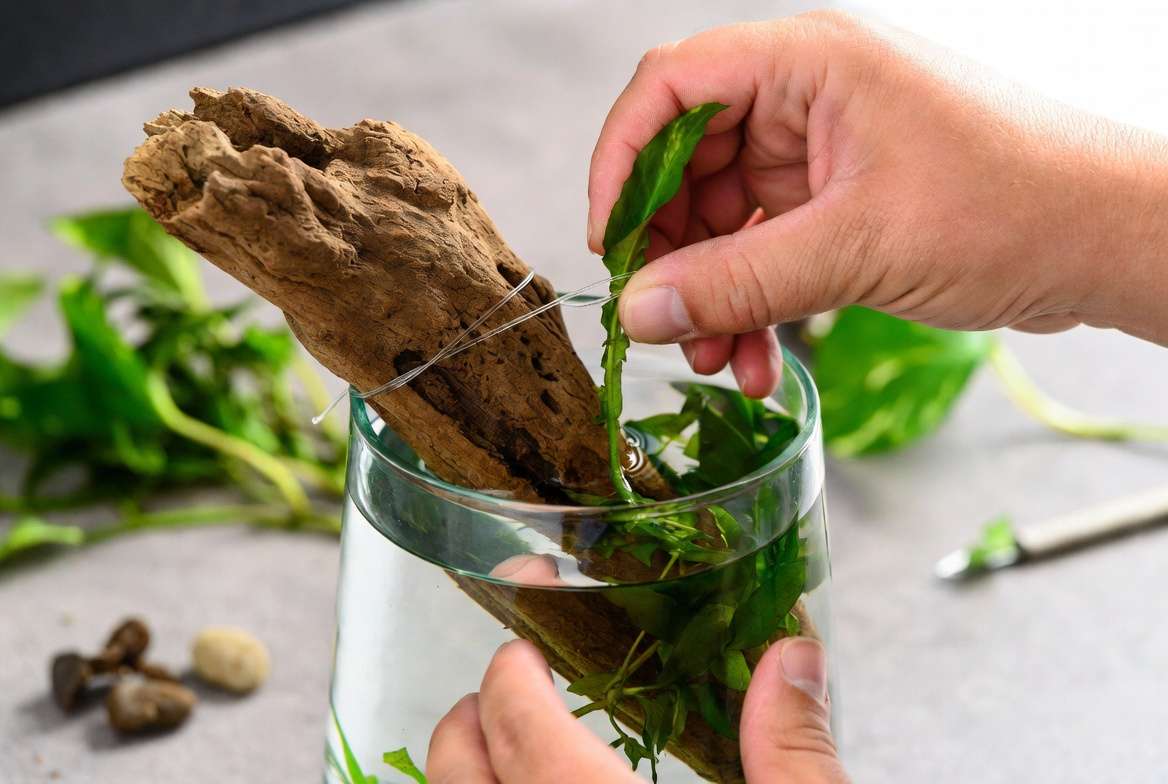
A simple starter setup: One Anubias on a rock, a Pothos cutting with roots submerged, and a Marimo ball. 🌿🐠
Daily & Weekly Care Routine for a Thriving Betta Vase Habitat 🧼🐟
- Feeding: Offer high-quality betta pellets or frozen bloodworms sparingly (what your fish eats in 2–3 minutes) to minimize waste.
- Water changes: In small vases, change 25–50% every 2–3 days with temperature-matched, dechlorinated water. Larger volumes allow weekly changes.
- Plant maintenance: Prune yellowing leaves, gently clean algae, and thin floaters. Avoid chemical fertilizers — they can spike parameters.
- Monitoring: Check temperature daily. Use liquid test kits weekly for ammonia, nitrite, nitrate, and pH.
- Signs of health: Active swimming, bright colors, flared fins during feeding, and vibrant plant growth indicate success. Lethargy or clamped fins signal issues — act quickly.
Consistency is key. Plants reduce maintenance slightly but never eliminate it. 💧
Common Problems & Troubleshooting 🛠️
- Algae blooms: Reduce light duration or intensity; add more floating plants for shade; manual removal.
- Plant melting/yellowing: Normal acclimation for Java Fern; check lighting and nutrients for others. Peace lilies may struggle in low light.
- Betta stress: Fin clamping, gasping, or hiding constantly — often due to poor water quality or temperature. Perform immediate water change and test parameters.
- Root rot or overcrowding: Thin roots/plants; ensure surface access.
- Overgrowth: Regular pruning keeps the vase balanced.
With patience and observation, most issues resolve easily. My own setups improved dramatically once I standardized water change schedules.
Expert Tips for a More Successful & Beautiful Setup ✨
- Layer plants: Low rhizomes + mid-level decor + surface floaters/emergents for depth.
- Create zones: Open swimming area near the surface, dense cover in corners, and resting leaves centrally.
- Budget hacks: Propagate Pothos from grocery store cuttings; source Anubias and Java Fern affordably online or from local clubs.
- Long-term thinking: View the vase as a stepping stone. Many bettas thrive better when upgraded to a 5–10 gallon planted tank with gentle filtration and a heater.
- Seasonal adjustments: In warmer months, monitor evaporation and temperature more closely.
Combining plant care expertise with betta knowledge creates rewarding results — your fish will show appreciation through bolder behavior and richer colors. 🐟💚
Is a Betta Vase Right for You? Alternatives to Consider
Pros of a vase setup: Compact, beautiful, low initial cost, great for small spaces or as a temporary home. Cons: Limited swimming room, parameter instability, higher maintenance frequency, and potential welfare compromise in very small volumes.
If your vase feels limiting, consider upgrading to a properly cycled 5-gallon tank with a sponge filter, heater, and the same plants scaled up. This allows more plants (including swords or vals) and a happier betta. Other humane options include rimless nano tanks or heavily planted 10-gallons for advanced setups.
Responsible fishkeeping means adapting to your betta’s needs, not forcing the fish into a trendy container.
Frequently Asked Questions (FAQs) ❓
Can bettas live in a vase with a peace lily long-term? Technically possible in larger volumes with diligent care, but not ideal. Dense roots can restrict movement and breathing access, and small vases lack stability. Many experts recommend against it as primary housing due to welfare concerns.
Do plants in a betta vase really clean the water? They help by absorbing nitrates and adding oxygen, but they don’t replace water changes or filtration. In small vases, combine plants with regular maintenance for best results.
What is the best plant for a small betta vase? Anubias nana or Marimo moss balls top the list for their hardiness, slow growth, and betta-friendly features. Pothos works well as an emergent addition.
How often should I change water in a planted betta vase? Every 2–3 days for volumes under 2 gallons; weekly for larger setups. Always match temperature and dechlorinate.
Are Marimo moss balls safe and beneficial for bettas? Yes! They’re gentle, provide enrichment, and contribute to water quality without harming fish.
Can I use Pothos or Philodendron in a betta vase? Absolutely — their roots are safe and excellent at nutrient uptake. Keep leaves mostly above water.
Will Java Fern or Anubias outgrow my vase quickly? No — both are slow growers, making them excellent choices for compact setups. Prune occasionally if needed.
Do I need substrate for plants for bettas in a vase? Not for rhizome plants like Anubias and Java Fern. A thin layer of pebbles helps with emergent plants or anchoring.
Conclusion: Create a Harmonious Mini Habitat with the Right Plants 🌿🐠
The best plants for bettas in a vase — Anubias, Java Fern, Marimo balls, Pothos, and carefully managed floaters or peace lilies — can transform a simple container into an attractive, more natural home. They offer resting spots, gentle filtration, and visual appeal while supporting your betta’s well-being when paired with responsible care.
Remember: beauty should never come at the expense of health. Prioritize stable temperatures, clean water, and enough space. Start simple, observe your fish and plants closely, and don’t hesitate to upgrade if your setup outgrows the vase concept.
Combining plant care passion with ethical fishkeeping brings immense joy. Your betta will thank you with vibrant colors and playful behavior, and your home will feature a living green accent you’ll love tending.
If you’ve tried any of these plants for bettas in a vase, share your experiences in the comments! For more in-depth guides, explore our articles on Anubias care, Pothos propagation, or upgrading to a full planted betta tank.
Happy planting and fishkeeping! 💚🐟🌱











