
If your dipladenia plant looks dull, refuses to bloom, or keeps dropping leaves, you’re not alone. Many gardeners struggle with getting consistent flowers and healthy growth — even when they’re doing “everything right.” 😟
The truth is, care for dipladenia plant isn’t difficult… but it is specific. Small mistakes in watering, light, or feeding can quickly lead to leggy stems, yellow leaves, or zero blooms.
The good news? Once you understand what this tropical beauty really needs, it becomes one of the easiest and most rewarding flowering plants to grow 🌸
In this complete expert guide, you’ll learn:
- Exactly how to grow lush, blooming dipladenia
- What causes common problems (and how to fix them fast)
- Pro-level care tips used by experienced gardeners
Whether you’re a beginner or looking to level up your plant care skills, this guide will help you grow a thriving dipladenia with confidence 🌿✨
🌿 What Is a Dipladenia Plant? (Quick Overview for Beginners)
🌱 Key Characteristics
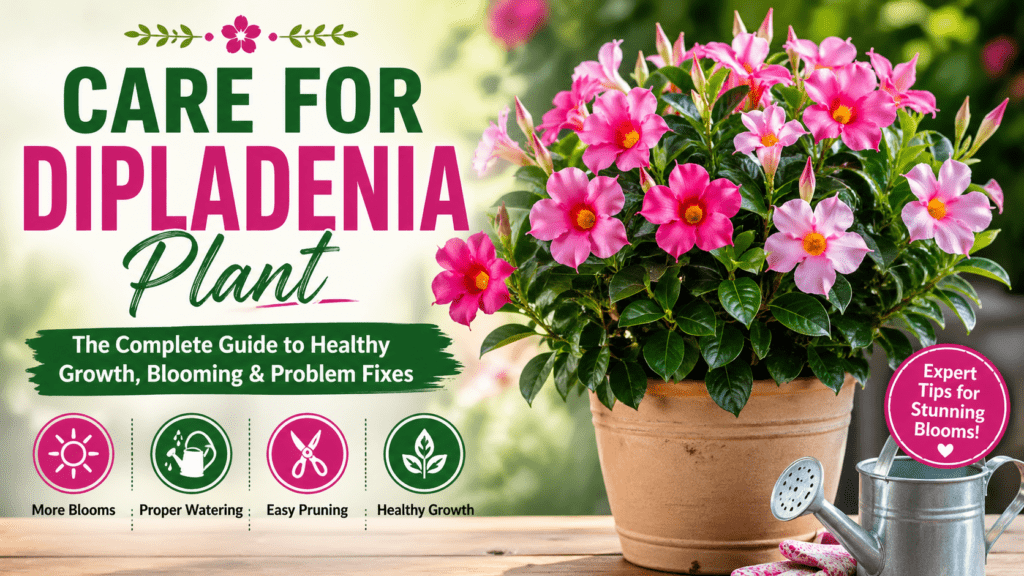
Dipladenia is a tropical flowering plant known for its elegant, trumpet-shaped blooms and glossy green leaves. It’s often confused with mandevilla, but it has its own unique charm.
Here’s what makes dipladenia special:
- 🌿 Compact, bushy growth (not overly vine-like)
- 🌸 Continuous blooms in warm conditions
- 🪴 Perfect for containers, balconies, and patios
- ☀️ Loves sunlight and warmth
Because of its manageable size, it’s ideal for gardeners who want vibrant color without dealing with aggressive climbing vines.
🌼 Dipladenia vs. Mandevilla: What’s the Difference?
Many people use these names interchangeably, but they’re slightly different plants:
| Feature | Dipladenia 🌿 | Mandevilla 🌸 |
|---|---|---|
| Growth Habit | Bushy, compact | Vining, climbing |
| Maintenance | Low | Moderate |
| Best Use | Pots, containers | Trellises, fences |
| Care Needs | Similar | Similar |
👉 Expert Tip: If you want a low-maintenance flowering plant for containers, dipladenia is the better choice.
☀️ Ideal Growing Conditions for Dipladenia
🌞 Light Requirements

Light is the #1 factor that determines whether your dipladenia blooms or not.
Best conditions:
- ☀️ 6–8 hours of bright sunlight daily
- 🌤️ Can tolerate partial shade (but fewer blooms)
Signs of improper lighting:
- ❌ Too little light → leggy growth, no flowers
- ❌ Too much harsh sun → leaf scorch
👉 Pro Insight: Morning sun + light afternoon shade works perfectly in hot climates.
🌡️ Temperature & Humidity Needs
Dipladenia thrives in warm, tropical conditions 🌴
- 🌡️ Ideal temperature: 18°C–30°C (65°F–86°F)
- ❄️ Sensitive to cold (below 10°C / 50°F can damage it)
- 💧 Prefers moderate humidity
Indoor tip: If your air is dry, place a humidity tray or mist occasionally.
💧 How to Water Dipladenia Properly (Avoid Overwatering!)
🚿 Watering Schedule

Watering mistakes are the most common reason dipladenia plants struggle.
Golden rule: Let the top 1–2 inches of soil dry before watering.
- 🌿 Summer: Water 2–3 times per week
- 🍂 Winter: Reduce watering significantly
⚠️ Signs of Overwatering vs. Underwatering
| Problem | Symptoms |
|---|---|
| 💧 Overwatering | Yellow leaves, root rot, soggy soil |
| 🌵 Underwatering | Drooping, dry, crispy leaves |
👉 Expert Tip: Always check soil moisture before watering — don’t follow a rigid schedule.
💡 Pro Tip: Drainage Is Everything
Dipladenia hates “wet feet.”
- Always use pots with drainage holes 🪴
- Never let water sit in trays
🌱 Best Soil and Potting Mix for Dipladenia
🪴 Ideal Soil Composition

The right soil prevents root rot and promotes healthy growth.
Best mix:
- 🌱 Peat or coco coir
- 🌬️ Perlite or sand (for drainage)
- 🌿 Organic compost
👉 Aim for well-draining, slightly acidic soil
🧴 Container and Drainage Tips
- Choose a pot slightly larger than the root ball
- Repot every 1–2 years
- Ensure proper airflow in soil
🌸 Fertilizing Dipladenia for Maximum Blooms
🌼 Best Fertilizers to Use

To get continuous blooms, feeding is essential.
Best options:
- 🌿 Balanced liquid fertilizer (10-10-10)
- 🌸 Bloom booster (higher phosphorus)
📅 Feeding Schedule
- 🌱 Spring–Summer: Every 2–3 weeks
- 🍂 Fall–Winter: Stop or reduce feeding
🚫 Common Fertilizing Mistakes
- ❌ Overfeeding → lots of leaves, few flowers
- ❌ Using wrong fertilizer ratio
👉 Expert Insight: Slight underfeeding is better than overfeeding.
✂️ Pruning and Training Dipladenia for Better Growth
✂️ When and How to Prune

Pruning keeps your plant compact and encourages blooms 🌿
- Best time: Early spring
- Remove dead, damaged, or leggy stems
🌿 Shaping Your Plant
- Pinch tips to encourage bushiness
- Maintain a rounded, full shape
🐛 Common Dipladenia Problems and How to Fix Them
🍂 Yellow Leaves: Causes and Solutions

Common causes:
- Overwatering
- Poor drainage
- Nutrient deficiency
Fix:
- Adjust watering
- Improve soil drainage
- Use balanced fertilizer
🐞 Pests (Aphids, Spider Mites, Mealybugs)
- Look for sticky residue or tiny insects
- Treat with neem oil or insecticidal soap 🌿
🌼 No Blooms? Here’s Why
- Not enough sunlight ☀️
- Too much nitrogen fertilizer
- Lack of pruning
🏡 Indoor vs. Outdoor Care for Dipladenia
🏠 Growing Indoors

- Place near bright, sunny windows
- Maintain airflow and humidity
🌳 Outdoor Care Tips
- Protect from strong winds 🌬️
- Adjust watering based on weather
❄️ Winter Care: How to Keep Dipladenia Alive in Cold Months

- Bring indoors before frost ❄️
- Reduce watering and feeding
- Allow semi-dormancy
🌱 How to Propagate Dipladenia (Step-by-Step Guide)
🌿 Propagation by Cuttings

Steps:
- Cut a healthy stem
- Remove lower leaves
- Plant in moist soil
- Keep warm and humid
🌼 Aftercare for New Plants
- Avoid direct harsh sunlight
- Keep soil lightly moist
💡 Expert Tips for Lush, Blooming Dipladenia
- 🔄 Rotate plant weekly for even growth
- 🌸 Deadhead spent blooms
- 🪴 Use high-quality soil
- ☀️ Prioritize sunlight above all
❌ Common Mistakes to Avoid
- Overwatering 🚫
- Poor lighting 🌑
- Ignoring pests 🐛
- Wrong fertilizer use
❓ FAQs About Care for Dipladenia Plant
❓ How often should I water dipladenia?
Water when the top soil feels dry — usually 2–3 times weekly in warm weather.
❓ Why are leaves turning yellow?
Most often due to overwatering or poor drainage.
❓ Can dipladenia grow indoors?
Yes, with enough bright sunlight.
❓ How do I get more flowers?
Increase sunlight and use bloom fertilizer.
❓ Is dipladenia toxic to pets?
Yes, mildly toxic — keep away from pets 🐾
🌺 Conclusion: Grow a Thriving Dipladenia with Confidence

Caring for dipladenia doesn’t have to be complicated 🌿
Once you master the basics — sunlight, proper watering, and well-draining soil — your plant will reward you with stunning blooms all season long 🌸
Stay consistent, observe your plant, and adjust care as needed. With the tips in this guide, you’re fully equipped to grow a healthy, vibrant dipladenia plant that truly stands out ✨











