
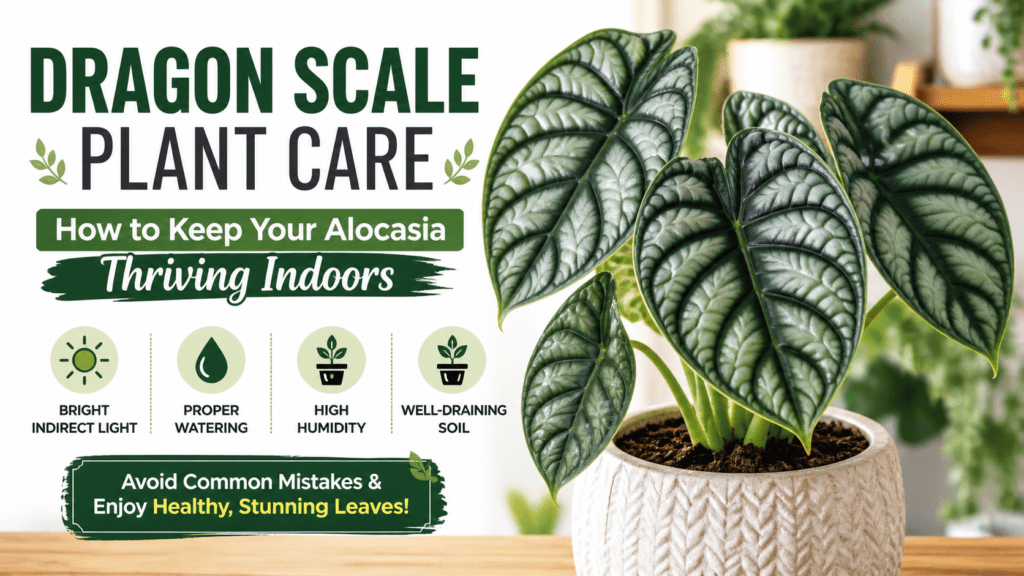
The dragon scale plant is one of the most visually stunning houseplants you can own — with its thick, silvery-green leaves that look like something straight out of a fantasy world 🐉🌿. But here’s the truth: while it’s beautiful, it’s also notoriously picky.
If your plant has yellowing leaves, drooping stems, or just refuses to grow, you’re not alone. Many indoor gardeners struggle with Alocasia dragon scale care because it doesn’t behave like typical houseplants.
The good news? Once you understand its needs, this tropical beauty becomes much easier to care for.
In this expert guide, you’ll learn:
- Exactly what your dragon scale plant needs to thrive indoors 🌱
- How to avoid the most common mistakes (that kill it fast ⚠️)
- Proven care tips used by experienced plant growers
By the end, you’ll have a clear, actionable plan to keep your plant healthy, vibrant, and thriving ✨
🌿 What Is a Dragon Scale Plant?
🌱 Botanical Background
The dragon scale plant, scientifically known as Alocasia baginda ‘Dragon Scale’, is a tropical plant native to the rainforests of Southeast Asia 🌏. It belongs to the Alocasia family, known for its dramatic foliage.
In its natural habitat, it grows under dense forest canopies — meaning it’s adapted to:
- Filtered light ☀️
- High humidity 💧
- Warm temperatures 🌡️
Understanding this environment is the key to successful indoor care.
🍃 Why It’s Different From Other Houseplants

Unlike common houseplants like pothos or snake plants, the dragon scale plant is:
- More sensitive to environmental changes ⚠️
- Slower growing ⏳
- Highly dependent on humidity 💦
Its thick, embossed leaves resemble reptile scales — making it a collector’s favorite 🐉
☀️ Ideal Growing Conditions for Dragon Scale Plant
Creating the right environment is the foundation of healthy growth. Get this right, and you’ll prevent most problems before they start.
🌤️ Light Requirements
The dragon scale plant thrives in bright, indirect light.
✅ Best conditions:
- Near an east- or north-facing window
- Filtered sunlight through curtains
❌ Avoid:
- Direct sunlight (can scorch leaves 🔥)
- Very low light (causes slow growth and drooping)
Pro Tip 💡:
If you can comfortably read a book without artificial light, your plant is likely getting enough light.
🌡️ Temperature & Humidity Needs

This plant is a tropical species — so it loves warmth and moisture.
Ideal temperature:
- 18–27°C (65–80°F)
Humidity:
- Minimum 60% (higher is better!)
Low humidity is one of the biggest reasons dragon scale plants fail indoors.
Ways to increase humidity:
- Use a humidifier 🌫️
- Place a pebble tray under the pot
- Group plants together 🌿
🌬️ Air Circulation & Placement Tips
- Keep away from AC vents and drafts ❄️
- Avoid sudden temperature drops
- Place in a stable, warm indoor spot
Consistency is key 🔑 — this plant dislikes change.
💧 Watering Your Dragon Scale Plant the Right Way
Watering is where most people go wrong.
🚿 How Often to Water
Instead of following a fixed schedule, check the soil.
✅ Water when:
- The top 2–3 cm of soil feels dry
❌ Avoid:
- Keeping soil constantly wet (leads to root rot ⚠️)
- Letting soil completely dry out
⚠️ Overwatering vs Underwatering Signs
Overwatering symptoms:
- Yellow leaves 🍂
- Mushy stems
- Root rot smell
Underwatering symptoms:
- Drooping leaves
- Crispy edges
💡 Pro Watering Tips
- Use filtered or rainwater if possible 💧
- Always use pots with drainage holes
- Empty excess water from saucers
🌱 Best Soil Mix for Healthy Growth

The dragon scale plant needs airy, well-draining soil.
🪴 Ideal Soil Composition
A perfect mix includes:
- Coco coir or peat 🌱
- Perlite for aeration
- Orchid bark for structure
🧪 DIY Soil Recipe
Try this proven mix:
- 40% coco coir
- 30% perlite
- 20% orchid bark
- 10% compost
This mimics its natural forest soil 🌳
⚠️ Soil Mistakes to Avoid
- Heavy garden soil ❌
- Poor drainage ❌
- Compact mixes ❌
These suffocate roots and lead to rot.
🌿 Fertilizing for Strong, Vibrant Leaves
🌼 When and How to Fertilize
Feed your plant during the growing season (spring & summer 🌸☀️).
- Use a balanced liquid fertilizer
- Apply every 2–4 weeks
⚠️ Overfertilization Risks
Too much fertilizer can cause:
- Leaf burn 🔥
- Salt buildup in soil
Golden rule: Less is more 🌱
🪴 Repotting and Root Care
📦 When to Repot
Repot every 1–2 years or when:
- Roots outgrow the pot
- Growth slows down
🪴 How to Repot Safely
Steps:
- Gently remove plant
- Loosen roots
- Place in fresh soil
- Water lightly
🌱 Choosing the Right Pot
- Always use drainage holes
- Avoid oversized pots
🐛 Common Problems and How to Fix Them

🍂 Yellow Leaves
Causes:
- Overwatering
- Poor drainage
Fix:
- Adjust watering
- Improve soil
🍃 Brown Tips & Edges
Cause: Low humidity 💧
Fix: Increase humidity immediately
🐜 Pests (Spider Mites, Mealybugs)
- Wipe leaves regularly 🧼
- Use neem oil spray
⚠️ Root Rot Prevention
- Never let soil stay soggy
- Use well-draining mix
✂️ Pruning and Maintenance Tips

Keeping your dragon scale plant well-maintained isn’t just about aesthetics — it directly impacts its health and growth 🌿✨
✂️ How to Prune Properly
Pruning helps your plant redirect energy to healthy growth.
When to prune:
- Yellowing or damaged leaves 🍂
- Diseased or pest-infested foliage
How to do it:
- Use clean, sterilized scissors ✂️
- Cut at the base of the stem
- Avoid removing too many leaves at once
💡 Expert Tip: Always prune during the growing season (spring/summer) for faster recovery.
🧼 Cleaning Leaves for Better Photosynthesis
Dust buildup blocks light and reduces photosynthesis.
How to clean:
- Use a soft, damp cloth 🧽
- Gently wipe each leaf
- Avoid harsh chemicals
This simple habit keeps your plant vibrant and glossy ✨
🌱 Propagation: Can You Multiply a Dragon Scale Plant?

Yes — but not in the way many beginners expect.
Unlike some houseplants, the dragon scale plant cannot be propagated from cuttings. Instead, it grows from rhizomes (underground stems).
🌿 Division Method Explained
The only reliable way to propagate is through division.
Steps:
- Remove the plant from its pot
- Locate separate rhizomes or offsets
- Gently divide them (ensure roots are attached)
- Repot in fresh soil
⏳ What to Expect After Propagation
- Initial slow growth is normal ⏳
- New leaves may take weeks to appear
- Keep humidity high for success 💧
💡 Pro Insight: Propagation success depends heavily on stable conditions — avoid experimenting during winter.
🏡 Styling & Placement Ideas for Indoors

The dragon scale plant isn’t just a plant — it’s a statement piece 🐉✨
🌿 Best Places to Display It
- Living rooms (bright corners) 🛋️
- Office desks (indirect light) 💻
- Bedrooms (away from drafts) 🛏️
🎨 Styling Tips
- Use decorative ceramic pots 🏺
- Pair with other tropical plants 🌿
- Place on plant stands for elevation
Its bold texture makes it perfect for minimalist and modern interiors.
⚠️ Toxicity and Safety (Important for Families & Pets)
The dragon scale plant contains calcium oxalate crystals, which are toxic if ingested ⚠️
🐶 Safety Tips
- Keep away from pets and children
- Avoid placing it on low surfaces
- Wear gloves when handling if sensitive
Symptoms if ingested:
- Irritation
- Swelling
- Discomfort
Always prioritize safety in your plant placement.
🌟 Expert Tips to Keep Your Dragon Scale Plant Thriving
Here’s what experienced plant growers consistently do differently:
🌱 Maintain a consistent care routine
💧 Prioritize humidity over everything else
☀️ Provide stable, indirect light
🪴 Use well-draining, airy soil
🔍 Inspect regularly for pests
💡 Golden Rule: The dragon scale plant thrives on consistency, not perfection.
❌ 7 Common Mistakes to Avoid
Avoid these, and you’ll solve 80% of plant problems instantly:
- 🚫 Overwatering
- 🚫 Ignoring humidity needs
- 🚫 Placing in direct sunlight
- 🚫 Using heavy soil
- 🚫 Overfertilizing
- 🚫 Frequent relocation
- 🚫 Ignoring early warning signs
Small mistakes compound quickly with this sensitive plant.
❓ Frequently Asked Questions (FAQs)
💬 Why are my dragon scale plant leaves curling?
Usually caused by low humidity or underwatering. Increase moisture levels 💧
💬 How fast does a dragon scale plant grow?
It’s a slow grower — expect a few new leaves per season 🌱
💬 Can it survive in low light?
It can survive, but won’t thrive. Growth will slow significantly ⚠️
💬 Why is my plant not producing new leaves?
Possible reasons:
- Low light ☀️
- Nutrient deficiency 🌱
- Stress from environmental changes
💬 Is dragon scale plant good for beginners?
It’s moderately difficult — best for those ready to learn and stay consistent 🌿
🧾 Conclusion: Mastering Dragon Scale Plant Care 🌿✨
The dragon scale plant may have a reputation for being difficult — but in reality, it simply demands the right conditions.
If you focus on:
- Bright, indirect light ☀️
- High humidity 💧
- Proper watering habits 🚿
- Well-draining soil 🌱
…you’ll transform your plant from struggling to thriving.
🌟 Remember: Success doesn’t come from doing everything perfectly — it comes from understanding your plant and responding consistently.











