
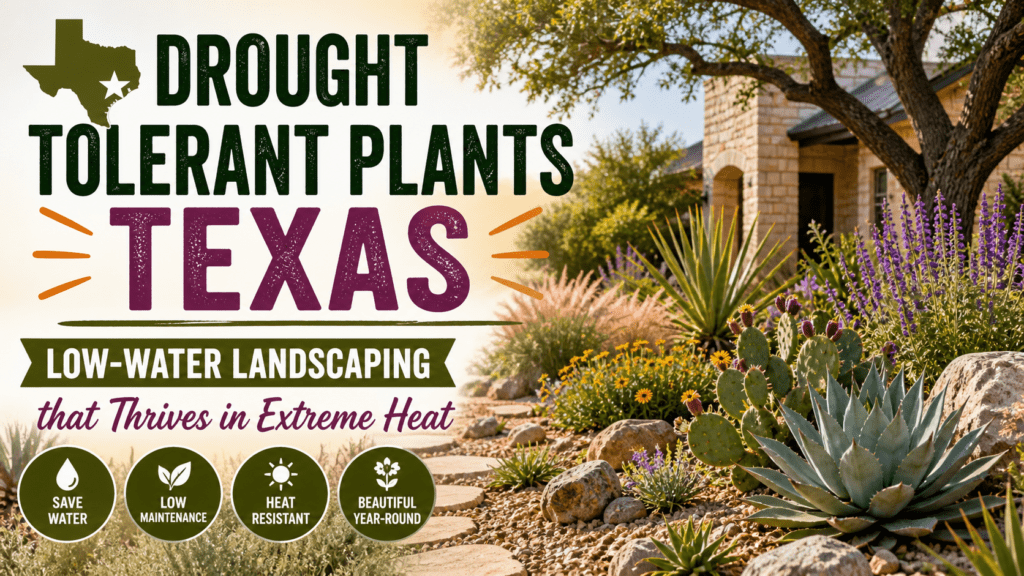
If you’ve ever watched your garden wilt under the blazing sun while your water bill keeps climbing, you’re not alone. Texas summers are unforgiving — and traditional landscaping simply wasn’t built for this climate.
The solution? Drought tolerant plants Texas homeowners trust to survive extreme heat with minimal water.
Instead of constantly battling nature, you can design a landscape that thrives because of it — not in spite of it. With the right plant choices, smart design, and proven techniques, you can create a yard that’s:
- 🌸 Beautiful year-round
- 💧 Water-efficient
- 🧰 Low-maintenance
- 🌞 Built for Texas extremes
This guide is designed to give you expert-level, practical, and actionable insights so you can transform your outdoor space into a resilient, thriving landscape — even during drought conditions.
☀️ Understanding Texas Climate Challenges (Why Most Plants Fail)
🌡️ Extreme Heat Zones Across Texas
Texas isn’t just hot — it’s diverse. Different regions present unique challenges:
- West Texas: Arid, desert-like, minimal rainfall
- Central Texas: Rocky soil, intense sun, drought-prone
- Gulf Coast: Humid but still experiences dry spells
Most areas fall within USDA Hardiness Zones 6–9, meaning plants must tolerate both heat and occasional cold snaps.
👉 Key takeaway: A plant that thrives in Houston might fail in El Paso. Regional adaptation matters.
🌵 Soil Types & Drainage Issues
Texas soil can be tricky:
- Heavy clay (common in Central Texas) retains water but compacts easily
- Sandy soil (West Texas) drains too quickly
Poor soil leads to:
- Root rot
- Nutrient deficiencies
- Weak plant growth
👉 Healthy soil = resilient plants.
💧 Water Restrictions & Drought Cycles
Water conservation isn’t optional anymore — it’s essential.
- Increasing drought frequency
- Municipal watering restrictions
- Rising water costs
👉 This is why low water landscaping Texas strategies are becoming the new standard.
🌿 What Makes a Plant Truly Drought Tolerant?
🌱 Key Characteristics of Drought-Resistant Plants
Not all “tough” plants are truly drought tolerant. The best ones share these traits:
- Deep root systems that access underground moisture
- Small, waxy, or fuzzy leaves to reduce water loss
- Slow growth patterns that conserve energy
🌼 Native vs Non-Native Plants
Native Texas plants are your best ally. They’ve evolved to survive local conditions.
✔ Benefits of native plants:
- Require less water
- Resist pests naturally
- Thrive with minimal care
Non-native plants can still work — but only if they’re adapted to similar climates.
👉 Pro tip: When in doubt, go native.
🌸 Best Drought Tolerant Plants Texas Homeowners Love
🌺 Flowering Plants for Color All Year
Adding color to a drought-resistant garden is easier than you think.
🌼 Top Picks:
1. Texas Lantana
- Bloom: Spring to fall
- Water: Very low
- Sun: Full sun ☀️
- Bonus: Attracts butterflies 🦋
2. Autumn Sage (Salvia greggii)
- Vibrant red, pink, or coral blooms
- Extremely heat tolerant
3. Blackfoot Daisy
- Delicate white flowers
- Thrives in rocky, dry soil
4. Mexican Feathergrass
- Soft, flowing texture
- Adds movement and elegance 🌾
🌳 Drought Resistant Trees for Shade & Structure

Trees are essential for shade — and reducing heat around your home.
🌳 Best Choices:
1. Desert Willow
- Fast-growing
- Beautiful trumpet-shaped flowers
2. Texas Red Oak
- Provides dense shade
- Strong and long-lasting
3. Cedar Elm
- Adaptable and hardy
- Excellent urban tree
4. Texas Mountain Laurel
- Stunning purple blooms
- Highly drought resistant
🌿 Hardy Shrubs for Low-Maintenance Landscapes

Shrubs add structure and privacy while staying low-maintenance.
🌿 Recommended Shrubs:
Texas Sage (Purple Sage)
- Thrives in heat and poor soil
- Gorgeous purple blooms after rain 🌧️
Agarita
- Bright yellow flowers
- Extremely tough and drought-proof
Yaupon Holly
- Great for hedges
- Evergreen beauty year-round
🌵 Succulents & Cacti That Thrive in Texas Heat

If you want ultra-low maintenance, this is your category.
🌵 Best Options:
Prickly Pear Cactus
- Iconic Texas plant
- Edible fruit and striking look
Red Yucca
- Tall coral flower spikes
- Hummingbird favorite 🐦
Agave
- Bold architectural shape
- Requires almost no watering
🌾 Drought Tolerant Grasses for Texture & Movement
Grasses bring softness and motion to your landscape.
🌾 Top Picks:
Buffalo Grass
- Native lawn alternative
- Minimal mowing required
Blue Grama
- Unique seed heads
- Excellent for natural landscapes
Gulf Muhly
- Stunning pink blooms in fall 🌸
- Perfect for visual impact
🏡 How to Design a Low-Water Texas Landscape (Step-by-Step)
📐 Plan Your Layout Like a Pro
- Group plants with similar water needs (hydrozoning)
- Place high-water plants closer to the house
🌿 Use Mulch to Retain Moisture
Mulch is your secret weapon:
- Reduces evaporation
- Keeps soil cool
- Suppresses weeds
👉 Use organic mulch like bark or compost.
💧 Smart Irrigation Techniques
- Switch to drip irrigation for efficiency
- Water early morning or late evening
👉 Deep watering > frequent shallow watering
🪨 Incorporate Hardscaping
- Gravel, stone paths, and patios reduce water demand
- Adds modern, clean aesthetics
⚠️ Common Mistakes to Avoid (That Kill Drought-Tolerant Plants)
Even tough plants can fail if mismanaged.
🚫 Overwatering
🚫 Ignoring soil drainage
🚫 Planting in the wrong location
🚫 Mixing incompatible species
👉 Remember: drought tolerant doesn’t mean “no care.”
🌟 Expert Tips for Thriving Drought-Tolerant Gardens
- Improve soil with compost before planting
- Water deeply but less frequently
- Choose native plant combinations
- Monitor seasonal changes
👉 Think long-term sustainability, not quick fixes.
📅 Seasonal Care Guide for Texas Drought-Resistant Plants
🌸 Spring
- Best time for planting
- Prepare soil and mulch
☀️ Summer
- Focus on water efficiency
- Protect young plants
🍂 Fall
- Ideal for root development
- Plant trees and shrubs
❄️ Winter
- Minimal watering needed
- Protect sensitive plants
💡 Real-Life Example: A Low-Water Texas Yard Transformation

A typical Texas homeowner replaced:
- High-water lawn ❌
With: - Native grasses, gravel, and drought-tolerant plants ✅
Results:
- 💧 60% reduction in water usage
- ⏱️ Less maintenance
- 🌿 Healthier, longer-lasting landscape
❓ FAQs About Drought Tolerant Plants Texas Gardeners Ask
Q: What are the easiest drought tolerant plants for beginners?
👉 Texas lantana, blackfoot daisy, and red yucca are great starting points.
Q: How often should I water drought resistant plants in Texas?
👉 Deep watering once every 1–2 weeks is usually enough after establishment.
Q: Can drought tolerant plants survive extreme heat waves?
👉 Yes — especially native species designed for Texas climates.
Q: Are native plants always better?
👉 In most cases, yes — they require less water and care.
Q: How do I replace my lawn with drought-tolerant landscaping?
👉 Start with removing turf, improving soil, and adding native plants + mulch.
🧰 Recommended Tools & Resources
- Soil testing kits
- Drip irrigation systems
- Local native plant nurseries
🌿 Conclusion: Build a Beautiful, Resilient Texas Landscape
Creating a thriving yard in Texas doesn’t have to mean constant watering, endless maintenance, or struggling plants.
By choosing the right drought tolerant plants Texas landscapes depend on, and combining them with smart design strategies, you can build a garden that:
- Saves water 💧
- Reduces effort ⏱️
- Looks stunning year-round 🌸
The key is simple: work with Texas nature — not against it.











