
Have you ever brought home what you thought was a hardy agave, only to watch it struggle, wilt, or rot despite your best efforts? 😩 You’re not alone. One of the most common mistakes plant lovers make is misidentifying a false agave plant—and that confusion can completely derail your care routine.
The truth is, many plants sold or labeled as “agave” aren’t true agaves at all. These false agave plants may look similar, but their care needs can differ in subtle yet crucial ways. And those differences? They often mean the difference between a thriving, architectural beauty 🌿 and a sad, declining plant.
In this expert guide, you’ll learn:
- How to correctly identify a false agave plant 🔍
- The exact care requirements for healthy growth 🌱
- How to fix the most common problems (including root rot and pests) 🐛
- Pro tips to grow a stunning, long-lasting plant 🌵
Whether you’re a beginner or an experienced plant enthusiast, this guide will give you the clarity and confidence to grow your plant successfully.
🌿 What Is a False Agave Plant?
🌱 Definition and Botanical Background
A false agave plant isn’t a single species—it’s a general term used for plants that resemble true agaves but belong to entirely different genera. These plants mimic the iconic rosette shape, spiky leaves, and drought-tolerant look of agave, making them easy to confuse.
Common examples include:
- Furcraea species
- Yucca varieties
- Some Dracaena types
While they may share visual similarities, their biology and growth habits can differ significantly.
👉 Why this matters: Misidentifying your plant often leads to improper watering, lighting, or soil choices—resulting in stress or damage.
🔍 False Agave vs True Agave: Key Differences
Understanding the difference is essential for proper care. Here’s a simple breakdown:
| Feature | True Agave 🌵 | False Agave 🌿 |
|---|---|---|
| Growth cycle | Monocarpic (dies after flowering) | Often perennial |
| Leaves | Thick, rigid, very succulent | Slightly softer or fibrous |
| Water needs | Extremely drought-tolerant | Moderate drought tolerance |
| Examples | Agave americana | Furcraea foetida, Yucca elephantipes |
💡 Expert Insight: Many false agaves require slightly more water and less intense sunlight than true agaves.
📌 Why Proper Identification Matters
Incorrect care is the #1 reason false agave plants fail.
- Overwatering → root rot 💀
- Too much sun → leaf burn 🔥
- Poor soil → stunted growth
Once you correctly identify your plant, everything else becomes much easier.
🪴 Types of Plants Commonly Called False Agave
🌵 Furcraea Species

Furcraea plants are among the most commonly mislabeled as agave.
Key traits:
- Long, sword-like leaves
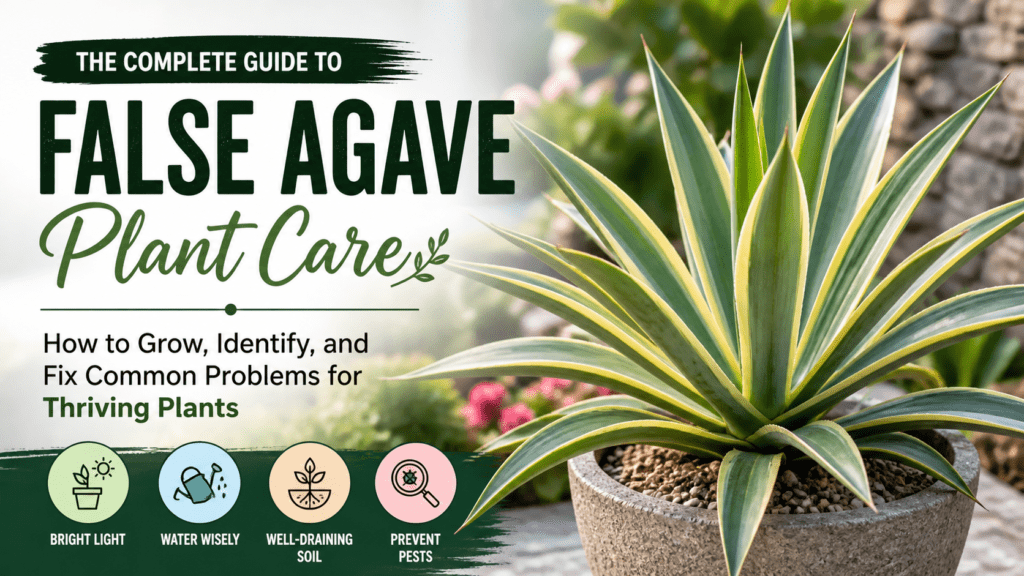
- Often variegated (green with yellow edges) 🌿
- Faster growth than true agave
They are excellent for landscaping and can grow quite large outdoors.
🌾 Yucca Varieties

Yucca plants are extremely popular and often confused with agave.
Key traits:
- Woody stems (especially in mature plants)
- Less succulent leaves
- Better suited for indoor environments 🪟
🌴 Other Lookalikes
Some additional plants that may be mistaken for agave include:
- Dracaena draco (Dragon Tree)
- Certain succulent hybrids
These plants require different care strategies, especially regarding watering and light.
☀️ Ideal Growing Conditions for False Agave Plants
🌞 Light Requirements
False agave plants thrive in bright, indirect to full sunlight.
- Outdoors: Full sun to partial shade ☀️
- Indoors: Place near a south- or west-facing window
Signs of improper light:
- Too much sun → scorched, brown leaf tips 🔥
- Too little light → leggy growth, pale leaves 😕
💡 Pro Tip: If moving your plant outdoors, acclimate it gradually to avoid shock.
🌡️ Temperature and Climate
- Ideal range: 18–30°C (65–86°F) 🌡️
- Most varieties prefer warm climates
- Sensitive to frost ❄️
If you live in a cooler region, grow your plant in a container so it can be moved indoors during winter.
💨 Humidity Needs
False agave plants prefer:
- Low to moderate humidity
They are well-suited for typical indoor conditions and do not require misting.
🌱 Soil and Potting Requirements
🪨 Best Soil Mix for Healthy Growth
Well-draining soil is absolutely critical.
Ideal mix:
- 50% cactus/succulent soil 🌵
- 25% perlite
- 25% coarse sand
This prevents water retention, which can lead to root rot.
🪴 Choosing the Right Pot
- Always use pots with drainage holes 🚿
- Terracotta pots are ideal (they absorb excess moisture)
- Choose a slightly snug pot to avoid overwatering risks
💧 Watering Guide: Avoiding the #1 Killer (Overwatering!)
🚿 How Often to Water
The biggest mistake? Watering too frequently.
General rule:
- Water only when soil is completely dry
Seasonal guide:
- Summer: Every 1–2 weeks ☀️
- Winter: Every 3–4 weeks ❄️
⚠️ Signs of Overwatering and Underwatering
Overwatering symptoms:
- Yellowing leaves 🍂
- Mushy base
- Foul smell from soil
Underwatering symptoms:
- Wrinkled or shriveled leaves
- Slow growth
💡 Expert Tip: The Soak-and-Dry Method
- Water deeply until it drains out
- Let soil dry completely before watering again
This mimics natural desert conditions and keeps roots healthy.
🌿 Fertilizing Your False Agave Plant
🌼 When and How to Fertilize
- Feed during active growth (spring and summer) 🌱
- Use a diluted, balanced fertilizer (e.g., 10-10-10)
Apply once every 4–6 weeks.
⚖️ Common Fertilizing Mistakes
- Overfeeding → salt buildup and root damage
- Fertilizing in winter → unnecessary stress
💡 Less is more when it comes to feeding!
✂️ Pruning and Maintenance Tips
🍂 Removing Dead or Damaged Leaves
- Trim yellow or dry leaves regularly ✂️
- Use sterilized tools to prevent disease
🧼 Keeping the Plant Clean
- Wipe leaves to remove dust 🧽
- Check for pests during cleaning
🐛 Common Problems and How to Fix Them
🦠 Pests (Mealybugs, Spider Mites, Scale)
Common invaders include:
- Mealybugs
- Spider mites
- Scale insects
Solution:
- Wipe with neem oil or insecticidal soap 🌿
🍂 Yellowing or Drooping Leaves
Causes:
- Overwatering
- Poor drainage
Fix:
- Adjust watering schedule
- Repot in better soil
🧫 Root Rot and Fungal Issues
Root rot is the most serious issue.
Signs:
- Black, mushy roots
- Foul smell
Fix:
- Remove affected roots
- Repot in dry, fresh soil
🔧 Quick Troubleshooting Table
| Problem 😟 | Cause ⚠️ | Solution ✅ |
|---|---|---|
| Yellow leaves | Overwatering | Reduce watering |
| Brown tips | Too much sun | Move to partial shade |
| Slow growth | Poor light | Increase sunlight |
🌱 Propagation Methods (Grow More Plants!)
🌿 Offsets and Pups
- Remove small offsets from base
- Let callous before planting
- Plant in well-draining soil
🌾 Seed Propagation
- Less common but possible
- Requires patience and warm conditions
🏡 Indoor vs Outdoor Care Differences
🪟 Growing Indoors
- Needs bright light
- Lower watering frequency
- Rotate plant for even growth
🌳 Growing Outdoors
- Ideal for warm climates
- Great for xeriscaping 🌵
- Requires minimal maintenance
🌼 Landscaping and Decorative Uses

- Perfect for drought-tolerant gardens 🌵
- Works as a focal point in modern landscapes
- Great for containers and patios
⚠️ Safety and Toxicity Considerations
- Some varieties may be mildly toxic to pets 🐶🐱
- Sap can irritate skin
👉 Always handle with care and keep away from curious pets.
💡 Expert Tips for Thriving False Agave Plants
- Always prioritize drainage over watering frequency
- Observe your plant regularly 👀
- Adjust care seasonally
- When in doubt, water less—not more
❓ Frequently Asked Questions (FAQs)
🤔 Is a false agave plant a succulent?
Some are succulent-like, but not all are true succulents.
🌵 How fast does a false agave grow?
Generally faster than true agave, especially in ideal conditions.
💧 Why is my false agave turning yellow?
Most likely due to overwatering or poor drainage.
🪴 Can I grow false agave indoors?
Yes! Many varieties adapt well indoors with proper light.
🌞 Does false agave need full sun?
Most prefer bright light, but some tolerate partial shade.
🔚 Conclusion: Grow Your False Agave with Confidence 🌿
Caring for a false agave plant doesn’t have to be confusing. Once you understand what your plant truly is and what it needs, everything changes. 🌱
By following the right watering routine, providing proper light, and avoiding common mistakes, you can transform your plant into a thriving, eye-catching centerpiece.
🌟 Remember: The key isn’t doing more—it’s doing the right things consistently.











