
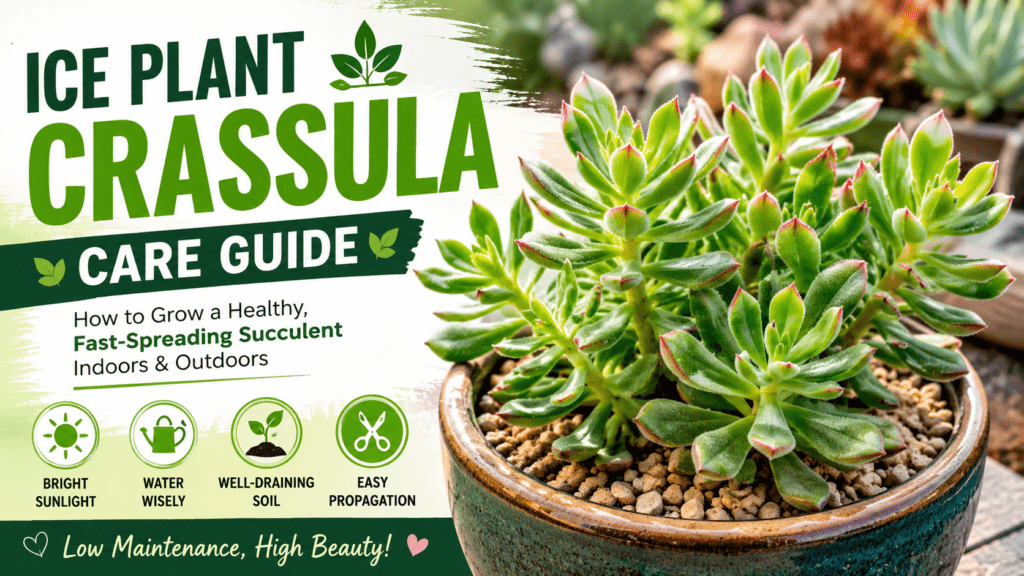
Succulents have exploded in popularity over the past few years — but few plants combine beauty, toughness, and beginner-friendly care quite like the ice plant crassula. 🌵💚 Whether you want a drought-tolerant ground cover, a charming indoor succulent, or a low-maintenance plant that practically thrives on neglect, this fascinating Crassula variety deserves a spot in your home or garden.
The problem is that many gardeners unknowingly kill their succulents through overwatering, poor soil choices, or incorrect lighting. If your ice plant crassula has yellow leaves, mushy stems, slow growth, or refuses to spread, you’re not alone. The good news? Most issues are incredibly easy to fix once you understand how this plant naturally grows.
In this complete expert guide, you’ll learn:
- How to grow ice plant crassula successfully indoors and outdoors 🪴
- The perfect watering and sunlight routine ☀️
- Best soil mixes and fertilizer tips 🌱
- How to propagate new plants easily ✂️
- Common problems and proven solutions 🛠️
- Landscaping ideas and pro care secrets 🌿
By the end of this article, you’ll have everything you need to grow a lush, healthy, fast-spreading succulent with confidence.
What Is Ice Plant Crassula? 🌵
Ice plant crassula is a drought-tolerant succulent known for its fleshy leaves, low-growing habit, and ability to thrive in hot, dry environments. Depending on the specific variety, it may grow as a compact houseplant or spread beautifully across garden beds and rock landscapes.
The plant belongs to the Crassulaceae family, which includes many popular succulents prized for their resilience and ornamental beauty.
Origin and Botanical Background 🌍
Most Crassula species are native to:
- South Africa
- Arid coastal regions
- Rocky desert-like habitats
These environments explain why the plant:
- Loves bright sunlight ☀️
- Prefers dry soil
- Stores water in its leaves
- Struggles in soggy conditions
The nickname “ice plant” often comes from the sparkling appearance of succulent leaves, which can appear to glisten under sunlight like tiny ice crystals. ✨
Key Characteristics of Ice Plant Crassula 🌿
Here’s what makes this succulent stand out:
Thick Water-Storing Leaves 💧
The fleshy leaves help the plant survive drought conditions for extended periods.
Fast-Spreading Growth 🌱
Many varieties grow outward quickly, making them excellent:
- Ground covers
- Hanging basket plants
- Border plants
- Rock garden fillers
Low Maintenance ❤️
Perfect for:
- Busy homeowners
- Beginner gardeners
- Apartment dwellers
- Xeriscape gardens
Attractive Texture and Shape ✨
Crassula plants add architectural beauty with:
- Compact growth
- Layered foliage
- Colorful leaf edges
- Dense succulent mats
Why Gardeners Love Ice Plant Crassula 💚
Ice plant crassula has become a favorite among succulent enthusiasts for several reasons.
Extremely Drought Tolerant 🌞
Unlike thirsty tropical plants, this succulent thrives with minimal watering. That makes it ideal for:
- Dry climates
- Water-wise gardening
- Low-maintenance landscapes
Great for Indoor and Outdoor Spaces 🏡
It adapts well to:
- Sunny windowsills
- Balconies
- Patios
- Rock gardens
- Container arrangements
Beginner-Friendly 🌿
If you’re new to plant care, ice plant crassula is forgiving and easy to grow when basic needs are met.
Excellent for Propagation ✂️
One healthy plant can quickly turn into many through simple stem or leaf cuttings.
Ice Plant Crassula Varieties You Should Know 🌈
There are several Crassula varieties often associated with ice plants or grown similarly.

Crassula Ovata (Jade Plant) 🌳
One of the most recognizable Crassula species.
Features:
- Thick oval leaves
- Tree-like growth
- Excellent indoor plant
- Long lifespan
Best for:
- Indoor containers
- Sunny offices
- Beginner succulent collections
Crassula Mesembryanthemoides 🌵
This fuzzy succulent is often admired for its unique texture.
Features:
- Soft silvery hairs
- Compact growth
- Drought resistance
Best for:
- Decorative succulent displays
- Small pots
- Collector gardens
Ground-Cover Crassula Types 🌿
Some low-growing species spread beautifully across soil surfaces.
Ideal Uses:
- Rock gardens
- Dry slopes
- Pathway borders
- Xeriscaping
Ideal Growing Conditions for Ice Plant Crassula ☀️
Understanding the plant’s natural habitat is the secret to success.
Light Requirements ☀️
Light is one of the most important factors for healthy succulent growth.
Outdoor Light Needs 🌞
Ice plant crassula grows best in:
- Full sun
- At least 6 hours of direct light daily
In extremely hot climates, light afternoon shade can prevent scorching.
Indoor Light Needs 🪴
Place indoor plants near:
- South-facing windows
- West-facing windows
- Bright sunny balconies
If natural light is limited, use:
- LED grow lights
- Full-spectrum lighting
Signs Your Plant Needs More Light 🚨
Watch for:
- Leggy growth
- Pale leaves
- Weak stems
- Large gaps between leaves
These are classic signs of insufficient sunlight.
Best Temperature and Humidity Levels 🌡️
Ice plant crassula prefers warm, dry conditions.
Ideal Temperature Range
Best growth occurs between:
- 65°F–80°F (18°C–27°C)
Cold Tolerance ❄️
Most varieties dislike frost.
Protect outdoor plants when temperatures fall below:
- 40°F (4°C)
In colder climates:
- Grow in containers
- Bring indoors during winter
Humidity Preferences 💨
Low humidity is best.
High humidity can cause:
- Rot
- Fungal diseases
- Mold problems
Good airflow is extremely important indoors.
Soil Requirements for Healthy Growth 🌱
The wrong soil is one of the biggest reasons succulents die.
Best Soil Type 🪴
Use:
- Fast-draining succulent soil
- Sandy or gritty mixes
Avoid:
- Heavy garden soil
- Moisture-retaining potting mixes
DIY Succulent Soil Recipe 🌿
A simple homemade mix:
- 2 parts cactus soil
- 1 part coarse sand
- 1 part perlite or pumice
This creates excellent drainage and airflow.
Why Drainage Matters 🚿
Succulent roots hate sitting in water.
Poor drainage can lead to:
- Root rot
- Fungal infections
- Sudden plant collapse
Choosing the Right Pot 🪴
Your container matters more than most people realize.
Best Pot Materials
Terracotta Pots 🏺
Best option because they:
- Allow airflow
- Dry faster
- Reduce overwatering risk
Plastic Pots
Work well but retain more moisture.
Drainage Holes Are Essential 🚨
Never grow ice plant crassula in pots without drainage holes.
Even experienced gardeners lose succulents this way.
How to Water Ice Plant Crassula Properly 💧
Overwatering is the #1 killer of succulents.

The Golden Rule 🌟
Water deeply — then let the soil dry completely before watering again.
Summer Watering Schedule ☀️
During active growth:
- Water every 7–14 days
- Adjust based on heat and sunlight
Hot outdoor plants may need slightly more frequent watering.
Winter Watering ❄️
In winter:
- Water much less
- Sometimes only once every 3–4 weeks
Succulents enter partial dormancy and use less moisture.
Signs of Overwatering 🚫
Common symptoms include:
- Yellow leaves
- Mushy stems
- Soft foliage
- Black spots
- Root rot smell
Quick Fix:
- Stop watering immediately
- Remove rotten roots
- Repot in dry succulent soil
- Improve drainage
Signs of Underwatering 🌵
Symptoms include:
- Wrinkled leaves
- Dry crispy edges
- Slow growth
Underwatered plants usually recover quickly after proper watering.
Expert Watering Tips 🌿
- Always check soil before watering
- Water soil directly — avoid wet leaves
- Empty drainage trays
- Reduce watering in cloudy weather
Step-by-Step Guide to Planting Ice Plant Crassula 🌱
How to Plant in Pots 🪴
Step 1: Choose a Drainage Pot
Terracotta is ideal.
Step 2: Add Succulent Soil
Use a gritty, fast-draining mix.
Step 3: Position the Plant
Keep the crown slightly above soil level.
Step 4: Water Lightly
Wait 2–3 days after transplanting before watering heavily.
How to Plant Outdoors 🌿
Best Location:
- Sunny
- Dry
- Well-draining soil
Avoid:
- Low wet areas
- Clay-heavy soil
Raised beds work beautifully for succulents.
Common Planting Mistakes ❌
Avoid these beginner errors:
- Planting too deep
- Using regular potting soil
- Watering immediately after repotting
- Growing in shade
- Overcrowding plants
Fertilizing Ice Plant Crassula 🌱
Succulents are light feeders, but occasional nutrients help growth.
Best Fertilizer Types 🌿
Use:
- Diluted cactus fertilizer
- Low-nitrogen succulent feed
Avoid strong fertilizers that force weak growth.
How Often to Fertilize 📅
Feed:
- Once monthly during spring and summer
Do not fertilize during winter dormancy.
Organic Fertilizer Options 🌾
Natural choices include:
- Worm castings
- Compost tea
- Fish emulsion (diluted)
Use lightly to avoid root burn.
How to Propagate Ice Plant Crassula Successfully ✂️🌵
Propagation is one of the most rewarding parts of growing succulents.

Propagation by Stem Cuttings 🌱
Step-by-Step Process
- Cut a healthy stem
- Let the cutting dry for 1–2 days
- Place in dry succulent soil
- Mist lightly after several days
- Roots usually form within weeks
Propagation by Leaf Cuttings 🍃
Some varieties grow from single leaves.
Important Tip:
Use healthy undamaged leaves for higher success rates.
Growing From Seeds 🌾
Possible but slower than cuttings.
Best for:
- Rare varieties
- Large succulent collections
Common Propagation Problems 🚨
Rotting Cuttings
Usually caused by excess moisture.
No Root Growth
Often due to insufficient warmth or light.
Shriveling Leaves
Normal during early rooting stages.
Common Ice Plant Crassula Problems and Solutions 🛠️
Even hardy succulents experience occasional issues.
Yellow Leaves 💛
Usually caused by:
- Overwatering
- Poor drainage
- Lack of sunlight
Solution:
Adjust watering and increase light exposure.
Root Rot 🚫
The most dangerous succulent problem.
Symptoms:
- Mushy roots
- Black stems
- Bad odor
Fix:
Remove damaged roots and repot immediately.
Leggy Growth 🌿
Caused by insufficient sunlight.
Solution:
Move to a brighter location and prune stretched stems.
Pests and Insects That Affect Ice Plant Crassula 🐛
Although ice plant crassula is relatively resistant to pests, infestations can still happen — especially with indoor plants or overly humid conditions.

Mealybugs 🐜
These tiny white cotton-like insects are one of the most common succulent pests.
Signs of Mealybugs:
- White fuzzy clusters
- Sticky residue on leaves
- Weak or distorted growth
How to Treat:
- Dab pests with rubbing alcohol using a cotton swab
- Spray with neem oil
- Isolate infected plants immediately
Spider Mites 🕷️
Spider mites thrive in dry indoor air.
Symptoms:
- Tiny webbing
- Speckled leaves
- Fading plant color
Prevention Tips:
- Improve airflow
- Inspect plants regularly
- Avoid dusty conditions
Aphids 🌱
Aphids sometimes attack fresh succulent growth.
Treatment:
- Spray with water
- Apply insecticidal soap
- Remove severely damaged leaves
Fungal Diseases in Ice Plant Crassula 🍄
Fungal issues are usually linked to excess moisture.
Common Causes:
- Poor airflow
- Wet leaves
- Overwatering
- High humidity
Signs of Fungal Problems:
- Black spots
- Mold growth
- Stem discoloration
Prevention:
- Water only when soil is dry
- Keep leaves dry
- Use fast-draining soil
How to Save a Dying Ice Plant Crassula 🚑
If your succulent looks unhealthy, don’t panic. Many plants recover quickly with proper care.
Step-by-Step Rescue Plan 🌿
Step 1: Inspect the Roots
Healthy roots should feel firm and white.
Cut away:
- Black roots
- Mushy roots
- Rotten sections
Step 2: Repot Into Dry Soil 🪴
Use:
- Fresh succulent mix
- A clean drainage pot
Avoid watering immediately after repotting.
Step 3: Improve Lighting ☀️
Move the plant to:
- A sunny windowsill
- A bright balcony
- Under a grow light
Step 4: Adjust Watering 💧
Wait until soil dries completely before watering again.
Indoor vs Outdoor Ice Plant Crassula Care 🏡
One of the best things about ice plant crassula is its versatility.
It can thrive:
- Indoors as a houseplant 🪴
- Outdoors in dry landscapes 🌿
However, care requirements differ slightly.
Indoor Care Essentials 🪴
Best Window Placement ☀️
Indoor succulents need bright light.
Ideal locations:
- South-facing windows
- West-facing windows
- Bright sunrooms
Without enough light, the plant may become stretched and weak.
Improve Air Circulation 💨
Good airflow helps prevent:
- Mold
- Root rot
- Pest problems
Simple ways to improve airflow:
- Open windows occasionally
- Avoid overcrowding plants
- Use a small fan in humid rooms
Indoor Watering Adjustments 💧
Indoor plants usually need less water than outdoor plants.
Always:
- Test soil dryness first
- Water deeply but infrequently
Outdoor Care Essentials 🌿
Outdoor-grown ice plant crassula often grows faster and fuller due to stronger sunlight.
Best Outdoor Conditions ☀️
Choose areas with:
- Full sun
- Excellent drainage
- Good airflow
Protect From Heavy Rain 🌧️
Too much rain can damage succulent roots.
Solutions include:
- Raised beds
- Rock gardens
- Covered patios
- Sloped planting areas
Seasonal Outdoor Care 🍂
In cold climates:
- Bring container plants indoors before frost
- Cover outdoor plants during freezing nights
Which Environment Is Better? 🤔
Both indoor and outdoor growing work well depending on your climate and lifestyle.
| Indoor Growing 🪴 | Outdoor Growing 🌿 |
|---|---|
| Easier climate control | Faster growth |
| Decorative home plant | Better spreading habit |
| Lower weather risk | Stronger sunlight |
| Slower growth | More vibrant colors |
Seasonal Care Tips for Year-Round Healthy Growth 🌸☀️🍂❄️
Understanding seasonal changes helps keep your succulent thriving all year long.

Spring Care 🌸
Spring is the active growing season.
What to Do:
- Resume regular watering
- Begin fertilizing lightly
- Repot crowded plants
- Propagate new cuttings
This is the best time for rapid healthy growth.
Summer Care ☀️
Hot weather can stress succulents if conditions become extreme.
Summer Tips:
- Water early morning
- Protect from scorching afternoon heat in very hot climates
- Watch for dehydration signs
Outdoor plants may need slightly more frequent watering.
Fall Maintenance 🍂
Growth begins slowing down.
Fall Checklist ✅
- Reduce fertilizer use
- Remove dead leaves
- Inspect for pests
- Prepare indoor space for winter
Winter Protection ❄️
Winter is when overwatering becomes most dangerous.
Winter Care Rules:
- Water sparingly
- Keep plants warm
- Maximize sunlight exposure
- Protect from frost
Indoor heating systems can dry air excessively, but succulents usually tolerate dry winter air well.
Best Companion Plants for Ice Plant Crassula 🌺
Pairing succulents together creates beautiful low-maintenance displays.
Great Succulent Companions 🌵
Excellent companion plants include:
- Echeveria
- Sedum
- Haworthia
- Aloe
- Sempervivum
These plants share similar:
- Watering needs
- Sunlight requirements
- Soil preferences
Rock Garden Pairing Ideas 🪨
Ice plant crassula looks stunning with:
- Decorative gravel
- Natural stones
- Driftwood
- Desert grasses
This creates a professional xeriscape look with minimal upkeep.
Container Arrangement Inspiration 🪴✨
Try combining:
- Tall upright succulents
- Trailing varieties
- Colorful echeverias
Use containers with:
- Neutral tones
- Terracotta finishes
- Rustic textures
Landscaping Ideas Using Ice Plant Crassula 🌿
This succulent is incredibly versatile in landscape design.

Ground Cover Designs 🌱
Low-growing varieties spread beautifully between:
- Stepping stones
- Walkways
- Dry slopes
They suppress weeds while adding color and texture.
Rock Garden Inspiration 🪨
Ice plant crassula thrives in:
- Rocky soil
- Gravel beds
- Alpine-style gardens
Combine with:
- Boulders
- Sand
- Drought-tolerant ornamental plants
Balcony and Patio Décor 🏡
Container-grown succulents are perfect for:
- Small balconies
- Apartment patios
- Sunny decks
Use hanging baskets for trailing varieties.
Xeriscaping Benefits 🌵
Xeriscaping focuses on low-water landscaping.
Ice plant crassula fits perfectly because it:
- Conserves water
- Requires little maintenance
- Tolerates drought beautifully
Expert Tips to Make Ice Plant Crassula Thrive 🌟
After years of succulent care, experienced growers often follow a few important principles.
Give More Sun Than You Think ☀️
Most succulent problems come from insufficient light.
More sunlight usually means:
- Better color
- Compact growth
- Faster spreading
Less Water Is Usually Better 💧
When unsure:
- Wait another day before watering
Succulents recover from underwatering much easier than overwatering.
Rotate Indoor Plants 🔄
Turn pots every few weeks for even growth and balanced sunlight exposure.
Prune for Fuller Growth ✂️
Light pruning encourages:
- Branching
- Dense foliage
- Compact appearance
Remove:
- Dead stems
- Leggy growth
- Damaged leaves
Mistakes Even Experienced Gardeners Make 🚨
Avoid these common succulent-care errors:
Using Decorative Pots Without Drainage
Beautiful pots can become deadly for succulents.
Overfertilizing 🌱
Too much fertilizer causes:
- Weak stems
- Rapid unhealthy growth
- Poor root development
Ignoring Early Signs of Stress
Small problems become major issues quickly.
Always inspect:
- Leaves
- Roots
- Soil moisture
- Pest activity
Is Ice Plant Crassula Toxic to Pets or Humans? 🐶🐱
Pet safety is important for indoor plant lovers.
Toxicity Information ⚠️
Some Crassula species may be mildly toxic if ingested by:
- Cats
- Dogs
Symptoms can include:
- Vomiting
- Lethargy
- Mild digestive upset
Safe Placement Tips 🪴
Keep plants:
- Out of pet reach
- On shelves
- In hanging planters
- In protected garden beds
What to Do if Ingested 🚑
Contact:
- A veterinarian
- Poison control center
Especially if symptoms appear severe.
Frequently Asked Questions About Ice Plant Crassula ❓
How Fast Does Ice Plant Crassula Grow? 🌱
Growth speed depends on:
- Sunlight
- Watering
- Temperature
- Variety
In ideal conditions, many varieties spread surprisingly fast.
Can Ice Plant Crassula Survive Indoors? 🪴
Yes! It grows beautifully indoors with enough bright light.
Why Are My Leaves Falling Off? 🍂
Usually caused by:
- Overwatering
- Sudden temperature changes
- Root stress
Does Ice Plant Crassula Bloom Every Year? 🌸
Many varieties bloom seasonally when healthy and mature.
Proper sunlight encourages flowering.
Can It Tolerate Full Sun? ☀️
Most varieties love full sun, especially outdoors.
However, extreme heat may require afternoon shade in desert climates.
How Long Does Ice Plant Crassula Live? 🌿
With proper care, some Crassula plants can live for decades.
Can Beginners Grow This Plant Successfully? 💚
Absolutely.
Ice plant crassula is one of the best beginner-friendly succulents available.
Final Thoughts: Is Ice Plant Crassula Worth Growing? 🌵✨
If you want a beautiful, low-maintenance succulent that thrives with minimal effort, ice plant crassula is an outstanding choice. Its drought tolerance, easy propagation, fast-spreading growth, and striking appearance make it perfect for both beginner and experienced gardeners alike. 🌿💚
Whether you grow it:
- Indoors on a sunny windowsill 🪴
- Outdoors in a rock garden 🌵
- Along pathways as ground cover 🌱
- In decorative patio containers ✨
…this resilient succulent rewards you with year-round beauty and surprisingly easy care.
The key to success is simple:
☀️ Plenty of sunlight
💧 Careful watering
🌱 Fast-draining soil
💨 Good airflow
Master those basics, and your ice plant crassula can thrive for many years.
If you’re just starting your succulent journey, this plant is one of the smartest and most rewarding choices you can make. 💚











