
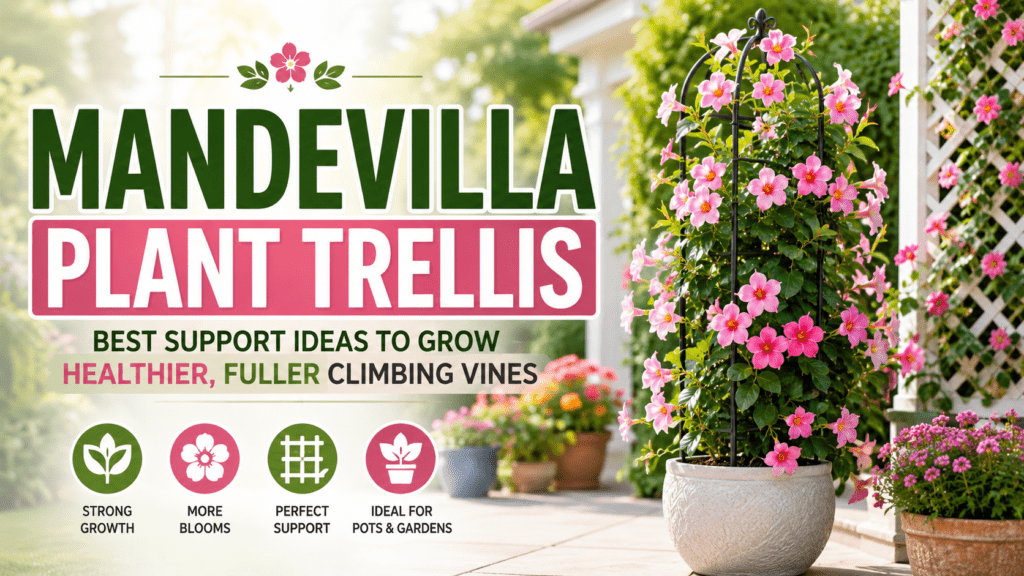
One healthy mandevilla vine can completely transform a dull patio, balcony, or garden corner into a tropical paradise bursting with colorful blooms. But here’s the secret many gardeners discover too late: without the right mandevilla plant trellis, these fast-growing vines often become tangled, weak, and surprisingly difficult to manage.
If your mandevilla looks messy instead of lush and elegant, the problem usually isn’t the plant itself — it’s the support system.
Mandevilla vines naturally climb and twine upward in search of sunlight. When properly supported with a sturdy trellis, they reward gardeners with fuller growth, healthier foliage, better airflow, and dramatically more flowers 🌸. Whether you’re growing mandevilla in containers, hanging baskets, raised beds, or tropical landscapes, choosing the right trellis can make the difference between average growth and a stunning vertical floral display.
In this expert guide, you’ll learn:
- The best trellis ideas for mandevilla plants
- How to train vines properly
- Common mistakes to avoid
- Care tips for fuller blooms
- DIY support ideas for pots and gardens
- Seasonal maintenance strategies for healthy climbing vines
By the end, you’ll know exactly how to create a gorgeous mandevilla display that looks professionally designed and blooms beautifully all season long 🌿✨
What Is a Mandevilla Plant and Why Does It Need a Trellis? 🌿
Mandevilla is a tropical flowering vine known for its trumpet-shaped blooms, glossy leaves, and fast climbing growth habit. Native to warm climates in Central and South America, this plant thrives in sunny environments and naturally climbs trees, fences, and structures in the wild.
Because of its vigorous growth pattern, mandevilla performs best when given vertical support.
Understanding the Natural Growth Habit of Mandevilla 🌱
Unlike compact shrubs, most mandevilla varieties are climbing vines that grow by twining their stems around nearby supports. Some varieties can easily reach:
- 6 to 15 feet tall
- Several feet wide during peak summer growth
Without support, the stems trail across the ground, become tangled, and may even snap under their own weight.
Popular climbing varieties include:
- Pink mandevilla
- Red Dipladenia hybrids
- White tropical mandevilla
- Giant sun mandevilla cultivars
Although Dipladenia is closely related and slightly bushier, both benefit greatly from vertical support systems.
Benefits of Using a Mandevilla Plant Trellis 🌸
A high-quality trellis does far more than simply hold the plant upright.
1. Encourages Strong Vertical Growth
Mandevilla naturally wants to climb. A trellis helps guide growth upward instead of outward.
2. Produces Fuller Flower Displays
Properly trained vines receive more sunlight exposure, which leads to:
- More blooms
- Longer flowering periods
- Better bud development
3. Improves Air Circulation
Good airflow reduces fungal diseases like:
- Powdery mildew
- Leaf spot
- Root rot caused by excessive moisture retention
4. Prevents Broken Stems
Heavy flowering vines can become surprisingly weighty. Trellises reduce stress on stems and prevent snapping.
5. Maximizes Small Spaces
Vertical gardening is ideal for:
- Balconies
- Patios
- Apartment gardens
- Compact landscapes
What Happens if Mandevilla Grows Without Support? ⚠️
Gardeners who skip support structures often encounter several frustrating issues:
- Tangled, messy growth
- Sparse flowering
- Weak stems
- Increased pest problems
- Reduced sunlight exposure
- Uneven growth patterns
Over time, unsupported vines may also become harder to prune and train effectively.
Best Types of Trellises for Mandevilla Plants 🪴
Not every trellis works equally well for mandevilla vines. The ideal support depends on:
- Plant size
- Growing location
- Container or garden planting
- Decorative preferences
Let’s explore the best options.
Traditional Garden Trellis 🌿
Classic garden trellises remain one of the best choices for outdoor mandevilla plants.
Wooden Trellises
Pros:
- Natural appearance
- Blends beautifully into gardens
- Great for cottage-style landscapes
Cons:
- Can rot over time
- Requires weather protection
Metal Trellises
Pros:
- Extremely durable
- Handles heavy mature vines
- Resistant to weather damage
Cons:
- May heat up in intense sunlight
For long-term growth, powder-coated metal trellises are often the most reliable choice.
Obelisk Trellis for Potted Mandevilla 🌺
Obelisk trellises are perfect for containers and patios.
These upright pyramid-shaped supports:
- Save space
- Create elegant vertical displays
- Keep vines compact and manageable
They work especially well for:
- Deck planters
- Entryways
- Balcony gardens
- Poolside tropical containers
An obelisk support also helps create a professionally styled look with minimal effort.
Arch Trellis for Dramatic Displays 🌸
If you want a show-stopping garden centerpiece, an arch trellis is hard to beat.
Mandevilla vines climbing over an arch create:
- Tropical walkways
- Romantic garden entrances
- Stunning bloom tunnels
For best results:
- Plant one vine on each side
- Use strong anchoring
- Train vines evenly across the arch
Wall-Mounted Trellis Systems 🏡
Wall-mounted supports are ideal for small-space gardening.
Benefits include:
- Excellent use of vertical space
- Warmth retention from walls
- Decorative impact
- Easy maintenance access
They work beautifully on:
- Balcony walls
- Fence panels
- Courtyard gardens
- Patio privacy screens
Always leave several inches between the wall and trellis for airflow.
DIY Bamboo Trellis Ideas 🎍
Budget-friendly gardeners love bamboo supports because they’re:
- Affordable
- Lightweight
- Eco-friendly
- Easy to customize
Simple bamboo teepee structures work especially well for:
- Young mandevilla plants
- Seasonal containers
- Temporary supports
Use garden twine or zip ties to secure the poles firmly.
Tomato Cages and Alternative Supports 🍅
In smaller containers, tomato cages can temporarily support young mandevilla vines.
However, mature mandevilla plants often outgrow them quickly.
Best used for:
- Starter plants
- Compact varieties
- Seasonal displays
Avoid flimsy cages that bend easily under plant weight.
How to Choose the Best Mandevilla Plant Trellis 🌿
Choosing the wrong support structure can limit growth and create maintenance problems later.
Here’s what experts recommend considering before buying or building a trellis.
Consider the Mature Size of the Plant 📏
Many gardeners underestimate how quickly mandevilla grows.
Some varieties can grow:
- Several feet in a single season
- Extremely dense foliage
- Heavy flowering stems
A tiny trellis may look attractive initially but quickly becomes overcrowded.
General Recommendations
| Plant Type | Recommended Trellis Height |
|---|---|
| Compact container mandevilla | 3–5 feet |
| Standard climbing varieties | 6–8 feet |
| Large tropical varieties | 10+ feet |
Choosing the Right Material 🛠️
Metal
Best overall durability and strength.
Wood
Natural aesthetic but requires maintenance.
Plastic-Coated Wire
Affordable and weather-resistant.
Bamboo
Eco-friendly and decorative for smaller setups.
Always choose weather-resistant materials for outdoor use.
Best Trellis Height and Width 🌸
Your trellis should allow room for future growth.
For Pots
- Minimum 3–5 feet tall
- Wide enough for airflow
For Garden Beds
- 6–8 feet tall preferred
- Strong anchoring system
Crowded vines often experience:
- Fungal disease
- Reduced flowering
- Poor airflow
Decorative vs. Functional Trellises 🌺
Some trellises prioritize appearance over strength.
A beautiful support is helpful, but structural stability matters most.
The best trellis combines:
✅ Durability
✅ Proper height
✅ Attractive design
✅ Weather resistance
✅ Easy vine attachment points
How to Install a Mandevilla Plant Trellis Properly 🔧
Even the best trellis can fail if installed incorrectly.
Proper installation protects:
- Roots
- Stems
- Overall plant health
Installing Trellises in Pots 🪴

Step-by-Step Installation
- Choose a heavy, stable container
- Insert the trellis before roots fully develop
- Secure the support deeply into the pot
- Use quality potting soil with drainage
- Position vines gently toward the support
Large ceramic or resin pots work best because they resist tipping.
Installing Trellises in Garden Beds 🌿
For landscape planting:
- Install supports deeply into soil
- Use anchors for windy areas
- Position in full sun
Avoid placing trellises too close to walls or fences where airflow becomes restricted.
Common Installation Mistakes to Avoid ⚠️
Weak Supports
Thin decorative trellises may collapse under mature vines.
Damaging Roots
Installing supports after roots expand can injure the plant.
Poor Placement
Too much shade reduces flowering dramatically.
Overcrowding
Multiple vines on tiny supports lead to disease issues.
How to Train Mandevilla Vines on a Trellis 🌱
Training mandevilla properly creates fuller, healthier growth and prevents tangled stems.
Many gardeners assume vines automatically climb perfectly — but gentle guidance produces far better results.
Best Time to Start Training Young Vines 🌸
Begin training early while stems are:
- Flexible
- Soft
- Easier to position
Young vines adapt much faster than mature woody stems.
Ideally:
- Start within weeks of active spring growth
- Train consistently throughout summer
Step-by-Step Vine Training Method 🌿
1. Position Stems Carefully
Gently wrap stems around the trellis without forcing sharp bends.
2. Use Soft Plant Ties
Secure vines loosely using:
- Garden tape
- Soft ties
- Velcro plant straps
Avoid wire ties that cut into stems.
3. Guide Growth Weekly
Mandevilla grows rapidly in warm weather.
Check weekly to:
- Redirect stems
- Prevent tangling
- Fill empty spaces evenly
4. Encourage Balanced Coverage
Spread vines outward across the structure for fuller flowering displays.
How Often to Tie and Adjust Vines 🔄
During peak summer growth:
- Inspect weekly
- Adjust ties monthly
- Remove damaged stems immediately
Frequent monitoring prevents overcrowding and stem breakage.
Pruning Tips for Fuller Growth and More Blooms ✂️
Strategic pruning helps mandevilla become:
- Bushier
- Fuller
- More floriferous
Pinch Growing Tips
Pinching encourages side branching and denser growth.
Remove Leggy Growth
Trim excessively long stems to improve shape.
Deadhead Old Blooms
Removing spent flowers redirects energy into new blooms.
Prune Before Winter Storage
Indoor overwintering becomes easier after reducing vine length.
Best Growing Conditions for Trellised Mandevilla ☀️
Even the perfect trellis cannot compensate for poor growing conditions.
Healthy mandevilla plants require the right balance of:
- Sunlight
- Soil
- Water
- Nutrients
Sunlight Requirements ☀️
Mandevilla thrives in:
- 6–8 hours of sunlight daily
- Bright, warm conditions
- Partial afternoon protection in extreme heat
Insufficient sunlight causes:
- Fewer blooms
- Weak stems
- Sparse foliage
Morning sun with light afternoon shade works wonderfully in very hot climates.
Soil Requirements 🌱
The ideal soil should be:
- Well-draining
- Rich in organic matter
- Slightly acidic to neutral
A high-quality potting mix with:
- Peat moss
- Perlite
- Compost
helps prevent root rot while supporting vigorous growth.
Watering Tips 💧
Mandevilla prefers consistent moisture but dislikes soggy soil.
Best Practices
✅ Water deeply
✅ Allow slight drying between watering
✅ Increase watering during extreme heat
✅ Reduce watering in winter dormancy
Container-grown plants dry out faster than garden-grown vines.
Fertilizer Tips for Heavy Blooming 🌺
Use a bloom-boosting fertilizer rich in:
- Phosphorus
- Potassium
Feed every:
- 2–4 weeks during active growth
Avoid excessive nitrogen, which encourages leaves instead of flowers.













