
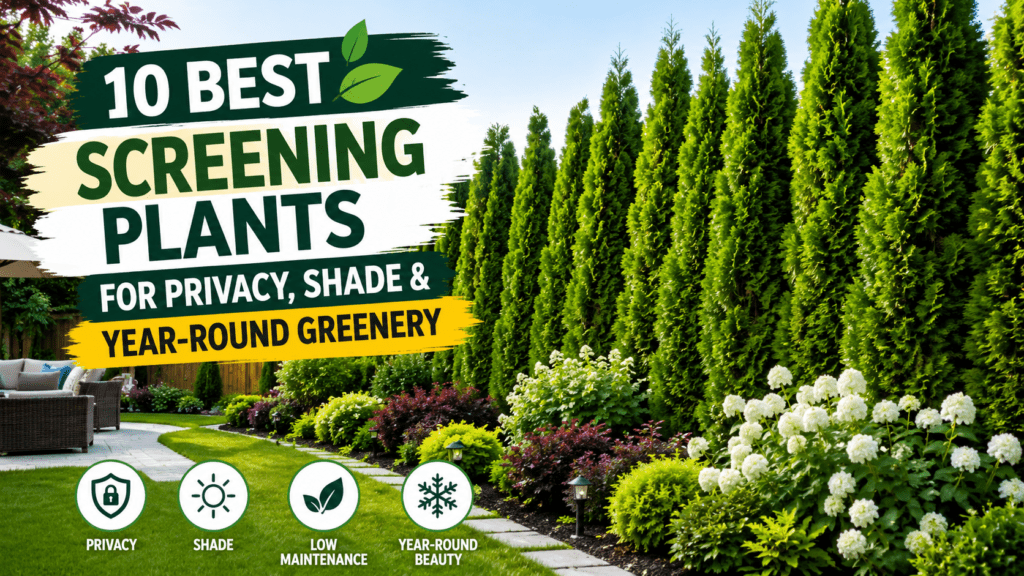
Whether you want a lush natural privacy wall, shade from intense sun, protection from wind, or simply a more peaceful outdoor retreat, screening plants can completely transform your landscape. Unlike hard fences or concrete walls, living privacy screens add beauty, improve air quality, attract birds and pollinators 🐦🐝, and create a calming atmosphere all year long.
But here’s the challenge: not all privacy plants work for every yard. Some grow too aggressively, others struggle in shade, and many require more maintenance than homeowners expect.
In this expert guide, you’ll discover the best screening plants for privacy, shade, and year-round greenery, including fast-growing options, low-maintenance favorites, and expert landscaping tips to help you choose the perfect plants for your outdoor space. Whether you have a tiny patio or a large backyard, this guide will help you create a greener, more private sanctuary. 🌳✨
🌳 What Are Screening Plants?
Screening plants are trees, shrubs, grasses, or climbing plants used to create a natural barrier in outdoor spaces. They are commonly planted along property lines, fences, patios, pools, and walkways to improve privacy and block unwanted views.
These plants are popular because they combine functionality with beauty. Instead of looking at a plain fence, you get a living wall filled with texture, greenery, and seasonal interest. 🌿
🌱 Benefits of Screening Plants
✅ Natural Privacy
The most obvious benefit is privacy. Dense evergreen shrubs and trees create a visual barrier that feels softer and more inviting than traditional fencing.
✅ Shade and Cooling
Tall screening plants can reduce direct sunlight and cool outdoor areas naturally, especially during hot summers. ☀️
✅ Noise Reduction
Dense foliage helps absorb sound from roads, neighbors, and busy streets.
✅ Wind Protection
Many homeowners use screening hedges as natural windbreaks to protect gardens and patios.
✅ Better Air Quality
Plants filter dust and pollutants while producing oxygen — something no fence can do. 🌎
✅ Increased Property Value
Well-designed landscaping can significantly improve curb appeal and property value.
🌿 How to Choose the Best Screening Plants for Your Yard
Before planting anything, it’s important to choose species that match your climate, space, and maintenance preferences.
☀️ Consider Sunlight Conditions
Some screening plants thrive in full sun, while others prefer shade or partial shade.
- Full Sun: Italian Cypress, Bamboo, Leyland Cypress
- Partial Shade: Skip Laurel, Holly
- Shade Tolerant: Boxwood, Laurel
🌧️ Think About Your Climate
Always select plants suitable for your USDA hardiness zone or local climate conditions.
For example:
- Warm climates: Bamboo, Wax Myrtle
- Cold climates: Arborvitae, Holly
📏 Check Mature Size
Many people underestimate how large screening plants can become. Always consider:
- Mature height
- Width/spread
- Root growth
A plant that looks small today may become overwhelming in just a few years.
✂️ Maintenance Level
Ask yourself:
- Do you enjoy pruning regularly?
- Do you prefer a formal hedge or a natural look?
- How much watering can you realistically manage?
Low-maintenance homeowners often prefer:
- Arborvitae
- Boxwood
- Skip Laurel
🌲 1. Arborvitae — Best Overall Privacy Screen
Arborvitae is one of the most popular evergreen screening plants — and for good reason. It grows quickly, stays lush year-round, and forms dense privacy hedges with minimal effort.
🌿 Why Homeowners Love Arborvitae
- Fast-growing evergreen
- Dense foliage blocks visibility effectively
- Low maintenance
- Cold hardy
- Ideal for suburban privacy screens
Popular varieties include:
- Emerald Green Arborvitae
- Green Giant Arborvitae
- American Arborvitae
🌱 Growing Tips
- Plant in full sun to partial shade
- Water deeply during the first year
- Mulch around roots to retain moisture
Expert Tip 💡
Space arborvitae properly to improve airflow and reduce fungal disease risk.
🎋 2. Bamboo — Best Fast-Growing Screening Plant

If you want privacy fast, bamboo is one of the quickest-growing screening plants available. Some varieties can grow several feet per year. 🌿
🌱 Clumping vs. Running Bamboo
Clumping Bamboo ✅
- Safer for residential gardens
- Easier to control
- Grows in tidy clusters
Running Bamboo ⚠️
- Extremely aggressive
- Can spread uncontrollably
- Requires root barriers
🌞 Best Conditions
- Full sun to partial shade
- Moist, well-drained soil
- Warm climates
✨ Why Bamboo Works So Well
- Tropical aesthetic
- Excellent wind protection
- Provides instant vertical interest
- Great for modern landscapes
Expert Warning 🚨
Always choose non-invasive clumping bamboo unless you are prepared to manage aggressive spreading.
🌳 3. Leyland Cypress — Best for Large Yards

Leyland Cypress is famous for its rapid growth and tall, dense structure. It’s perfect for homeowners needing privacy in large spaces.
🌿 Key Benefits
- Extremely fast-growing
- Evergreen year-round
- Creates a thick privacy wall
- Excellent windbreak
📏 Mature Size
- Height: 40–60 feet
- Width: 15–25 feet
Because of its large size, this tree works best in spacious yards.
✂️ Maintenance Tips
- Prune annually to maintain shape
- Avoid overcrowding
- Monitor for fungal disease
Best For 🌟
- Rural properties
- Large suburban yards
- Windy areas
✂️ 4. Boxwood — Best Low-Maintenance Screening Plant

Boxwood shrubs are classic landscape favorites known for their elegant appearance and easy maintenance.
🌿 Why Choose Boxwood?
- Compact growth
- Easy to shape
- Evergreen foliage
- Great for small gardens
🌤️ Ideal Growing Conditions
- Partial shade to full sun
- Well-drained soil
- Moderate watering
🌱 Best Uses
- Front yard privacy
- Formal hedges
- Small-space screening
- Decorative borders
Expert Tip 💚
Boxwoods respond beautifully to regular trimming, making them ideal for neat, structured landscapes.
❤️ 5. Holly — Best for Year-Round Color

Holly plants provide more than privacy — they add vibrant seasonal color and attract birds with their bright berries. 🐦
🌿 Benefits of Holly
- Evergreen leaves
- Dense screening ability
- Decorative berries
- Wildlife-friendly
🌞 Growing Requirements
- Full sun to partial shade
- Slightly acidic soil
- Regular watering during establishment
🌸 Popular Holly Varieties
- American Holly
- Nellie Stevens Holly
- Japanese Holly
Bonus Benefit ✨
Holly hedges also provide excellent security because many varieties have spiny leaves.
🌿 6. Privet — Best Traditional Privacy Hedge

Privet has been used for decades as a traditional privacy hedge because of its thick growth and adaptability.
🌱 Why It’s Popular
- Fast-growing
- Dense foliage
- Easy to shape
- Affordable
✂️ Maintenance Needs
Privet requires regular pruning to prevent it from looking messy or becoming invasive.
⚠️ Important Consideration
Some privet species can spread aggressively in certain regions, so check local recommendations before planting.
🌤️ 7. Skip Laurel — Best Screening Plant for Shade
Many screening plants struggle in low-light conditions, but Skip Laurel thrives beautifully in partial shade. 🌿
🌱 Why Gardeners Love Skip Laurel
- Dense evergreen foliage
- Fast growth
- Excellent shade tolerance
- Elegant glossy leaves
🌧️ Care Requirements
- Moderate watering
- Well-draining soil
- Occasional pruning
📏 Best Placement
Skip Laurel works wonderfully:
- Along fences
- Around patios
- In narrow side yards
🍃 8. Red Tip Photinia — Best Colorful Privacy Plant
Unlike ordinary green hedges, Red Tip Photinia adds stunning bursts of red foliage throughout the year. ❤️🍃
🌿 Main Advantages
- Vibrant red new growth
- Dense privacy coverage
- Fast-growing
- Attractive ornamental value
☀️ Growing Conditions
- Full sun
- Good airflow
- Regular pruning
🚨 Disease Prevention
Photinia can develop leaf spot disease in humid climates. Proper spacing and pruning improve airflow and reduce problems.
🌊 9. Wax Myrtle — Best for Coastal Gardens

Wax Myrtle is a fantastic option for coastal areas where salt spray and sandy soil make gardening difficult.
🌿 Benefits
- Salt tolerant
- Drought resistant
- Fast-growing
- Fragrant foliage
🌞 Best Uses
- Coastal privacy screens
- Natural hedges
- Wildlife gardens
🐦 Bonus Benefit
Wax Myrtle berries attract birds and beneficial wildlife.
🇮🇹 10. Italian Cypress — Best Elegant Vertical Screen
Italian Cypress trees create dramatic vertical accents and elegant Mediterranean-style landscapes. 🌞
🌿 Why They Stand Out
- Tall and narrow growth
- Minimal ground space needed
- Sophisticated appearance
- Evergreen year-round
☀️ Growing Conditions
- Full sun
- Well-drained soil
- Warm climates
🌱 Best Applications
- Driveway borders
- Poolside landscaping
- Formal garden designs
🏡 How to Choose the Right Screening Plants for Different Yard Sizes
Not every yard has the same privacy needs. Choosing the right plant size and growth habit can save you years of frustration later.
🌿 Best Screening Plants for Small Yards
Small gardens require plants that provide privacy without overwhelming the space.
✅ Top Picks for Compact Spaces
🌱 Boxwood
Compact and easy to shape for neat borders.
🌿 Skip Laurel
Narrow growth makes it ideal for side yards.
🇮🇹 Italian Cypress
Tall but slim — perfect for tight spaces.
🎋 Clumping Bamboo
Adds privacy without taking up much width.
💡 Small Yard Design Tip
Use layered landscaping:
- Tall screening plants in the back
- Medium shrubs in the middle
- Groundcovers in front
This creates depth and makes smaller spaces feel larger. ✨
🌳 Best Screening Plants for Large Properties
Large yards need taller and broader screening plants to provide effective coverage.
🌿 Recommended Choices
- Leyland Cypress
- Green Giant Arborvitae
- Wax Myrtle
- Bamboo
These plants grow quickly and create substantial privacy walls.
🌬️ Windbreak Advantage
Large evergreen screens can also reduce wind exposure and help protect gardens from storm damage.
🌲 Best Evergreen Screening Plants for Year-Round Privacy
Evergreen screening plants keep their foliage all year, making them ideal for permanent privacy.
🌿 Top Evergreen Options
| Plant | Growth Speed | Best Feature |
|---|---|---|
| Arborvitae | Fast | Dense coverage |
| Holly | Moderate | Decorative berries |
| Boxwood | Slow-Moderate | Formal appearance |
| Skip Laurel | Fast | Shade tolerant |
| Italian Cypress | Moderate | Elegant vertical growth |
Expert Insight 💚
Evergreens provide better winter privacy compared to deciduous plants that lose leaves during colder months.
🌸 Best Flowering Screening Plants
Who says privacy screens must be plain green walls? Flowering screening plants add seasonal beauty while still blocking unwanted views.
🌺 Beautiful Flowering Options
🌸 Camellia
Glossy evergreen leaves with stunning flowers.
🌺 Hydrangea
Excellent for soft privacy in cottage-style gardens.
🌼 Oleander
Fast-growing and colorful in warm climates.
🌷 Viburnum
Dense foliage with fragrant blooms.
⚡ Best Fast-Growing Screening Plants
Need privacy quickly? Fast-growing plants can establish a screen within just a few seasons.

🚀 Fastest-Growing Options
| Plant | Approximate Growth Per Year |
|---|---|
| Bamboo | 3–5 feet |
| Leyland Cypress | 3–4 feet |
| Green Giant Arborvitae | 2–3 feet |
| Privet | 2–3 feet |
| Wax Myrtle | 2–4 feet |
💡 Expert Tip
Fast growth often means more pruning and maintenance. Balance speed with long-term manageability.
🌱 Expert Planting Tips for Healthy Screening Plants
Even the best screening plants can fail if planted incorrectly. Proper installation is critical for long-term success.
📅 When Is the Best Time to Plant Screening Plants?
The ideal planting seasons are:
🌸 Spring
- Warm soil encourages root growth
- Longer growing season ahead
🍂 Fall
- Cooler temperatures reduce stress
- Roots establish before summer heat
Avoid 🚫
Planting during extreme summer heat or frozen winter conditions.
📏 Proper Spacing for Privacy Screens
One of the biggest mistakes homeowners make is planting too closely.
🌿 Why Spacing Matters
Correct spacing:
- Improves airflow
- Prevents fungal disease
- Allows mature growth
- Reduces root competition
📐 General Spacing Guide
| Plant Type | Recommended Spacing |
|---|---|
| Arborvitae | 3–5 feet |
| Bamboo | 5–8 feet |
| Boxwood | 2–3 feet |
| Privet | 2–4 feet |
| Leyland Cypress | 8–12 feet |
Expert Advice 💡
Always check mature plant width — not just nursery size.
🌱 Soil Preparation Tips
Healthy soil creates healthier screening plants.
🌿 Improve Drainage
Most screening plants dislike soggy roots. Add:
- Compost
- Organic matter
- Sand if needed
🍂 Add Mulch
Mulch helps:
- Retain moisture
- Suppress weeds
- Moderate soil temperature
Apply 2–3 inches around the root zone while keeping mulch away from trunks.
💧 Watering and Fertilizing Guide
Newly planted screening plants need consistent watering to establish strong roots.
🌱 First Year Watering
- Deep watering 1–2 times weekly
- Increase during heatwaves
🌳 Established Plants
Most mature screening plants become more drought tolerant.
🌿 Fertilizer Tips
Use slow-release fertilizer in spring for healthy growth.
Avoid over-fertilizing, which can cause weak, leggy growth.
🚨 Common Problems With Screening Plants (And How to Fix Them)
Even experienced gardeners encounter occasional problems. The key is recognizing issues early.
🍂 Yellowing Leaves
Possible Causes
- Overwatering
- Poor drainage
- Nutrient deficiencies
- Root stress
Solution ✅
- Improve drainage
- Adjust watering schedule
- Test soil nutrients
🌿 Sparse or Thin Growth
Privacy screens should look lush and dense — not patchy.
Common Reasons
- Insufficient sunlight
- Improper pruning
- Poor soil nutrition
Fixes 💡
- Increase sun exposure if possible
- Use balanced fertilizer
- Prune strategically to encourage branching
🐛 Pest and Disease Issues

Common Problems
🕷️ Spider Mites
Cause yellow stippling and leaf damage.
🐜 Aphids
Feed on tender new growth.
🍂 Fungal Diseases
Often caused by overcrowding and excess moisture.
Prevention Tips
- Avoid overhead watering
- Improve airflow
- Remove infected foliage promptly
❄️ Winter Damage Protection
Cold temperatures and drying winds can damage evergreens.
🌲 Winter Protection Tips
- Water deeply before freezing weather
- Apply mulch around roots
- Use burlap barriers in windy locations
Expert Tip 💚
Anti-desiccant sprays can reduce winter moisture loss in evergreens.
⚖️ Screening Plants vs. Fences — Which Is Better?
Many homeowners struggle to decide between a fence and natural screening plants.
🌿 Advantages of Screening Plants
✅ More Natural Appearance
Plants soften landscapes beautifully.
✅ Environmental Benefits
They improve biodiversity and air quality.
✅ Cooling Effect
Living plants reduce heat better than fences.
✅ Noise Reduction
Dense foliage absorbs sound naturally.
🚧 Advantages of Fences
- Immediate privacy
- Lower short-term maintenance
- Works in extremely small spaces
🌟 Best Solution? Combine Both
Many designers combine fences with screening plants for layered privacy and visual appeal.
For example:
- Fence for instant coverage
- Plants for beauty and long-term screening
This creates a softer, more luxurious outdoor environment.
🌼 Landscaping Ideas Using Screening Plants
Privacy screens can become stunning focal points — not just functional barriers.
🏡 Backyard Privacy Retreat Ideas
Transform your yard into a peaceful sanctuary by combining:
- Tall screening hedges
- Cozy seating
- Outdoor lighting ✨
- Flowering shrubs
Add water features for extra tranquility.
🏊 Poolside Screening Plant Designs
Pool areas benefit greatly from natural privacy.
Best Poolside Plants
- Bamboo
- Italian Cypress
- Wax Myrtle
These tolerate heat well and create resort-style vibes. 🌴
🌿 Patio and Balcony Green Screens
Even small patios can feel private with container-grown screening plants.
Great Container Options
- Clumping Bamboo
- Boxwood
- Dwarf Arborvitae
Use decorative planters for added style.
🌬️ Creating Windbreaks With Screening Plants
Dense evergreen rows can significantly reduce wind exposure around homes and gardens.
Best Windbreak Plants
- Leyland Cypress
- Arborvitae
- Wax Myrtle
Plant multiple staggered rows for maximum effectiveness.
🌳 Mixing Different Screening Plants for a Layered Look
A mix of textures and heights creates a more natural and visually appealing screen.
Example Combination 🌿
- Tall Arborvitae in back
- Flowering Viburnum in middle
- Boxwood border in front
This layered approach increases biodiversity and visual depth.
✂️ Expert Tips for Keeping Screening Plants Healthy Year-Round
Beautiful privacy screens require ongoing care.
🌸 Spring Care
- Fertilize
- Mulch
- Inspect for winter damage
☀️ Summer Care
- Deep watering
- Monitor pests
- Trim excessive growth
🍂 Fall Care
- Remove dead branches
- Refresh mulch
- Water before frost
❄️ Winter Care
- Protect young plants from heavy snow and wind
✂️ Pruning Best Practices
Proper pruning keeps screening plants dense and healthy.
🌿 Key Pruning Tips
- Prune lightly but consistently
- Avoid removing too much at once
- Shape wider at the bottom than the top
This helps sunlight reach lower branches.
🌱 Encouraging Dense Growth Naturally
To create fuller privacy screens:
✅ Provide adequate sunlight
✅ Water consistently
✅ Feed appropriately
✅ Prune strategically
✅ Avoid overcrowding
Healthy roots lead to dense foliage. 🌳✨
❓ Frequently Asked Questions About Screening Plants
🌿 What are the fastest-growing screening plants?
Bamboo, Leyland Cypress, and Green Giant Arborvitae are among the fastest-growing options.
🌲 Which screening plants stay green all year?
Evergreens like Arborvitae, Holly, Skip Laurel, and Italian Cypress maintain year-round greenery.
🌱 What are the best low-maintenance screening plants?
Boxwood, Arborvitae, and Skip Laurel require relatively little maintenance once established.
📏 How far apart should screening plants be planted?
Spacing depends on mature size, but most privacy hedges need 3–8 feet between plants.
🪴 Can screening plants grow in containers?
Yes! Bamboo, Boxwood, and dwarf evergreens perform well in large containers.
🌤️ Which screening plants grow best in shade?
Skip Laurel, Boxwood, and some Holly varieties tolerate shade very well.
🌳 Final Thoughts
The right screening plants can completely transform your outdoor space — adding privacy, beauty, shade, and year-round greenery all at once. 🌿✨
Whether you prefer elegant Italian Cypress, fast-growing Bamboo, classic Arborvitae, or colorful Holly, there’s a perfect privacy plant for every garden style and climate.
The key is choosing plants that match your:
- Space
- Sunlight conditions
- Climate
- Maintenance preferences
With proper planning and care, your living privacy screen won’t just block unwanted views — it will create a peaceful outdoor sanctuary you’ll enjoy for years to come. 🏡💚











