
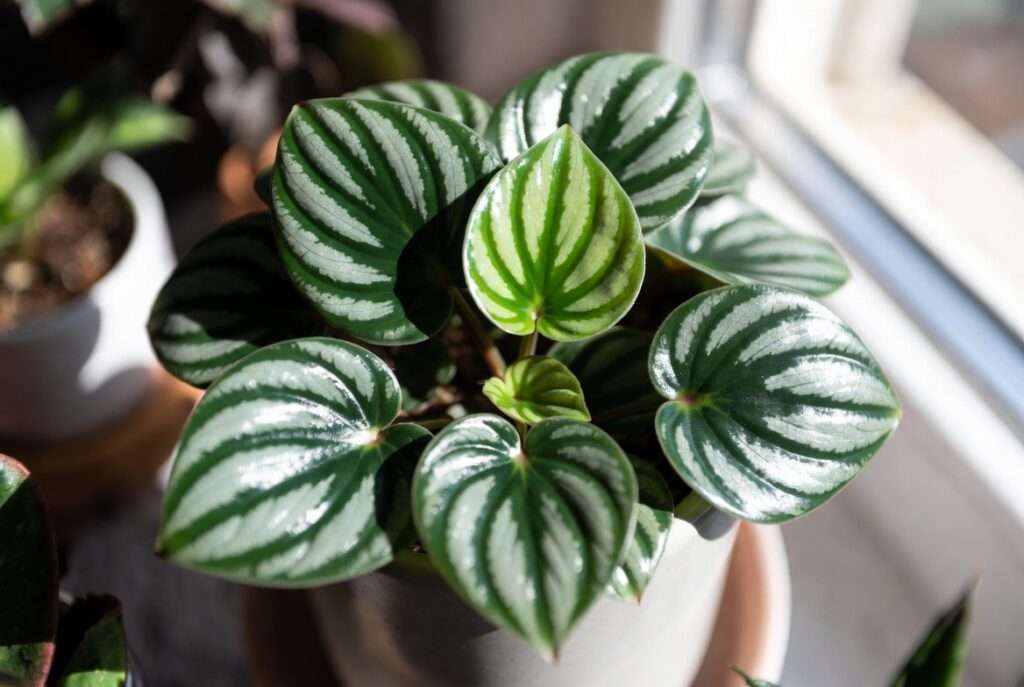
Imagine bringing home a plant with leaves so striking they look like miniature watermelons — vibrant green with bold silver-white stripes radiating from the center like juicy fruit slices. That’s the magic of the Watermelon Peperomia (Peperomia argyreia). If you’re searching for reliable watermelon peperomia plant care advice, you’re in the right place.
This compact, eye-catching houseplant has captured the hearts of indoor gardeners worldwide, but many struggle with drooping leaves, yellowing, or slow growth. In this comprehensive guide, I’ll share everything you need to know to keep your plant lush, vibrant, and thriving for years. With over a decade of hands-on experience growing tropical houseplants, I’ve refined these techniques to help both beginners and seasoned collectors succeed.
Whether you’re a first-time plant parent or looking to expand your collection, this guide solves the most common problems and delivers pro-level results. Let’s dive in! 🌱
Why the Watermelon Peperomia Is Perfect for Indoor Spaces
The Watermelon Peperomia, also known as Watermelon Begonia (though it’s not a true begonia), is a tropical understory plant native to Brazil. Its unique foliage makes it a standout in any home. The thick, fleshy, almost succulent-like leaves store moisture, giving it some drought tolerance while maintaining a lush appearance.
Key Benefits:
- Compact size: Grows 6–12 inches tall and wide — ideal for small apartments, desks, shelves, and tabletops.
- Pet-friendly: Completely non-toxic to cats, dogs, and kids (confirmed by ASPCA).
- Air-purifying: Contributes to better indoor air quality.
- Low-maintenance appeal: Forgiving for busy plant lovers when you understand its preferences.
- Versatile styling: Looks stunning in terrariums, hanging baskets, or grouped with other houseplants.
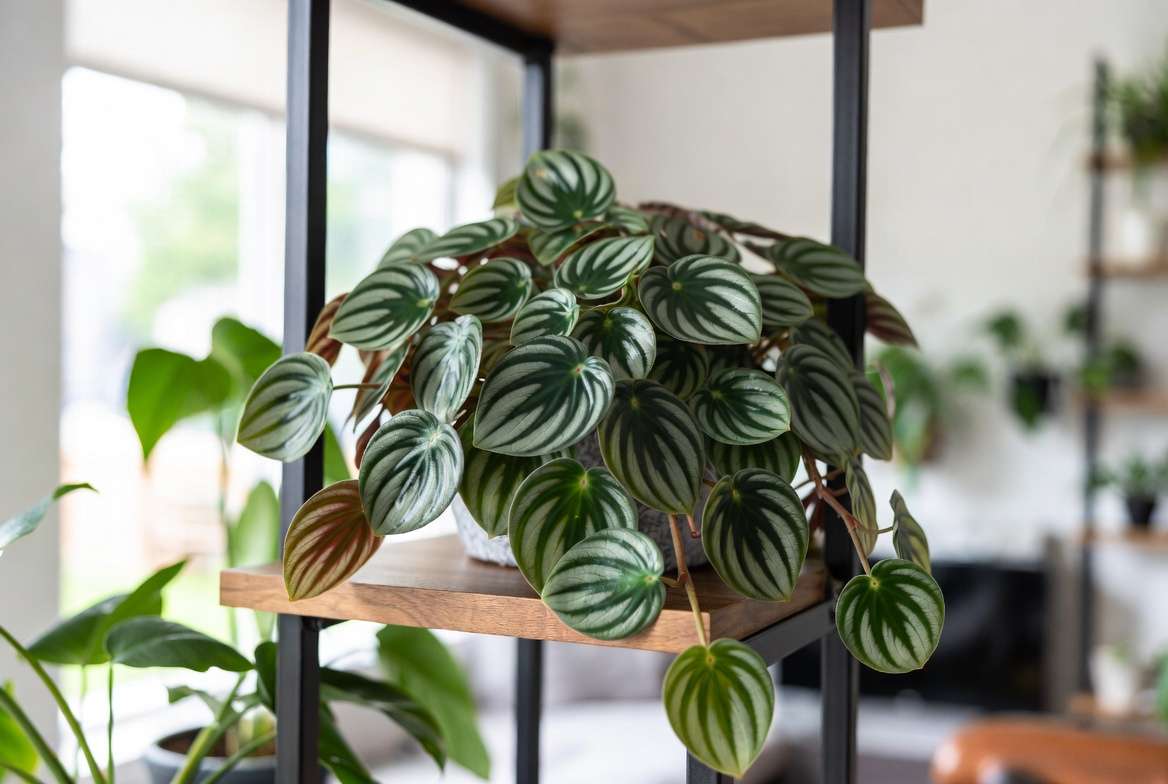
Beginner rating: Easy to moderate. Success comes down to mastering light and watering — the two biggest pain points for new owners.
Alt text: Watermelon Peperomia displayed on a shelf in a cozy living room
Botanical Profile and Characteristics
Scientific Name: Peperomia argyreia Family: Piperaceae
This evergreen perennial features peltate leaves (attached to the stem at the center) with dramatic silvery stripes on deep green backgrounds. The leaves have a slightly waxy texture and can reach 3–5 inches in diameter. It produces insignificant greenish-white flower spikes that aren’t the main attraction — the foliage steals the show!
Growth rate is moderate. In optimal conditions, it stays neat and bushy. Compared to its cousin Peperomia obtusifolia (Baby Rubber Plant), the Watermelon variety offers more dramatic variegation but similar care needs.
Essential Care Requirements
Light Requirements for Vibrant Foliage 🌞
Proper lighting is crucial for maintaining those signature watermelon stripes.
Ideal Light: Bright indirect or medium-bright light. Place it near an east or north-facing window, or a few feet back from a south/west window where curtains filter direct rays.
- Too little light → Leggy stems, faded stripes, slow growth.
- Too much direct sun → Scorched or washed-out leaves.
Pro Tip: In low-light homes, supplement with a full-spectrum grow light for 10–12 hours daily. During winter, move closer to windows or increase artificial lighting. Rotate your plant weekly for even growth.
Soil and Potting Mix: The Foundation of Healthy Roots 🪴
As a semi-succulent, your Watermelon Peperomia hates soggy roots. Excellent drainage is non-negotiable.
Best Soil Recipe (DIY well-draining mix):
- 50% high-quality potting soil or coco coir
- 30% perlite or pumice
- 20% orchid bark or coarse sand
This airy mix mimics its natural epiphytic tendencies while retaining just enough moisture. Aim for slightly acidic to neutral pH (6.0–7.0).
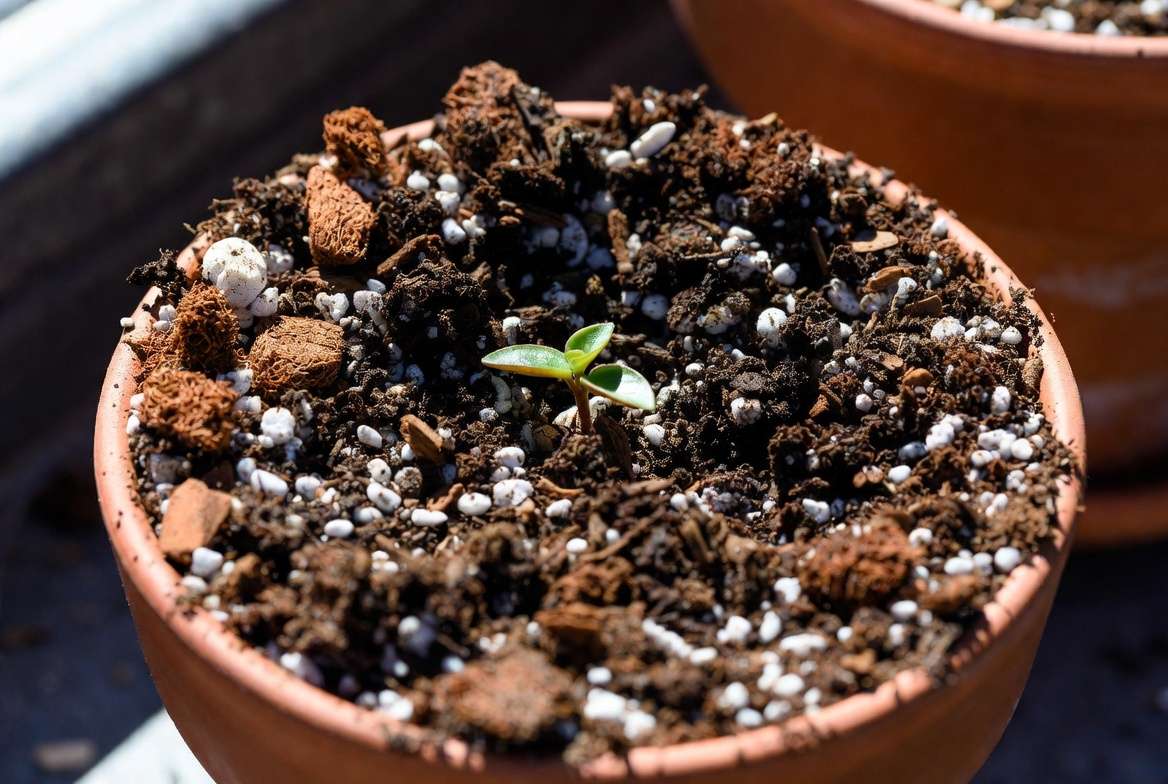
Pot Choice: Always use containers with drainage holes. Terracotta pots help wick away excess moisture. Avoid oversized pots — this plant has shallow roots and prefers being slightly snug.
Quick Reference Table:
| Aspect | Recommendation |
|---|---|
| Soil Type | Well-draining, airy mix |
| Drainage | Essential |
| Pot Material | Terracotta or ceramic preferred |
Watering Schedule and Techniques 💧
This is where most owners go wrong. Overwatering is the #1 killer.
Rule of Thumb: Water thoroughly when the top 1–2 inches of soil feel dry (about every 7–14 days).
- Growing season (Spring–Summer): More frequent watering.
- Winter: Reduce significantly — let soil dry more.
Proper Technique:
- Water at the base until it drains out the bottom.
- Empty saucer after 30 minutes.
- Use room-temperature filtered or settled tap water.
Signs to Watch:
- Underwatering → Drooping leaves and petioles.
- Overwatering → Yellowing lower leaves, mushy stems, soil smell.
Expert Insight: These plants prefer “evenly moist but never soggy.” A moisture meter can be a game-changer for beginners.
Temperature and Humidity Needs 🌡️
Ideal Temperature: 65–80°F (18–27°C). Protect from cold drafts below 55°F and hot air vents.
Humidity: Prefers 40–60%+. Average household humidity often works, but boost it during dry winters:
- Use a pebble tray with water.
- Group plants together.
- Run a small humidifier.
- Light misting (avoid overdoing it to prevent fungal issues).
Fertilizing for Lush Growth
Feed during active growth (spring through early fall) with a balanced, diluted liquid houseplant fertilizer (e.g., 20-20-20) every 4–6 weeks.
Organic alternatives: Worm castings or compost tea as top dressing. Skip fertilizing in winter. Over-fertilizing causes salt buildup and leaf burn — less is more!
Fertilizing for Lush Growth
Feed during active growth (spring through early fall) with a balanced, diluted liquid houseplant fertilizer (e.g., 20-20-20) every 4–6 weeks at half strength.
Organic alternatives include top-dressing with worm castings or diluted compost tea once or twice per season. Skip fertilizing entirely during winter dormancy. Over-fertilizing leads to salt buildup, crispy leaf edges, and weakened plants — remember, less is always more with Peperomia.
A healthy feeding routine encourages those signature bold watermelon stripes and compact, bushy growth.
Advanced Care and Maintenance
Repotting: When and How 🪴
Watermelon Peperomia has relatively shallow roots and doesn’t need frequent repotting — every 2–3 years is usually sufficient.
Signs it’s time to repot:
- Roots circling the bottom of the pot or emerging from drainage holes
- Soil drying out extremely fast
- Stunted growth despite good care
- Plant becoming top-heavy
Best Time: Early spring, just as new growth begins.
Step-by-Step Repotting Guide:
- Gently remove the plant and shake off old soil.
- Inspect roots and trim any soft, rotten ones with sterilized scissors.
- Place in a new pot 1–2 inches larger with fresh well-draining mix.
- Firm the soil gently and water thoroughly.
- Keep in bright indirect light and avoid fertilizing for 4–6 weeks.
Pro Tip: Refresh the top layer of soil annually instead of full repotting if the plant is healthy. This maintains nutrients without stressing the roots.
Pruning, Cleaning, and Shaping ✂️
Regular maintenance keeps your plant looking its best and encourages fuller growth.
- Pruning: Pinch back leggy stems just above a leaf node to promote bushiness. Remove any yellow or damaged leaves at the base.
- Cleaning: Wipe leaves gently with a damp microfiber cloth every 2–3 weeks to remove dust. This improves photosynthesis and keeps the silver stripes shiny.
- Shaping: Rotate the plant regularly for symmetrical growth.
Avoid heavy pruning — this species grows slowly and recovers best from light, consistent maintenance.
Propagation Methods: Multiply Your Collection 🌱
One of the most rewarding aspects of watermelon peperomia plant care is how easily it propagates. You can quickly grow a beautiful collection to share with friends or expand your indoor jungle.
1. Leaf Cuttings (Most Popular Method)
- Choose a healthy, mature leaf with a small piece of petiole attached.
- Place the petiole in water or insert directly into moist, well-draining soil.
- Cover with a humidity dome or plastic bag.
- Keep in bright indirect light. New plantlets usually appear in 4–8 weeks.
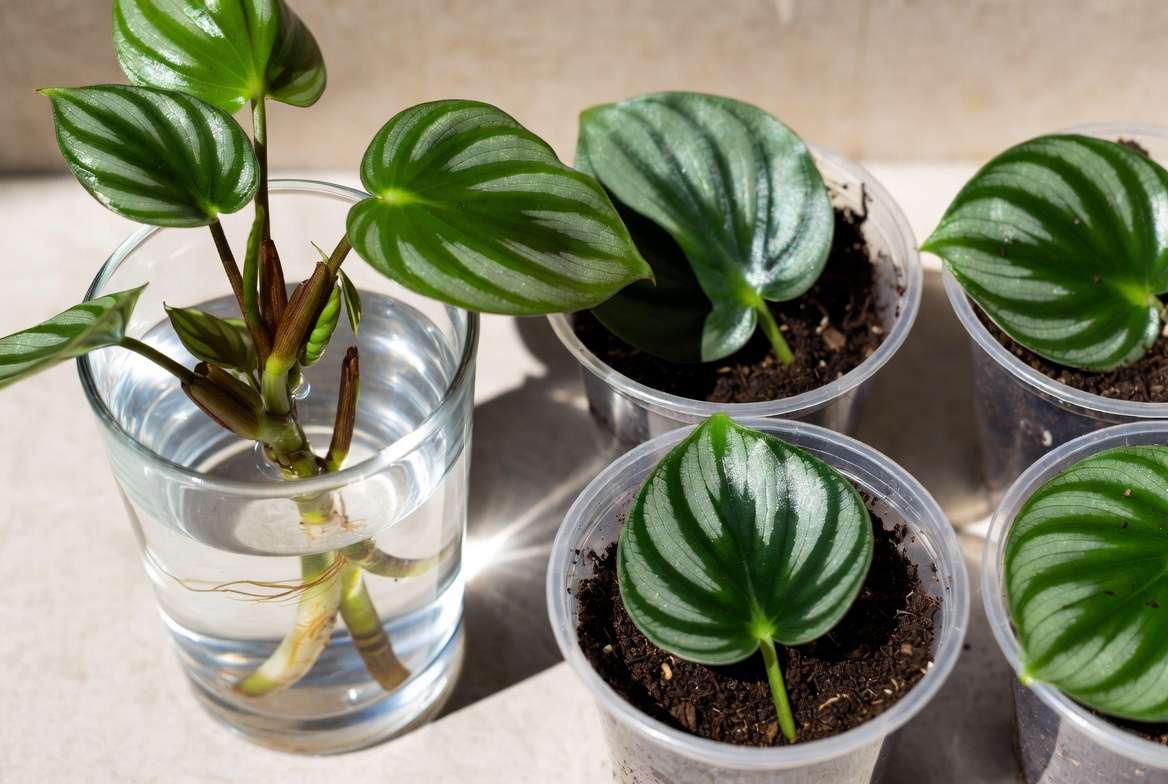
2. Stem Cuttings
- Take 3–4 inch stems with 2–3 leaves.
- Root in water (change every few days) or directly in soil.
- High success rate with added bottom heat or rooting hormone.
3. Division For mature, clumping plants: Gently separate the root ball into sections during repotting. Each section should have roots and several leaves.
Success Tips:
- Maintain 60–70% humidity during rooting.
- Use sterile tools to prevent disease.
- Be patient — Watermelon Peperomia roots slower than faster-growing houseplants but has a high success rate (80–90% with proper technique).
Common Problems and Solutions (Troubleshooting) 🛠️
Even experienced growers face challenges. Here’s a comprehensive troubleshooting section based on real issues I’ve helped hundreds of plant parents resolve.
Yellow Leaves
- Most common cause: Overwatering or poor drainage.
- Solution: Let soil dry out more, improve drainage, and check roots for rot.
Drooping or Wilting
- Usually underwatering or low humidity.
- Solution: Check soil moisture, increase humidity, and ensure consistent watering schedule.
Brown Leaf Edges or Tips
- Low humidity, fertilizer burn, or dry air from heaters.
- Solution: Use a humidifier, flush soil to remove excess salts, and move away from heat sources.
Leggy Growth & Faded Stripes
- Insufficient light.
- Solution: Move to brighter indirect location or add grow lights.
Pests (Mealybugs, Spider Mites, Fungus Gnats)
- Inspect regularly under leaves.
- Treat with neem oil, insecticidal soap, or horticultural oil. Isolate affected plants immediately.
Root Rot
- Prevent by using well-draining soil and proper watering.
- Rescue: Trim rotten roots, repot in fresh mix, and reduce watering.
Other Issues: Curling leaves often indicate temperature stress or drafts. No new growth in winter is normal — don’t panic!
Preventive Care Checklist:
- Check soil moisture before watering
- Ensure bright indirect light
- Maintain moderate humidity
- Wipe leaves regularly
- Fertilize sparingly
Troubleshooting Quick Reference Table:
| Problem | Likely Cause | Solution |
|---|---|---|
| Yellow leaves | Overwatering | Improve drainage, reduce water |
| Brown tips | Low humidity | Humidifier + pebble tray |
| Leggy stems | Low light | Brighter location or grow light |
| Pests | Mealybugs/mites | Neem oil treatment |
Seasonal Care Guide
Spring & Summer (Active Growth): Increase watering and fertilizing. This is the best time for propagation and repotting. Plants grow faster and produce fresh new leaves with bold patterns. 🌞
Fall & Winter (Dormancy): Reduce watering significantly (every 2–3 weeks). Stop fertilizing. Provide as much natural light as possible or supplement with grow lights. Protect from cold windows and heating vents.
If you live in a warm climate, you can move plants outdoors to a shaded patio during summer, but acclimate gradually and bring indoors before temperatures drop below 55°F (13°C).
Styling and Display Ideas 📸
The Watermelon Peperomia’s compact size and striking foliage make it incredibly versatile:
- Modern desks & shelves: Pairs beautifully with minimalist ceramic pots.
- Terrariums & dish gardens: Thrives in closed environments with proper ventilation.
- Hanging setups: Use small macrame hangers for trailing varieties or grouped displays.
- Companion Plants: Perfect with Pothos, Snake Plant, ZZ Plant, or other Peperomia species that share similar care needs.
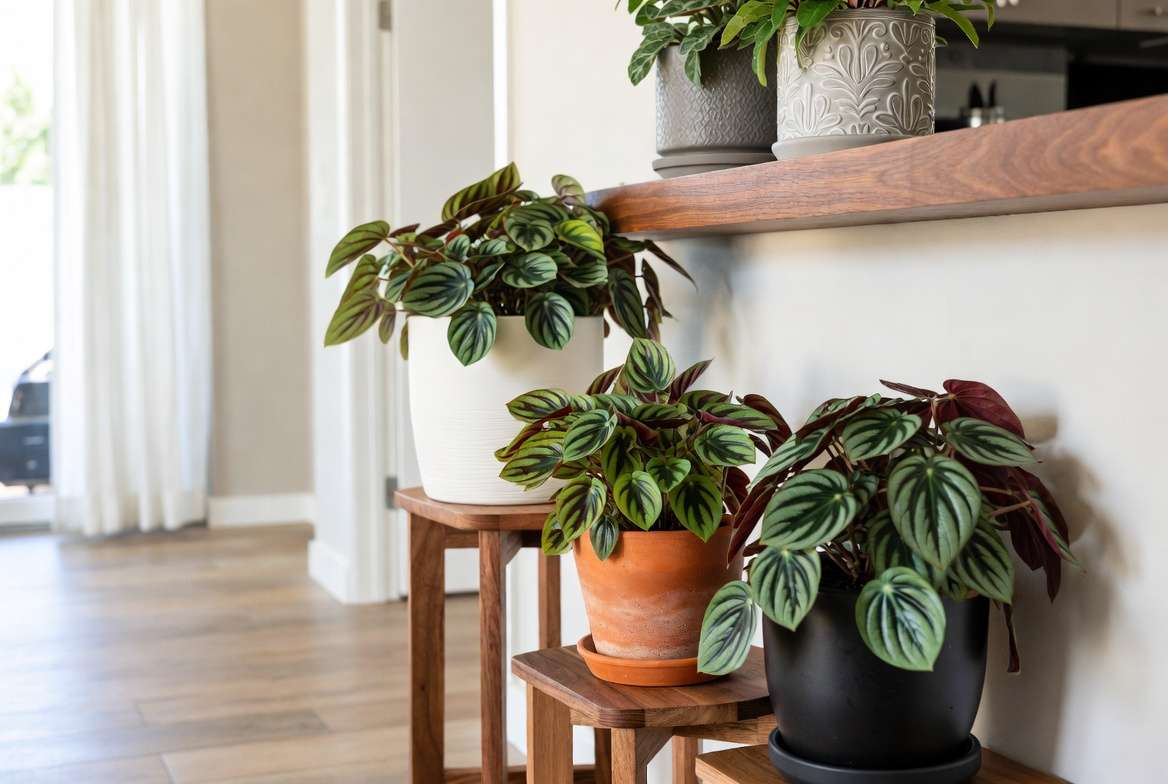
Choose pots in white, black, or terracotta to make the green-silver contrast pop. Group 3–5 plants together for a lush “jungle” effect on a plant stand.
Expert Insights and Pro Tips
From years of growing Peperomia argyreia and helping plant lovers, here are my top secrets for success:
- Consistency beats perfection. A stable environment matters more than daily fussing.
- These plants are semi-succulent — treat them more like a succulent than a thirsty fern.
- Always use room-temperature water to avoid shocking the roots.
- Track your care routine in a simple plant journal or app for better long-term results.
Safety Note: Fully non-toxic to pets and children, making it an excellent choice for households with curious cats or toddlers.
Sustainability Tip: Use peat-free soil mixes and propagate instead of constantly buying new plants — it’s better for your wallet and the planet.
Frequently Asked Questions (FAQs)
Is Watermelon Peperomia toxic to cats or dogs? No, it is completely non-toxic according to ASPCA guidelines. Safe for pet households. 🐱
Why is my Watermelon Peperomia not growing? Likely due to low light or winter dormancy. Increase light and wait for spring.
Can it tolerate low light conditions? It can survive but won’t thrive. Bright indirect light is best for strong patterns and compact growth.
How do I revive an overwatered plant? Remove from pot, trim rotten roots, repot in fresh dry soil, and withhold water until it recovers.
What is the best fertilizer for Watermelon Peperomia? A balanced, diluted liquid fertilizer used sparingly during growing season.
How often should I water in winter? Every 14–21 days or when soil is mostly dry.
Do the flowers mean anything? The small spikes are normal but not showy. You can trim them if desired to redirect energy to foliage.
Conclusion
Mastering watermelon peperomia plant care is incredibly rewarding. With its stunning striped leaves and forgiving nature, Peperomia argyreia makes an outstanding addition to any indoor plant collection. By providing bright indirect light, well-draining soil, careful watering, and moderate humidity, you’ll enjoy a vibrant, healthy plant for many years.
Remember: Observe your plant closely — it will tell you what it needs. Consistent, attentive care transforms good plants into spectacular ones.
Now it’s your turn! Share your Watermelon Peperomia journey in the comments below, including photos of your beautiful plants. For more expert houseplant guides, check out our articles on Peperomia varieties, common indoor plant problems, and beginner-friendly houseplants.
Happy growing! 🪴🍉🌿











