
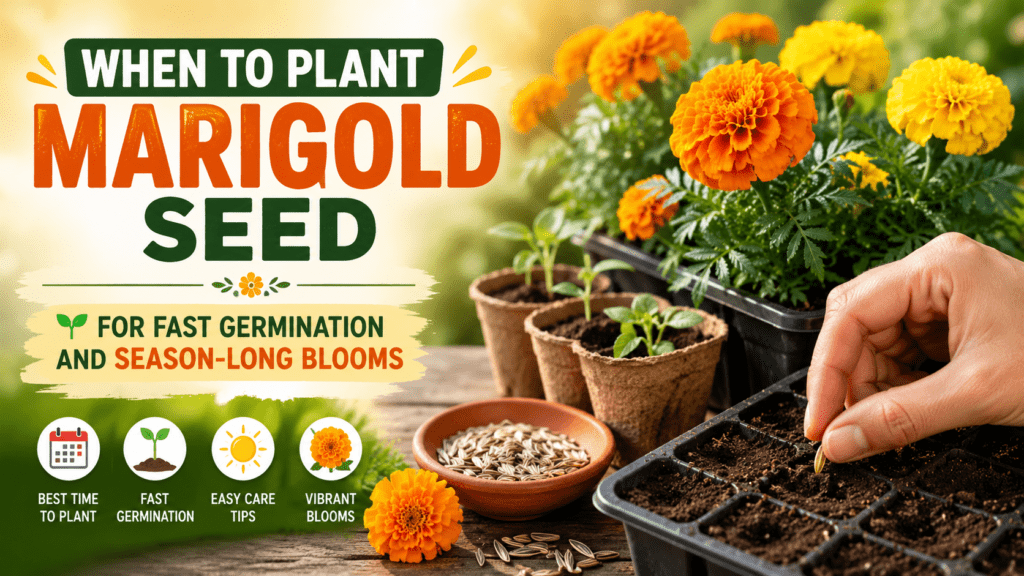
Few flowers brighten a garden as effortlessly as marigolds 🌼. Their cheerful yellow, orange, and gold blooms can instantly transform dull garden beds into vibrant, pollinator-friendly spaces. But here’s the truth many beginner gardeners learn too late: knowing exactly when to plant marigold seed makes the difference between weak, struggling plants and explosive season-long blooms.
Plant marigold seeds too early, and cold soil may prevent germination. Plant them too late, and summer heat can stress young seedlings before they establish properly. Timing matters more than most people realize.
The good news? Marigolds are one of the easiest flowers to grow successfully when you understand their ideal planting conditions. Whether you’re planting seeds indoors, sowing directly into the garden, or growing marigolds in containers, this expert guide will show you:
- 🌱 The best time to plant marigold seeds
- 🌡️ Ideal soil and temperature conditions
- 🪴 Indoor vs outdoor planting methods
- 🌼 How to get faster germination
- ☀️ Tips for bigger blooms all season
- 🚫 Common mistakes to avoid
By the end of this guide, you’ll know exactly how to grow healthy, colorful marigolds that thrive from spring through fall.
🌼 Understanding Marigolds Before You Plant
🌱 What Are Marigolds?
Marigolds are warm-season annual flowers known for their bright colors, low maintenance needs, and impressive pest-repelling abilities. They belong to the Tagetes genus and are native to Central and South America.
Gardeners love marigolds because they:
- Grow quickly from seed 🌿
- Bloom continuously for months
- Thrive in sunny conditions ☀️
- Attract pollinators like bees and butterflies 🐝
- Help deter harmful garden pests
These flowers are especially popular in vegetable gardens because they naturally repel certain insects and nematodes.
🌞 Types of Marigolds and Their Growing Habits
Understanding the different marigold varieties helps you choose the best type for your garden goals.
🌼 French Marigolds (Tagetes patula)
- Compact and bushy
- Ideal for borders and containers
- Bloom quickly
- Excellent pest deterrents
🌻 African Marigolds (Tagetes erecta)
- Taller plants with large blooms
- Great for flower beds
- Require more spacing
- Produce dramatic flowers
🌿 Signet Marigolds (Tagetes tenuifolia)
- Small delicate flowers
- Edible petals
- Light citrus fragrance
- Excellent for pollinator gardens
If you want the fastest blooms from seed, French marigolds are usually the best choice for beginners.
🐝 Why Gardeners Love Growing Marigolds
Marigolds do much more than simply look beautiful.
🌱 Natural Pest Control
Their scent helps repel:
- Aphids
- Whiteflies
- Mosquitoes
- Root-knot nematodes
🐝 Pollinator Attraction
Marigolds attract beneficial insects like:
- Bees
- Butterflies
- Hoverflies
🌼 Long Blooming Season
With proper care, marigolds bloom continuously from late spring until frost.
🪴 Beginner-Friendly
They tolerate heat, poor soil, and occasional neglect better than many flowering plants.
📅 When to Plant Marigold Seed
🌡️ Best Time to Plant Marigold Seeds Outdoors
The ideal time to sow marigold seeds outdoors is after the danger of frost has completely passed in spring.
Marigolds are heat-loving plants and dislike cold soil. For the best germination rates, wait until:
- Soil temperatures reach at least 65°F–70°F (18°C–21°C)
- Night temperatures remain consistently above 50°F (10°C)
In many regions, this means planting:
- 🌸 Early to mid-spring in warm climates
- 🌿 Late spring in cooler climates
Planting too early is one of the most common reasons marigold seeds fail to sprout.
🏡 When to Start Marigold Seeds Indoors
Starting marigold seeds indoors gives gardeners a head start on the growing season.
⏰ Best Timing
Start seeds:
- 4–6 weeks before your last expected frost date
🌱 Benefits of Indoor Seed Starting
- Earlier blooms
- Stronger seedlings
- Better control over germination conditions
- Protection from outdoor temperature swings
☀️ Indoor Growing Tips
- Use seed trays or small pots
- Provide bright grow lights
- Keep temperatures around 70°F–75°F
- Maintain lightly moist soil
Marigold seeds germinate quickly indoors, often within 5–10 days.
🌍 Best Planting Time by Climate Zone
❄️ Cold Climates (Zones 3–5)
Best planting time:
- Late spring to early summer
Wait until all frost danger has passed before direct sowing outdoors.
🌤️ Moderate Climates (Zones 6–8)
Best planting time:
- Mid-spring
Indoor starting works especially well in these regions.
☀️ Warm & Tropical Climates (Zones 9–11)
Best planting time:
- Late winter to early spring
- Fall planting may also work in extremely hot areas
In tropical climates, avoid peak summer heat during seedling establishment.
📆 Month-by-Month Marigold Planting Guide
| Month | Recommended Action |
|---|---|
| January | Start indoors in warm climates |
| February | Indoor sowing begins |
| March | Start seeds indoors |
| April | Outdoor sowing in warm regions |
| May | Ideal outdoor planting month |
| June | Late planting still possible |
| July | Succession sowing for fall blooms |
| August | Plant in mild climates |
| September | Fall planting in warm zones |
| October | Grow in frost-free areas |
| November | Tropical region planting |
| December | Indoor seed starting in warm areas |
🌱 How to Plant Marigold Seeds Correctly

🪴 Choosing the Best Location
Marigolds thrive in locations with:
- Full sun ☀️
- Good airflow
- Well-draining soil
Aim for:
- At least 6–8 hours of direct sunlight daily
Too much shade leads to:
- Leggy growth
- Fewer blooms
- Increased disease risk
🌾 Soil Requirements for Healthy Marigolds
Marigolds are adaptable but perform best in:
- Loose, well-draining soil
- Moderately fertile conditions
- Slightly acidic to neutral pH (6.0–7.0)
Avoid:
- Heavy clay soil
- Constantly soggy areas
Interestingly, overly rich soil may produce more leaves than flowers.
✋ Step-by-Step Guide to Sowing Marigold Seeds
1️⃣ Prepare the Soil
Remove weeds and loosen soil to improve drainage.
2️⃣ Sow Seeds Properly
Plant seeds:
- About ¼ inch deep
3️⃣ Space Correctly
Spacing depends on variety:
- French marigolds: 8–10 inches apart
- African marigolds: 10–18 inches apart
4️⃣ Water Gently
Moisten soil without flooding it.
5️⃣ Wait for Germination 🌱
Under ideal conditions, seedlings usually appear within a week.
💧 How Often to Water Newly Planted Seeds
Newly planted marigold seeds need consistent moisture — but not soaking wet soil.
Best Watering Practices
✅ Keep soil lightly moist
✅ Water in the morning
✅ Avoid puddling
Avoid Overwatering 🚫
Excess moisture can cause:
- Root rot
- Mold
- Damping-off disease
Once established, marigolds become fairly drought-tolerant.
🌿 How Long Marigold Seeds Take to Germinate
⏳ Average Germination Time
Marigold seeds are known for germinating quickly.
Typical germination time:
- 🌱 5–10 days under ideal conditions
Warm soil dramatically speeds up sprouting.
🌡️ Factors That Affect Germination Speed
Several conditions influence how quickly marigold seeds sprout.
☀️ Temperature
Ideal soil temperature:
- 70°F–75°F
💧 Moisture
Soil should stay evenly moist, never waterlogged.
🌱 Seed Quality
Fresh seeds germinate faster and more reliably.
🌞 Sunlight
After sprouting, seedlings need strong light immediately.
🚫 Why Marigold Seeds Fail to Germinate
If your seeds aren’t sprouting, one of these issues is usually responsible:
❄️ Cold Soil
Marigolds struggle in chilly conditions.
💦 Overwatering
Too much water causes rot before sprouting.
🕰️ Old Seeds
Marigold seeds lose viability over time.
⬇️ Planting Too Deep
Seeds buried too deeply may never emerge.
☀️ Essential Care Tips After Germination
🌱 Thinning Seedlings Properly
Once seedlings develop their first true leaves, thin crowded plants.
Proper spacing:
- Improves airflow 🌬️
- Reduces fungal disease
- Encourages stronger roots
Avoid overcrowding, especially in humid climates.
🌸 How to Encourage More Blooms
Want nonstop flowers all season? Follow these expert techniques:
✂️ Deadhead Regularly
Remove spent blooms weekly.
☀️ Maximize Sunlight
More sun equals more flowers.
🌿 Avoid Excess Fertilizer
Too much nitrogen encourages leafy growth instead of blooms.
💧 Water Deeply but Infrequently
Established plants prefer occasional deep watering.
✂️ When and How to Prune Marigolds
Pinching young plants encourages bushier growth.
Best Time to Prune
- When plants are 6–8 inches tall
Remove:
- Dead flowers
- Leggy stems
- Damaged foliage
This keeps plants tidy and blooming longer 🌼
🐌 Common Pests and Diseases
Although marigolds are hardy, they can still face occasional problems.
Common Pests
- Aphids
- Spider mites
- Slugs
Common Diseases
- Powdery mildew
- Root rot
- Botrytis blight
Prevention Tips 🌱
- Avoid overhead watering
- Improve airflow
- Remove infected foliage promptly
🪴 Growing Marigolds in Pots vs Garden Beds
🏺 Best Container Sizes for Marigolds
Container gardening is perfect for patios, balconies, and small spaces.
Recommended pot sizes:
- Small French marigolds: 6–8 inch pots
- Larger African marigolds: 10–12 inch containers
Always choose pots with drainage holes.
🌞 Container Placement Tips
Place pots where marigolds receive:
- Full sunlight
- Good airflow
South-facing locations usually produce the best blooms ☀️
💦 Extra Watering Needs for Potted Marigolds
Container plants dry out faster than garden beds.
During hot weather:
- Check soil daily
- Water when the top inch feels dry
Avoid constantly soggy containers.
🌼 Best Marigold Varieties for Containers
Excellent container choices include:
- French marigolds
- Dwarf signet marigolds
- Compact hybrid varieties
These stay tidy and bloom heavily.
🌻 Companion Planting With Marigolds

Marigolds are more than decorative flowers — they’re some of the most effective companion plants you can grow 🌿. Gardeners have used marigolds for generations to help reduce pest pressure naturally while improving garden biodiversity.
When planted strategically, marigolds can benefit vegetables, herbs, and even fruit gardens.
🥕 Best Vegetables to Plant With Marigolds
🍅 Tomatoes
Tomatoes and marigolds are classic companion plants.
Benefits include:
- Reduced whitefly activity
- Improved pollinator attraction 🐝
- Better visual appeal in garden beds
French marigolds are especially effective near tomatoes.
🌶️ Peppers
Marigolds help create a healthier environment for pepper plants by attracting beneficial insects that prey on aphids.
🥒 Cucumbers
Cucumbers often attract beetles and aphids. Marigolds may help deter some of these pests while drawing pollinators to improve cucumber production.
🫘 Beans
Beans benefit from the pollinator-friendly environment marigolds create.
🥬 Lettuce and Leafy Greens
Marigolds add color while helping reduce pest damage around tender greens.
🚫 Plants You Should Avoid Pairing With Marigolds
Although marigolds are generally excellent companions, avoid planting them too densely around plants that require very dry conditions.
Potential concerns:
- Excess crowding reduces airflow
- Increased humidity may encourage fungal issues
Always leave enough spacing between plants for healthy circulation 🌬️
🐞 How Marigolds Help Repel Garden Pests Naturally
One reason marigolds remain popular in organic gardening is their natural pest-deterrent qualities.
Common Pests They May Help Reduce
- Aphids
- Whiteflies
- Mosquitoes
- Squash bugs
- Root-knot nematodes
Why They Work
Marigold roots release compounds into the soil that may suppress certain harmful nematodes. Their strong scent can also confuse or repel some insects.
While marigolds are not magical pest eliminators, they are an excellent addition to an integrated pest management strategy 🌱
⚠️ Common Mistakes to Avoid When Planting Marigold Seeds
Even though marigolds are beginner-friendly, several common mistakes can reduce germination rates and flower production.
Avoiding these issues can dramatically improve your results.
❌ Planting Too Early
This is one of the biggest gardening mistakes.
Marigolds hate cold conditions ❄️
If planted before the soil warms properly:
- Seeds may rot
- Germination slows dramatically
- Seedlings become weak
Always wait until frost danger passes completely.
💦 Overwatering Seedlings
Young marigolds need moisture — not swamp-like soil.
Signs of overwatering:
- Yellow leaves
- Wilting despite wet soil
- Stem rot
- Mold growth
Better Watering Strategy
✅ Water deeply
✅ Allow slight drying between waterings
✅ Improve drainage if needed
🌑 Giving Too Little Sunlight
Marigolds are sun-loving flowers ☀️
Without enough direct light:
- Plants become leggy
- Bloom production decreases
- Disease risk increases
Aim for:
- At least 6–8 hours of direct sunlight daily
🌱 Crowding Plants Too Closely
Overcrowding reduces airflow and increases fungal problems.
Proper spacing helps:
- Prevent mildew
- Encourage fuller growth
- Improve blooming
Always follow recommended spacing guidelines based on the marigold variety.
🧪 Using Poor Soil
Although marigolds tolerate average soil, extremely compacted or poorly draining conditions can stunt growth.
Improve soil with:
- Compost
- Organic matter
- Raised beds if necessary
Healthy soil leads to stronger root systems and longer-lasting blooms 🌼
🌼 Expert Tips for Season-Long Marigold Blooms
Want marigolds that flower nonstop from spring until frost? These expert techniques can help maximize blooming performance.
🌞 Succession Planting for Continuous Flowers
Instead of planting all seeds at once, sow additional seeds every 3–4 weeks.
Benefits:
- Fresh waves of blooms
- Healthier late-season plants
- Extended garden color 🌻
This method works especially well in warm climates.
✂️ Deadheading Techniques That Work Best
Deadheading means removing faded flowers before they produce seeds.
Why Deadheading Matters
It encourages plants to:
- Produce more flower buds
- Stay compact
- Bloom longer
How to Deadhead
Use clean scissors or pinch flowers off just above the next leaf set.
Spend a few minutes weekly for dramatically better blooms 🌸
🌿 Best Organic Fertilizers for Marigolds
Marigolds are not heavy feeders, but moderate nutrition helps maintain flowering.
Excellent Organic Options
- Compost tea
- Fish emulsion
- Worm castings
- Balanced organic flower fertilizer
Avoid excessive nitrogen fertilizers, which promote leafy growth instead of flowers.
🌧️ Protecting Marigolds From Heavy Rain and Heat Stress
Extreme weather can damage marigolds, especially young plants.
During Heavy Rain
- Improve drainage
- Remove damaged blooms
- Avoid soggy soil
During Heat Waves ☀️
- Water deeply early in the morning
- Add mulch around roots
- Provide temporary afternoon shade in extreme climates
Healthy marigolds recover quickly when stress is minimized.
❓ Frequently Asked Questions About When to Plant Marigold Seed
❓ Can I Plant Marigold Seeds Directly in the Ground?
Yes 🌱
Marigold seeds are excellent candidates for direct sowing once soil temperatures warm in spring.
Direct sowing works especially well in:
- Warm climates
- Sunny garden beds
- Well-draining soil
❓ Do Marigolds Come Back Every Year?
Most garden marigolds are annuals, meaning they complete their life cycle in one season.
However:
- They often self-seed naturally
- New seedlings may appear the following spring 🌼
In frost-free climates, marigolds may persist longer.
❓ How Late Can You Plant Marigold Seeds?
You can usually plant marigold seeds until mid-to-late summer, depending on your climate.
Most varieties bloom:
- About 8 weeks after planting
Late sowing is perfect for extending fall color.
❓ Can Marigolds Grow in Partial Shade?
Yes, but flowering may decrease.
For best performance:
- Provide full sun whenever possible ☀️
Partial shade may work in extremely hot climates where afternoon protection benefits plants.
❓ How Many Days Do Marigolds Take to Bloom?
Most marigolds bloom:
- 45–60 days after planting from seed
French marigolds often bloom faster than African varieties.
❓ Should I Soak Marigold Seeds Before Planting?
Soaking is optional.
Fresh marigold seeds usually germinate quickly without pre-soaking. However, soaking seeds for a few hours may slightly speed up germination.
Do not soak too long, as overly wet seeds can rot.
🌟 Final Thoughts: Plant Marigolds at the Right Time for Stunning Blooms

Growing marigolds from seed is one of the easiest and most rewarding gardening projects for beginners and experienced gardeners alike 🌼. But success starts with one critical step: understanding when to plant marigold seed for your specific climate and growing conditions.
When planted at the right time and given proper care, marigolds reward gardeners with:
- Fast germination 🌱
- Brilliant blooms
- Continuous flowering
- Natural pest protection
- Vibrant seasonal color
Remember these key takeaways:
✅ Wait until frost danger passes
✅ Plant in warm, sunny conditions ☀️
✅ Use well-draining soil
✅ Avoid overwatering
✅ Deadhead regularly for nonstop blooms
Whether you’re planting marigolds in garden beds, vegetable plots, raised beds, or patio containers, these cheerful flowers can transform your outdoor space into a thriving, pollinator-friendly paradise 🐝











