
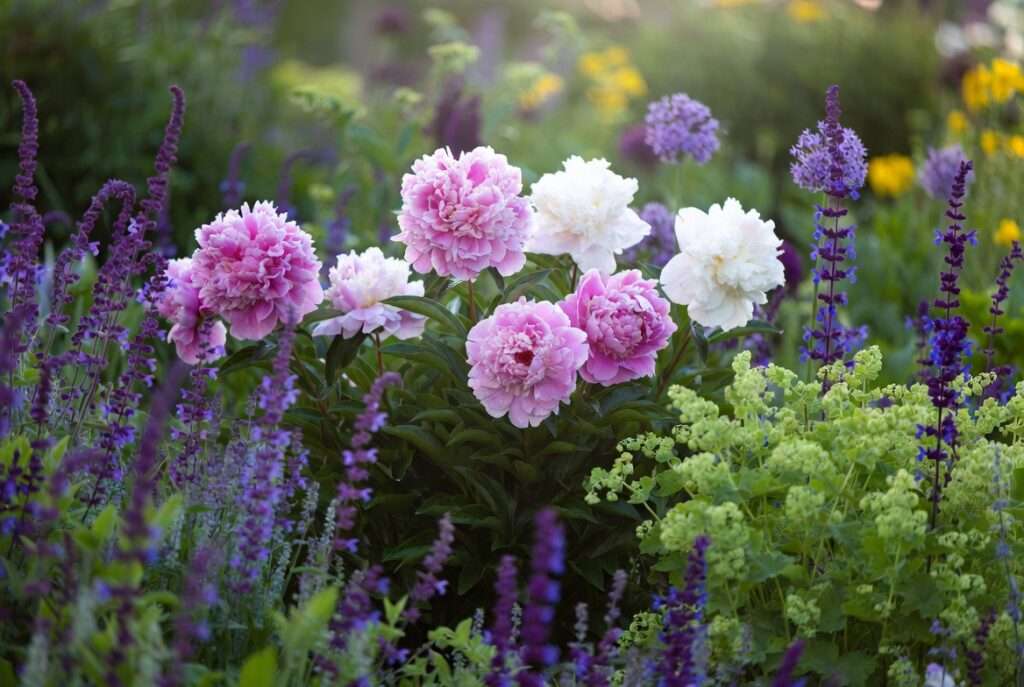
Imagine stepping into your garden on a warm June morning and being greeted by enormous, fluffy peony blooms in shades of blush pink, crimson, and pure white, their sweet fragrance filling the air. Now picture those show-stopping flowers beautifully complemented by neighboring plants that enhance their beauty, protect their health, and keep the garden looking spectacular long after the peonies fade. That’s the magic of peony companion plants. 🌷
Many gardeners adore peonies for their spectacular spring display, but they often face the same challenge: once the blooms are gone, the foliage can turn yellow and messy, leaving awkward gaps in the border. Strategic companion planting solves this problem elegantly. It creates year-round interest, improves plant vigor, deters pests, attracts pollinators, and turns an ordinary garden into a breathtaking, professional-looking landscape.
With over 18 years of hands-on experience as a horticulturist specializing in perennial gardens and cottage-style plantings, I’ve helped hundreds of homeowners design thriving peony beds. In this comprehensive guide, you’ll discover 15 of the very best peony companion plants, proven design strategies, practical care tips, and expert insights that go far beyond basic lists you’ll find elsewhere. Whether you’re a beginner or seasoned gardener, this article will help you create a healthier, more beautiful garden that brings joy from spring through autumn. ✨
Why Companion Planting Matters for Peonies 🌿
Peonies (Paeonia lactiflora and other varieties) are long-lived perennials that can thrive for decades with proper care. However, they have specific needs that make thoughtful companions especially valuable.
The Unique Needs of Peonies Peonies prefer full sun (at least 6-8 hours daily), rich, well-drained soil, and good air circulation. They dislike competition for nutrients and are susceptible to botrytis (gray mold) and powdery mildew in crowded, humid conditions. Their large, heavy blooms also benefit from structural support from neighboring plants.
Key Benefits of Strategic Companions
- Aesthetic Enhancement: Companions hide fading peony foliage while adding contrasting colors, textures, and extended bloom times.
- Pest and Disease Management: Many companions attract beneficial insects or naturally repel pests.
- Soil Health and Nutrient Balance: Diverse plantings improve soil structure and reduce the risk of nutrient depletion.
- Pollinator Support: Peonies bloom early, but companions keep bees, butterflies, and hummingbirds visiting all season.
- Low-Maintenance Beauty: A well-designed mix creates a self-sustaining ecosystem that looks intentional and lush. 🦋
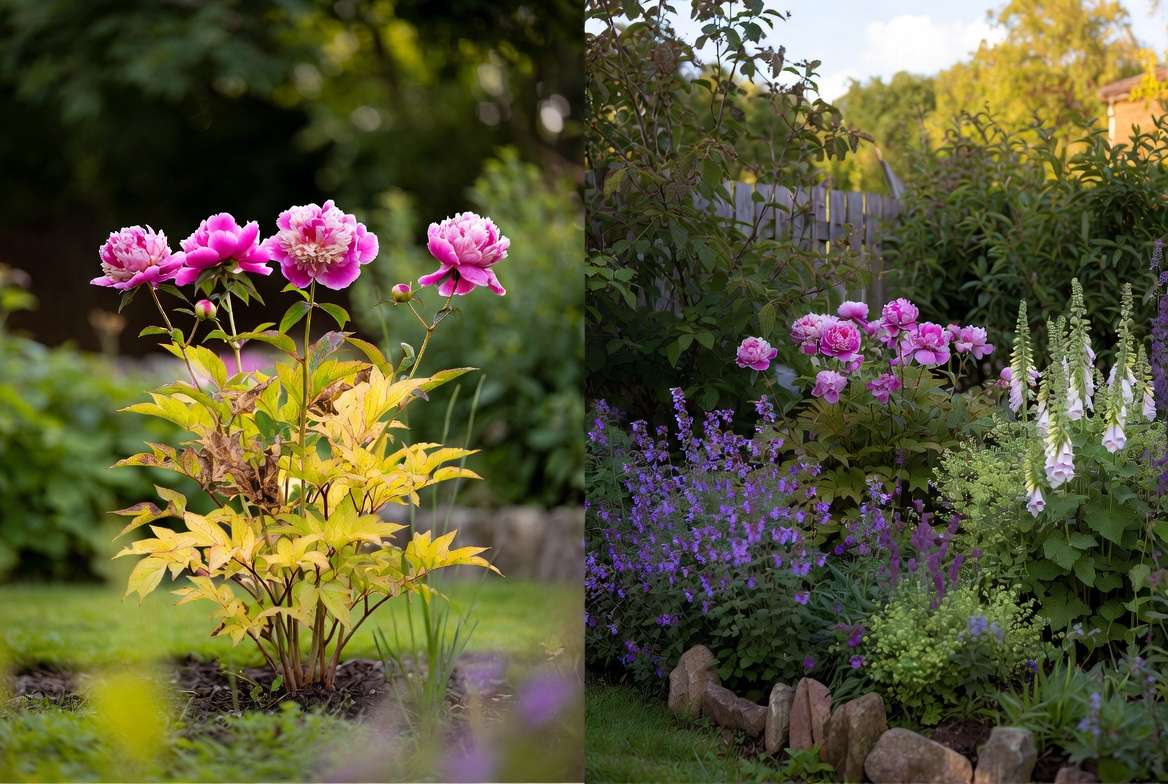
How Companions Extend Your Garden’s Beauty Beyond Peony Season Peonies typically bloom for 2-3 weeks in late spring to early summer. The right companions ensure your garden never has a dull moment—from early spring bulbs to late-summer perennials and evergreen foliage for winter interest.
Common Mistakes to Avoid Avoid planting aggressive spreaders (like mint or bee balm) too close, as they can choke peonies. Don’t place tall, shading plants on the south side, and never disturb peony roots deeply once established.
Understanding Peony Growing Conditions for Successful Companions ☀️
Success with peony companion plants starts with matching environmental needs.
Sunlight, Soil, and Spacing Requirements Peonies need full sun and dislike wet feet. Plant them with “eyes” (pink buds) no more than 2 inches below the soil surface. Space peonies 3-4 feet apart to allow good airflow and room for companions.
USDA Hardiness Zones and Climate Considerations Most garden peonies thrive in zones 3-8. In warmer zones, choose heat-tolerant varieties and provide afternoon shade. In colder areas, companions like catmint and hardy geraniums add winter structure.
Preparing Your Soil and Site for Mixed Plantings Amend soil with compost and ensure excellent drainage. A slightly alkaline pH (6.5-7.5) is ideal. Test your soil before planting to create the perfect foundation for a thriving mixed border. 🌱
15 Best Peony Companion Plants 🌼
Here is my curated list of top-performing companions, organized by season and role. Each has been tested in real gardens for compatibility, beauty, and ease of care.
Early-Season Spring Companions (Blooming Alongside Peonies)
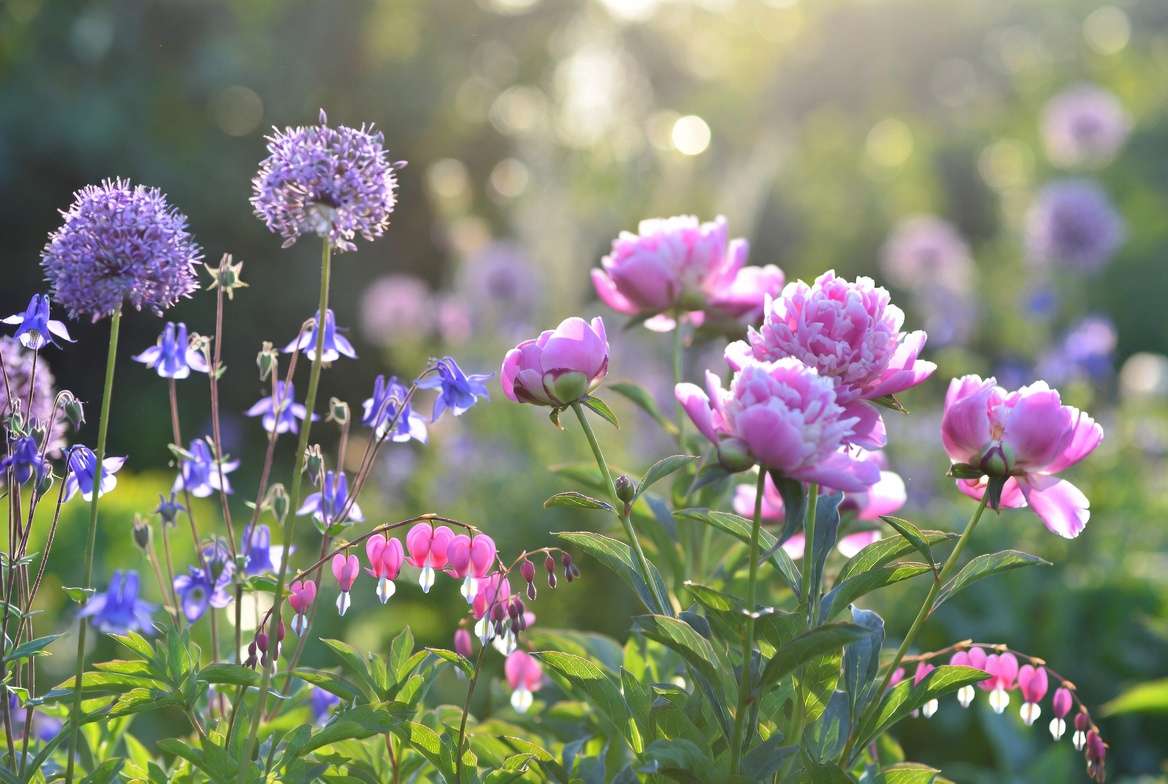
Bleeding Heart (Dicentra spectabilis) 💕 These elegant, heart-shaped pink or white flowers bloom at the same time as peonies and share similar shade tolerance in hotter climates. Their ferny foliage softens the bold peony leaves. Plant bleeding hearts behind or beside peonies for a romantic cottage look. They prefer partial shade in warmer zones and go dormant gracefully in summer.
Bearded Iris and Siberian Iris 🌈 Irises are classic peony companions. Their sword-like foliage contrasts beautifully with peony leaves, and their stunning blooms overlap perfectly. Bearded irises add vertical drama, while Siberian irises tolerate slightly more moisture. Divide every few years to maintain vigor.
Alliums (Ornamental Onions) 🧅 Tall, globe-shaped purple or white allium flowers rise above peonies like living sculptures. They deter deer and rabbits while attracting pollinators. Alliums are drought-tolerant once established and their foliage dies back neatly.
Columbine (Aquilegia) ✨ Delicate, spurred flowers in many colors dance above peonies in late spring. Columbines self-seed gently and fill gaps without competing aggressively. They thrive in similar well-drained conditions.
Foxglove (Digitalis) 🧚 These tall spires add vertical interest and cottage charm. Biennial foxgloves bloom in early summer, extending the show. Choose shorter varieties to avoid shading peonies.
Mid-to-Late Season Summer Companions (Filling Gaps After Peonies Fade)
Catmint (Nepeta) 🐱 One of the absolute best peony companion plants. Its silvery foliage and lavender-blue spikes bloom from late spring through summer. Catmint is drought-tolerant, deer-resistant, and attracts masses of pollinators. Cut it back after the first flush for rebloom. ‘Walker’s Low’ is a top variety.
Salvia (Sage) 🌿 Especially perennial salvias like ‘May Night’ or ‘Caradonna’. Their deep purple spikes contrast beautifully with peony colors and continue blooming long after peonies finish. Salvia improves air circulation and repels certain pests.
Coneflower (Echinacea) 🦋 Sturdy, daisy-like flowers in pink, purple, white, and orange bring mid-to-late summer color. Echinacea is tough, long-blooming, and highly attractive to butterflies and bees. It pairs wonderfully with peonies in full-sun borders.
Lady’s Mantle (Alchemilla mollis) 💧 Its chartreuse, scalloped leaves catch morning dew like jewels and provide excellent ground cover to hide yellowing peony foliage. Soft lime-green flower sprays add ethereal beauty in early summer.
Hardy Geraniums (Cranesbill) 🌸 Reliable ground covers with delicate flowers and attractive foliage. Varieties like ‘Rozanne’ bloom nonstop from spring to frost. They weave beautifully between peonies without smothering them.
Foliage-Focused and Ground Cover Companions
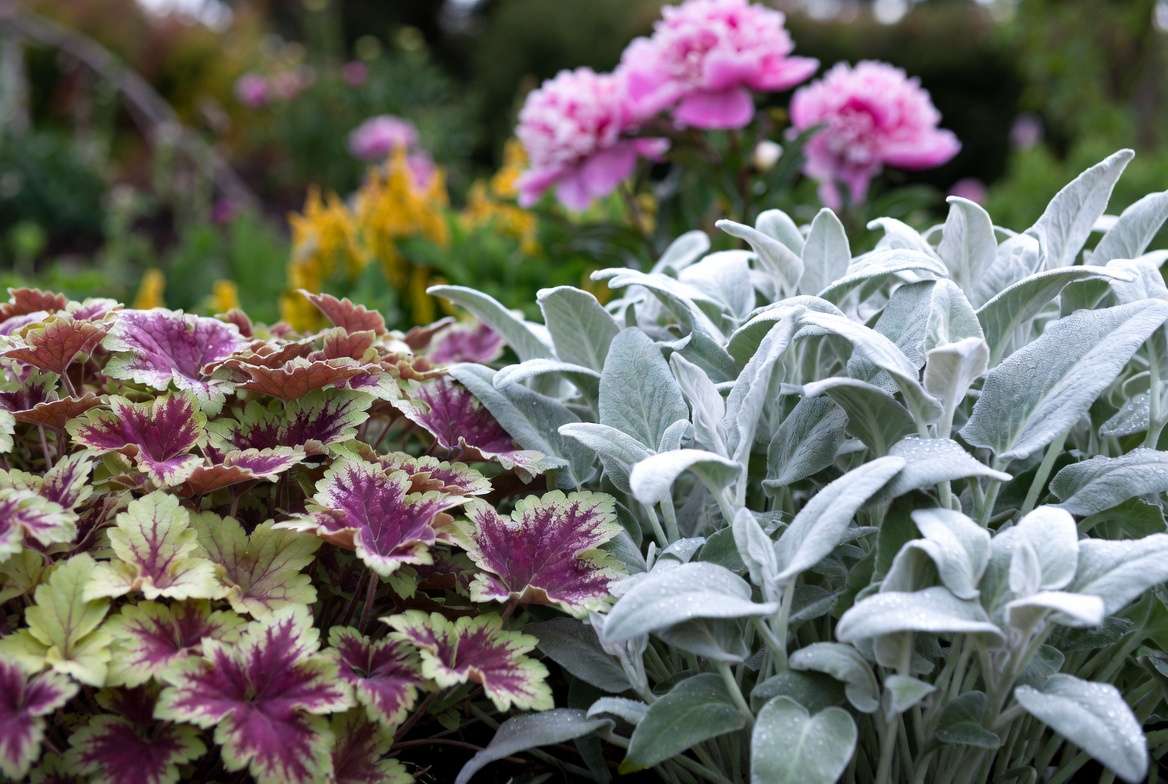
Heuchera (Coral Bells) 🍁 Heuchera offers stunning foliage in shades of purple, lime, peach, and silver. It thrives in partial shade and keeps the base of peonies looking neat year-round. Tiny bell flowers add extra interest.
Lamb’s Ear (Stachys byzantina) 🐑 Soft, fuzzy silver leaves provide wonderful textural contrast. It’s drought-tolerant and makes an excellent edging plant. Lamb’s ear helps suppress weeds around peonies.
Brunnera (Siberian Bugloss) 🌿 Heart-shaped leaves with silver variegation shine in shady spots. Delicate blue forget-me-not flowers appear in spring. Excellent for woodland-style peony plantings.
Tall Structure and Shrub Companions
Roses (especially David Austin or floribunda) 🌹 Peonies and roses are a match made in heaven. Their bloom times overlap beautifully, and both enjoy similar growing conditions. Choose disease-resistant varieties.
Baptisia (False Indigo) 💙 Tall, lupine-like spikes in blue, purple, or yellow add structure and vertical interest behind your peonies. As a member of the legume family, Baptisia fixes nitrogen in the soil, benefiting neighboring peonies naturally. It’s extremely drought-tolerant once established and provides beautiful seed pods for winter interest. Plant it 2-3 feet behind peonies for the perfect layered effect.
Design Tips for Stunning Peony Companion Gardens 🎨
Creating a harmonious peony companion planting scheme requires thoughtful layering and color planning. The goal is a garden that looks naturally abundant rather than crowded.
Creating Layered Planting Schemes (Height, Texture, Color Harmony) Use the “thriller, filler, spiller” approach:
- Thrillers: Tall plants like Baptisia, Foxglove, and Alliums for vertical drama.
- Fillers: Bushy companions like Catmint, Hardy Geraniums, and Coneflower to fill mid-level space.
- Spillers: Low-growing Lamb’s Ear, Lady’s Mantle, and Heuchera to cascade at the front and hide fading peony stems.
Mix fine textures (fern-like Bleeding Heart) with bold ones (peony leaves and Iris swords) for visual interest that changes throughout the seasons.
Cottage Garden, Formal Border, and Mixed Perennial Bed Ideas In cottage gardens, mix peonies freely with roses, foxgloves, and columbines for romantic abundance. For formal borders, plant in repeating patterns — peony, catmint, salvia, heuchera — for clean repetition. Mixed beds work beautifully when you group 3-5 peonies with 8-12 companion plants per 10×6 foot area.
Color Palette Inspirations
- Pastel Dream: Soft pink peonies with white foxgloves, blue baptisia, and silver lamb’s ear.
- Bold Contrast: Red peonies paired with purple salvia and bright coneflowers.
- Monochromatic: White peonies with white irises, lady’s mantle, and variegated brunnera for elegant serenity.
Using Bulbs and Annuals to Fill Seasonal Gaps Interplant early daffodils and tulips for spring color before peonies open. Add cool-season annuals like snapdragons or late-season fillers like cosmos to keep beds vibrant into fall.
Practical Planting and Care Guidelines 🛠️
How to Plant Peonies with Companions Without Disturbing Roots Plant peonies first in autumn or early spring. Once established (after 1-2 years), add companions in the spaces between. Dig wide, shallow holes for new plants to avoid damaging peony roots. Water deeply after planting to help everything settle.
Watering, Mulching, and Fertilizing Mixed Beds Water consistently but avoid overhead watering to prevent fungal issues. Apply 2-3 inches of organic mulch (bark or compost) to retain moisture and suppress weeds. Fertilize peonies lightly in spring with a low-nitrogen, high-phosphorus formula. Most companions thrive on the same schedule.
Pest and Disease Management in Companion Plantings Good companions naturally reduce problems. Catmint and salvia attract ladybugs that eat aphids. Proper spacing prevents powdery mildew. Monitor for botrytis and remove affected foliage promptly. Companion diversity creates a balanced ecosystem less prone to outbreaks.

Seasonal Maintenance Calendar
- Spring: Cut back last year’s growth, divide companions if needed, apply slow-release fertilizer.
- Summer: Deadhead spent blooms, cut catmint and geraniums back for rebloom.
- Fall: Clean up yellow peony foliage, plant new companions, add winter mulch.
- Winter: Leave sturdy stems (like coneflower and baptisia) for bird interest.
Plants to Avoid Near Peonies ❌
Not every plant makes a good neighbor. Avoid these to protect your peonies’ health:
- Aggressive Spreaders: Mint, bee balm (Monarda), and yarrow can quickly overtake peonies.
- Heavy Shade-Casters: Large trees or tall shrubs on the south side that block sunlight.
- Walnut Trees: They release juglone, which is toxic to many perennials including peonies.
- Water-Loving Plants: Hostas in very wet soil can encourage fungal diseases that spread to peonies.
- Invasive Grasses: Ornamental grasses that spread by runners can compete aggressively for nutrients.
Choosing the right peony companion plants prevents future headaches and keeps your garden thriving for decades.
Expert Insights and Real Garden Success Stories 🌟
In my 18+ years designing perennial gardens, I’ve seen dramatic transformations when gardeners embrace companion planting. One client in USDA Zone 5 replaced a tired lawn border with peonies, catmint, salvia, and heuchera. Two years later, their garden won a local beautification award and required almost no pesticides due to increased beneficial insects.
Another success story involved a shady suburban yard where bleeding hearts, brunnera, and coral bells turned a struggling peony bed into a lush woodland oasis. These combinations not only look stunning but support local biodiversity.
Pro Tips from Long-Time Peony Growers:
- Stake peonies early using grow-through supports that blend with companions.
- Allow some self-seeding from columbine and foxglove for natural evolution.
- Photograph your garden each season to refine combinations over time.
- Focus on soil health first — everything else follows.

Frequently Asked Questions (FAQs) ❓
What are the best peony companion plants for shade? In partial shade, choose bleeding heart, brunnera, heuchera, and astilbe. They tolerate less sun while complementing peonies beautifully.
Can I plant peonies with roses? Absolutely! Peonies and roses are excellent companions. They share similar care needs and create luxurious, fragrant displays when planted together.
How far apart should companions be planted? Leave 18-36 inches between peonies and companions, depending on mature size. This ensures good airflow and prevents root competition.
Do peonies like lavender as a companion? Lavender works in well-drained, sunny spots but prefers drier conditions than peonies. Use it sparingly on the edges of the bed.
How do I hide yellowing peony foliage? Plant bushy companions like catmint, lady’s mantle, or hardy geraniums in front to naturally camouflage fading leaves.
When is the best time to add companions? Early fall or spring, after peonies are established. Avoid disturbing peonies during active growth.
Are there any deer-resistant peony companion plants? Yes — catmint, salvia, alliums, and baptisia are generally deer-resistant due to their scent and texture.
Conclusion
Mastering peony companion plants transforms your garden from a short-lived spring spectacle into a season-long masterpiece of beauty, health, and biodiversity. By choosing the right partners — from elegant bleeding hearts and hardworking catmint to structural baptisia and textural lamb’s ear — you create a resilient, low-maintenance landscape that brings joy year after year. 🌸
Start small if you’re new to companion planting. Add just 3-5 new plants this season and watch the magic unfold. Your peonies will thank you with stronger growth and more abundant blooms, while your entire garden gains depth, color, and life.
Which of these 15 best peony companion plants will you try first? Share your garden plans or favorite combinations in the comments below — I love hearing from fellow gardeners and offering personalized advice!
Ready to create your dream peony garden? Explore more of our perennial care guides and start planting today. Your future self (and local pollinators) will be grateful. ✨











