
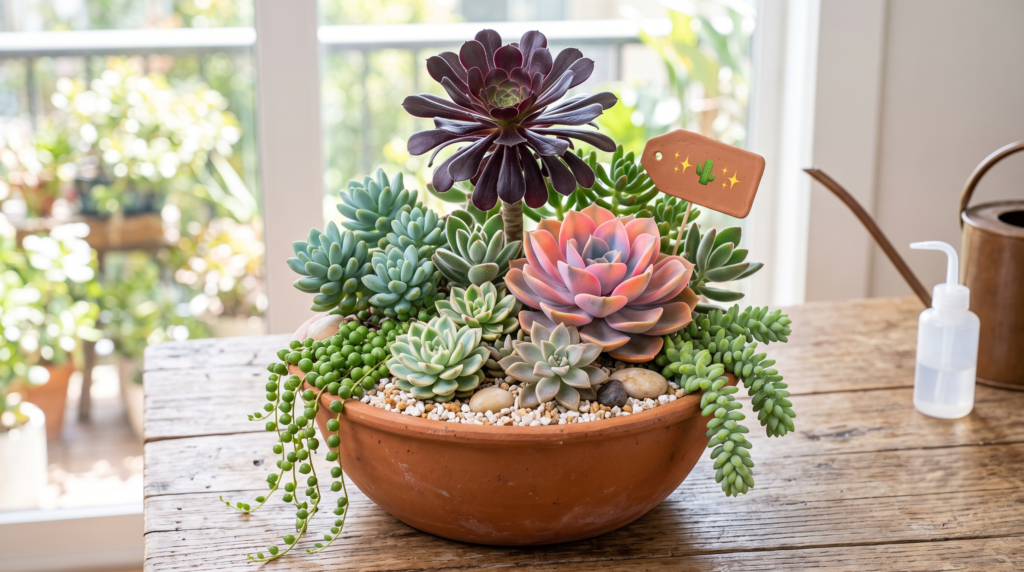
You’ve just returned from the nursery with a stunning haul of colorful rosettes, trailing vines, and textural accents. You carefully arrange them in a gorgeous bowl, step back to admire your handiwork, and picture how amazing it will look as a centerpiece. But fast forward four weeks: half the plants are turning to a mushy, translucent brown, while the other half look shriveled, crispy, and desperate for a drink. Sound familiar?
The truth is, mixing different succulents in one container is entirely possible—and can yield breathtakingly beautiful results—but it requires more than just an eye for design. It demands a fundamental understanding of plant biology. Most generic gardening advice ignores the fact that “succulent” is just a broad term for plants that store water; they come from vastly different ecosystems across the globe.
As someone deeply invested in the science of plant care and soil health, I can tell you that the secret to a long-lasting, vibrant arrangement isn’t magic. It comes down to mimicking nature. This guide is your ultimate blueprint for combining different species without the heartbreak of root rot, etiolation (stretching), or pest outbreaks.
Expert Author Note: 📝 Early in my horticultural journey, I lost countless expensive Echeverias because I paired them with thirsty trailing plants in standard, moisture-retaining soil. It wasn’t until I dove deep into soil biology and the specific dormancy cycles of these desert natives that I realized successful pairing is a science first, and an art second. By applying the principles below, you will never have to guess if your arrangement will survive the season.
The Golden Rules of Succulent Compatibility 🤝
If you want your succulent arrangement to thrive for years rather than weeks, you must group plants by their physiological needs. Think of it as creating a micro-climate where everyone gets along.
1. Match the Watering Needs (Thick vs. Thin Leaves) 💧
Not all succulents process water at the same rate. A great rule of thumb is to look at the foliage. Plants with thick, plump leaves (like Lithops or chunky Pachyphytum) store massive amounts of water and need very infrequent drenching. Conversely, succulents with thinner leaves (like Aeoniums or Senecio) deplete their water reserves faster and require more frequent top-ups. Putting a deeply drought-tolerant plant next to a thirsty one guarantees that one will rot while the other dehydrates.
2. Align Light Requirements ☀️
Light is the most common reason mixed arrangements fail indoors.
-
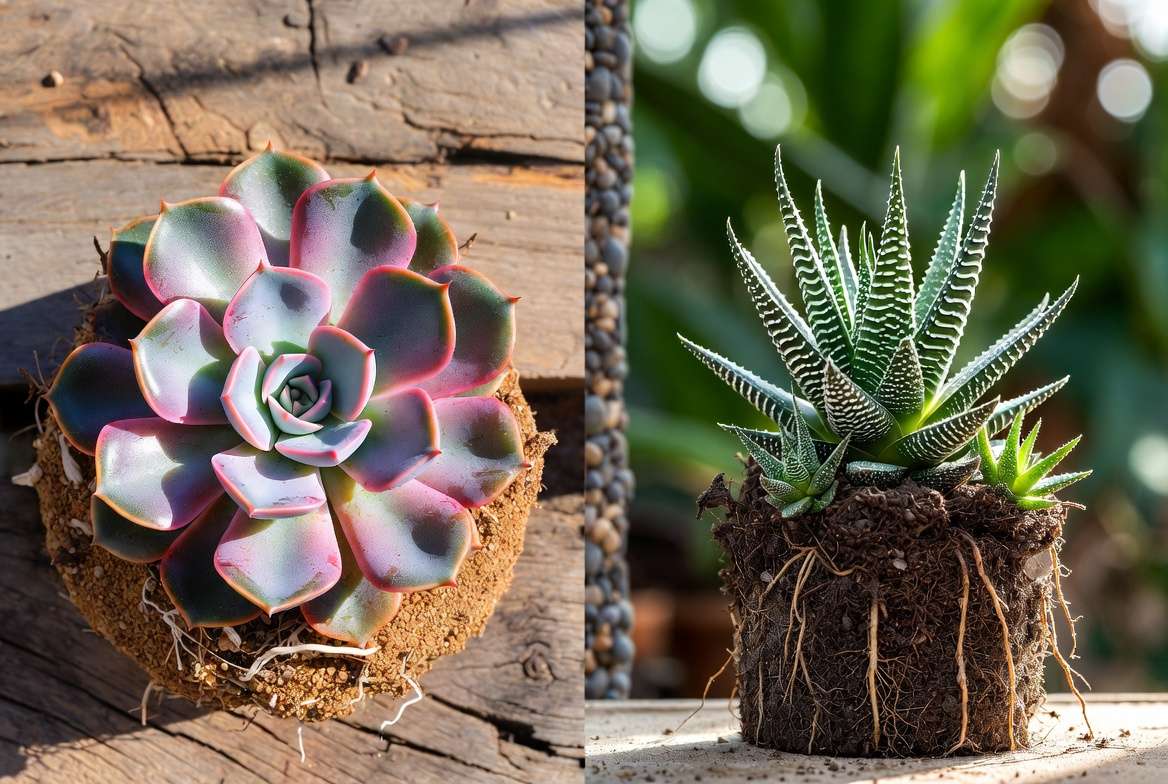
The Sun Worshippers: Cacti, Echeveria, and Graptopetalum generally require 6+ hours of direct sunlight to maintain their vibrant stress colors and compact rosette shapes.
-
The Shade Seekers: Haworthia, Gasteria, and many Aloes evolved under the shade of larger rocks or bushes in their native habitats. Placed in intense, direct sun, they will quickly sunburn, turning a dull brown or white.
3. Respect Dormancy Cycles (Summer vs. Winter Growers) ❄️
Just like trees shed their leaves in winter, succulents have periods of active growth and deep rest.
-
Summer Dormant (Winter Growers): Aeonium, Aloe, and Crassula tend to slow down or completely stop growing during the peak heat of summer. Watering them heavily during this time can lead to instant root rot.
-
Winter Dormant (Summer Growers): Echeveria, Agave, and Euphorbia thrive in summer heat and sleep through the winter. Mixing a winter-dormant plant with a summer-dormant plant is a recipe for disaster, as their watering schedules will completely clash.
Quick Reference: Succulent Pairing Table 📊
Crafting the Ultimate Soil Matrix for Mixed Containers 🪨
When grouping multiple root systems in a single, confined space, your soil health becomes the ultimate defense against disease and decay. A standard, store-bought “potting mix”—even if labeled for cacti—is almost always a death sentence for a densely packed arrangement because it contains too much peat moss, which acts like a sponge.
The Science of Aeration
Mixed containers require a highly aerated soil matrix. Succulent roots need oxygen just as much as they need water. When soil stays wet for more than three days, the lack of oxygen breeds anaerobic bacteria and fungal pathogens, leading to the dreaded black, mushy stems.
The Ideal Soil Recipe
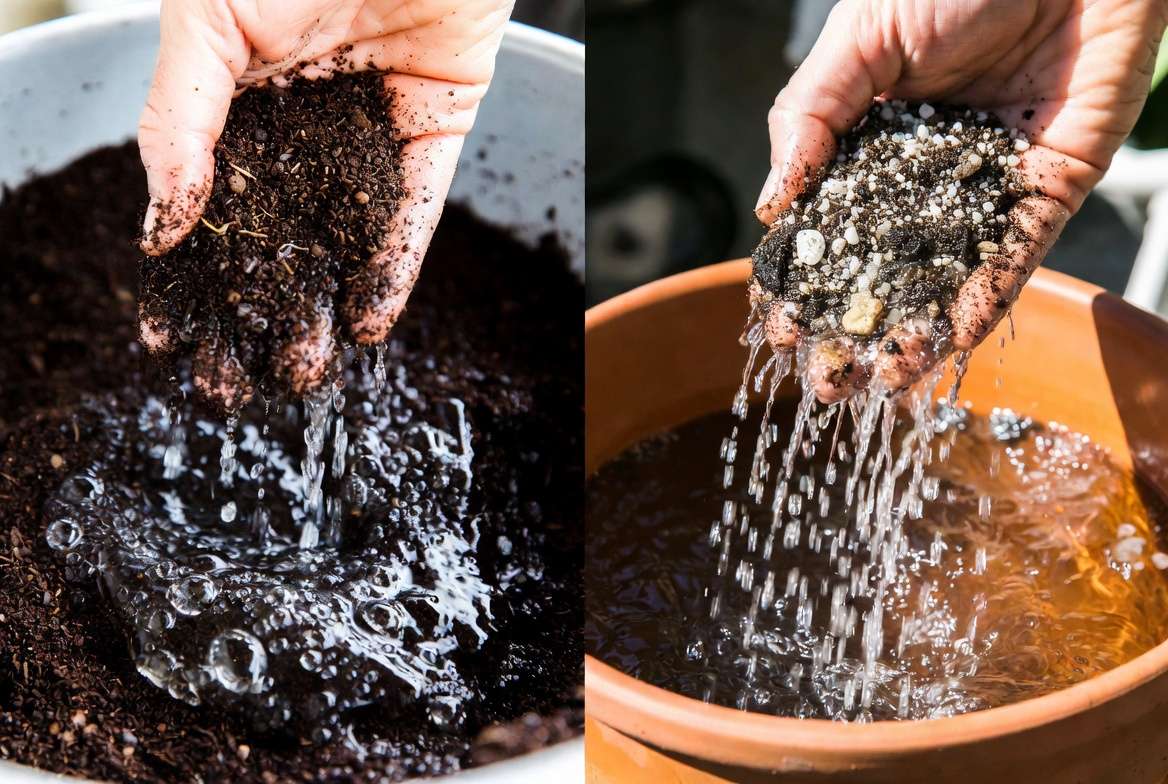
To ensure multiple species can share limited space without competing aggressively for trapped moisture, you need a gritty mix. A proven, expert-grade ratio is:
-
30-40% Organic Matter: High-quality potting soil (sifted to remove large chunks of bark).
-
60-70% Inorganic Grit: A mixture of pumice, coarse horticultural sand, perlite, or calcined clay (like Turface).
This coarse matrix allows water to flush through the pot rapidly, pulling fresh oxygen down to the root zone as it drains. Speaking of drainage—drainage holes are absolutely non-negotiable. A pot without a hole will cause water to pool at the bottom, creating a toxic, soggy environment no matter how good your soil mix is.
Designing Your Arrangement: The Thriller, Filler, Spiller Method 🎨
Now that the biological foundations are set, it’s time to design. The most visually striking arrangements utilize the classic “Thriller, Filler, Spiller” technique, adapted perfectly for drought-tolerant plants. This method is especially crucial if your goal is to showcase your plants online. A well-structured arrangement with high color contrast and varying textures naturally catches the eye—perfect for designing that highly clickable YouTube thumbnail or a viral Pinterest pin. 📸
-
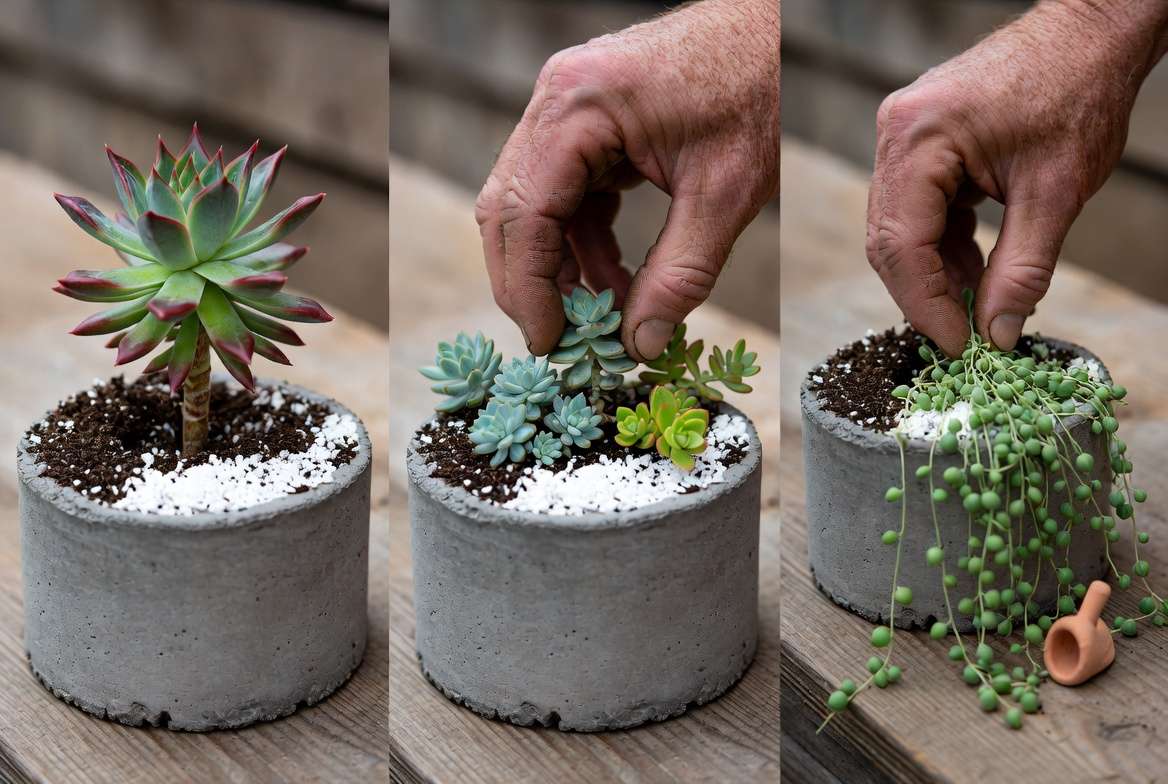
The Thriller (The Star): Choose a tall, colorful, or architecturally fascinating plant to serve as the focal point. A large, pastel Echeveria or a dramatic, dark-leaved Aeonium Zwartkop anchors the design. Position this slightly off-center for a modern look.
-
The Fillers (The Support): Use compact, clustering plants to cover the soil and frame the Thriller. Sedum clavatum, small Crassula varieties, or Pachyveria work beautifully to fill gaps and add contrasting textures.
-
The Spillers (The Edge): Soften the hard edges of your container by adding trailing succulents that cascade over the sides. String of Pearls, String of Hearts, or Burro’s Tail add elegant vertical movement to the composition.
Step-by-Step Planting Guide 🧤
Creating your mixed arrangement requires a gentle touch and a bit of strategic planning. When packing multiple root systems into a single space, precision is key. Follow these expert steps to ensure a flawless potting process:
1. Preparation and Pot Selection 🏺 Choose a container that is wider than it is deep. Succulents generally have shallow root systems; a pot that is too deep will hold stagnant, wet soil at the bottom, increasing the risk of rot. Gather your gritty soil mix, a small trowel or scoop, and a clean paintbrush.
2. Unpotting & Root Inspection 🔬 Carefully remove your selected plants from their nursery pots. Gently massage the root balls to remove as much of the old, peaty nursery soil as possible. This is a critical moment to inspect for pests like root mealybugs (look for tiny white cotton-like tufts). If you spot any, treat the roots with 70% isopropyl alcohol before proceeding.
3. Strategic Positioning 📐 Place a piece of mesh tape over your container’s drainage hole to keep the soil in while letting water out. Add a base layer of your gritty soil mix. Begin by planting your “Thriller” slightly off-center to establish the visual weight. Next, arrange your “Fillers” around the base, and finally, tuck your “Spillers” near the edges so they can cascade naturally.
4. Filling the Gaps (The Chopstick Method) 🥢 When mixing different succulents in one container, space gets tight quickly. Use a small soil scoop to add your gritty mix around the plants. To ensure there are no large air pockets trapped around the roots, take a wooden chopstick and gently poke the soil down into the crevices. This helps settle the soil matrix securely without damaging delicate roots.
5. Top Dressing for Polish and Protection 🪨 Add a layer of decorative gravel, pumice, or polished pebbles to the surface of the soil. This isn’t just for aesthetics! Top dressing acts as a physical barrier that keeps the wet soil away from the lower leaves and crowns of your succulents, drastically reducing the risk of crown rot.
6. The Waiting Period (The Ultimate Expert Secret) ⏳ Once your beautiful arrangement is complete, do not water it. I repeat: step away from the watering can! During the repotting process, microscopic root hairs are inevitably broken. If you introduce water immediately, those fresh wounds act as an open door for fungal pathogens. Wait 5 to 7 days to allow these micro-abrasions to callous over and heal. After this waiting period, give the container a deep, thorough watering.
Long-Term Care for a Crowded Container 🚿
Maintaining a densely planted arrangement requires a slightly different approach than caring for single potted succulents. The goal is harmony, balancing the needs of the community while keeping the container looking pristine.
Targeted Watering Strategies 🎯 Always utilize the “soak and dry” method—wait until the soil is 100% bone dry all the way to the bottom before watering again. However, in a mixed pot, you might occasionally notice that a thinner-leaved “Filler” is looking thirsty while a chunky “Thriller” is still perfectly plump.
-
The Solution: Keep a squeeze bottle or a large precision syringe in your gardening toolkit. This allows you to deliver a targeted dose of water straight to the root zone of the thirsty plant without soaking the soil around the drought-tolerant ones.
Managing Aggressive Growth ✂️ Over a growing season, some succulents will inevitably grow faster than others. A vigorous Sedum might start to swallow up a slow-growing Haworthia. Don’t be afraid to act as the editor of your arrangement! Use sterilized pruning snips to trim back aggressive growers. As a bonus, you can let those cuttings callous over for a few days and propagate them into entirely new plants!
Proper Fertilization 🧪 Crowded containers deplete soil nutrients faster than solitary pots. Feed your arrangement once in the spring and once in the mid-summer using a specialized, low-nitrogen succulent fertilizer diluted to 1/4 of the recommended strength. Over-fertilizing can cause weak, spindly growth that disrupts the tight, compact look of your design.
Troubleshooting Common Mixed Container Problems 🔍
Even with the best intentions, issues can arise. Here is how to diagnose and fix problems like a seasoned horticulturist:
Problem: One plant is stretching out, becoming tall and pale (Etiolation). 🦒
-
The Cause: It is starved for light.
-
The Fix: If the rest of the plants look fine, the stretched plant may simply require a higher light intensity than its neighbors. You can rotate the pot to ensure all sides receive equal sun, or carefully extract the stretched plant and replace it with a more shade-tolerant variety.
Problem: Leaves on a specific plant are turning yellow, translucent, and mushy. 🍂
-
The Cause: Overwatering or root rot.
-
The Fix: This is an emergency. Immediately extract the affected plant to prevent the rot from spreading to the neighboring root systems. Use a spoon to scoop out the surrounding wet soil, replace it with fresh, dry gritty mix, and hold off on watering the container for at least a week.
Problem: Shriveled, crispy, and dry lower leaves. 🏜️
-
The Cause: Natural leaf reabsorption (if only the very bottom leaves) or severe underwatering (if the whole plant is wrinkling).
-
The Fix: Gently remove dead lower leaves with tweezers to maintain good airflow. If the whole plant is dehydrated, use your squeeze bottle for a targeted deep soak around its base.
Frequently Asked Questions (FAQ) 💬
Can I plant cacti and succulents in the same pot? 🌵 Generally, this is not recommended for long-term success. While cacti are technically succulents, their watering needs are drastically lower, and their light requirements are significantly higher than most fleshy succulents. Mixing them usually leads to an overwatered, rotting cactus or a severely dehydrated succulent.
Do I need to add a layer of gravel at the bottom of the pot for extra drainage? 🛑 No! This is one of the most pervasive and damaging myths in gardening. Adding a layer of gravel at the bottom of a pot does not improve drainage; it actually creates a “perched water table.” Water will refuse to cross the barrier from the fine soil into the coarse gravel until the soil is completely saturated, moving the soggy, drowning soil directly up into the root zone of your succulents. Always use a uniform, well-draining soil mix throughout the entire pot.
How long will a mixed succulent arrangement last before needing repotting? ⏳ If you use the proper gritty soil matrix and manage growth through occasional pruning, a mixed arrangement can thrive for 1 to 2 years. Eventually, the root systems will become completely root-bound, and the organic matter in the soil will break down, signaling that it is time for a fresh repotting.
What happens if one plant in the arrangement gets pests? 🐛 Because the plants are in close proximity, pests like mealybugs or spider mites will spread rapidly. If you spot an infestation, immediately quarantine the entire container away from your other houseplants. Treat the arrangement thoroughly with insecticidal soap or 70% isopropyl alcohol spray, ensuring you get into all the tight crevices between the plants.
Conclusion: Cultivating Confidence 🌟
Mastering the art of mixing different succulents in one container doesn’t require a magical green thumb; it simply requires a basic understanding of plant biology and a willingness to match your plants by their specific light, water, and dormancy needs.
By utilizing an airy, gritty soil matrix, employing the Thriller-Filler-Spiller design method, and following the golden rule of targeted watering, you can create breathtaking, living centerpieces that flourish for years. Remember, every expert gardener has lost a few plants along the way—it’s how we learn! But armed with the knowledge in this guide, you are perfectly equipped to avoid the common pitfalls and cultivate a stunning, thriving succulent community.
Now it’s time to get your hands dirty! Have you successfully mixed different succulent varieties before? Which combination is your absolute favorite? Let me know in the comments below, and don’t forget to save this guide for your next potting session! Happy planting! 🪴💚











