
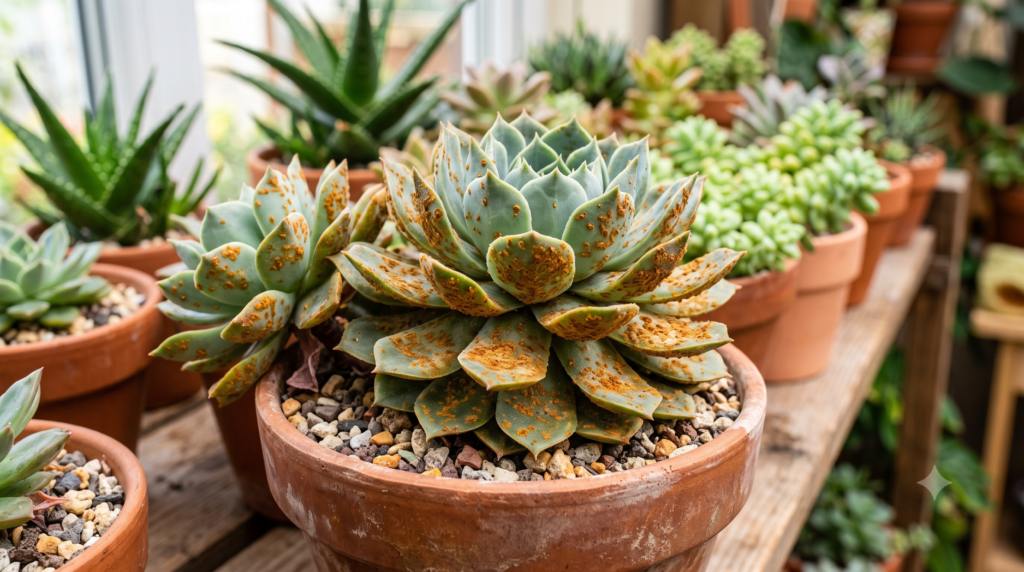
We have all experienced that sinking feeling. You are admiring your beautiful indoor garden, checking the plump, healthy leaves of your favorite desert plants, when you suddenly spot it: strange, powdery orange or brownish-red spots scattered across the foliage. Panic sets in. What is it, and is it going to kill your plant?
While these resilient drought-tolerant plants are famous for being tough, rust fungus on certain succulents is a highly contagious and destructive reality that can devastate your collection if ignored.
The good news? You do not have to throw your beloved plant in the trash just yet. Rust fungus is a common plant disease, and with the right horticultural knowledge, it is entirely treatable. In this comprehensive, step-by-step guide, we are going to dive deep into exactly what these fungal spores are, how to accurately diagnose them without confusing them with other common succulent issues, and the exact treatment protocol you need to eradicate the fungus, save your plant, and protect your entire garden. Let’s get to work! 🪴✨
🔍 What is Rust Fungus and Why Is It Attacking My Succulents?
To defeat an enemy, you must first understand it. Rust fungus is not just a single disease; it is a broad term for thousands of species of fungi, primarily from the Puccinia and Uromyces genera. These microscopic organisms are obligate parasites, meaning they require a living host plant to survive, grow, and multiply.
The Science Behind the Spores 🧫
Unlike pests like mealybugs or spider mites that crawl from pot to pot, rust fungus spreads via microscopic spores. These spores are incredibly resilient and can travel through your garden or home via:
-
Wind and Drafts: An open window or a ceiling fan can easily carry spores to neighboring plants.
-
Water Splashing: Watering your succulents from above can cause spores on the soil or lower leaves to splash up onto healthy foliage.
-
Contaminated Tools: Using the same pruning shears or tweezers on an infected plant and then a healthy one is a guaranteed recipe for cross-contamination.
Why It Targets Specific Plants
You might be wondering: Why is only one of my succulents infected while the plant sitting right next to it is completely fine?
Rust fungi are notoriously host-specific. A strain of rust that infects an apple tree will not infect a succulent, and a strain that attacks an Aloe vera might completely ignore your Echeveria. The occurrence of rust fungus on certain succulents is tied to the plant’s specific cellular structure, the thickness of its cuticle (the waxy outer layer), and the microclimate surrounding its leaves.
The Most Susceptible Succulent Varieties 🪴
While any plant can fall victim under the right (or wrong) conditions, horticultural experts frequently observe rust fungus outbreaks on these specific succulent varieties:
-
Sempervivum (Hens and Chicks): Because they grow in dense, low-to-the-ground clusters, airflow is often poor, creating a humid microclimate that spores love.
-
Euphorbia Species: Many Euphorbia have structural ridges where water can easily pool, inviting fungal growth.
-
Aloes and Gasterias: These genera frequently fall victim to a specific type of rust that manifests as black or dark brown pustules rather than the typical orange.
-
Agaves: Outdoor agaves are highly susceptible to wind-borne rust spores, especially during damp, cool seasons.
🕵️♀️ How to Accurately Identify Rust Fungus
Before you start spraying chemicals or hacking away at your plant’s leaves, you need a confirmed diagnosis. Treating a plant for rust fungus when it actually has a watering issue can cause more harm than good. Here is how to identify rust fungus through its life cycle.
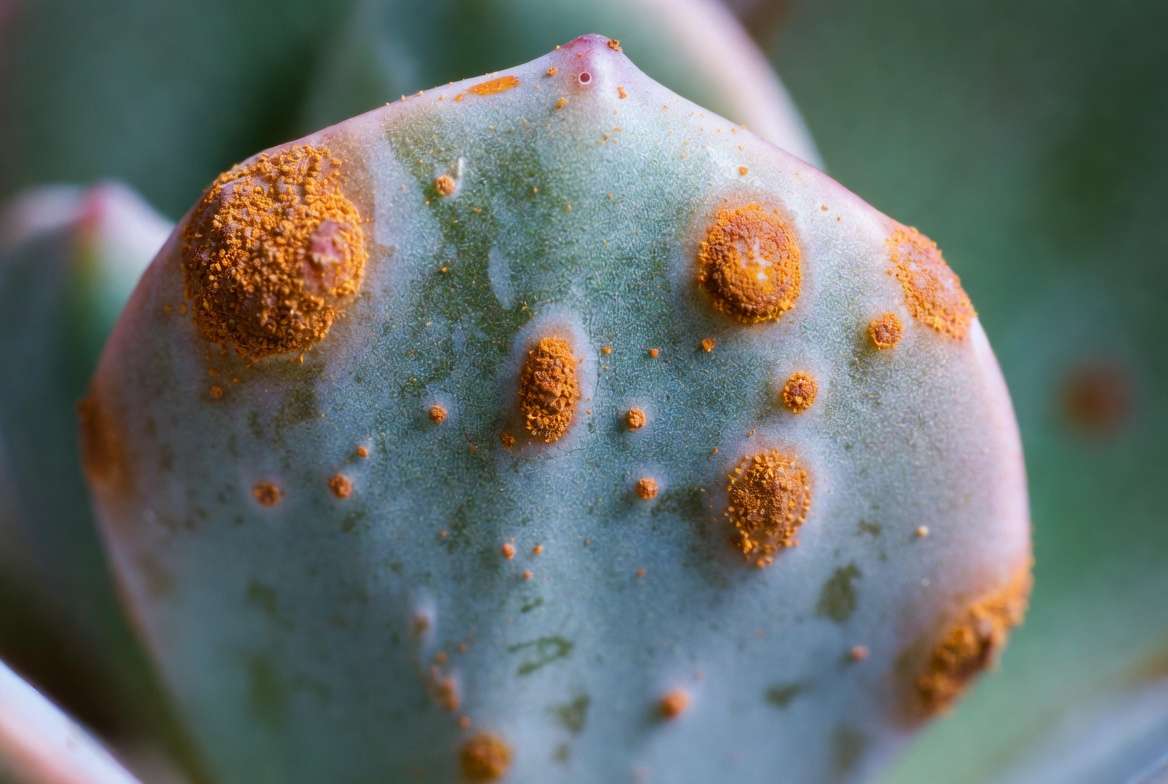
Stage 1: The Early Warning Signs 🟡
Rust fungus starts subtly. If you inspect your succulents regularly, you might catch it in this phase. Look for small, pale, yellowish or white dots appearing on the upper surfaces of the lower leaves. At this point, the fungus is incubating inside the plant tissue, feeding on the plant’s nutrients.
Stage 2: The “Rusty” Outbreak 🟠
As the infection progresses, the true nature of the disease reveals itself. The fungus pushes through the epidermal layer of the leaf, usually on the underside, forming raised, blister-like bumps known as pustules.
When these pustules mature, they rupture, releasing a powdery mass of spores. Depending on the specific fungal strain and the succulent species, this powder can be:
-
Bright, rusty orange
-
Brick red
-
Dark brown or purplish-black
Diagnostic Table: Rust Fungus vs. Lookalikes 📊
Misdiagnosis is the number one reason succulent owners fail to save their plants. Use this expert diagnostic table to compare your plant’s symptoms against other common succulent ailments:
| Symptom / Condition | Visual Appearance | Texture / Feel | Primary Cause |
|---|---|---|---|
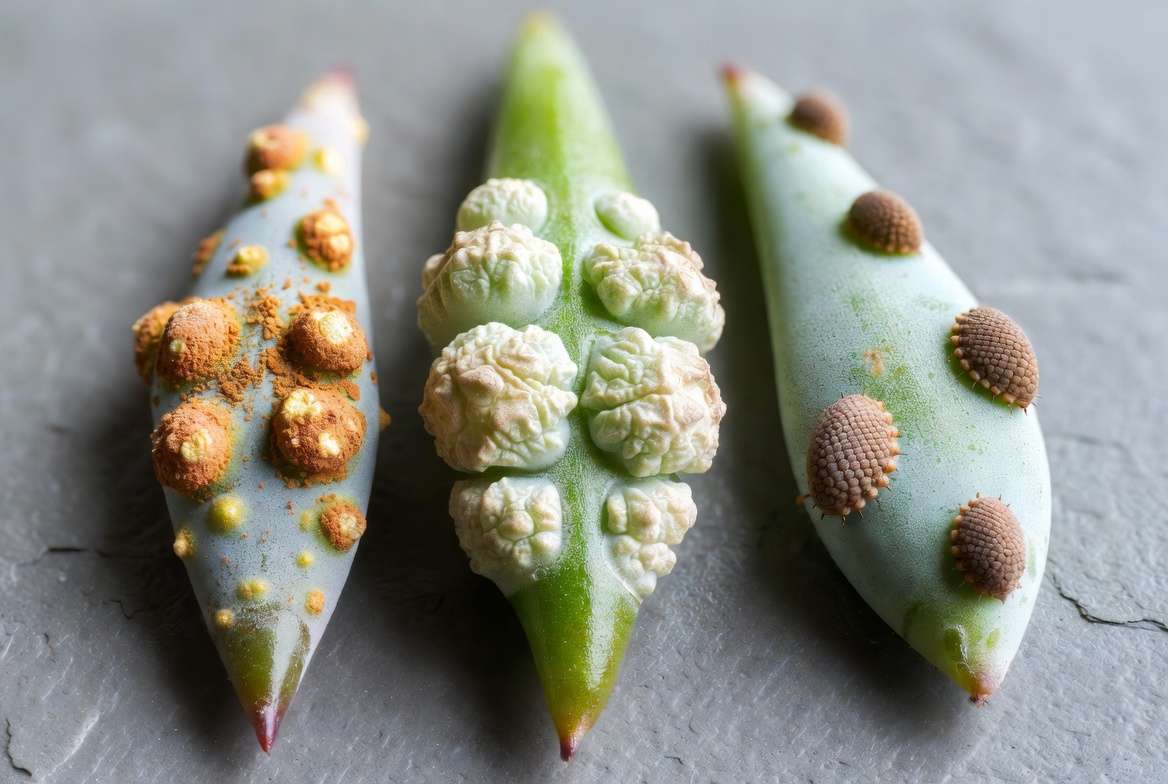
| Rust Fungus 🍄 | Raised pustules; orange, red, or brown spots. | Powdery; the orange “dust” will easily rub off onto your fingers or a cotton swab. | Airborne fungal spores thriving in high humidity. |
| Edema (Oedema) 💧 | Hard, crusty, or corky scabs, usually white or light brown. | Rough and hard; does not rub off or wipe away. | Irregular watering or overwatering causing plant cells to burst. |
| Sunburn ☀️ | Flat, scorched patches; usually white, yellow, or crispy brown. | Dry, papery, and flat on the leaf surface facing the light. | Sudden exposure to intense, direct sunlight. |
| Scale Insects 🪲 | Small, round, dome-like brown bumps. | Hard or waxy shells; can be popped or scraped off with a fingernail; often accompanied by sticky honeydew. | Sap-sucking pest infestation. |
🚨 Immediate Action: Stop the Spread!
If your diagnostic check confirms that you are indeed dealing with rust fungus, you must act immediately. Time is of the essence, as every hour that passes allows thousands of new microscopic spores to mature and catch the breeze.
Step 1: The Quarantine Zone 🛑
Treat an infected succulent like a highly contagious patient. Carefully pick up the pot—avoiding any sudden movements that might shake the powdery spores loose—and move the plant to an isolation zone.
Your quarantine area should be:
-
At least 10 to 15 feet away from any other houseplants.
-
Preferably in a completely different room.
-
Well-ventilated but away from direct fans that could blow spores around the room.
Step 2: Tool Sterilization Protocol ✂️
Never underestimate the microscopic nature of fungus. After handling the infected plant, you must wash your hands thoroughly with soap and warm water. Furthermore, any tools you plan to use for treatment (pruning shears, scissors, tweezers) must be strictly sterilized.
Wipe down your tools with 70% isopropyl alcohol before and after making any cuts. Do not skip this step, or you risk physically injecting rust spores directly into the healthy tissues of your other plants during routine pruning!
⚔️ The Ultimate Treatment Plan for Rust Fungus
Now that your plant is securely in quarantine and your tools are properly sanitized, it is time to go on the offensive. Treating rust fungus on certain succulents requires a multi-phased approach. We cannot just wipe the leaves and hope for the best; we have to physically remove the worst of the infection and then chemically alter the plant’s surface environment to make it inhospitable to remaining spores.
Phase 1: Surgical Pruning 🧤
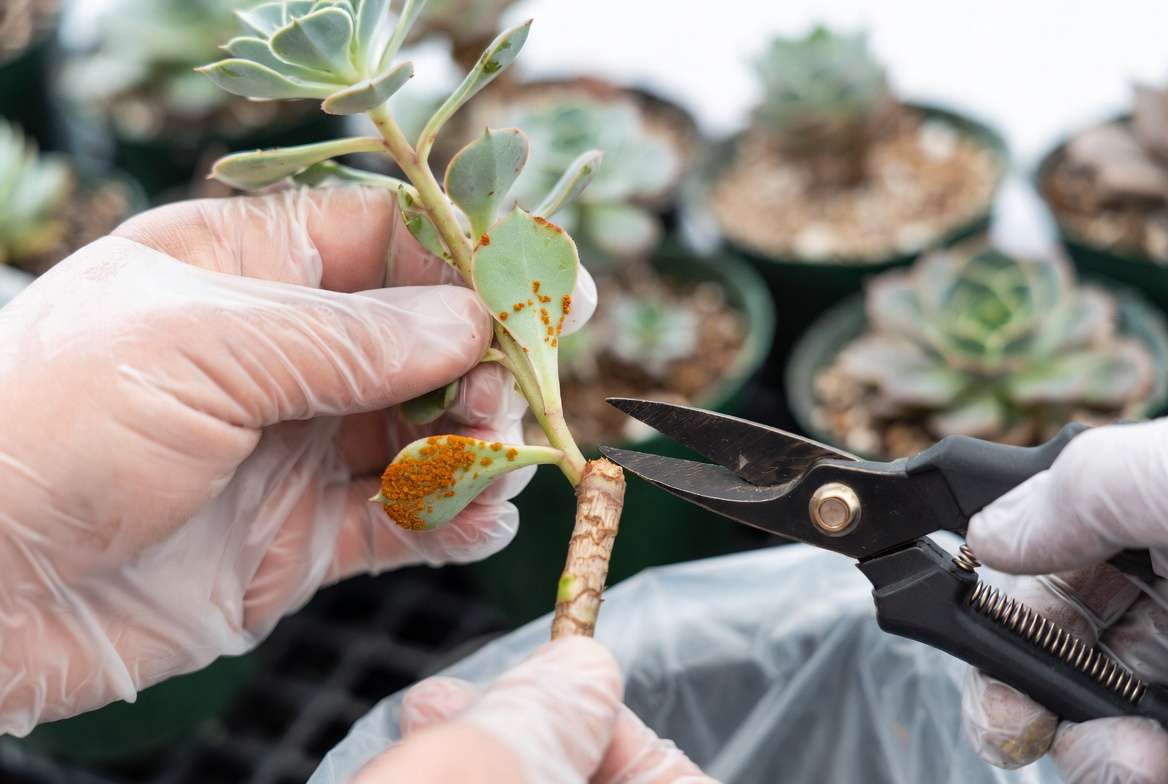
The first step in saving your plant is removing the most heavily infected tissue. This reduces the overall spore load and stops the fungus from draining your succulent’s vital energy.
-
Assess the Damage: Carefully inspect the plant. Identify leaves that are more than 30% covered in rust pustules. These leaves are too far gone to save and are acting as spore factories.
-
Make Clean Cuts: Using your sterilized shears, cut the infected leaves as close to the main stem as possible without damaging the stem itself. If dealing with rosette succulents like Echeveria or Sempervivum, gently wiggle the infected lower leaves side-to-side until they snap cleanly off the stem.
-
Proper Disposal (Crucial Step): Never, ever throw rust-infected plant parts into your compost bin! Rust spores can survive the winter in compost piles and will happily re-infect your garden next spring. Place the diseased leaves in a sealed plastic bag and throw them straight into the municipal garbage. 🗑️
Phase 2: Natural and Organic Treatments 🌿
If you caught the infection early, or if you prefer to avoid harsh chemicals inside your home, you can start with organic horticultural treatments.
-
The Baking Soda & Dish Soap Spray 🧼: Fungus thrives in slightly acidic environments. By applying a mild alkaline solution, you can drastically alter the pH of the leaf surface, halting fungal growth.
-
The Recipe: Mix 1 tablespoon of baking soda, 1/2 teaspoon of mild liquid dish soap (which acts as a surfactant to help the mixture stick), and 1 gallon of water in a spray bottle.
-
Application: Spray the plant thoroughly, paying special attention to the undersides of the leaves.
-
-
Neem Oil and Horticultural Oils 🌰: Neem oil is a popular organic fungicide that works by physically smothering the fungal spores, preventing them from germinating.
-
Expert Warning: Oils strip away the protective waxy coating (farina) on many succulents. Furthermore, oil amplifies sunlight. Never put a succulent treated with neem oil in direct sunlight, or it will suffer severe, irreversible leaf burn. Keep treated plants in bright, indirect light until the oil has fully washed away.
-
Phase 3: Commercial Fungicides (When to Bring in the Big Guns) 🛡️
If the natural methods fail after a week or two, or if the initial infection was massive, it is time to turn to commercial fungicides.
-
Copper Fungicide: This is a gold-standard treatment for rust and powdery mildew. Copper ions disrupt the cellular proteins of the fungus. Liquid copper sprays are highly effective, but again, use caution with sun exposure after application.
-
Sulfur Powder: Dusting the plant with wettable sulfur is an old-school but highly effective horticultural trick for treating rust fungus on certain succulents. It is less likely to damage the farina compared to oils.
-
Systemic Fungicides: Products containing active ingredients like Myclobutanil or Propiconazole work from the inside out. You apply them to the soil or spray them on the leaves, and the plant absorbs the chemical. When the fungus attempts to feed on the plant, it dies. Systemic treatments provide long-term protection, making them ideal for chronic outbreaks. 🧪
🛡️ How to Prevent Rust Fungus from Returning
Curing the current infection is only half the battle. To be a truly successful plant parent, you need to adjust your care routine to ensure rust spores never find a welcoming home in your collection again.
Perfecting Your Watering Technique 🚿
Fungal spores require moisture to germinate. The golden rule of succulent care—and your absolute best defense against rust—is: Never get the leaves wet.
-
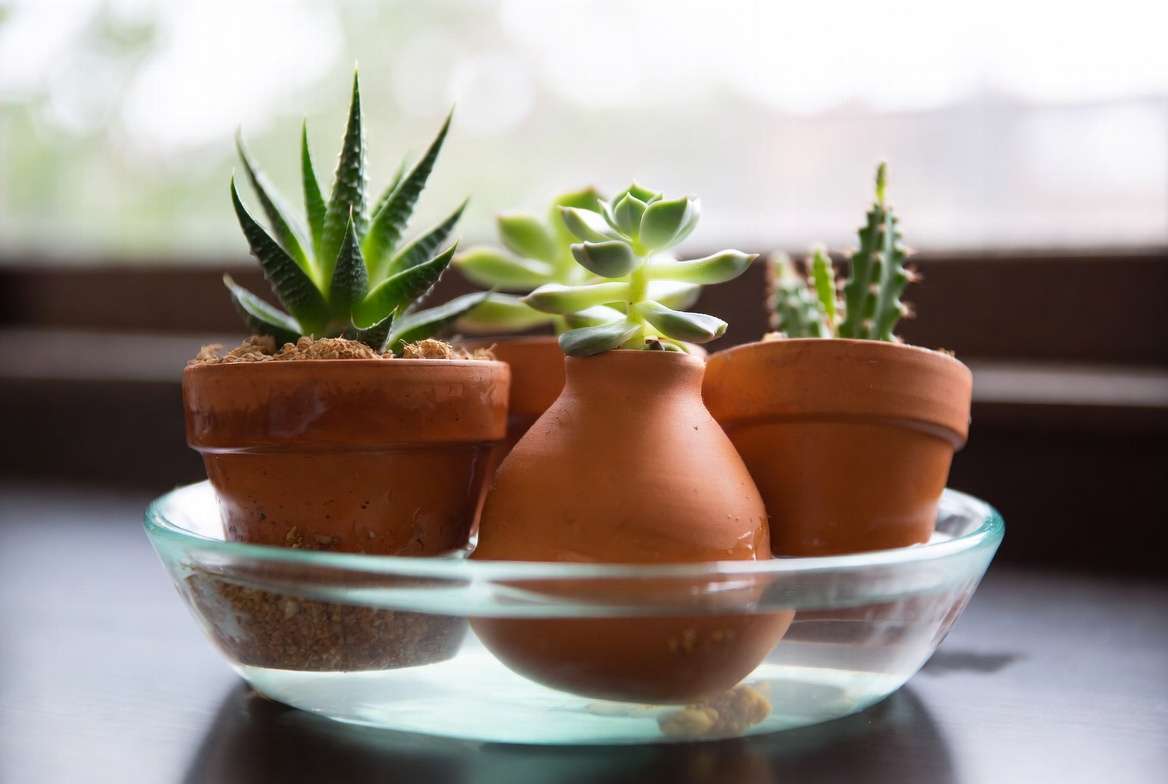
Bottom Watering: Place your nursery pots in a shallow tray of water and let the soil soak up moisture from the drainage holes. This keeps the foliage 100% dry.
-
Targeted Watering: If you must water from the top, use a watering can with a long, narrow spout to deliver water directly to the soil level, bypassing the leaves entirely.
Optimizing Airflow and Humidity 🌬️
Rust thrives in stagnant, humid air. Succulents, native to arid deserts, hate high humidity.
-
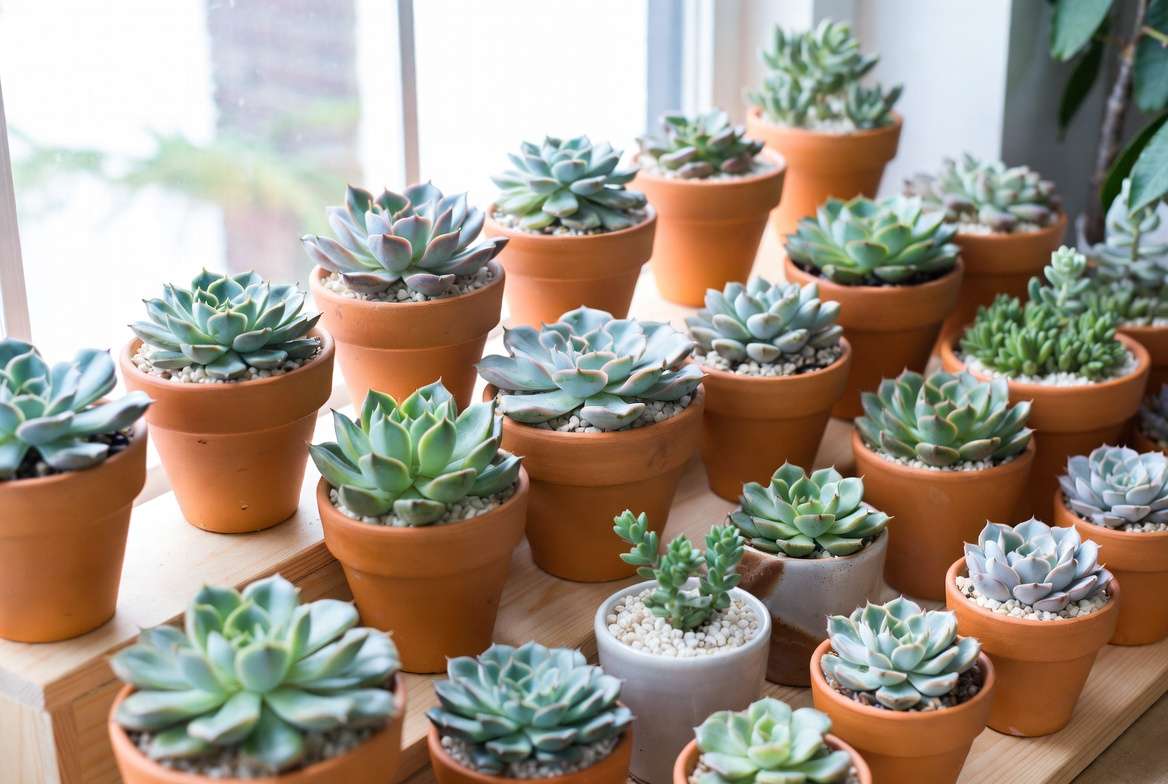
Spacing: Do not cram your plants tightly together on a shelf. Ensure there is enough space between pots for air to circulate freely.
-
Air Circulation: If you keep your succulents indoors or in a greenhouse, run a small oscillating fan nearby. Moving air dries out any accidental moisture on the leaves rapidly, giving spores zero time to germinate.
Soil Drainage and Potting Mix Secrets 🪨
Standard potting soil holds onto water for far too long, creating a humid microclimate around the base of the plant. Repot your succulents in a gritty, fast-draining cactus mix. Amending your soil with pumice, perlite, or calcined clay ensures that water flushes through the pot quickly, keeping the root zone and surrounding air dry and inhospitable to fungi.
💡 Plant Care Expert Insights: Real-Life Success Stories
“A few years ago, a devastating rust strain swept through my greenhouse collection of rare Agaves. Because they were packed so tightly together for the winter, the humidity spiked, and the orange pustules spread like wildfire. I realized then that chemical sprays weren’t enough. I had to change the environment. By aggressively pruning the infected leaves, spacing the plants out, setting up industrial fans, and switching entirely to bottom-watering, I saved 90% of the collection. The biggest lesson? Rust fungus is an environmental disease just as much as it is a biological one. Fix the environment, and you fix the plant.” ✨ — [Your Name], Lead Horticulturist & Plant Care Author
❓ Frequently Asked Questions (FAQs)
Can rust fungus spread to my other houseplants? Yes. While many rust strains are specific to certain plant families, the spores are highly mobile. If an infected succulent is sitting next to a vulnerable plant, the cross-contamination risk is immense. This is why immediate isolation is non-negotiable. 🪴
Will the infected succulent leaves heal or turn green again? Unfortunately, no. The orange pustules physically rupture the plant’s cellular tissue. Even after the fungus is dead, those specific leaves will remain scarred or eventually dry up. However, the goal of treatment is to protect the new growth emerging from the center of the plant.
Is rust fungus dangerous to humans or pets? No. Rust fungi are obligate plant pathogens, meaning they strictly feed on plant tissue. They cannot infect humans, cats, or dogs. However, if you suffer from severe asthma or mold allergies, inhaling a large cloud of spores while pruning could cause minor respiratory irritation. Wear a mask if you are highly sensitive! 😷
Should I repot a succulent with rust fungus? Yes, it is highly recommended! When pustules burst, countless spores fall onto the top layer of the soil. Once you have treated the foliage, gently unpot the plant, dispose of the old, contaminated soil, and repot it in fresh, sterile, well-draining succulent mix in a clean pot.
✨ Final Thoughts: Don’t Give Up on Your Succulents
Discovering rust fungus on certain succulents can feel like a disaster, but it is merely a bump in your plant parenting journey. Fungal diseases are a completely normal part of nature, and dealing with them is how we grow into better, more experienced horticulturists.
By taking swift action—identifying the bright orange spores early, isolating the sick plant, applying the correct antifungal treatments, and optimizing your watering habits—you can completely eradicate the infection. Don’t throw your beloved succulents away; grab your sterile shears, mix up your treatments, and show that fungus who is the boss of your indoor garden! 🌵💪











