
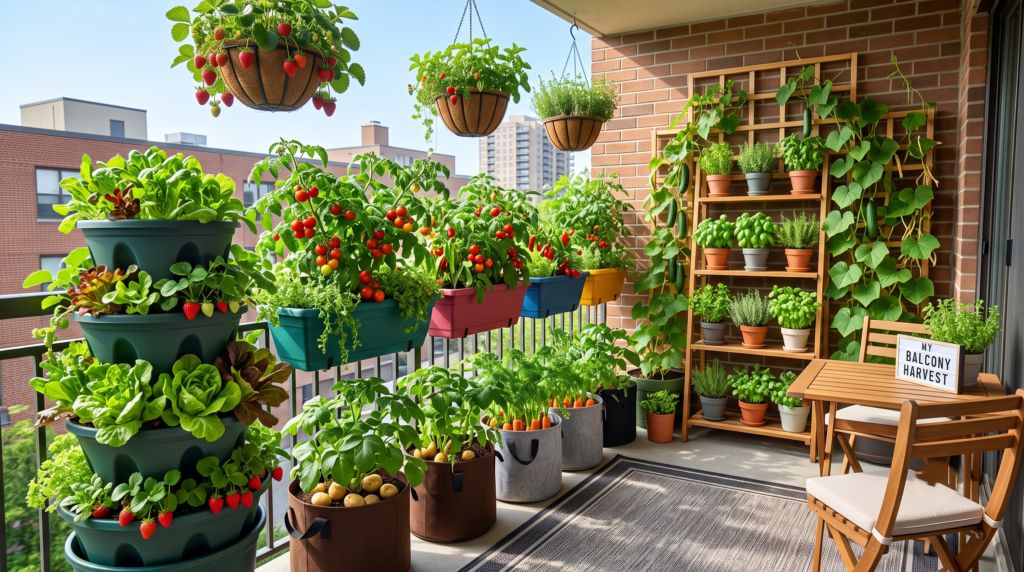
Have you ever stared at your tiny, empty concrete balcony, dreaming of plucking a fresh, sun-warmed cherry tomato right off the vine? The frustration of wanting to grow your own food but feeling held back by a lack of square footage is incredibly common for apartment dwellers. But here is the good news: you absolutely do not need a sprawling backyard to cultivate a massive, continuous harvest. If you are looking for practical, creative balcony vegetable garden ideas, you are in exactly the right place. 🍅
After years of diagnosing plant issues, obsessing over the microbiology of container soil health, and sharing cultivation techniques, I have learned that small-space growing simply requires a shift in perspective. Instead of growing out, we grow up. You can maximize every single square inch of your patio to create a thriving, vibrant food source.
In this comprehensive guide, we will cover the essential preparations to guarantee your success, followed by 12 actionable, space-saving strategies to transform your balcony into a lush urban oasis. Pin this guide for later, and let’s get growing! 🌱
3 Crucial Checks Before You Start Planting 📋
It is tempting to rush out to the nursery, buy a cart full of seedlings, and start potting. However, bypassing the foundational steps is the number one reason balcony gardens fail. Before investing your time and energy, perform these three critical checks to set up an optimal environment for plant cultivation.
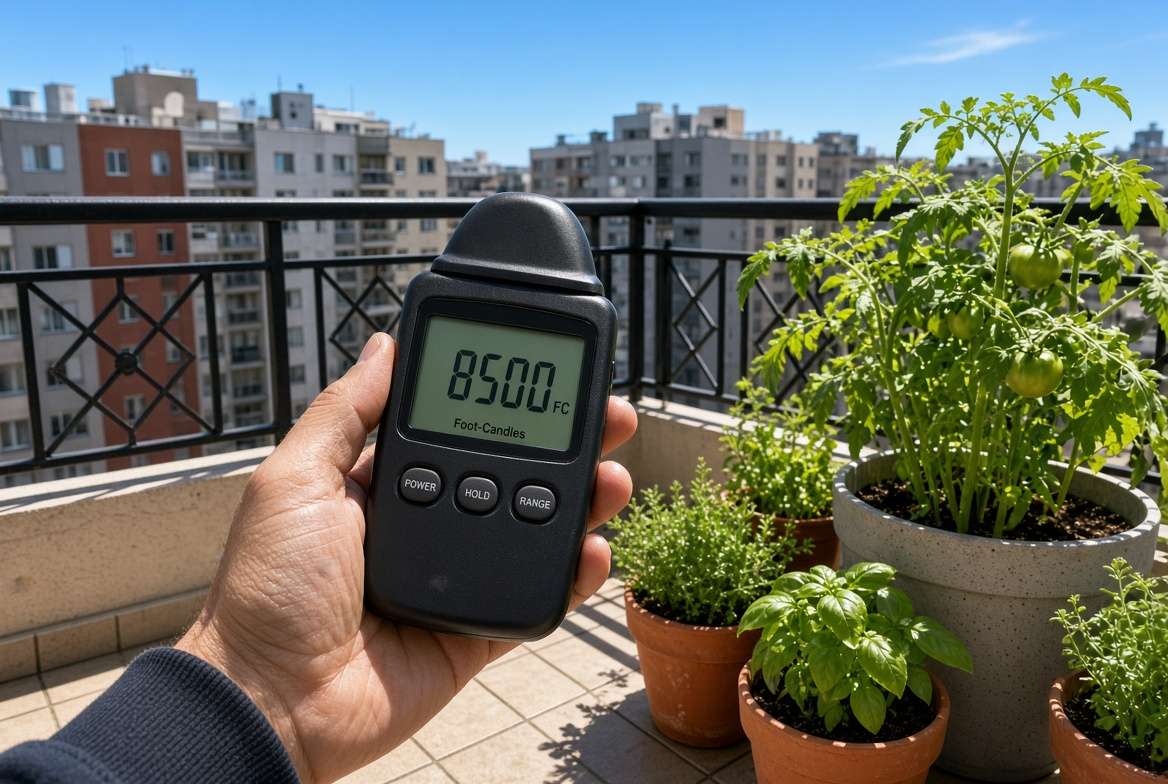
Assess Your Sunlight (The 6-Hour Rule) ☀️
Vegetables are essentially sunlight-processing machines. To yield a meaningful harvest, most fruiting vegetables (like tomatoes, peppers, and cucumbers) require “full sun,” which equates to 6 to 8 hours of direct, unobstructed sunlight per day.
-
South-Facing Balconies: These are the holy grail of urban gardening, receiving intense, all-day sun.
-
East or West-Facing Balconies: These receive moderate sun (morning or afternoon). They are perfect for root vegetables and leafy greens.
-
North-Facing Balconies: These are heavily shaded. While you won’t be growing massive pumpkins, you can still easily cultivate a lush garden of shade-tolerant herbs, spinach, and lettuce.
Expert Tip: Spend one weekend tracking the sun on your balcony. Note exactly when the light hits the floor and when it dips behind the next building. This “sun mapping” is the secret to placing the right plant in the exact right spot.
Check Weight Limits & Strata Rules ⚖️
Containers filled with damp soil are deceptively heavy. A large terracotta pot soaked with water can easily weigh over 50 pounds. When you multiply that across an entire balcony, you are adding significant structural load.
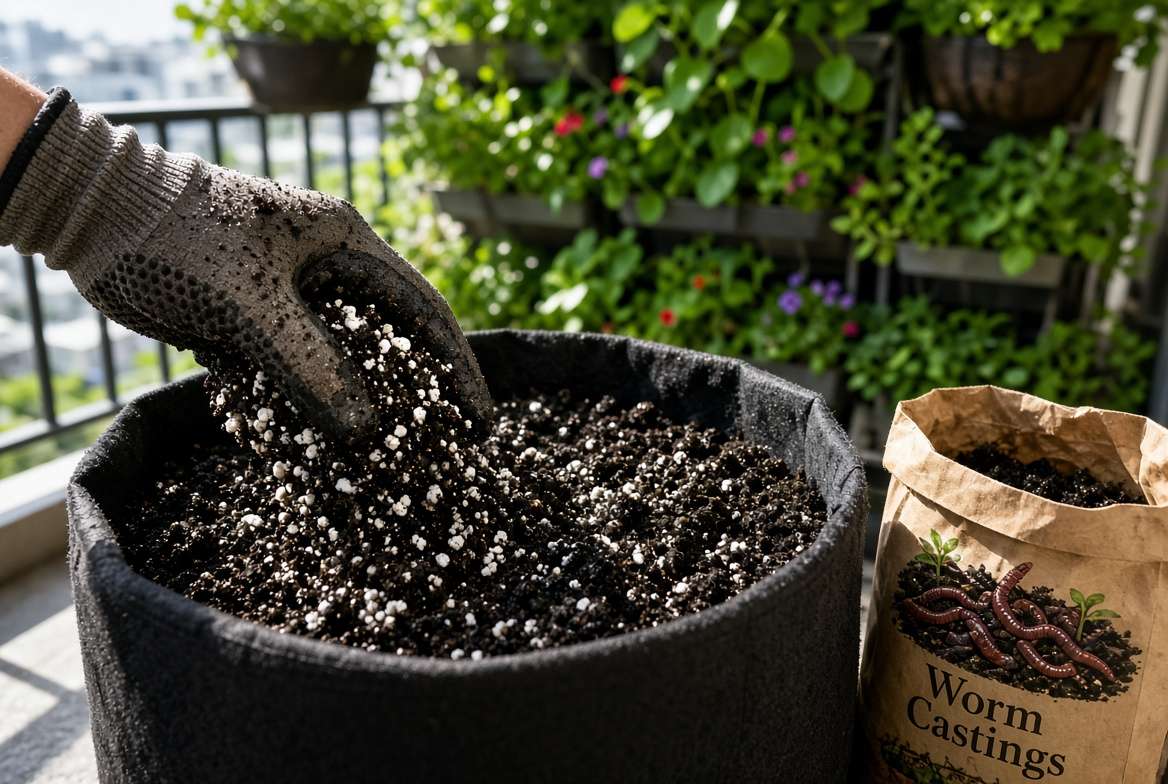
Always check your building’s strata rules, lease agreements, or homeowner’s association (HOA) guidelines regarding balcony usage. To mitigate weight, always use lightweight resin, fabric, or fiberglass pots instead of concrete or heavy ceramic. Furthermore, utilizing a high-quality, lightweight potting mix infused with perlite will keep the weight down while dramatically improving soil aeration and root health.
Wind Exposure and Microclimates 🌬️
The higher up you live, the stronger the wind currents. High winds can snap delicate stems, drastically lower the ambient temperature, and severely dehydrate your plant’s leaves and soil.
You need to create a sheltered microclimate. Consider setting up a bamboo screen, a decorative trellis interwoven with a wind-blocking fabric, or simply placing your tallest, sturdiest potted plants (like a dwarf citrus tree or robust rosemary bush) on the windward side to act as a natural windbreak for your more delicate vegetable seedlings.

12 Space-Saving Balcony Vegetable Garden Ideas 🚀
Now that your microclimate is prepared, it is time to maximize your yield. Here are twelve proven ways to squeeze an abundance of crops into a limited area.
1. Vertical Tower Planters (The Ultimate Yield Booster) 🗼
When horizontal floor space is scarce, the sky is the limit. Vertical tower planters, whether hydroponic or soil-based, are arguably the most efficient way to grow food on a balcony.
These tiered systems allow you to stack plants directly on top of one another. A single tower with a 2-foot footprint can comfortably house up to 30 individual plants! They are absolute perfection for cultivating massive quantities of strawberries, bush beans, lettuce, kale, and mixed culinary herbs.
2. Over-the-Railing Planters for Trailing Veggies 🪴
Your balcony railing is prime, underutilized real estate. Over-the-railing planters sit securely on top of your balustrade, capitalizing on “dead space” that otherwise goes completely unused.
Because railing planters are often positioned to catch the best sunlight, they are excellent for sun-loving, cascading crops. Try planting trailing cherry tomatoes (like the ‘Tumbler’ variety), creeping thyme, or nasturtiums. Just ensure the planters are deeply secured to prevent them from becoming a hazard during high winds.
3. Tiered Shelving Units to Create Microclimates 🪜
A simple, weather-resistant tiered shelving unit (like a repurposed wooden ladder or metal baker’s rack) is a brilliant way to organize your garden and manipulate light exposure.
By utilizing shelves, you can create customized microclimates on a single wall. Place your heavy sun-lovers (peppers, basil, cherry tomatoes) on the top tier where the light is strongest. Use the middle and bottom tiers, which naturally receive a bit of cooling shade from the plants above, to grow heat-sensitive crops like cilantro, spinach, and arugula that would otherwise bolt (go to seed) in the scorching mid-summer sun.
4. Fabric Grow Bags for Deep-Rooted Crops 🥔
For years, urban gardeners believed they couldn’t grow root crops like potatoes or carrots because traditional deep pots were too heavy, expensive, and cumbersome to store in an apartment. Enter the fabric grow bag.
Fabric grow bags are lightweight, incredibly affordable, and feature handles for easy moving. More importantly, they provide phenomenal soil aeration. When a plant root reaches the edge of a plastic pot, it circles endlessly (becoming root-bound). In a breathable fabric bag, the root reaches the air and stops growing outward (a process called air-pruning), encouraging a denser, healthier root system. They are the perfect vessel for growing an impressive yield of balcony potatoes, and at the end of the season, you simply dump the soil and fold the bag flat in a drawer!

5. Hanging Baskets to Free Up Floor Space 🧺
When every square foot of floor space is spoken for, look up! Hanging baskets are a classic, beautiful way to draw the eye upward while keeping your precious floor space clear for a small bistro set or larger containers.
Hanging baskets are ideal for lightweight, shallow-rooted crops. Strawberries are a phenomenal choice, as their runners will beautifully cascade over the edges. Tumbling tomatoes, bush beans, and herbs like oregano and mint also thrive here. Just remember that hanging baskets dry out much faster due to 360-degree wind exposure, so daily moisture checks are a must!
6. Repurposed Wooden Pallet Herb Walls 🪵
If you love a good DIY project, transforming a shipping pallet into a vertical herb garden is both budget-friendly and highly productive. By stapling landscaping fabric to the back of the pallet and filling the slats with high-quality soil, you create an instant, multi-level planting wall.
Safety Warning: Always ensure you select a pallet stamped with “HT” (Heat Treated). Avoid pallets stamped with “MB” (Methyl Bromide), as these have been chemically treated and are toxic, making them entirely unsafe for growing food.
7. Pocket Planters for Instant Green Walls 🌿
Pocket planters (often made from heavy-duty felt or recycled canvas) can be hung flat against any bare wall or partition. They look like over-the-door shoe organizers, but they are specially designed to hold soil and retain moisture.
Because the soil volume in each pocket is quite small, this system is best reserved for cut-and-come-again leafy greens (like mesclun mix, arugula, and baby spinach) and smaller culinary herbs. The breathable felt prevents root rot and naturally air-prunes the roots for healthier, more vigorous growth.
8. Mobile Carts to “Chase the Sun” 🛒
On many balconies, the sun moves dramatically throughout the day, leaving certain corners in deep shade by noon. A brilliant workaround is using a heavy-duty rolling bar cart or a tiered utility cart on casters.
You can arrange dozens of small pots on the cart and simply wheel it across the balcony to “chase the sun.” When severe thunderstorms or unexpected frosts threaten your crops, you can easily roll the entire garden indoors for protection.
9. Window Boxes for Easy Access 🪟
You do not need a windowsill to use a window box! These long, narrow rectangular planters can be mounted on the inside of your balcony railing, placed directly flush against a wall, or hung on a sturdy trellis. They offer a classic “kitchen garden” aesthetic and are perfect for growing a dense row of radishes, scallions, or bush beans.
10. Trellises and Climbing Nets for Vining Veggies 🕸️
If you want to grow heavy yielders like cucumbers, pole beans, snap peas, or even small melons, you must train them to grow vertically. Left to their own devices, these vining vegetables will sprawl and take over your entire balcony floor in a matter of weeks.
Secure a wooden lattice, bamboo teepee, or nylon climbing net inside a large container. As the plants grow, gently weave their tendrils through the support. Growing vertically not only saves space but also massively improves airflow around the foliage, which is a critical preventative measure against fungal diseases like powdery mildew.
11. Corner Stacking Planters 📐
Corners are notoriously underutilized in apartment gardening. Corner stacking planters are molded to fit perfectly into tight 90-degree angles. They stack vertically, usually three to five tiers high, creating a beautiful column of greenery in a space that would otherwise collect dust. Fill them with a mix of trailing colorful flowers (like marigolds, which also deter pests) and edible herbs for a highly functional, visually stunning display.
12. Self-Watering Container Systems 💧
Balcony gardens are highly susceptible to drying out due to elevated heat and wind. Self-watering containers feature a built-in water reservoir at the bottom. The potting mix wicks moisture up through capillary action exactly as the plant needs it, ensuring consistent hydration without the risk of overwatering. This is a game-changer for thirsty crops like tomatoes and cucumbers, and it allows you to go away for the weekend without worrying about your plants crisping up in the sun!
The Best Vegetables for Balcony Gardens (Categorized) 🍅
Choosing the right plant for your specific environment is half the battle. Here is a quick cheat sheet for balcony success:
Top Performers for Full Sun (6-8 hours)
-
Cherry Tomatoes: Varieties like ‘Patio Princess’ or ‘Sweet Million’ are prolific and compact.
-
Peppers: Both bell peppers and hot chilies thrive in hot, sunny containers.
-
Eggplant: Opt for miniature varieties like ‘Fairy Tale’.
-
Basil & Rosemary: Sun-worshipping herbs that love the heat.
Best Veggies for Partial Shade (3-5 hours)
-
Leafy Greens: Spinach, Swiss chard, and kale prefer cooler temperatures and will happily grow in the shade of your railing.
-
Herbs: Mint, cilantro, and parsley do exceptionally well with limited direct light.
Shallow-Rooted Champions (For small pots & window boxes)
-
Radishes: Ready to harvest in just 30 days!
-
Green Onions (Scallions): Take up almost zero space and can be harvested continuously.
-
Bush Beans: Highly productive without the need for tall trellising.
Pro Tips for Balcony Garden Maintenance & Soil Health 🪱
As any experienced grower knows, the secret to a thriving garden isn’t just the seeds you plant—it’s the ecosystem you cultivate beneath the surface. Container gardening requires a completely different approach to soil health and plant diagnostics than growing in the ground.
The Right Potting Mix Matters
Never, under any circumstances, scoop topsoil out of a traditional garden bed to use in your balcony pots. Garden dirt is too dense; it will compact in a container, suffocating the roots and preventing proper drainage.
Instead, invest in a premium, lightweight, organic potting mix. To optimize soil structure and aeration, amend the mix with extra perlite or pumice (up to 30% of the volume). Incorporating a high-quality worm casting compost will introduce beneficial microbes that break down organic matter and deliver nutrients directly to the root zone, ensuring long-term soil vitality.
Smart Watering and Drainage Strategies
Proper drainage is non-negotiable. Every single pot must have drainage holes. If water pools at the bottom, your plants will suffer from root rot—a fatal condition.
To prevent muddy water from cascading down onto your downstairs neighbor’s balcony, place deep saucers beneath every pot. Water slowly and deeply at the base of the plant until you see a small amount of water pool in the saucer, then stop.
Container Fertilizing and Plant Diagnostics 101
Every time you water a container, trace amounts of nutrients are flushed out through the drainage holes. Because balcony vegetables are confined to a small soil volume, they are heavy feeders that deplete available nutrients quickly.
To maintain peak plant health, apply a balanced, water-soluble organic fertilizer (like liquid kelp or fish emulsion) every 10 to 14 days.
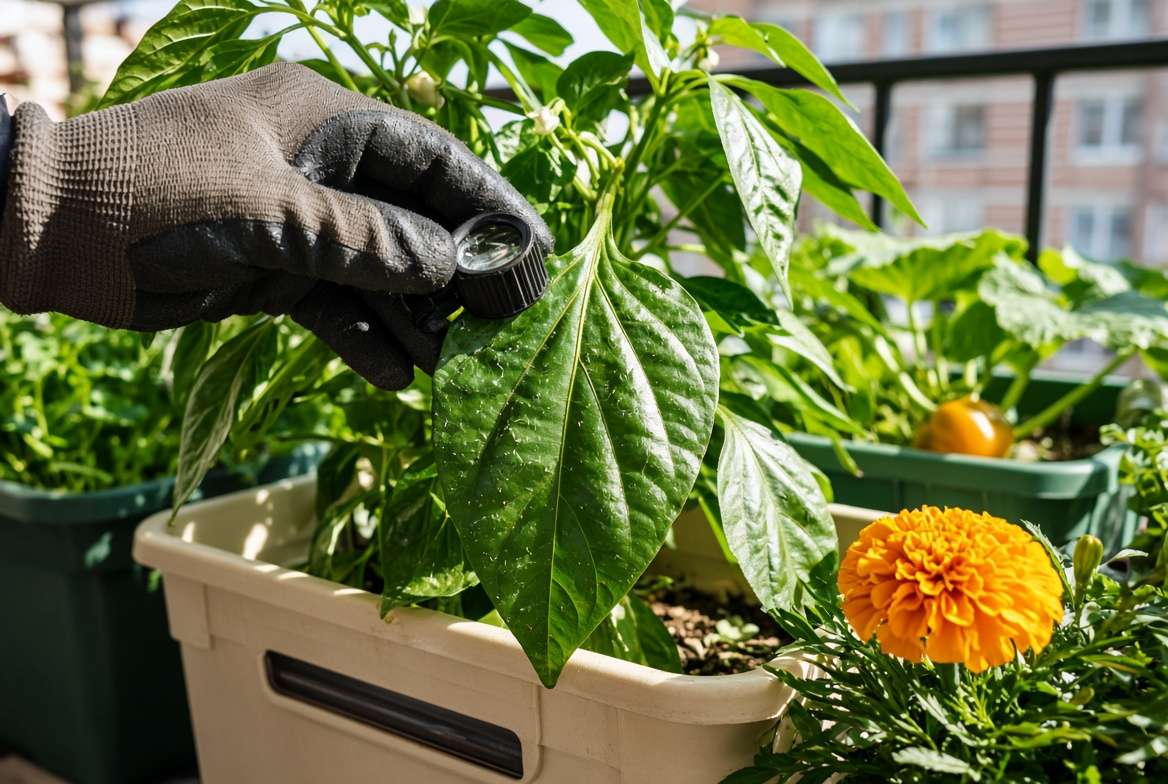
Keep a close eye on your foliage for early diagnostics. If the lower leaves of your tomato plant begin turning a pale, uniform yellow, it is rarely a disease; it is typically an early indicator of nitrogen deficiency or overwatering. Recognizing these subtle visual cues early allows you to correct the soil chemistry before the plant’s yield is compromised.
Frequently Asked Questions (FAQs) ❓
Can I grow vegetables on a North-facing balcony? Yes! While you won’t be able to grow sun-loving fruiting crops like tomatoes or peppers, a North-facing balcony is a fantastic environment for an extensive salad garden. Focus on shade-tolerant greens like arugula, lettuce, spinach, and herbs like chives and mint.
How deep should containers be for balcony vegetables? It depends on the crop. Shallow-rooted veggies like lettuce and radishes only need 6 to 8 inches of depth. Peppers, eggplants, and bush beans require 10 to 12 inches. Deep-rooted crops like large tomatoes, carrots, and potatoes need containers that are at least 15 to 18 inches deep.
How do I keep pests away from my high-rise garden? While high-rise balconies naturally see fewer pests than ground-level gardens, aphids and spider mites can still drift up on the wind. The best defense is proactive companion planting. Tuck marigolds, sweet alyssum, and strongly scented herbs like basil among your vegetables to naturally repel pests and attract beneficial, predatory insects like ladybugs.
Conclusion: Your Urban Harvest Awaits 💚
Creating a highly productive balcony vegetable garden doesn’t require a massive budget or a background in agriculture. By applying these space-saving ideas—from utilizing vertical tower planters to mastering container soil health—you can transform your limited square footage into an abundant, edible sanctuary.
The most important step is simply to start. Pick two or three of the space-saving concepts above, select crops that match your balcony’s sunlight profile, and enjoy the incredible satisfaction of harvesting your own homegrown food.
What are you planning to grow on your balcony this season? Let us know in the comments below!











