
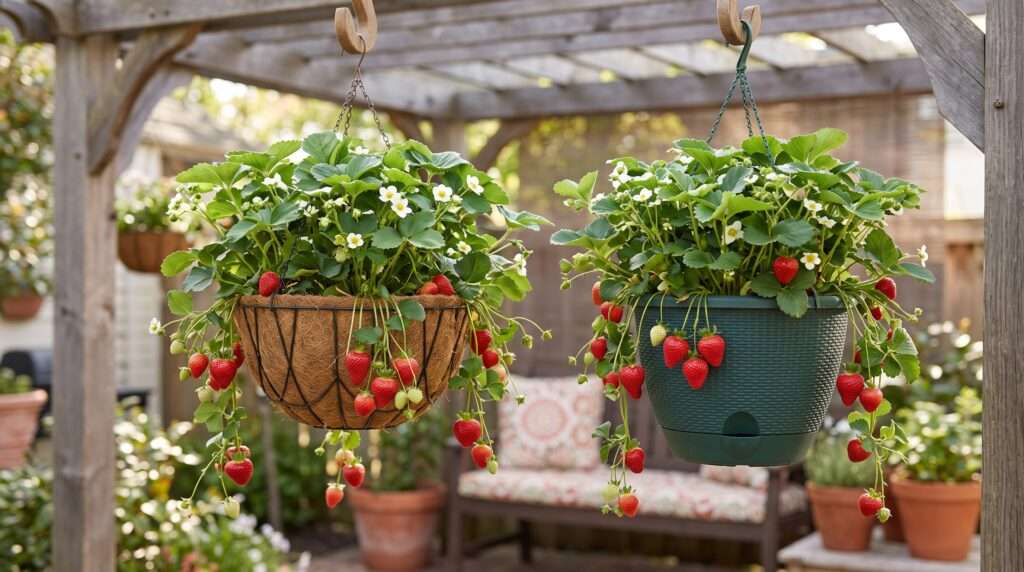
Every gardener knows the crushing heartbreak of watching a strawberry ripen to the perfect, glossy red, only to flip it over and discover a slug has already hollowed out the bottom. Ground-level beds are a constant battleground against pests, poor drainage, and limited square footage. But there is a surprisingly simple, elegant solution: elevating your crop.
Planting hanging baskets for strawberries is the ultimate secret to a space-saving, pest-free harvest. By taking your plants off the ground, you instantly eliminate soil-dwelling predators, improve vital air circulation around the foliage, and transform bare patios or balcony rails into highly productive, vertical fruit gardens.
Whether you are an urban homesteader working with a tiny sunny balcony or an experienced grower tired of battling rot in your raised beds, this comprehensive guide will walk you through exactly how to master the art of elevated strawberry cultivation.
⚡ At a Glance: Hanging Strawberry Basics
Light Requirements: Full sun (6–8 hours of direct sunlight daily).
Ideal pH: 5.5 to 6.5 (slightly acidic).
Basket Capacity: 3 to 4 plants per 12-inch basket.
Best Plant Types: Day-neutral or Everbearing varieties.
Primary Challenge: Soil moisture retention during peak summer heat.
🌿 1. The Hidden Benefits of Growing Strawberries Vertically
If you have only ever grown bare-root strawberries in traditional garden plots, moving them into the air might seem like a purely aesthetic choice. However, as any experienced horticulturist will tell you, the benefits go far beyond creating a beautiful, trailing display.
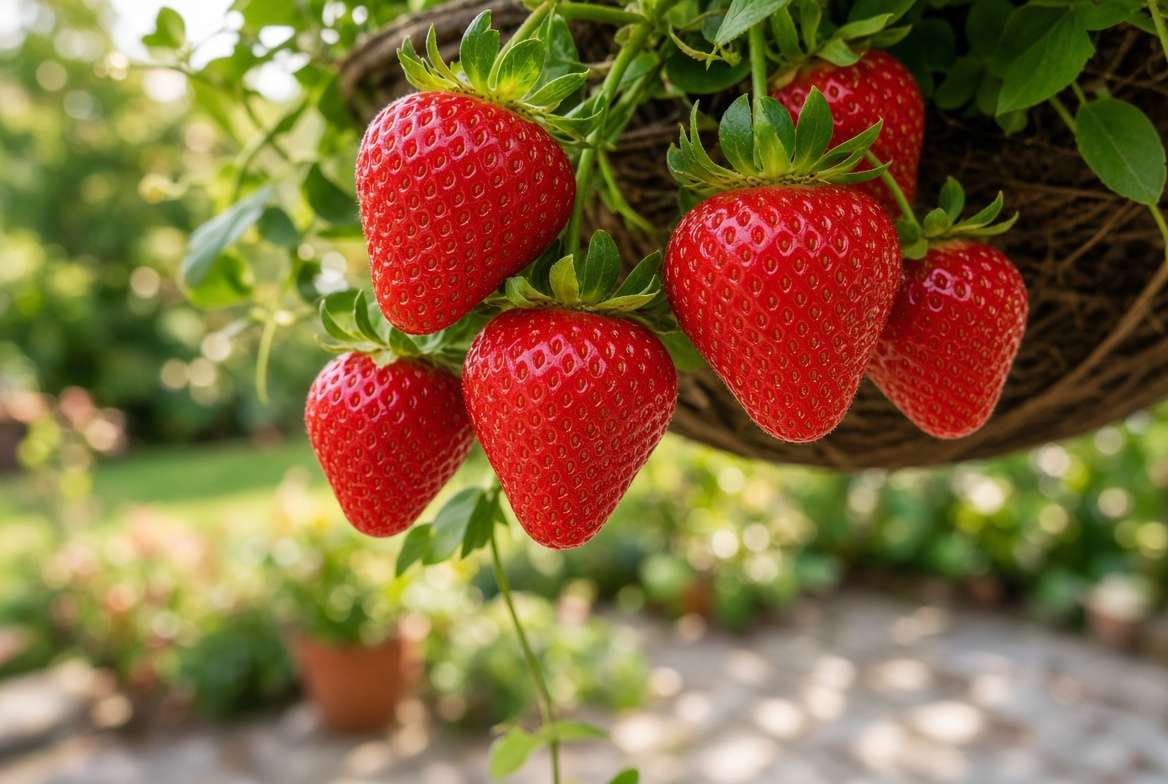
🛡️ Complete Pest & Disease Defense
When fruit rests on damp garden soil, it becomes a magnet for pillbugs, earwigs, snails, and slugs. Furthermore, soil contact significantly increases the risk of Botrytis cinerea (gray mold) and leather rot, especially after heavy spring rains. By suspending your plants, gravity pulls the heavy fruiting trusses over the edges of the basket, allowing the berries to dangle safely in mid-air. They remain immaculately clean, dry, and completely out of reach for traditional crawling pests.
☀️ Optimal Sunlight & Airflow Dynamics
Strawberries are sun-worshippers. In a hanging container, plants receive 360-degree light exposure, which ensures even ripening and significantly boosts the Brix level (the natural sugar content) of the fruit. Additionally, the increased breeze circulation dries morning dew off the foliage much faster than in a crowded ground bed, naturally suppressing powdery mildew and other fungal leaf spot diseases.
🏡 Ergonomic & Aesthetic Perks
Let’s be honest: crouching and kneeling to harvest tiny fruits is hard on the back and knees. Elevated baskets bring the harvest to eye level. Beyond the ergonomic relief, hanging strawberries are undeniably gorgeous. With their bright green cascading runners, delicate white and pink blossoms, and jewel-like red fruits, they rival the beauty of traditional ornamental flowers like petunias or fuchsias.
🍓 2. Selecting the Best Strawberry Varieties for Hanging Baskets
Not all strawberry plants are created equal, and choosing the wrong type is the number one reason beginners fail with container fruit. To maximize your yield in a confined space, you need to understand the difference in fruiting habits.
📅 Understanding Fruiting Types
-
June-Bearing: These varieties produce one massive, concentrated harvest over a 2-to-3-week period in early summer. They also send out aggressive runners (baby plants on long stems). While they can be grown in baskets, their short harvest window and wild runner production make them less than ideal for long-term container displays.
-
Day-Neutral & Everbearing (Highly Recommended): These are the undisputed champions of container gardening. Day-neutral varieties ignore day length and will continuously set flowers and fruit from late spring all the way until the first hard frost. They tend to be more compact, focus their energy on fruit rather than aggressive runners, and provide a steady trickle of fresh berries all season long.
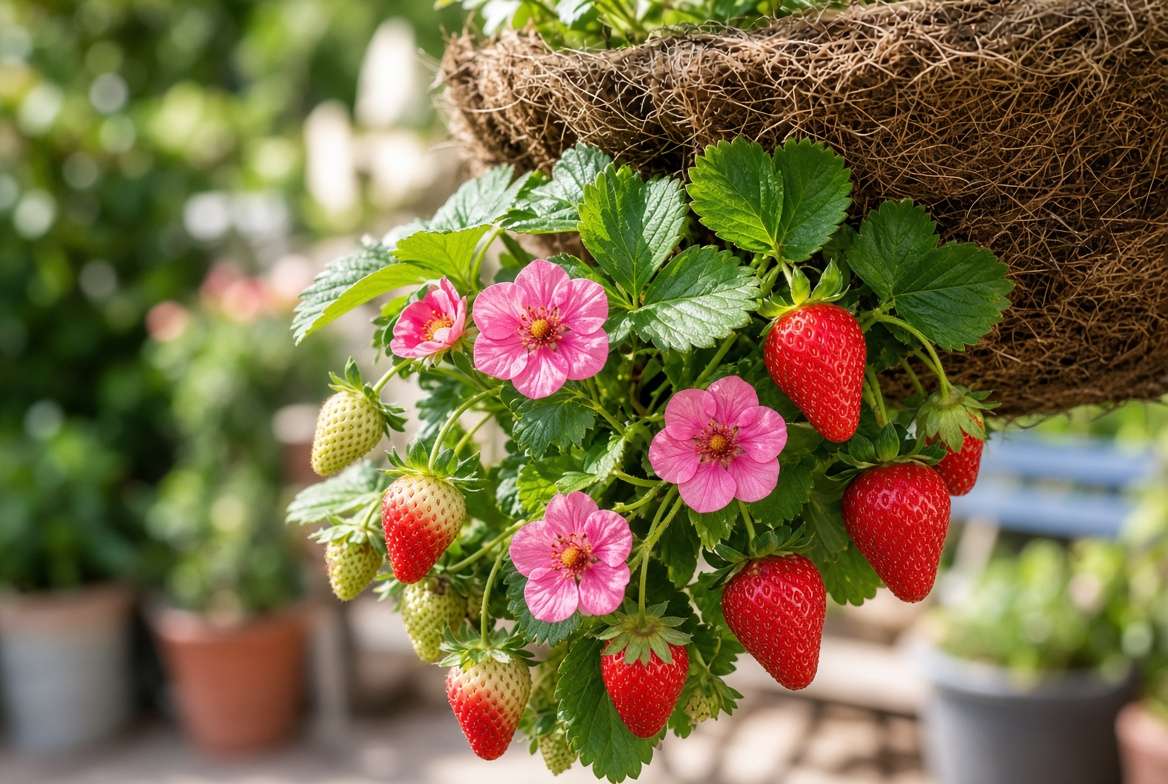
🏆 Top 5 Cultivars for Hanging Baskets
If you want a basket that looks just as good as it tastes—and is highly photogenic for your garden updates or social media—look for these specific varieties:
-
Mara des Bois: A day-neutral favorite among chefs. It produces medium-sized berries with the intense, aromatic flavor of wild woodland alpine strawberries, but with the reliable yield of a modern hybrid.
-
Toscana (or Tristan): If you want an ornamental showstopper, this is it. Toscana produces massive, deep magenta-pink blooms (unlike the standard white flowers) and follows up with sweet, dark red, cone-shaped berries. It was specifically bred for patios and containers.
-
Albion: A workhorse day-neutral variety. Albion is highly prized for its exceptional disease resistance, firm texture, and consistent production of large, symmetrical berries throughout the hottest parts of summer.
-
Seascape: Originally bred in California, Seascape is incredibly heat-tolerant and thrives in full sun. It produces large, glossy fruits and performs exceptionally well in the restricted root zones of hanging pots.
-
Temptation: A nearly runnerless, compact variety that is perfect for smaller 10-inch baskets. Because it doesn’t waste energy throwing out long vines, all its vigor goes straight into producing sweet, juicy fruit.
🪴 3. Choosing the Right Basket & Crafting the Ultimate Soil Mix
Because your strawberry plants are entirely dependent on the micro-environment within their container, getting your hardware and soil right is critical.
🧺 Container Materials Compared
-
Wire Baskets with Coco Coir Liners: These look classic and provide phenomenal root aeration, which strawberries love. However, they are highly prone to rapid evaporation. If you choose this route, you must line the bottom interior with a hidden plastic saucer (with a small drainage hole) to create a moisture reservoir.
-
Self-Watering Plastic Baskets: Often the most practical choice for busy growers. They feature a built-in water reservoir at the base, drawing moisture up via capillary action. This prevents the soil from turning into a dry brick during a July heatwave.
-
Fabric Planters / Grow Bags (Hanging Variants): These felt-like materials air-prune the roots, preventing the plants from becoming root-bound. They are excellent for overall plant health but will require daily watering.
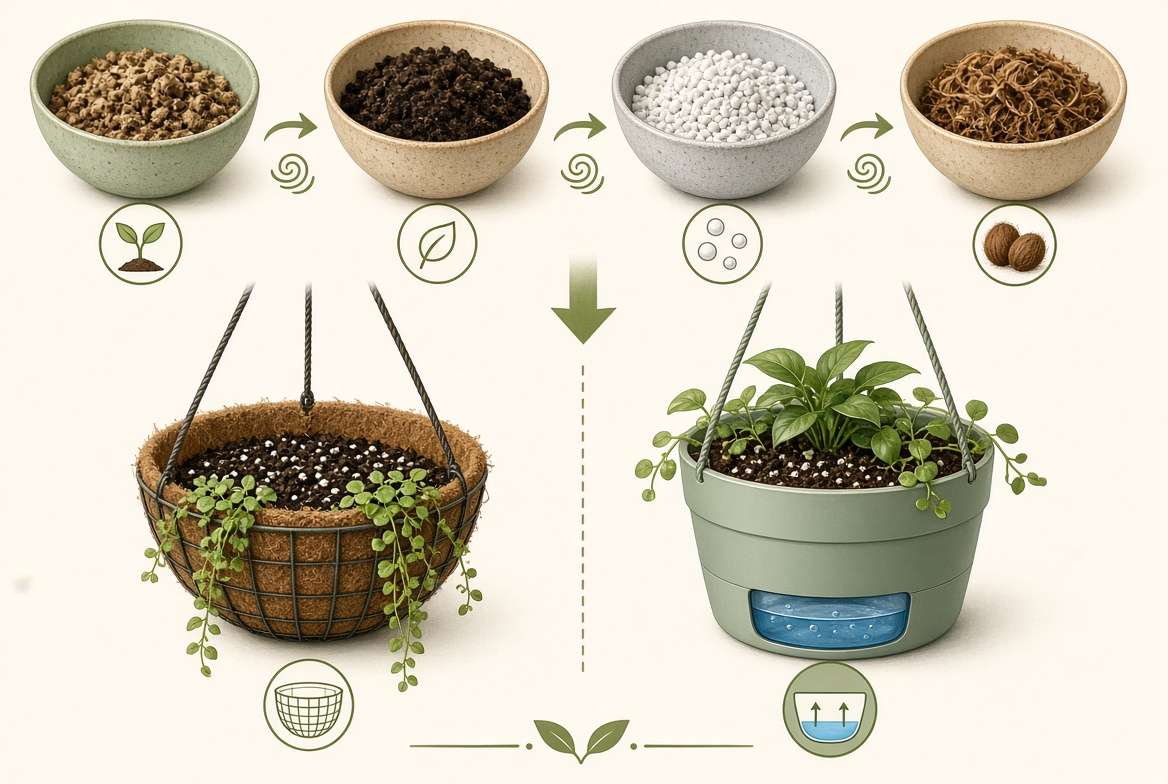
🥣 The Expert Soil Formula (Lightweight & Nutrient-Rich)
Standard garden dirt will suffocate container roots, and cheap, peat-heavy potting mixes will eventually repel water once they dry out. For vigorous growth and optimal soil health—which directly translates to better-tasting fruit—blend this custom soil recipe:
-
40% High-Quality Organic Potting Mix: Your light, fluffy base.
-
30% Aged Compost or Worm Castings: Essential for a slow, steady release of micronutrients and for building a healthy microbial soil web.
-
20% Perlite or Pumice: Vital for rapid drainage. Strawberries despise “wet feet” and will quickly succumb to root rot in soggy soil.
-
10% Coco Coir: An excellent, sustainable alternative to peat moss that holds moisture beautifully without compacting.
Pro Tip: Before planting, mix in a handful of organic, granular berry fertilizer (one rich in phosphorus and potassium) to give the root systems an immediate, gentle boost.
🪴 4. Step-by-Step Planting Guide (Getting the Crown Right)
Proper installation is the bedrock of a thriving aerial garden. When moving your plants into their final elevated home, precision matters.
-
Step 1: Basket Preparation: If you are using a traditional wire and coco coir basket, place a small plastic saucer at the inside bottom before adding your soil mix. This hidden reservoir catches runoff, prevents rapid drying, and keeps the soil evenly moist during hot afternoons.
-
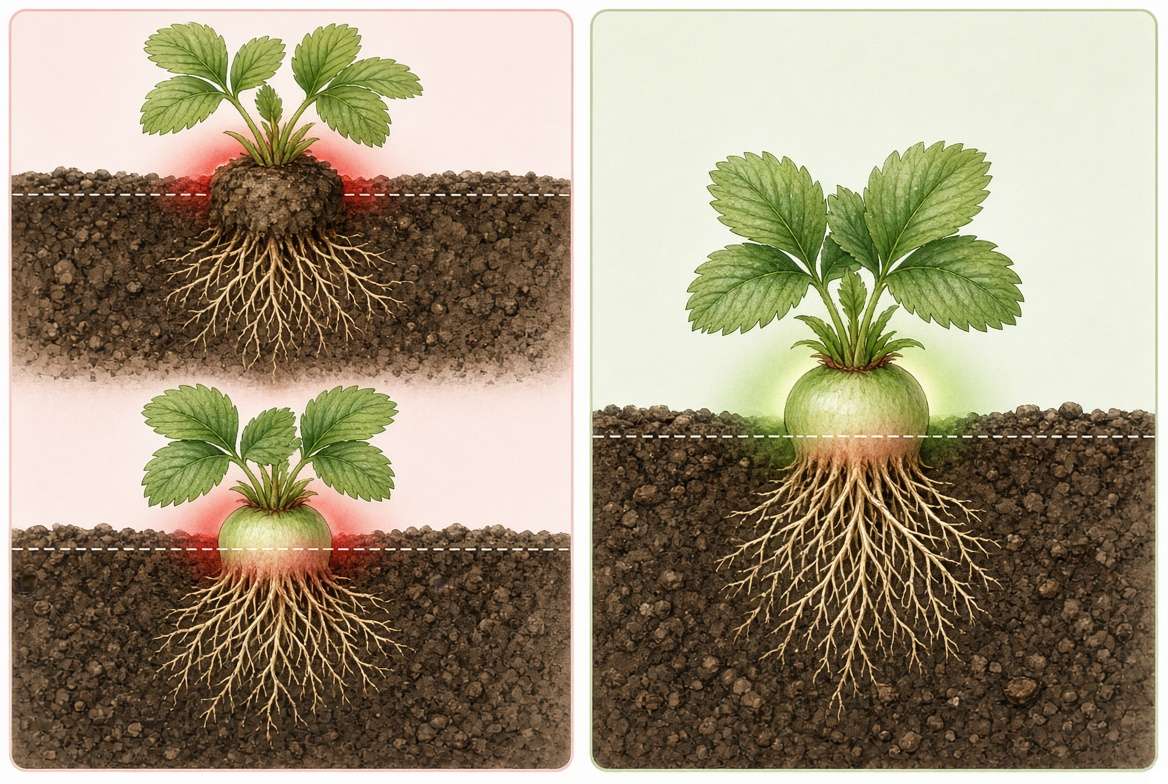
Step 2: The Golden Rule of the Crown: This is the most critical step for strawberry survival. The “crown” (the thick, fleshy base where the stems meet the root system) must rest exactly at the soil surface. Planting too deep invites immediate crown rot, while planting too shallow exposes sensitive upper roots to fatal desiccation.
-
Step 3: Perimeter Planting: Position your bare-root or nursery plants near the rim of the container, spacing them roughly 6 to 8 inches apart. Angling the crowns slightly outward encourages the developing fruit trusses to gracefully spill over the edge, rather than resting on the center soil.
☀️ 5. Daily Care & Nutrient Management
Container gardening accelerates both moisture loss and nutrient depletion. A proactive care routine guarantees your plants remain highly productive.
-
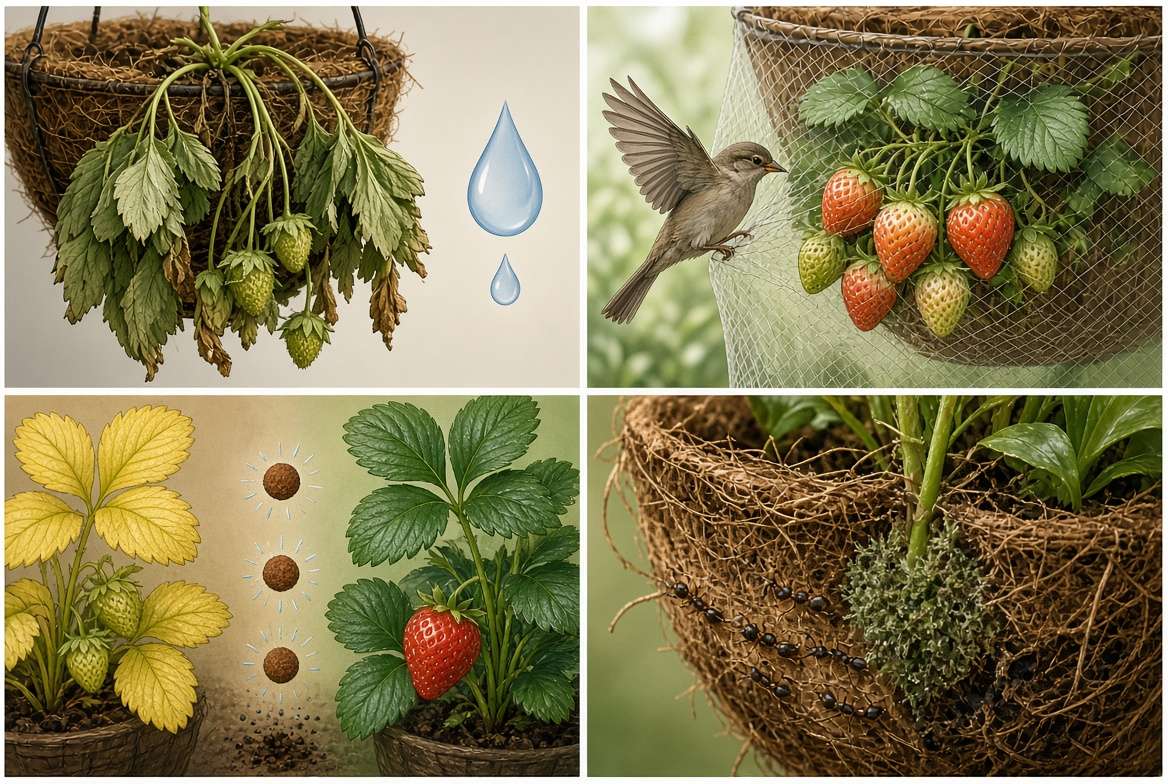
💧 The Watering Strategy: Elevated containers dry out twice as fast as ground beds due to 360-degree wind exposure. Utilize the “finger test”—if the top inch of soil feels dry to the touch, water the basket deeply until moisture drips from the bottom drainage holes. Morning watering is best, as it allows foliage to dry before nightfall.
-
🧪 Targeted Fertilization: During early spring leaf growth, apply a balanced organic feed. Once the first white blossoms appear, switch to a high-potassium liquid feed (like seaweed extract or a specialized tomato fertilizer) every 10–14 days to support heavy, continuous fruiting.
-
✂️ Pruning Runners: To direct the plant’s energy entirely into berry production, rigorously snip off early-season runners. You can allow a select few to cascade late in the summer for a lush, ornamental drape, but excessive runners will result in tiny, sour yields.
❄️ 6. Troubleshooting & Overwintering Baskets
Protecting your investment ensures multi-year harvests and minimizes seasonal frustrations.
-
🚨 Combating Midday Wilt & Pests: If soil dries too rapidly despite morning watering, integrate moisture-retaining perlite into the topsoil or move baskets to a location with dappled afternoon shade. To deter curious birds, slip lightweight, breathable organza fruit bags over ripening berry clusters.
-
🥀 Diagnosing Yellow Leaves: Yellowing foliage with pronounced green veins usually indicates iron chlorosis or a severely root-bound plant. A quick dose of chelated iron spray, or gently repotting the plants into a slightly larger basket next season, often resolves this imbalance.
-
❄️ Winter Survival: Above-ground roots lack the earth’s natural thermal mass and will freeze solid in harsh winters. To overwinter your plants, unhook the baskets before the first deep freeze. You can either bury the pots temporarily in a garden trench covered in a heavy straw blanket, or store them in an unheated garage, keeping the soil barely damp until spring.
❓ 7. FAQs & Final Action Checklist
To complete your mastery of vertical strawberry cultivation, keep these final expert insights in mind.
-
FAQ: Do hanging basket strawberries come back every year? Yes! If overwintered properly, day-neutral and everbearing varieties will produce reliably for 2 to 3 years before their vigor naturally declines and they need replacing.
-
FAQ: Why are my berries small or sour? This typically points to inadequate sunlight (less than 6 hours daily) or a lack of crucial potassium and phosphorus during the active fruiting phase.
-
✅ Action Checklist: For immediate success, choose day-neutral varieties like Albion or Mara des Bois, mix a lightweight and well-draining soil, master the exact crown depth placement, and implement a strict bi-weekly liquid feeding schedule.











