
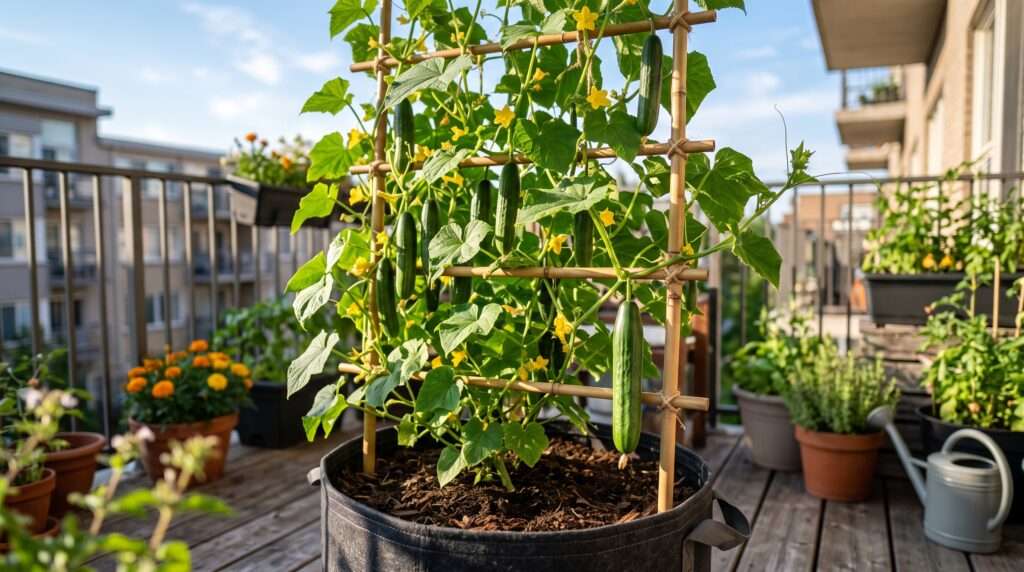
If you’ve ever stared at a small patio, balcony, or modest deck and felt the sting of garden envy, you’re not alone. Many gardeners mistakenly assume that vigorous vining vegetables require sprawling raised beds or massive backyard plots. But after years of trial, error, and fine-tuning the perfect container ecosystems, I can assure you that is a myth. The ultimate secret to transforming a tiny footprint into a highly productive, lush oasis is growing cucumbers on a trellis in containers. By shifting your focus from horizontal sprawl to vertical canopy management, you can harvest baskets of crisp, homegrown cucumbers from just a few square feet of space.
Whether you are looking to grow massive slicers for summer salads or cultivate the perfect crunchy pickles, this comprehensive guide will walk you through the exact steps, soil science, and structural setups needed to guarantee a huge harvest in a small space. 🪴🌿
🪜 Why Bother Growing Cucumbers on a Trellis in Containers?
When you grow plants in pots, you are managing a closed micro-environment. Every choice matters. While you can buy compact “bush” varieties of cucumbers that don’t require support, training vining varieties up a trellis offers unparalleled advantages for both plant health and your final yield.
Maximizing Tiny Spaces 🏙️
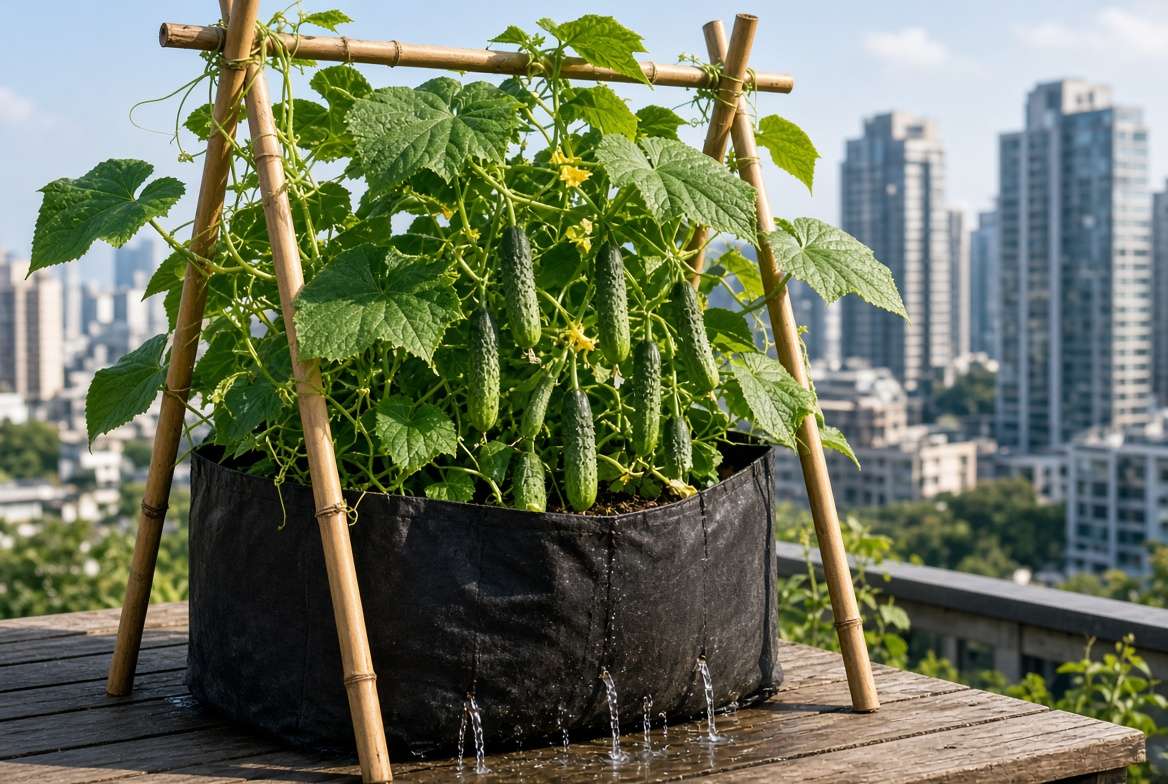
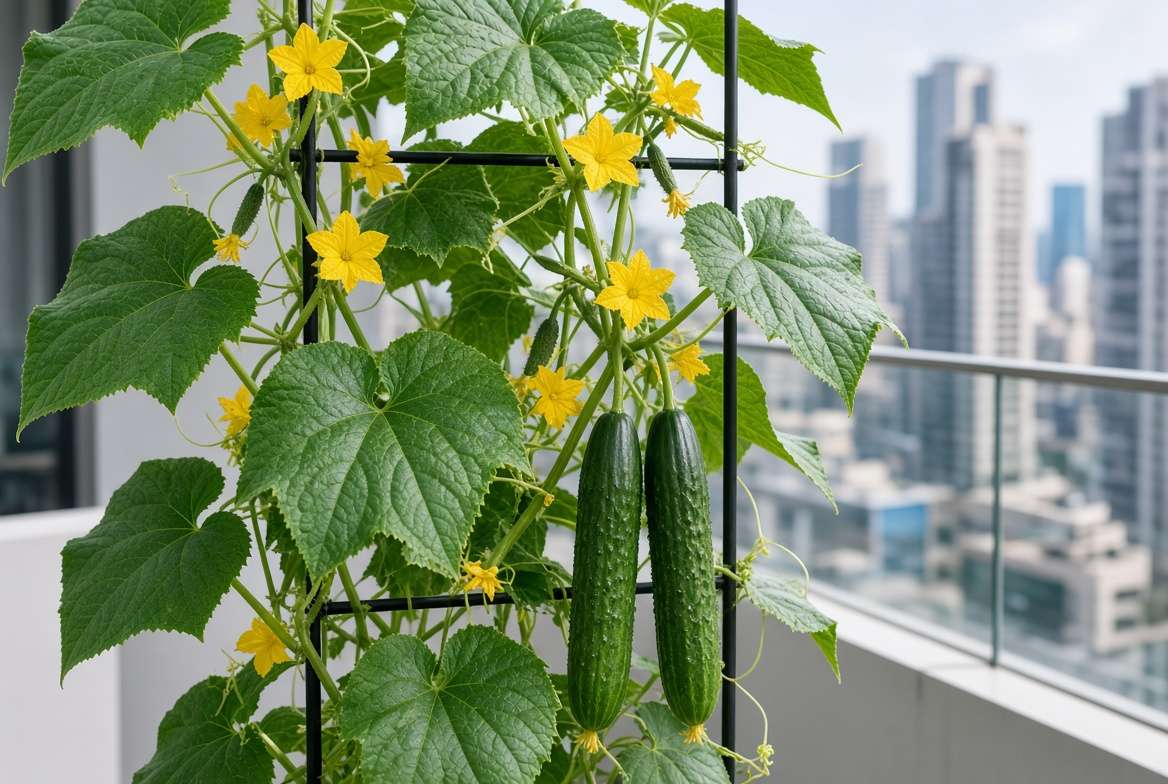
The most obvious benefit of vertical gardening is spatial efficiency. A cucumber vine left to its own devices will easily swallow 10 to 15 square feet of ground space. By redirecting that energy upward, a single 10-gallon pot occupying just two square feet of floor space can support a lush, 6-foot-tall wall of foliage and fruit. This allows you to squeeze high-yielding crops into balconies, urban courtyards, or even a sunny corner of a driveway.
Superior Airflow and Disease Prevention 🍃
Cucumbers are notoriously susceptible to fungal diseases, particularly powdery mildew and downy mildew. When vines sprawl on the ground, leaves overlap, trapping humidity and blocking air circulation. Damp soil splashing onto low-lying leaves during watering creates the perfect breeding ground for spores. Trellising pulls the foliage up into the breeze, ensuring rapid drying after rain and drastically reducing disease pressure. Healthy leaves mean a longer growing season and a bigger harvest.
Easier Harvesting & Cleaner Fruit ✨
There is nothing more frustrating than stepping on a hidden vine or discovering a massive, overripe cucumber rotting in the dirt. Growing vertically ensures your fruit hangs freely. Gravity gently pulls the developing cucumbers downward, resulting in perfectly straight, uniformly green fruits with no yellow “soil spots” on their bellies. Not only are they easier to spot and harvest at eye level, but these flawless cucumbers are incredibly photogenic—perfect for showing off your garden successes!
Expert Insight: Gravity is your friend! When cucumbers hang freely from a trellis, the weight of the fruit pulls it into a perfect, straight cylinder. Ground-grown cucumbers often curl as they grow around obstacles or rest on uneven soil.
🪣 The Perfect Setup: Choosing Your Pot and Trellis
A successful vertical container garden requires a strong foundation. Cucumbers grow rapidly and produce heavy water-weight in their fruit, meaning your setup must be both spacious for roots and structurally sound enough to prevent tipping in the wind.
Sizing Up Your Container
Cucumbers have extensive, thirsty root systems. Cramping them into a small pot is a guaranteed recipe for stunted growth, bitter fruit, and blossom drop.
-
The Minimum Rule: Provide an absolute minimum of 5 gallons of soil volume per plant, though 10 gallons is the sweet spot for maximum yield.
-
Material Matters: Fabric grow bags are phenomenal for container vegetables. They allow roots to “air prune” (preventing root binding) and offer superior oxygen exchange. However, they dry out faster than plastic or glazed ceramic. If using hard-sided pots, terracotta is beautiful but porous (requiring more frequent watering).
-
Drainage: This is non-negotiable. Ensure your container has multiple, large drainage holes. Cucumbers love consistent moisture, but their roots will quickly rot in standing water.
Best Trellis Designs for Container Gardening
Your trellis needs to be installed on the same day you plant your seeds or transplants. Shoving a trellis deep into the soil weeks later will sever delicate root systems and shock the plant.
-
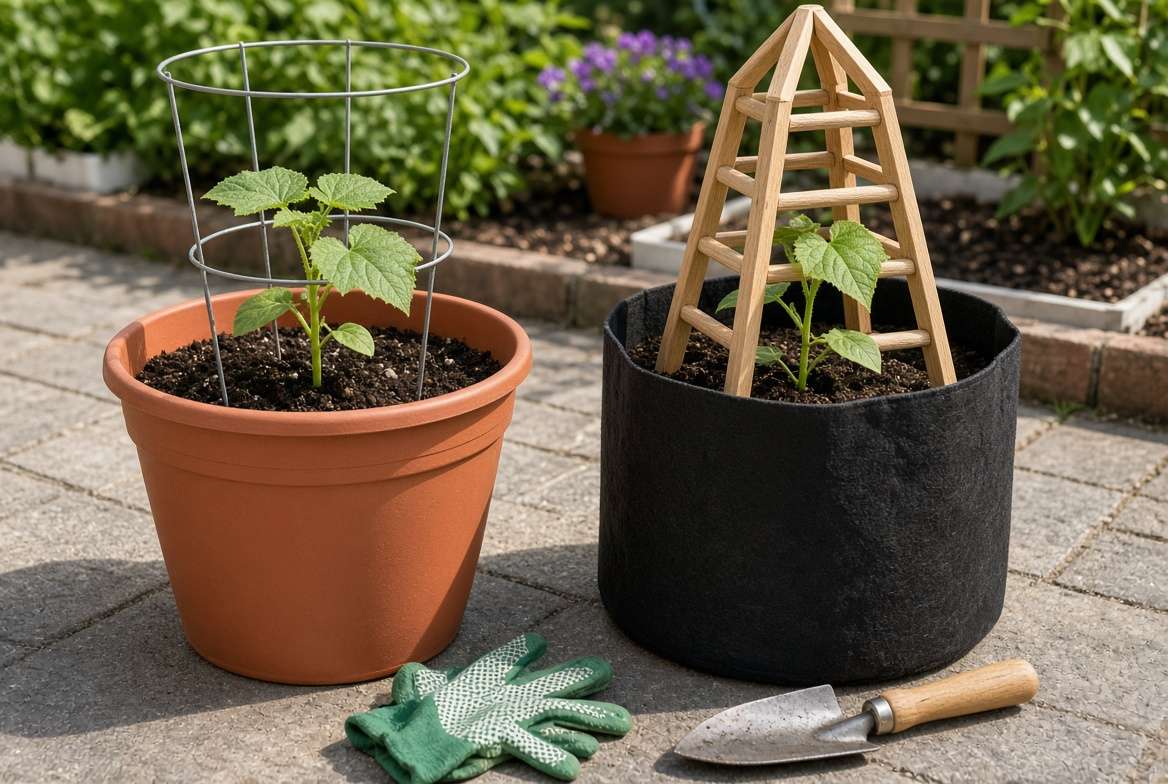
A-Frame Trellises: These are sturdy, freestanding structures that can straddle a large rectangular planter. They are incredibly stable in windy conditions.
-
Obelisks and Heavy-Duty Tomato Cages: Perfect for large, round pots. A visually striking obelisk not only supports the heavy vines but acts as a beautiful architectural focal point on a patio.
-
DIY Bamboo and Netting: For a cost-effective, custom fit, push three long bamboo poles into the edges of the pot to form a teepee. Wrap the structure tightly in flexible nylon or jute trellis netting.
🌱 The Foundation of Yields: Soil Health Management
In a traditional garden bed, roots can travel deep into the earth to forage for minerals and water. In a container, the plant is entirely dependent on the ecosystem you provide. Exceptional soil health is the true secret behind a thriving vertical garden.
Crafting the Ideal Potting Mix
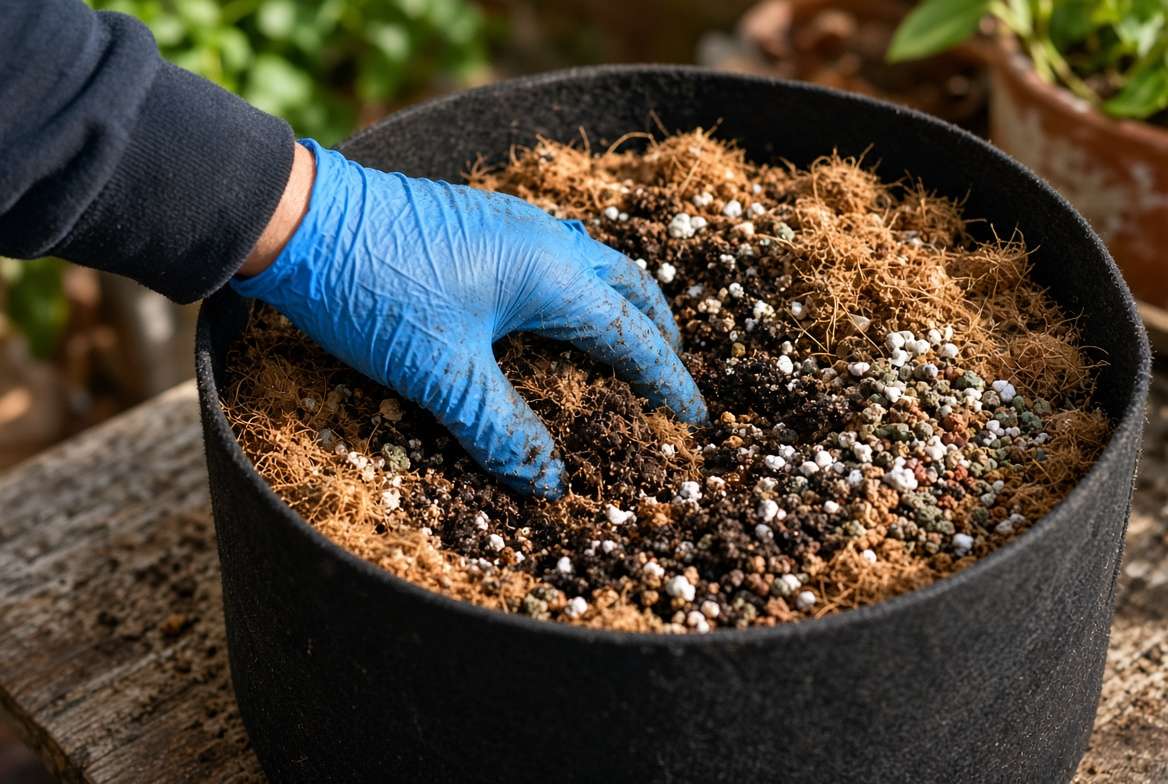
Never, under any circumstances, fill a container with heavy garden topsoil or bagged “garden soil.” These lack the necessary aeration and will compact into a suffocating brick after a few waterings. Instead, build a premium, lightweight potting mix:
-
The Base: Start with a high-quality, peat-free organic potting soil.
-
Moisture Retention: Blend in generous amounts of coco coir. Coir acts like a sponge, holding onto water while still allowing air pockets to form.
-
Aeration: Add extra perlite or pumice to ensure rapid drainage and prevent waterlogging.
The Power of Compost and Worm Castings 🪱
To mimic the biological richness of natural earth, you must introduce organic life to your sterile potting mix. Mixing in high-quality compost and earthworm castings adds billions of beneficial microbes to the root zone. These microbes break down organic matter, making nutrients bio-available to the cucumber plant’s roots. Worm castings also contain chitinase, an enzyme that naturally repels pests like fungus gnats and spider mites.
Pre-Planting Fertilization Strategies
Cucumbers are incredibly heavy feeders, requiring a steady stream of nitrogen for foliar growth and potassium/phosphorus for fruit development. At planting time, thoroughly mix a granular, slow-release organic vegetable fertilizer (like a 4-4-4 or 5-5-5 blend) into the lower two-thirds of the potting mix. This ensures that as the roots drive downward, they encounter a steady buffet of nutrients to sustain their rapid upward climb.
🥒 Top Cucumber Varieties for Trellising in Pots
Not all cucumber seeds are created equal, and choosing the right variety is the most critical decision you will make. When buying seeds or starter plants, you must specifically look for vining varieties, completely avoiding those labeled as “bush” or “compact” (like Spacemaster or Bush Slicer), as these lack the long, aggressive tendrils needed to climb a trellis efficiently.
Why Parthenocarpic Varieties Rule the Balcony 🐝
If you are gardening on a high-rise balcony, a screened-in porch, or in an urban area with a low pollinator population, you need to understand the magic of parthenocarpic cucumbers. Traditional cucumber plants produce both male and female flowers and rely heavily on bees to transfer pollen between them to set fruit.
Parthenocarpic varieties, however, are bred to produce almost entirely female flowers and will develop fruit without any pollination at all. This results in seedless, sweet cucumbers and guarantees a massive yield even if you never see a single bee.
Top Vining Picks for Slicing and Pickling
-
Diva (Parthenocarpic Slicer): A standout performer for container gardeners. It is highly disease-resistant, thrives on a trellis, and produces incredibly crisp, sweet, seedless fruits that don’t need peeling.
-
Marketmore 76 (Traditional Slicer): The gold standard for a classic, dark-green slicing cucumber. It’s a vigorous climber that withstands temperature fluctuations and resists common diseases well.
-
Parisian Gherkin (Pickler): If your goal is to make homemade pickles, this semi-vining variety is perfect for pots. It climbs beautifully and produces dozens of crunchy, blocky cucumbers ideal for a brine.
-
Lemon Cucumbers (Heirloom Novelty): These produce round, yellow, tennis-ball-sized cucumbers that look stunning hanging from a trellis. They are vigorous climbers and add a fun, sweet crunch to summer salads.
🛠️ Step-by-Step: Planting and Training Your Vines
With your container, soil, trellis, and seeds selected, it is time to bring your vertical garden to life.
Seed Sowing vs. Nursery Transplants
Cucumbers have incredibly fragile taproots that deeply resent being disturbed. For this reason, direct sowing seeds into your final container is highly recommended over buying nursery transplants.
-
Wait until the soil temperature is consistently above 70°F (21°C). Cucumbers are heat-lovers and will rot in cold, damp soil.
-
Plant 3–4 seeds near the base of your trellis, about one inch deep.
-
Once they sprout and develop their first set of “true leaves,” use snips to thin them out, leaving only the strongest 1 or 2 plants per pot. Never pull the extra seedlings out, as this will damage the roots of the one you are trying to keep.
How to Train Cucumbers Up a Trellis 🧗♀️
Cucumbers have specialized curly offshoots called tendrils that reach out and grab supports. However, when they are young, they often need a little guidance to understand their vertical assignment.
-
The Initial Tie: Once the plant is about 8 to 10 inches tall, gently lean the main stem (the leader) toward the trellis. Use soft plant ties, strips of old cotton t-shirts, or specialized plastic trellis clips to loosely secure the stem to the support.
-
The Weave Method: If you are using trellis netting, gently weave the growing tip of the vine in and out of the mesh every few days. Be extremely gentle—if you snap the growing tip of the main leader, upward vertical growth will stop!
-
Frequent Checks: Check your vines every 2 to 3 days. They can grow several inches overnight in the peak of summer, and guiding them early prevents a tangled, messy canopy.
Pruning for Production ✂️
To maximize airflow and force the plant’s energy into vertical growth and fruit production, I recommend pruning the lower section of the plant.
-
Remove any side shoots (suckers) or flowers that develop on the bottom 12 to 18 inches of the main stem.
-
Snip off any yellowing or damaged lower leaves. This creates a clear gap between the soil line and the canopy, drastically reducing the chances of soil-borne fungi splashing onto the foliage.
💧 Daily Care: Watering and Feeding for a Huge Harvest
Container gardening demands absolute vigilance when it comes to moisture and nutrients. Because the roots cannot dig deep into the earth to find underground reserves, you are entirely responsible for their diet and hydration.
The Art of Watering Container Veggies
Cucumbers are over 90% water. If the soil in your container dries out entirely, the plant will become stressed, resulting in misshapen, hollow, or incredibly bitter-tasting cucumbers.
-
The Knuckle Test: Push your index finger into the potting mix up to your second knuckle. If it feels dry, it is time to water. In the heat of mid-summer, 10-gallon containers may need deep watering every single day.
-
Water the Soil, Not the Leaves: Always use a watering can with a long spout or a drip irrigation system to apply water directly to the soil. Wet leaves in a crowded container setup are an open invitation to powdery mildew.
-
Morning Hydration: Water early in the morning so the plant is fully hydrated before the harsh afternoon sun hits.
Mid-Season Feeding Schedule 🥗
That granular fertilizer you mixed into the soil at planting time will run out after about 4 to 6 weeks. Once your vines begin flowering, their nutritional needs change.
-
Switch to a liquid fertilizer specifically formulated for blooming and fruiting plants (lower in Nitrogen, higher in Phosphorus and Potassium).
-
Liquid kelp, fish emulsion, or organic compost tea applied every 10 to 14 days will give the vines the exact nutrient boost they need to set heavy fruit without burning the roots.
🛡️ Troubleshooting: Pests, Diseases, and Dropped Blooms
Even with a perfect setup, nature happens. Being proactive rather than reactive is the hallmark of an expert gardener. Here is how to handle the most common issues you will face when growing cucumbers on a trellis in containers.
Beating Powdery Mildew 🌫️
This looks like someone dusted white flour over your lush green leaves. It thrives in high humidity and poor airflow.
-
Prevention: Your trellis is already doing the heavy lifting by improving airflow!
-
Treatment: At the first sign of white spots, mix a solution of 40% milk and 60% water in a spray bottle. Spray the leaves (top and bottom) in bright sunlight. The proteins in the milk interact with the sun to create an antiseptic environment that kills the fungus. Neem oil is also a fantastic organic alternative.
Dealing with Cucumber Beetles and Spider Mites 🕷️
Spider mites love hot, dry environments (like sun-baked balconies) and will create fine webbing under the leaves. Cucumber beetles are striped or spotted yellow bugs that spread bacterial wilt.
-
Treatment: Check the undersides of your leaves weekly. Blast spider mites away with a strong jet of water. For cucumber beetles, hand-pick them in the early morning when they are sluggish, dropping them into a cup of soapy water.
Why Are My Flowers Falling Off? 🥀
Many beginners panic when they see early flowers drying up and falling off without producing fruit.
-
The Male Flower Phase: Cucumber plants usually produce male flowers first to attract bees, followed by female flowers (which have a tiny, miniature cucumber attached to their base) a week or two later. Only the female flowers produce fruit!
-
Stress: Extreme heat waves (over 95°F) or inconsistent watering can cause the plant to drop blossoms to conserve energy. Keep the soil evenly moist and provide afternoon shade if temperatures soar.
🧺 The Harvest: Enjoying the Fruits of Your Labor
The most exciting part of vertical gardening is the harvest. Because the cucumbers are hanging beautifully in the air, picking them is an absolute breeze.
When and How to Pick Cucumbers
Do not leave cucumbers on the vine until they turn massive and yellow. Overripe cucumbers become incredibly bitter, and their seeds become hard and unpalatable. Furthermore, if you let a cucumber fully mature and turn yellow, it signals to the plant that its reproductive cycle is complete, and the vine will stop producing new flowers.
-
Size Matters: Pick slicing varieties when they are 6 to 8 inches long and uniformly dark green. Pickling varieties should be harvested at 3 to 4 inches.
-
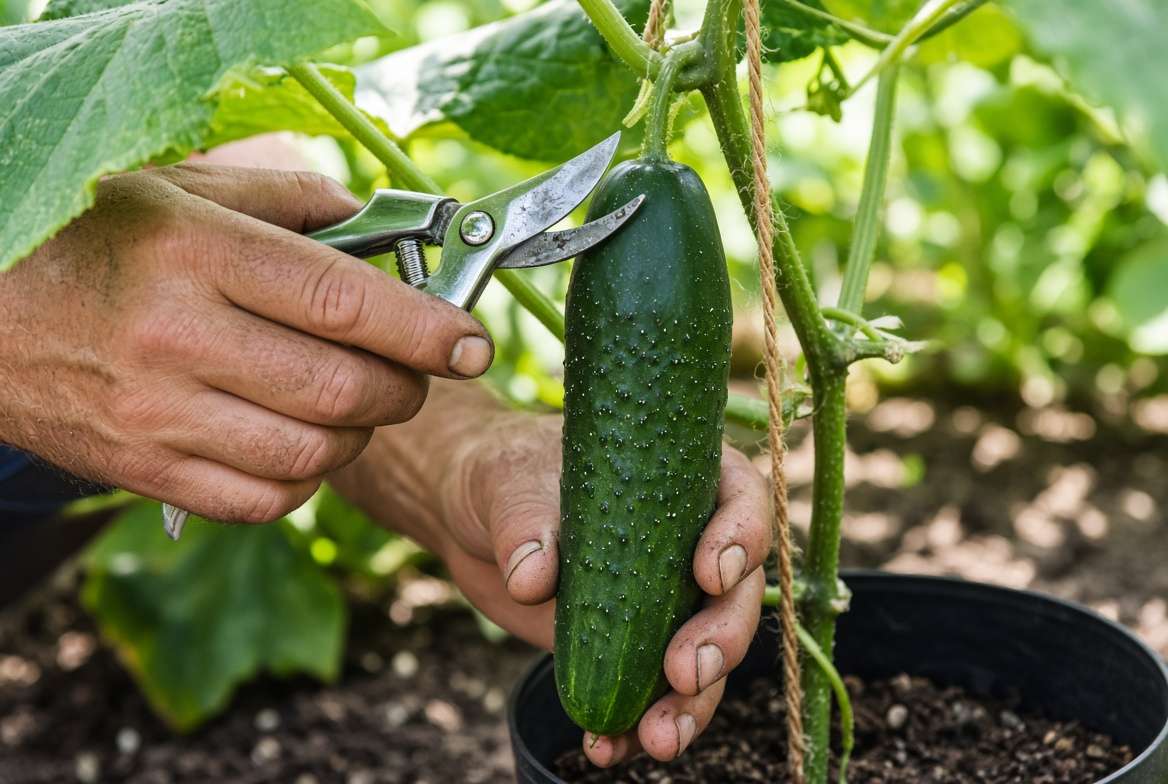
The Cut: Never rip or twist the cucumber off the vine. The vines are fragile, and a hard yank can uproot the plant or snap the main stem. Always use clean, sharp pruning shears or scissors to snip the stem just above the fruit.
-
Harvest Often: The more you pick, the more the plant will produce. Check your trellis every single day during peak season!
❓ Frequently Asked Questions (FAQs)
Can I grow two cucumber plants in one pot? Yes, but only if the container is large enough. A 10 to 15-gallon container can support two cucumber plants if they are trained strictly up a trellis and heavily fed. For anything smaller than 7 gallons, stick to one single plant to avoid nutrient competition.
How tall should my trellis be for container cucumbers? Aim for a trellis that is at least 5 to 6 feet tall. Vining cucumbers are aggressive climbers. If they reach the top of a short trellis, they will cascade back down, creating a tangled, disease-prone mess that defeats the purpose of vertical gardening.
How much sun do trellised cucumbers need? Cucumbers require “full sun,” which means a minimum of 6 to 8 hours of direct, unfiltered sunlight per day. If you are growing on an apartment balcony, carefully observe how the sun hits your space throughout the day to find the optimal placement.
💚 Conclusion
By mastering the art of growing cucumbers on a trellis in containers, you are completely bypassing the limitations of a small yard or patio. You are leveraging vertical air space, optimizing plant health through superior airflow, and treating yourself to an eye-level harvest of crisp, flawless cucumbers.
Remember the golden rules: choose a large container with stellar drainage, invest in rich, aerated potting soil, select the right vining (or parthenocarpic) varieties, and keep those roots consistently watered.
Do you have a small patio or balcony where you plan to set up your vertical garden? Let me know in the comments below, and feel free to share photos of your trellising setups! Happy gardening! 🌱🥒✨











