
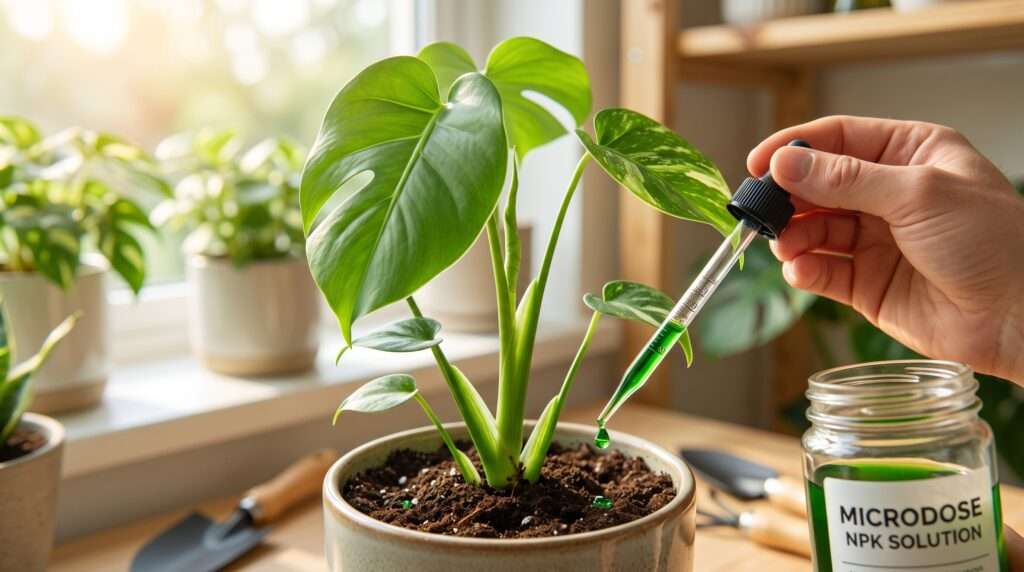
Have you ever watched a prized houseplant or delicate garden seedling develop crispy, brown leaf edges just days after a well-intentioned feeding? It is a heartbreaking but incredibly common scenario. We want our plants to thrive, so we follow the instructions on the back of the bottle, mix up a heavy dose of synthetic nutrients, and flood the soil. The result? Root shock, salt toxicity, and stunted development. The ultimate, science-backed solution to ending this destructive feast-or-famine cycle is microdosing fertilizer for consistent growth. By rethinking how and when we feed our plants, we can eliminate chemical burns entirely and unlock lush, continuous foliage.
Author’s Note on Soil Health & Diagnostics: Over years of deep-diving into plant diagnostics and soil health management, I have consistently seen one primary culprit behind mysterious plant decline: improper nutrient application. Soil is a living ecosystem, not a sterile sponge. Treating it with aggressive monthly chemical dumps destroys its natural balance. Shifting to a gentle, continuous feeding strategy is the single most effective intervention for long-term plant vitality.
What is Nutrient Burn, and Why Are Your Plants Suffering? 🍂
Before we can fix the problem, we need to understand exactly what happens beneath the soil surface when a plant is overfed. Nutrient burn, often referred to as fertilizer burn, is not a mysterious disease; it is an acute physiological reaction to environmental stress.
The Science of Over-Fertilization 🔬
Most commercial liquid plant foods and synthetic powders are composed of mineral salts. When you apply a standard “macro-dose” of these macronutrients (Nitrogen, Phosphorus, and Potassium, or NPK), you are introducing a massive spike of salts into the potting medium. This suddenly and drastically raises the soil’s Electrical Conductivity (EC).
When the concentration of mineral salts in the soil becomes higher than the natural salt concentration inside the plant’s own root cells, a devastating biological process occurs: reverse osmosis. Instead of the roots pulling water in from the soil to hydrate the leaves, the highly concentrated synthetic salts draw moisture out of the root system.
You are essentially dehydrating your plant from the roots up. The roots become scorched and begin to die back, rendering the plant incapable of transporting water to its furthest extremities—which is exactly why the tips and edges of the leaves turn brown and crispy first.
Telltale Signs of Fertilizer Toxicity 🥀
Accurate plant diagnostics are crucial. Nutrient burn is frequently misdiagnosed as underwatering or a lack of humidity, leading well-meaning gardeners to add more water (and sometimes more fertilizer!), exacerbating the issue. Look for these undeniable red flags:
-
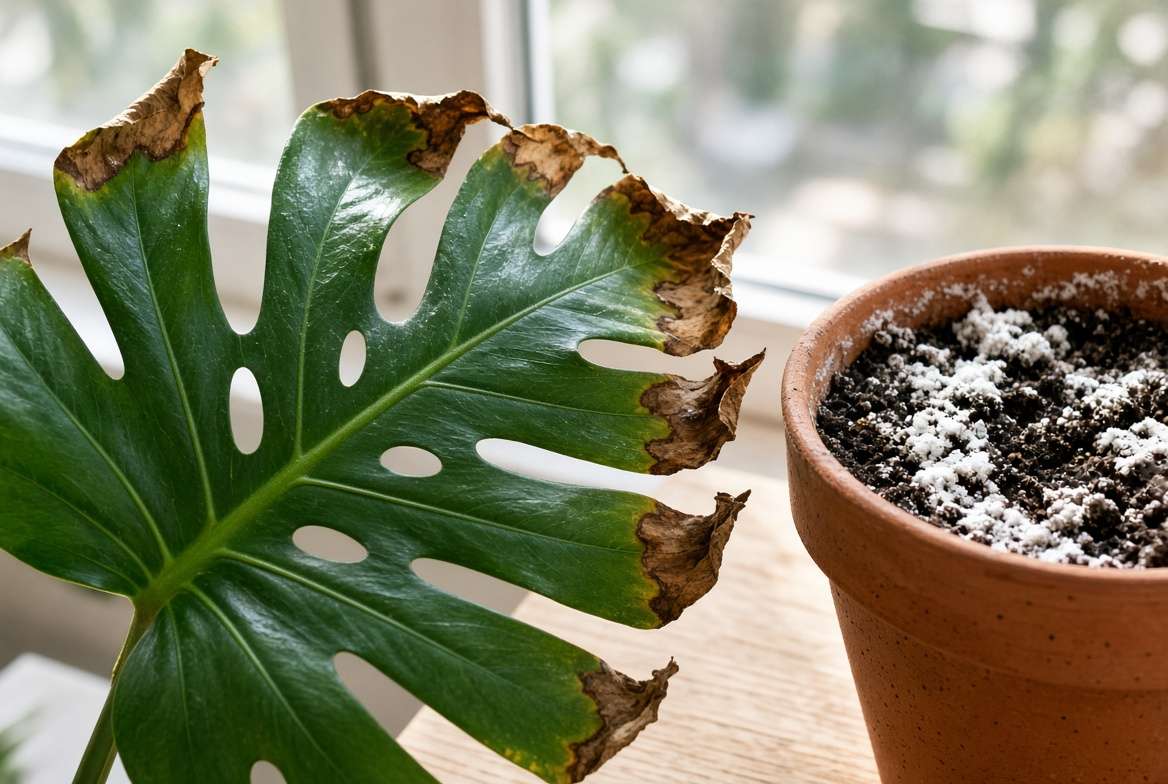
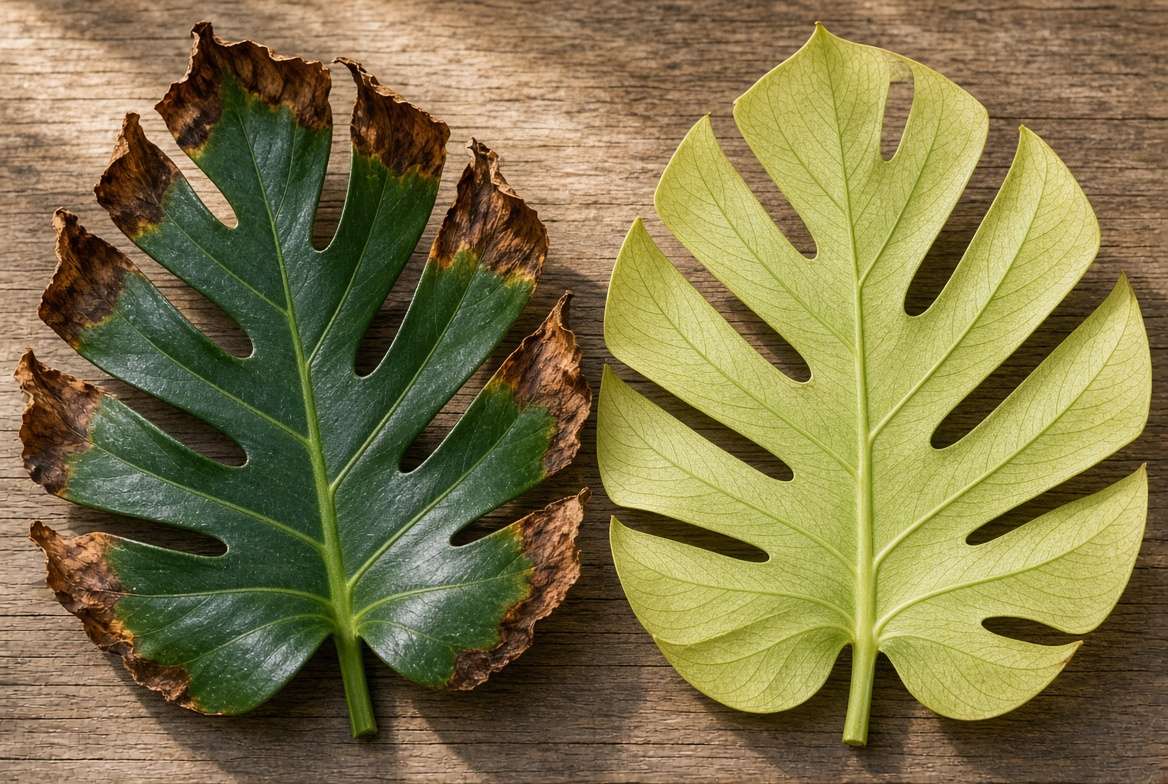
Crispy, Brown Margins: Unlike underwatering, which usually causes the entire lower leaf to yellow and drop, fertilizer toxicity typically manifests as a scorched, brown halo strictly around the edges and tips of otherwise green leaves.
-
Sudden Wilting in Wet Soil: If your plant looks severely wilted and limp, but the potting mix is thoroughly moist, reverse osmosis is likely suffocating the root system.
-
Crusty Mineral Deposits: A hard, white or yellowish crust forming on the top layer of your soil, or white crystalline rings seeping through the sides of unglazed terracotta pots, indicates a severe buildup of unabsorbed fertilizer salts.
-
Stunted New Growth: New leaves may emerge blackened, deformed, or significantly smaller than older foliage due to the chemical stress blocking vital micronutrients like calcium and magnesium.
Enter Microdosing: A Paradigm Shift in Plant Care 🌱
If standard monthly feeding is a recipe for disaster, what is the alternative? The answer lies in mimicking the natural world. In a natural forest or rich garden bed, plants do not receive massive chemical dumps once a month. They receive a constant, microscopic trickle of nutrients as organic matter slowly breaks down.
What Exactly is Fertilizer Microdosing? 💧
Microdosing (also known as “weakly, weekly” or continuous fertigation) is the practice of heavily diluting your liquid or water-soluble fertilizer to a fraction of the manufacturer’s recommended dose—typically 1/8th to 1/4th strength—and applying it every single time you water your plant.
Think of it through the lens of human nutrition. Eating one massive 10,000-calorie meal at the beginning of the month and starving for the next 29 days would leave you lethargic, stressed, and sick. Taking a daily multivitamin alongside regular, balanced meals keeps your energy steady and your system functioning perfectly. Microdosing provides that same steady, digestible stream of foundational plant nutrition.
Traditional Feeding vs. Microdosing ⚖️
To clearly visualize why this paradigm shift is so highly recommended by horticulturalists, let’s compare the two methodologies:
The Core Benefits of Microdosing Fertilizer for Consistent Growth 📈
Shifting your plant care regimen to a microdosing model does more than just prevent crispy leaves. It fundamentally upgrades the internal health of your greenery.
1. Eliminating Root Shock and Chemical Burns 🚫
As established, the primary advantage is safety. By keeping the nutrient concentration well below the threshold that triggers reverse osmosis, you protect the delicate, microscopic root hairs responsible for the vast majority of water and nutrient uptake. Healthy, unburned root hairs mean a more resilient plant that can withstand temperature fluctuations and occasional missed waterings.
2. Promoting Steady, Uninterrupted Development 🌿
Plants are highly sensitive to their environment. When they sense a sudden abundance of nitrogen, they rush to push out foliage, often resulting in weak, leggy stems. When that nitrogen inevitably runs out weeks later, growth abruptly stalls. Microdosing fertilizer for consistent growth ensures the plant always has exactly what it needs to build strong cell walls, resulting in thicker stems, vibrant coloration, and uniformly sized foliage that doesn’t suffer from seasonal “stop-and-go” development.
3. Fostering a Thriving Soil Microbiome 🪱
Healthy soil is teeming with beneficial bacteria and mycorrhizal fungi. These microscopic allies form symbiotic relationships with your plant’s roots, helping them break down complex minerals and fight off soil-borne pathogens like root rot. High concentrations of synthetic phosphorus and synthetic salts act almost like a bleach, wiping out these beneficial microbes. By delivering nutrients in micro-doses, you feed the plant without destroying the delicate ecosystem living within your potting mix.
Your Step-by-Step Guide to Starting a Microdosing Routine 🛠️
Transitioning from traditional heavy feeding to continuous fertigation is straightforward, but it requires the right tools and a basic understanding of dilution ratios. Here is how to implement this system flawlessly for your indoor jungle or outdoor garden.
Step 1: Choosing the Right Fertilizer 🧪
Not all plant foods are created equal when it comes to microdosing. Because you will be applying this solution frequently, you need a product that distributes evenly in water and absorbs readily without leaving heavy residues.
-
Liquid Concentrates and Water-Soluble Powders: These are absolutely mandatory for this method. They dissolve completely, ensuring that every drop of water contains an identical, microscopic trace of nutrients.
-
Organic vs. Synthetic: Both can be microdosed effectively. High-quality synthetic liquid fertilizers (like a balanced 20-20-20 NPK ratio) are excellent for providing immediate, precise nutrition without the heavy salt load of macro-dosing. Organic liquids (like fish emulsion, kelp extract, or liquid worm castings) are even gentler and actively feed the soil microbes, making them a premium choice for long-term soil health.
Step 2: The Micro-Math Made Easy 🧮
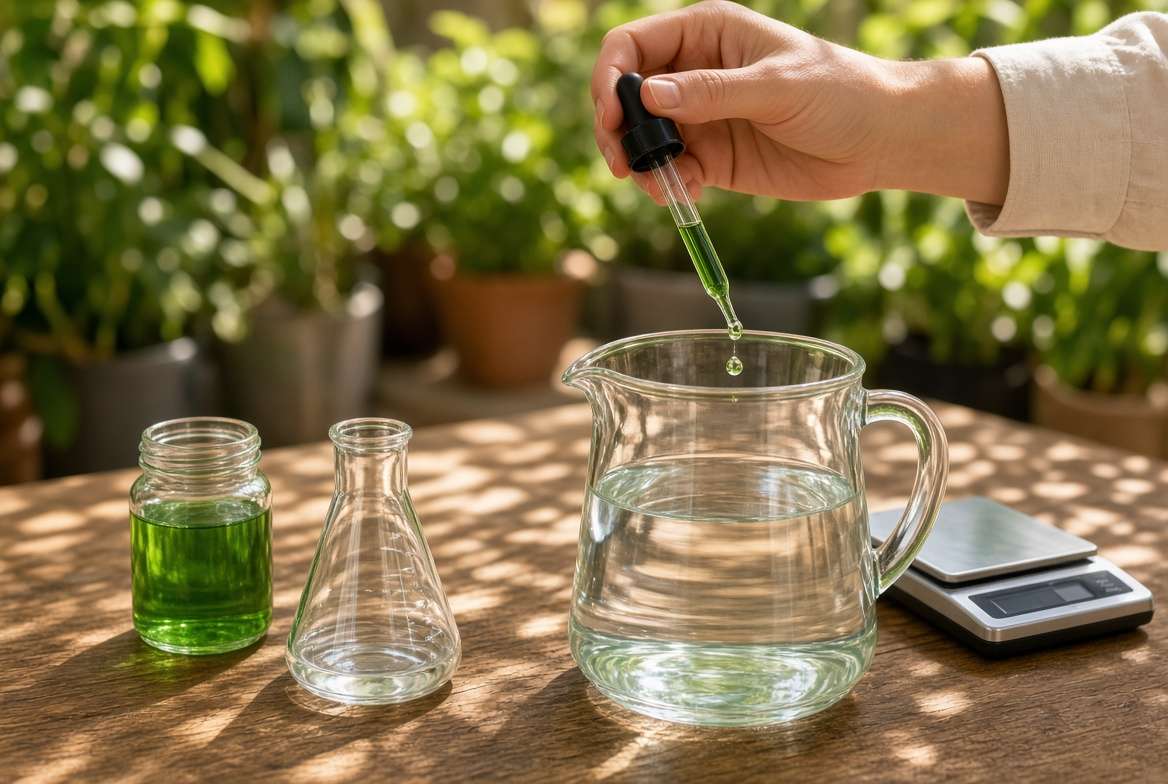
The core principle of microdosing fertilizer for consistent growth is dividing the manufacturer’s recommended monthly dose into smaller, bite-sized portions suitable for your watering schedule.
If you water your plants approximately once a week, aim for 1/4th of the recommended strength. If you water twice a week (common for outdoor potted plants in summer or moisture-loving tropicals), drop it to 1/8th strength.
Example Calculation:
-
The Bottle Says: Mix 1 teaspoon per gallon of water, apply once a month.
-
Your Weekly Microdose: Mix 1/4 teaspoon per gallon of water, apply with every weekly watering.
Expert Pro Tip: Do not measure out 1/4 teaspoon every single time you water. Instead, create a dedicated “fertigation jug.” Take a one-gallon watering can or milk jug, mix in your 1/4 teaspoon of fertilizer, and keep it on standby. This makes your routine completely effortless—just grab and pour.
Step 3: Application Techniques and Flushing 🚿
When watering with your micro-dose solution, water thoroughly. Pour the diluted mixture evenly over the entire surface of the potting mix until you see roughly 10% to 20% of the liquid draining out of the bottom of the pot. This ensures the entire root ball has access to the nutrients and prevents dry pockets from forming in the soil.
The Golden Rule: The Monthly Flush Even with ultra-diluted feeding, trace minerals can slowly accumulate in closed container systems over time. To maintain pristine soil health, replace your micro-dose mixture with plain, unfertilized water once a month. Water the plant heavily, allowing a large volume of water to cascade through the drainage holes. This “flushes” out any residual, unabsorbed salts and resets the soil ecosystem.
Advanced Plant Diagnostics: Fine-Tuning Your Regimen 🔍
While microdosing is universally safer than macro-dosing, plant care is never a one-size-fits-all endeavor. You must still observe your plants and adjust your strategy based on their feedback and environmental conditions.
Reading the Leaves: Are You Under-Feeding? 📉
Because microdosing is so gentle, the primary risk shifts from over-feeding to slight under-feeding, especially for fast-growing, “hungry” plants like Monsteras, Alocasias, or heavy-fruiting garden vegetables.
Look for signs of genuine nutrient deficiency:
-
Overall Pale Foliage: If the older leaves are turning a uniform, pale yellowish-green (chlorosis) while the veins remain dark, the plant may need more nitrogen.
-
Stunted, Miniature Leaves: If the plant is receiving ample light and water but continues to push out incredibly small new leaves, it lacks the building blocks to generate standard-sized foliage.
If you observe these symptoms, do not panic and dump a full dose of fertilizer into the pot. Simply bump your microdose ratio from 1/8th to 1/4th strength, or from 1/4th to 1/2 strength, and monitor the new growth over the next few weeks.
Adjusting for the Seasons ☀️❄️
A plant’s metabolism is dictated by light and temperature. You must adjust your microdosing rhythm to match the seasons.
-
Active Growing Season (Spring and Summer): When days are long and warm, plants are photosynthesizing rapidly and generating new tissue. This is when they require steady fuel. Maintain your standard 1/4th or 1/8th strength microdosing routine with every watering.
-
Dormancy (Fall and Winter): As light levels drop, many plants enter a resting phase. Their metabolism slows to a crawl, and they stop producing new leaves. Never force-feed a dormant plant. Even microdosing can lead to salt buildup if the plant is not actively taking up the nutrients. During the depths of winter, reduce feeding to 1/10th strength, or pause fertilizing entirely and switch to plain water until you see active new growth resume in the spring.
Frequently Asked Questions (FAQs) 🙋♀️
Can I microdose with slow-release fertilizer pellets? Technically, slow-release pellets (like Osmocote) are a physical form of microdosing, as their resin coatings slowly degrade and release trace nutrients every time you water. However, you have far less control over the exact dosage, especially as temperatures fluctuate (heat causes pellets to release faster). Liquid microdosing offers superior precision and control.
Does microdosing fertilizer for consistent growth work on succulents and cacti? Absolutely. While succulents require very little fertilizer overall, they still benefit from consistent, trace nutrition rather than a heavy yearly dose. Dilute a specialized cactus fertilizer to 1/8th strength and apply it only during their active summer growing season.
Is it safe to microdose seedlings and newly propagated cuttings? Yes, and it is highly recommended! Seedlings and delicate water-propagated roots are incredibly susceptible to chemical burns from standard fertilizer. A microscopic dose (1/10th strength) of liquid fertilizer provides them with essential early nutrients without risking root damage.
How do I balance microdosing with tap water that already has high mineral content? If you live in an area with very “hard” tap water (high in calcium and magnesium), your soil EC is already starting at a higher baseline. In this case, stick to the lowest end of the microdosing spectrum (1/8th strength) and be highly diligent about your monthly plain-water flush. Ideally, use filtered water, rainwater, or distilled water for your fertigation jug to maintain total control over the mineral content.
Cultivating a Lifetime of Lush, Resilient Plants 🌳
Achieving that magazine-worthy, jungle-like aesthetic in your home or garden does not require expensive magic potions or aggressive chemical interventions. Consistency is the secret language of plants. By shifting away from the feast-or-famine rollercoaster of traditional feeding and embracing the gentle art of microdosing fertilizer for consistent growth, you are working with plant biology rather than against it.
You will eliminate the heartbreak of burned, crispy edges, protect your soil’s delicate microbiome, and provide your plants with the steady fuel they need to push out robust, uniform foliage season after season.
Ready to transform your plant care routine? Share your current fertilizer strategy in the comments below, or tell us which plant you are going to try microdosing on first! And do not forget to bookmark this guide or download our free Microdosing Math Cheat Sheet so you can easily calculate the perfect dilution ratios for your entire indoor jungle. Happy growing! ✨











