
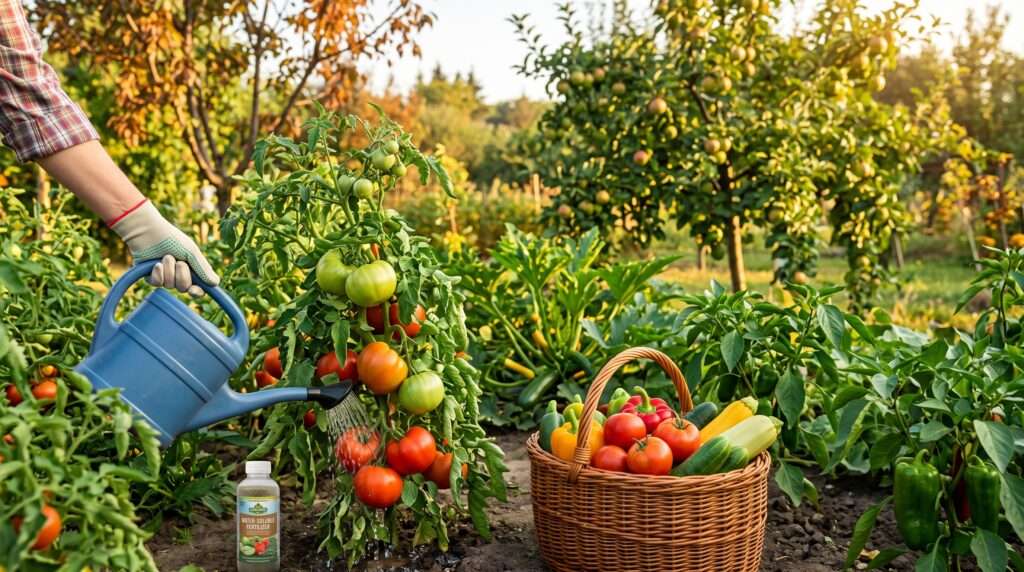
As the peak days of summer begin to wane, many gardeners and orchardists watch in dismay as their once-prolific vegetable patches and fruit trees suddenly slow down. Blossoms drop, fruit development stalls, and leaves begin to yellow just as late summer approaches. You do not have to settle for this early decline. The secret to maximizing your garden’s true potential lies in prolonging harvest season with fertilizer boosts. By understanding exactly what your plants crave during their final fruiting push, you can safely squeeze out three to six more weeks of heavy, high-quality yields.
The problem rarely stems from the changing weather alone. Instead, it is a matter of severe soil depletion. After producing a massive initial flush of fruits and vegetables, heavy-feeding plants effectively strip the surrounding soil of its accessible macronutrients. Without an intervention, the plant naturally enters survival mode, abandoning fruit production to conserve energy. This comprehensive guide will walk you through the exact timing, specific nutrient blends, and expert application methods required to revive your tired plants, ensuring your baskets stay full well into the autumn months.
2. The Science of Late-Season Yield Decline 🔬🪴
To effectively extend your growing season, you must first understand the biological shifts happening within your plants and the soil beneath them.
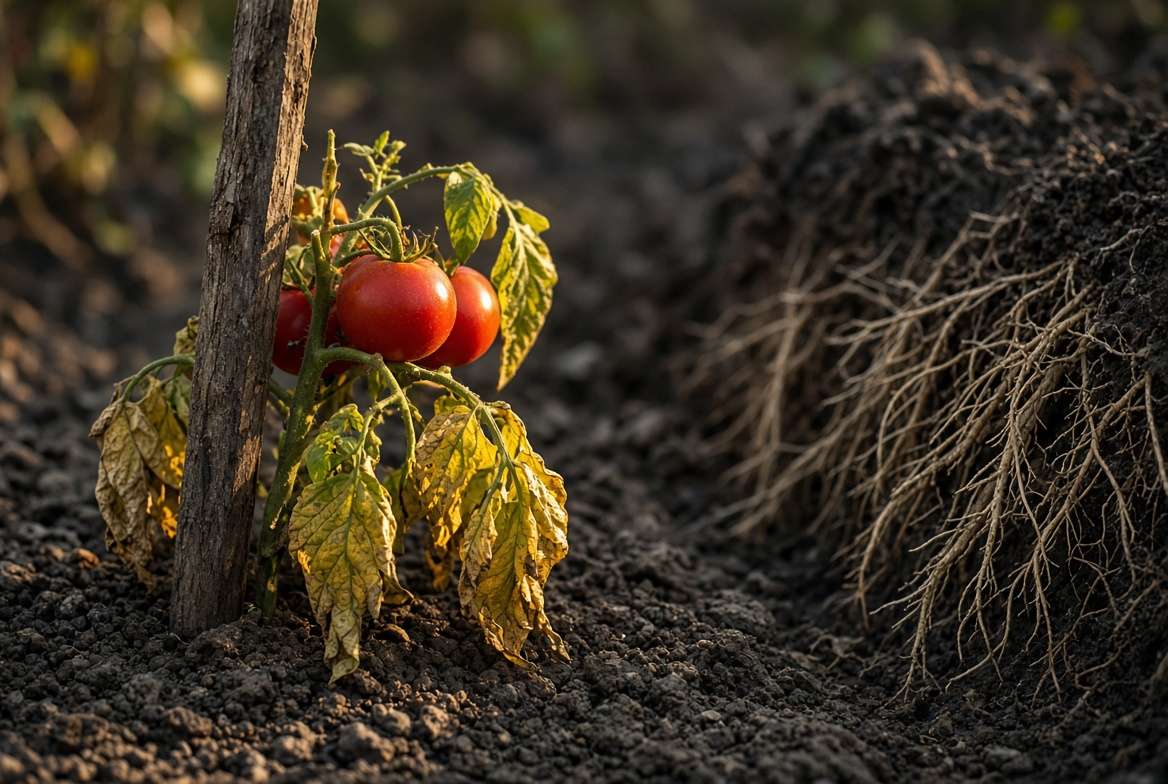
Why Do Plants Stop Producing?
Plants operate on strict biological clocks governed by temperature, daylight hours, and available resources. As days shorten, annuals (like tomatoes and cucumbers) and perennials (like fruit trees) naturally begin shifting their energy from reproduction (flowering and fruiting) to senescence (aging and dying) or dormancy. When a plant senses that its nutrient supply is running low, it accelerates this shutdown process. It will abort new flowers and stunt the growth of existing fruit to ensure it doesn’t expend energy it simply doesn’t have.
The Soil Depletion Factor
By late July or August, your soil is exhausted. Heavy feeders demand massive amounts of nitrogen, phosphorus, and potassium to build plant tissue and set fruit. Even if you amended your beds heavily with organic compost in the spring, those readily available nutrients have likely been consumed or washed away by months of watering and summer rainstorms.
Expert Insight 💡: Late in the season, soil biology also begins to slow down. The beneficial microbes and fungi that normally break down organic matter into plant-available nutrients become less active as nighttime temperatures drop. Because the soil food web is sluggish, waiting for slow-release granular fertilizers to break down is no longer a viable strategy. Plants need readily available, water-soluble nutrients now.
3. The Core Strategy: Prolonging Harvest Season With Fertilizer Boosts 🚀💦
Applying the exact same fertilizer in August that you used in May is a recipe for disaster. The nutritional demands of a mature, fruiting plant are fundamentally different from those of a young seedling.
Shifting the N-P-K Ratio for Late-Season Growth ⚖️
To trigger continued harvests without harming the plant, you must drastically alter your N-P-K (Nitrogen – Phosphorus – Potassium) approach.
-
Nitrogen (N) – Time to Pull Back: Nitrogen stimulates aggressive, leafy green growth. In the spring, this is essential. Late in the season, applying high nitrogen is incredibly detrimental. It forces the plant to push out tender new foliage instead of ripening existing fruit. Furthermore, fresh green growth is highly susceptible to late-season pests (like aphids) and will be instantly killed by early frosts.
-
Phosphorus (P) – The Blossom Builder: Phosphorus is critical for root development, flower formation, and seed production. A late-season phosphorus boost prevents blossom drop and encourages the plant to set one final round of fruit.
-
Potassium (K) – The Ripening Agent: Potassium (or potash) regulates the plant’s metabolism and water uptake. Crucially for the late season, potassium accelerates the ripening process, increases the sugar content (Brix level) of fruits, and hardens plant cells, providing a natural defense against cold stress and mild frosts.
Liquid vs. Granular Fertilizers 💧vs🪨
When time is running out before the first frost, speed is your greatest asset.
-
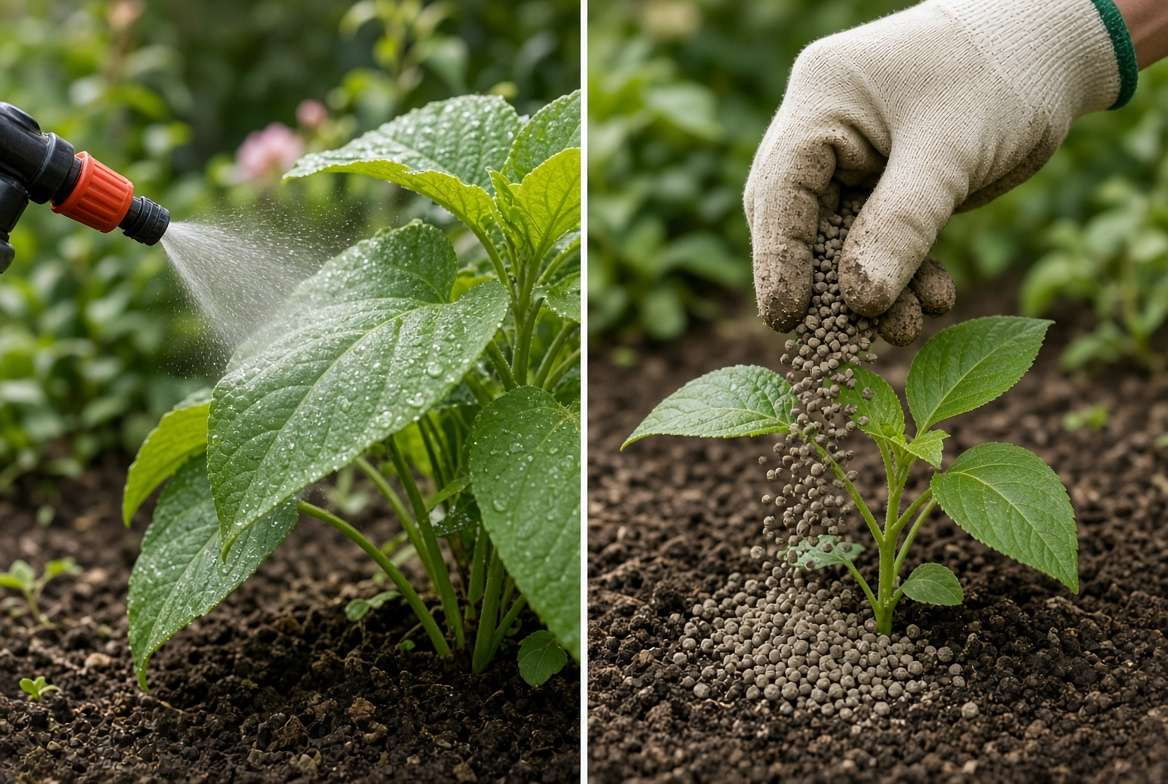
Liquid / Water-Soluble Fertilizers: These are your primary rescue tools. Because the nutrients are already dissolved in water, they bypass the need for microbial breakdown in the soil. When applied to the root zone, the plant absorbs them almost instantly. Liquid kelp, fish emulsion (low-nitrogen varieties), and soluble mineral blends provide the immediate energy spike needed to push stalled fruit to maturity.
-
Granular Fertilizers: While less effective for emergency rescues, a very light top-dressing of a high-potassium granular organic fertilizer (like bone meal or langbeinite) applied in late summer can provide a steady, slow drip of nutrients to support the liquid boosts.
Foliar Feeding for Immediate Rescue 🍃
Foliar feeding involves spraying a highly diluted, water-soluble fertilizer directly onto the leaves of the plant. Plant leaves feature microscopic pores called stomata, which can absorb nutrients up to 20 times faster than the root system. If your vining crops are yellowing or your tomatoes have stopped swelling, a weekly foliar spray of a phosphorus and potassium-rich liquid feed (such as liquid seaweed) is the most efficient way to bypass sluggish late-season roots and deliver an instant nutritional payload.
4. Crop-Specific Fertilizer Strategies for Extended Yields 🌶️🍎
Different plants require entirely different late-season interventions. Here is exactly how to tailor your approach to the most common garden crops.
Nightshades (Tomatoes, Peppers, Eggplants) 🍅
Nightshades are notorious for hitting a “late summer wall” where fruit sits green on the vine for weeks.
-
The Strategy: Transition to a high-potassium, low-nitrogen feed (e.g., a 3-4-6 NPK ratio).
-
Calcium is Crucial: Late-season watering inconsistencies often lead to Blossom End Rot. Ensure your liquid feed includes readily available calcium, or supplement with a liquid calcium-magnesium (Cal-Mag) spray to keep fruit skins robust and disease-free.
Vining Crops (Cucumbers, Squash, Melons) 🥒
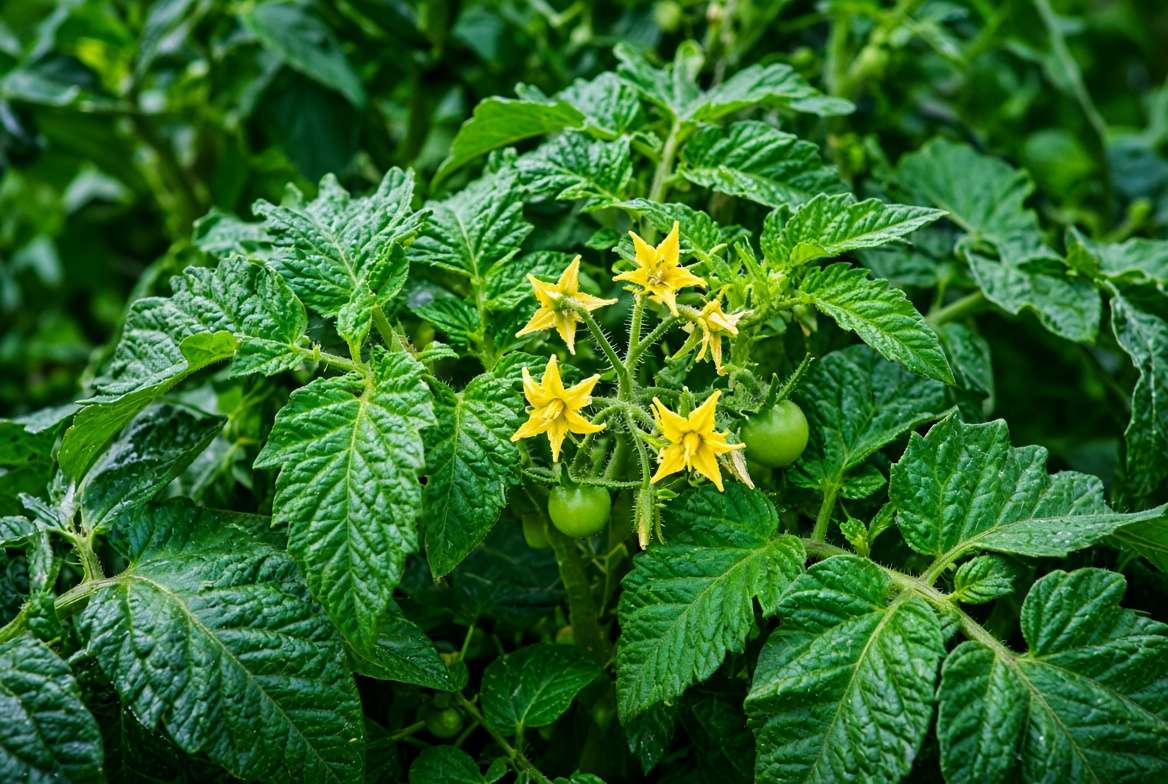
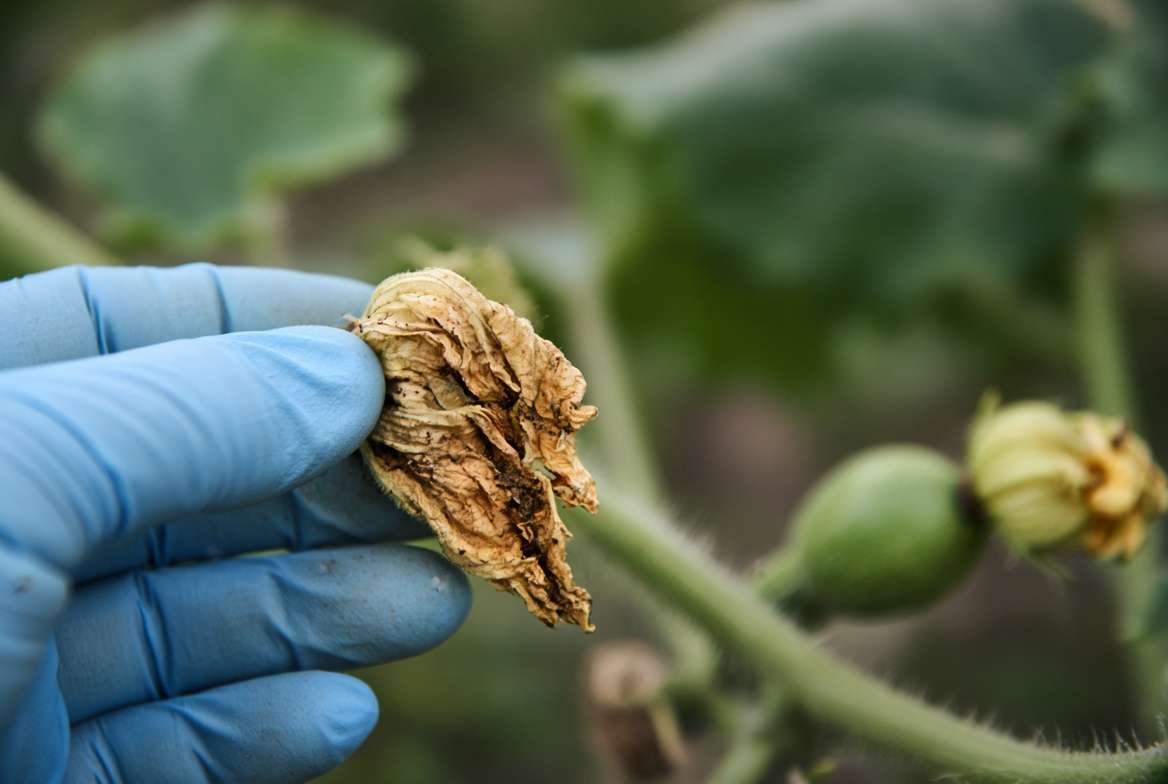
Cucumbers and summer squash often suffer from yellowing leaves and a sudden halt in female flower production as they exhaust their soil pockets.
-
The Strategy: These plants benefit from a targeted phosphorus boost to trigger a secondary wave of flowering. Apply a liquid bloom-booster to the root zone every 10 to 14 days. Simultaneously, foliar feed with a micronutrient spray (focusing on iron and zinc) to re-green the older leaves, allowing the plant to photosynthesize efficiently in fading autumn sunlight.
Fruit Trees (Citrus, Apples, Stone Fruits) 🍋
Cautionary Note ⚠️: Fruit trees require careful handling. While you want to support fruit development, pushing a tree to grow too late in the year can be fatal.
-
The Strategy: For fruit trees, your “late-season boost” actually needs to happen in mid-to-late summer (July/August) as the fruit is actively swelling. Apply a heavy dose of potassium (like sulfate of potash) to increase fruit size and sweetness.
-
Strict Rule: Never apply nitrogen to a fruit tree in the late summer or fall. Nitrogen forces new branch growth that will not have time to harden off before winter. When the freeze hits, those new branches will die back, potentially introducing disease into the heart of the tree.
Leafy Greens and Herbs (Kale, Spinach, Basil) 🥬
Unlike fruiting plants, leafy greens are grown explicitly for their foliage.
-
The Strategy: Cool-weather crops like kale and spinach thrive as temperatures drop. Because you want them to produce more leaves, they are the exception to the late-season nitrogen rule. A mild, organic nitrogen boost (like diluted blood meal or fish emulsion) applied every two weeks will trigger a fresh, tender flush of greens that can often be harvested well past the first light frosts.
5. Timing is Everything: The “When” and “How Often” 🗓️⏰
Knowing which nutrients to apply is only half the battle; knowing exactly when to apply them dictates whether you get a bumper crop or a blackened, frost-bitten plant. Timing late-season interventions requires a strategic shift from your spring feeding schedule.
The 4-Week Rule
To maximize your harvest without wasting money on fertilizer that the plant won’t have time to use, employ the 4-Week Rule. Find your area’s average first frost date and count backward by four to six weeks. This window is your prime intervention period. During this time, the weather is still warm enough for active metabolism, but the plant is beginning its natural slowdown. Applying your phosphorus and potassium boosts during this window gives the plant enough time to uptake the nutrients, set a final round of blossoms, and push existing fruit to full maturity before the killing freeze arrives.
Frequency of Application
Spring and early summer are dominated by slow-release granular feeds applied every four to six weeks. Late summer and early autumn demand agility.
-
Transition to Weekly: Shift to a highly diluted, water-soluble fertilizer applied every 7 to 10 days.
-
The “Weak Weekly” Approach: It is much better to feed your plants a quarter-strength liquid fertilizer every week than a full-strength dose once a month. This continuous, gentle supply of energy prevents nutrient shock and ensures a steady pipeline of resources directly to the swelling fruit.
Late-Season Intervention Checklist ✅
Don’t wait for your plants to completely stall. Watch for these visual cues that signal it’s time to intervene:
-
Blossom Drop: Flowers dry up and fall off before tiny fruits can form.
-
Stalled Fruit: Tomatoes, peppers, or squash remain the exact same size and color for over two weeks.
-
Pale Canopy: The upper leaves of the plant begin to look washed out or slightly yellow, indicating a lack of mobile nutrients.
-
Thinning Stems: New growth on vining crops appears spindly and weak.
6. Common Mistakes That Ruin Late-Season Harvests 🚫🥀
When gardeners panic over a stalling harvest, they often make aggressive missteps that ultimately doom the crop. Avoid these frequent pitfalls to protect your late-season yield.
Over-fertilizing (Nutrient Burn)
More is not always better. Dumping a massive dose of synthetic fertilizer onto a struggling plant creates a high concentration of salt in the soil. This salt effectively pulls moisture away from the plant’s roots, causing “nutrient burn.” The edges of the leaves will turn crispy and brown, and the plant’s ability to absorb water will plummet right when it needs hydration to plump up late-season fruit. Always err on the side of under-diluting your liquid feeds.
Using High-Nitrogen Formulas Too Late
As mentioned in the crop-specific strategies, late-season nitrogen is the enemy of a prolonged harvest for fruiting plants. Pushing a plant to create fresh, sappy green foliage in September or October diverts all energy away from ripening fruit. Furthermore, this tender new growth is highly vulnerable to powdery mildew, aphids, and even the mildest chill, leaving the entire plant compromised.
Ignoring Soil pH
You can pour all the high-quality liquid fertilizer in the world onto your garden, but if the soil pH has drifted out of the optimal range (typically 6.0 to 7.0 for most vegetables), the plant cannot access it. This is known as nutrient lockout. Heavy watering throughout the summer can sometimes leach calcium and shift the pH. If your plants aren’t responding to your late-season fertilizer boosts within a week, do a quick soil pH test before adding more nutrients.
7. Pro-Tips: Pairing Fertilizers With Other Season-Extending Tactics 🛠️🌤️
Prolonging harvest season with fertilizer boosts is highly effective on its own, but when paired with environmental and structural tactics, the results multiply.
Aggressive Late-Season Pruning ✂️
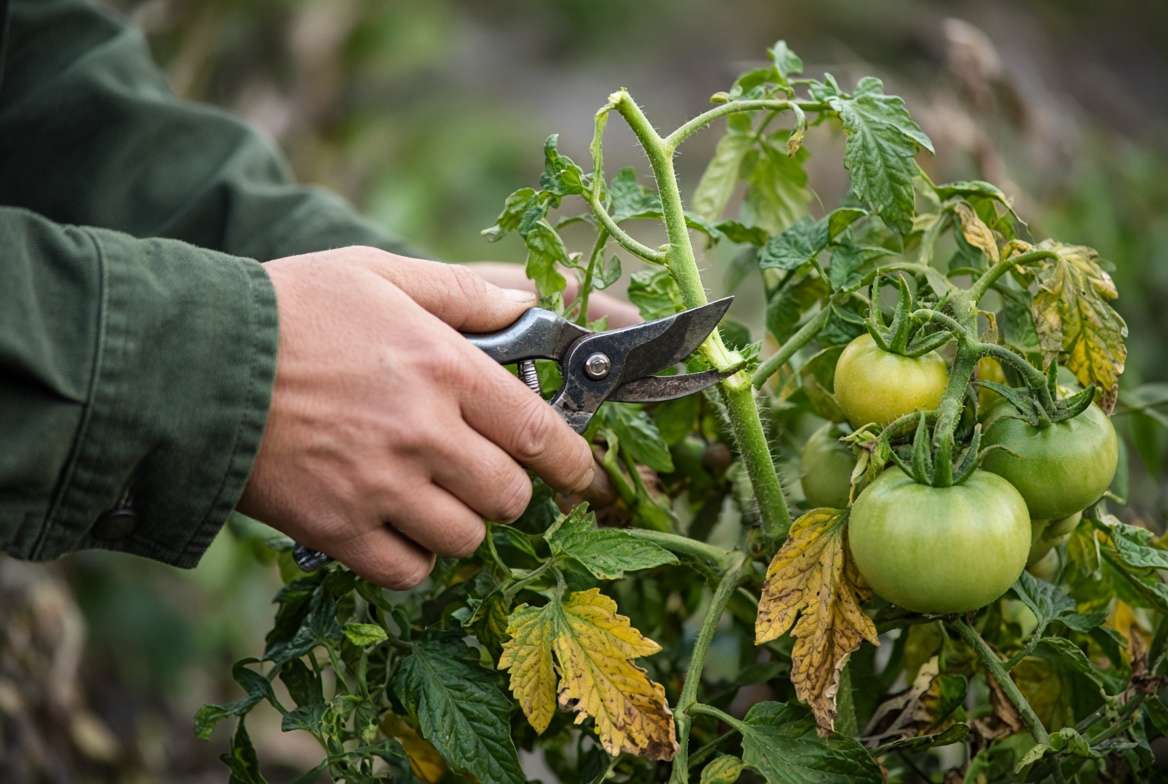
Your fertilizer needs a specific target. Roughly four weeks before your first frost, aggressively “top” your indeterminate tomatoes and sprawling vines. Cut off the growing tips of the main stems and remove any new flowers that will not have time to mature into full-sized fruit. By physically stopping the plant from expanding, you force 100% of the fertilizer’s energy into ripening the existing, near-mature fruit.
Consistent Watering Regimens 🚿
Nutrients are physically transported through plant tissue via water. If you allow your garden beds to dry out completely in late summer, your fertilizer boosts will sit dormant in the soil crust. Maintain a consistent, deep watering schedule. Moist (but not waterlogged) soil allows the root system to maintain the turgor pressure necessary to draw up phosphorus and potassium efficiently.
Row Covers and Mulch 🧣
Roots become sluggish as soil temperatures drop below 60°F (15°C). To ensure your plants actively absorb your liquid feeds, lay down a thick layer of organic mulch to trap the late summer heat in the soil. As nights get significantly colder, deploying floating row covers or low frost tunnels over your fertilized crops will trap ambient heat, keeping the plant’s metabolism running fast enough to utilize the nutrients you’ve provided.
8. Frequently Asked Questions (FAQs) 🙋♀️🌱
Can I use compost tea for prolonging harvest season with fertilizer boosts? Yes, but you must brew it strategically. Standard compost tea can sometimes be too high in nitrogen for late-season fruiting crops. To make a late-season tea, steep high-potassium organic matter like kelp meal, comfrey leaves, or banana peels. This delivers the microbial benefits of compost tea alongside the targeted P-K boost your plants need to finish ripening.
Will late fertilizing prevent my fruit trees from surviving the winter? It will if you use nitrogen. Applying nitrogen past mid-summer forces fruit trees to break dormancy and push new growth, which will inevitably freeze and damage the tree. However, applying potassium and phosphorus in late summer helps harden off the wood, actually improving the tree’s winter survival rates while sweetening the late-hanging fruit.
Is it too late to fertilize if my tomato plant leaves are already turning yellow? Not necessarily. If the yellowing is concentrated on the lower leaves, the plant is cannibalizing mobile nutrients to feed the fruit above. You can intervene immediately with a fast-acting foliar spray of liquid seaweed and a root drench of water-soluble potassium to halt the decline and push the remaining green tomatoes to ripeness.
What is the best organic potassium source for a quick late-season boost? For immediate, fast-acting results, liquid kelp extract is unmatched. It is completely water-soluble and packed with potassium and essential micronutrients. For a slightly slower, but robust organic option, look for water-soluble sulfate of potash or carefully dissolved langbeinite.
9. Maximize Every Square Inch of Your Garden 🏆🍁
Watching a productive garden fade prematurely is frustrating, but it doesn’t have to be your reality. By transitioning away from nitrogen-heavy spring regimens and focusing entirely on fast-acting, highly soluble phosphorus and potassium feeds, you can actively manipulate your plants’ biological clocks. Whether you are using a liquid kelp foliar spray to rescue yellowing cucumber vines or applying a targeted potassium drench to push your tomatoes across the finish line, strategic nutrient management is your greatest defense against the changing seasons. Do not let those final, valuable weeks of sunshine go to waste.
What has been your biggest struggle keeping your garden productive into the autumn months? Drop your experiences in the comments below, or subscribe to our newsletter to receive our customized, region-specific frost-date feeding calendar so you never miss an application window!











