
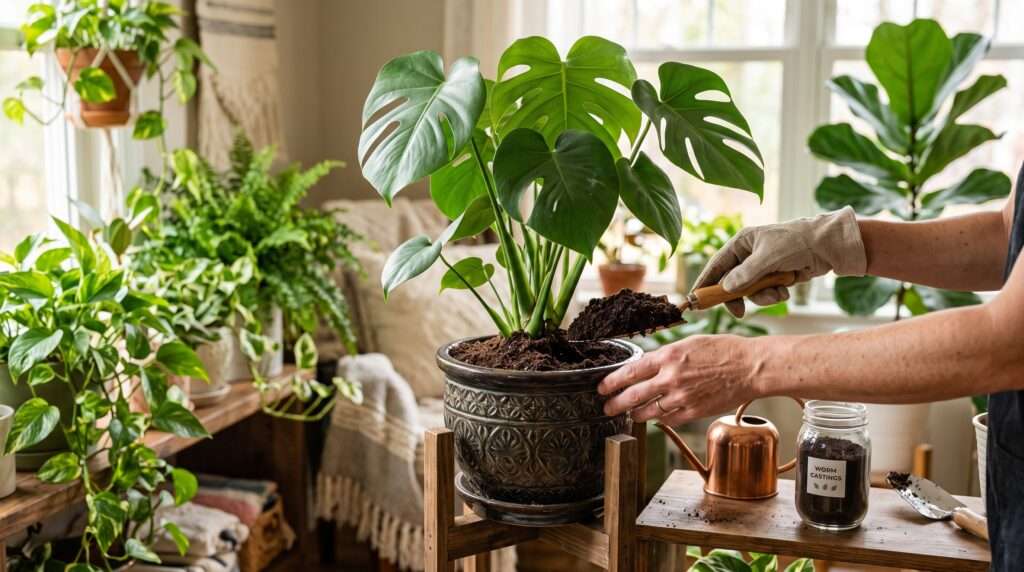
We’ve all been there. You are staring at a massive, beautifully mature Monstera or a heavy outdoor patio planter, knowing the potting soil is old, compacted, and completely depleted of nutrients. The thought of dragging out a plastic tarp, wrestling a heavy, stubborn root ball out of its pot, and making a massive mess in your living room is enough to make any gardener procrastinate. But as that soil degrades, your plant inevitably suffers. Fortunately, there is a highly effective, low-mess alternative to full soil replacement: compost topdressing for container plants.
This traditional gardening technique allows you to bypass the chaos of repotting while delivering a massive boost of vitality to your indoor and outdoor potted gardens. By mimicking the natural cycle of the forest floor, you can revitalize exhausted soil, introduce vital beneficial microbes, and feed your plants naturally.
If you want to save your back, save your floors, and grow the healthiest plants possible, it is time to master the art of the topdress.
What Exactly is Compost Topdressing? 🌱
In the wild, plants never need to be “repotted.” Leaves fall, organic matter decays on the soil surface, and earthworms and microbes pull those rich nutrients down into the root zone. Topdressing is the horticultural practice of recreating this exact process in your containers.
It involves applying a thin, fresh layer of rich organic material (like high-quality compost or worm castings) directly to the surface of your existing potting soil, entirely without disturbing the established root ball.
Topdressing vs. Liquid Fertilizers ⚖️
Many indoor gardeners rely exclusively on synthetic liquid fertilizers. While liquid feeds offer a rapid nutrient spike, they do absolutely nothing to improve the physical structure or biological health of the soil. Over time, synthetic fertilizers can even leave behind salt accumulations that burn delicate feeder roots.
Compost topdressing, on the other hand, acts as a slow-release, holistic soil builder. It is not just about feeding the plant; it is about feeding the soil.
[Expert Insight 💡]: Think of topdressing as brewing a natural, slow-drip “compost tea” right inside your pot. Every single time you water your plant, that water passes through the fresh layer of compost at the surface. As it drains downward, it carries dissolved organic matter, humic acids, and microscopic life directly into the lower root zone, continuously revitalizing the old potting mix beneath it.
5 Incredible Benefits of Compost Topdressing for Container Plants 🌿
Why go through the effort of adding organic matter to your pots? The science of soil health reveals that topdressing offers profound, long-lasting benefits that chemical fertilizers simply cannot match.
1. Replenishing Depleted Nutrients 💧
Standard potting mixes are primarily composed of peat moss or coco coir, both of which are naturally sterile and devoid of long-term nutrients. Once a plant exhausts the initial fertilizer added by the nursery, it begins to starve. Compost provides a rich, full-spectrum diet of essential macronutrients (Nitrogen, Phosphorus, and Potassium) alongside vital trace minerals (like calcium, magnesium, and iron) that keep foliage vibrant and prevent yellowing.
2. Restoring Soil Structure and Aeration 🌬️
Over time, organic matter in potting soil naturally breaks down and decomposes. This causes the soil to collapse in on itself, becoming dense and compacted. Compacted soil suffocates roots. Adding a fresh layer of coarse compost introduces new organic material that helps break up surface crusting, allowing essential oxygen to penetrate deep into the container.
3. Boosting Water Retention 🧽
If you have ever watered a potted plant only to watch the water instantly run down the inside edges of the pot and out the drainage hole, your soil has become hydrophobic. High-quality compost acts like a microscopic sponge. Topdressing introduces organic humus that helps re-hydrate old soil, significantly improving its water-holding capacity. This is especially crucial for outdoor container gardens battling hot summer winds.
4. Activating Beneficial Microbes 🦠
Healthy soil is alive. Compost is teeming with beneficial bacteria and mycorrhizal fungi. These microscopic allies form symbiotic relationships with your plant’s root systems. The microbes break down complex organic compounds into simple, bioavailable nutrients that the plant’s roots can easily absorb. Without this microbial life, a plant struggles to feed itself, even if fertilizer is present.
5. Minimizing Transplant Shock 🛡️
Older, mature plants—like large Ficus trees, indoor palms, or established citrus trees in pots—hate having their roots disturbed. Uprooting them can trigger severe transplant shock, leading to massive leaf drop or stunted growth. Topdressing delivers all the benefits of fresh soil with absolute zero root disturbance, keeping your most prized plants stress-free.
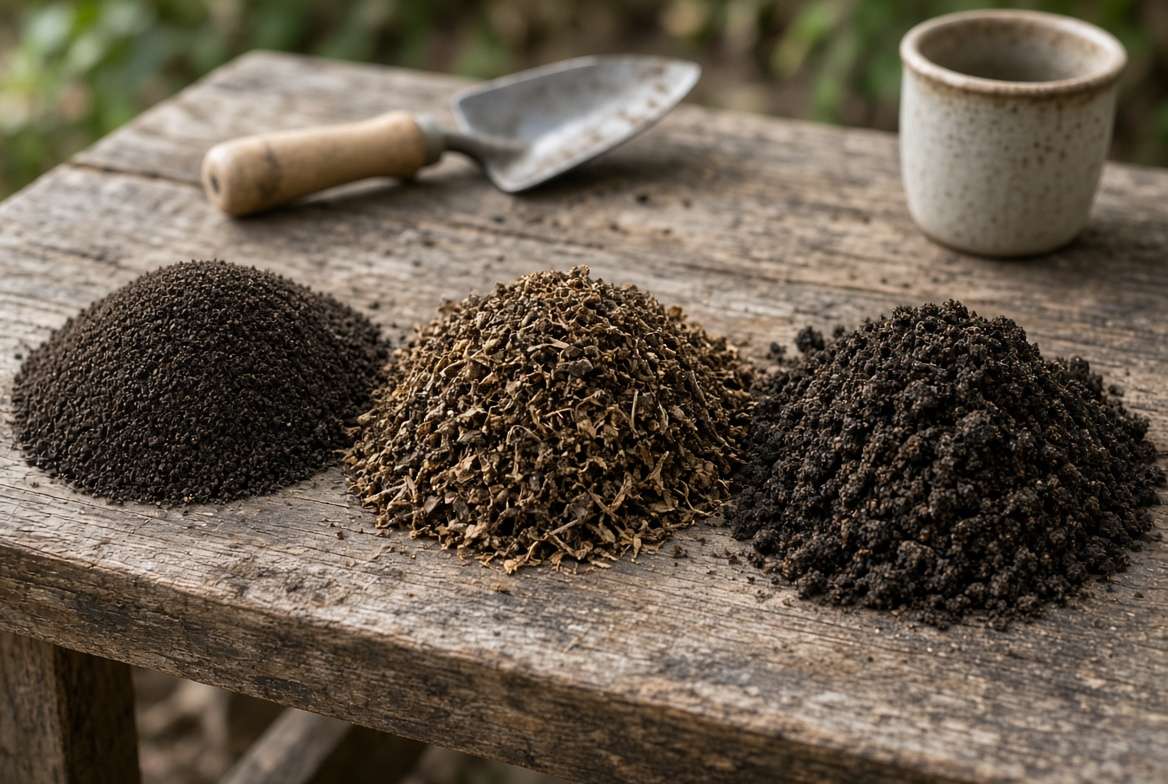
Choosing the Best Compost for Your Potted Plants 🪱
Not all compost is created equal, and using the wrong material in an enclosed container can lead to unpleasant odors, pest infestations, or root burn. Here is the ultimate guide to selecting the right amendment.
Worm Castings (Vermicompost) 🪱
For indoor houseplants, worm castings are the undisputed gold standard. This is organic matter that has been fully broken down by earthworms.
-
The Pros: Completely odorless, incredibly nutrient-dense, and highly concentrated with beneficial microbes. Best of all, worm castings are so gentle they will never cause “nutrient burn” on sensitive indoor foliage plants.
Leaf Mold and Aged Humus 🍁
Created from fully decomposed deciduous leaves, leaf mold is a phenomenal soil conditioner.
-
The Pros: It excels at moisture retention and is packed with beneficial fungal networks. This makes it an ideal, cost-effective choice for large outdoor patio planters, balcony vegetable gardens, and raised container beds.
Commercial Bagged Compost 🛍️
If you are buying compost from a garden center, quality control is paramount.
-
The Pros: Convenient and accessible.
-
What to Look For: Always look for labels that say “OMRI Listed” (Organic Materials Review Institute) and ensure the bag states it is “fully aged” or “cured.” It should smell like rich, sweet forest earth, never sour or pungent.
What to Avoid at All Costs 🛑
[Pro Tip ⭐]: Never use raw animal manure, unfinished kitchen scrap compost (where you can still recognize food pieces), or cheap, heavy municipal compost in your containers. In an enclosed pot, these materials can heat up as they decompose (cooking your plant’s roots), introduce aggressive weed seeds, cause devastating salt spikes, and attract swarms of fungus gnats.
Step-by-Step Guide: How to Apply Compost Topdressing for Container Plants 🛠️
Applying a topdress is a simple process, but doing it correctly ensures the nutrients reach the roots without causing fungal rot at the plant’s base. Follow these expert steps.
Step 1: Prep and Clean the Canvas 🧹
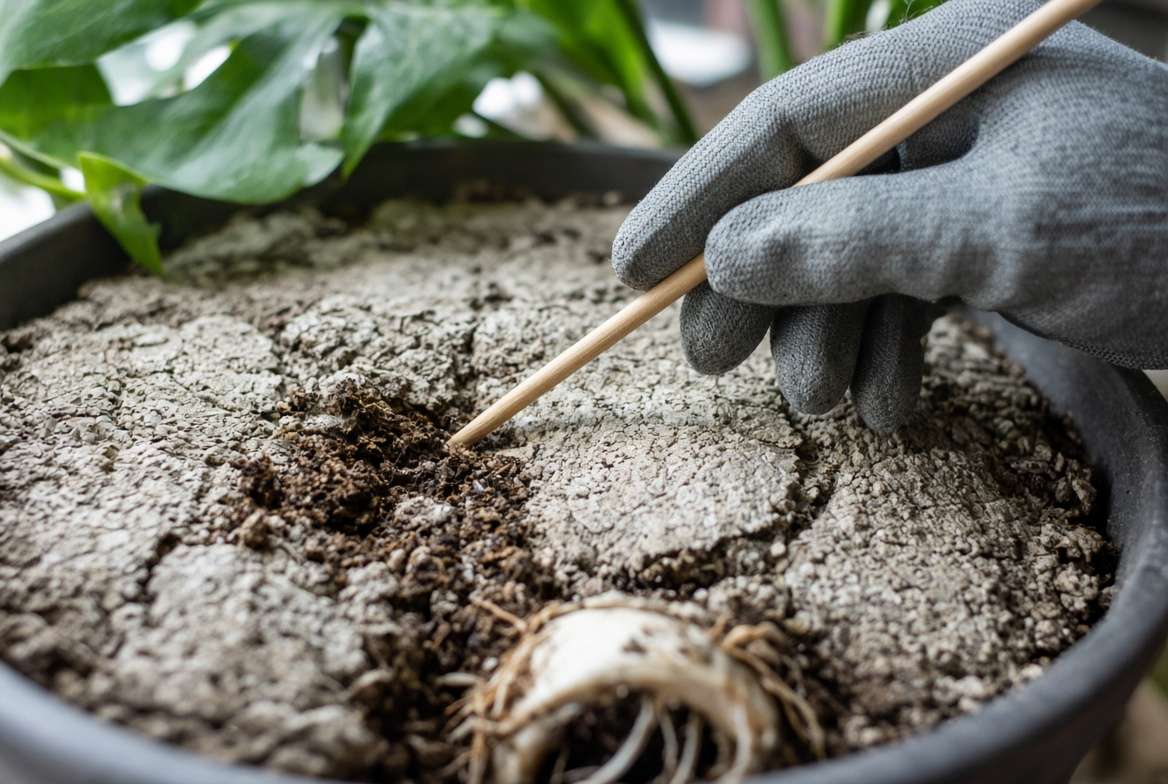
Begin by meticulously cleaning the soil surface. Remove any fallen, dead, or decaying leaves, as these can harbor fungal spores or pests. If you previously applied a decorative mulch (like Spanish moss or heavy pebbles), temporarily remove it. Finally, if there is a white, crusty buildup of mineral salts on the soil surface, gently scrape it away and discard it.
Step 2: Gently Aerate the Top Layer 🍴
Old potting soil often develops a hard, impenetrable crust. Take a wooden chopstick, a skewer, or a small hand fork, and gently scratch the top 1/2 to 1 inch of the old soil. Use a light, raking motion. The goal is to break up the surface tension without snapping or tearing any of the delicate feeder roots lurking just below the surface.
Step 3: Add the Compost Layer 🥄
Using a small trowel or a designated soil spoon, sprinkle your chosen compost over the aerated soil.
-
The Golden Ratio: Aim for an even layer about 1/2 inch to 1 inch thick, depending on the size of the pot.
-
Crucial Rule: Keep the compost pulled back at least an inch away from the main stem, trunk, or crown of the plant. Piling wet compost directly against the stem is a guaranteed recipe for stem rot.
Step 4: Water It In Thoroughly 🚿
This is the most critical step. Immediately after applying the topdress, water the plant slowly and thoroughly until water freely flows from the bottom drainage holes. This initial watering settles the compost, eliminates hidden air pockets, and immediately begins washing those nutrient-rich humic acids down into the deep root zone.
Step 5: (Optional) Seal with a Top Mulch 🪵
For outdoor containers, or if you are battling dry indoor air, you can apply a thin layer of organic mulch (like fine orchid bark, horticultural pumice, or expanded clay pebbles) directly over the new compost layer. This traps moisture, insulates the soil, and makes it incredibly difficult for fungus gnats to lay eggs in the rich organic matter.
Repotting vs. Topdressing: Which Does Your Plant Actually Need? 🔍
While compost topdressing is a miracle technique, it cannot fix every soil problem. As an expert plant parent, you need to know how to diagnose your container’s true needs.
When to Topdress (The Green Light) ✅:
-
The soil level has noticeably dropped in the pot over the last year.
-
The plant is generally healthy, but new growth has slowed down or leaves look slightly pale.
-
The plant is physically too large or heavy to safely move or transplant.
-
The plant is an older, established specimen that resents root disturbance.
When You MUST Repot (The Red Flag) 🚨:
-
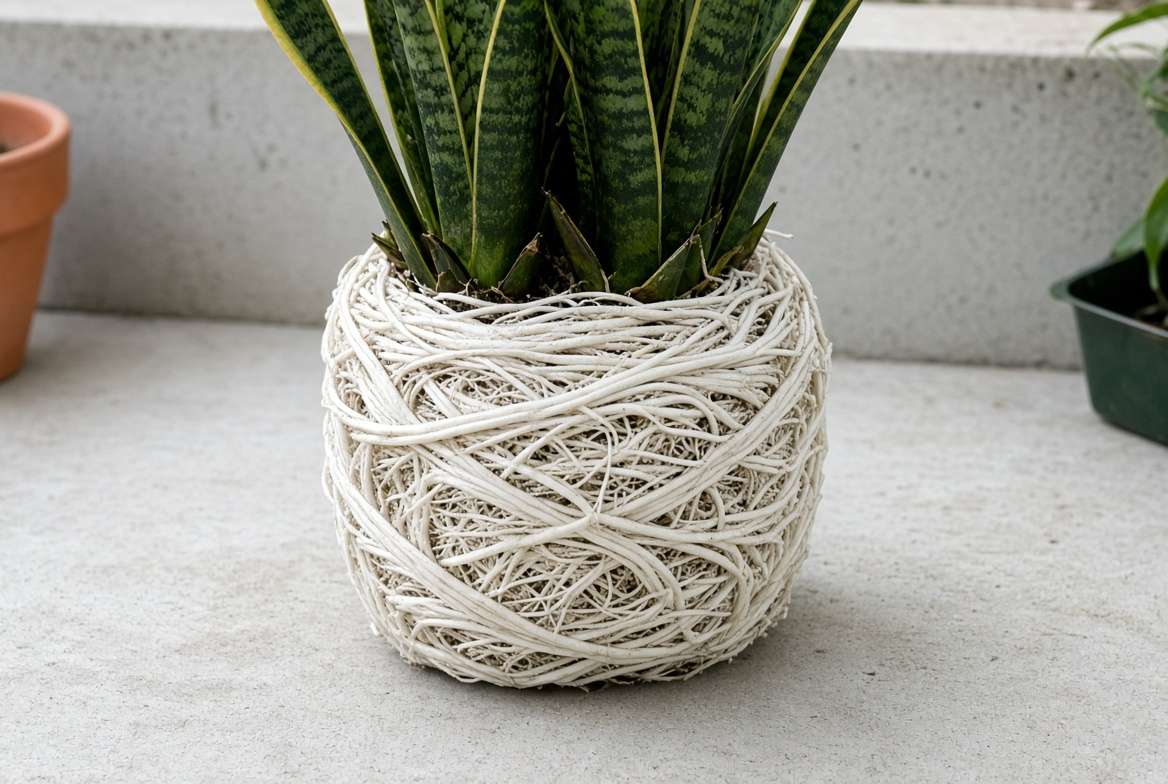
Severe Rootbound Status: Roots are heavily circling the top of the soil, pushing the plant up, or aggressively growing out of the bottom drainage holes.
-
Instant Drainage: When you water, the water immediately rushes down the sides and out the bottom without the pot gaining any water weight (severe hydrophobia).
-
Anaerobic Soil: The soil stays wet for weeks at a time and smells like sulfur or rotten eggs. This means the soil structure has collapsed completely, starving roots of oxygen, and must be replaced.
When is the Best Time to Topdress? 🗓️
Timing your soil amendments correctly maximizes plant uptake and minimizes waste.
The Spring Awakening 🌷
The absolute optimal time for compost topdressing for container plants is early spring. As daylight hours lengthen, plants break dormancy and enter their active growing phase. Providing a rich topdress right as they “wake up” gives them the exact fuel they need to push out vigorous new foliage and blooms.
The Mid-Summer Boost ☀️
For heavy feeders—such as container-grown tomatoes, flowering patio tropicals, or fast-growing Monsteras—a secondary, lighter topdress in mid-summer works wonders. It replenishes the nutrients that rapid spring growth exhausted, sustaining the plant through the heat of August.
[Expert Insight 💡]: Avoid topdressing your indoor houseplants in late fall or winter. As natural light decreases, indoor plants enter a period of rest or dormancy. Their metabolism slows down, and they cannot utilize extra nutrients. Adding heavy, moisture-retentive compost during winter can actually lead to overwatering issues and root rot.
3 Common Topdressing Mistakes and How to Avoid Them 🚫
Even seasoned gardeners can stumble. Keep these pitfalls in mind to ensure your topdressing routine is flawless.
1. The “Volcano” Effect (Burying the Stem) 🥀
This is the most frequent error. If you pile compost up against the base of the plant like a volcano, you will smother the crown. The trunk and lower stems of most plants are not designed to be buried in damp organic matter. Doing so invites crown rot, which is fatal. Always leave a “moat” of bare soil directly around the stem.
2. Suffocating the Roots 🫁
More is not always better. Adding a 3-inch layer of dense compost to a small 6-inch pot will drastically alter the soil dynamics. It will hold too much water and block oxygen exchange, effectively drowning the plant. Stick to the 1/2-inch to 1-inch rule.
3. Introducing Pests 🪰
Fungus gnats absolutely love moist, rich, unsterilized compost. To prevent an infestation in your home:
-
Use high-quality, fully cured worm castings for indoor plants.
-
Allow the top inch of the newly dressed soil to dry out completely between waterings.
-
If you are prone to gnats, water your newly topdressed plant with a “Mosquito Bits” tea (which contains Bacillus thuringiensis israelensis, a natural bacteria that kills gnat larvae without harming the plant).
Frequently Asked Questions (FAQs) 🤔
Can I topdress with regular potting soil instead of compost? You can, but it won’t be nearly as effective. Standard potting soil is mostly peat or coir, which is great for structure but sterile in terms of nutrients and microbial life. Compost delivers the biological punch that old potting soil desperately needs.
How often should I apply compost topdressing for container plants? For most indoor houseplants and perennial patio containers, once or twice a year is perfect. Early spring is best, with an optional lighter application in mid-summer for fast-growing specimens.
Can I topdress my succulents and cacti? Yes, but you must alter the recipe. Standard compost is too rich and holds too much water for desert plants. If you want to topdress a cactus, mix a very small amount of worm castings (about 10%) into a gritty, fast-draining top layer like pumice or crushed granite.
Will compost make my house smell? Not if you use the right kind! Fully finished, high-quality worm castings or bagged indoor-specific compost should smell earthy and pleasant, like a damp forest floor. If your compost smells sour, rotting, or like ammonia, do not bring it inside—it has not finished decomposing.
Container plants live in entirely isolated environments. Unlike garden beds, they rely 100% on us to replenish the resources they consume to survive. By adopting the simple, back-saving routine of compost topdressing, you can easily mimic the restorative natural cycles of the earth right in your living room or on your balcony. It saves you time, prevents massive messes, and yields vibrantly healthy, resilient plants year after year. Happy growing! 🌿✨











