
Picture this: you have just brought home a vibrant, elegant palm with beautifully arching, feathery leaves. It feels like you’ve successfully captured a slice of a tropical island. But a few weeks later, the heartbreak begins—those perfect green tips start to crisp up, and slowly, your beloved plant begins turning an unsightly shade of brown.
If this sounds familiar, you are not alone. Whether you are cultivating it in a bright sunroom or planting it as a landscape centerpiece, the christmas tree palm (Adonidia merrillii) is a stunning, manageable species that can transform any space. However, despite its easy-going reputation, it has very specific triggers that dictate whether it will merely survive or truly thrive.
In this comprehensive guide, we are moving past basic care tags. You are going to get a masterclass in palm horticulture. We will break down exactly how to optimize your soil, decode your watering schedule, and implement the exact steps needed to stop browning fronds in their tracks. By the end of this article, you will have the expert knowledge required to unlock vibrant, lush growth year-round. Let’s dive in! 🌴✨
🌴 1. Getting to Know the Christmas Tree Palm (Adonidia merrillii)
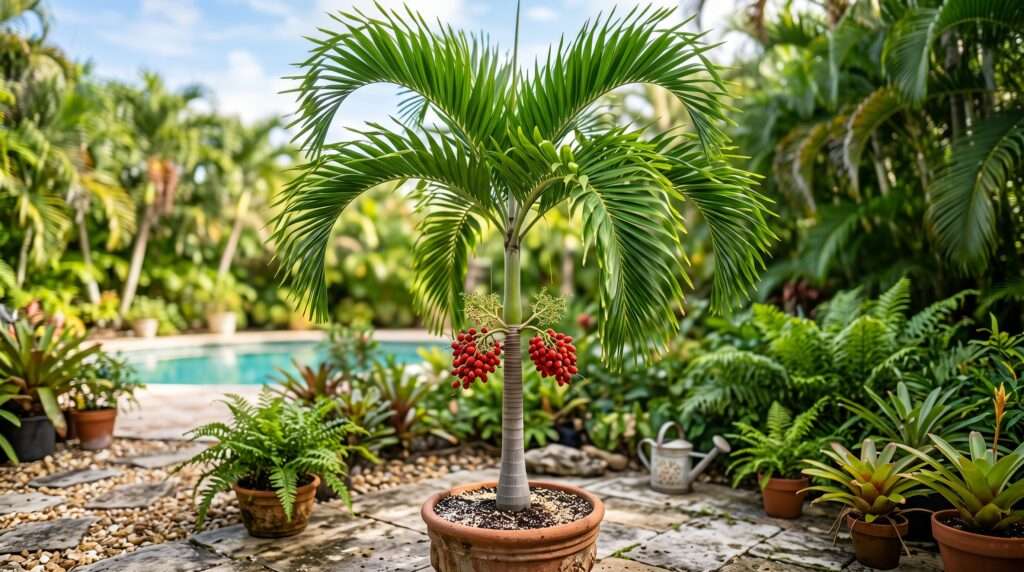
Before we can optimize its care, we need to understand where this magnificent plant comes from and how it naturally grows. Native to the tropical environments of the Philippines, the Adonidia merrillii is widely beloved by landscapers and indoor plant enthusiasts alike for its neat, compact growth habit and elegant, smooth gray trunk.
Why is it called the Christmas Tree Palm? 🎄 The name isn’t due to its foliage resembling a traditional pine tree. Instead, it earns its festive moniker from the large clusters of bright red, berry-like fruits that mature in late fall and winter. Hanging gracefully just below the crown shaft, these berries look just like dazzling red ornaments suspended on a holiday tree.
Landscape vs. Indoor Versatility 🏡 One of the greatest advantages of this species is its scale. While massive Royal Palms or Coconut Palms quickly outgrow residential spaces, the Christmas Tree Palm is perfectly proportioned.
-
Outdoors in the Landscape: When planted in the ground in optimal climates, it reaches a mature height of 15 to 25 feet. This makes it an ideal “statement tree” for small front yards, pool enclosures, or lining driveways without threatening overhead power lines or underground plumbing.
-
Indoors and on Patios: When confined to a container, its growth is naturally restricted. A potted specimen will typically max out around 5 to 8 feet tall, making it a spectacular, architectural houseplant that won’t take over your living room.
🪴 2. The Foundation of Lush Growth: Mastering Soil Health
If there is one secret to expert-level palm care, it happens below the surface. The most common point of failure for palm owners is poor root health, which always stems from incorrect soil structure.
The Ideal Soil Composition 🪨 Standard, off-the-shelf potting soil is practically a death sentence for a potted palm. These commercial mixes are heavily peat-based and designed to hold onto moisture for as long as possible. For a Christmas Tree Palm, sitting in soggy, compacted soil cuts off oxygen to the roots, leading directly to root rot and—you guessed it—rapidly browning fronds.
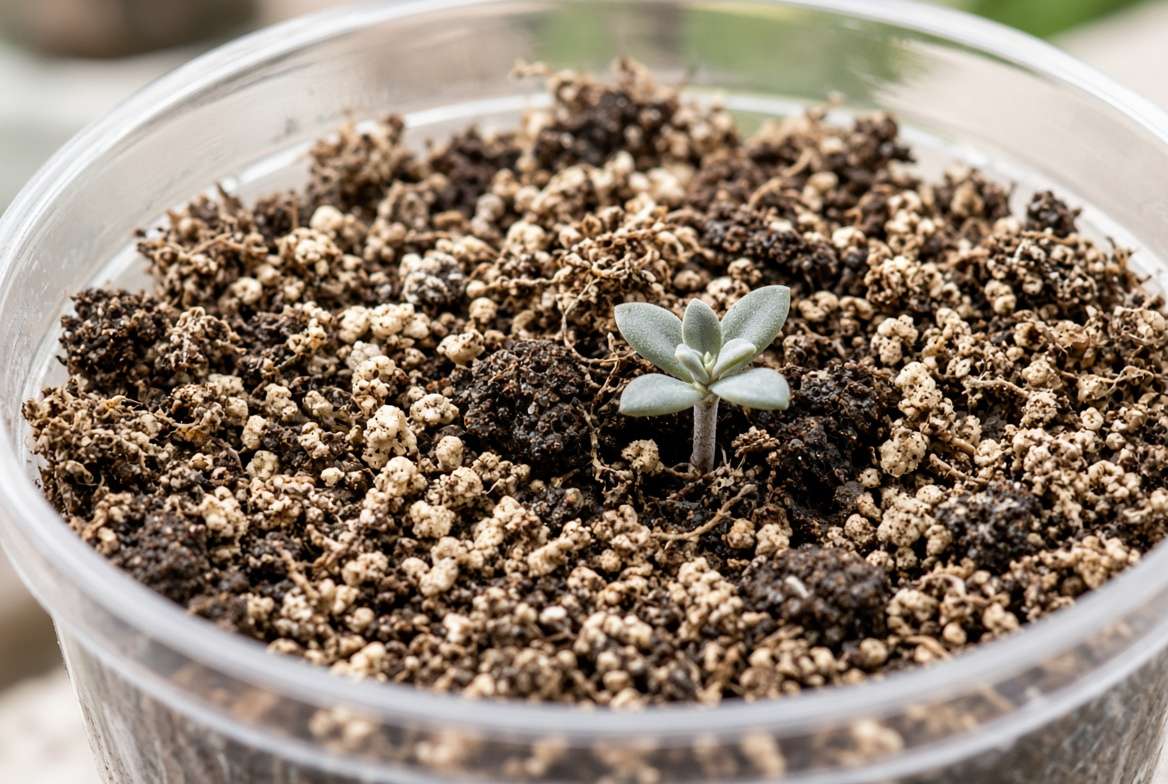
To replicate its native tropical environment, your soil needs to drain rapidly while retaining just a hint of moisture. The ultimate palm soil recipe includes:
-
40% High-Quality Loam or Potting Mix: For foundational structure and organic nutrients.
-
40% Coarse Sand or Pumice: To ensure rapid water drainage and prevent compaction.
-
20% Peat Moss or Coco Coir: To provide just enough moisture retention between waterings.
Additionally, palms thrive in soil with a slightly acidic to neutral pH (between 6.0 and 7.5). If your soil is too alkaline, the plant will suffer from nutrient lockout, meaning it cannot absorb the vital minerals it needs to stay green.
Container vs. In-Ground Planting Strategies 🏗️
-
For Container Planting: Drainage holes are strictly non-negotiable. If your decorative pot does not have a hole, you must keep the palm in a plastic nursery pot and “drop” it into the decorative planter (a practice known as double-potting or staging). Never add a layer of gravel to the bottom of the pot; contrary to popular belief, this creates a “perched water table” that forces water to pool exactly where the roots sit.
-
For In-Ground Planting: When planting outdoors, dig a hole that is twice as wide as the root ball, but exactly the same depth. Planting a palm too deep will rot the trunk. Backfill the hole with a mixture of the native soil amended with coarse sand and organic compost to encourage the roots to spread outward.
☀️ 3. Lighting and Climate Rules
The Adonidia merrillii is a true tropical, meaning it has an insatiable appetite for warmth and light, but it requires a bit of finesse depending on where it lives.
Dialing in the Sunlight 🌤️
-
Outdoor Landscapes: These palms love full sun. However, if you are bringing a palm home from a shaded nursery, you cannot plant it directly in blazing 90-degree afternoon sun right away. It needs to be acclimated over two weeks to prevent severe leaf scorch. Once established, they thrive in 6 to 8 hours of direct, unfiltered sunlight.
-
Indoor Environments: Indoors, the rules change slightly. The glass of your windows acts as a magnifying glass. If placed directly against a harsh, south-facing window, the radiant heat can bake the fronds. The ideal indoor placement is in a room with bright, indirect light—perhaps a few feet back from a southern or western window, or directly in front of an eastern window where it receives gentle morning sun.
Temperature & Cold Shock Restrictions 🥶 Let’s be incredibly clear: this plant despises the cold. It is hardy only in USDA Zones 10b to 11 (think South Florida, Hawaii, and Southern California).
-
The Danger Zone: Christmas Tree Palms are highly sensitive to temperatures dropping below 40°F (4°C). Exposure to frost will cause the cells in the fronds to rupture, turning the beautiful green leaves into brown, mushy messes overnight.
-
Winterizing Tips: If you live in a cooler climate and keep your palm on a patio during the summer, you must bring it indoors before the first autumn chill hits. Keep it away from drafty windows, exterior doors, and direct streams of air from heating vents, which will severely dehydrate the plant.
💧 4. Watering Strategies: The Fine Line Between Thriving and Dying
Watering a Christmas Tree Palm is where most well-meaning plant parents make their fatal error. Because it is a tropical plant, the assumption is often that it needs to be constantly wet. In reality, overwatering is the fastest way to kill this species. Mastering the watering cycle is the absolute key to lush, spot-free foliage.
The “Top-Inch” Rule 📏 To strike the perfect balance, you must abandon strict watering schedules (e.g., “every Sunday”). Instead, water based on the soil’s actual moisture level. The golden rule for palm care is to allow the top 1 to 2 inches of the soil to dry out completely before you water again.
-
How to check: Simply stick your finger into the soil up to your second knuckle. If it feels moist, wait a few more days. If it is dry, it is time for a deep, thorough soaking.
-
The Soaking Method: When you do water, water deeply until you see liquid escaping from the drainage holes at the bottom of the pot. This ensures the entire root ball receives hydration, encouraging deep, robust root growth rather than shallow, weak roots.
Seasonal Adjustments 🌧️ Your palm’s water requirements will drastically shift throughout the year.
-
Active Growing Season (Spring and Summer): As temperatures rise and the plant actively produces new fronds, its water uptake will skyrocket. During intense summer heat waves, outdoor potted palms may need watering every other day.
-
Dormancy (Fall and Winter): When daylight hours decrease, the plant enters a resting phase. Its water requirements plummet. Continuing a summer watering schedule into the winter will instantly lead to soggy roots. Always taper your watering frequency during the cooler months.
The Role of Humidity 🌫️ While soil moisture is critical, atmospheric moisture is just as vital. Christmas Tree Palms evolved in the humid tropics. Indoors, our HVAC systems and winter heaters create bone-dry air, which pulls moisture directly out of the palm’s leaves, leading to crispy brown tips.
-
How to fix it: If your indoor humidity is below 40%, you must intervene. Use a continuous humidifier near the plant, or place the palm’s pot on top of a wide pebble tray filled with water (ensuring the bottom of the pot is sitting on the pebbles, not touching the water). Misting the leaves with a spray bottle is largely ineffective, as the water evaporates in minutes, offering no long-term humidity boost.
🍂 5. Troubleshooting: Why Are My Palm’s Fronds Turning Brown?
This is the most common question in palm horticulture. When a Christmas Tree Palm exhibits browning foliage, it is communicating a specific stressor. To act as an effective plant physician, you need to diagnose the type of browning to apply the correct cure.
Brown Tips vs. Entirely Brown Leaves 🔍
-
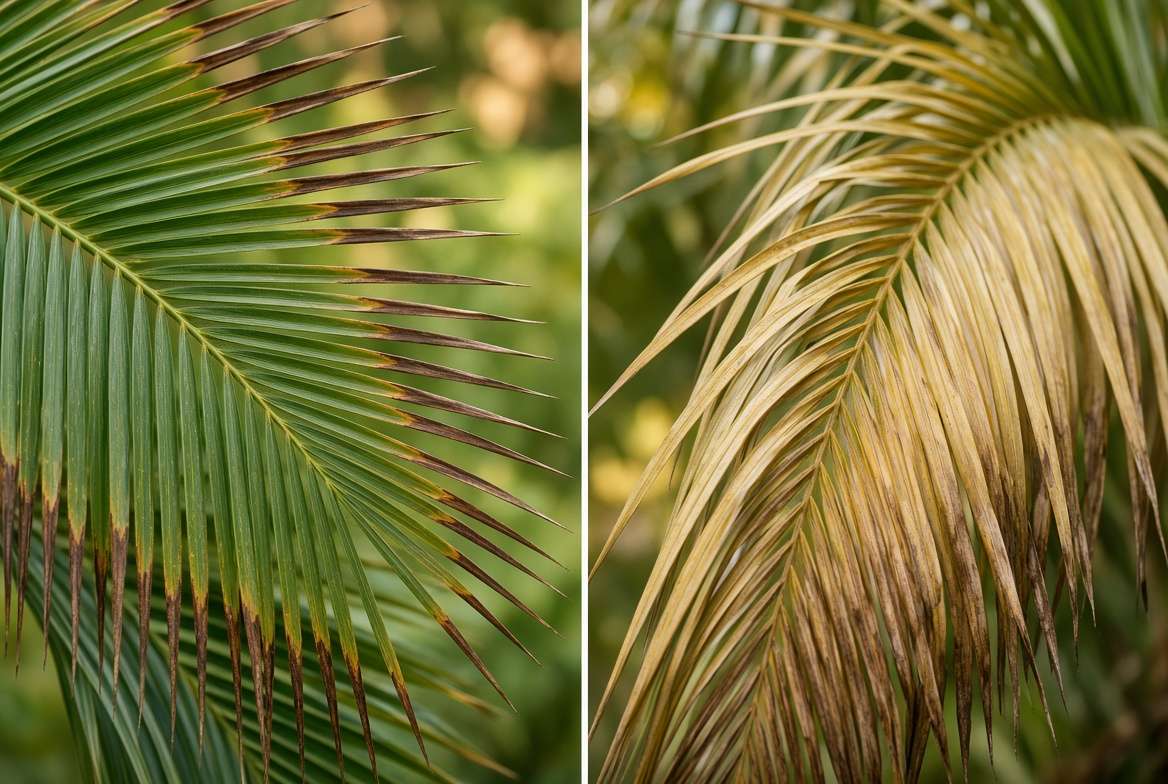
Crispy Brown Tips: If only the very tips of the leaflets are turning brown and crispy, the issue is almost always environmental dehydration. This means underwatering, severely low humidity, or exposure to a hot, dry draft. Increase your watering frequency slightly and boost ambient humidity.
-
Yellowing Fronds That Turn Brown: If lower fronds are turning pale yellow and gradually shifting to a mushy brown, this is a textbook symptom of overwatering and early-stage root rot. The roots are suffocating and can no longer transport oxygen to the leaves. You must immediately scale back watering, check your soil’s drainage, and potentially repot the plant in a drier, sand-heavy mix.
Nutrient Deficiencies (The Silent Killer) 🧪 Palms are incredibly heavy feeders and are highly susceptible to micro-nutrient deficiencies, which often manifest as bizarre foliage discoloration.
-
Potassium Deficiency: This shows up as translucent yellow or orange spotting on the oldest leaves. Eventually, the tips will become necrotic, frizzy, and brown.
-
Boron Deficiency: This affects the new growth. Emerging fronds will look stunted, crumpled (often called “hook leaf”), or fail to open entirely.
-
The Solution: Standard houseplant fertilizers will not work. You must use a high-quality, slow-release palm fertilizer that contains essential micro-nutrients (magnesium, manganese, iron, and boron). Look for an N-P-K ratio tailored to palms, such as 12-4-12 or 8-2-12, and apply it three times a year during the active growing season.
Cold Damage ❄️ If your palm was accidentally exposed to a frost or a harsh cold snap, the fronds will look burned, turning a dark, dry brown across the entire leaf surface. If this happens, do not panic and do not immediately prune the damage. The dead tissue actually insulates the vulnerable growing spear (the bud) from further cold. Wait until the warmth of spring arrives and new growth emerges before removing the frostbitten fronds.
✂️ 6. Pruning: The “Self-Cleaning” Advantage
One of the most appealing traits of the Adonidia merrillii is that it is a “self-cleaning” palm.
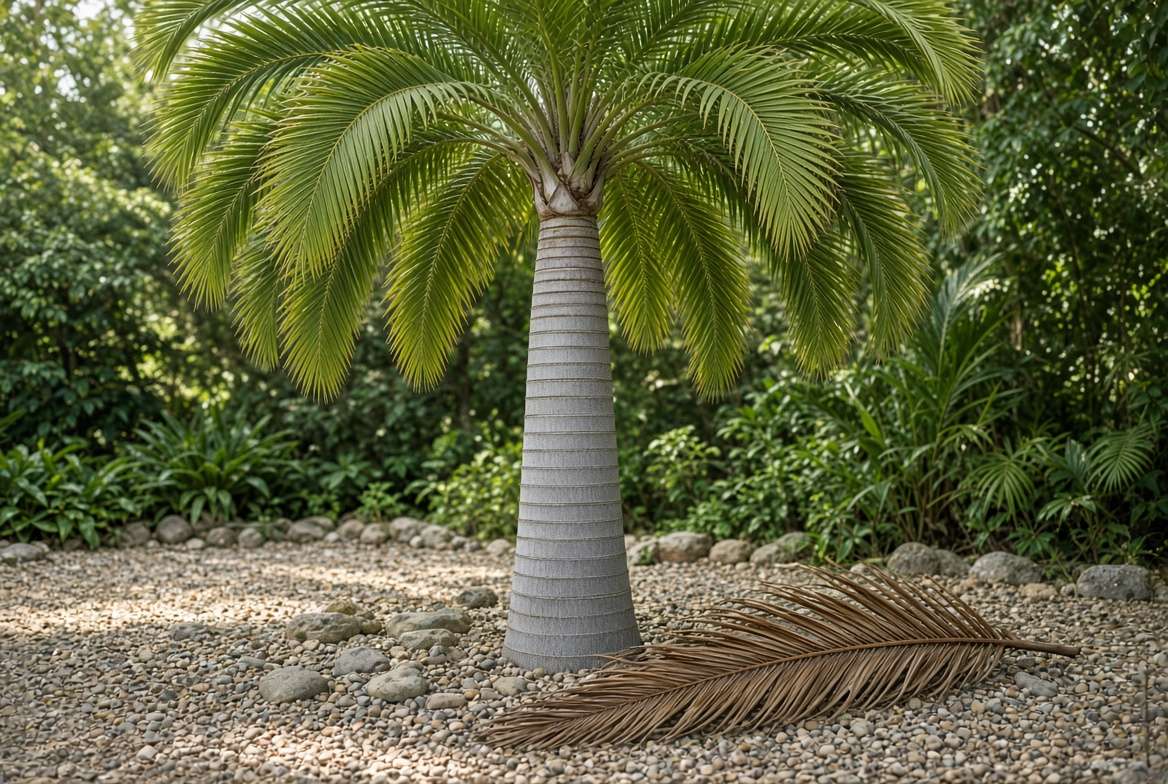
Put Down the Shears! 🛑 Unlike Date Palms or Washingtonia Palms that hold onto their dead fronds in an untidy “hula skirt,” the Christmas Tree Palm naturally sheds its old leaves. As a lower frond reaches the end of its life cycle, it will naturally brown, detach from the trunk, and fall off on its own, leaving behind the smooth, clean gray trunk this species is famous for.
How to Prune Safely (If You Must) 🔪 Because the plant is self-cleaning, your pruning duties are virtually zero. However, if an older frond is hanging low and getting in the way, follow this strict rule: Only remove a frond if it is 100% brown and dead.
-
Never cut off a frond that still has green tissue. Palms recycle nutrients from their older leaves, pulling potassium and magnesium back into the trunk to support new growth at the top.
-
Cutting a green frond actively starves the plant and introduces open wounds that invite bacterial infections. When pruning a fully dead leaf, use sterilized loppers and cut cleanly just outside the trunk base—never cut into the trunk wood itself.
🛡️ 7. Pest and Disease Defense
While generally robust, a stressed Christmas Tree Palm can fall victim to a few common ailments. Early detection is your best defense.
Common Insects 🕷️ Indoor palms, suffering from low humidity, are particularly vulnerable to sap-sucking pests.
-
Spider Mites: Look for faint, dusty webbing between the leaflets and a stippled, faded appearance on the green foliage.
-
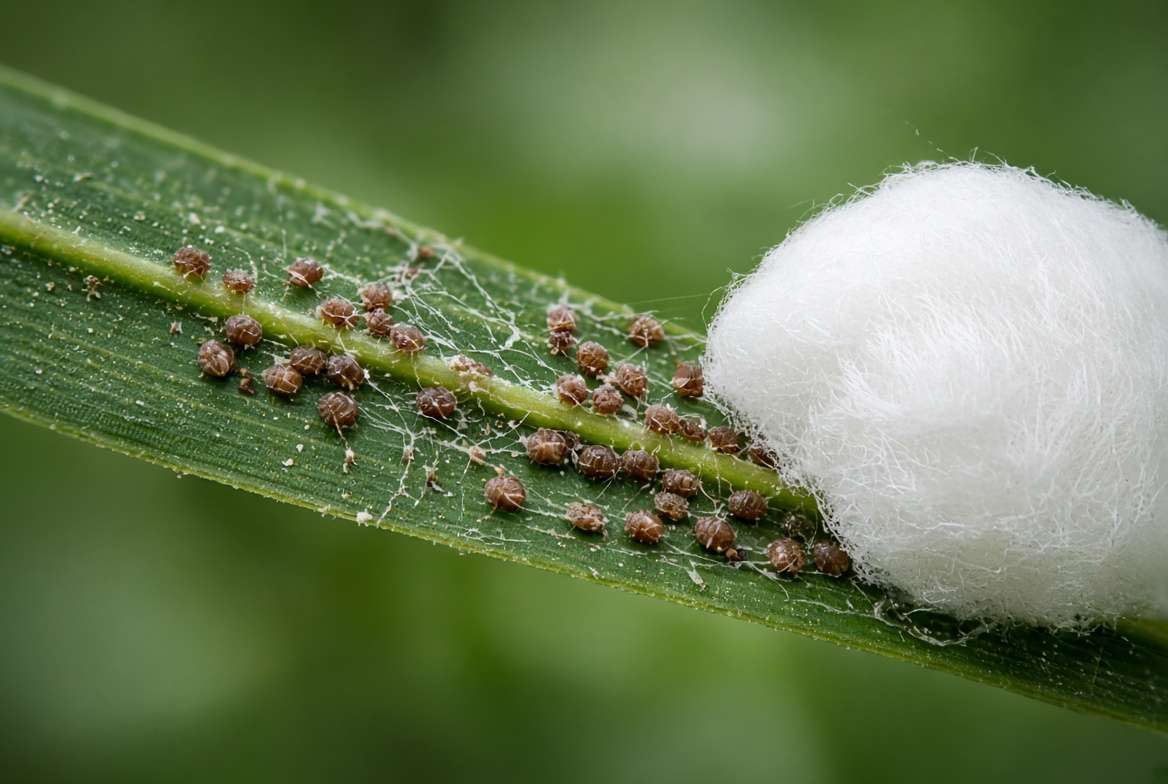
Scale Insects: These appear as small, hard, brown or white bumps glued to the stems and leaves, often accompanied by a sticky, clear residue (honeydew).
-
Treatment: Wipe down the fronds with a damp microfiber cloth to physically remove pests. Treat the entire plant—focusing on the undersides of the leaves—with organic Neem oil or a gentle insecticidal soap once a week until the infestation is eradicated.
Lethal Yellowing Disease 🦠 If you are growing this palm outdoors in South Florida or the Caribbean, you must be aware of Lethal Yellowing. This is a devastating phytoplasma disease spread by a tiny insect called the planthopper. Symptoms include the premature dropping of all fruits and a rapid yellowing of the fronds, starting from the bottom and moving up until the crown collapses.
-
Treatment: Sadly, there is no cure once a palm is fully infected; it must be removed to protect surrounding trees. The best defense is maintaining peak plant health through proper fertilization, as vigorous palms are less susceptible, and administering preventative trunk injections of the antibiotic oxytetracycline (OTC) by a certified arborist if the disease is active in your neighborhood.
📌 8. The Quick-Care Reference Guide
Bookmark or screenshot this cheat sheet to keep your Christmas Tree Palm thriving year-round:
-
Botanical Name: Adonidia merrillii
-
Light Requirements: Full sun (outdoors) / Bright, indirect light (indoors).
-
Watering: Deep soak only when the top 2 inches of soil are bone dry. Never leave sitting in standing water.
-
Soil: Fast-draining sandy loam (40% potting mix, 40% coarse sand, 20% peat moss).
-
Temperature: 65°F – 85°F (18°C – 29°C). Highly sensitive to frost; protect below 40°F (4°C).
-
Fertilizer: Palm-specific slow-release granular fertilizer (with micro-nutrients like boron and magnesium) applied in Spring, Summer, and early Fall.
-
Toxicity: Completely non-toxic and safe for homes with cats, dogs, and children. 🐾
❓ 9. Frequently Asked Questions (FAQ)
How fast do Christmas Tree Palms grow? They are considered moderate growers. In ideal outdoor, tropical conditions, you can expect about 6 to 12 inches of trunk growth per year. Indoors in containers, their growth rate slows down significantly, usually pushing out just a few new fronds annually.
Can I grow a Christmas Palm indoors year-round? Absolutely! Because of their manageable size and slow indoor growth rate, they make excellent long-term houseplants. Just ensure they are positioned near a bright window, are planted in a highly porous soil mix, and receive supplemental humidity during the winter months when indoor air gets dry.
Why is the trunk of my palm getting skinny at the top? This condition is commonly known as “pencil-pointing.” It happens when the palm’s trunk suddenly narrows near the crown shaft. This is a severe stress response, almost always caused by a sudden, drastic reduction in light or severe nutrient starvation. To correct it, you must evaluate its environment, slowly introduce it to brighter light, and ensure it is on a proper, palm-specific feeding schedule.
By mastering the balance of soil drainage, precise watering, and proper nutrient management, your christmas tree palm will reward you with years of stunning, architectural beauty. Say goodbye to crispy brown fronds and hello to your very own thriving, tropical oasis! 🌴✨











