
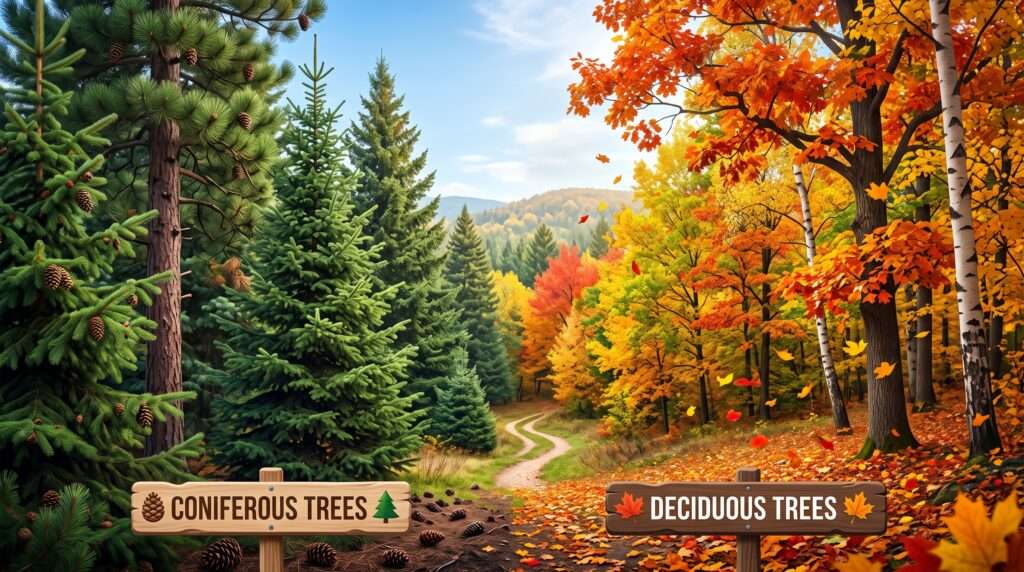
Picture this: it’s the dead of winter, the wind is howling, and your once-lush backyard is now a barren, shivering landscape. Or perhaps it’s autumn, and you’re spending your third consecutive weekend raking an endless, back-breaking mountain of leaves. These common landscaping regrets usually stem from one fundamental mistake: not fully understanding the differences between coniferous vs deciduous trees before putting a shovel in the ground.
Choosing the right tree for your property goes far beyond simple aesthetics. Your decision directly impacts your home’s energy efficiency, the local soil ecology, your seasonal maintenance schedule, and even your property value. As arborists and experienced plant care specialists know, planting a sapling is a generational commitment. To make the best choice for your landscape design and local climate, you need to understand the biological and practical distinctions between these two major tree categories.
Here are the five crucial differences you must know to make a confident, permanent planting decision that will thrive for decades to come. 🏡
🌿 Back to Basics: What Are Coniferous and Deciduous Trees?
Before diving into the complex landscape strategies, we need to establish the foundational botany. All trees in your local nursery belong to one of two main evolutionary groups, and their structural differences dictate how they behave in your yard.
The Steadfast Conifers (Gymnosperms) 🌲
Conifers belong to a group of plants known as gymnosperms, which translates to “naked seeds.” These ancient survivors evolved millions of years before broad-leafed trees. Instead of producing flowers, they reproduce using cones. Foliage-wise, conifers typically feature modified leaves in the form of sharp needles or flat, scale-like structures.
For the most part, conifers are “evergreens,” meaning they retain their foliage year-round, continuously shedding and replacing older needles so slowly that the canopy never appears bare.
-
Popular Examples: Pine, Spruce, Fir, Cedar, Hemlock, and Juniper.
-
💡 Botanical Fun Fact: Not all conifers are evergreen! The Tamarack (Larch) and the majestic Dawn Redwood are unique deciduous conifers. They produce cones and needles, but turn a brilliant golden-yellow in the fall before dropping their needles completely for the winter.
The Seasonal Deciduous Trees (Angiosperms) 🍁
Deciduous trees fall under the category of angiosperms, meaning “enclosed seeds.” These are the flowering plants of the tree world. They produce true flowers—ranging from the massive, showy blooms of a Magnolia to the tiny, inconspicuous catkins of a Birch—and their seeds are protected within a fruit or a hard nut.
The defining characteristic of a deciduous tree is its seasonal cycle. To survive the freezing temperatures of winter or the severe droughts of dry seasons, they actively sever the connection to their broad leaves, reabsorb the nutrients, and drop the foliage. This brilliant survival mechanism forces the tree into a state of deep dormancy to conserve energy and moisture.
-
Popular Examples: Oak, Maple, Birch, Apple, Cherry, Willow, and Dogwood.
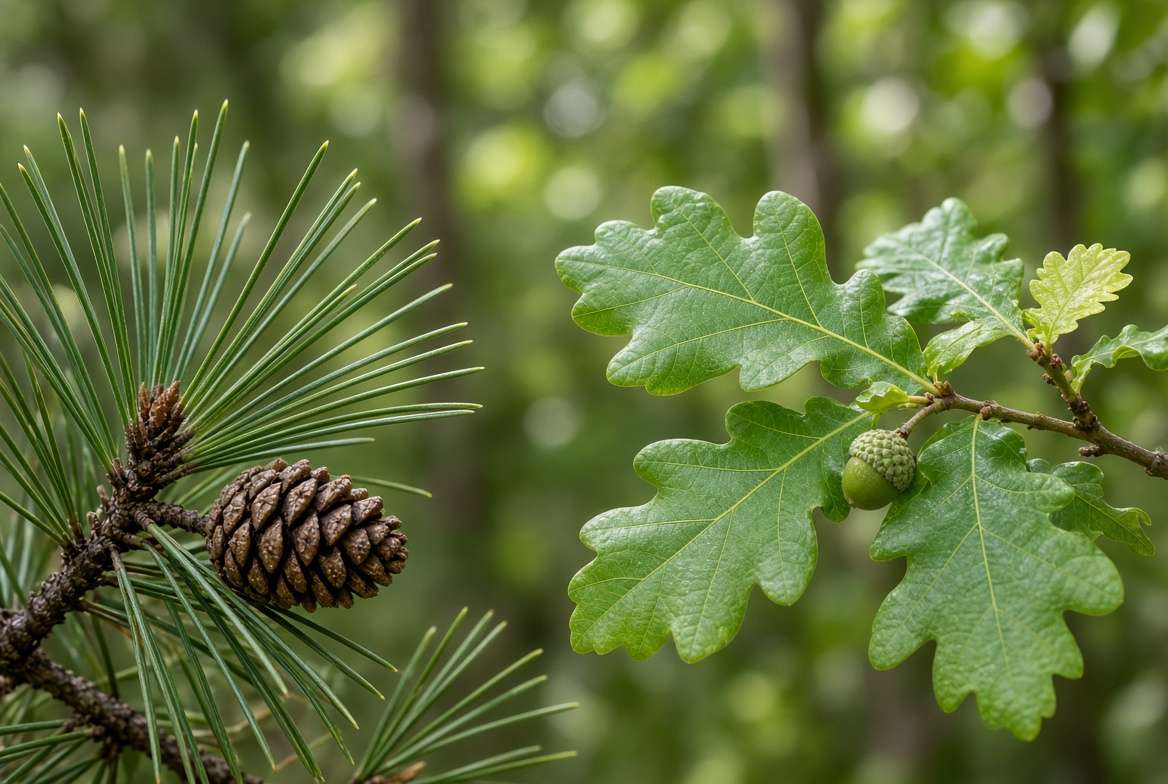
🔍 Coniferous vs Deciduous Trees: The 5 Crucial Differences
Understanding the structural biology of these trees is just the beginning. How do these botanical traits translate to your backyard? Here is the deep dive into the five critical differences that should guide your planting strategy.
1. Foliage Type and Lifespan: Needles vs. Broad Leaves 🍃
The most obvious visual difference is also the most functional. The structure of a tree’s foliage determines how much maintenance it requires and how it interacts with the sun.
The Botanical Science: Deciduous broad leaves are essentially highly efficient solar panels. They boast a massive surface area designed to capture maximum sunlight and carbon dioxide during the short, warm growing season. However, this large surface area makes them highly vulnerable to freezing temperatures and moisture loss, which is why they must be shed.
Conversely, coniferous needles are heavily modified for endurance. They have a very low surface area and are coated in a thick, waxy substance called a cuticle. Furthermore, their stomata (the pores used for gas exchange) are sunken deep into the needle. This brilliant architectural design prevents water loss, allowing the conifer to survive brutal, freezing winds without desiccating.
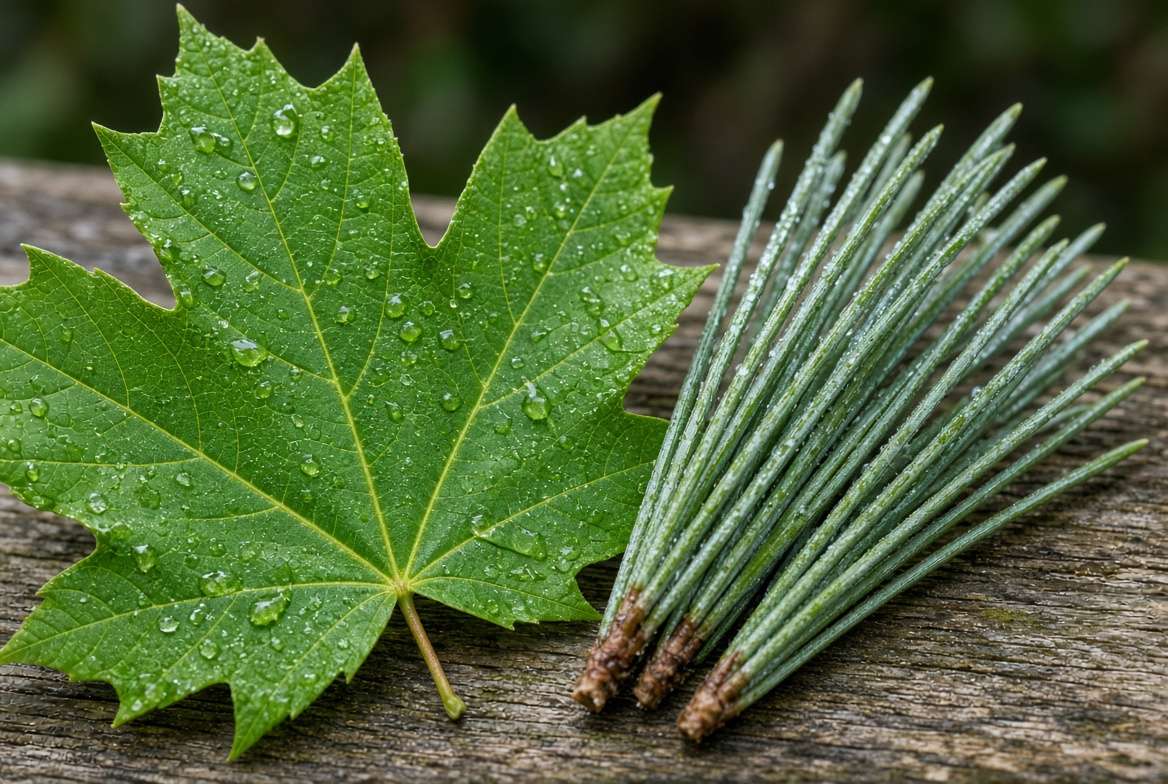
The Homeowner Impact:
-
Maintenance: Deciduous trees require heavy, intensive cleanup in the autumn. Conifers drop needles continuously, which can create a fine debris over time, but completely eliminates the need for aggressive seasonal raking.
-
Light Management: If you plant a dense conifer near a southern-facing window, your home will be plunged into permanent shade year-round. A deciduous tree in the same spot offers the best of both worlds: cooling canopy shade in the blistering summer, and—once the leaves drop—warming, passive solar sunlight streaming into your home throughout the freezing winter.
2. Reproduction Strategies: Cones vs. Flowers 🌸🌰
The way a tree reproduces dramatically alters its landscape footprint, its attraction to wildlife, and the type of yard debris you will have to manage.
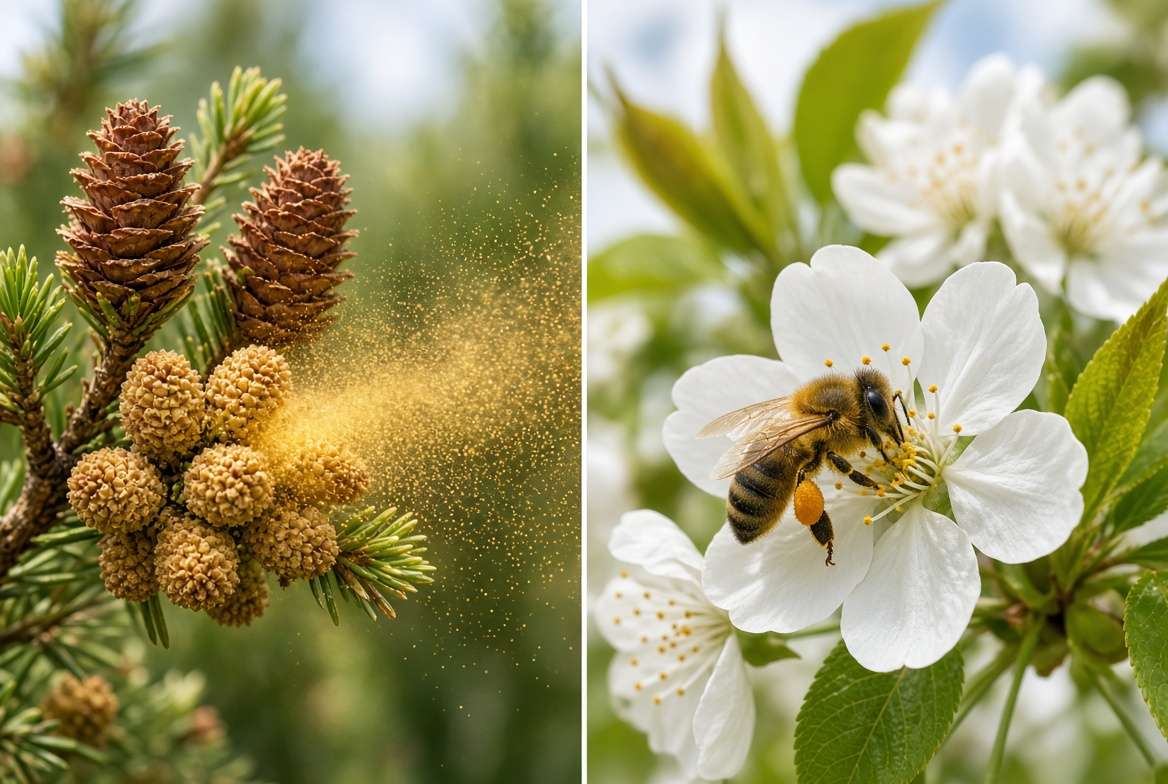
The Botanical Science: As angiosperms, deciduous trees rely heavily on pollinators (bees, butterflies, and birds) or wind to fertilize their flowers. Once fertilized, the tree expends massive amounts of energy creating a protective vessel for the seed—this could be a fleshy apple, a winged maple samara (often called a “helicopter”), or a dense oak acorn.
Gymnosperms (conifers) take a more primitive, wind-reliant approach. They produce separate male pollen cones and larger, woody female seed cones. The wind carries the pollen, and the resulting seeds develop naked on the scales of the female cone.
The Homeowner Impact:
-
The Mess Factor: Deciduous trees can be highly messy during their reproductive cycles. Dropped berries can stain driveways, heavy acorn masting can make walking hazardous (and attract aggressive squirrel populations), and dropped flower petals can clog gutters. Conifers are generally cleaner, though you will have to deal with picking up woody pinecones and managing occasional sticky sap (pitch) drops on cars or patios.
-
Wildlife Support: If your goal is to build a vibrant pollinator garden, deciduous trees are non-negotiable. Early bloomers like Cherry and Redbud trees provide critical early-spring nectar for waking bees.
3. Growth Rates and Wood Density (Softwood vs. Hardwood) 🪵
In the lumber and arboriculture industries, trees are broadly categorized into softwoods and hardwoods. These terms can be slightly misleading—some softwoods are remarkably strong—but they are vital indicators of a tree’s growth rate and biological structure.
The Botanical Science: Conifers are classified as “softwoods.” Their internal cellular structure is relatively simple, relying on long fibers called tracheids to transport water. This streamlined biology generally allows coniferous trees to grow quite rapidly. Deciduous trees are classified as “hardwoods.” They possess a much more complex internal anatomy, including highly specialized vessel elements and dense wood fibers, which take significantly more time and energy to produce.
The Homeowner Impact:
-
The Need for Speed: If you have an exposed property line and need a privacy screen fast, coniferous softwoods like the Leyland Cypress, Arborvitae, or Eastern White Pine are your best options. They put on rapid vertical growth, establishing a dense barrier in just a few years.
-
Generational Stability: If you want a sturdy, sprawling shade tree that will become a structural centerpiece for generations, plant a deciduous hardwood. Trees like White Oaks or Sugar Maples take much longer to reach maturity, but their dense wood makes them highly resistant to wind damage and rot.
4. Winter Hardiness and Climate Adaptability ❄️☀️
Mother Nature engineered these two tree categories to handle severe weather in drastically different ways. Understanding how they manage snow, ice, and wind is crucial for preventing devastating property damage.
The Botanical Science: Deciduous trees survive winter through evasion. By dropping their broad leaves, they eliminate the surface area that would otherwise catch heavy snow and freezing rain. If a deciduous tree kept its leaves in a blizzard, the sheer weight of the snow would snap its branches instantly. Conifers, on the other hand, are built for endurance. Their classic, conical shape is an evolutionary masterpiece designed to shed heavy snowfall. Their branches are highly flexible, bending downward under the weight of snow until it slides off, preventing the branch from breaking.
The Homeowner Impact:
-
Windbreaks and Microclimates: Because they keep their foliage, conifers are the ultimate natural snow fences and windbreaks. Planting a row of sturdy spruces on the windward side of your property can significantly reduce harsh winter winds from hitting your house, lowering your heating bills.
-
Ice Storm Vulnerability: If you live in an area prone to severe ice storms, carefully select your deciduous hardwoods. Soft-wooded deciduous trees like Silver Maples or Bradford Pears are notoriously brittle and prone to shattering under ice loads, posing a major risk to nearby roofs and power lines.
5. Soil Preferences and Root Behaviors 🌱🪱
What happens beneath the soil surface is just as important as what happens in the canopy. The ongoing debate between coniferous vs deciduous trees plays out dramatically in the local soil ecology of your garden beds.
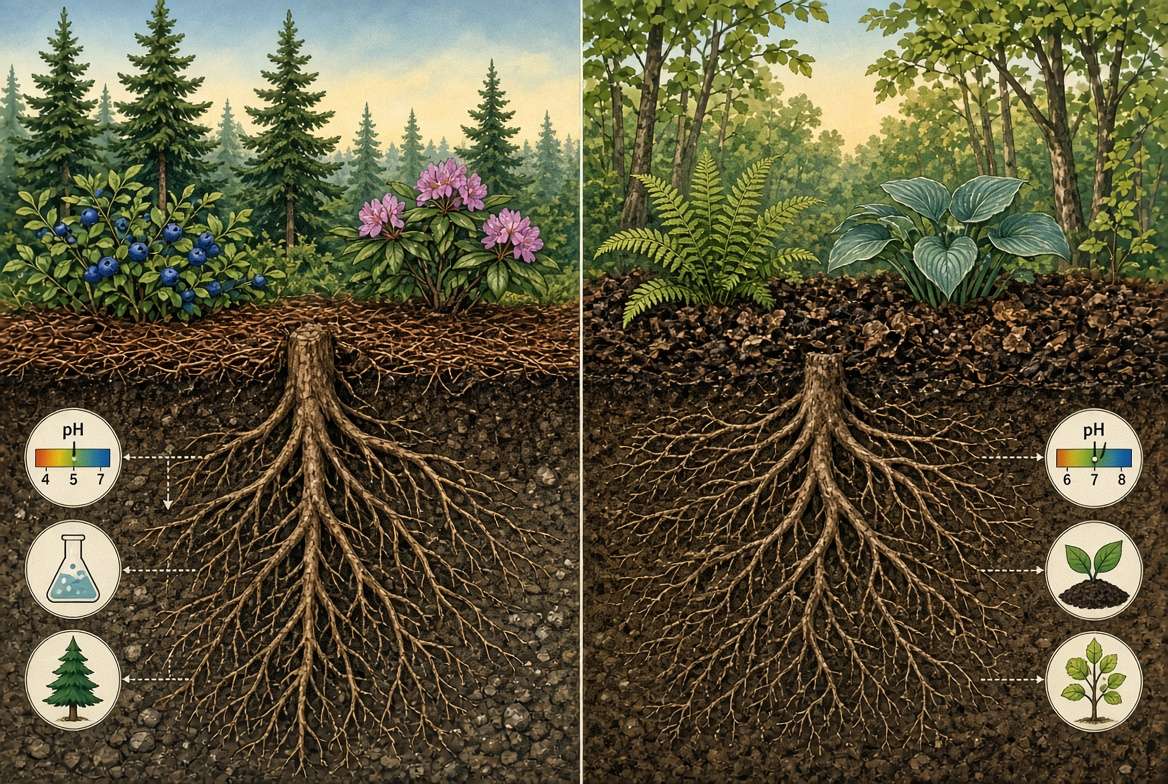
The Botanical Science: As coniferous needles eventually die and fall to the ground, they begin to decompose. Pine needles are highly acidic. Over several years, a thick layer of decomposing needles will actively lower the pH of the surrounding soil, creating a distinctly acidic environment. Conversely, when deciduous leaves fall and break down, they create a rich, crumbly organic material known as humus or leaf mold. This decomposition process generally results in a neutral soil pH and highly fertile, nutrient-dense topsoil that fosters a thriving ecosystem of earthworms and beneficial microbes.
The Homeowner Impact:
-
Companion Planting: You cannot plant a thriving garden underneath a heavy conifer canopy without careful planning. The acidic soil and dense shade will stunt most standard landscape plants. However, acid-loving plants like blueberries, rhododendrons, hydrangeas, and azaleas will thrive spectacularly when planted near conifers.
-
Lawn Health: Deciduous trees are generally much friendlier to turfgrass. Turf struggles immensely with the acidic, dry soil found at the base of mature pine or spruce trees.
🏡 How to Choose the Right Tree for Your Landscape
Now that you understand the science and the practical implications, how do you make the final choice? It comes down to identifying the primary job you want the tree to perform.
When to Plant a Conifer 🛡️
Choose a coniferous evergreen when your primary goals are structural and protective. They are the undeniable champions of:
-
Year-Round Privacy: Blocking a noisy street or nosy neighbors.
-
Wind and Snow Mitigation: Creating a protective barrier on the north or west sides of your property.
-
Wildlife Sheltering: Providing vital winter coverage and roosting spots for songbirds during freezing weather.
When to Plant a Deciduous Tree ⛱️
Choose a deciduous broadleaf when your primary goals involve temperature regulation, aesthetics, and seasonal variety. They excel at:
-
Passive Solar Heating & Cooling: Planting a massive shade tree on the south or west side of your home blocks the scorching summer sun, but allows winter sunlight to warm the house once the leaves fall.
-
Aesthetic Drama: Delivering spectacular spring blossoms and breathtaking autumn foliage colors.
-
Pollinator Support: Providing essential nectar for local bee and butterfly populations.
The Magic of Mixed Planting 🎨
You rarely have to choose just one! The most resilient and visually stunning landscape designs utilize both. By planting tall, dark conifers in the background, you create a beautiful, solid canvas. When you plant vibrant, flowering deciduous trees in the foreground, their bright spring greens and fiery autumn reds pop magnificently against the deep evergreen backdrop.
🧑🌾 Pro Arborist Tips: Setting Your New Tree Up for Success
Regardless of which side of the coniferous vs deciduous trees debate you land on for your next purchase, professional planting techniques are universal. Avoid the most common amateur mistakes with these expert guidelines:
-
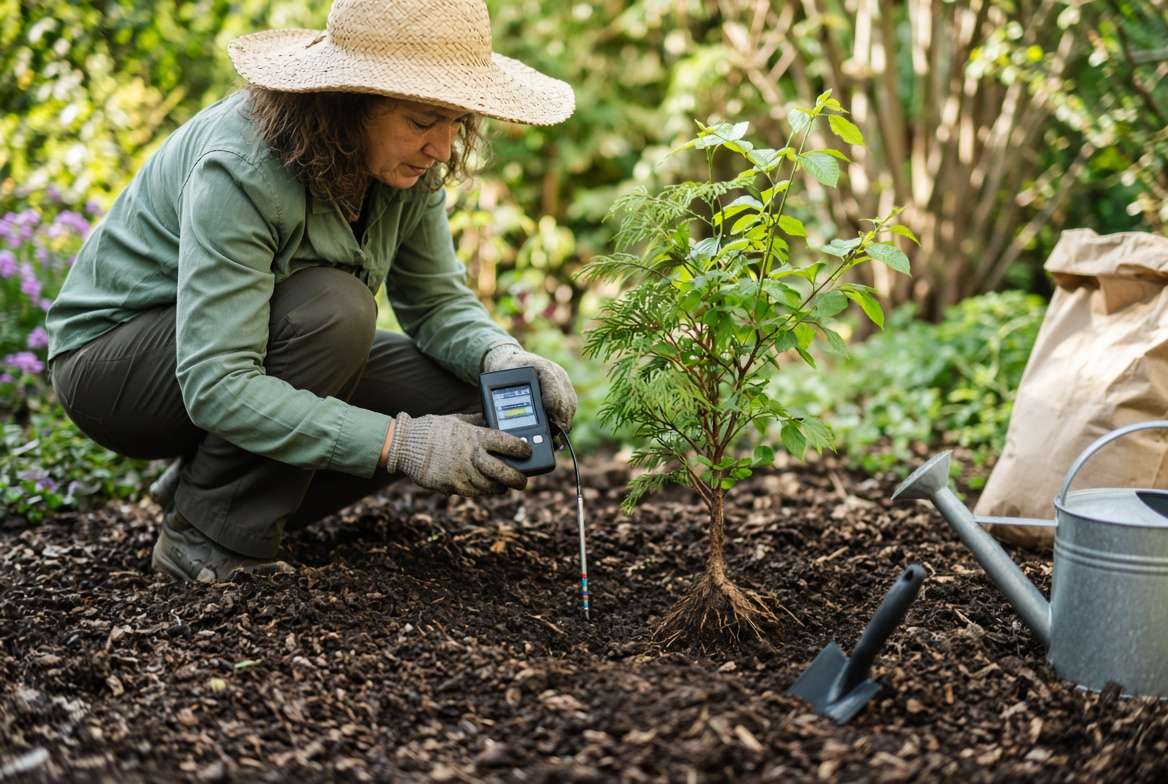
Test Your Soil First: 🧪 Never guess your soil pH or drainage capacity. A simple home soil test will tell you immediately if your native dirt can support an acid-loving conifer or if it requires heavy amending for a demanding hardwood.
-
Respect the Root Flare: 🌳 The absolute most common cause of premature tree death is planting too deeply. The “root flare” (the widened base of the trunk where it transitions into roots) must remain visible above the soil line. Burying it leads to fatal trunk rot and suffocates the root system, whether it’s an oak or a pine.
-
Master the First-Year Watering: 💧 Newly transplanted saplings suffer from transplant shock. They require deep, infrequent watering to encourage their roots to stretch downward into the surrounding native soil. Shallow, daily watering creates weak, surface-level root systems that will fail during the first major drought.
❓ Frequently Asked Questions (FAQs)
Are all coniferous trees evergreen? No. While the vast majority are evergreen, there are notable exceptions known as deciduous conifers. Trees like the Larch (Tamarack), Bald Cypress, and Dawn Redwood produce cones and needles but drop their foliage entirely every autumn.
Which is better for small yards: coniferous or deciduous? Both can work beautifully, provided you select dwarf or columnar cultivars. For tight spaces, look for narrow conifers like the ‘Sky Pencil’ Holly or Italian Cypress. For deciduous options, dwarf Japanese Maples or compact Dogwoods offer spectacular color without overwhelming a small footprint.
Do coniferous or deciduous trees live longer? Lifespans vary wildly by specific species rather than broad categories. Fast-growing softwood conifers like the Leyland Cypress may only live 20 to 50 years in a landscape setting. Meanwhile, deciduous giants like the White Oak can easily surpass 300 years. However, the oldest individual trees on Earth happen to be conifers—the ancient Bristlecone Pines of California, some of which are over 4,800 years old!
🏁 Conclusion
The choice between coniferous vs deciduous trees doesn’t have to be a gamble. By understanding their fundamental biological differences—from how their foliage manages the seasons to how their root systems alter the soil chemistry—you can confidently select the perfect specimen for your unique landscape. Whether you need the steadfast, year-round privacy of a spruce or the spectacular, energy-saving seasonal shifts of a mighty oak, your property is a blank canvas ready to be cultivated.
What is your planting zone, and which type of tree are you planning to add to your yard this upcoming season? Let us know in the comments below, and happy planting!











