

Southern gardeners know a painful truth: traditional spring-flowering shrubs like lilacs simply cannot survive our brutal, unrelenting summers. They melt under the intense humidity and shrivel when the drought sets in. But there is a spectacular, heat-loving alternative. If you want to cultivate a stunning vitex tree, Texas landscapes offer the absolute perfect environment for this resilient Mediterranean native.
Also known as the Chaste Tree or the “Texas Lilac,” the Vitex (Vitex agnus-castus) doesn’t just survive triple-digit temperatures—it actively thrives in them. However, growing a vitex that looks like a manicured, blooming masterpiece rather than a messy, overgrown weed requires specific knowledge.
In this ultimate skyscraper guide, we are diving deep into the exact horticultural secrets you need. From navigating its controversial reputation in the Lone Star State to the aggressive pruning techniques required to force massive, vibrant purple blooms all summer long, here is everything you need to know about mastering the Vitex tree.
2. What is a Vitex Tree? (And Why Do Texans Love It?) 🌳
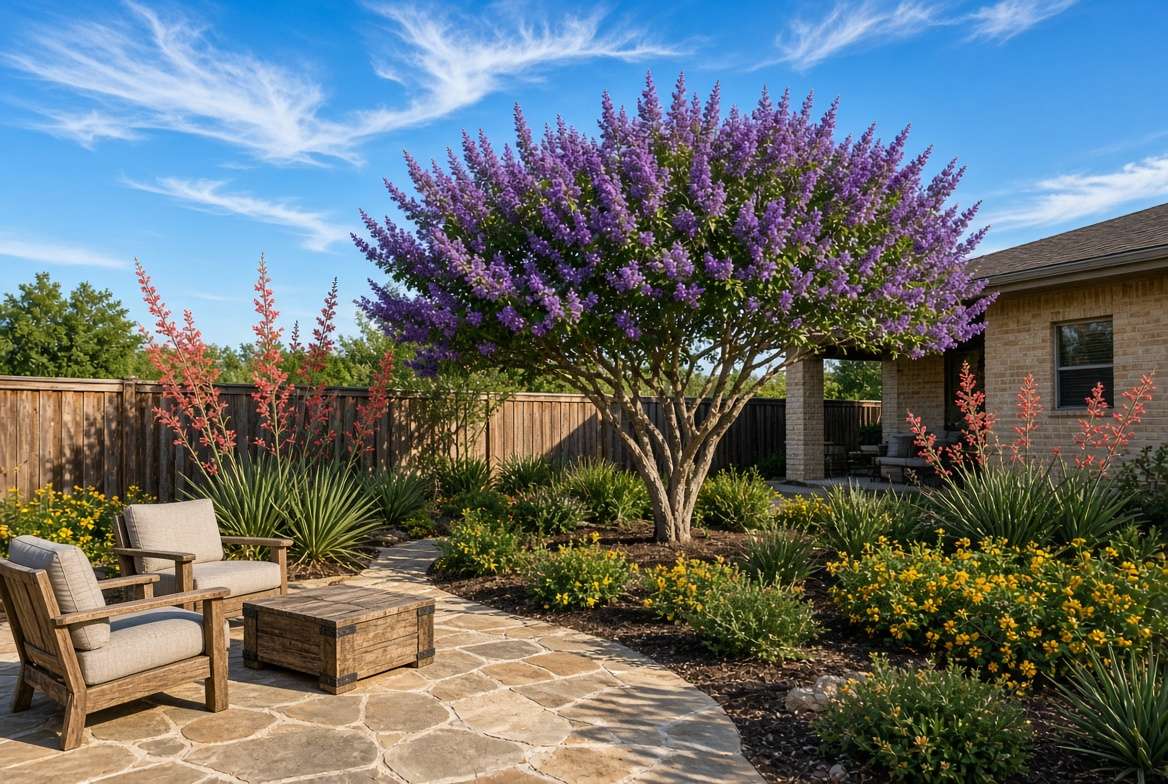
Native to the Mediterranean region and central Asia, the Vitex tree is a deciduous large shrub or small tree that has become a staple in Southern landscaping. It is famous for its striking, multi-trunked architectural structure and its spectacular floral display.
Growth Habit & Appearance
The vitex is a remarkably fast grower, often shooting up 24 to 36 inches in a single growing season once established. It features aromatic, grayish-green palmate leaves (meaning they spread out like the fingers of a hand) that look distinctly tropical. But the real show begins in late May or early June. The tree erupts in magnificent, 8-to-12-inch spikes of purple, lavender, pink, or white flowers that stand proudly above the foliage.
Landscape Versatility
One of the greatest benefits of the Texas Lilac is its landscape versatility. Left entirely alone, it will form a dense, sprawling 10-to-15-foot shrub, making it an excellent option for a fast-growing privacy screen or windbreak. However, with the right pruning techniques (which we will cover in detail below), it can be trained into a highly elegant, multi-trunked ornamental tree capping out around 15 to 20 feet tall—perfect for small residential yards or shading a sunny patio.
A Massive Pollinator Magnet 🦋
If you want to bring your garden to life, the vitex is unrivaled. During the peak of summer, when most nectar-producing plants have retreated from the heat, the vitex is in full bloom. It acts as a massive magnet for bumblebees, honeybees, hummingbirds, and a wide variety of butterflies, including Swallowtails and Monarchs.
3. 🤠 The Great Texas Vitex Debate: Superstar vs. Invasive
Before you rush to the nursery, it is crucial to understand the ongoing horticultural debate surrounding this plant in our state. To be an expert gardener means being a responsible steward of the local ecosystem.
The Texas A&M “Texas Superstar®” Status ⭐
In 2005, Texas A&M AgriLife Extension officially named the Vitex a “Texas Superstar®.” To earn this prestigious title, a plant must undergo years of extensive field trials across the state to prove it can handle our wildest weather. The vitex passed with flying colors. It is virtually immune to extreme heat, highly drought-tolerant, and laughs off most pests and diseases. For homeowners looking for a low-maintenance, high-reward ornamental, it is a gold-standard recommendation.
The Invasive Species Warning ⚠️
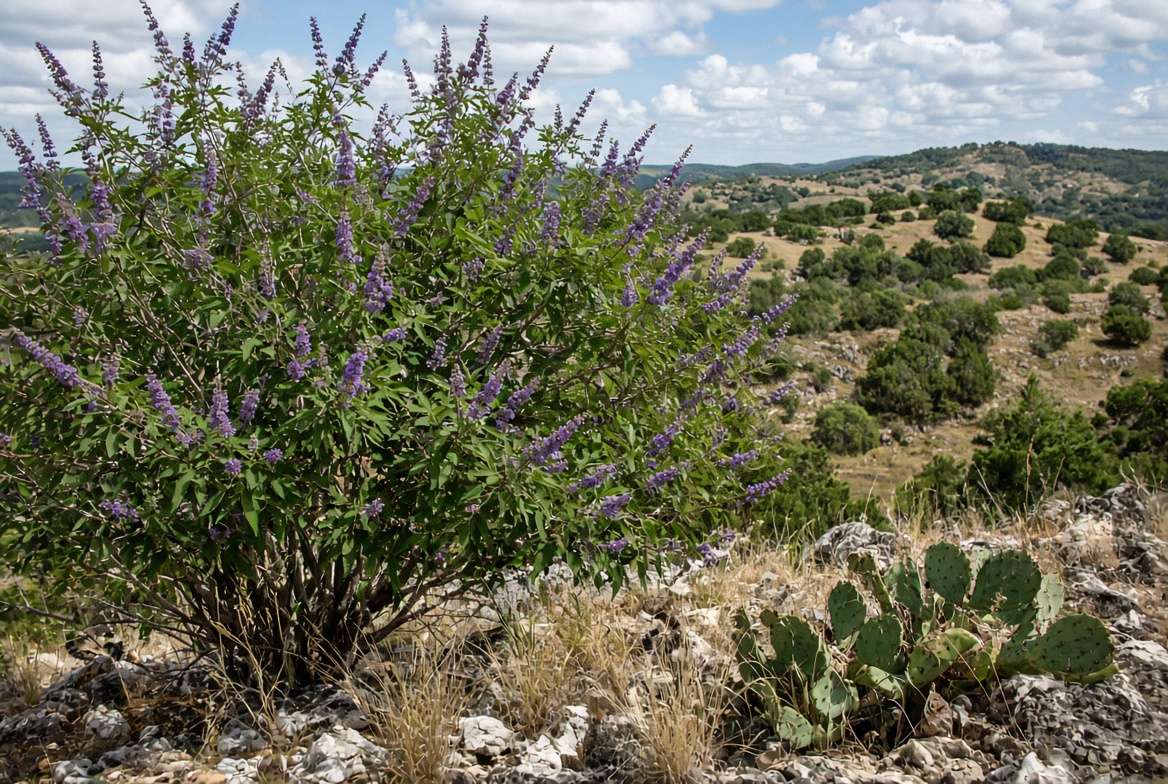
However, the Native Plant Society of Texas (NPSOT) and local environmentalists have raised valid red flags. Because the vitex produces thousands of seeds, which are often eaten and dispersed by birds, it can escape residential gardens. When these seeds land in limestone outcrops, dry creek beds, or riparian zones (especially in the Texas Hill Country and Central Texas), they sprout aggressively. Over time, wild vitex thickets can crowd out crucial native species and disrupt natural waterways.
How to Be a Responsible Grower 🌍
You can still enjoy the beauty of a vitex without harming the local ecosystem. Here are the rules for responsible planting:
-
Avoid planting near greenbelts: If your property backs up to a creek bed, river, or wild nature preserve, do not plant a vitex. Opt for Texas native alternatives like the Desert Willow (Chilopsis linearis), Texas Mountain Laurel (Sophora secundiflora), or Mexican Buckeye (Ungnadia speciosa).
-
Plant in urban/suburban yards: Vitex trees grown in enclosed residential neighborhoods pose far less risk of seed spread to wild waterways.
-
Mandatory Deadheading: As you will learn in our pruning section, snipping off dead flowers before they form seeds is the #1 way to prevent invasive spread (and it actually forces the tree to bloom more!).
-
Choose sterile or low-seed cultivars: Opt for modern named cultivars, which produce far fewer viable seeds than generic, unnamed nursery stock.
4. 🌱 Planting Your Vitex Tree for Texas Success
Proper planting is the foundation of a healthy, long-lasting tree. While the vitex is tough, getting these three elements right will mean the difference between a struggling shrub and a neighborhood showstopper.
Sunlight Requirements: The More, The Better ☀️
Do not try to compromise on sunlight. The vitex demands absolute, unrelenting full sun to perform its best. We are talking a minimum of 8 to 10 hours of direct sunlight every single day.
-
What happens in the shade? If planted in partial shade or under the canopy of a larger shade tree (like an oak or pecan), the vitex will become “leggy” as it stretches for the light. The foliage will thin out, and worse, flower production will drop to almost zero.
Soil and Drainage (Beware the “Clay Bathtub”) 💧
The vitex is wonderfully adaptable to poor soils. It thrives in the rocky, alkaline soils of the Hill Country and the sandy loams of East Texas. However, it has one fatal weakness: it cannot tolerate wet feet.
If you live in North Texas (Dallas/Fort Worth) or the Coastal Plains (Houston) with heavy, deep black gumbo clay, you must be extremely careful. Digging a hole in dense clay and dropping a vitex into it creates the “Bathtub Effect.” Water fills the hole, the clay prevents it from draining, and the roots sit in stagnant water, leading to immediate root rot.
-
The Fix: If you have heavy clay, plant your vitex on a raised mound (12 to 18 inches above grade) or heavily amend a wide planting area with expanded shale and coarse compost to guarantee sharp drainage.

The Ideal Planting Window 🍂
While you can plant a vitex in the spring, the absolute best time to plant trees in Texas is the fall (September through November). Planting in the autumn allows the root system to establish itself in the warm soil over the mild winter, long before the plant is subjected to the stress of a 105°F July afternoon.
5. ✂️ The Pruning Secrets: Maximizing Huge Summer Blooms
If you want a vitex that stops traffic, this is the most important section of this guide. Without pruning, a vitex becomes a chaotic, tangled mess with diminishing blooms. With the right pruning, it becomes a structural masterpiece covered in massive flower spikes.
The Golden Rule: Vitex Blooms on New Wood 🌿
The biological secret to the vitex is that it only produces flowers on the current season’s growth (new wood). If you leave old, woody branches intact, they will not produce flowers. Therefore, aggressive pruning isn’t just safe for this tree—it is mandatory for maximum floral output. The harder you prune, the more vigorous the new growth will be, and the larger the flower spikes will grow.
Late Winter “Hard Pruning” (The Big Chop) 🪓
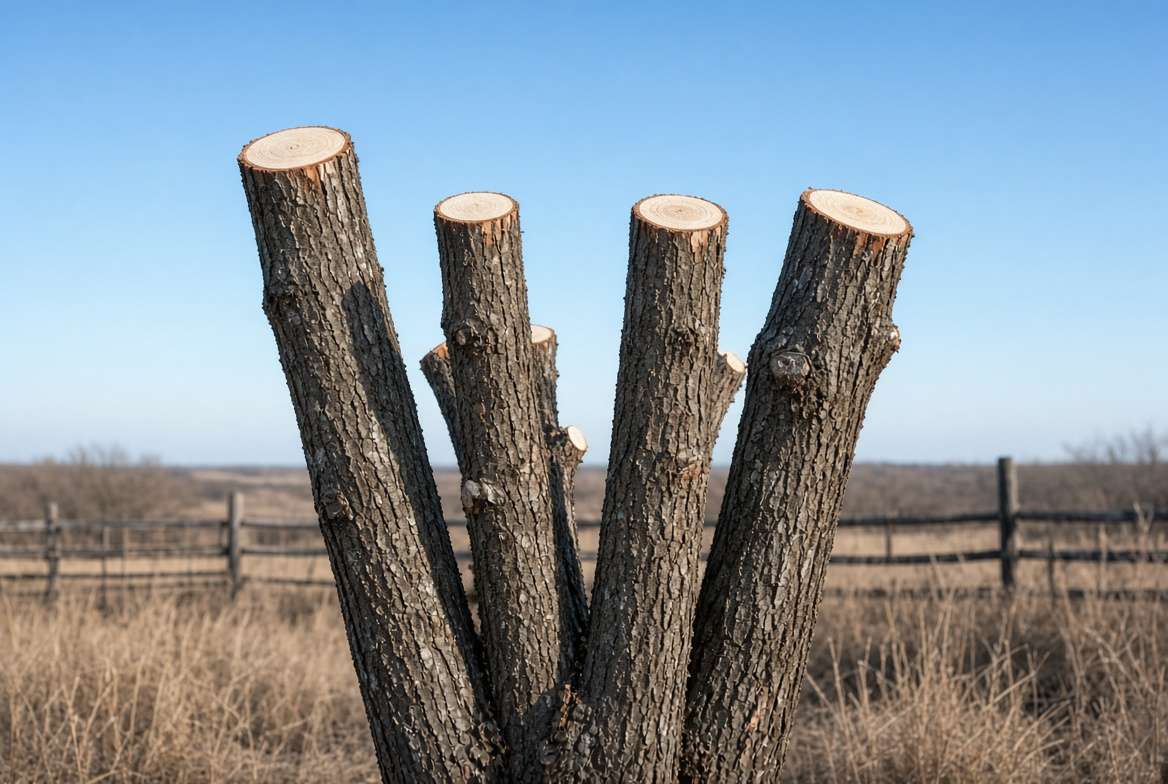
Your primary pruning session should happen in late winter (late February to early March in Texas), just before the spring bud break. Do not be timid!
-
For a Bushy Shrub: If you are growing vitex as a privacy hedge or shrub, you can actually perform rejuvenation pruning. Cut the entire plant back to about 2 to 3 feet from the ground. Yes, it looks extreme, but it will aggressively shoot up dense, leafy branches that will be completely smothered in huge blooms by June.
-
For a Multi-Trunk Tree: If you want an elegant tree shape, select 3 to 5 strong, well-spaced main trunks and remove all others at ground level. Every winter, prune the upper canopy aggressively. Remove any branches that are crossing or rubbing, prune out vertical “water sprouts” growing straight up, and reduce the length of the canopy branches by about one-third. This opens up the center for air circulation (preventing disease) and directs all the plant’s energy into producing large flowers on the tips of the remaining branches.
Summer Deadheading for a Second Flush 🌸
Remember how we discussed preventing invasive seed spread? This is how you do it, while simultaneously triggering a spectacular second wave of flowers.
In late June or July, when the first massive flush of blooms begins to fade and turn brown, cut them off. Snip the spent flower spikes right above the next set of healthy leaves. By removing the fading flowers, you stop the tree from wasting its energy producing thousands of seeds. Instead, the tree redirects that energy into pushing out a second, slightly smaller flush of blooms in late summer or early fall!
6. 💧 Watering and Feeding: Surviving the Texas Heat
The vitex is celebrated for its toughness, but understanding its specific moisture and nutrient needs is vital for long-term health.
The Watering Schedule (Establishment vs. Maturity)
-
Year 1 (The Establishment Phase): A newly planted vitex needs consistent moisture to drive its roots deep into the soil. Water it deeply once a week during the spring, and perhaps twice a week during the peak heat of its first summer. Deep watering (using a soaker hose or drip line) is far better than frequent, shallow sprinkling.
-
Year 2+ (Mature Drought Tolerance): Once established, the vitex is fiercely drought-tolerant. In many parts of Texas, a mature vitex can survive solely on natural rainfall. During severe, extended droughts, a deep soaking once every three to four weeks is usually plenty. Remember: The number one way to kill a mature vitex is overwatering it. Let the soil dry out completely between waterings.
Fertilizing? Less is More 🚫
Texans love to feed their plants, but the vitex is a rugged survivor that actively resents heavy fertilization.
-
The Nitrogen Trap: If you apply a high-nitrogen lawn fertilizer near a vitex, the tree will absorb it and respond by putting all its energy into growing massive, lush green leaves at the absolute expense of flowers. You will end up with a giant green bush and zero purple spikes.
-
The Right Approach: A 1-to-2-inch layer of high-quality organic compost spread over the root zone (keeping it away from the base of the trunk) in early spring provides all the slow-release nutrients the tree needs.
7. 🥶 Dealing with Texas Pests and Wild Weather
Texas weather is notoriously unpredictable, oscillating from blistering droughts to sudden, brutal freezes. Fortunately, the vitex is built for battle.
Winter Die-Back and Freeze Recovery
If you live in Central or South Texas (USDA Zones 8-9), your vitex will easily handle standard winter weather. However, in North Texas or the Panhandle (Zones 6-7), extreme freeze events (like the infamous Winter Storm Uri) can occasionally kill the above-ground branches of the tree.
If this happens, do not panic and do not dig up the tree! The root system is extremely hardy down to -10°F. Simply saw off the dead, frozen branches at ground level in the spring. Because the established root system is massive, the vitex will furiously shoot up new growth, often recovering 4 to 7 feet of height in a single summer.
Pest and Disease Resistance 🐛
When it comes to E-E-A-T (Experience, Expertise, Authoritativeness, and Trustworthiness), horticulturalists love recommending the vitex because it requires almost zero chemical intervention.
-
Pests: It is largely ignored by insects. The aromatic leaves act as a natural deterrent. Even better, it is highly deer-resistant, making it a perfect choice for rural Hill Country landscapes.
-
Diseases: The only real threat is root rot or fungal leaf spot, both of which are entirely caused by poor drainage, overwatering, or lack of sunlight. Give it hot sun and dry feet, and it will remain disease-free.
8. 🏆 Top Vitex Cultivars for Texas Landscapes
Do not just buy a generic, unlabelled vitex at a big-box store. To get the best blooms, the most vibrant colors, and the lowest seed production, seek out these named cultivars at your local independent nursery:
-
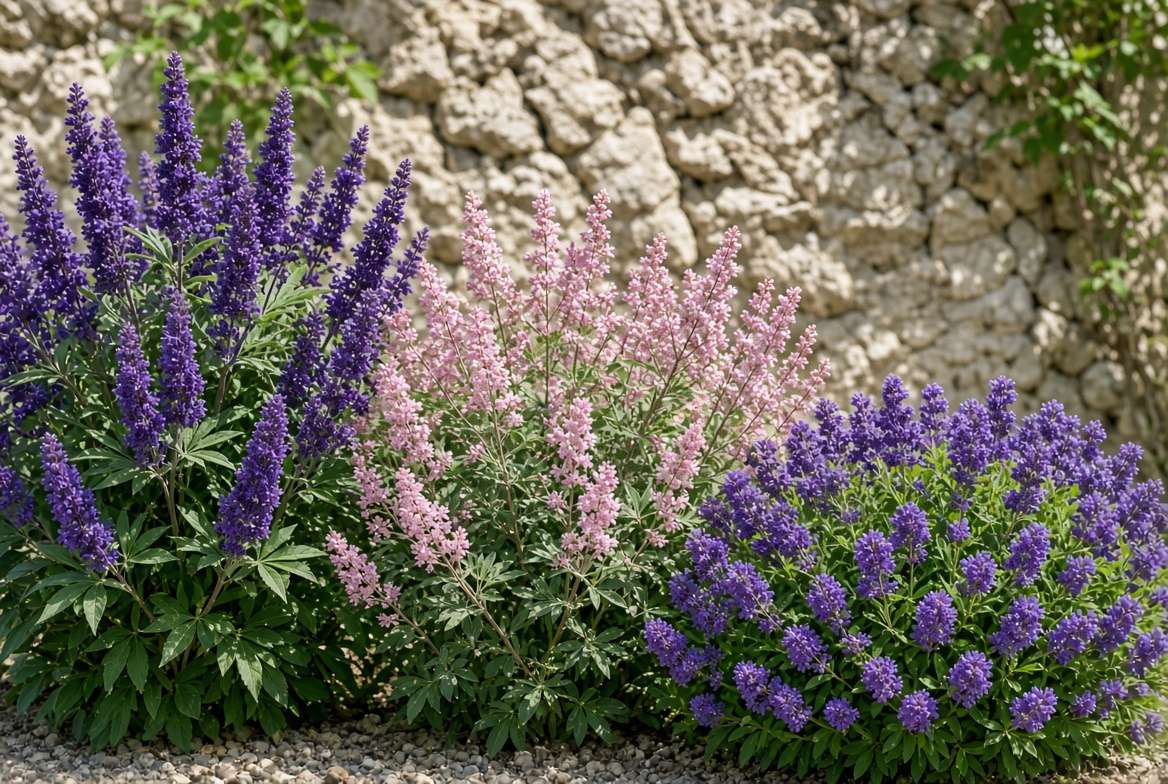
‘Shoal Creek’: The absolute gold standard for Texas. It features larger, deeper purple bloom spikes, exceptionally vigorous growth, and—crucially—it produces far fewer viable seeds than standard varieties, making it a much more ecologically responsible choice.
-
‘Montrose Purple’: Celebrated for having incredibly rich, dark violet flower spikes and excellent heat tolerance.
-
‘Blue Puffball’ or ‘Blue Diddley’: If you want the vitex look but only have a small patio, these are fantastic dwarf varieties. They cap out at just 3 to 6 feet tall and wide, and they perform beautifully in large containers!
-
‘Silver Spire’ or ‘Salinas Pink’: For gardeners who want to break away from the traditional purple, these cultivars offer stunning white or delicate pink blooms, respectively.
9. ❓ Frequently Asked Questions (FAQs)
Are Vitex trees messy? They can be. The vitex drops its large flower spikes once they fade, and in the autumn, it drops its leaves and small, peppercorn-like seed pods. Planting them over a patio or driveway requires sweeping, which is why they are often best planted in garden beds where the debris can decompose naturally as mulch.
How fast does a Vitex tree grow in Texas? Incredibly fast. Once the root system is established, you can expect 2 to 3 feet of new growth per year. If you cut it back to the ground in late winter, it will easily reach 5 to 7 feet tall by mid-summer.
Is the Vitex tree toxic to dogs or cats? No! The ASPCA lists the Vitex (Vitex agnus-castus) as non-toxic to dogs, cats, and horses.
10. Conclusion: Embrace the Texas Lilac
Growing a spectacular vitex tree in Texas is not about babying a fragile plant; it is about understanding how to harness the raw vigor of a rugged survivor. By ensuring perfect drainage, embracing the blazing summer sun, and bravely executing a hard winter prune, you will force this resilient tree to produce a magnificent, pollinator-friendly floral show year after year.
Grab your pruning shears this February, cut back that old wood, and get ready for a summer filled with huge, vibrant blooms.











