
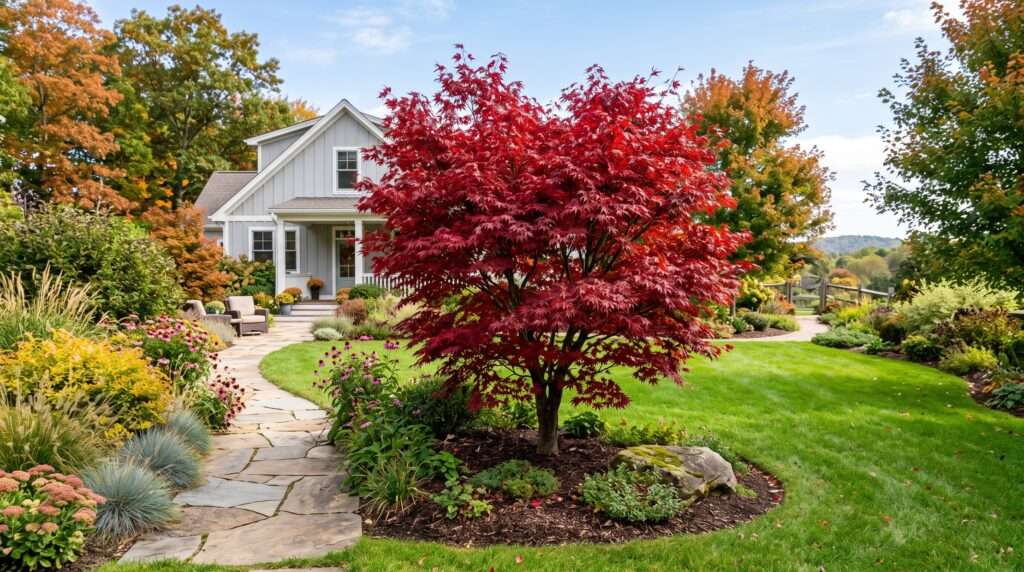
Walk past an ocean of standard green lawns and predictable shade canopies, and a splash of crimson, burgundy, or wine-red instantly commands attention. If you want to plant a tree with red leaves to elevate your landscape’s aesthetic, you are making a brilliant design choice. Red foliage creates unparalleled visual contrast, turning an ordinary yard into a breathtaking, photo-worthy garden retreat. ✨
However, a common pitfall plagues many enthusiastic gardeners: they buy a stunning ruby-red tree in the spring, only to watch its leaves fade to a muddy bronze or dull green by midsummer.
Why does this happen? It comes down to botanical science. The vibrant red and purple tones you love are caused by pigments called anthocyanins. When a tree is stressed by poor soil health, improper watering, or incorrect sunlight levels, it overproduces green chlorophyll to survive, masking those gorgeous red pigments.
As an arboriculture and plant care specialist, I’ve designed this comprehensive guide to help you avoid that exact disappointment. Below, we’ll explore the 7 most reliable, visually stunning red-leaved trees for your landscape, followed by a masterclass on the exact soil and care protocols needed to keep their colors vibrant from spring through autumn. Let’s dig in! 🌱
2. Quick-Glance Selection Matrix: The Top 7 Red-Leaved Trees 📊
Whether you have a sprawling estate or a compact urban courtyard, selecting the right tree for your specific microclimate is step one. Use this quick-reference matrix to find your perfect match.
| Tree Variety & Botanical Name | USDA Zones | Mature Size (Height × Spread) | Foliage Duration | Best Sunlight Condition |
|---|---|---|---|---|
| Japanese Maple (Acer palmatum) | 5–9 | 8–20 ft × 10–15 ft | Spring to Fall | Dappled shade / Morning sun |
| Purple Leaf Plum (Prunus cerasifera) | 5–9 | 20–25 ft × 15–20 ft | Spring to Fall | Full sun |
| Forest Pansy Redbud (Cercis canadensis) | 5–9 | 20–30 ft × 25–35 ft | Spring to late Summer | Partial shade to full sun |
| Red Smokebush (Cotinus coggygria) | 4–8 | 10–15 ft × 10–15 ft | Spring to Fall | Full sun |
| Copper Beech (Fagus sylvatica) | 4–7 | 50–60 ft × 35–45 ft | Spring to Fall | Full sun |
| Prairifire Crabapple (Malus spp.) | 4–8 | 15–20 ft × 15–20 ft | Spring to Summer (turns bronze) | Full sun |
| October Glory Maple (Acer rubrum) | 4–9 | 40–50 ft × 35–40 ft | Brilliant Fall color only | Full sun to light shade |
3. The 7 Best Trees With Red Leaves for Your Landscape 🏡🍂
3.1. Japanese Maple (Acer palmatum ‘Bloodgood’ & ‘Crimson Queen’) 🍁
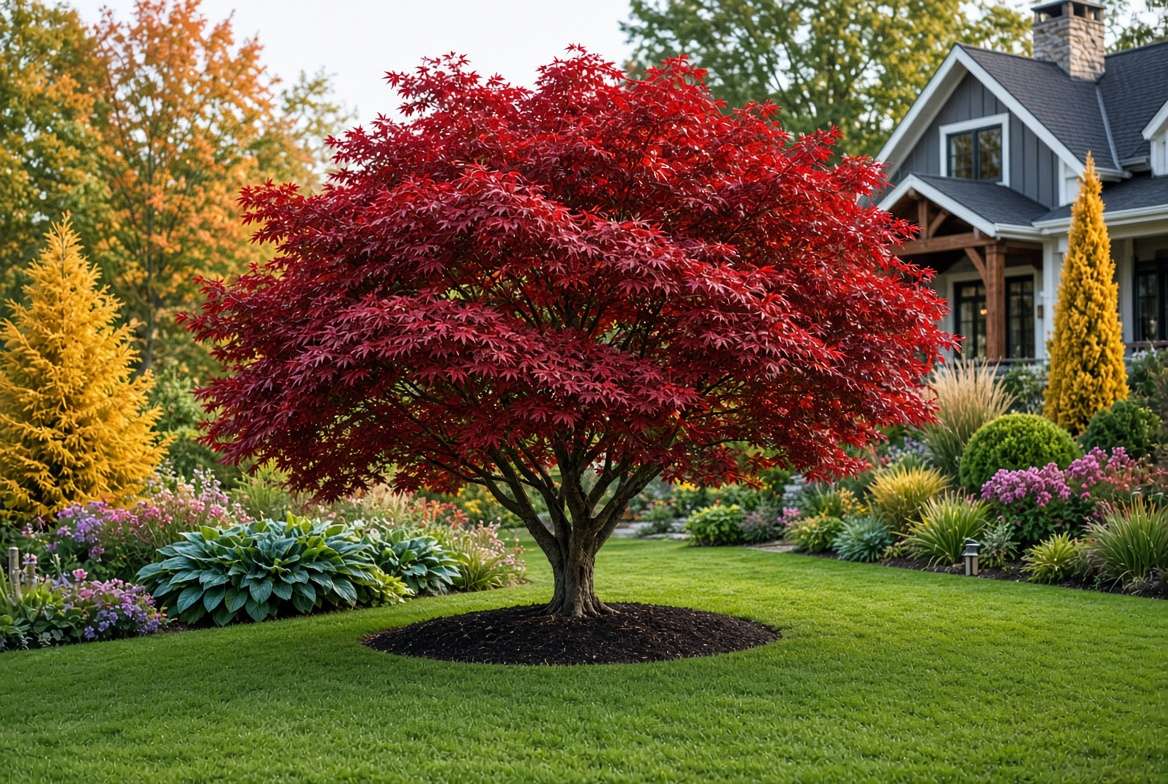
When it comes to ornamental trees with red foliage, the Japanese Maple is the undisputed crown jewel. Varieties like ‘Bloodgood’ offer an upright, graceful canopy, while ‘Crimson Queen’ provides a weeping, cascading structure.
-
Aesthetic Profile: Delicate, deeply lobed palmate foliage that emerges deep burgundy-crimson in the spring, holds a rich purple-red through the summer, and ignites into a fiery scarlet in autumn.
-
Landscape Role: Perfect as a specimen focal point, a staple in zen or rock gardens, or even grown in large decorative containers near an entryway.
-
Arborist Pro-Tip 💡: Japanese Maples have incredibly fine, shallow root systems. To keep the foliage lush, prioritize soil health by applying a 3-inch layer of organic pine bark mulch to regulate soil temperature and retain moisture. Shelter them from harsh, drying afternoon winds to prevent the delicate leaf edges from scorching.
-
Visual Asset Tip 📸: If you are documenting your garden’s progress for a blog, YouTube thumbnail, or a Pinterest pin, photograph your Japanese Maple during the “golden hour” (early morning or late afternoon). Backlighting these lacy leaves with soft sunlight makes the red hues absolutely glow on camera.
3.2. Purple Leaf Plum (Prunus cerasifera ‘Thundercloud’) 🌸
If you want a fast-growing tree that provides a massive pop of color, the Purple Leaf Plum is a stellar choice.
-
Aesthetic Profile: This tree is famous for its deep ruby-purple foliage, but the real show happens in early spring when the bare branches erupt in a profusion of fragrant, pale pink blossoms before the leaves even emerge.
-
Landscape Role: Excellent as a fast-growing boundary accent, a medium-sized shade tree, or a vibrant backdrop to contrast with lighter green shrubs.
-
Arborist Pro-Tip 💡: Unlike the Japanese Maple, the Purple Leaf Plum requires full, blasting sun to maintain its deep purple-red color. If planted in the shade, the leaves will quickly revert to a muted green. Monitor the trunk for common stone-fruit pests like borers, and only prune immediately after the spring flowering finishes so you don’t accidentally remove next year’s bloom buds.
3.3. Forest Pansy Redbud (Cercis canadensis ‘Forest Pansy’) 💜
The native Eastern Redbud gets a moody, colorful upgrade with the ‘Forest Pansy’ cultivar.
-
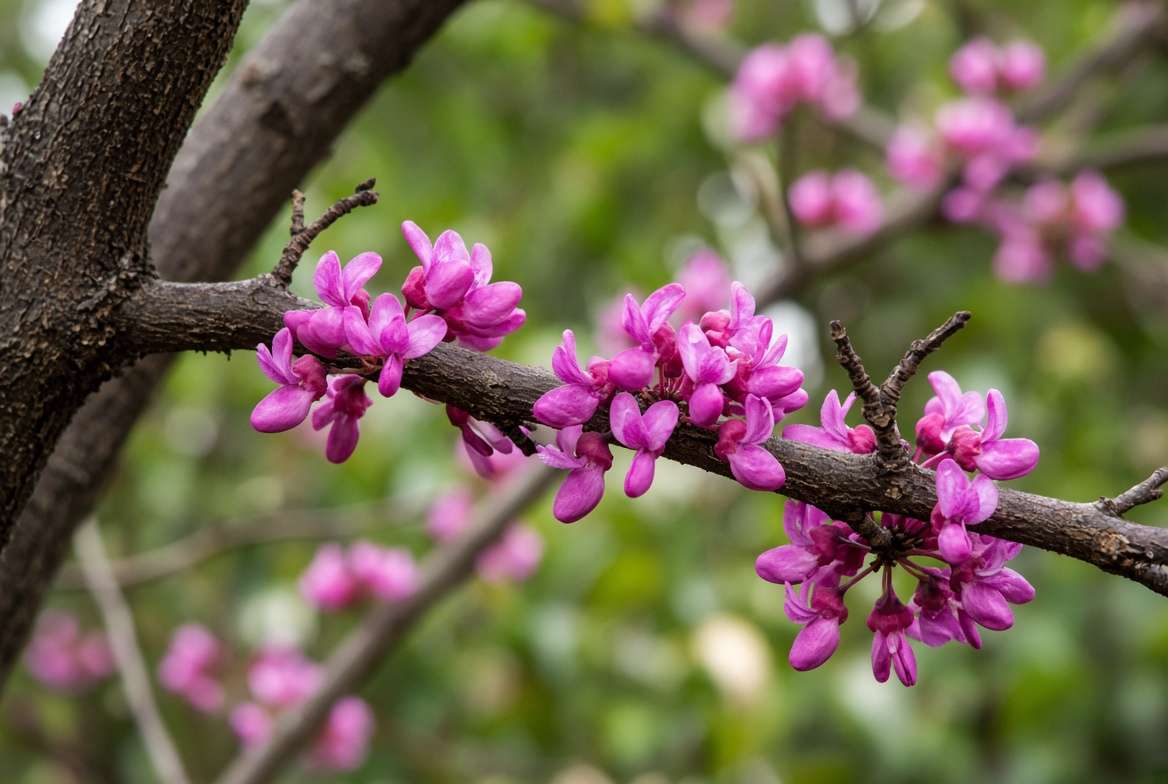
Aesthetic Profile: The broad, heart-shaped leaves unfurl as a shimmering violet-red in spring, maturing into a rich maroon. Before the foliage appears, tiny, rosy-magenta pea-like flowers bloom directly on the bare bark and branches (a fascinating botanical trait called cauliflory).
-
Landscape Role: Ideal as an understory specimen, a courtyard tree, or a wildlife-friendly planting that supports early-season pollinators.
-
Arborist Pro-Tip 💡: Soil drainage is non-negotiable for the Forest Pansy. They are highly susceptible to Verticillium wilt (a deadly fungal disease) if planted in poorly aerated, waterlogged, heavy clay soils. Focus on soil health by incorporating rich compost into the native soil at planting time to encourage robust, deep root development and healthy microbial activity.
3.4. Red Smokebush Tree (Cotinus coggygria ‘Royal Purple’) 💨
Often grown as a large shrub, the Red Smokebush can be easily pruned into a spectacular small, single-stemmed tree (known as a “standard”).
-
Aesthetic Profile: Features velvety, dark purple-maroon rounded leaves. In midsummer, it produces billowy, cloud-like pinkish-purple flower panicles that look like puffs of smoke hovering over the red foliage.
-
Landscape Role: A highly architectural focal plant. Its compact size makes it perfect for tight suburban lots or patio borders.
-
Arborist Pro-Tip 💡: This plant thrives on a little neglect! It actually prefers rocky, somewhat poor soils. Avoid the temptation to over-fertilize. Applying too much nitrogen will cause the plant to produce floppy, weak growth and will severely mute the intense red coloring of the leaves.
3.5. Copper Beech (Fagus sylvatica ‘Purpurea’ / ‘Riversii’) 🌳
If you have the acreage to support it, few things are as majestic as a mature Copper Beech. This is a tree for the generations.
-
Aesthetic Profile: A massive, grand canopy defined by smooth, elephant-gray bark. The glossy leaves emerge a bright, deep copper-purple, darkening through the summer before transforming into a warm amber-bronze in the fall.
-
Landscape Role: This is a grand estate shade tree, a parkland centerpiece, or the anchoring specimen of a very large property.
-
Arborist Pro-Tip 💡: Give this gentle giant the space it deserves. Beeches have incredibly sensitive, widespread root systems. Keep heavy landscaping equipment, driveways, and heavy foot traffic well away from the area beneath the canopy (the “drip line”) to prevent root compaction, which can slowly decline the tree’s health over several years.
3.6. Prairifire Flowering Crabapple (Malus ‘Prairifire’) 🍎
A true four-season performer, the Prairifire Crabapple offers year-round visual interest and is incredibly resilient.
-
Aesthetic Profile: The foliage emerges a vibrant purple-red in spring. While the leaves do transition to a bronze-green with distinct red veins in summer, the tree compensates with a spectacular show of vibrant carmine-pink spring blooms, followed by persistent cherry-red berries that hang on the branches through the winter snow.
-
Landscape Role: A multi-interest specimen tree with extremely high value for local wildlife, feeding pollinators in spring and birds in winter.
-
Arborist Pro-Tip 💡: When selecting crabapples, disease resistance is everything. ‘Prairifire’ was specifically bred for superior resistance to common apple diseases like apple scab, cedar-apple rust, and fire blight, making it a low-maintenance, chemical-free option for your landscape.
3.7. October Glory Red Maple (Acer rubrum ‘October Glory’) 🍁
While this guide focuses on trees with red leaves throughout the growing season, no list is complete without the reigning champion of autumn color.
-
Aesthetic Profile: It features a classic, lush green summer canopy that reliably transforms into an intense, glowing, neon-crimson in late autumn, often holding its leaves later than other maples.
-
Landscape Role: A superior, fast-growing lawn shade tree and a classic neighborhood statement plant.
-
Arborist Pro-Tip 💡: Red Maples are sensitive to alkaline soil (a pH greater than 7.0). If planted in highly alkaline conditions, they will struggle to absorb bioavailable iron and manganese, leading to chlorosis (an unhealthy yellowing of the leaves between the veins). Test your soil pH before planting.
4. Master Cultivation Guide: How to Maintain Intense Red Foliage 🧪🌱
Choosing the right tree with red leaves is only half the battle. Preserving those striking hues requires a proactive approach to plant care. Here is the expert-level science and cultivation strategy you need to keep your foliage vibrant.
4.1. The Sunlight Balance & Anthocyanin Production ☀️
The red and purple pigments (anthocyanins) in your tree act almost like a natural “sunscreen” for the leaves. They are produced in higher quantities when the tree is exposed to strong light. Conversely, if a red-leaved tree is planted in deep shade, the lack of sunlight forces the tree into a panic. To survive, it must maximize photosynthesis, so it overproduces green chlorophyll, essentially masking the red color and turning the leaves green.
-
The Sweet Spot: For delicate trees like Japanese Maples and Redbuds, target “morning sun and afternoon filtered shade.” This provides enough light to trigger the red pigments but protects the fragile leaves from scorching in the harsh 3 PM summer sun. For robust trees like the Purple Leaf Plum or Smokebush, give them full, unadulterated sunshine all day long.
4.2. Soil Chemistry and pH Secrets 🪴
Healthy soil equals vibrant leaves. If a tree’s root system cannot efficiently uptake nutrients, its foliage color will suffer.
-
Target pH: Most red-foliage trees thrive in slightly acidic soils (pH 5.5 to 6.5). This acidity ensures that essential micronutrients (like iron and magnesium) are water-soluble and easily absorbed by the roots.
-
Amending the Soil: If you have heavy, dense clay, avoid digging a simple hole and dropping the tree in; this creates a “bathtub effect” where water pools around the roots, causing rot. Instead, amend a wide planting area with rich organic compost to improve soil aeration, drainage, and biological activity.
4.3. Watering Practices for Sensitive Leaf Tissues 💧
How you water is just as important as how much you water.
-
Deep vs. Shallow: Always water deeply and infrequently. A long, slow soak encourages the tree to send roots deep into the earth, making it drought-resilient. Frequent, shallow sprinkling creates a weak, surface-level root system that dries out quickly in the summer heat.
-
Avoid Overhead Watering: Do not use sprinklers that spray water directly onto the leaves, especially during the heat of the day. Water droplets act like tiny magnifying glasses, scorching the delicate red leaf tissues. Furthermore, wet foliage in humid weather is a breeding ground for fungal diseases like powdery mildew and leaf spot. Always water at the base of the trunk.
4.4. The Fertilizer Trap: Don’t Overfeed Nitrogen 🚫
This is the most common mistake homeowners make. If your tree’s red leaves are turning green rapidly in the summer, you might be over-fertilizing.
-
The Nitrogen Effect: High-nitrogen fertilizers (often used for greening up lawns) trigger rapid, explosive vegetative growth. When a red-leaved tree grows too fast, it prioritizes producing green chlorophyll to fuel that growth, abandoning its red pigments.
-
The Solution: Keep high-nitrogen lawn fertilizers away from your tree’s root zone. Instead, feed the tree in early spring using a balanced, slow-release organic blend, or simply rely on a healthy layer of organic compost and wood mulch breaking down naturally over time.
5. Troubleshooting: Common Red Foliage Problems & Fixes 🩺🔍
Even with the best tree care and soil health management, environmental stressors can occasionally compromise your tree’s foliage. Here is how to diagnose and resolve the three most common issues affecting red-leaved varieties.
-
Issue 1: Red Leaves Turning Green in Midsummer (Greening Out)
-
Root Cause: As discussed in our cultivation guide, this is almost always a reaction to severe shade or excessive nitrogen.
-
Remedy: If the tree is heavily shaded by a larger canopy, consider selectively thinning the branches of the surrounding, taller trees to allow more dappled sunlight to penetrate. If you suspect fertilizer runoff from your lawn is the culprit, switch to zero-nitrogen organic compost top-dressings around the tree’s root zone instead of synthetic lawn feeds.
-
-
Issue 2: Crispy, Brown Leaf Edges (Marginal Scorch)
-
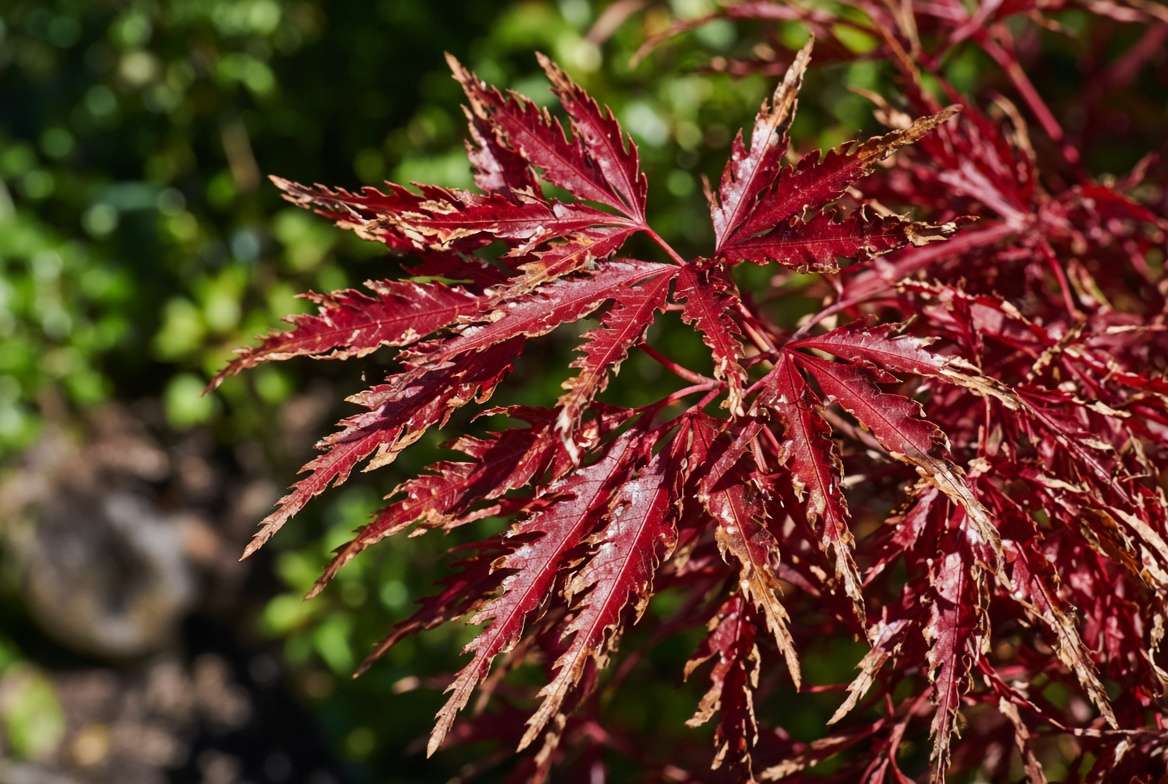
Root Cause: Delicate varieties like the Japanese Maple often suffer from marginal scorch due to intense radiant heat from nearby driveways, prolonged drought, or dry, whipping winds that strip moisture from the leaf edges faster than the roots can replenish it.
-
Remedy: Proactive microclimate management is key. Install a thick, 3-inch ring of hardwood mulch to cool the soil surface. During extreme heatwaves, provide supplemental, deep-root soaking. If the tree is young and highly exposed, erecting a temporary shade cloth or windbreak during its first two summers can save the foliage.
-
-
Issue 3: White Powdery Spots on Burgundy Leaves
-
Root Cause: Powdery mildew is a superficial fungal infection that thrives in humid, stagnant late-summer air. It shows up as an unsightly white dusting, heavily contrasting against dark purple and red leaves.
-
Remedy: Prevention starts with proper pruning; always thin out the congested interior branches of your tree to promote excellent air circulation. If an outbreak occurs, treat the foliage promptly with organic neem oil or a copper-based bio-fungicide, being sure to apply it in the early morning to avoid sun-burning the treated leaves.
-
6. Landscape Design Ideas: How to Style Red-Leaved Trees 🎨🏡
A tree with red leaves is a bold statement piece. To maximize its impact, you must purposefully design the surrounding landscape to complement—rather than compete with—its striking hues.
-
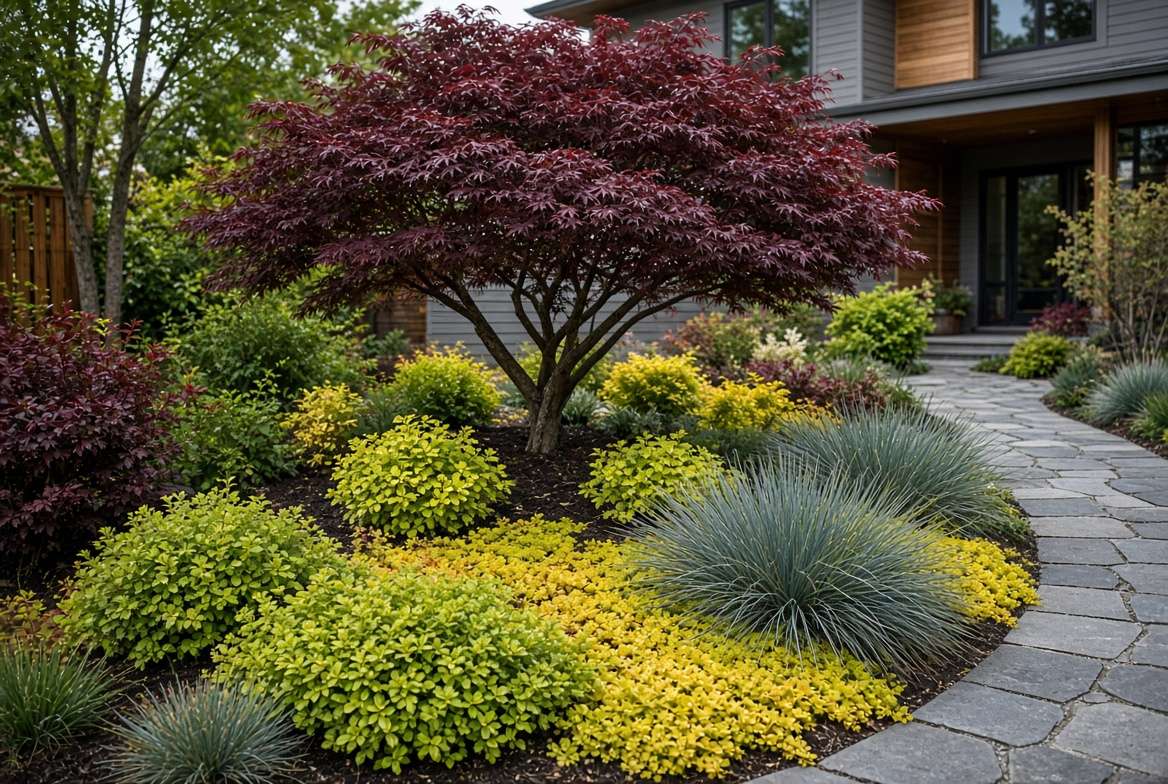
The High-Contrast Companion Strategy: The secret to professional landscape design is the color wheel. Pair dark, moody burgundy foliage with bright chartreuse, glowing golden, or icy silver companion plants. Planting ‘Lime Mound’ Spirea, bright yellow Creeping Jenny, or silvery Blue Fescue at the base of a dark-leaved tree creates a striking, high-contrast vignette. These bold color blocks don’t just look incredible in person—they naturally pop on camera, making them perfect, vibrant subjects for highly engaging Pinterest pins or eye-catching video thumbnails if you regularly photograph and document your garden projects.
-
Framing Entrances & Walkways: Use symmetry to your advantage. Flanking a front walkway or a driveway entrance with two identical, smaller red trees (like the weeping ‘Crimson Queen’ Japanese Maple) adds instant architectural weight and curb appeal to your property, establishing a clear, welcoming boundary.
-
Layering Heights: Never leave the ground beneath a specimen tree bare. Build a lush understory by layering multi-tonal perennials and shade-tolerant groundcovers beneath the canopy. This mimics a natural forest edge, suppresses weeds, and maintains essential soil moisture.
7. Frequently Asked Questions ❓💬
Is there a tree with red leaves that stays red all year long?
In temperate climates with freezing winters, no. True red-leaved trees are deciduous, meaning they will drop their leaves in the fall and remain bare through the winter. If you live in a warmer climate (Zones 7-10) and want year-round red foliage, you will need to look at broadleaf evergreen shrubs that produce red flushes of growth, such as the Photinia (Red Tip Photinia).
Can I grow a red-leaved tree in a patio container?
Yes, absolutely! Dwarf Japanese Maples are exceptionally well-suited for container gardening. The key to success is ensuring the pot has large drainage holes and using a high-quality, well-aerated potting mix. Remember that containerized plants lack the insulating warmth of the earth, so in colder zones, you may need to wrap the pots in burlap or move them into an unheated garage during severe winter freezes to protect the roots.
What is the easiest red foliage tree for beginners?
If you are new to tree care, the Red Smokebush and the ‘Prairifire’ Crabapple are your most forgiving options. They are highly adaptable to poor soils, possess excellent natural disease resistance, and tolerate minor drought and inconsistent watering far better than sensitive maples.
Do red leaves fall off earlier in autumn than green leaves?
Not necessarily. Leaf drop (abscission) is triggered by the shortening of daylight hours (photoperiod) and dropping nighttime temperatures, rather than the color of the leaf itself. However, because red-leaved trees naturally have less active chlorophyll, they may sometimes begin their dormancy process slightly earlier than heavily green, nitrogen-rich trees nearby.
8. Final Action Checklist: Planting for Success 📝🪴
Ready to plant your stunning new addition? Follow this arborist-approved checklist to guarantee your tree thrives from day one:
-
Conduct a Soil Test: Before buying, verify that your native soil pH falls within the ideal 5.5 to 6.5 range to ensure optimal nutrient uptake and color saturation.
-
Dig Wide, Not Deep: Excavate the planting hole two to three times as wide as the nursery pot, but exactly the same depth.
-
Find the Root Flare: Never bury the trunk. The root flare (the point where the trunk widens at the base and transitions into roots) must sit roughly 1 to 2 inches above the surrounding soil grade to prevent trunk rot.
-
Saturate and Settle: After backfilling with native soil (amended with compost if working with heavy clay), water the area deeply and slowly to eliminate subterranean air pockets around the root ball.
-
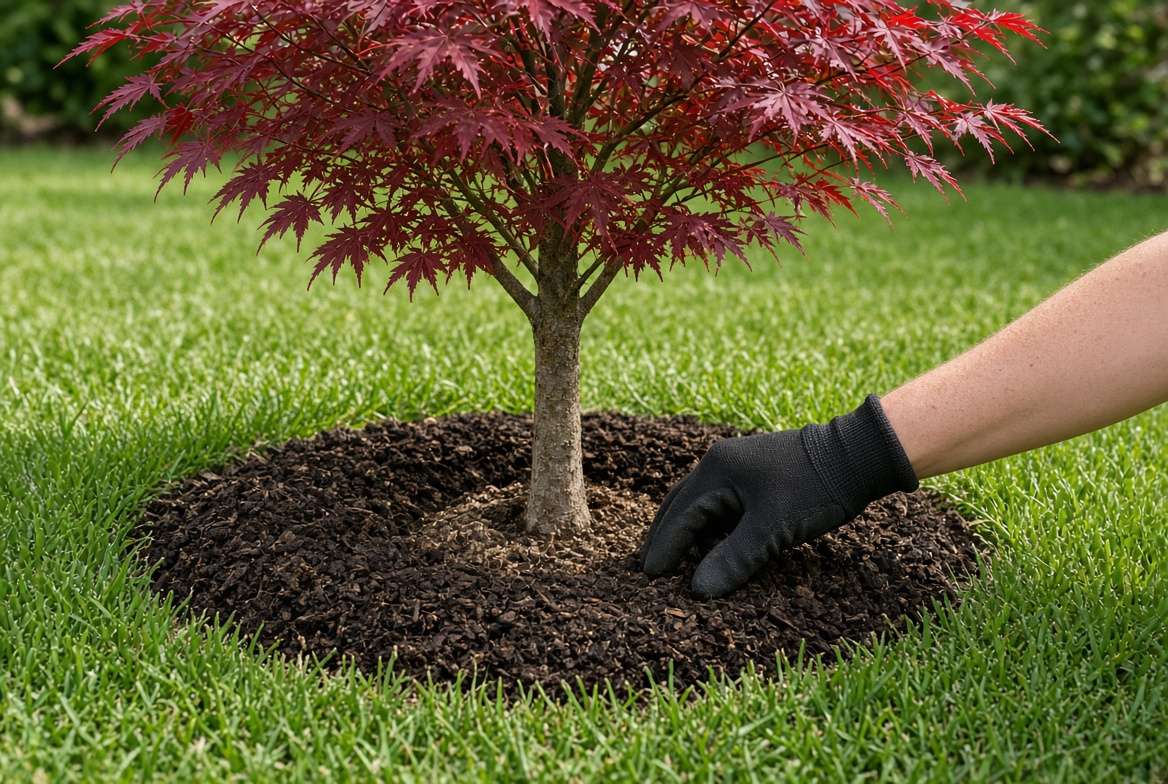
Mulch Like a Pro: Apply a 3-inch layer of organic wood chips around the tree, spreading it out to the drip line. Pull the mulch at least 3 inches away from the actual trunk to prevent moisture buildup and decay on the bark.
Planting a gorgeous, red-leaved specimen is an investment in your property’s beauty and biodiversity. By selecting the right variety for your sunlight conditions and prioritizing long-term soil health, you will enjoy a vibrant, show-stopping canopy for decades to come.











