
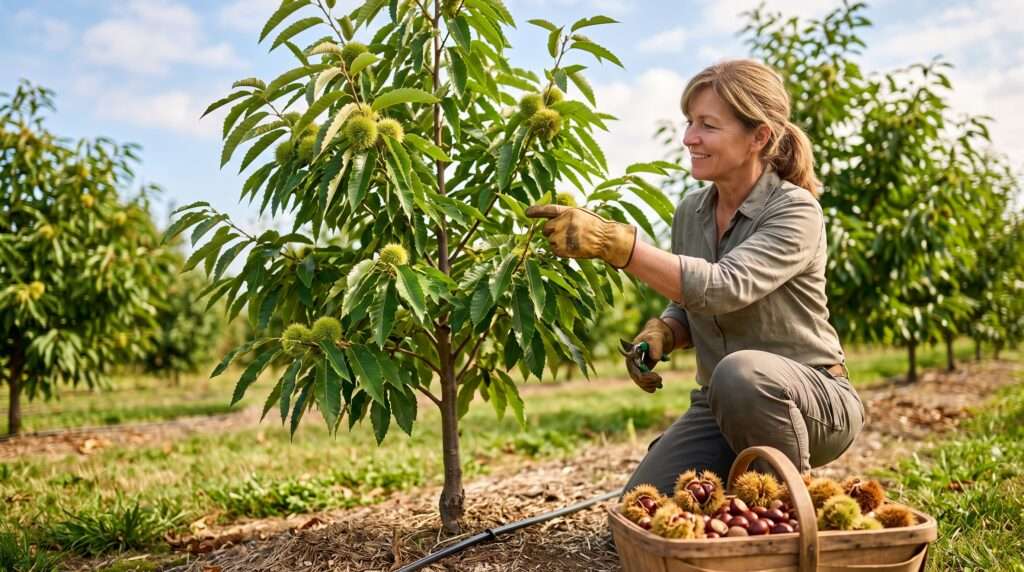
Imagine walking out into your backyard on a crisp autumn morning, gathering sweet, nutrient-dense nuts from a majestic forest giant you planted with your own hands. Growing thriving chestnut trees is not just about producing a bountiful harvest for roasting over an open fire; it’s an opportunity to participate in the restoration and continuation of a truly legendary tree species. 🌰
As an arborist and orchard specialist with years of hands-on experience in tree cultivation, I’ve guided countless growers through the deeply rewarding process of nurturing these magnificent plants. Whether you are a homesteader looking for a reliable food crop, a wildlife enthusiast wanting to attract deer and turkeys, or a gardener hoping to leave a generational legacy, this comprehensive guide will equip you with everything you need to know. We will cover site selection, essential care, and the all-important strategies for defeating chestnut blight.
🌰 The Chestnut Legacy & Species Selection
To successfully grow chestnut trees (Castanea genus), you first need to understand their history and choose the right variety for your specific goals and climate. Over a century ago, the American chestnut dominated the eastern United States, but a devastating fungal disease known as chestnut blight nearly wiped them out. Today, thanks to dedicated breeding programs, growers have access to incredibly resilient varieties.
Choosing the Right Tree for Your Landscape
Selecting the correct species is the foundational step in your tree-growing journey. Here is a breakdown of the most common options available to modern growers:
-
Chinese Chestnut (Castanea mollissima): This is the undisputed champion for home orchards and commercial nut producers. Chinese chestnuts are naturally highly resistant to chestnut blight. They tend to have a wider, more spreading canopy like an apple tree, making harvesting easier. 🌳
-
The Dunstan Chestnut (Hybrid): A popular and highly sought-after hybrid, the Dunstan chestnut crosses the blight resistance of the Chinese chestnut with the upright, timber-type growth habit of the American chestnut. They are incredibly vigorous, produce large, sweet nuts, and are hardy across a wide range of USDA zones.
-
American Chestnut (Castanea dentata): While pure American chestnuts are still highly susceptible to blight and generally not recommended for nut production, they are often planted by conservationists working on restoration projects. 🧬
-
European Chestnut (Castanea sativa): Also known as the sweet chestnut, these are popular in Europe but are susceptible to blight. They do well in areas where blight is not heavily present (like parts of the US West Coast).
Expert Tip: For reliable, disease-free nut production, your best E-E-A-T backed recommendation is to plant either pure Chinese chestnuts or proven blight-resistant hybrids like the Dunstan. Expect your trees to begin bearing nuts in just 3 to 5 years under optimal conditions! ⏱️
🌱 Site Selection & Planting Strategy
Even the healthiest sapling will fail if planted in the wrong environment. Chestnut trees are notoriously picky about their soil, and getting this right is non-negotiable.
Soil & Sunlight: The Non-Negotiables
If you want your chestnut trees to thrive, you must mimic their natural habitat: well-draining, slightly acidic upland soils.
-
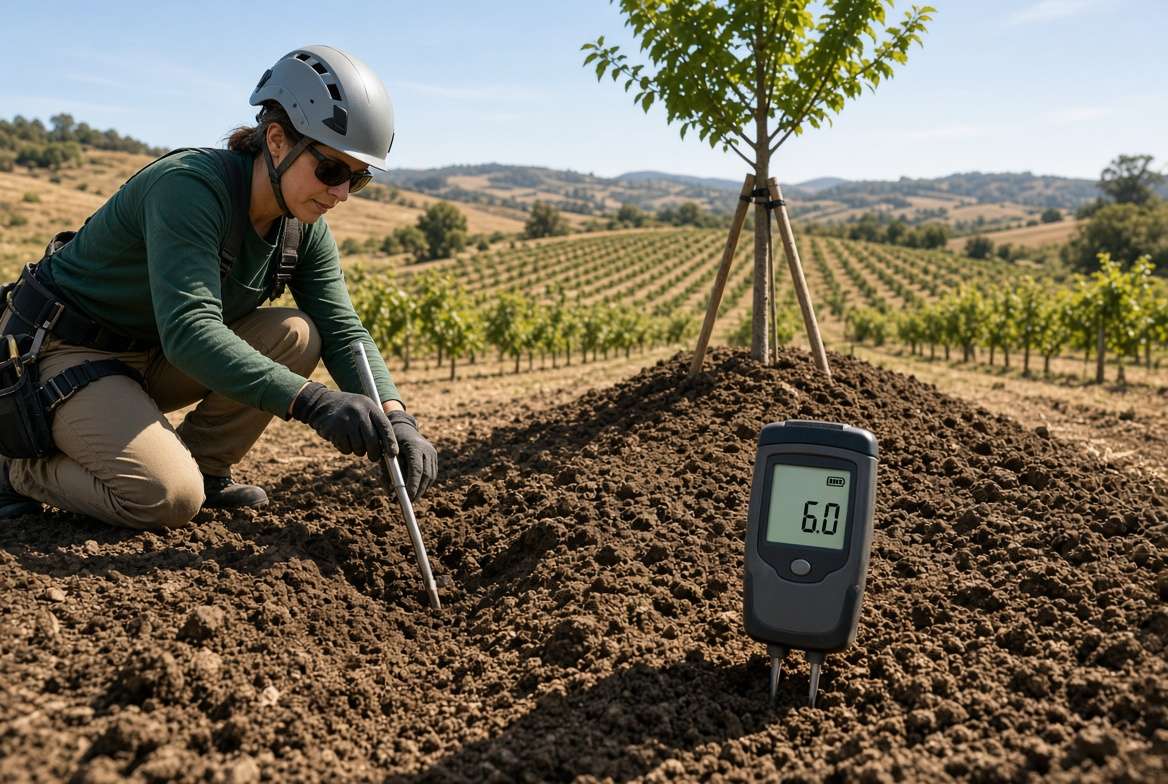
Soil pH: Chestnuts require acidic soil, with an ideal pH range between 5.5 and 6.5. Before planting, always conduct a soil test. If your soil is too alkaline, your trees will suffer from nutrient lockout and yellowing leaves (chlorosis).
-
Drainage is Critical: Chestnuts absolutely despise “wet feet.” Planting them in heavy clay or low-lying areas where water pools will almost certainly lead to Phytophthora root rot—a death sentence for the tree. If you have heavy soil, consider planting on mounds or slopes to ensure water drains rapidly away from the root zone. 💧
-
Sunlight: Full sun is required. Your trees need at least 6 to 8 hours of direct, unobstructed sunlight daily to fuel vigorous growth and heavy nut production. ☀️
The Golden Rule of Pollination
A single chestnut tree is a lonely, barren tree. Chestnut trees are generally self-unfruitful, meaning they require cross-pollination to produce nuts.
-
Plant at least two: You must plant a minimum of two trees of the same species (or compatible hybrids) to ensure pollination.
-
Spacing: Because they are wind-pollinated, the trees need to be close enough for the pollen to drift between them, but far enough apart to allow their massive canopies to expand. Plant your trees 30 to 40 feet apart. 🌳🌳
Proper Planting Technique
The way you put your tree in the ground dictates its survival rate during that vulnerable first year. Spring, just after the final frost, is generally the best time to plant bare-root seedlings.
-
Prepare the Hole: Dig a hole twice as wide as the root system, but no deeper. The root flare (where the trunk meets the roots) must remain at or slightly above the soil line. Planting too deep suffocates the tree. 🍂
-
Inspect the Roots: For bare-root trees, trim away any broken, mushy, or J-hooked roots with sterilized pruners.
-
Position and Backfill: Place the tree in the hole, ensuring the central leader is standing straight. Backfill with the native soil—do not add rich compost or potting soil to the hole, as this discourages the roots from expanding into the surrounding earth.
-
Tamp and Water: Gently tamp the soil down to remove air pockets, then water deeply to settle the earth around the roots.
-
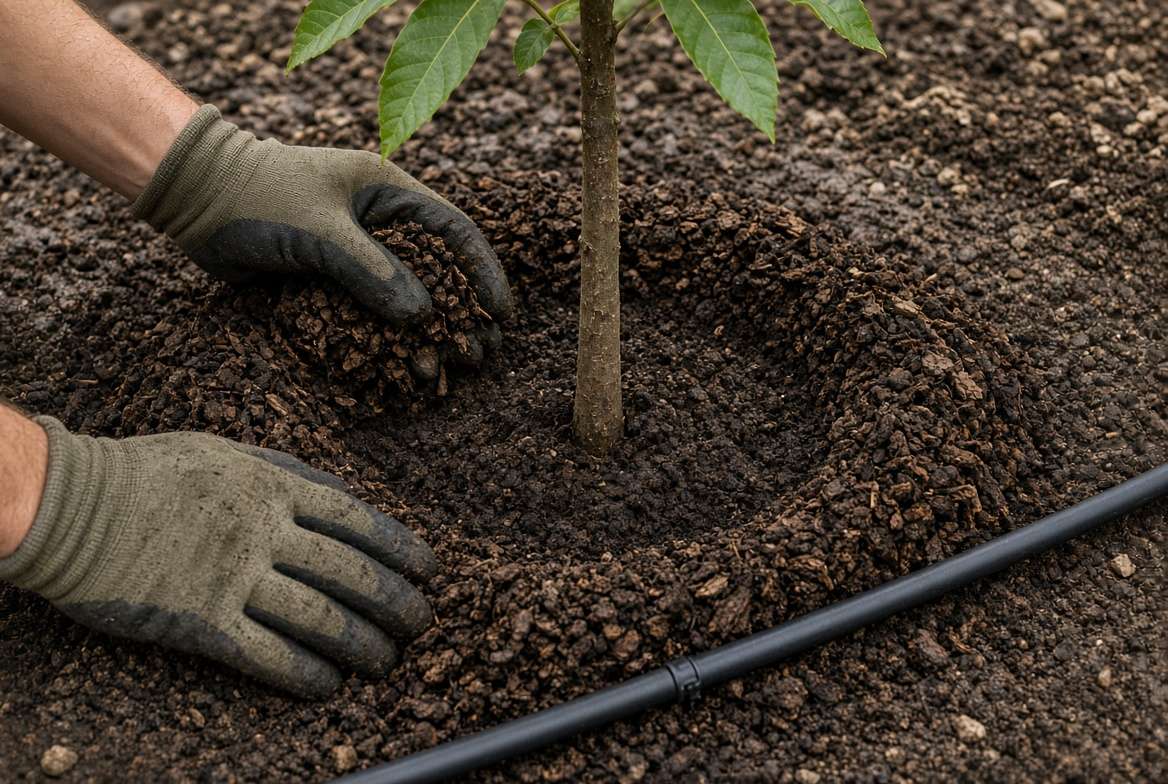
Mulch: Apply a 3-inch layer of organic mulch (like wood chips) around the base to retain moisture and suppress weeds, ensuring the mulch does not touch the trunk (which can cause rot).
💧 Essential Care & Expert Maintenance
Once your chestnut trees are safely in the ground, the focus shifts to establishing a robust root system and a strong canopy. While mature chestnut trees are remarkably drought-tolerant and resilient, the first three to five years of their life require attentive, expert care.
Watering Regimen: Nurturing the Taproot
Chestnut trees develop a deep, powerful taproot that anchors them and seeks out underground water reserves. However, until that taproot is fully established, the tree is highly vulnerable to moisture stress.
-
The First Two Years: Newly planted saplings need consistent moisture. Provide about 1 to 2 inches of water per week during the growing season, either through rainfall or supplemental irrigation. 💦
-
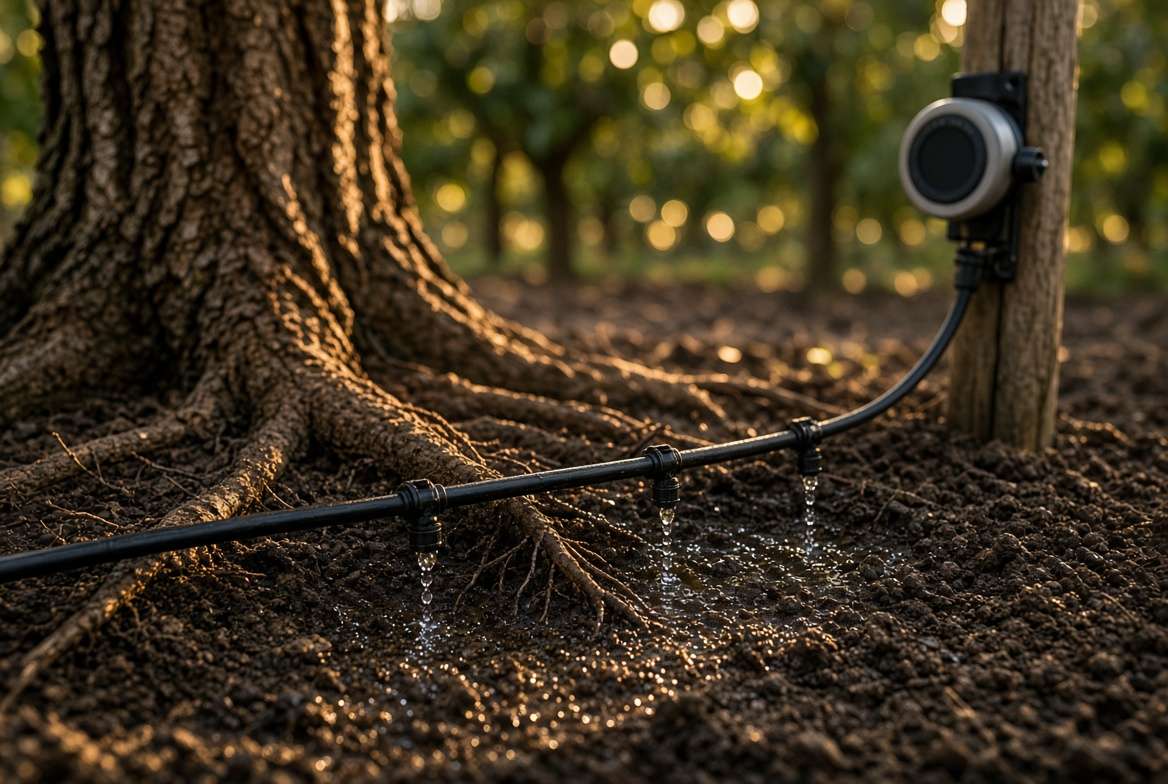
Deep Watering Method: Avoid frequent, shallow watering. Instead, water deeply and slowly at the base of the tree to encourage the roots to grow downward. Drip irrigation systems or tree watering bags are excellent tools for delivering moisture effectively without causing surface runoff.
-
The Overwatering Warning: Remember that chestnut trees will suffocate in waterlogged soil. Always allow the top two inches of soil to dry out completely before watering again.
Nutrient Management and Fertilization
A common mistake novice growers make is over-fertilizing young trees, which can burn delicate roots and stimulate weak, leggy growth that easily snaps in the wind.
-
Year One: Do not fertilize your chestnut trees in their first year of planting. Let the root system establish itself using the native soil nutrients.
-
Established Trees: Beginning in the second spring, right before new growth emerges, apply a balanced, slow-release granular fertilizer. A standard 10-10-10 (N-P-K) ratio is generally effective, but your exact application should always be guided by an annual soil test. 🧪
-
Organic Amendments: Top-dressing the drip line (the area directly under the outer circumference of the tree branches) with high-quality organic compost every spring improves soil microbiology and structure, naturally feeding the tree over time. 🌱
Pruning for Structural Architecture
Pruning is not just about aesthetics; it is about building a structural framework that can support the immense weight of future nut harvests and withstand severe weather.
-
The Central Leader: Chestnut trees should be trained to a “modified central leader” system. Identify the strongest, straightest vertical trunk (the leader) and prune away competing vertical branches that try to overtake it. ✂️
-
Timing is Everything: Always conduct heavy structural pruning during late winter or early spring while the tree is fully dormant. Pruning during the active growing season stresses the tree and creates open wounds that attract pests and pathogens.
-
Canopy Airflow: Remove any dead, diseased, crossing, or inward-growing branches. Good airflow through the canopy is a critical physical defense against fungal diseases. 🌬️
🛡️ Defeating Blight & Pest Management
The health of your orchard depends on your ability to identify and manage threats proactively. E-E-A-T principles dictate that we confront the reality of disease and pests with science-backed management strategies.
Understanding and Managing Chestnut Blight
Chestnut blight (Cryphonectria parasitica) is a fungal pathogen that enters through wounds in the bark. It forms sunken, reddish-orange cankers that eventually girdle the branch or trunk, cutting off the flow of water and nutrients, killing everything above the canker. 🔬
-
Cultivar Selection: As previously mentioned, the absolute best defense against blight is planting resistant genetics like Chinese chestnuts or the Dunstan hybrid.
-
Sanitation: If you notice small cankers on the branches of a resistant variety, immediately prune the infected branch at least 6 to 8 inches below the visible canker. Burn or bag the diseased wood—do not compost it, as the fungal spores can easily spread. 🔥
-
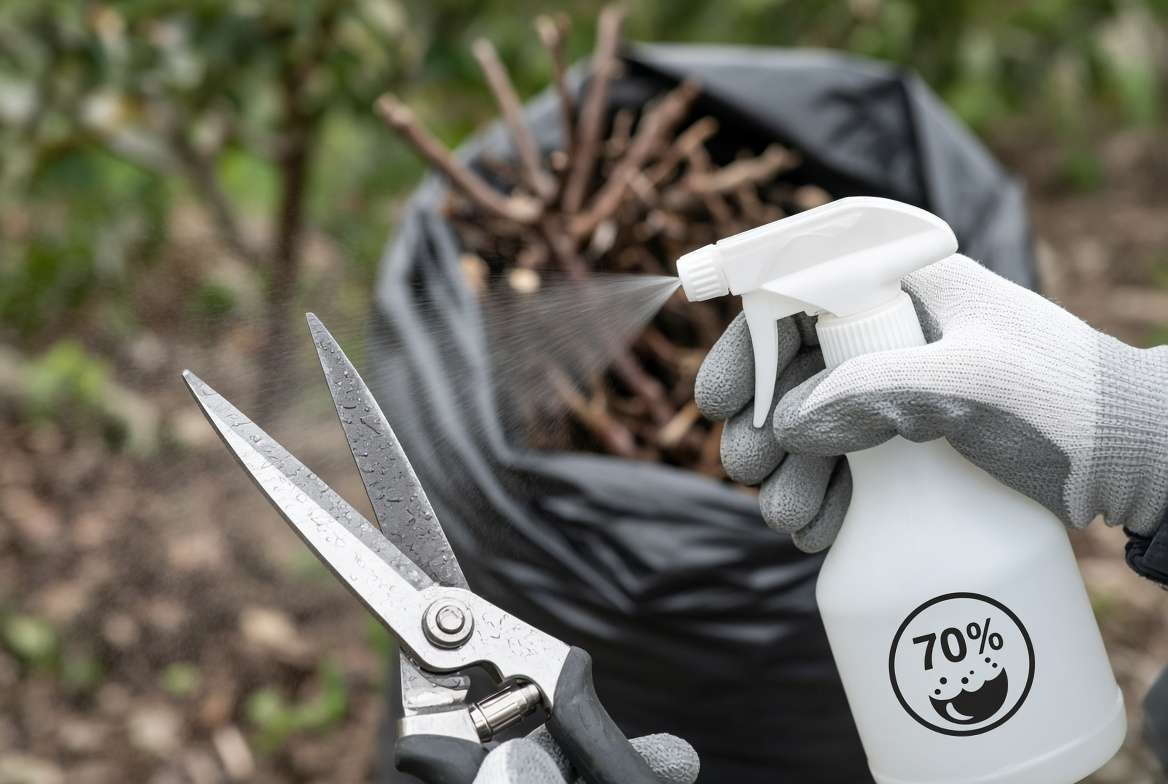
Sterilize Your Tools: Always wipe your pruning shears with a 70% isopropyl alcohol solution between cuts and between trees to prevent accidentally spreading blight or other bacterial pathogens.
Outsmarting Common Chestnut Pests
While chestnut trees are relatively low-maintenance, a few specific insects target them and their valuable nuts.
-
Chestnut Weevils: These are the most notorious pests for nut growers. The adult weevils lay eggs inside the developing nut. When the nuts drop, the larvae hatch and eat their way out, ruining the harvest. 🐛
-
Management: Excellent orchard sanitation is key. Pick up all fallen nuts and burrs daily during the harvest season. For organic control, gathered nuts can be submerged in a hot water bath (exactly 120°F / 49°C for 20 minutes) to kill any hidden eggs or larvae without cooking the nut.
-
-
Chestnut Gall Wasp: This tiny insect lays eggs in the leaf buds, causing abnormal growths (galls) that stunt tree growth and severely reduce nut yields.
-
Management: Prune out and destroy old galls before the adult wasps emerge in early summer. Purchasing certified pest-free stock from reputable nurseries is the best preventative measure.
-
🧺 Harvesting & Expert FAQs
After years of careful stewardship, the ultimate reward is the harvest. Chestnut trees provide an incredibly generous yield when properly managed.
The Nut Harvest: Gathering and Curing
Chestnuts grow inside intensely sharp, spiky protective casings called burrs. Do not attempt to pull closed burrs directly from the tree—they are not ripe yet!
-
The Drop: In early to mid-autumn, the burrs will naturally crack open and drop the mature brown nuts to the ground. 🍂
-
Daily Collection: Gather fallen nuts daily. If left on the ground, they will quickly be consumed by deer, squirrels, or turkeys, or they will begin to rot in wet autumn grass.
-
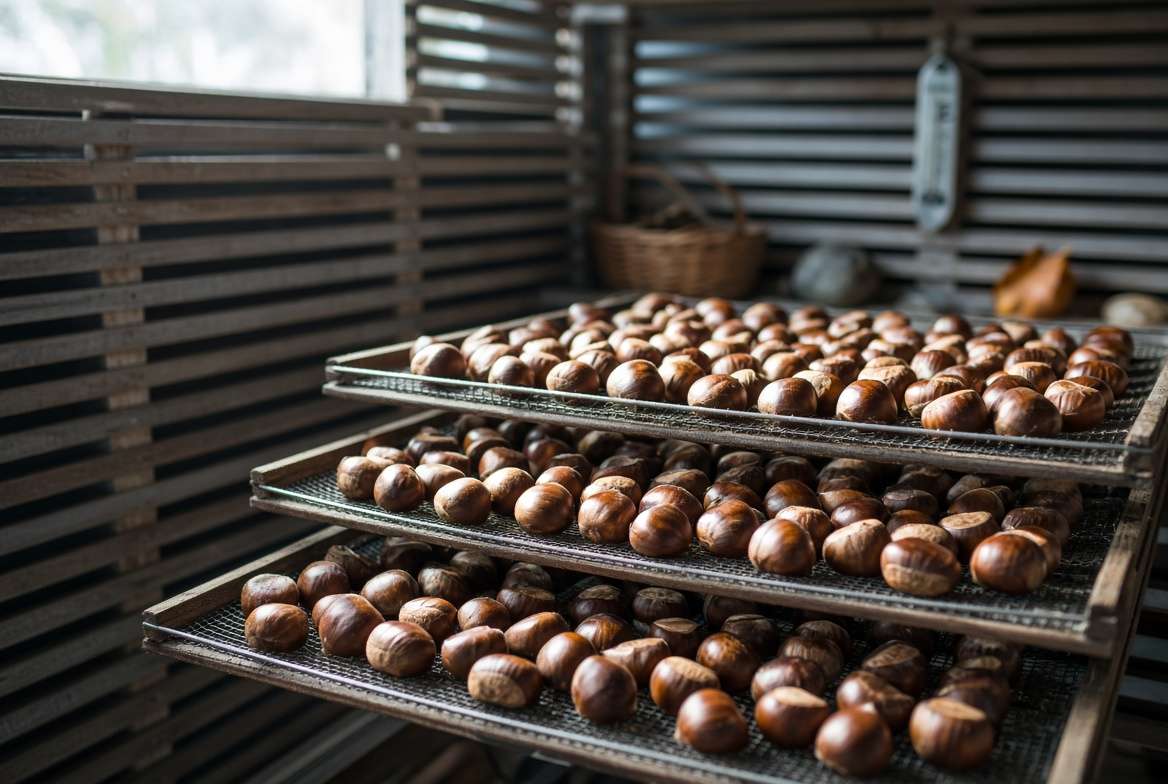
Curing for Sweetness: Freshly dropped chestnuts can be a bit starchy and bland. To maximize their rich, sweet flavor, cure them by keeping them at room temperature in a well-ventilated area for a few days. The starches will convert to sugars, making them perfect for roasting. 🌰
Top 5 Grower FAQs
To ensure you have all the authoritative information you need, here are the most common questions I receive from first-time growers:
-
How long does it take for chestnut trees to bear fruit? Grafted or hybrid trees (like the Dunstan) often begin bearing small crops in just 3 to 5 years. Trees grown from seed may take 7 to 10 years to produce.
-
Can I grow a chestnut tree in a pot? Only temporarily. Due to their massive taproots and large mature size, they are not suitable for long-term container growing and must be transplanted into the ground. 🪴
-
Are chestnut burrs dangerous? Yes, the spines are incredibly sharp and resemble porcupine quills. Always wear heavy-duty leather gloves when handling burrs or harvesting fallen nuts. 🧤
-
How cold-hardy are they? Most Chinese and hybrid chestnut varieties are very hardy and thrive in USDA Hardiness Zones 5 through 9, capable of withstanding winter temperatures well below freezing. ❄️
-
How should I store my harvested nuts? Once cured, store fresh chestnuts in the refrigerator in a breathable crisper drawer. Unlike walnuts or pecans, chestnuts are high in water content and carbohydrates, not oil, so they are highly perishable and must be kept cold to prevent mold.
By respecting the soil, prioritizing correct pruning, and selecting blight-resistant varieties, you are setting the stage for decades of robust health and abundant harvests.
What specific challenges have you faced with your soil quality in the past that might impact your planting location?











