
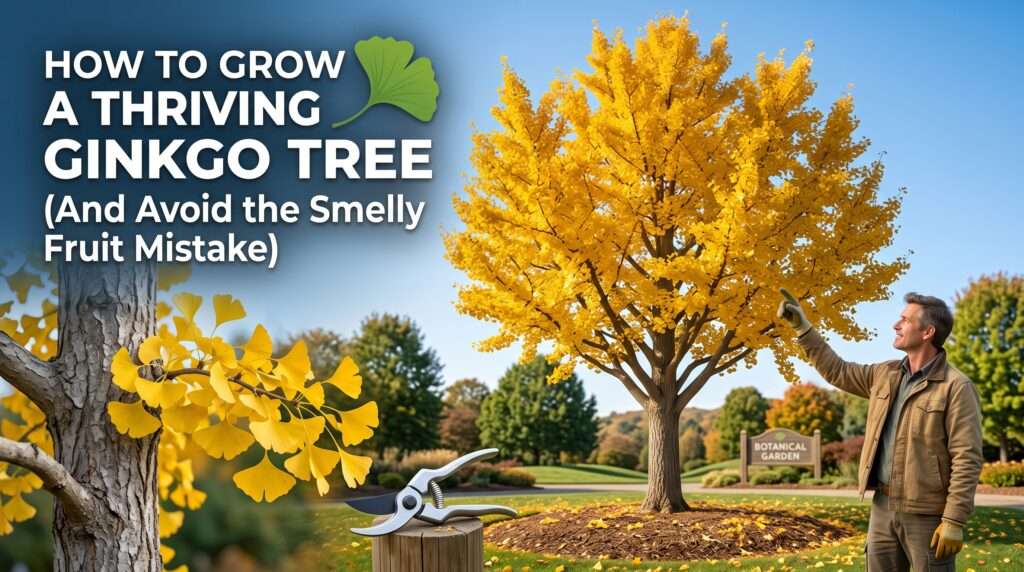
Imagine planting a tree in your yard that has outlived the dinosaurs, survived ice ages, and even withstood the atomic bombing of Hiroshima. That is the unmatched, awe-inspiring resilience of the ginkgo tree (Ginkgo biloba). As a plant care specialist and landscape enthusiast, I can tell you that adding this “living fossil” to your garden is one of the most rewarding botanical decisions you can make. It offers unique fan-shaped leaves, spectacular golden autumn foliage, and incredible hardiness.
However, there is a massive catch. If you don’t know exactly what you are doing at the nursery, you might be setting your yard up for a literal stinker of a disaster.
In this comprehensive, expert-led guide, we are going to walk through everything you need to know to cultivate a thriving, healthy Ginkgo biloba. From selecting the right cultivar to mastering soil prep, structural pruning, and long-term care, this guide is designed to help you successfully grow a masterpiece that will shade your home for generations.
Introduction & The Golden Rule of Ginkgos 🌟
To truly understand how to care for a Ginkgo biloba, you must first understand its biology. The ginkgo is a biological anomaly. It is a gymnosperm (related to conifers like pines) but behaves like a deciduous broadleaf tree. It is also the sole surviving species of an ancient order of trees (Ginkgoales) that covered the earth over 200 million years ago.
But the most critical biological trait you need to understand as a home gardener is that ginkgos are dioecious. This means there are distinct male and female trees. And this brings us to the most important rule of ginkgo tree care.
The “Smelly Fruit” Mistake (And How to Avoid It) 🤢
If you buy a ginkgo grown from seed, you have a 50/50 chance of planting a female tree. For the first 15 to 20 years of its life, a female tree will look identical to a male tree. But once it reaches sexual maturity, the nightmare begins.
Female ginkgo trees produce fleshy, plum-like seeds. When these seeds drop in the late fall and are crushed underfoot, their fleshy outer coating begins to decay, releasing a compound called butyric acid. This is the exact same chemical compound found in rancid butter and human vomit. The smell is incredibly pungent, overwhelming, and notoriously difficult to wash off your shoes or out of your carpets.
The Golden Rule: Never buy a seed-grown ginkgo tree.
To avoid the smelly fruit mistake, you must exclusively purchase cloned, grafted male cultivars. Because they are propagated via cuttings and grafted onto rootstocks, their gender is guaranteed.
Top Male Ginkgo Cultivars for Your Landscape 🥇
When shopping at your local nursery or online, look specifically for these verified male varieties to ensure a clean, odor-free autumn:
-
‘Autumn Gold’: A phenomenal, broadly spreading shade tree with a symmetrical canopy and highly reliable, intense yellow fall color.
-
‘Princeton Sentry’: An excellent columnar (upright and narrow) variety perfect for tighter spaces, street planting, or framing a driveway.
-
‘Magyar’: Another fantastic upright variety that grows slightly faster than ‘Princeton Sentry’ and features deeply lobed leaves.
-
‘Lakeview’: A compact, conical shape that works beautifully in medium-sized residential yards.
Optimal Planting & Environmental Needs ☀️
Once you have secured a male cultivar, setting your tree up for centuries of success comes down to proper site selection and planting technique. While ginkgos are famous for their adaptability, giving them the ideal environment during their first few years will drastically speed up their establishment.
Sunlight & Soil: The Foundation of a Thriving Ginkgo 🌱
For the best growth rate and the most vibrant autumn color, your ginkgo tree requires full sun. This means it needs a minimum of six to eight hours of direct, unfiltered sunlight every day. While they can tolerate partial shade, too much shade will result in a leggy, sparse canopy and muted fall colors.
When it comes to soil, the ginkgo is a champion of adaptability.
-
Soil Type: They perform exceptionally well in sandy, loamy, and even heavy clay soils.
-
pH Levels: They are highly tolerant of both acidic and alkaline soils, meaning you rarely need to amend your yard’s natural pH.
-
Drainage: This is the one non-negotiable factor. Ginkgos absolutely hate “wet feet.” The planting site must have excellent drainage. If you have dense, water-logged clay, consider planting on a slight berm or mound to keep the root flare dry.
Unmatched Urban Resilience 🏙️
There is a reason Ginkgo biloba is one of the most popular street trees in major metropolises like New York City, Tokyo, and London. They possess an almost magical resistance to the harsh realities of urban environments.
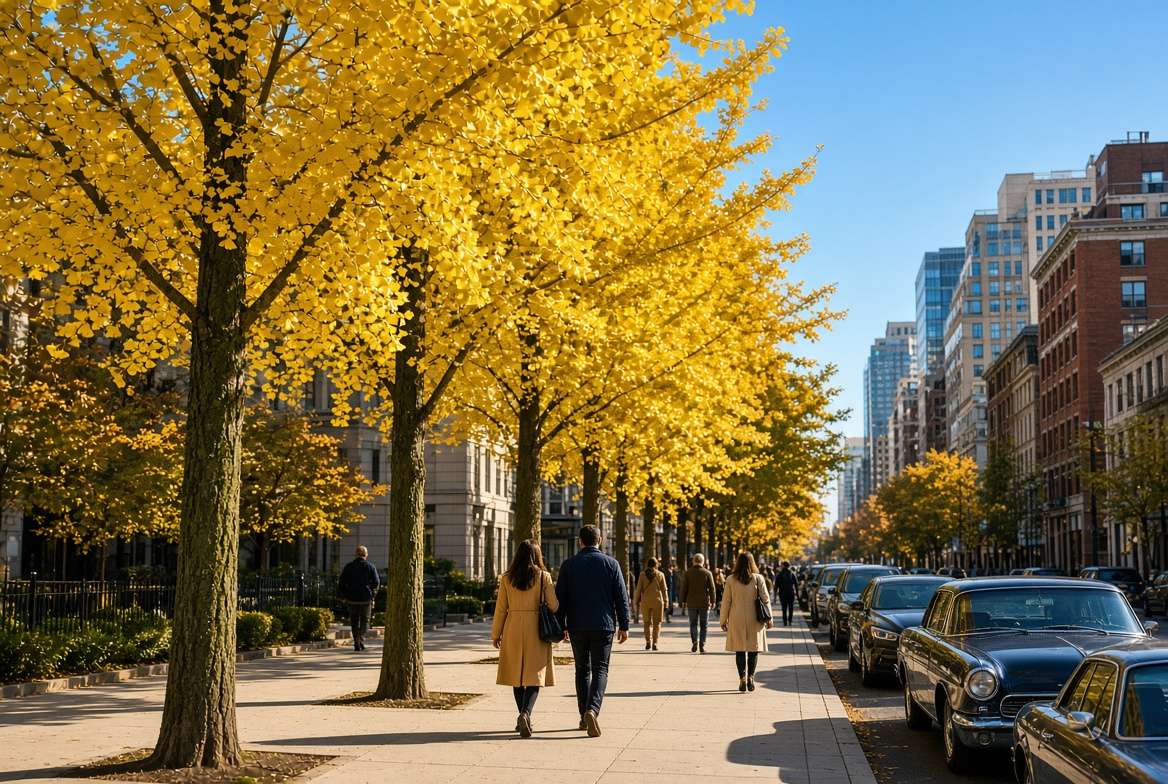
If you live in a city, a suburb with heavy traffic, or an area that experiences harsh winters, the ginkgo is your best friend. They easily tolerate:
-
Air Pollution & Smog: Their thick, waxy leaves resist damage from exhaust fumes.
-
Soil Compaction: Their robust root systems can push through dense, heavily trodden earth.
-
De-icing Salts: They are highly resistant to road salt spray and saline soil runoff, making them perfect for curbside planting.
Step-by-Step Planting Technique 🪴
The day you plant your ginkgo tree dictates its health for the next century. Poor planting techniques, such as burying the tree too deeply, are the leading cause of premature tree decline in residential landscapes. Follow this expert protocol for planting:
-
Prepare the Root Ball: If your tree is in a plastic nursery pot, gently slide it out. Inspect the roots. If they are circling tightly around the soil, make vertical slices down the sides with a sterilized pruner or sharp knife to encourage outward growth.
-
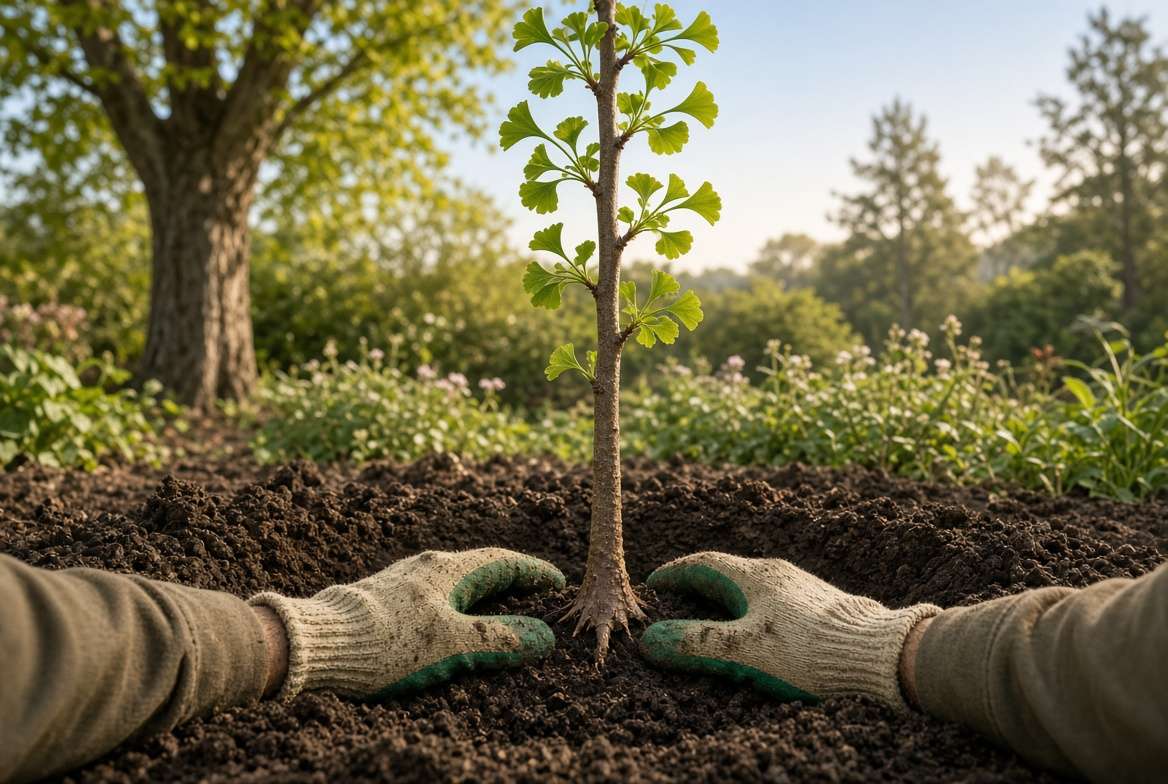
Dig the Perfect Hole: Dig a hole that is two to three times wider than the root ball, but no deeper. Digging a deep hole causes the soil to settle over time, sinking the tree and suffocating the roots.
-
Find the Root Flare: The root flare is the widened base of the trunk where it transitions into the root system. This flare must remain visible above the soil line. Burying the root flare traps moisture against the bark, inviting fungal diseases and crown rot.
-
Backfill and Water: Place the tree in the center of the hole. Backfill halfway with the native soil (do not add heavy amendments or peat moss, as this discourages the roots from spreading into the surrounding yard). Water deeply to remove air pockets, then finish backfilling.
-
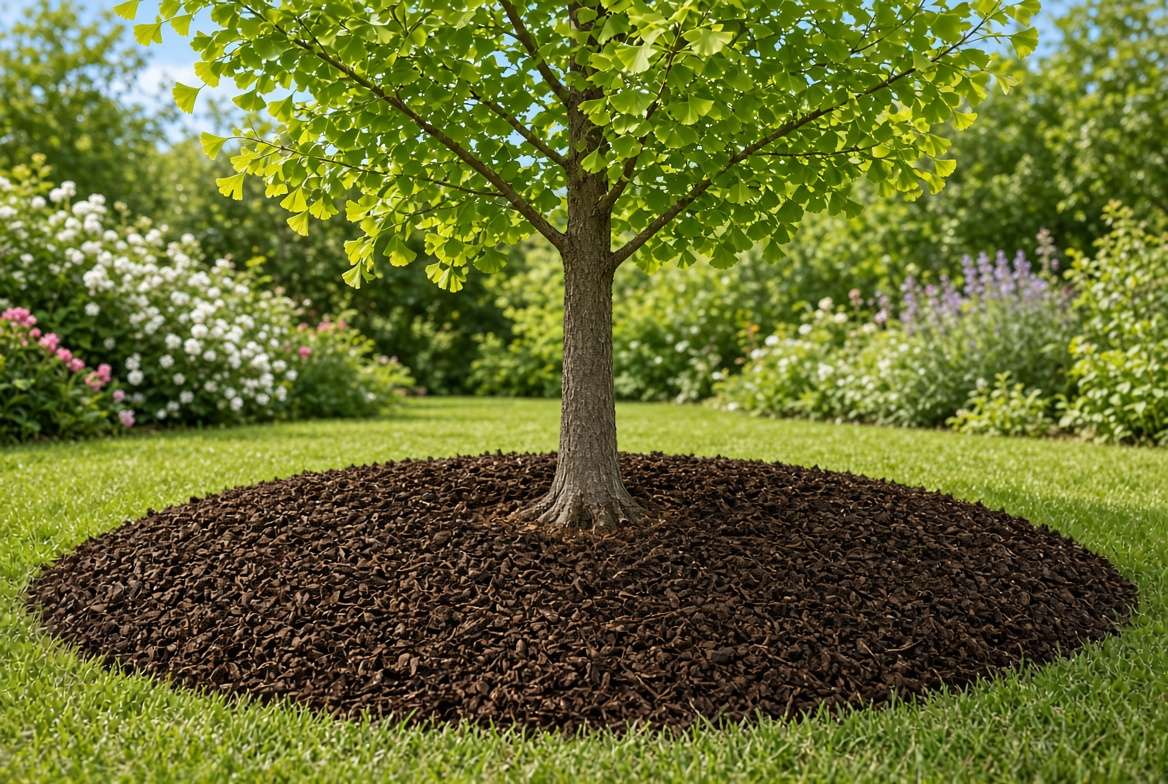
Apply Mulch Wisely: Apply a 2- to 3-inch layer of organic mulch (like shredded hardwood or bark) around the base of the tree to retain moisture and regulate soil temperature. Crucial Tip: Keep the mulch pull back at least 3 inches away from the trunk. Never create a “mulch volcano,” which can rot the bark.
Essential Care, Pruning & Feeding 💧
Once your male ginkgo is safely in the ground, the transition from a fragile transplant to a robust, self-sufficient landscape tree begins. While they are famously low-maintenance, the first few years require your undivided attention.
Watering Strategy for Establishment and Beyond 🚿
Years 1 to 3 (Establishment Phase): During the initial establishment phase, your ginkgo’s root system is desperately trying to expand into the surrounding soil. During the first growing season, provide a deep, slow watering once or twice a week. You want the soil to be moist, but not soggy. Use a soaker hose or a slow drip from a garden hose placed at the base of the tree for about 30 minutes.
Mature Trees (Drought Tolerance): Once established, the Ginkgo biloba transforms into a highly drought-tolerant specimen. Its deep root system allows it to withstand long periods of dry weather. You will typically only need to provide supplemental watering during extreme, prolonged heatwaves or severe summer droughts.
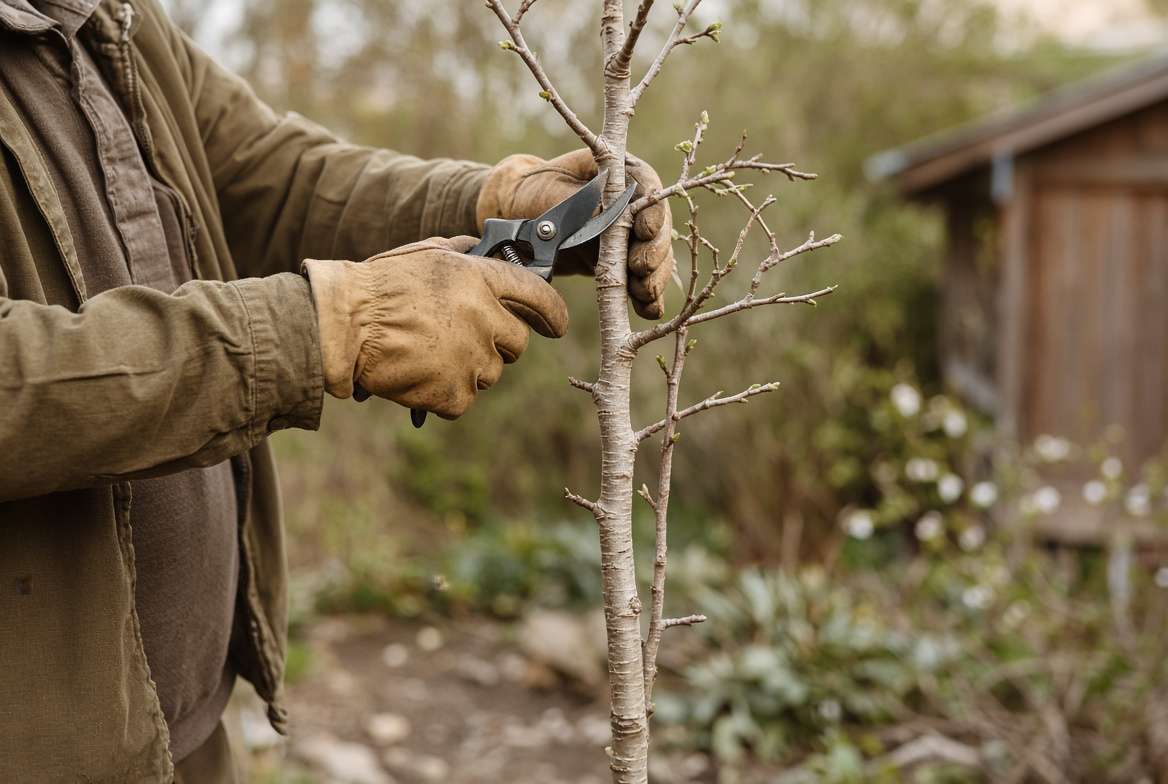
Structural Pruning for Long-Term Integrity ✂️
Ginkgo trees have a tendency to grow at awkward angles or produce competing branches when they are young. Proper pruning ensures a structurally sound, visually pleasing canopy that will resist wind and ice damage later in life.
-
Timing: Always prune during the dormant season (late winter to early spring) before the buds break. Pruning while dormant minimizes stress and prevents sap bleeding.
-
Establish a Central Leader: Your primary goal in the first 5 to 10 years is to establish a single, dominant trunk (the central leader). If you see two branches competing for the top spot (co-dominant stems), prune the weaker one away.
-
Remove Crossing Branches: Trim any branches that rub against each other, as the friction creates open wounds in the bark that invite disease.
-
Canopy Raising: As the tree matures, you can gradually remove the lowest branches to raise the canopy, allowing clearance for pedestrians, mowers, or vehicles.
Nutrient Management and Fertilization 🍂
In most residential landscapes, a ginkgo tree will get all the nutrients it needs from the native soil and the breakdown of your annual mulch layer. However, if your tree is growing in severely degraded urban soil, a light feeding can give it a boost.
-
Juvenile Trees: Apply a balanced, slow-release granular tree fertilizer (like a 10-10-10) in early spring, just before new growth emerges. Sprinkle it evenly across the root zone, extending out to the drip line (the edge of the canopy).
-
Mature Trees: Once a ginkgo is well-established, chemical fertilizers are rarely necessary. Over-fertilizing can actually stimulate excessive, weak foliage growth at the expense of root development.
Troubleshooting & Expert FAQs 🛡️
Even with the hardiest trees, gardeners naturally have questions and concerns. Let’s address the most common queries and troubleshooting scenarios associated with ginkgo tree care.
Pests & Diseases (The Ginkgo’s Superpower) 🦸♂️
If you are tired of battling aphids, Japanese beetles, powdery mildew, or caterpillars, the ginkgo is about to become your favorite plant.
The ginkgo tree is virtually immune to modern pests and diseases. Because it evolved hundreds of millions of years ago, the pests that originally preyed upon it have long since gone extinct. Furthermore, the tree’s leaves contain unique chemical compounds (like ginkgolides) that naturally repel insects and resist fungal and viral infections. You will rarely, if ever, need to spray a ginkgo tree with pesticides or fungicides.
FAQ: Why is my tree growing so slowly? 🐢
Many first-time growers panic when their newly planted ginkgo seems to freeze in time, growing barely an inch in its first two years. Do not worry—this is completely normal.
Ginkgo trees follow the classic perennial and tree growth mantra: “Sleep, Creep, Leap.”
-
Year 1 (Sleep): The tree focuses 100% of its energy on repairing root shock and establishing itself in the soil. Above-ground growth is negligible.
-
Year 2-3 (Creep): You will see minor branch extension and slightly larger foliage, but growth remains slow.
-
Year 4+ (Leap): Once the root system is fully anchored, the tree will “leap,” averaging 1 to 2 feet of upward growth per year depending on the cultivar and environmental conditions. Patience is key!
FAQ: Are there ginkgos for small spaces or containers? 🏡
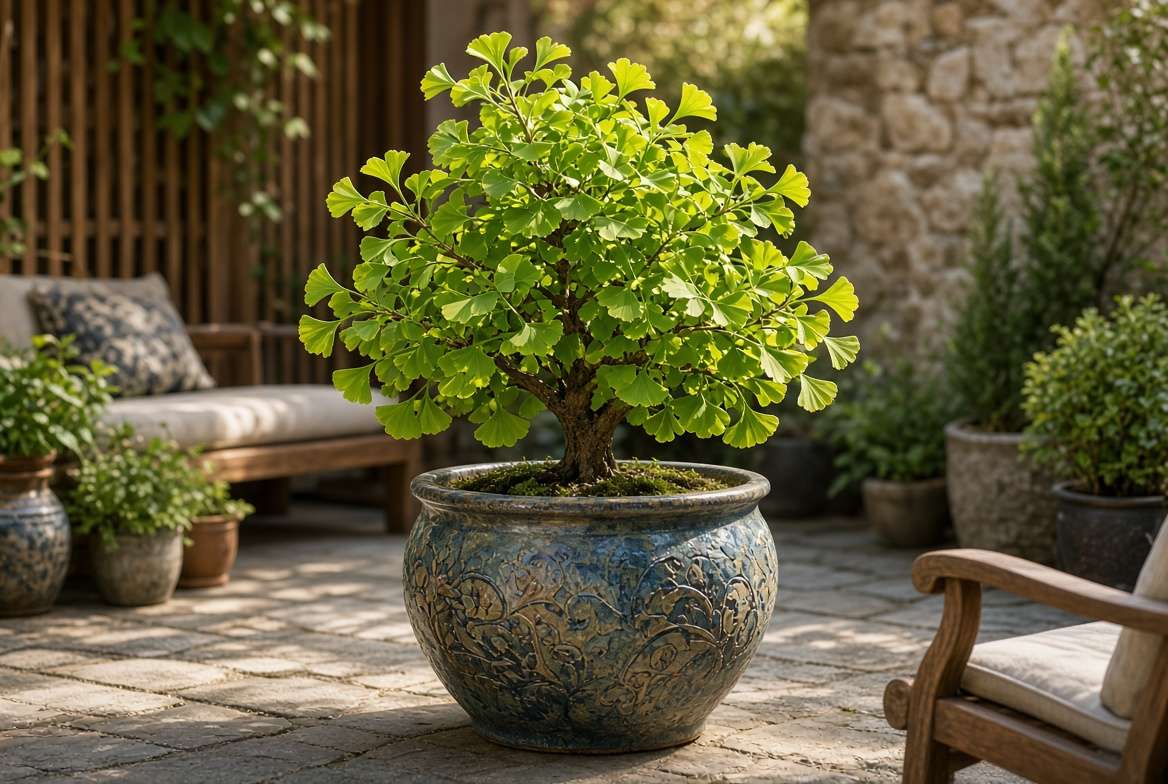
Absolutely! If you lack the acreage for a 50-foot ‘Autumn Gold’, breeders have developed stunning dwarf varieties that bring the iconic fan-shaped leaves to patios, small courtyards, and even large containers.
-
‘Mariken’: A highly sought-after dwarf male cultivar. It grows as a dense, low-spreading shrub that rarely exceeds 3 feet in height and width. It is perfect for rock gardens or Japanese-inspired landscape designs.
-
‘Jade Butterflies’: A slow-growing, semi-dwarf variety that matures at about 12 to 15 feet tall. Its leaves grow in clusters that beautifully resemble fluttering green butterfly wings.
FAQ: What causes the famous synchronized leaf drop? 🍂
One of the most magical phenomena of the Ginkgo biloba is its autumn leaf drop. Unlike maples or oaks, which shed their leaves gradually over several weeks, a ginkgo will often drop its entire canopy of stunning yellow leaves in a matter of hours—often immediately following the first hard frost.
This happens because the stems of the leaves (petioles) form a uniform protective layer of cells (the abscission zone) all at exactly the same time in response to sudden temperature drops. The result is a breathtaking, golden carpet surrounding the base of the trunk.
Adding a ginkgo tree to your property is more than just a landscaping choice; it is an investment in a living piece of natural history. By ensuring you select a male cultivar, planting the root flare at the proper depth, and practicing patient, structural care in its youth, you will be rewarded with a spectacular, pest-free shade tree that will outlast us all.











