
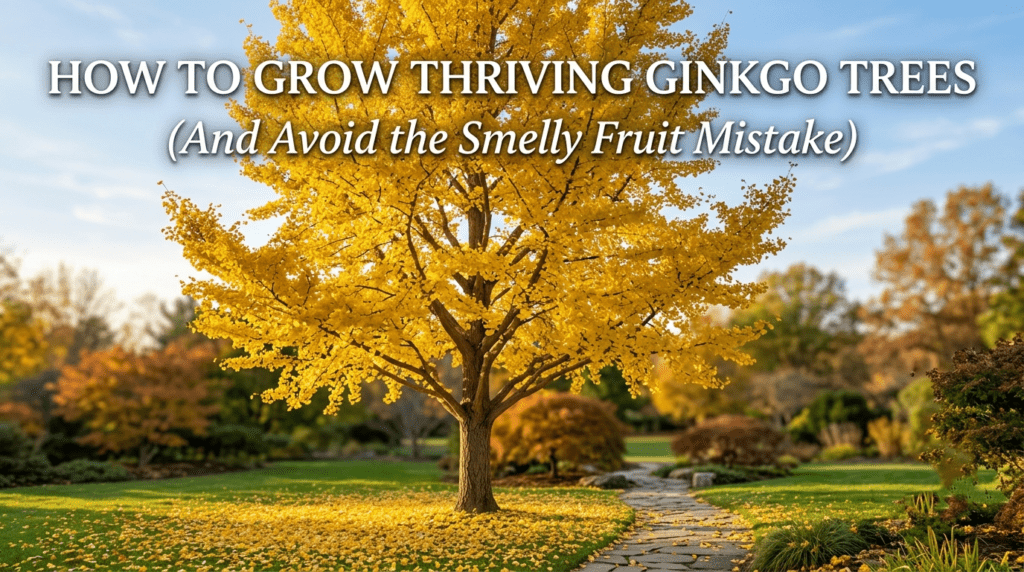
Imagine stepping into your front yard and standing beneath a canopy that looks exactly as it did when the dinosaurs roamed the earth over 200 million years ago. Ginkgo biloba, often called the maidenhair tree, is a true living fossil. But beyond its fascinating history, growing thriving ginkgo trees is one of the most rewarding investments you can make in your landscape. They offer unparalleled urban resilience, dramatic fan-shaped leaves, and an autumn color display so vibrant it almost glows.
However, there is an elephant in the room: the notorious “vomit smell” associated with fallen ginkgo fruit. Every year, unsuspecting homeowners watch in horror as their beautiful tree drops messy, fleshy seeds that ruin sidewalks, stick to shoes, and make the entire neighborhood smell like rancid cheese.
As someone who has spent years analyzing landscape trees and guiding planting decisions, I can assure you that this nightmare is 100% avoidable. By the end of this comprehensive guide, you will know exactly how to select the right tree, plant it for a lifetime of success, prioritize the underlying soil health, and enjoy those breathtaking golden autumns—completely stink-free.
1. The Smelly Fruit Mistake: Male vs. Female Ginkgo Trees 🚫🤢
The single most critical decision you will make when adding a ginkgo to your property happens before you even pick up a shovel. You must understand the difference between male and female trees. Ginkgos are dioecious, meaning individual trees are distinctly male or female.
Why Do Female Ginkgo Trees Smell So Bad? 🧀
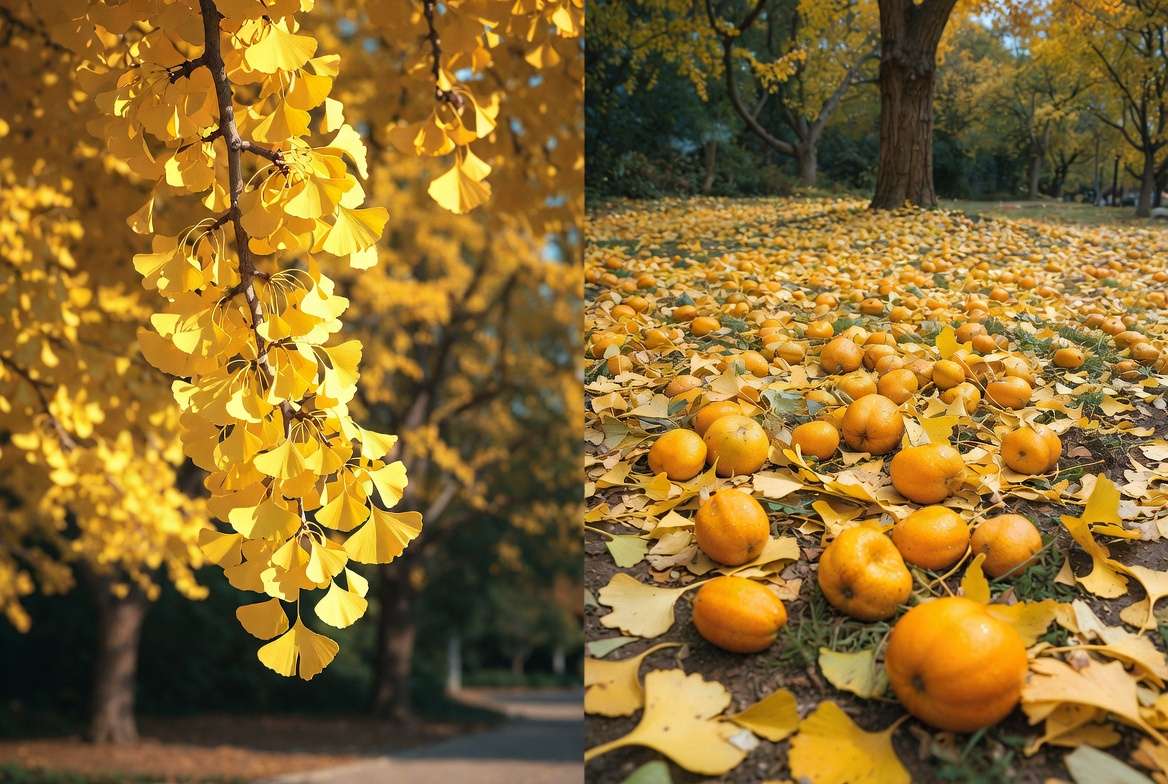
Only the female ginkgo produces the cherry-sized, plum-like seeds. While the inner nut is actually considered an edible delicacy in some cultures once properly roasted, the outer fleshy seed coat is a landscaping disaster. As the fruit falls and begins to decay in late autumn, it releases high levels of butyric acid. This is the exact same chemical compound found in rancid butter and human vomit.
When these seeds drop onto driveways, patios, and sidewalks, they create a slippery, foul-smelling mess that is incredibly difficult to clean up.
How to Guarantee You Buy a Male Tree ♂️
To avoid the smelly fruit mistake, you must plant a male tree. However, you cannot simply look at a young ginkgo sapling and determine its sex. In fact, a seed-grown ginkgo might not reveal its gender until it reaches sexual maturity—which can take 15 to 20 years!
Expert Warning: Never purchase a generically labeled, seed-grown ginkgo tree from a bargain nursery.
Instead, you must exclusively buy grafted or cloned named cultivars. These trees are propagated from cuttings of known male trees, guaranteeing that they will never produce a single piece of fruit.
Top Recommended Male Cultivars (The Safe Bets) 🏆
To ensure a clean, beautiful landscape, look for these specific male cultivars at your local nursery:
-
Autumn Gold: A phenomenal, symmetrical grower with a broad canopy. True to its name, it delivers highly reliable, brilliant yellow fall foliage.
-
Princeton Sentry: If you have limited space, this is your go-to. It features a narrow, columnar, upright shape that makes it perfect for tight property lines and street planting.
-
Magyar: A slightly faster-growing variety (relative to other ginkgos) with a uniform, upright branching structure that is excellent for urban environments.
2. What Makes Ginkgo Trees a Landscape MVP? 🌟
Once you have secured a male cultivar, you are well on your way to hosting one of the absolute best trees available in modern horticulture. The maidenhair tree doesn’t just survive; it thrives in conditions that would kill lesser species.
Unrivaled Urban Resilience 🏙️
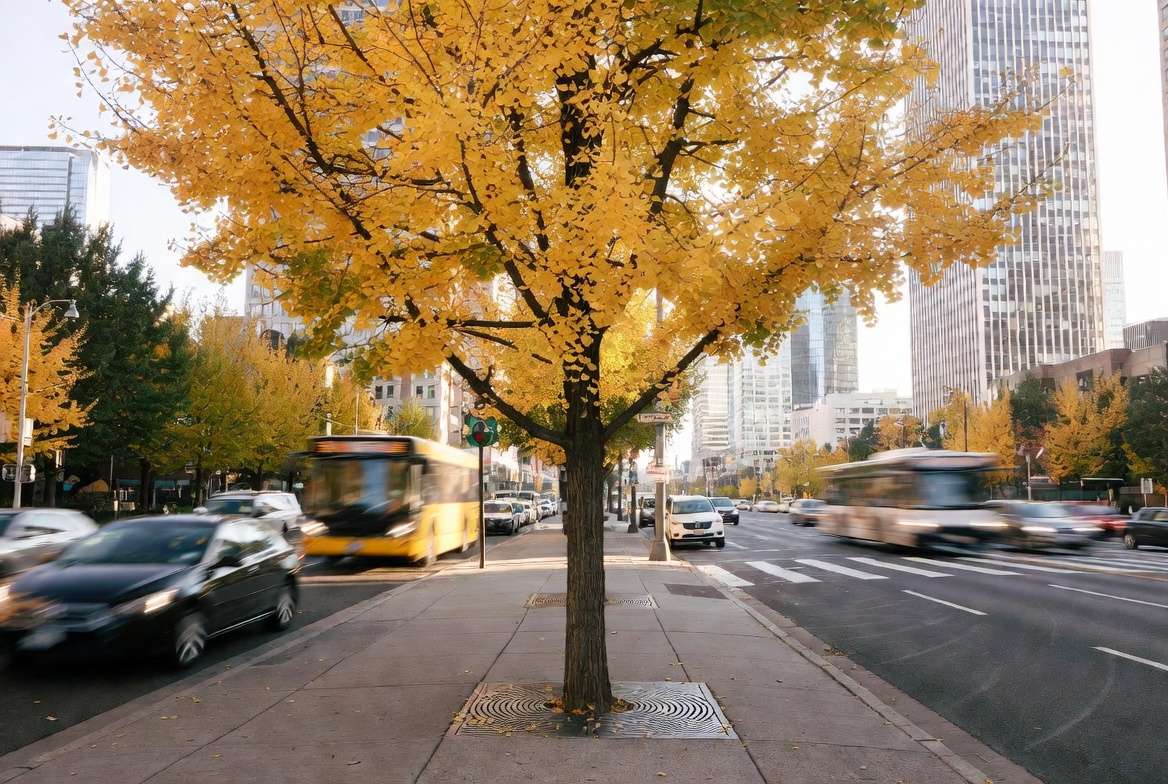
There is a reason ginkgo trees line the concrete-heavy streets of New York City and Tokyo. They possess an almost magical tolerance to the harshest environmental stressors. They shrug off severe air pollution, thrive in compacted and poor-quality urban soils, and can withstand heavy road salt accumulation during the winter. Their root systems are incredibly adaptable, capable of surviving in confined spaces where other shade trees would quickly decline.
Practically Pest and Disease-Free 🛡️
Because the ginkgo is an ancient botanical isolate with no close living relatives, modern pests and fungal diseases simply do not know how to attack it. You will rarely, if ever, need to spray a ginkgo for aphids, caterpillars, or rust. Their ancient genetics give them natural chemical defenses, making them a remarkably low-maintenance addition to your property.
The Synchronized Fall Drop 🍂
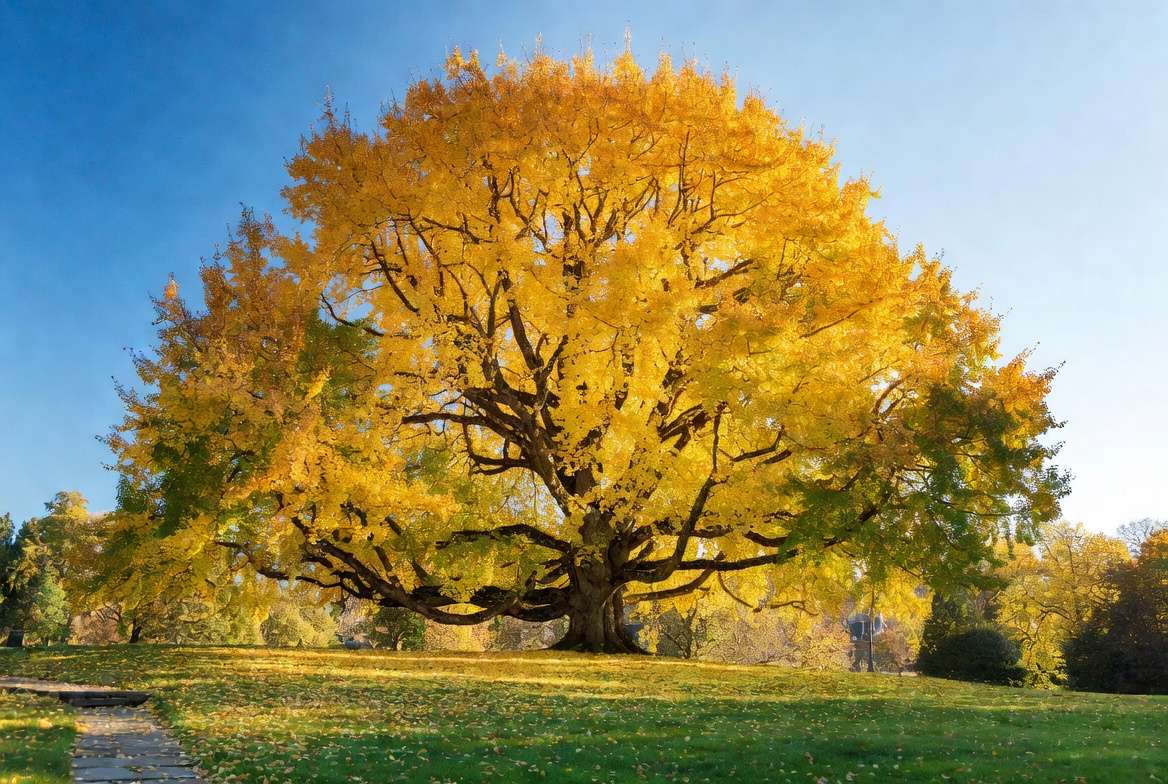
While most deciduous trees lose their leaves gradually over several weeks, the ginkgo is famous for a phenomenon known as the “Ginkgo Rain.” After a hard frost in late autumn, a ginkgo will often drop nearly all of its stunning, butter-yellow leaves in a single 24-hour period. It creates a breathtaking, perfectly circular carpet of gold around the base of the trunk. This brilliant golden display is so visually striking that it easily becomes the focal point of autumn garden tours, inspiring countless Pinterest pins and captivating YouTube thumbnails for those who love documenting their landscape’s seasonal shifts.
3. Planting Your Ginkgo Tree: Step-by-Step for Long-Term Success 🌱
A tree that can live for over 1,000 years deserves a proper start in life. Proper planting techniques will determine how quickly your tree establishes itself and how vigorously it grows.
Choosing the Perfect Location ☀️
Ginkgos are adaptable, but for the most vigorous growth and the most dazzling fall foliage, they require full sun (at least 6 to 8 hours of direct, unfiltered sunlight per day). When selecting your site, you must also account for the tree’s mature size. Depending on the cultivar, a mature ginkgo can easily reach 40 to 50 feet tall with a spread of 30 feet or more. Keep them an appropriate distance from power lines, rooflines, and underground utilities.
Soil Preparation and Drainage 🪨
Establishing excellent soil health from day one is the foundation of a thriving landscape. While ginkgos can tolerate clay, loam, or sandy soils—and are highly forgiving of both acidic and alkaline pH levels—they absolutely despise “wet feet.”
Ensure your planting site has adequate drainage. If you are dealing with heavily compacted, waterlogged clay, consider planting the tree on a slight mound or berm to keep the upper root system out of standing water. Avoid amending the planting hole with too much rich compost; it is better to let the tree adapt to your native soil to encourage the roots to spread outward rather than circling within a nutrient-rich “bathtub” of potting soil.
The Planting Process 🗓️
Spring and early fall are the optimal times to plant. Follow these critical steps:
-
Dig the Right Hole: Dig a hole that is two to three times as wide as the root ball, but no deeper. Digging too deep is the number one cause of tree failure.
-
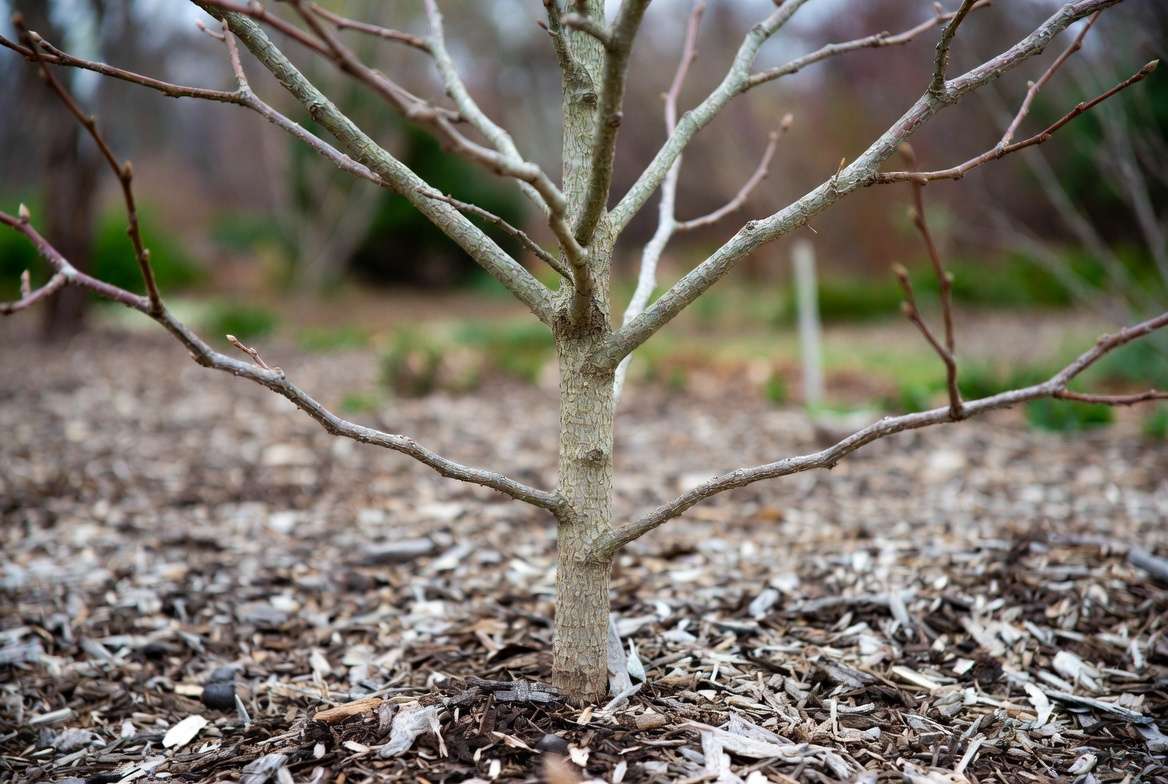
Expose the Root Flare: This is a crucial expert tip. The “root flare” is the widened area at the base of the trunk where the first main roots branch out. This flare must sit at or slightly above the natural soil grade. Nursery trees are often buried too deeply in their pots; gently pull away excess soil until you find that flare before planting.
-
Backfill and Water: Backfill with native soil, tamping gently to remove air pockets. Water deeply immediately after planting to settle the soil around the roots.
-
Mulch Carefully: Apply a 2- to 3-inch layer of organic mulch (like shredded hardwood) in a wide ring around the tree. Keep the mulch pulled back at least three inches away from the trunk itself to prevent bark rot. Never create a “mulch volcano.”
4. Caring for Ginkgo Trees Year-Round 💧✂️
While the maidenhair tree is famous for its independent nature and rugged resilience, providing optimal care during its formative years is essential to developing a structurally sound and aesthetically pleasing mature tree. The care regimen shifts significantly from the sapling stage to maturity.
Watering: From Sapling to Maturity 🚿
The most critical period in your ginkgo’s life is the establishment phase, which typically encompasses the first two to three years after planting in your landscape.
-
The Establishment Phase: During these first few seasons, the tree’s root system is limited and highly vulnerable to drying out. Water deeply and thoroughly once or twice a week, depending on rainfall and temperature. The goal is to keep the soil consistently moist but never soggy. Using a soaker hose or drip irrigation system is highly recommended, as it delivers water directly to the root zone without encouraging fungal issues on the foliage.
-
The Mature Phase: Once established, ginkgo trees are exceptionally drought-tolerant. A mature tree with a sprawling, deep root system will rarely require supplemental watering, easily surviving extended dry spells on natural rainfall alone.
Fertilization: Less is More 🍃
When it comes to feeding, ginkgo trees are incredibly efficient and generally require very little intervention. In fact, over-fertilizing is a common mistake that can lead to rapid, weak, and leggy growth that is susceptible to wind damage.
-
Read the Soil First: Before applying any nutrients, conduct a soil test to check for actual deficiencies.
-
Feeding Strategy: If your soil test indicates a lack of nutrients, or if you notice unusually stunted growth after the establishment phase, apply a slow-release, balanced granular tree fertilizer in early spring just before new growth pushes out. Sprinkle the fertilizer evenly across the root zone (extending out to the drip line of the canopy) and water it in thoroughly. Avoid heavy nitrogen applications late in the season, which can stimulate new foliage that will simply be killed by the first winter frost.
Pruning for Structural Integrity 🪵
Ginkgo trees require minimal pruning compared to fruit trees or fast-growing shade trees, but early structural training is vital.
-
The Goal: You want to establish a strong “central leader,” which is a single, dominant main trunk extending all the way to the top of the canopy.
-
When to Prune: Always prune during the late winter or early spring while the tree is fully dormant. Pruning during active growth can cause the tree to weep sap and invites stress.
-
What to Remove: Focus strictly on removing dead, diseased, or crossing branches that rub against one another. If you see two branches competing for the role of the central leader (often called a co-dominant stem), prune away the weaker one to prevent the tree from splitting down the middle in high winds decades later.
5. Troubleshooting: Why Isn’t My Ginkgo Thriving? 🩺
Even the toughest trees occasionally encounter roadblocks. If your newly planted tree seems to be struggling, don’t panic. Here are the most common issues and how an expert approaches them.
The “Sleep, Creep, Leap” Growth Habit 🐢
Many new homeowners become frustrated when their newly planted ginkgo barely grows an inch in its first two years. This is completely normal! Ginkgo trees follow the classic perennial and tree growth rule:
-
Year 1 (Sleep): The tree is recovering from transplant shock and pouring all its energy into underground root development.
-
Year 2 (Creep): You might see a few inches of top growth, but it is still prioritizing its foundation.
-
Year 3 (Leap): With a robust root system finally established, the tree begins to push out significant upper canopy growth (typically 1 to 2 feet per year).
-
Solution: Be patient. Do not try to force growth with heavy fertilizers.
Leaf Scorch ☀️
If you notice the edges of your ginkgo’s fan-shaped leaves turning brown and crispy in the middle of summer, you are likely dealing with leaf scorch. This is rarely a disease; rather, it is an environmental stressor. It happens when moisture evaporates from the leaves faster than the roots can pull water from the ground—often caused by extreme heat waves, high winds, or underwatering during the establishment phase.
-
Solution: Increase your deep-watering frequency during extreme heat. Ensure your mulch layer is intact to cool the soil surface and retain moisture.
Poor Fall Color 🌫️
The dazzling golden-yellow autumn display is the ginkgo’s calling card. If your tree’s leaves are turning brown or dropping while still green, it is usually due to weather anomalies. The best fall color requires a specific biochemical trigger: bright, sunny autumn days paired with crisp, cool (but not freezing) nights.
-
Solution: While you cannot control the weather, you can ensure your tree is planted in full sun. Trees shaded by buildings or larger evergreens will often have muted fall color because they lack the necessary sunlight to break down chlorophyll efficiently.
6. Frequently Asked Questions (FAQs) ❓
To help you make the best landscaping decisions, here are clear answers to the most common questions surrounding ginkgo tree care.
How fast do Ginkgo trees grow?
Ginkgo trees are considered slow to moderate growers. During their first few years in the ground, they may only grow a few inches annually as they establish roots. Once fully established, a healthy ginkgo will typically grow between 12 and 24 inches per year, depending on the cultivar and environmental conditions.
Are Ginkgo trees toxic to dogs or cats?
The leaves of the ginkgo are generally considered non-toxic. However, the seeds (produced only by female trees) contain ginkgotoxin, which is toxic to dogs, cats, and horses if ingested in large quantities. It can cause vomiting, irritability, and in severe cases, seizures. This is yet another compelling reason to exclusively plant cloned male cultivars!
Are Ginkgo tree roots invasive?
No, ginkgo roots are exceptionally well-behaved. They tend to grow deep rather than spreading aggressively along the surface. This makes them a highly favored choice for planting near sidewalks, driveways, retaining walls, and foundations, as they rarely cause pavement heaving or structural damage.
Can you grow a Ginkgo tree in a container?
Yes, temporarily. Because they are slow growers, ginkgo trees can thrive in large planters or as patio trees for several years, and they are incredibly popular in the art of bonsai. However, as large shade trees by nature, they will eventually become root-bound and must be transplanted into the ground to reach their full lifespan and potential.
Conclusion: Planting a Legacy 🌍
Adding a ginkgo tree to your landscape is about much more than filling an empty space in your yard; it is about planting a living legacy. These incredibly resilient “living fossils” will outlast us all, providing generations of shade, architectural beauty, and a spectacular golden autumn show year after year.
By following the golden rules of ginkgo care—insisting on a grafted male cultivar to avoid the smelly fruit mistake, prioritizing well-draining soil, providing full sun, and practicing patience during those first few sleepy years—you guarantee a thriving centerpiece for your property.











