
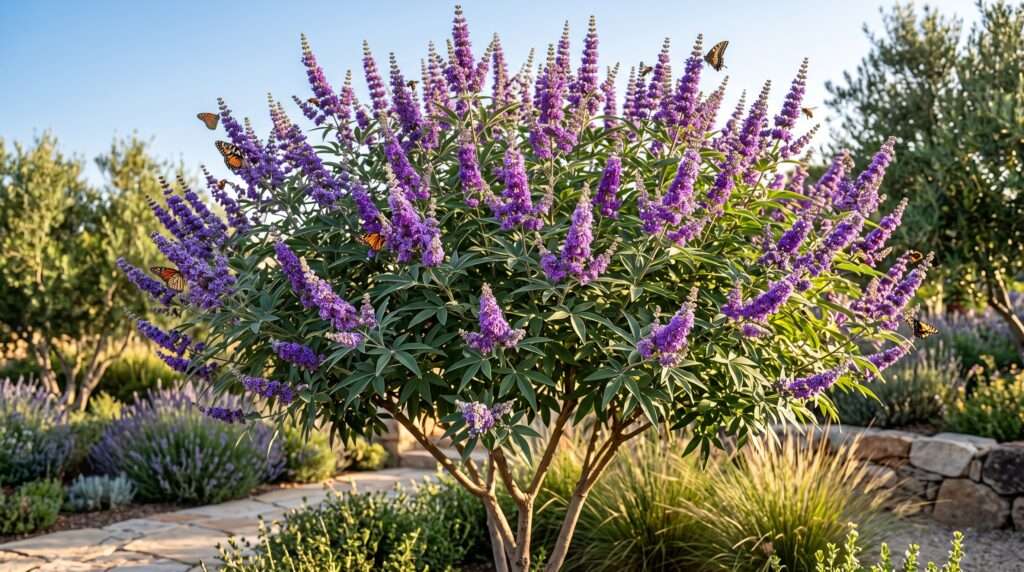
When the dog days of summer arrive and most of your garden is wilting under the oppressive heat, one tough-as-nails botanical wonder is just getting started. Imagine a landscape bursting with striking, fragrant spikes of purple, blue, or white flowers, drawing in clouds of butterflies and hummingbirds while everything else fades. This is the magic of the chasteberry plant. Also known botanically as Vitex agnus-castus, this Mediterranean native is an absolute powerhouse for late-season color.
However, despite their incredible resilience, many gardeners struggle with chasteberries that become wildly overgrown, suffer from sparse blooms, or develop weak, leggy branches. Whether you want to train it into a neat, elegant multi-trunk tree or maintain it as a lush, blooming shrub, this complete guide covers the exact planting, watering, and pruning techniques you need to achieve a spectacular, tidy floral display year after year.
Meet the Chasteberry Plant (Vitex agnus-castus) 🌿
Before digging your first hole, understanding the natural habits of the chasteberry plant is crucial for long-term landscaping success. Native to the rocky shorelines and dry slopes of the Mediterranean and Central Asia, the chaste tree (as it is often called) has evolved to thrive in harsh, unforgiving environments. You might also see it sold under names like Monk’s Pepper or Lilac Chaste Tree, owing to the spicy aroma of its seeds and its lilac-like floral cones.
-
Growth Habits & Size: Left to its own devices, a chasteberry plant is a vigorous, fast-growing, and somewhat sprawling deciduous shrub. Without intervention, it can easily reach 15 to 20 feet in both height and spread. However, its flexible growth habit is one of its greatest assets. With a few targeted pruning cuts, it can be easily trained into a highly ornamental, small multi-trunk tree that tops out at a manageable 10 to 15 feet.
-
Hardiness Zones: This resilient grower performs exceptionally well in USDA Hardiness Zones 6 through 9. In warmer southern climates (Zones 8 and 9), it easily survives the winter as woody above-ground growth. In the colder northern limits (Zone 6), it frequently dies back to the ground in freezing temperatures, treating itself more like a herbaceous perennial—but fear not, it will rapidly shoot up new growth in the spring and still bloom beautifully by late summer.
-
🌱 Expert Landscaping Insight: The grayish-green, palmate leaves of the chaste tree are highly aromatic, producing a scent reminiscent of sage when crushed. This built-in essential oil profile makes the foliage highly unpalatable to deer. If you are designing a woodland-edge garden or live in an area with heavy deer traffic, planting Vitex is a smart, headache-free choice.
Choosing the Perfect Spot: Sunlight, Soil, and Spacing ☀️
Success with a chasteberry plant comes down to mimicking its native Mediterranean habitat. Proper site selection prevents the vast majority of fungal issues and blooming failures gardeners encounter.

The Sunlight Rule for Maximum Blooms
The chaste tree is a fierce sun-worshipper. For the tightest growth habit and the most prolific flower spikes, plant it in a location that receives full sun—an absolute minimum of six hours of direct, unfiltered sunlight per day. While it can technically survive in partial shade, the lack of light will cause the branches to stretch toward the sun, resulting in a floppy, leggy plant with a disappointing, sparse floral yield.
Soil Requirements and Drainage 🪨
When it comes to soil, Vitex agnus-castus prefers it on the leaner side. It demands loose, exceptionally well-draining soil. Whether your yard features sandy loam or rocky earth, the chasteberry will feel right at home.
Pro Tip: One of the most common mistakes well-meaning gardeners make is planting Vitex in heavy, clay-rich soil heavily amended with compost. Highly fertile, rich soils actually harm this plant’s structural integrity. Excess nutrients promote rapid, weak vegetative growth that easily snaps in the wind, sacrificing the sturdy branches needed to hold up heavy clusters of flowers. Keep it lean for a stronger plant.
Spacing for Airflow and Growth
Because they grow rapidly, give them plenty of room to breathe. Space multiple plants at least 10 to 15 feet apart. Excellent air circulation is your best natural defense against leaf spot diseases, and giving the roots ample room ensures they don’t compete for moisture during extreme droughts.
Watering and Feeding: The “Tough Love” Approach 💧
If you want a low-maintenance, xeriscaping hero, this is your plant. The chaste tree thrives on a “tough love” horticultural approach.
Watering a New vs. Established Chasteberry Plant
-
The First Year: During its first growing season, your primary goal is helping the plant establish its deep taproot system. Provide deep, regular watering—about once a week, or more frequently during extreme heat waves. Allow the top two inches of soil to dry out completely before watering again.
-
Established Plants: Once established (usually by year two), the chasteberry plant becomes extraordinarily drought-tolerant. In most regions, normal rainfall is entirely sufficient. You only need to provide supplemental water during severe, prolonged droughts. Be extremely cautious about overwatering, particularly in poorly draining soils, as wet feet will quickly lead to fatal root rot.
Fertilizer: Less is More 🚫
Put away the fertilizer box. Unless you are growing a chasteberry plant in a container where nutrients are flushed out daily, you should absolutely not fertilize it in the ground. High-nitrogen fertilizers will trigger an explosion of lush green leaves at the direct expense of flowers. A light, one-inch layer of organic bark mulch around the root zone (kept away from the trunk) is all the top-dressing it will ever need to regulate soil moisture and temperature.
The Secret to Endless Blooms: Pruning Like a Pro ✂️
This is where most chasteberry owners get stuck. Understanding how and when to prune is the absolute secret to transforming a messy, overgrown bush into a stunning neighborhood showpiece.
Why Pruning is Non-Negotiable
Vitex agnus-castus produces its spectacular flower spikes exclusively on new wood—meaning the current season’s growth. If you never prune your plant, the flowers will only appear at the very tips of the old, sprawling branches, leaving the interior looking bare and woody. Pruning stimulates vigorous new shoots, which in turn generate massive, abundant blooms.
When to Prune Your Chasteberry 🗓️
Timing is everything. The ideal time to prune is in late winter to early spring (typically February or March, depending on your zone), right before the plant breaks dormancy and new buds begin to swell. Because you are pruning before new growth starts, you risk zero damage to the upcoming summer floral display.
How to Shape it as a Shrub vs. a Tree 🌳
You have two distinct architectural choices for your plant:
-
For a Bushy, Compact Shrub: If you want to keep the plant under six feet tall and maximize blooms at eye level, use a technique called “coppicing.” In late winter, cut all the stems down to about 1 to 2 feet from the ground. While this seems drastic, the chaste tree will rapidly push out massive amounts of new, vigorous stems in the spring, resulting in a dense, rounded shrub covered in flowers by July.
-
For an Elegant Tree Form: To train your Vitex into a stunning multi-trunk tree, start when the plant is young. Select 3 to 5 of the strongest, most upright main stems to serve as your permanent trunks. Prune away all other shoots down to the soil line. As the tree grows, continually remove any lower lateral branches and “suckers” (small shoots emerging from the base or roots) to raise the canopy. Every late winter, lightly thin out the upper canopy to improve sunlight penetration and trim back the branch tips by about one-third to encourage branching and blooming.

Deadheading for a Second Flush of Flowers 🌸
Don’t let the show stop in mid-summer! As the first wave of blooms begins to fade and turn brown in July or August, grab your pruning shears. Snip off the spent flower spikes just above the next set of leaves. This simple act of “deadheading” redirects the plant’s energy away from seed production and forces it to push out a highly rewarding second flush of flowers in the early fall.

Propagating Your Chasteberry Plant: Grow More for Free 🌱
Once you experience the vibrant beauty of a blooming chaste tree, you will inevitably want more of them. Fortunately, multiplying your Vitex agnus-castus is a straightforward and rewarding process, even for beginner gardeners.
Softwood Cuttings (Early Summer)
The fastest and most reliable method to propagate a chasteberry plant is via softwood cuttings. Because cuttings produce an exact genetic clone of the parent plant, you are guaranteed the same flower color and growth habit.
-
Take the Cutting: In early summer (May or June), select a healthy, non-blooming stem of fresh green growth. Snip off a 4-to-6-inch section just below a leaf node.
-
Prep the Stem: Strip the leaves from the bottom half of the cutting to expose the nodes, leaving only the top two or three leaves.
-
Rooting Hormone: Dip the cut end into powdered or gel rooting hormone to stimulate rapid root development.
-
Plant and Protect: Stick the cutting into a small pot filled with a moistened, well-draining mix of perlite and peat moss. Place a clear plastic bag over the pot to create a mini-greenhouse, retaining vital humidity. Keep it in bright, indirect light, and you should feel resistance from new roots when you gently tug the stem in about four to six weeks.

Growing from Seed (Patience Required) 🌰
If you prefer a hands-on botanical project, you can easily grow chasteberries from seed. In autumn, the spent flower spikes develop into clusters of small, dark, aromatic berries (the famous “Monk’s pepper”). Harvest these dried berries and store them in a cool, dry place. For the best germination rates, subject the seeds to cold stratification by placing them in your refrigerator for 30 to 60 days before sowing them in seed-starting trays in early spring. Keep in mind that seed-grown plants take significantly longer to reach blooming size compared to cuttings.
Pest and Disease Management (And How to Fix Them) 🐛
One of the greatest landscaping advantages of the chasteberry plant is its rugged constitution. It is exceptionally pest-resistant and virtually immune to the diseases that plague more delicate ornamentals. When issues do arise, they are almost always cultural—caused by poor site placement rather than an inherent weakness in the plant.
Leaf Spot (Fungal Issues) 🍂
-
Symptoms: As summer humidity peaks, you may notice small brown or black spots developing on the foliage, sometimes followed by premature leaf drop.
-
The Fix: Fungal leaf spot thrives in damp, stagnant conditions. Prevention is your best defense: ensure your plant is spaced adequately (10+ feet from other large shrubs) for maximum airflow. Always water at the base of the plant to keep the foliage dry. If leaf spot occurs, rake up and dispose of any fallen diseased leaves to prevent the spores from overwintering in your soil.
Aphids and Whiteflies
-
Symptoms: These tiny sap-sucking insects occasionally congregate on the tender undersides of new leaves. You might first notice them when the lower leaves become coated in a sticky substance called honeydew, which can attract black sooty mold.
-
The Fix: Avoid harsh chemical pesticides, which kill off the very bees and butterflies your Vitex works so hard to attract. Instead, dislodge the pests with a sharp, strong blast from your garden hose. For severe infestations, an evening application of organic Neem oil or insecticidal soap will safely smother the insects.
Expert Landscaping Ideas: Styling Vitex in Your Yard 🏡
The architectural flexibility of the chaste tree makes it a versatile design element. Here is how landscape architects use Vitex agnus-castus to anchor stunning outdoor spaces:
-
The Pollinator Paradise: Maximize your garden’s ecological value by pairing the chasteberry plant with other sun-loving, nectar-rich perennials. Plant an understory of Purple Coneflowers (Echinacea), Russian Sage, Lantana, and Black-Eyed Susans. This creates a layered, multi-season buffet for local pollinators.
-
The Crape Myrtle Alternative: In many southern and central regions, Crape Myrtles are suffering from devastating outbreaks of Crape Myrtle Bark Scale. The chaste tree serves as the perfect, pest-free alternative. It offers a similar multi-trunk structural aesthetic, blooms during the same intense summer heat, and requires a fraction of the maintenance.
-
Xeriscaping & Water-Wise Gardens: If you are transitioning your yard to a drought-tolerant landscape to conserve water, the chasteberry plant is an ideal centerpiece. Surround it with architectural succulents like Agave or Yucca, gravel mulch, and sweeping drifts of ornamental grasses like Pink Muhly grass for a striking, low-water Mediterranean oasis.

Frequently Asked Questions (FAQs) ❓
Why isn’t my chasteberry plant blooming? The most common culprit is a lack of direct sunlight; Vitex requires a minimum of six hours of full sun to produce flowers. Other reasons include pruning too late in the spring (which inadvertently chops off the new flower buds) or planting in overly rich, highly fertilized soil, which encourages leafy growth instead of blooms.
Is the chasteberry plant invasive? While generally well-behaved, Vitex agnus-castus can self-seed aggressively in certain warm, humid regions, particularly in the southern United States (like Texas and the Carolinas). If you live in a region where it is considered a nuisance, practice diligent deadheading. By snipping off the flower spikes before they go to seed, you completely eliminate the risk of invasive spreading.
Are chasteberries toxic to dogs or cats? No, they are completely non-toxic. The ASPCA does not list the chasteberry plant as toxic to dogs, cats, or horses. You can safely plant this beautiful shrub in yards frequented by curious pets.
Can I grow a chasteberry plant in a pot? Yes, but you need to select the right cultivar. Standard Vitex grows far too large and aggressive for long-term container living. Instead, look for dwarf varieties such as ‘Blue Diddley’ or ‘Puffball’, which naturally stay under three to six feet tall. Plant them in a massive, heavy container (to prevent the wind from tipping them over) using a lightweight, fast-draining potting mix, and remember that potted plants require more frequent watering than those in the ground.











