
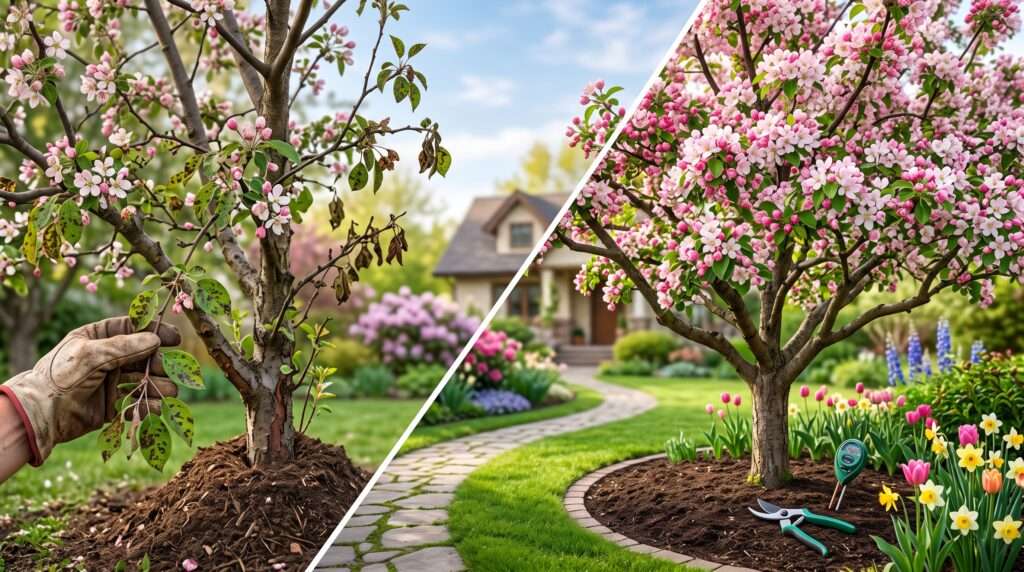
You wait all winter for it. The snow melts, the days stretch longer, and you anticipate that breathtaking, cloud-like explosion of pink, red, or white blossoms in your front yard. But instead of a vibrant spring showstopper, you’re greeted with sparse, lackluster blooms, premature leaf drop, or a sickly-looking canopy.
If this sounds familiar, you are not alone. While crabapple trees (genus Malus) are famously hardy and resilient ornamental trees, well-meaning gardeners often accidentally sabotage them with outdated or incorrect care habits.
As tree care specialists, we see it every single season. Homeowners invest time and money into these beautiful landscape centerpieces, only to watch them succumb to preventable fungal diseases, root rot, or structural failure. The good news? Horticultural science shows that most of these issues are entirely reversible once you know what to look for.
This comprehensive guide is built on proven arboricultural best practices. We are going to diagnose the most common issues, reverse the damage, and guarantee your tree grows into a breathtaking, healthy canopy for next season.
🛑 Quick Summary: The 5 Culprits Ruining Your Tree For those skimming, here are the top mistakes we will tackle in this guide:
-
Planting in the wrong microclimate (too much shade and poor drainage).
-
Watering whiplash (drowning young trees or parching established ones).
-
Pruning malpractice (cutting at the wrong time or using poor techniques).
-
Ignoring the “Big Three” fungal diseases until it’s too late.
-
The fertilizer frenzy (suffocating the tree with excess nitrogen).
Let’s dive into the root of the problems—and exactly how you can fix them. 🧑🌾✨
🛑 Mistake #1: Planting in the Wrong Microclimate (The Shade & Soil Trap)
One of the most fatal mistakes you can make is assuming that because a tree is “hardy,” you can just stick it anywhere in your yard and expect it to thrive. Crabapple trees are highly sensitive to their microclimate, specifically when it comes to sunlight and soil composition.
☀️ The Sunlight Requirement
If your tree is looking thin, producing very few blossoms, or constantly battling leaf spot diseases, look up. What is casting a shadow over it?
Crabapple trees require a minimum of 6 to 8 hours of direct, unfiltered sunlight daily. Sunlight is the engine that drives blossom production. When a tree is shaded by larger canopy trees (like mature oaks or maples) or shadowed by the side of a house, it redirects its energy from producing flowers to stretching its branches in a desperate search for light.
Expert Insight 🧑🌾: Sunlight isn’t just for blooming—it’s a critical disease-prevention tool. Certified arborists know that morning sunlight is vital because it rapidly dries dew and overnight moisture from the tree’s foliage. Shade drastically increases the time moisture sits on the leaves, creating the perfect incubator for fungal spores to germinate and spread.
💧 Soil and Drainage Disasters
Crabapples absolutely despise “wet feet.” If you plant your tree in heavy, compacted clay soil where water pools after a rainstorm, the roots will slowly suffocate. This leads to root rot, a condition where the root system literally decays, preventing the tree from absorbing nutrients and water.
How to Fix It:
-
The Percolation Test: Before planting, dig a hole 12 inches deep and fill it with water. Let it drain, then fill it again. If the water hasn’t drained after 24 hours, your drainage is too poor for a crabapple.
-
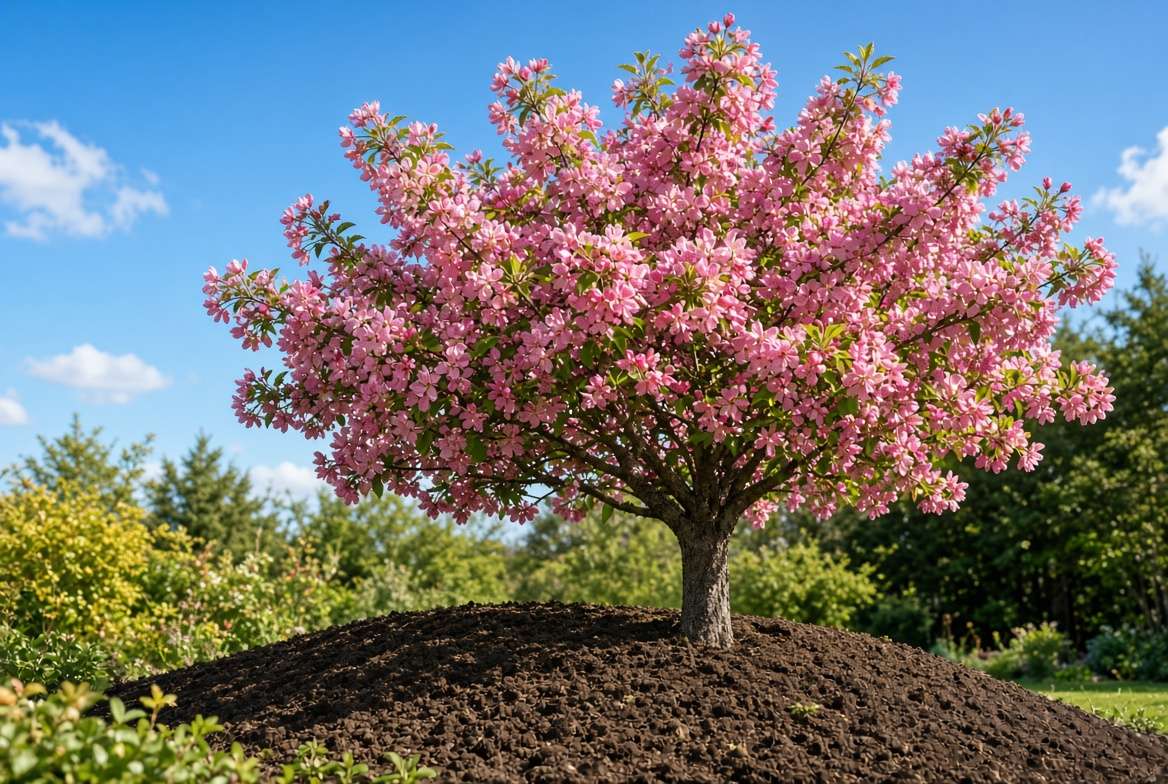
Plant on a Mound: If you are stuck with heavy clay, don’t dig a deeper hole (that just creates a bathtub effect). Instead, plant the tree on a slight mound or berm of amended topsoil, raising the root flare 2 to 3 inches above the surrounding grade.
-
Check the pH: Crabapple trees prefer a slightly acidic to neutral soil pH, ideally in the 6.0 to 7.0 range. Pick up a simple soil testing kit from your local nursery. If your soil is too alkaline, you may need to amend it with elemental sulfur; if it’s too acidic, garden lime can help balance it out.
🛑 Mistake #2: The Watering Whiplash (Drowning vs. Parching)
Watering seems like the easiest part of plant care, but it is actually where the most fatal errors occur. The mistake lies in treating a newly planted sapling like an established, mature tree—or vice versa.
🌱 Watering Young Crabapple Trees
The first two years of a crabapple tree’s life in your yard are critical. During this establishment period, the tree is frantically trying to push roots into the surrounding native soil.
Many homeowners make the mistake of using a lawn sprinkler to water their new tree. Sprinklers only wet the top inch of the soil, which encourages the tree to develop a shallow, weak root system that will fail during a drought.
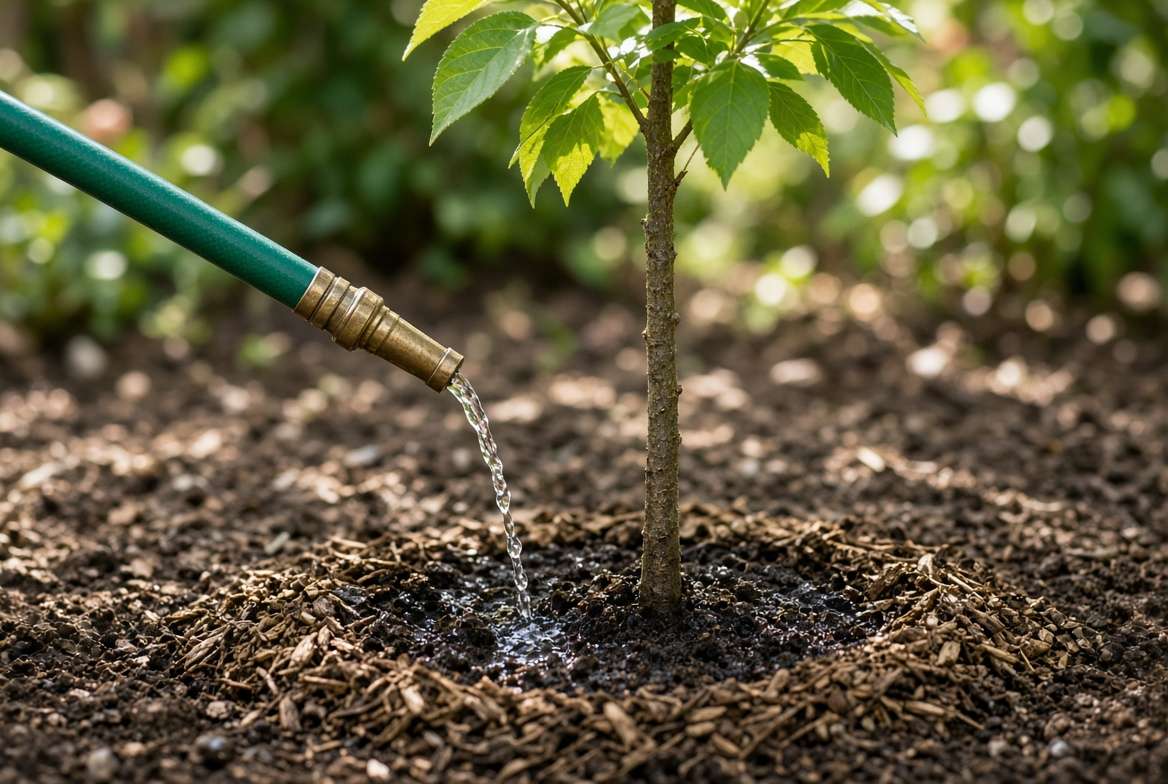
Real-World Example 🌳: To build a robust, deep root system, use the “garden hose trickle” method. Place the end of your hose at the base of the tree and turn it on to a slow, steady trickle. Leave it there for 30 to 45 minutes. This allows the water to percolate deeply into the soil profile, coaxing the roots to grow downward. Do this once or twice a week during dry spells for the first two years. Alternatively, use a slow-release tree watering bag (like a Gator bag).
🍂 Recognizing Moisture Stress in Established Trees
Once established (after 3–5 years), crabapple trees are remarkably drought-tolerant. In fact, overwatering an established tree is much more common—and dangerous—than underwatering it.
How can you tell what your tree is experiencing? Look at the leaves.
-
Drought Stress: The edges of the leaves will turn brown and crispy. The leaves may curl inward to conserve moisture, and the tree may prematurely drop its fruit.
-
Overwatering (Drowning): The leaves will turn a pale, sickly yellow and droop sadly, but they will often remain firmly attached to the branch. The ground around the trunk may feel spongy or smell faintly of rot.
Pro Tip 💡: Never guess when it comes to watering. Use the “screwdriver test.” Take a standard 8-inch flathead screwdriver and push it into the soil beneath the tree’s canopy. If it slides in easily, the soil is moist and you do not need to water. If you have to force it, the soil is bone-dry, and it’s time for a deep, slow soaking.
🛑 Mistake #3: Pruning Malpractice (Timing and Technique)
Pruning is both an art and a science. When done correctly, it opens up the canopy to sunlight, improves air circulation (which naturally prevents disease), and builds a strong, storm-resistant branch structure. However, improper pruning—whether it’s hacking away branches at the wrong time of year or using incorrect cutting techniques—is one of the fastest ways to traumatize your crabapple tree.
✂️ When to Prune (The Dormancy Rule)
The most common pruning mistake is deciding to trim the tree in late spring or summer just because it’s a nice day to be in the yard. Pruning while the tree is actively growing and sap is heavily flowing creates open wounds that act as homing beacons for pests and airborne fungal spores.
As a strict rule, structural pruning should only be done during late winter or early spring, while the tree is still fully dormant and before the leaf buds begin to swell. Pruning during dormancy ensures the tree can quickly heal the wound as soon as spring growth begins, minimizing the risk of disease transmission.
The Golden Exception: You can—and should—remove the “3 D’s” (Dead, Diseased, or Damaged wood) at any time of the year. If a branch is broken in a summer storm, do not wait until winter to remove it.
🚫 The Danger of Water Sprouts and Suckers
Have you ever seen a crabapple tree that looks like it has a hundred perfectly straight, weak little twigs shooting straight up into the air from its main branches? These are called “water sprouts,” and they are a massive red flag.
Water sprouts (and their base-level equivalents, “suckers”) are panic responses. When an inexperienced gardener aggressively over-prunes or “tops” a tree, the tree realizes it suddenly lacks the foliage needed for photosynthesis. In sheer panic, it pushes out rapid, weak vertical growth to compensate. This ruins the tree’s natural shape and wastes valuable energy.
How to Fix It:
-
The 1/3 Rule: Never remove more than 33% of a tree’s live canopy in a single year. If you have a wildly overgrown tree, plan a multi-year pruning rehabilitation schedule rather than trying to fix it all in one afternoon.
-
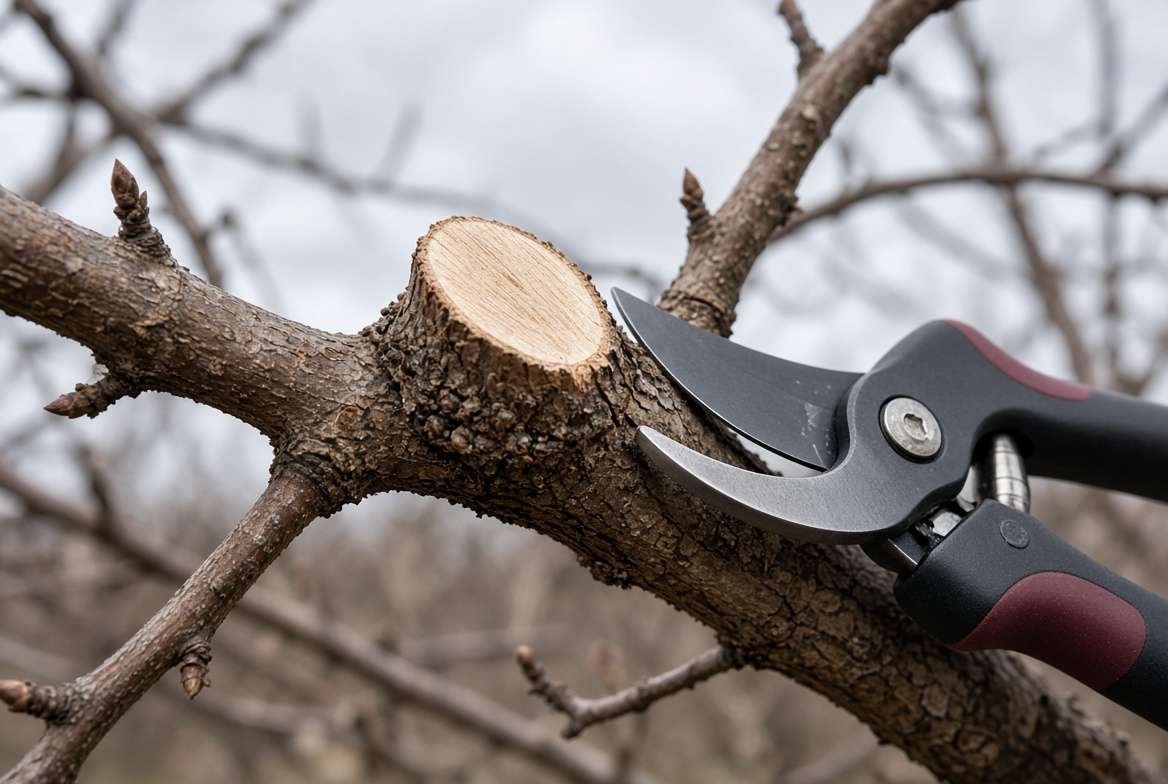
The Branch Collar Cut: Never leave a long, ugly stub, and never cut completely flush against the trunk. Look for the “branch collar”—the slightly swollen, wrinkled area where the branch meets the trunk. Make a clean, angled cut just outside this collar using sharp, sterilized pruning shears or a high-quality hand saw. The collar contains specialized cells that will rapidly grow over and seal the wound.
🛑 Mistake #4: Ignoring the “Big Three” Fungal Diseases
Crabapple trees are spectacular, but older, non-resistant varieties are notorious magnets for fungal pathogens. The mistake homeowners make is waiting until the tree is completely defoliated in mid-August before trying to apply a treatment. By the time the leaves are turning yellow with black spots and falling off, the battle for that year is already lost.
To maintain a healthy crabapple, you must learn to identify the “Big Three” and adopt a preventative mindset.
🦠 Apple Scab
-
The Symptoms: This is the most common crabapple affliction. It starts as olive-green, velvety spots on the leaves in spring. By mid-summer, the spots turn black, the leaves yellow, and the tree aggressively drops its foliage, often looking completely bare by late August.
-
The Impact: While rarely fatal in a single season, repeated years of early defoliation will severely weaken the tree and drastically reduce next year’s bloom.
🔥 Fire Blight
-
The Symptoms: Fire blight is a devastating bacterial disease. The defining characteristic is branches that look as though they have been scorched by a blowtorch. The tips of the infected branches will dramatically wilt, curling over into a distinct “shepherd’s crook” shape, and the leaves will turn black but remain clinging to the branch.
🌲 Cedar Apple Rust
-
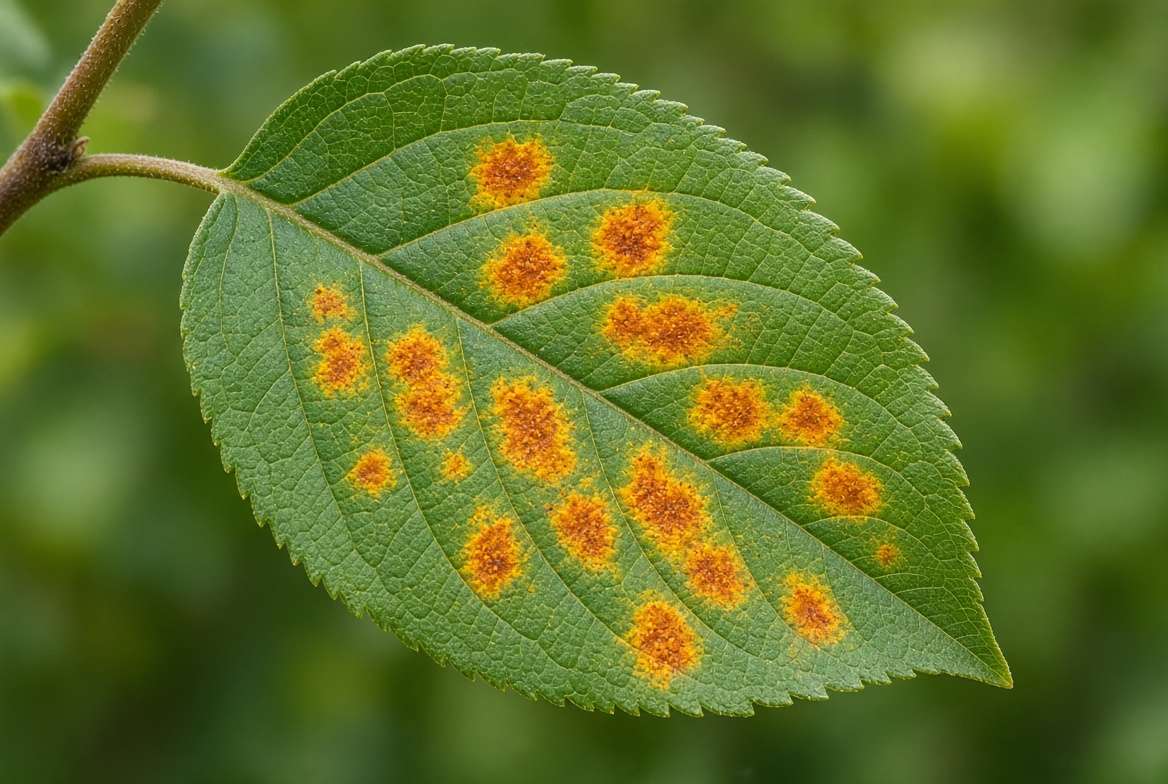
The Symptoms: If your crabapple leaves develop bright, rusty-orange or yellow spots with tiny black dots in the center, you have Cedar Apple Rust. This fungus is fascinating but annoying: it requires a nearby Juniper (cedar) host plant to complete its lifecycle, traveling back and forth between the two species on the wind.
How to Fix It (Treatment Protocol) 🩺:
-
Strict Fall Sanitation: Fungal spores overwinter in the fallen diseased leaves at the base of the tree. The most effective, chemical-free prevention you can do is aggressively rake up and destroy (or bag and trash) all fallen crabapple leaves in the autumn. Do not compost them, as average backyard compost bins do not get hot enough to kill the spores.
-
Fungicide Schedules: If your tree suffers from severe Apple Scab or Rust year after year, you must apply a preventative fungicide. The trick is timing: the first spray must be applied exactly as the leaf buds are breaking in early spring, with follow-up applications according to the product label (usually every 10–14 days) until the weather warms and dries out.
-
Future-Proofing: If you are planning to plant a new crabapple tree, save yourself years of heartache by selecting a modern, disease-resistant cultivar. Varieties like ‘Prairifire’, ‘Sugar Tyme’, and ‘Sargent’ boast excellent natural resistance to scab, rust, and blight.
🛑 Mistake #5: The Fertilizer Frenzy (Suffocating with Nitrogen)
More food equals more flowers, right? Wrong.
One of the most frequent causes of a crabapple tree refusing to bloom is accidental over-fertilization, specifically with heavy nitrogen. This usually happens indirectly. Homeowners aggressively broadcast high-nitrogen lawn fertilizer on the turf directly beneath the tree’s canopy. The tree’s shallow feeder roots soak up this nitrogen-heavy feast.
📉 Why More Leaves = Fewer Flowers
Nitrogen is the macronutrient responsible for pushing green, vegetative growth. When a crabapple tree gets a massive spike of nitrogen, it signals the plant to abandon its reproductive efforts (making flowers and fruit) and focus entirely on making massive amounts of new foliage. You will end up with a giant, lush, leafy green tree with zero blossoms.
Furthermore, this rapid flush of succulent, soft new green growth is highly vulnerable. Aphids love tender new shoots, and the bacteria that causes Fire Blight enters the tree much more easily through soft, rapid growth.
🍎 The Correct Feeding Protocol
How to Fix It:
-
Stop the Lawn Feed: Create a large mulch ring around the base of the tree so you are not applying turf fertilizer directly over the tree’s root zone.
-
Test Before You Treat: Mature crabapple trees planted in relatively healthy native soil rarely need supplemental fertilizer. Only apply fertilizer if a professional soil test indicates a specific nutrient deficiency.
-
Go Slow and Organic: If your soil is truly depleted and the tree lacks vigor (evidenced by stunted growth or pale leaves), skip the harsh synthetic chemical spikes. Instead, apply a top-dressing of rich, aged compost over the root zone in early spring, or use a slow-release, balanced organic tree fertilizer with a lower first number in its N-P-K ratio (e.g., a 4-7-7 blend).
🌟 Bonus Section: The Expert’s Formula for Explosive Spring Blooms
If you have corrected the mistakes above and want to take your healthy crabapple tree to the next level of landscape perfection, follow these advanced arboriculture tips:
-
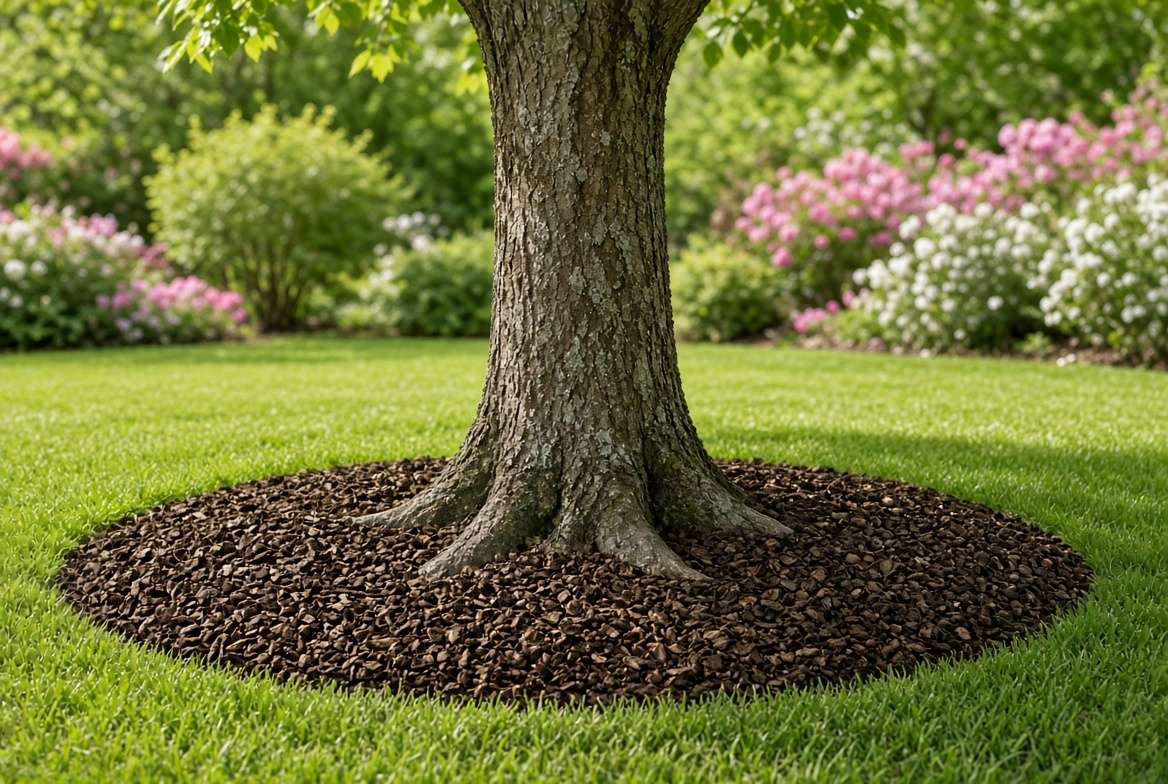
Master the Mulch Ring 🌋: Mulch retains soil moisture, regulates temperature, and suppresses weeds that compete for nutrients. However, the dreaded “mulch volcano”—piling thick mounds of mulch directly against the trunk of the tree—will rot the bark and invite borers. Apply a 3-inch layer of organic wood chips starting a few inches away from the trunk and extending out to the drip line (the edge of the canopy). You should always be able to see the natural “root flare” where the trunk meets the soil.
-
Winterize Young Trunks: The thin bark of young crabapple saplings is highly susceptible to “sunscald” (winter cracking caused by extreme temperature fluctuations) and hungry rabbits or voles chewing on the bark when food is scarce. Wrap the trunk with a breathable, commercial tree guard in late autumn and remove it promptly in the spring.
❓ Frequently Asked Questions (FAQ) About Crabapple Trees
How long do crabapple trees live? With proper care, appropriate pruning, and a healthy microclimate, a standard crabapple tree will live for 40 to 60 years, though some heritage varieties can live much longer.
Why didn’t my crabapple tree bloom this year? The most common reasons are: severe over-pruning the previous summer (which cuts off the buds that were forming for spring), over-fertilization with nitrogen, a lack of sunlight, or a phenomenon called “biennial bearing” (where a tree produces a heavy crop of flowers and fruit one year, exhausts its energy, and takes the next year off to recover).
Are crabapples toxic to dogs? The flesh of the crabapple fruit itself is generally safe for dogs and wildlife. However, the seeds, stems, and leaves contain trace amounts of cyanogenic glycosides (which convert to cyanide when chewed). If a dog ingests a massive quantity of seeds, it can cause toxicity. It’s best to rake up heavy fruit drops if you have a curious puppy.
Can I grow a crabapple tree in a pot? Yes, but you must select a specific dwarf variety (such as ‘Tina’ or ‘Lollipop’) and use a massive, well-insulated container. Container-grown trees require meticulous watering and root-pruning every few years to prevent them from becoming root-bound.
🎯 Reclaiming Your Spring Display
Growing a spectacular crabapple tree doesn’t require a degree in horticulture; it simply requires observation and working with the tree’s natural biology rather than against it. By ensuring proper sunlight, watering deeply but infrequently, pruning only during dormancy, staying ahead of fungal pathogens, and laying off the heavy lawn fertilizers, you are setting the stage for a lifetime of beauty.
Crabapples are incredibly resilient. Even if your tree looked miserable last season, implementing these corrective steps this year can trigger a remarkable turnaround.
What is the biggest struggle you’ve faced with your tree? Drop a comment below with your specific symptoms, or check out our related guide on The Best Companion Plants to Grow Beneath Your Crabapple Tree to complete your landscape transformation! 🌸🌳











