
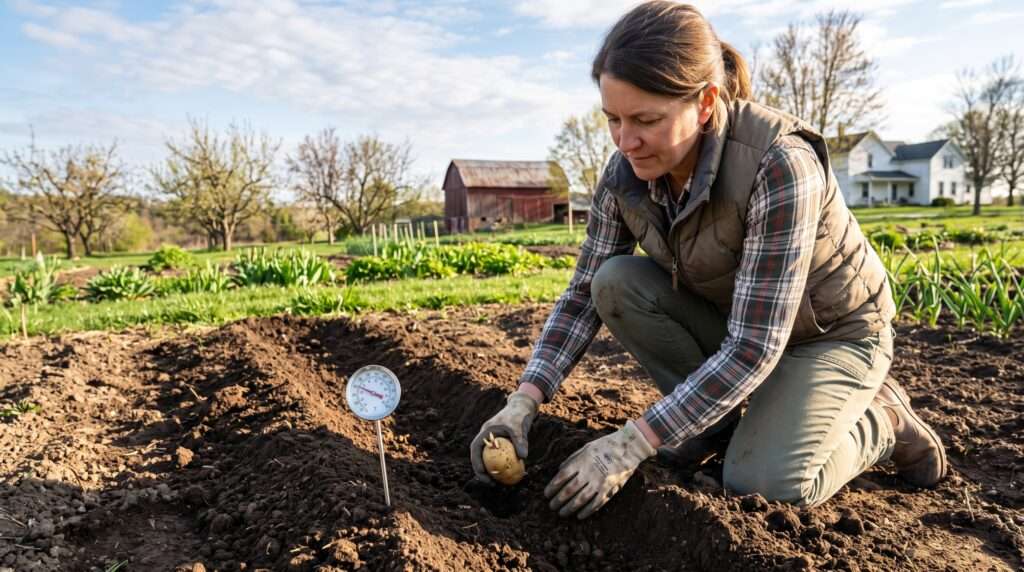
As a gardener in the Great Lakes state, you already know the drill: Mother Nature teases us with a gorgeous 70-degree day in April, only to dump two inches of snow the very next week. This chaotic, unpredictable spring weather is the ultimate test of patience, especially when you are eager to get your root crops into the dirt. If you want a bountiful, disease-free yield, knowing exactly when to plant potatoes in Michigan is the single most critical factor for your garden’s success.
Plant too early, and your seed pieces risk rotting in cold, soggy spring soil; plant too late, and the intense, humid summer heat will stunt tuber development before they reach a decent size.
🎯 The Quick Answer for Michigan Gardeners: In Michigan, the best time to plant potatoes is generally late April to mid-May, about 2 to 4 weeks before your region’s last expected spring frost, once soil temperatures reach a consistent 45°F.
However, relying on a calendar date alone is a rookie mistake in a state where the weather fluctuates wildly from Detroit to Marquette. In this comprehensive guide, we will walk you through the exact soil science, regional timelines, and expert planting techniques you need to outsmart the weather, protect your crop from sudden frosts, and dig up a massive, cellar-filling potato harvest this year! 🧑🌾🚜
2. The Golden Rule: When to Plant Potatoes in Michigan 🗓️
Forget what the back of the seed packet says—your local microclimate is what truly dictates your planting schedule. To achieve an abundant harvest, you must look at the ground, not just the sky.
Soil Temperature vs. The Calendar (The 45°F Rule) 🌡️
The most common mistake new Michigan gardeners make is planting based on the first warm weekend in April. Potatoes are highly susceptible to fungal rot if placed in cold, waterlogged earth.
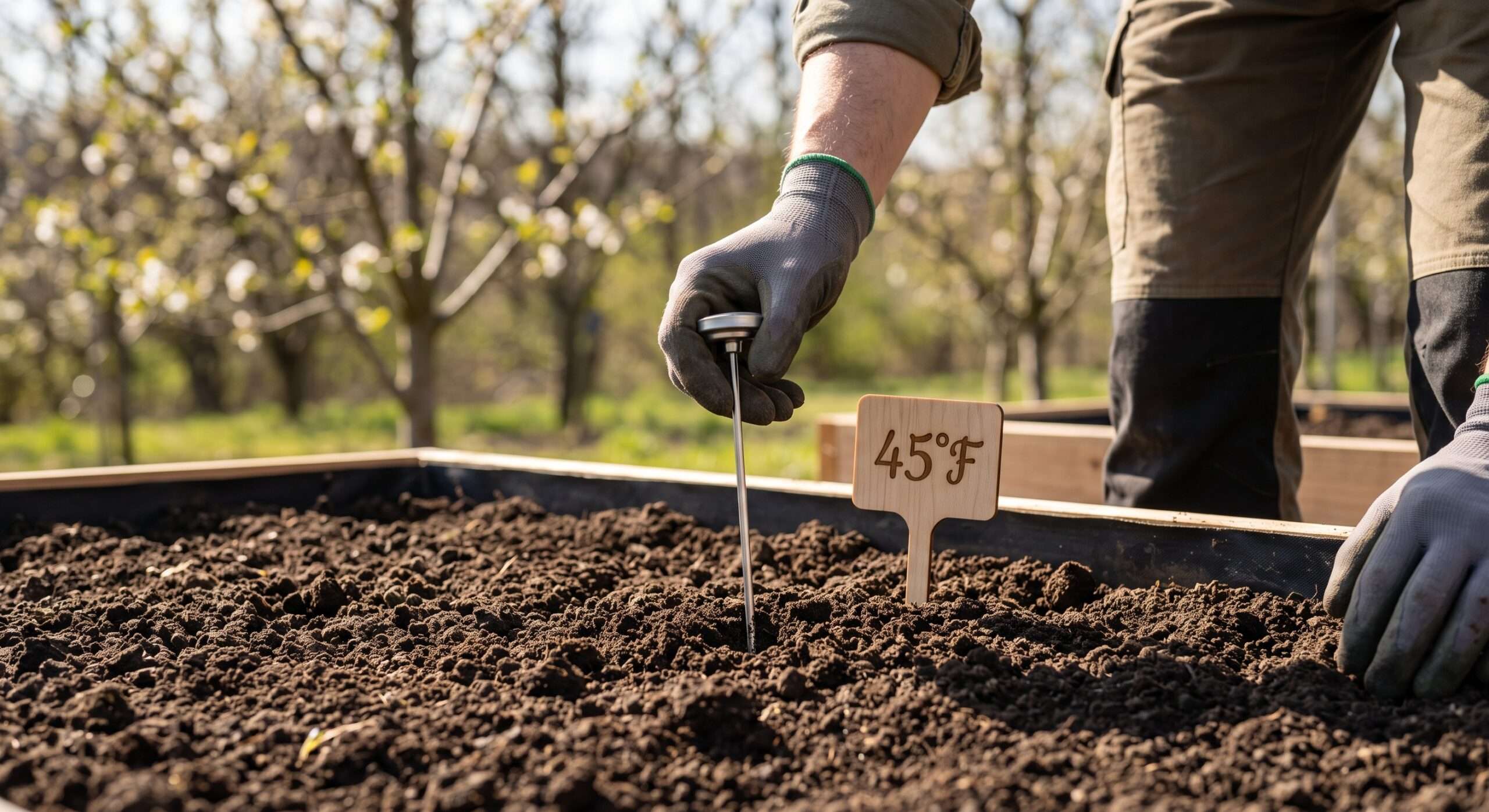
Instead of watching the calendar, watch your soil temperature. Potatoes need the soil to be at least 45°F (7°C) to wake up and begin sprouting, though 50°F to 55°F is the absolute sweet spot for vigorous root growth.
Expert E-E-A-T Tip: Invest in a simple, $10 compost or soil thermometer. Plunge it about 4 to 6 inches deep into your prepared garden bed for three consecutive mornings. If it consistently reads 45°F or above, and the soil isn’t dripping wet when squeezed in your fist, it is officially potato planting time! 🌡️🪴
Can Potatoes Survive a Michigan Spring Frost? ❄️
Yes and no. Potatoes are classified as “half-hardy” vegetables. The good news is that the actual seed potato piece is buried safely underground, insulated from fluctuating air temperatures.
If a sudden late-May frost hits after your potato plants have pushed green shoots above the soil, those tender leaves will likely turn black and die back. While a light frost will merely delay your harvest by a week or two as the plant pushes up new foliage, a severe hard freeze (below 28°F) can kill the young plant entirely. This is why timing your planting 2-4 weeks prior to your last frost date is the perfect buffer—the sprouts remain safely underground during the coldest weeks and emerge just as the danger of frost passes.
3. Michigan Frost Dates & Planting Timelines by Region 🗺️
Because Michigan spans several USDA Hardiness Zones (from frigid Zone 4a in the Upper Peninsula to a milder Zone 6b near the southern borders), “potato planting season” rolls across the state in waves.
Here is a quick reference guide to help you pinpoint your local planting window:
Lower Peninsula Planting Timeline (Zones 5b – 6b) 🍒
Gardeners in the southern and central stretches of the Lower Peninsula have the luxury of a longer growing season. You can usually begin preparing your beds in early April as soon as the snow melts and the mud dries. Direct-sowing can reliably begin from late April to early May. Because your season stretches well into October, you can successfully grow both early-maturing and late-maturing winter storage varieties.
Upper Peninsula Planting Timeline (Zones 4a – 5a) 🌲
If you garden in the U.P., you know that winter holds on with an icy grip. Do not rush the season! Wait 1 to 2 weeks longer than your downstate friends, planting from mid-May to early June. Since your frost-free growing window is much shorter (sometimes less than 100 days), you should prioritize early-to-mid-season potato varieties to ensure they mature before the autumn freezes arrive.
4. Step-by-Step Pre-Planting Guide for a Massive Yield 👩🌾
Great potatoes start long before you ever dig a hole. Preparing your seed and your soil properly is the difference between a sad, spotty harvest and a wheelbarrow overflowing with spuds.
Sourcing the Best Seed Potatoes 🛒
It might be tempting to plant those sprouted potatoes sitting on your kitchen counter, but do not plant grocery store potatoes. Commercial potatoes are routinely sprayed with chemical sprout inhibitors (like chlorpropham) to extend shelf life, meaning they will struggle to grow vigorously in your garden. Furthermore, they are not screened for devastating soil-borne diseases.
Always purchase certified, disease-free seed potatoes from a reputable local Michigan nursery, a farmer’s market, or a trusted online catalog. Certified seed guarantees you aren’t introducing pathogens like potato blight into your backyard ecosystem.
The Magic of “Chitting” (Pre-Sprouting in April) ✨
Want to beat the short Michigan growing season? You need to “chit” your potatoes!
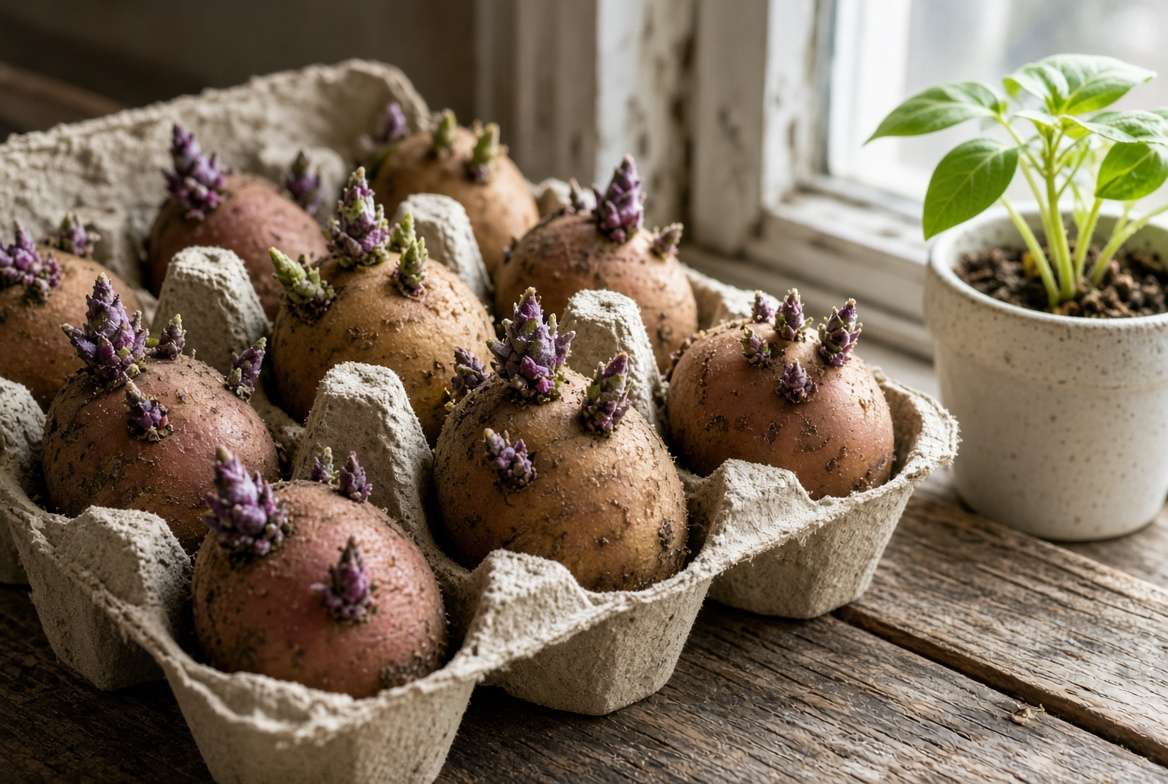
Chitting is simply the process of pre-sprouting your seed potatoes indoors. About 3 to 4 weeks before your target planting date, place your seed potatoes in an open egg carton or shallow cardboard box. Place them in a cool (around 50°F), brightly lit room—like an unheated spare bedroom or an enclosed porch.
Within a few weeks, stout, dark green or purple sprouts (called “chits”) will emerge from the “eyes” of the potato. When it’s time to plant, these pre-sprouted potatoes will burst out of the ground days or even weeks faster than dormant seeds.
Preparing Michigan Soil for Potatoes 🪱
Potatoes are notoriously hungry and require loose, well-draining, slightly acidic soil to thrive. Michigan’s natural soil profile ranges heavily from sandy loam on the west coast (perfect for root crops!) to dense, heavy clay in the southeast.
-
Loosen Up Heavy Clay: If you have dense clay, you must amend it heavily with organic matter. Dig in plenty of well-rotted compost or leaf mold to a depth of 8-12 inches to improve drainage. Potatoes grown in compacted clay will be small and malformed.
-
Watch the pH: Potatoes prefer a slightly acidic soil pH between 5.8 and 6.5.
-
Avoid Fresh Manure: Never add fresh manure or heavy lime to a potato bed right before planting. Highly alkaline conditions and fresh manure are the leading causes of Potato Scab—a bacterial disease that causes unsightly, corky lesions on potato skins.
5. The Best Potato Varieties to Grow in Michigan 🥔🏆
Because of the varying microclimates, selecting the right cultivar is crucial. Not all potatoes perform equally well in Great Lakes weather.
Early-Season Champions (Fast Harvest!) ⏱️
Early varieties mature in just 70 to 85 days. These are absolute life-savers for Upper Peninsula gardeners fighting a short season, or Lower Peninsula gardeners who want to harvest potatoes before the brutal heat of late July sets in.
-
Yukon Gold: The undisputed king of flavor. Buttery, thin-skinned, and highly reliable in Michigan soils.
-
Norland (Dark Red): A fantastic red-skinned boiling potato that produces heavy yields and shows great resistance to potato scab.
-
Superior: An excellent white-fleshed variety developed specifically for northern climates.
Mid-to-Late Season Varieties (Winter Storage) 📦
These maincrop varieties take 100 to 120+ days to reach maturity. They grow massive tubers and develop thick skins, making them perfect for storing in a root cellar or cold basement all winter long.
-
Kennebec: A prolific, drought-resistant workhorse that makes the ultimate french fry or baking potato.
-
Russet Burbank: The classic baking potato. It requires consistent moisture (so keep that hose handy during dry Michigan Augusts) and a longer growing season, making it best suited for the Lower Peninsula.
6. Expert Planting Techniques to Outsmart the Weather 🌤️
Once your soil hits that magic 45°F mark and your seed potatoes have beautiful, sturdy chits, it is time to get your hands dirty. In Michigan, standard row planting works well, but using specific techniques can insulate your crop against sudden temperature drops and maximize your yield.
The Trenching & “Hilling” Method ⛰️
This is the gold standard for traditional in-ground and raised-bed potato growing.
-
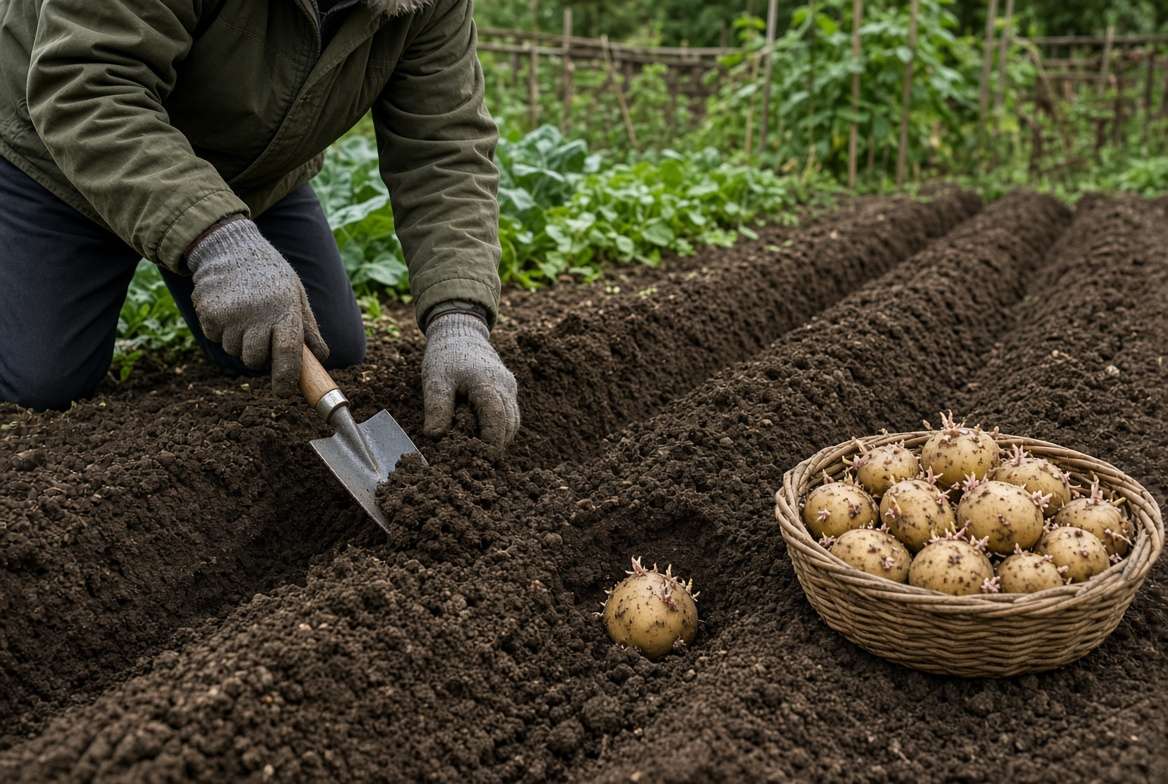
Dig the Trench: Dig a trench about 6 to 8 inches deep. If you are planting multiple rows, space the trenches about 2 to 3 feet apart to give yourself room to walk and work.
-
Space the Seed: Place your seed potatoes (or cut seed pieces) into the trench with the “eyes” or sprouts pointing toward the sky. Space them 10 to 12 inches apart.
-
Cover Lightly: Cover the potatoes with just 3 to 4 inches of soil. Do not fill the trench completely yet.
-
The Hilling Process: As the green shoots emerge and grow to about 6 to 8 inches tall, gently mound (or “hill”) the surrounding soil around the stems, burying the lower half of the plant.
Why is hilling crucial in Michigan? First, burying those stems protects the young, tender foliage if a late-May frost threatens overnight. Second, potatoes form above the seed piece, along the buried stem. Hilling gives the tubers a loose, dark environment to expand into and prevents them from pushing through the soil surface. Tubers exposed to sunlight turn green and produce solanine, a toxic, bitter compound.’
The Straw Mulch Hack (A Michigan Favorite) 🌾
If you struggle with heavy, rock-filled clay in the Lower Peninsula, the straw mulch method is a game-changer.
Instead of digging deep trenches, simply loosen the top few inches of soil and press your seed potatoes slightly into the earth. Then, cover the entire bed with 6 to 8 inches of clean, weed-free agricultural straw. As the potato plants grow through the straw, continue layering more straw around the stems (acting as a lightweight “hill”).
The straw acts as a brilliant insulator against late spring frosts, retains precious soil moisture during dry August heatwaves, and suppresses weeds. The best part? At harvest time, you do not need a pitchfork—you simply pull back the straw and pick up pristine, clean potatoes right off the soil surface!
7. Defending Your Crop: Michigan Pests & Diseases 🐛
Even with perfect planting timing, you must remain vigilant. The Great Lakes climate provides ideal conditions for a few notorious garden invaders.
Beating the Colorado Potato Beetle 🪲
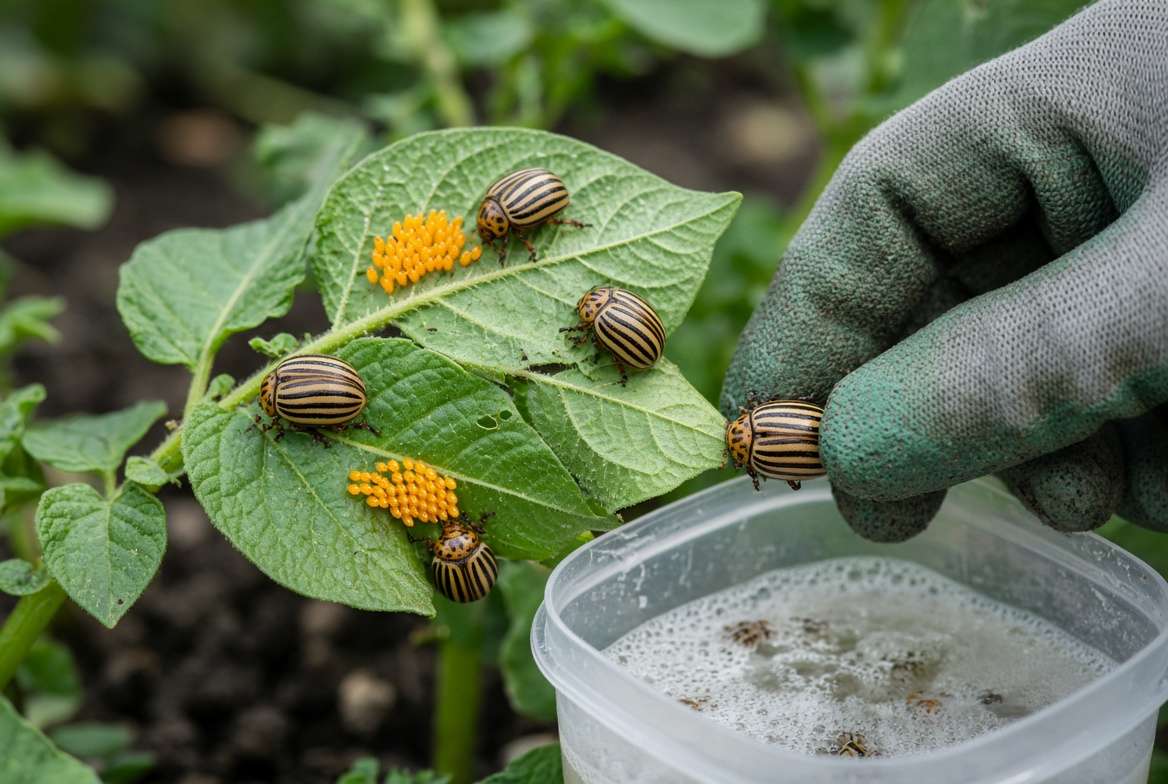
The Colorado Potato Beetle is the most destructive insect pest for Michigan potato growers. Adult beetles feature distinctive yellow and black striped shells, while their larvae are bright red and fleshy. Both stages will rapidly skeletonize your potato foliage if left unchecked.
Expert E-E-A-T Tip: Inspect the undersides of your potato leaves weekly starting in early June. Look for clusters of bright orange eggs. The most effective organic defense is vigilant hand-picking—dropping adults, larvae, and egg clusters into a bucket of soapy water. For heavy infestations, organic sprays like Neem oil or Spinosad can be highly effective when applied to young larvae.
Preventing Potato Scab & Late Blight 🍂
Michigan’s humid summers can be a breeding ground for fungal and bacterial diseases.
-
Potato Scab: As mentioned earlier, this bacterial infection thrives in alkaline soils (pH above 6.5) and dry conditions. Keep your soil evenly moist, especially right after the plants finish flowering, which is when the new tubers are rapidly expanding.
-
Late Blight: This devastating fungal disease causes foliage to blacken and collapse in humid, wet weather. To prevent it, ensure your plants are spaced adequately for good airflow. Avoid overhead watering—use drip irrigation or water at the base of the plants in the morning so the leaves dry quickly in the sun. Always follow the advice of agricultural authorities like the MSU Extension: practice crop rotation by never planting potatoes (or their nightshade cousins, like tomatoes and peppers) in the same spot more than once every three years.
8. Harvesting Your Bounty: When to Start Digging 🧺
The anticipation of digging up hidden treasure makes potatoes the most fun crop to harvest. Your harvesting timeline depends entirely on how you plan to eat them.
Harvesting Tender “New Potatoes” 🍽️
You do not have to wait until fall to enjoy your crop! About 2 to 3 weeks after your potato plants burst into bloom (usually in July for Michigan gardeners), the plant has started forming small tubers underground.
Carefully loosen the soil around the outer edges of a plant with your hands or a hand trowel. You can “bandicoot” or steal a few small, thin-skinned “new potatoes” without killing the main plant. These are incredibly sweet and tender, perfect for a quick summer potato salad. Eat them immediately, as their thin skins mean they will not store for long.
Curing and Storing the Main Harvest 🍂
If you are growing potatoes for winter storage, patience is key. Wait until late summer or early fall when the green foliage begins to yellow, wither, and completely die back to the ground.
Once the foliage is dead, leave the potatoes in the ground for another 10 to 14 days. This crucial waiting period allows the potato skins to thicken and cure, which prevents rotting during winter storage. Dig them up gently with a broadfork or spading fork on a dry, sunny day.
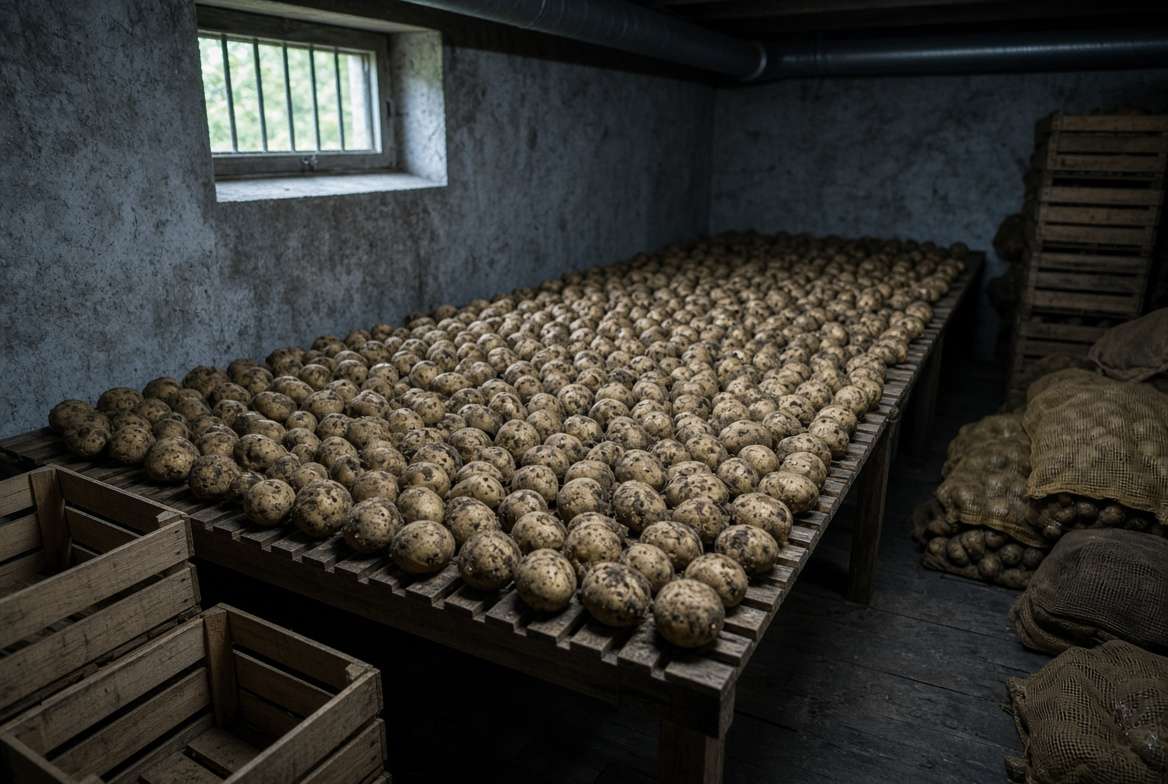
The Golden Rule of Storage: Never wash potatoes before storing them! Brush off the loose dirt and lay them out in a single layer in a dark, humid, cool area (around 50°F to 60°F) for one week to finish curing. Afterward, move them to a cool, dark root cellar, basement, or unheated closet (ideally 38°F to 40°F) in breathable mesh bags or cardboard boxes.
9. Frequently Asked Questions (FAQs) 🤔
How late can I plant potatoes in Michigan?
If you missed the spring planting window, you can still plant fast-maturing early varieties (like Yukon Gold or Norland) through mid-to-late June. Because the intense summer heat will already be present, make sure you mulch them heavily to keep the root zone cool. Yields may be slightly smaller, but you will still get a respectable fall harvest.
What happens if it snows after I plant my potatoes?
Do not panic! Michigan springs are famous for surprise May snowfalls. If your potatoes are still safely buried under the soil, the earth acts as excellent insulation and they will be perfectly fine. If the green shoots have already emerged above the hilled soil, quickly cover the plants with a thick layer of straw, old blankets, or agricultural frost cloth before the snow hits. Remove the covers as soon as the sun comes out the next day.
Can I grow potatoes in buckets or grow bags in Michigan?
Absolutely! Container gardening is a brilliant, space-saving strategy for urban gardeners in places like Detroit or Grand Rapids. Grow bags (10 to 15 gallons) warm up much faster in the spring than the actual ground, allowing you to plant a week or two earlier. Just be aware that containers dry out incredibly fast during a Michigan July, so you will need to water them almost daily.
The secret to a massive, frost-free potato harvest in Michigan ultimately comes down to paying closer attention to your soil temperature than the calendar. By waiting for that crucial 45°F mark, pre-sprouting your seed potatoes for a head start, and utilizing smart hilling and mulching techniques, you can easily outmaneuver our state’s unpredictable spring weather.
Now is the perfect time to start planning your garden layout and sourcing high-quality, certified seed potatoes from your local nursery. Get your soil thermometers ready, prepare those beds with rich compost, and prepare to dig up your best root crop yet. Happy planting! 🌻🚜











