
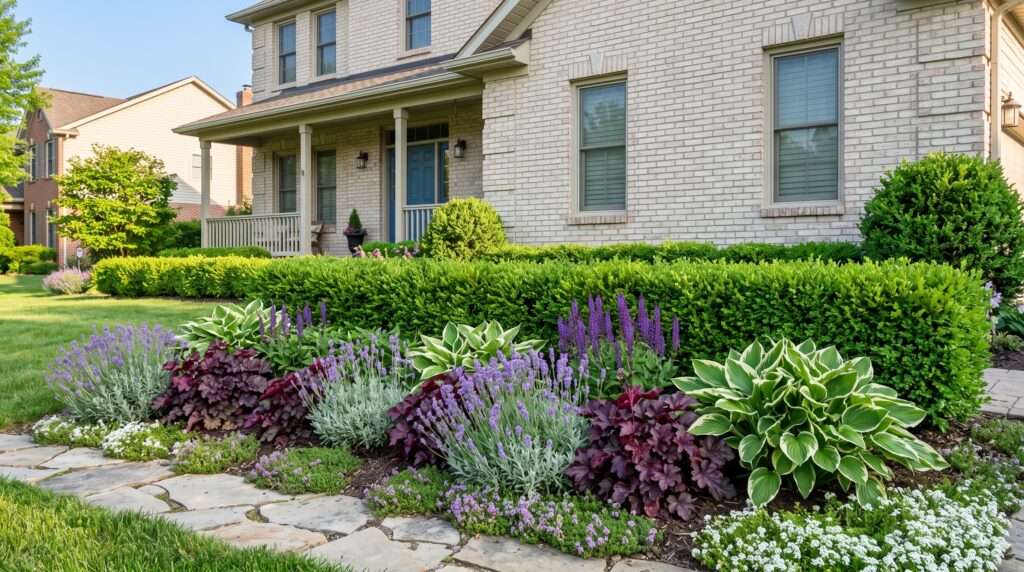
Boxwoods are the undisputed kings of foundational planting, offering year-round structure, deer resistance, and timeless elegance to any property. However, a continuous, solid line of green can quickly feel flat, formal, or monotonous without the right contrasting elements. If you are struggling to figure out exactly what to plant in front of boxwoods to break up that “green wall,” you are facing one of the most common landscape design challenges. Homeowners often find it difficult to select companion plants that will not aggressively compete with the boxwood’s notoriously shallow, sensitive root system while thriving in the exact same soil and watering conditions.
This comprehensive guide breaks down the science and art of landscape layering. By choosing the right mix of perennials, groundcovers, and annuals, you can frame your evergreen shrubs beautifully. Below is an expert-approved list of 12 perfect companion plants categorized by sunlight, texture, and color to help you transform your front yard into a magazine-worthy landscape. 🌸🌿
The Golden Rules of Planting Near Boxwoods (Expert Insights) 🧠
Before diving into the plant list, it is crucial to understand the horticultural science behind companion planting with evergreen shrubs. Boxwoods (Buxus spp.) have specific environmental needs, and choosing the wrong neighbor can lead to stunted growth, fungal diseases, or root suffocation.
Mind the Shallow Root System 🚫⛏️
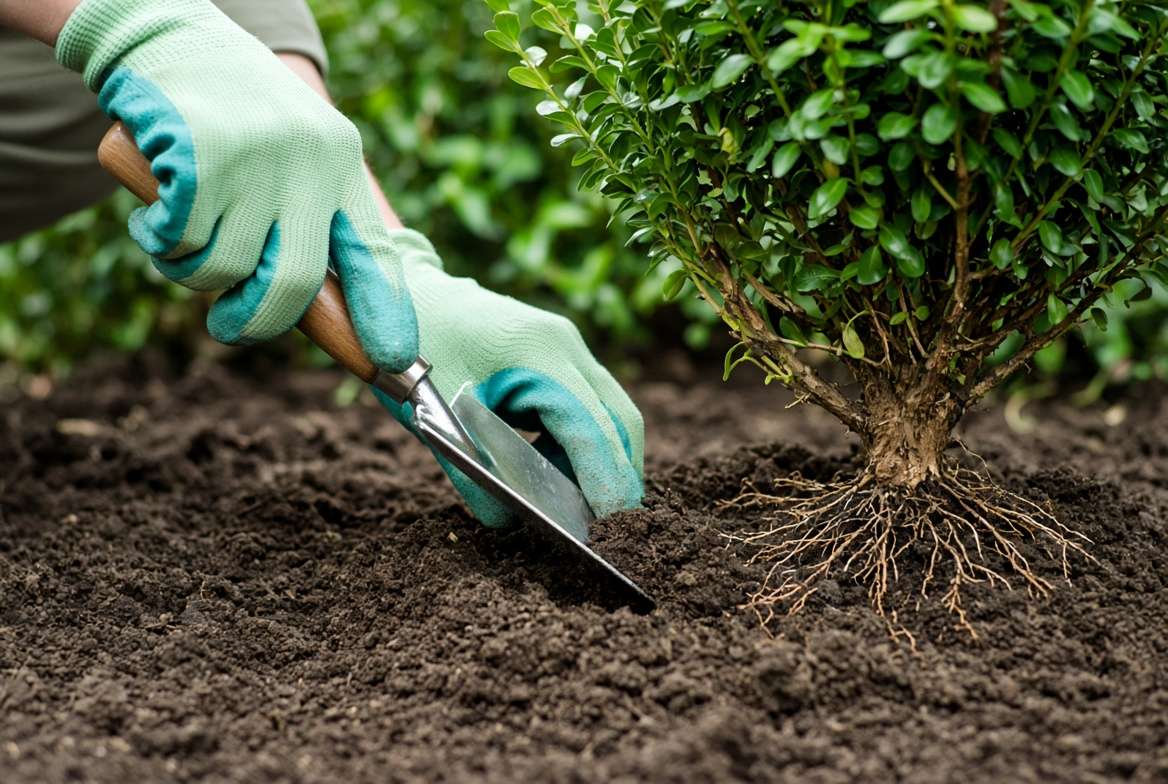
Boxwoods are characterized by a very dense, fibrous root system that sits incredibly close to the soil surface. When you plant directly in front of them, aggressive digging can easily sever these feeder roots, causing the shrub to turn yellow or suffer from dieback. When selecting companion plants, avoid deep-rooted shrubs or aggressive spreaders. Always dig your planting holes carefully with a hand trowel rather than a large shovel, gently working around the existing boxwood roots.
Match Soil and Watering Needs 💧🌱
A companion plant is only successful if it can share a habitat without competing for basic survival. Boxwoods prefer well-draining loam, a slightly acidic to neutral pH, and moderate watering. If you pair them with bog plants that require constant moisture, the boxwood roots will develop rot.
| Environmental Factor | Boxwood Preference | Ideal Companion Plant Match |
| Soil Drainage | Highly well-draining | Requires loose, well-aerated soil; intolerant of standing water. |
| Soil pH | 6.5 to 7.0 (Slightly acidic to neutral) | Adaptable to neutral soils; avoid acid-loving extremes like blueberries. |
| Watering | Moderate (Let top inch dry out) | Drought-tolerant once established; moderate water needs. |
| Nutrient Demand | Low to moderate | Light feeders that will not deplete nitrogen from the topsoil. |
The Art of Layering and Texture Contrast 🎨✂️
Outstanding landscape design relies on visual contrast. Clipped boxwoods provide tight, small leaves and rigid, predictable geometry (spheres, cubes, or straight hedges). To create striking curb appeal, plant neighbors must offer the exact opposite: loose, airy habits, large broad leaves, or spiky vertical blooms. This juxtaposition highlights the structured beauty of the boxwood rather than blending into it.
Top Sun-Loving Perennials for Boxwood Borders 🐝
If your foundational plantings face south or west and receive six to eight hours of direct sunlight daily, these sun-worshipping perennials provide the perfect splash of color and textural contrast.
1. Lavender (Lavandula angustifolia) 💜
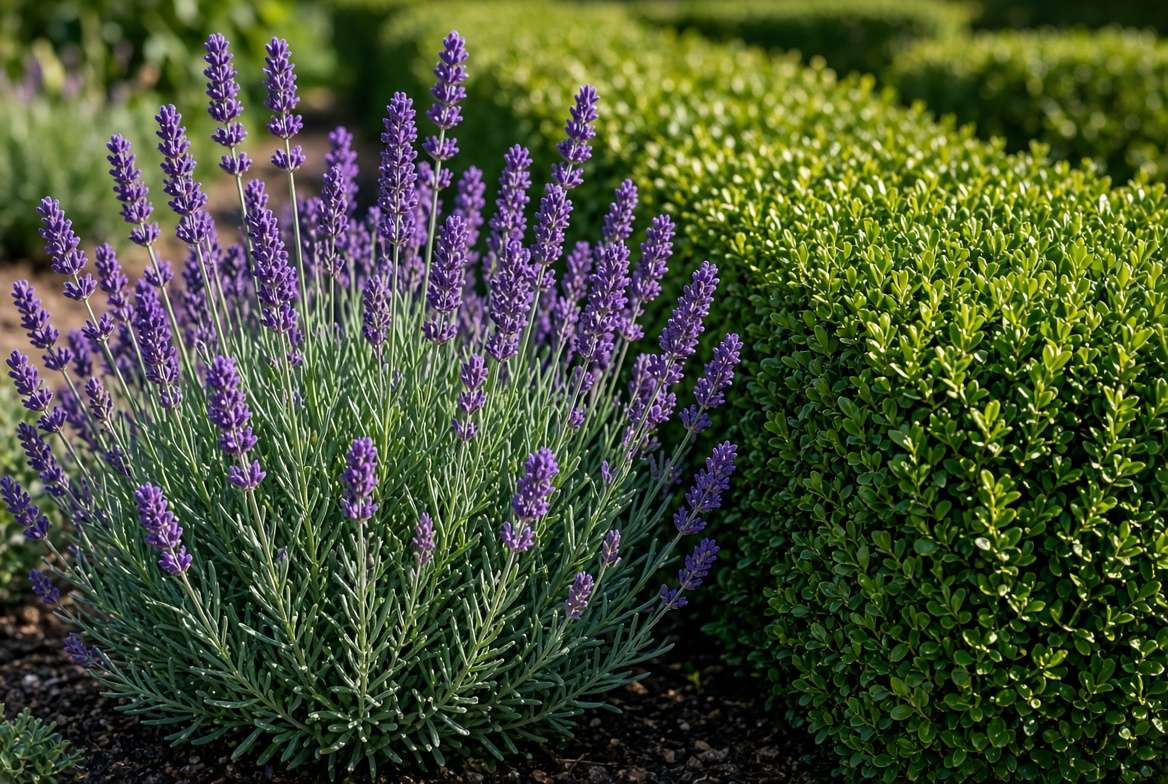
Lavender is arguably the most classic companion for boxwood hedges, frequently seen in formal English and French potager gardens.
-
Why it Works: The silvery-gray, needle-like foliage provides a stunning, muted contrast against the glossy, dark green leaves of the boxwood.
-
Key Details: Lavender absolutely demands excellent drainage and thrives in slightly alkaline soil. Its vertical spikes of purple blooms break up the horizontal lines of a clipped hedge perfectly, while the soothing fragrance elevates the sensory experience of your walkways.
-
Hardiness: Zones 5-9.
2. Salvia (Salvia nemorosa) 🦋
For homeowners seeking intense, vibrant color that lasts all summer, perennial Salvia (often called Meadow Sage) is an unbeatable choice.
-
Why it Works: Salvia produces densely packed, vertical spikes of deep purple, blue, or even pink flowers. The rigid upright posture of the blooms plays beautifully against the rounded mounds of boxwood shrubs.
-
Expert Tip: To maximize your curb appeal, cut the Salvia back entirely after its first major bloom in early summer. This will trigger a robust second flush of flowers in late August.
-
Hardiness: Zones 4-8.
3. Catmint (Nepeta racemosa) 🐱
If you love the look of lavender but struggle with heavy clay soil or humid conditions, Catmint is your resilient alternative.
-
Why it Works: Catmint has a soft, sprawling, billowy habit that elegantly blurs the rigid, formal baseline of boxwoods. It softens the hard edges of landscape borders.
-
Key Details: This plant is incredibly drought-tolerant, blooms profusely from late spring through fall, and is highly deer-resistant. Varieties like ‘Walker’s Low’ provide endless violet-blue color with virtually zero maintenance.
-
Hardiness: Zones 3-9.
4. Creeping Thyme (Thymus serpyllum) 🌿
For beds that transition directly into hardscaping like sidewalks, driveways, or retaining walls, a low-growing mat is essential.
-
Why it Works: Creeping Thyme stays hugging the ground (rarely growing taller than 2 to 3 inches) and cascades beautifully over stone edges. It prevents the soil in front of the boxwoods from looking bare while offering tiny, vibrant pink or purple flowers in mid-summer.
-
Key Details: It requires very little water and can even handle light foot traffic.
-
Hardiness: Zones 4-9.
Best Shade-Tolerant Plants to Pair with Boxwoods 🌤️
Boxwoods are incredibly versatile and are often planted on the north or east sides of homes, or nestled under the dappled canopies of large oak or maple trees. In these lower-light environments, foliage becomes your greatest design asset.
5. Coral Bells (Heuchera) 🍁
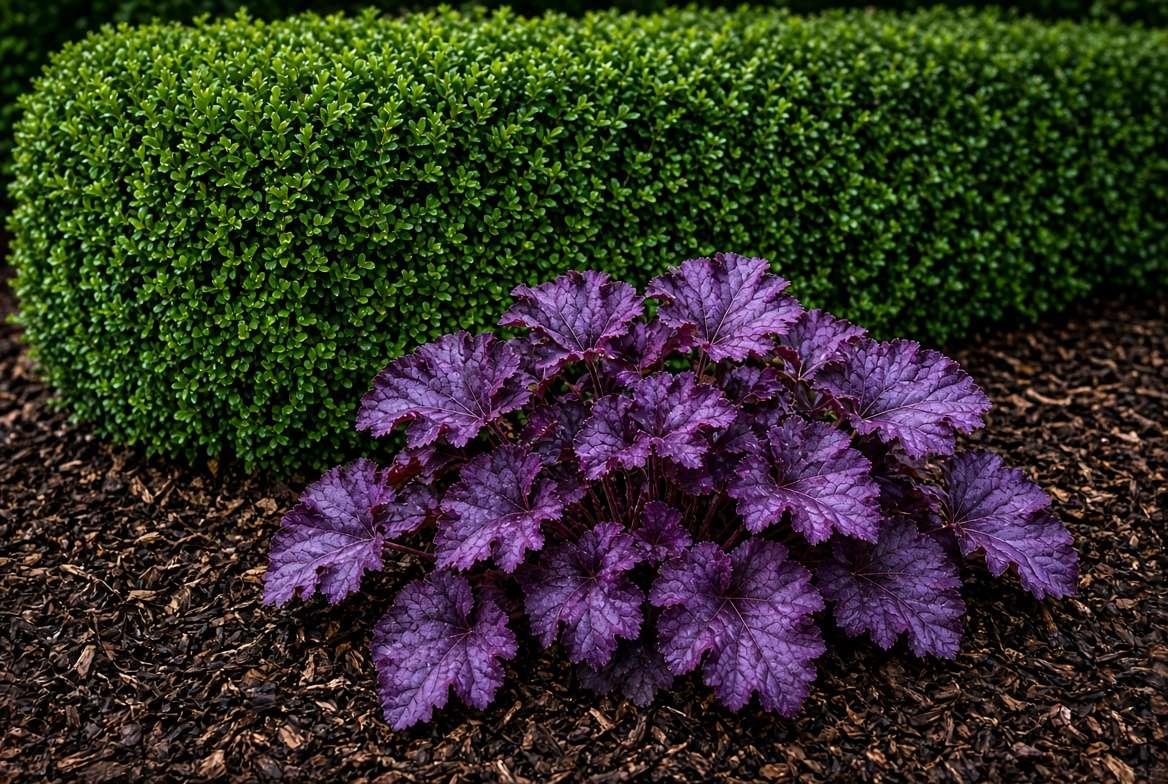
When flowers are scarce in the shade, Coral Bells bring the drama through their extraordinary leaves.
-
Why it Works: Heuchera comes in an astonishing array of foliage colors—ranging from deep plum and ruffled bronze to neon lime green and silver-veined magenta. A neat row of plum-colored Coral Bells bordering a bright green boxwood hedge creates instant, year-round contrast without ever relying on blooms.
-
Key Details: Their shallow, non-competitive root systems make them ideal, respectful neighbors for boxwoods.
-
Hardiness: Zones 4-9.
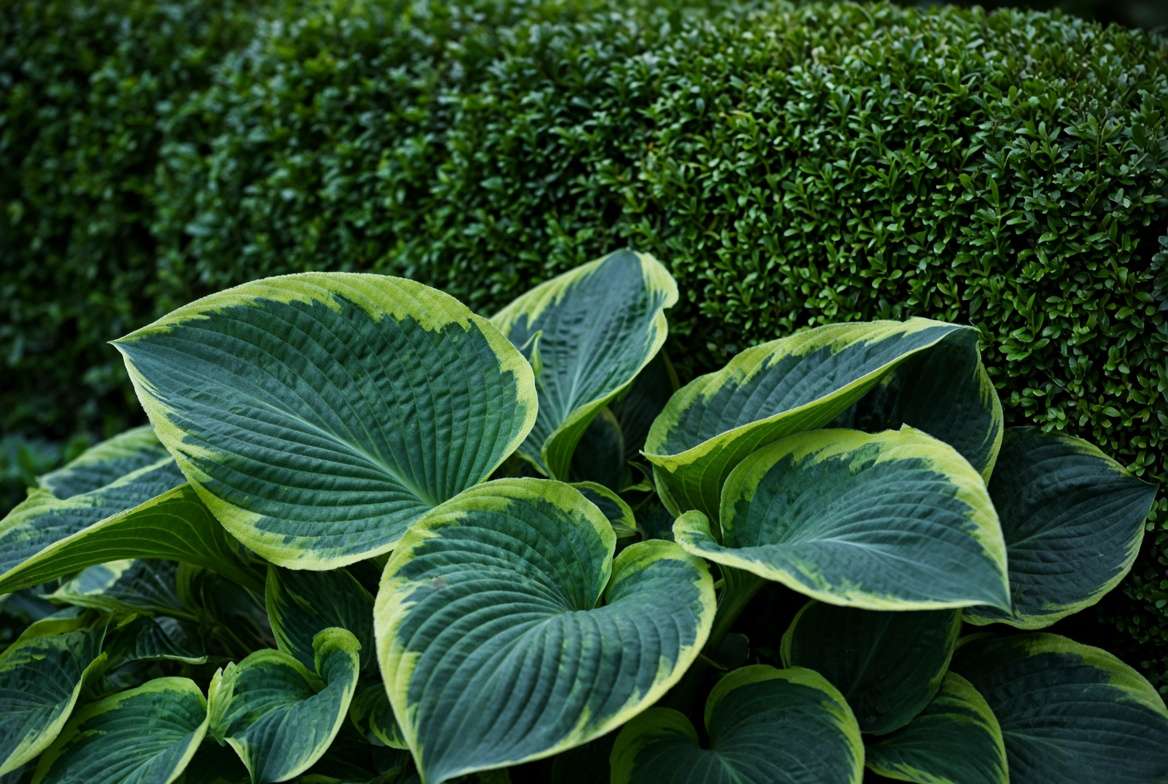
6. Hostas (Hosta spp.) 🥬
Hostas are the undisputed champions of the shade garden, and their structural differences make them an ideal pairing for fine-leaved evergreens.
-
Why it Works: The massive, broad, deeply ribbed leaves of a Hosta offer the ultimate textural contrast to the tiny, smooth, uniform leaves of a boxwood.
-
Expert Tip: To brighten up a particularly dark, shady foundational bed, opt for variegated Hosta varieties (those with white or yellow margins) like ‘Patriot’ or ‘Frances Williams’.
-
Hardiness: Zones 3-9.
7. Astilbe (Astilbe spp.) 🌸
For those who want vibrant floral color in the shade, Astilbe delivers with unique, feather-like blooms.
-
Why it Works: Astilbe produces fluffy, pastel plumes in shades of pale pink, white, and deep red. These soft, romantic textures soften the architectural stiffness of clipped hedges.
-
Key Details: Astilbe does prefer slightly more moisture than boxwoods. To maintain harmony, apply a generous layer of mulch directly around the Astilbe to trap localized moisture without waterlogging the entire bed.
-
Hardiness: Zones 4-9.
8. Lenten Rose (Helleborus) 🥀
Your front landscape should not look barren in the early months of the year. Lenten Roses are the key to extending your garden’s season.
-
Why it Works: Hellebores are evergreen perennials that bloom incredibly early—often in late winter or early spring while snow is still on the ground. Planting them in front of boxwoods ensures the bed looks vibrant and alive before other perennials have even broken dormancy.
-
Key Details: They feature leathery, palmate leaves and nodding, cup-shaped flowers that thrive in dappled shade.
-
Hardiness: Zones 4-9.
Low-Growing Groundcovers for a Seamless Edge 🌼
Sometimes you do not want a tall perennial blocking the view of your meticulously pruned boxwoods; you simply want a neat, tidy, and low-maintenance carpet to finish the front border.
9. Sweet Alyssum (Lobularia maritima) ☁️
Sweet Alyssum is a powerhouse for creating a crisp, clean aesthetic.
-
Why it Works: This low-mounding plant grows densely and covers itself in thousands of tiny blossoms, acting as a fragrant, white (or purple) “snow” resting at the base of your shrubs.
-
Key Details: While treated as an annual in most growing zones, it grows incredibly fast and often self-seeds. It acts as a living mulch, suppressing weeds naturally around the boxwood roots.
10. Pachysandra (Pachysandra terminalis) 🍃
For traditional, estate-style landscaping, Pachysandra is a staple that never goes out of style.
-
Why it Works: It provides a rich, glossy, evergreen carpet that unifies the landscape. The jagged edges of Pachysandra leaves add just enough subtle texture variation against the smooth boxwood.
-
Key Details: It spreads via underground runners to form a dense colony. Plant it in shaded borders where turfgrass refuses to grow.
-
Hardiness: Zones 4-8.
Colorful Annuals for High-Impact Curb Appeal 🌷
If you are the type of gardener who loves to switch up your home’s color palette every season, dedicating the front border to annuals allows for high-impact, continuous blooms from May until frost.
11. Calibrachoa (Million Bells) 🌺
Resembling miniature petunias, Calibrachoa is a prolific bloomer that thrives in full sun.
-
Why it Works: The plant features a naturally trailing, spilling habit. When planted at the front of a raised bed or retaining wall bordering your boxwoods, it creates a cascading waterfall of non-stop trumpet flowers.
-
Key Details: They are self-cleaning (no deadheading required) and come in almost every color of the rainbow.
12. Begonias (Begonia semperflorens) 🌸
Wax begonias are landscape workhorses that bring unwavering reliability to challenging spots.
-
Why it Works: Their fleshy, waxy leaves (available in both bronze and green) and continuous blooms thrive in both partial sun and deep shade. This makes them highly versatile if your boxwood hedge wraps around the corner of a house, transitioning from sun to shade.
-
Key Details: Begonias require very little maintenance, have tiny root structures that will not disturb your shrubs, and are highly drought-tolerant once established.
Pro Landscape Design Tips for Boxwood Borders 📐
Selecting the right plants is only half the battle; how you install and maintain them determines the long-term success of your curb appeal.
The Spacing Rule for Disease Prevention 🌬️
One of the most critical mistakes homeowners make is planting companions too closely to the boxwood’s foliage. Boxwoods are highly susceptible to fungal diseases like Boxwood Blight and Volutella Stem Blight, both of which thrive in damp, stagnant air.
-
The Rule: Always leave a minimum of 12 to 18 inches of “breathing room” between the mature width of your boxwood and the mature spread of your companion plant. This spacing ensures proper air circulation, allowing the evergreen foliage to dry rapidly after rainfall or morning dew.
Adding Spring Bulbs for Early Color 🌷
For an expert-level landscaping trick, interplant spring-blooming bulbs like Tulips, Daffodils, and Crocus between your boxwoods and your summer-blooming perennials.
-
How to Execute: Plant the bulbs in the fall just behind low groundcovers (like Creeping Thyme) or among late-emerging perennials (like Hostas). In early spring, the bulbs will provide spectacular color. By the time the bulb flowers fade and their foliage begins to yellow, the neighboring perennials will grow up and gracefully camouflage the dying bulb leaves, keeping the front bed looking pristine.
Frequently Asked Questions (FAQs) 🤔
What should you NOT plant next to boxwoods?
Avoid any plants that are aggressive spreaders, have deep taproots, or are heavy water-feeders. For example, planting thirsty companions like Willows, large Hydrangeas, or moisture-loving ferns directly next to a boxwood will either suffocate the boxwood’s roots or force you to overwater the bed, leading to root rot.
How far in front of boxwoods should I plant perennials?
Calculations must be based on the mature size of the plants, not the nursery pot size. Generally, dig your perennial holes 2 to 3 feet outward from the main trunk of the boxwood. This protects the shallow root zone and ensures airflow around the lower branches of the hedge.
Can I put mulch around boxwoods and their companion plants?
Yes, mulching is highly beneficial for regulating soil temperature and suppressing weeds. However, keep the mulch layer strictly to 1.5 to 2 inches thick. You must pull the mulch away from the main stems of both the boxwoods and the companion plants (leaving a small bare ring around the trunks) to prevent stem rot and pest infestations.
Designing Your Dream Landscape 🌟
Mastering what to plant in front of boxwoods all comes down to the foundational principles of landscape layering: keeping your tall, structured evergreens in the back, and placing your airy, colorful, and textured companions in the front. By honoring the boxwood’s need for well-draining soil and careful root management, you can create a vibrant, multi-dimensional garden bed that evolves beautifully through the seasons.
Before making a trip to the nursery, take a few days to observe your front beds to determine exactly how many hours of direct sunlight they receive. Whether you lean toward a classic English garden with fragrant Lavender, or a lush, shaded retreat filled with giant Hostas and Coral Bells, matching the plant to your specific microclimate is the secret to low-maintenance success. What companion plant are you planning to add to your landscape this weekend?











