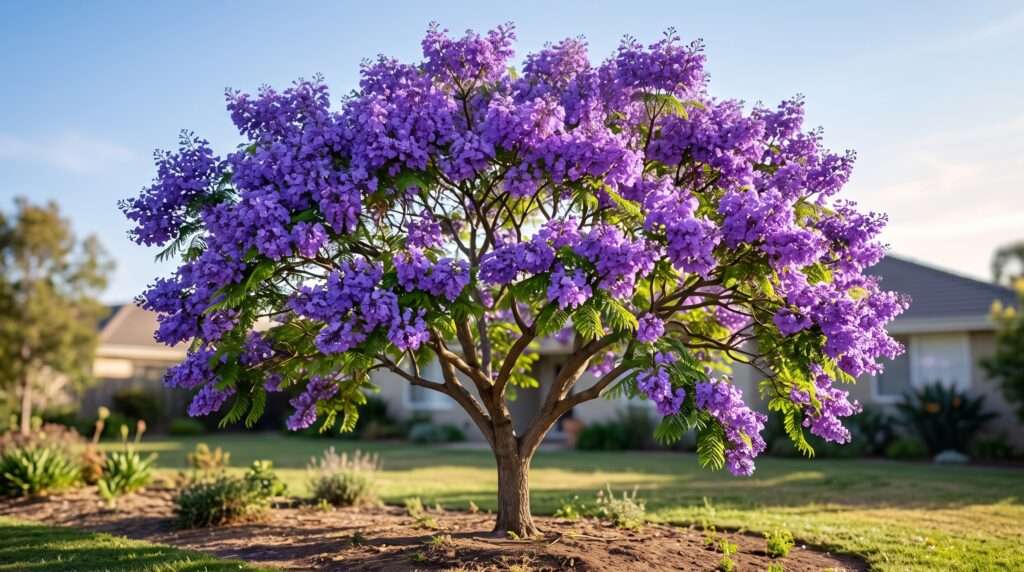
Few sights in the horticultural world rival a neighborhood transformed by the breathtaking, cloud-like canopy of vibrant purple flowers. Cultivating a jacaranda plant (Jacaranda mimosifolia) is a dream for many gardeners, but it is also a common source of frustration. Many enthusiasts plant these magnificent flowering trees only to end up with lush, fern-like green foliage and absolutely zero flowers, or they struggle with brittle branches that snap in the first heavy wind. This comprehensive guide reveals the expert-backed secrets to triggering those massive blooms, tailoring care routines for both outdoor landscapes and indoor containers, and mastering the crucial pruning techniques required to keep your tree structurally safe and thriving.
🌱 What is a Jacaranda Plant? (Understanding Jacaranda mimosifolia)
Native to the tropical and subtropical regions of South America—specifically Argentina and Brazil—the Jacaranda is a fast-growing deciduous (or semi-evergreen, depending on the climate) tree. Known for its finely cut, bipinnate leaves that resemble giant fern fronds, it brings an immediate architectural elegance to any landscape.
Under ideal conditions, a young tree can shoot up by as much as 10 feet per year, ultimately reaching mature heights of 25 to 50 feet with an equally impressive canopy spread. Because of their tropical origins, outdoor Jacarandas thrive year-round only in USDA Hardiness Zones 9b through 11. In cooler climates, they are often treated as patio plants or indoor specimens.
💡 Expert Insight: Planting a Jacaranda requires strategic space planning. They develop aggressive, surface-level root systems that compete heavily for nutrients and water. Never plant a Jacaranda within 15 feet of a foundation, driveway, or swimming pool, as the roots can lift concrete and the seasonal flower drop can clog pool filters.
🌸 The Ultimate Secret to Massive Purple Blooms
The primary reason growers fail to see flowers on their Jacaranda is a fundamental misunderstanding of the tree’s natural bloom cycle. Here is exactly how to force your tree to produce its signature purple canopy.
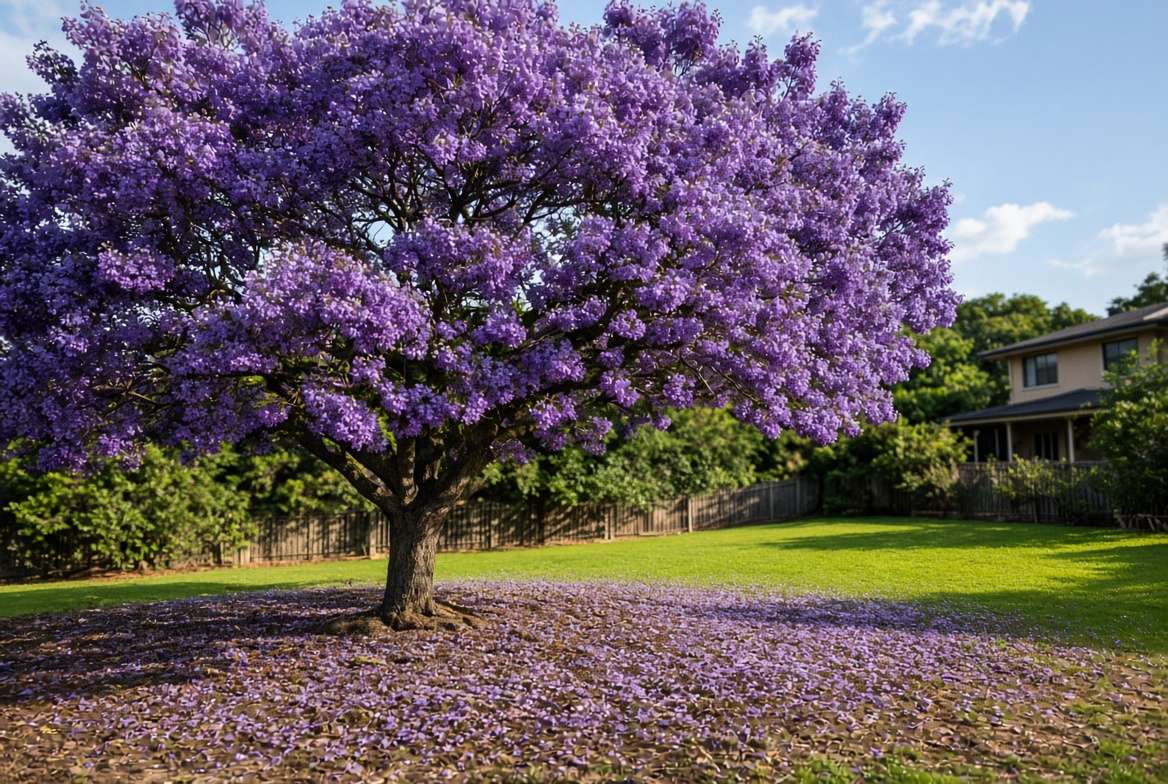
The Role of “Stress” in Blooming
There is a counterintuitive horticultural secret to flowering trees: Jacarandas actually bloom best when slightly stressed. In their native habitat, they experience a distinct dry season followed by a wet season. Over-pampering your tree with constant water and rich soil often leads to vigorous foliage growth at the expense of flower buds. Allowing the soil to dry out significantly during the dormant winter months mimics this natural dry season and signals the tree to reproduce (bloom) when spring arrives.
The Nitrogen Trap
Lawn fertilizers are the number one enemy of a blooming Jacaranda. Turf grass fertilizers are heavily loaded with nitrogen, the macronutrient responsible for rapid, green leaf growth. Because Jacaranda roots spread far beyond their drip line, trees planted in or near lawns constantly absorb this nitrogen. The result is a tree trapped in a vegetative state. To encourage flowers, keep high-nitrogen fertilizers far away from the root zone.
Temperature and Sunlight Triggers
Blooms require absolute full sun. Even partial shade will drastically reduce flower production. Furthermore, bud formation is triggered by a slight dip in winter temperatures. While they cannot tolerate freezing conditions, a couple of months of cool weather (around 50°F to 60°F) is necessary to initiate the spectacular spring show.
☀️ Essential Care Guide for a Thriving Jacaranda Plant
Achieving a healthy, long-lived tree requires replicating its native subtropical environment as closely as possible.
Sunlight Requirements 🌞
Rule of thumb: Your tree needs a minimum of 6 to 8 hours of direct, unfiltered sunlight daily. If planting outdoors, choose a southern or western exposure.
Soil & Drainage Rules 🪨
Jacarandas despise “wet feet” and will quickly succumb to root rot in heavy, waterlogged earth. They prefer sandy, loamy, well-draining soil with a slightly acidic to neutral pH.
-
Pro Tip for Heavy Clay: If you live in an area with heavy clay soil, do not simply dig a hole and fill it with potting mix (this creates a “bathtub” effect where water pools). Instead, plant the tree on a raised mound to ensure gravity pulls excess water away from the root crown.
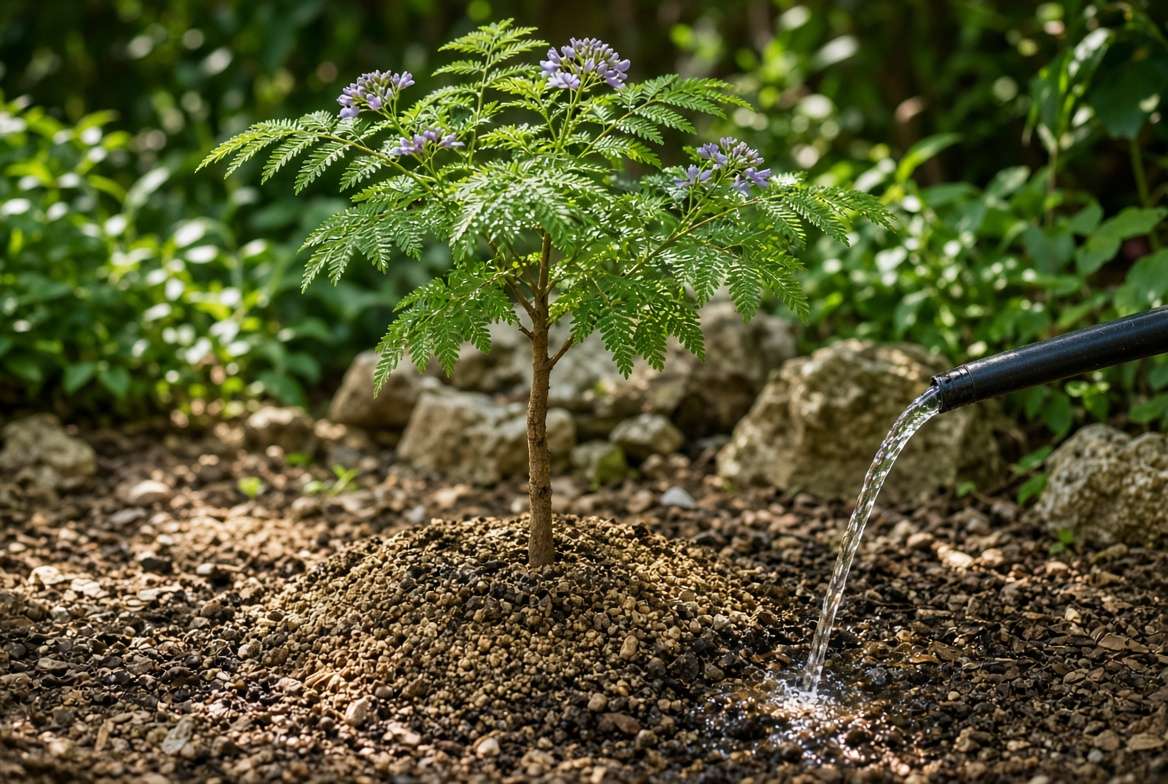
Watering Schedule by Season 💧
-
Establishment Phase (First Year): Water deeply once a week to help roots establish.
-
Active Growth (Spring/Summer): Water established trees deeply but infrequently—only when the top 3 inches of soil are completely dry.
-
Dormancy (Winter): Cut back watering drastically. Allow the tree to experience the mild drought stress necessary for spring blooms.
Fertilizing for Flowers, Not Just Leaves 🧪
If your soil is exceptionally poor, skip the standard balanced fertilizers. Instead, apply a fertilizer high in phosphorus (the middle number in the N-P-K ratio), such as bone meal, in early spring. Phosphorus is the key nutrient that supports healthy root development and prolific flower production.
✂️ How to Prune a Jacaranda Tree for Health and Safety
Jacaranda wood is notoriously soft and brittle. Without structural intervention, the heavy, rapidly growing canopy can easily split the trunk or drop massive branches during storms.
Formative Pruning in the First 3 Years
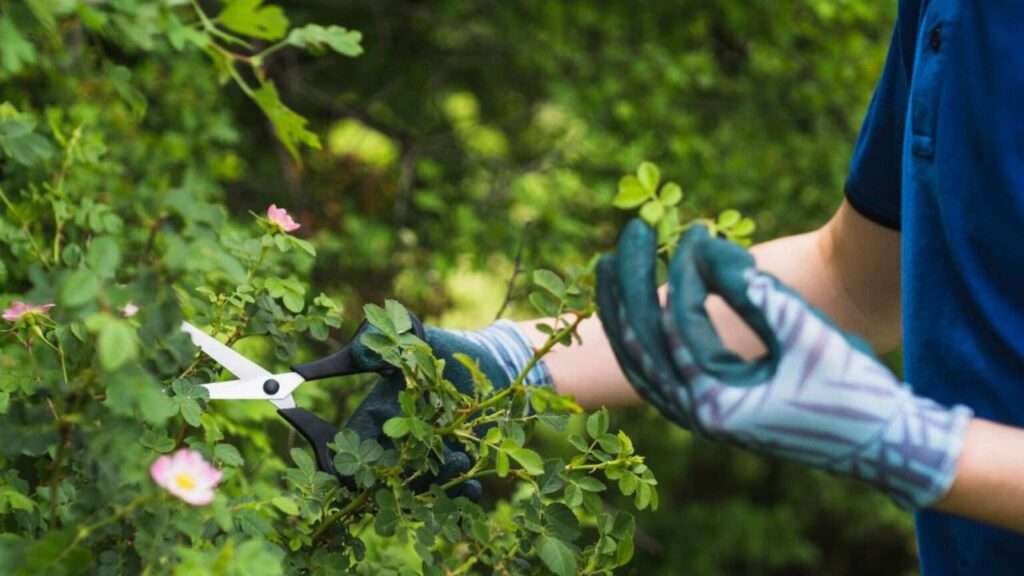
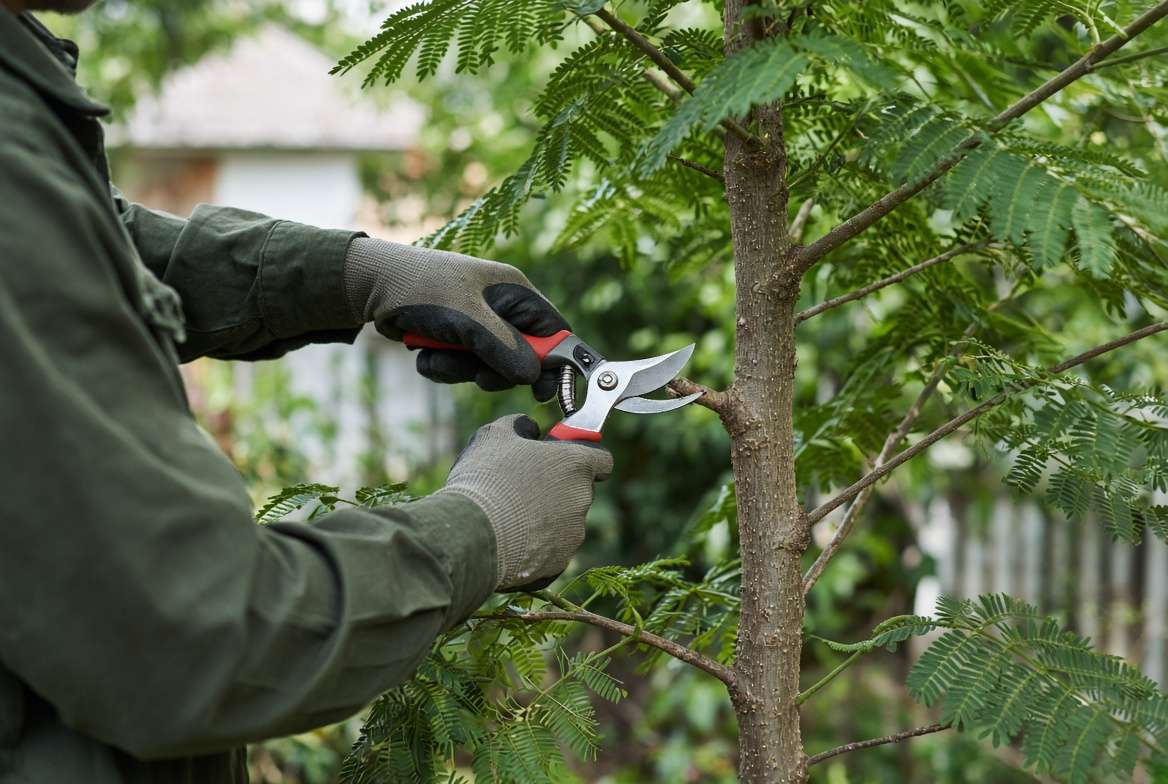
Your primary goal is to establish a single, strong central leader (the main trunk). Look for competing vertical branches (co-dominant stems) and remove them early. Ensure the remaining lateral branches have wide angles of attachment to the trunk; narrow, “V-shaped” crotches are weak and prone to splitting.
Maintenance Pruning for Mature Trees
Once mature, pruning shifts to canopy management. Thin out the dense inner branches every few years. This allows wind to pass through the canopy rather than pushing against it like a sail, significantly reducing the risk of branch failure.
⚠️ Safety Warning: Never “top” or pollard a Jacaranda. Chopping off the upper canopy forces the tree to push out rapid, weakly attached emergency shoots (water sprouts). These snap easily in the wind, permanently ruin the tree’s natural umbrella shape, and delay blooming for years.
🪴 Can You Grow a Jacaranda Plant Indoors in a Pot?
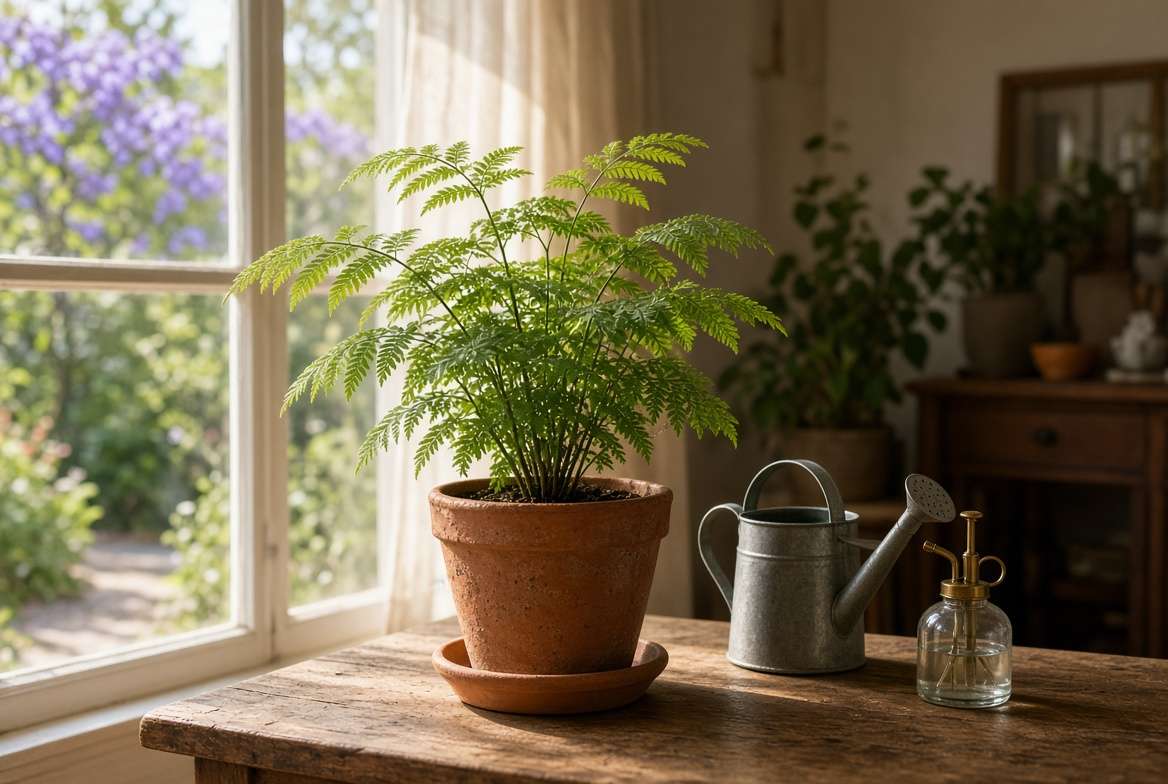
Yes, but it is vital to set proper expectations: indoor Jacarandas rarely, if ever, bloom. However, their delicate, mimosa-like foliage makes them stunning, fast-growing houseplants.
Choosing the Right Container
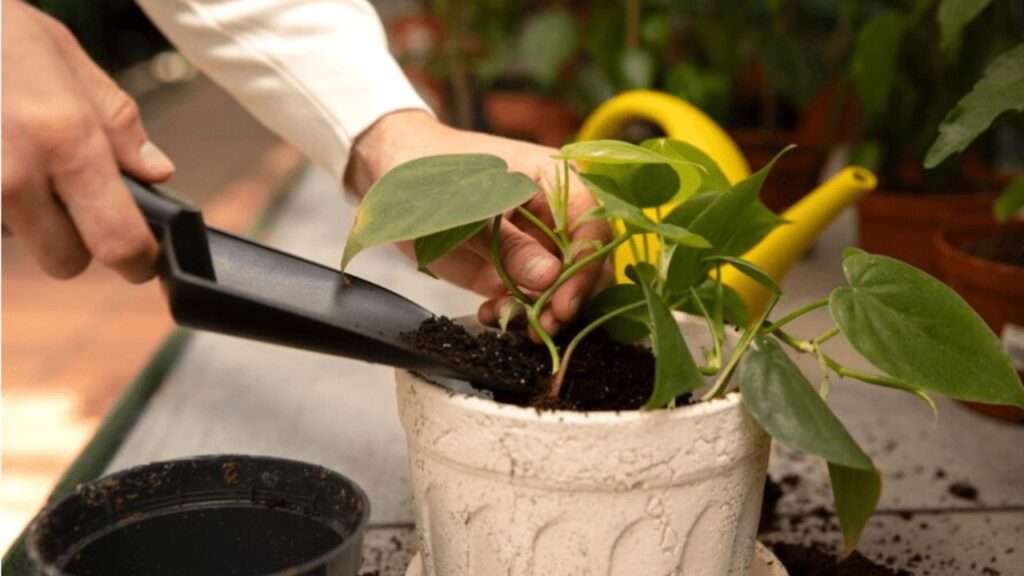
Opt for a heavy, unglazed terracotta pot. Terracotta is porous, allowing excess moisture to evaporate from the soil, which is crucial for preventing root rot in indoor environments. Ensure the pot has multiple, large drainage holes.
Indoor Care Tweaks
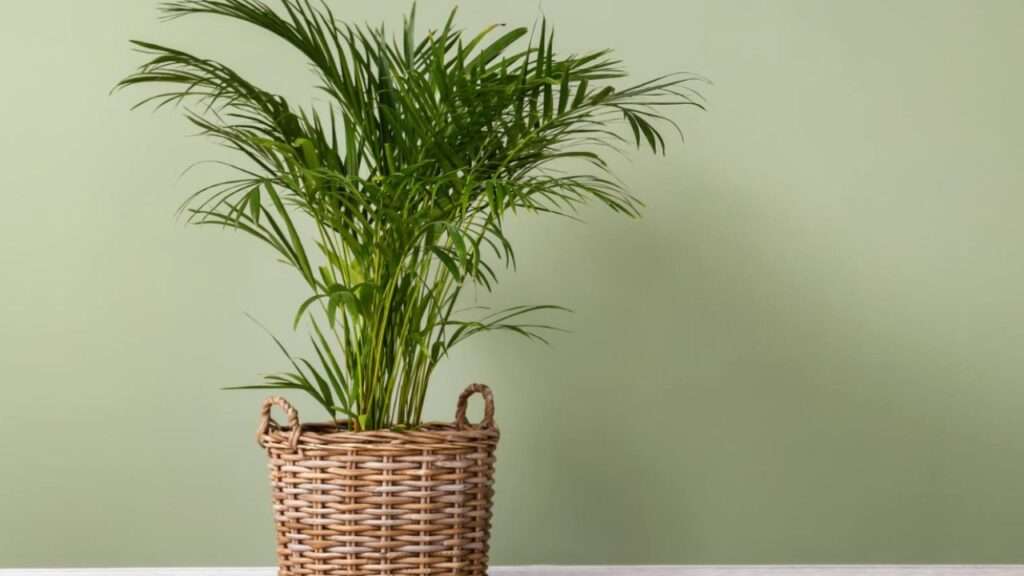
Place your indoor plant directly in front of your brightest south-facing or west-facing window. They require high humidity, so placing the pot on a pebble tray filled with water or running a humidifier nearby will prevent the leaf tips from turning brown and crispy. Plan to repot every one to two years, as their aggressive root systems will quickly circle the pot.
The Bonsai Option 🎋
Because they tolerate aggressive root pruning, Jacarandas are excellent candidates for bonsai. Training a Jacaranda into a bonsai requires patience and wire-shaping while the branches are young and pliable, offering a miniature version of their majestic canopy.
🐛 Common Pests, Diseases, and Troubleshooting
While generally resilient, a few specific issues can plague these trees, especially in humid or overly wet conditions.
Aphids and the “Honeydew” Problem
Aphids love the soft, fleshy new growth of a Jacaranda. As they feed on the sap, they excrete a sticky substance called honeydew. If your tree is planted over a driveway or patio, this honeydew will rain down, coating cars and furniture in a sticky glaze that soon attracts black sooty mold.
-
Solution: Release beneficial ladybugs, or spray the canopy with horticultural neem oil at dawn or dusk.
Glassy-Winged Sharpshooter
In regions like California, this large leafhopper insect can spread the deadly Xylella fastidiosa bacterium. Keep the tree healthy, as stressed trees are more susceptible, and monitor the foliage for the distinctive chalky white excrement these pests leave behind.
Root Rot (Phytophthora)
The most common killer of Jacarandas, caused by overwatering and poor drainage. Symptoms include widespread yellowing of leaves, premature leaf drop, and sudden branch dieback.
🛑 Quick Troubleshooting Chart
🌿 Propagation: How to Grow a Jacaranda from Seed
Growing from seed is a rewarding project, though it requires patience. Seed-grown trees may take 7 to 14 years to produce their first blooms, whereas trees grafted from mature blooming wood often flower in just 2 to 3 years.
-
Harvesting: Collect the woody, castanet-shaped seed pods in late autumn once they turn brown and dry. Wait for them to pop open naturally to reveal the papery seeds inside.
-
Preparation: Soak the seeds in room-temperature water for 24 hours to soften the outer coating and improve germination rates.
-
Sowing: Press the seeds lightly into a moist seed-starting mix. Do not bury them deep; they need light to germinate. Cover the tray with a clear plastic dome to maintain greenhouse humidity and keep it in a warm, bright spot. Germination typically occurs within 14 to 28 days.
💬 Frequently Asked Questions (Expert Q&A)
Are Jacaranda roots invasive? Yes, the root system is aggressive and travels close to the surface. They will lift sidewalks, disrupt shallow plumbing, and outcompete nearby plants for water. Always plant them with plenty of clearance from hardscaping.
Are Jacaranda leaves or seed pods toxic to dogs? The plant itself is considered non-toxic to dogs, cats, and horses. However, if a pet swallows the hard, woody seed pods whole, it can cause severe gastrointestinal blockages.
Why are my Jacaranda tree’s leaves dropping in spring? This is entirely normal behavior. Jacarandas often drop their foliage in late winter or early spring just before the flower buds open. The tree trades its green canopy for a purely purple one.
Is the Jacaranda tree messy? Extremely. When the bloom cycle ends, the tree drops thousands of sticky flowers, creating a “purple carpet.” This is followed by dropping leaves and hard seed pods. They are stunning, but they require significant cleanup if planted over lawns, patios, or pathways.
Cultivating a spectacular Jacaranda requires balancing its need for intense sunlight with the exact right amount of benign neglect. By keeping high-nitrogen fertilizers away, ensuring impeccable drainage, and establishing a strong trunk early on, you set the stage for decades of structural health. Whether you are aiming for a sweeping purple canopy in your front yard or a delicate, fern-like addition to your sunroom, respecting the tree’s natural subtropical rhythms is the true secret to success.