Have you ever spent a small fortune on premium grass seed, meticulously spread it across your yard, only to watch it get scorched by July heat or decimated by an early November frost? You are certainly not alone. Michigan’s erratic climate—swinging from muddy springs to sweltering summers and freezing winters—is notoriously tough on turf. If you want to stop wasting time and finally achieve a lush, barefoot-perfect yard, you need to know exactly when to plant grass seed in Michigan.
The secret to a pristine lawn isn’t just about buying the most expensive seed; it is entirely about timing. There is a specific, golden window for seeding that works in perfect harmony with Michigan’s weather patterns. In this comprehensive, expert-backed guide, we will reveal the exact 30-day timeframe that guarantees the highest germination rates, along with the tailored soil preparation, seed selection, and watering routines required for our unique Great Lakes climate. Let’s dig into the science of cultivating a resilient, weed-free lawn. 🌱
The Absolute Best Time to Plant Grass Seed in Michigan ⏱️
If you ask any turfgrass expert or agricultural extension officer in the state, they will give you the same definitive answer: The optimal time to plant grass seed in Michigan is between mid-August and mid-September.
For the Lower Peninsula (like Grand Rapids, Lansing, and Metro Detroit), the sweet spot is generally August 15th to September 15th. If you live in the Upper Peninsula or the northernmost parts of the Lower Peninsula, you should shift this timeline slightly earlier, aiming for August 1st to September 1st before the early autumn chills set in.
But why is this specific late-summer to early-fall window so magical for your lawn? It comes down to three crucial environmental factors:
1. The Science of Soil Temperature 🌡️
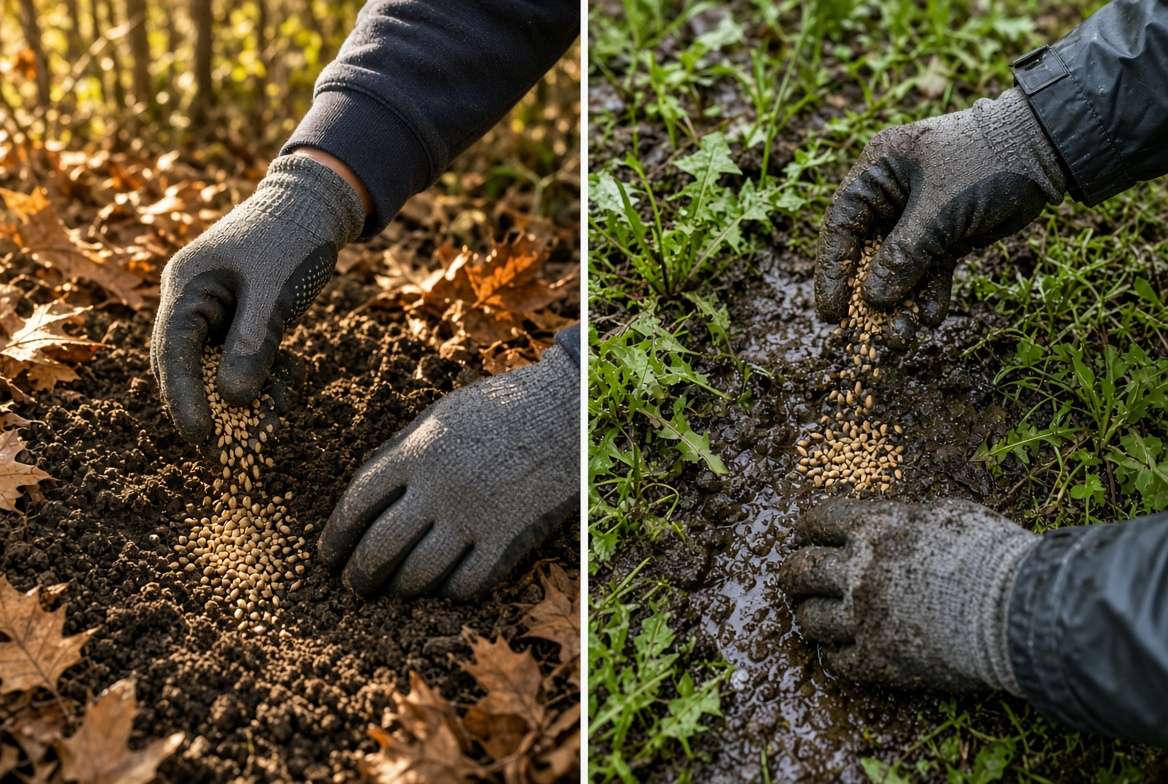
The grasses that thrive in Michigan—Kentucky Bluegrass, Perennial Ryegrass, and Fescues—are known as “cool-season grasses.” These grass types germinate best when soil temperatures (not air temperatures) consistently hover between 50°F and 65°F. By mid-August, the soil has spent all summer absorbing the sun’s heat. This warm soil acts like a natural incubator, causing seeds to sprout significantly faster than they would in the freezing, water-logged soils of early spring. Meanwhile, the cooler autumn air (typically between 60°F and 75°F) prevents the new, fragile grass shoots from being burned by extreme heat stress.
2. The Fall Weed Advantage 🚫🌿
One of the biggest hurdles to growing new grass is weed competition. During the spring, you are fighting a losing battle against aggressive summer annual weeds, particularly crabgrass and dandelions, which are racing your grass seeds for water, sunlight, and soil nutrients. By September, the life cycle of these summer weeds is coming to an end. The weed pressure drops dramatically, allowing your newly planted turf to establish its root system without having to fight for survival.
3. Beating the Frost Clock ❄️
While fall is the best time to plant, planting too late in the fall is a common and expensive mistake. Your new grass needs a minimum of 4 to 6 weeks to establish a deep, anchored root system before the first hard freeze forces the plant into winter dormancy. If you plant in late October, a sudden November freeze will kill the immature seedlings before they can harden off. By planting in that mid-August to mid-September window, you give your turf plenty of time to mature, ensuring it will survive the harsh Michigan winter and wake up vibrantly green the following spring.
Spring Seeding: The Backup Plan 🌱
Sometimes, waiting for late August just isn’t feasible. Perhaps you just moved into a new construction home surrounded by bare dirt, or winter snow molds completely destroyed a large section of your front yard. In these cases, spring seeding is your backup plan.
Timing the Spring Thaw 🕰️
If you must plant in the spring, the secondary window is from mid-May to early June. You must wait until the risk of a hard frost has passed and the soil temperature has steadily warmed to at least 50°F. Do not make the mistake of throwing seed down in April when the ground is still a muddy, freezing mess; the seeds will simply rot or be eaten by birds. However, you also cannot wait until late June. Any seed planted after June 15th will likely be incinerated by July’s heat before it has the root structure to survive.
The Dual Threats of Spring Planting ⚠️
Spring seeding is notoriously difficult in Michigan for two reasons:
-
Fierce Weed Competition: As the soil warms, millions of dormant weed seeds wake up. Because you cannot apply chemical pre-emergent weed killers at the same time you put down grass seed (the chemicals will prevent your grass from germinating, too), you will inevitably have to tolerate some weeds during the summer.
-
Impending Summer Drought: Grass planted in May only has a few short weeks to grow roots before the blistering heat of July and August arrives. Shallow roots dry out instantly.
Mandatory Spring Prep 💧
If you choose the spring route, you must be prepared for a rigorous maintenance schedule. Spring planting requires a relentless, daily watering routine to get the seeds to germinate, followed by careful, deep watering throughout the summer to keep the vulnerable young plants alive during dry spells. You will also need to plan for a heavy overseeding session in the fall to fill in the bare patches that inevitably failed during the summer heat.
Choosing the Right Grass Seed for Michigan’s Climate 🌾
Planting at the right time is only half the battle; you also have to choose the right seed. Walking down the aisle of a big-box home improvement store can be overwhelming, with dozens of bags promising a “miracle lawn.” However, because Michigan experiences freezing winters and hot, humid summers, warm-season grasses (like Bermuda or Zoysia) will simply not survive here. You must strictly use cool-season grass seed.
For the vast majority of Michigan homeowners, a high-quality blend of the following three grass types will yield the best results:
1. Kentucky Bluegrass (The Michigan Standard) 👑
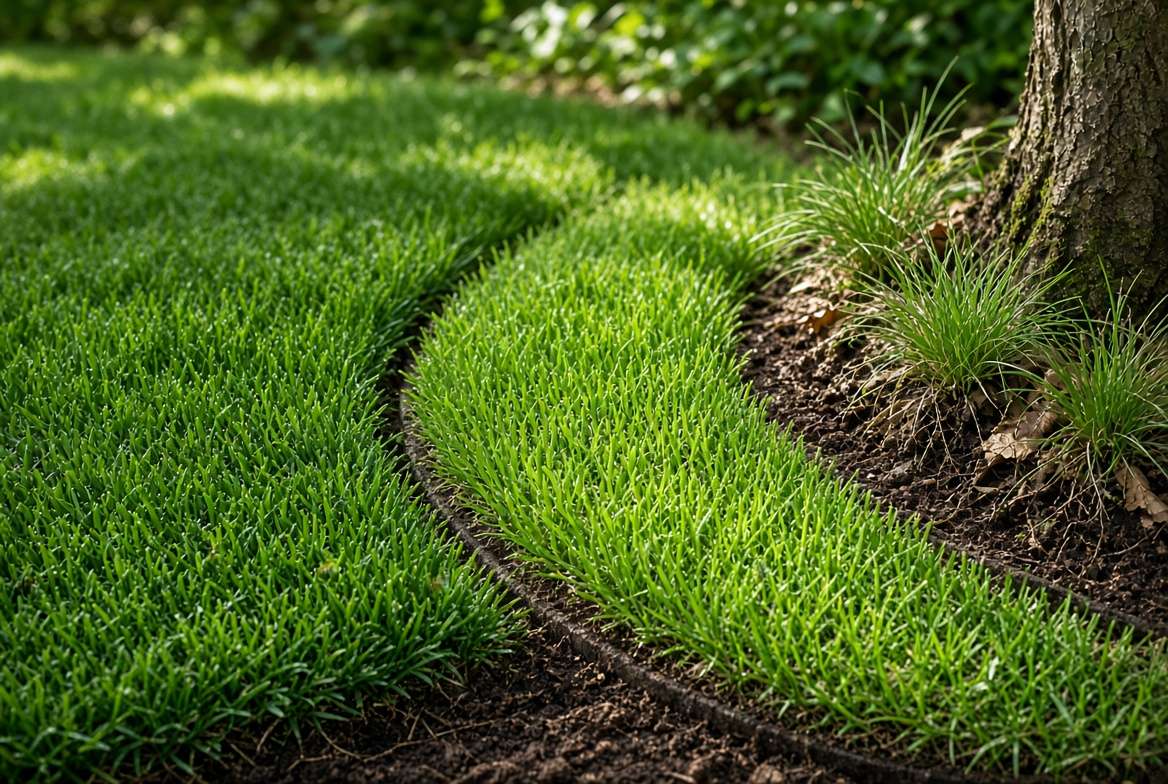
Kentucky Bluegrass (KBG) is the undisputed king of northern lawns. It is prized for its stunning, deep emerald-green color and its incredibly soft texture—perfect for kids and pets to play on.
-
The Superpower: KBG spreads via underground stems called rhizomes. This means it has an incredible ability to self-repair; if a patch gets damaged by drought or dog urine, the surrounding grass will actively spread to fill in the bare spot.
-
The Catch: It requires full sun (at least 6-8 hours of direct sunlight a day) and demands higher maintenance, needing regular fertilization and consistent watering during dry spells. It is also slow to germinate, often taking up to 14 to 21 days to sprout.
2. Perennial Ryegrass (The Sprinter) 🏃♂️
If Kentucky Bluegrass is the marathon runner, Perennial Ryegrass is the sprinter. This grass is often blended with KBG because of its rapid germination speed.
-
The Superpower: Perennial Ryegrass can germinate in as little as 5 to 7 days. This quick growth provides immediate soil cover, preventing erosion and keeping weeds at bay while the slower Kentucky Bluegrass takes its time to sprout. It also holds up phenomenally well to heavy foot traffic.
-
The Catch: It grows in clumps rather than spreading, meaning it cannot self-repair bare spots. It is also slightly less cold-hardy than KBG, though modern varieties have improved significantly.
3. Fine and Tall Fescues (The Survivors) 🌳
If your yard is shaded by large oak or maple trees, or if you live in an area of Michigan with sandy, nutrient-poor soil (common in the northern regions and along the lakeshores), Fescues are your best friend.
-
The Superpower: Fine Fescues (like Creeping Red or Chewings Fescue) are incredibly shade-tolerant and require very little fertilizer or water. Turf-Type Tall Fescue (TTTF) has incredibly deep root systems—sometimes reaching up to 3 feet down—making it the most drought-resistant cool-season grass available.
-
The Catch: Fine Fescues cannot handle heavy foot traffic; they will trample easily. Tall Fescue has a slightly wider, coarser blade that some homeowners find less aesthetically pleasing than KBG, though newer cultivars are much finer.
The Expert Recommendation: Avoid cheap seeds packed with “filler” or weed seeds (always read the label on the back of the bag). For a standard, sunny Michigan lawn, look for a premium blend that is roughly 70% Kentucky Bluegrass and 30% Perennial Ryegrass. For a shaded lawn, look for a mix that is predominantly Fine Fescue (60% or more) mixed with some shade-tolerant KBG varieties.
Step-by-Step Soil Preparation (The Secret to a Lush Lawn) 🪨
The biggest mistake homeowners make is buying expensive seed and simply throwing it onto hard, compacted dirt. Grass seed will not grow on a brick. Exceptional lawns are built from the ground up, and proper soil preparation is non-negotiable.
Step 1: Clearing, Aerating, and Tilling 🚜
Before you drop a single seed, the ground must be ready to receive it.
-
For bare dirt: Remove all rocks, sticks, and dead vegetation. If the soil is heavily compacted (hard clay), use a rototiller to loosen the top 2 to 3 inches of soil.
-
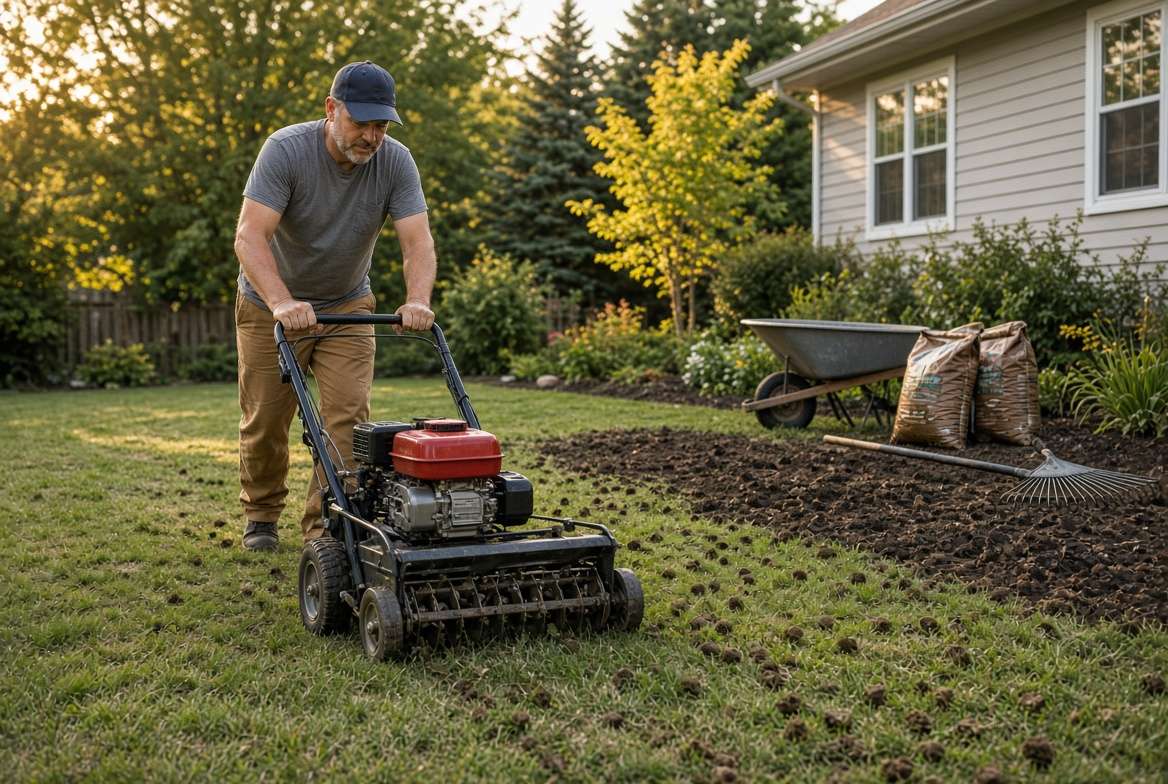
For overseeding an existing lawn: Mow your current grass exceptionally short (about 1.5 inches). Then, use a heavy-duty rake or a mechanical dethatcher to vigorously pull up all the dead thatch and debris. Finally, run a core aerator over the lawn to pull soil plugs out of the ground, relieving compaction and creating perfect little holes for the new seed to fall into.
Step 2: Soil Testing and pH Balancing 🧪
Michigan soil varies wildly. You might have heavy, poor-draining clay in Macomb County, or fast-draining, acidic sand in Traverse City. Grass prefers a slightly acidic to neutral soil pH between 6.0 and 7.0.
-
If your soil is too acidic (pH below 6.0), the grass cannot absorb nutrients properly. You will need to apply limestone to raise the pH.
-
If your soil is too alkaline (pH above 7.0), you will need to apply elemental sulfur to lower it.
-
Expert Tip: Don’t guess. Send a soil sample to the Michigan State University (MSU) Extension for a few dollars. They will send you a precise breakdown of exactly what amendments your yard needs.
Step 3: Adding Organic Matter and Starter Fertilizer 💩
Once the soil is loosened and balanced, it is time to add nutrients.
-
Spread a thin layer (about 1/4 inch) of high-quality compost, peat moss, or rich topsoil over the area. This organic matter improves moisture retention and feeds the soil microbiome.
-
Apply a starter fertilizer. Unlike regular lawn food, starter fertilizers (often labeled with an N-P-K ratio like 10-20-10 or 12-12-12) are high in Phosphorus (the middle number), which is absolutely critical for explosive, deep root development in new seedlings.
How to Plant Grass Seed Like a Pro 🚜
With your soil perfectly prepared, tested, and fertilized, you are finally ready to lay down the seed. However, tossing seed by hand like you are feeding chickens is a surefire way to end up with a patchy, uneven lawn. To achieve that thick, carpet-like turf, you need precision.
The Criss-Cross Spreading Technique ✖️
Whether you are using a broadcast spreader for a large yard or a drop spreader for tight corners, the secret to perfectly even coverage is the “criss-cross” method.
-
Check the seed bag for the recommended dial setting for your specific spreader brand.
-
Divide your total amount of grass seed exactly in half.
-
Walk your yard applying the first half of the seed walking back and forth in a north-to-south direction.
-
Take the second half of the seed and apply it walking east-to-west, perpendicular to your first path. This guarantees that you do not end up with awkward, bare “racing stripes” running across your lawn where the spreader missed a few inches.
The Golden Rule: Seed-to-Soil Contact 🌍
Grass seed will absolutely not germinate if it is suspended in the air by dead grass or resting on top of a rock. It needs direct, intimate contact with the soil to draw moisture and take root. Once you have spread the seed, take a soft leaf rake and very gently flip the rake upside down (tines pointing up). Drag the flat back of the rake over the soil to lightly mix the seed into the top 1/4-inch of dirt. Do not bury it deep; grass seed needs light to sprout.
Top-Dressing and Rolling (Locking it in) 🔒
To protect your expensive investment from hungry birds, intense sun, and heavy autumn rains that might wash it away, apply a light top-dressing.
-
Weed-Free Straw: A light layer of weed-free straw is the traditional choice, but be absolutely certain it is certified weed-free, or you will accidentally plant a field of agricultural weeds.
-
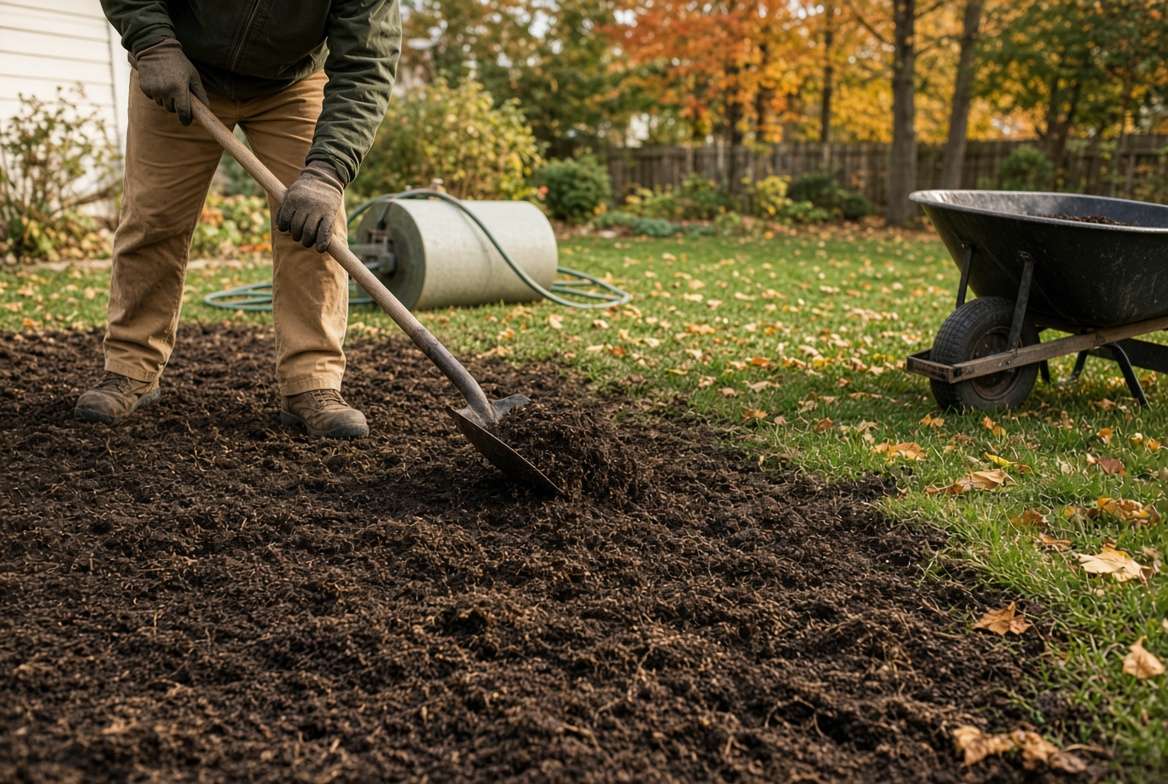
Peat Moss: A thin, 1/8-inch dusting of peat moss is highly recommended by turf experts because it changes color to a light brown when dry, giving you a perfect visual cue for when it is time to water. Finally, run a lawn roller (filled only halfway with water so it isn’t too heavy) over the entire area. This presses the seed, the soil, and the top-dressing firmly together, locking the seed in place for optimal germination.
Watering and Maintenance for New Grass Seed 💧
You have done everything perfectly so far. Now comes the phase where 80% of homeowners fail: the watering schedule. The moment a grass seed gets wet, the germination clock starts. If that seed dries out even once before it establishes a root, it will die permanently. There is no reviving it.
The Critical First 14 Days: Light and Frequent 🚿
During the first two to three weeks, your goal is to keep the top inch of the soil consistently moist, like a wrung-out sponge. It should never be bone-dry, and it should never have puddles of standing water (which will cause the seed to rot).
-
The Schedule: You will likely need to water briefly (5 to 10 minutes per zone) two to three times a day. Aim for 8:00 AM, 12:00 PM, and 4:00 PM.
-
Avoid Evening Watering: Try to avoid watering late at night. Leaving the newly sprouting grass sitting in cold, damp conditions overnight promotes devastating fungal diseases.
Transitioning the Watering Schedule 📉
Once your new grass seedlings reach about an inch in height, they have begun to push roots downward. It is time to transition your watering to force those roots to dive deeper into the soil for moisture. Reduce your watering frequency to once a day, but water for a longer duration. After another week, transition to the standard maintenance schedule: deep, infrequent watering. Your goal is to provide about 1 to 1.5 inches of water per week, applied across one or two deep watering sessions.
When to Mow Your New Grass ✂️
It is incredibly tempting to mow your fuzzy new lawn, but patience is key. Wait until the new grass blades are at least 2.5 to 3 inches tall.
-
The Mower Check: Before you mow, verify your mower blade is razor-sharp. A dull blade will not cut the fragile new grass; it will violently rip it out of the dirt by the roots.
-
The One-Third Rule: Never cut off more than one-third of the grass blade in a single mowing session to avoid sending the young plant into shock.
A Critical Warning on Weed Control 🛑
If you see weeds sprouting alongside your new grass, do not panic, and do not apply chemical weed killers. Pre-emergent herbicides and broadleaf weed killers will instantly kill immature grass. You must wait until you have successfully mowed the new lawn at least four times before applying any chemical weed control. Simply let the weeds grow for now; the approaching winter frosts will kill the annual summer weeds anyway.
Expert Insights for Michigan Homeowners 💡
Michigan’s geography means that lawn care in Traverse City looks very different than lawn care in Ann Arbor. Here is how to adapt based on your local microclimate:
-
Sandy Soils (Northern Michigan & Lakeshores): Sand drains water instantly and holds zero nutrients. If you live near Lake Michigan or in the upper half of the state, you must incorporate heavy amounts of organic compost into your soil before planting to help it retain moisture. You will also need to water your new seeds more frequently than someone downstate.
-
Heavy Clay Soils (Metro Detroit & Southeast Michigan): Clay soil turns into a brick in the summer and a swamp in the spring. Core aeration is absolutely mandatory here before seeding to allow oxygen and roots to penetrate the dense earth.
-
Winterizing Your New Grass: In late October or early November, before the first snow flies, apply a “winterizer” fertilizer. This final feeding pushes nutrients straight into the root system, giving your new grass the energy reserves it needs to survive under the snowpack and explode with green color next spring.
Frequently Asked Questions (FAQs) ❓
Can I throw grass seed down in November in Michigan? Yes, but this is known as “dormant seeding.” If you missed the late-summer window, you can spread seed in late November or December right before the first major snowfall. The goal is not for the seed to grow now. The freezing temperatures keep the seed dormant all winter, and the freeze-thaw cycle of the ground naturally works the seed into the soil. As soon as the snow melts and the soil hits 50°F in the spring, the seed will automatically germinate.
Will grass seed grow if I just throw it on the dirt? Technically, a few seeds might sprout, but your success rate will be abysmal (often less than 10%). Birds will eat the exposed seed, rain will wash it down the storm drain, and the hot sun will dry it out before it can root. You absolutely must rake the soil to create a hospitable bed and ensure seed-to-soil contact.