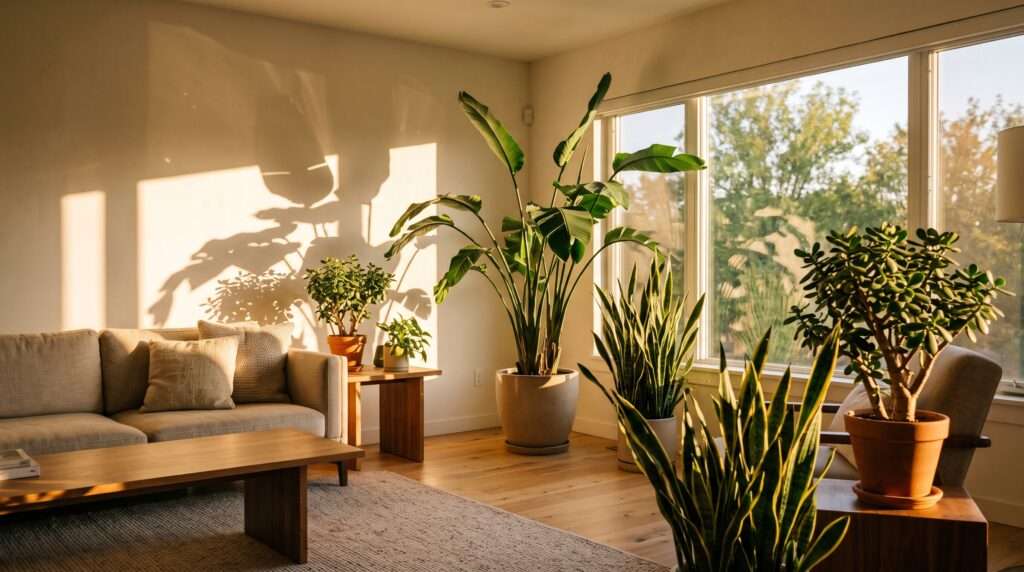
We have all been there: you bring home a gorgeous, lush houseplant, place it proudly in a bright room, and within a week, its vibrant leaves turn crispy, brown, and lifeless. The culprit is almost always the intense, unforgiving heat of the afternoon sun. Finding the right west facing window plants is one of the most common challenges in indoor gardening. It requires a delicate balance—plants must be hungry for bright light, yet resilient enough to withstand rising temperatures.
As a horticulturist who has rehabilitated countless sunburned tropicals and wilted indoor jungles, I can tell you that a western exposure does not have to be a plant graveyard. Instead, it is an incredible microclimate for rapid growth and vibrant blooms, provided you choose the right species. In this comprehensive guide, we will break down the science of afternoon light and explore 15 houseplants specifically adapted to thrive when the sun gets hot.
🌡️ The Science Behind the Glass: Why West-Facing Windows Are Unique To understand why your plants struggle on the western side of your home, you have to look at the physics of indoor light and temperature.
The “Greenhouse Effect” at 3:00 PM 🔍 A west-facing window is deceptive. For the first half of the day, it offers gentle, ambient indirect light. But as the sun crosses the sky and begins to set, those rays hit the glass at a direct angle. By 3:00 PM, not only is the sunlight at its most intense, but the ambient temperature of the room has also been rising all day. The windowpane traps this thermal energy, creating a localized greenhouse effect. The air immediately surrounding your windowsill can easily be 10 to 15 degrees hotter than the rest of your living room, doubling the rate of soil evaporation and leaf transpiration.
West vs. South Facing Windows 🧭 Many beginner plant parents confuse south and west light. South-facing windows receive consistent, bright sunlight throughout the entire day, but the angle is higher, often making it slightly more diffuse indoors. West-facing windows, however, receive a concentrated blast of horizontal, direct UV rays during the hottest hours of the day. Plants here need to act like sprinters—capable of handling sudden, intense bursts of energy.
💡 Expert Tip: The “Shadow Test” Not sure how intense your light actually is? Try the Shadow Test. At 4:00 PM on a clear day, hold your hand about 12 inches above a piece of white paper on your windowsill. If the shadow is sharply defined with hard, distinct edges, you have intense direct sunlight. If it is slightly fuzzy, it is bright indirect light. Most west windows will cast a very hard shadow.
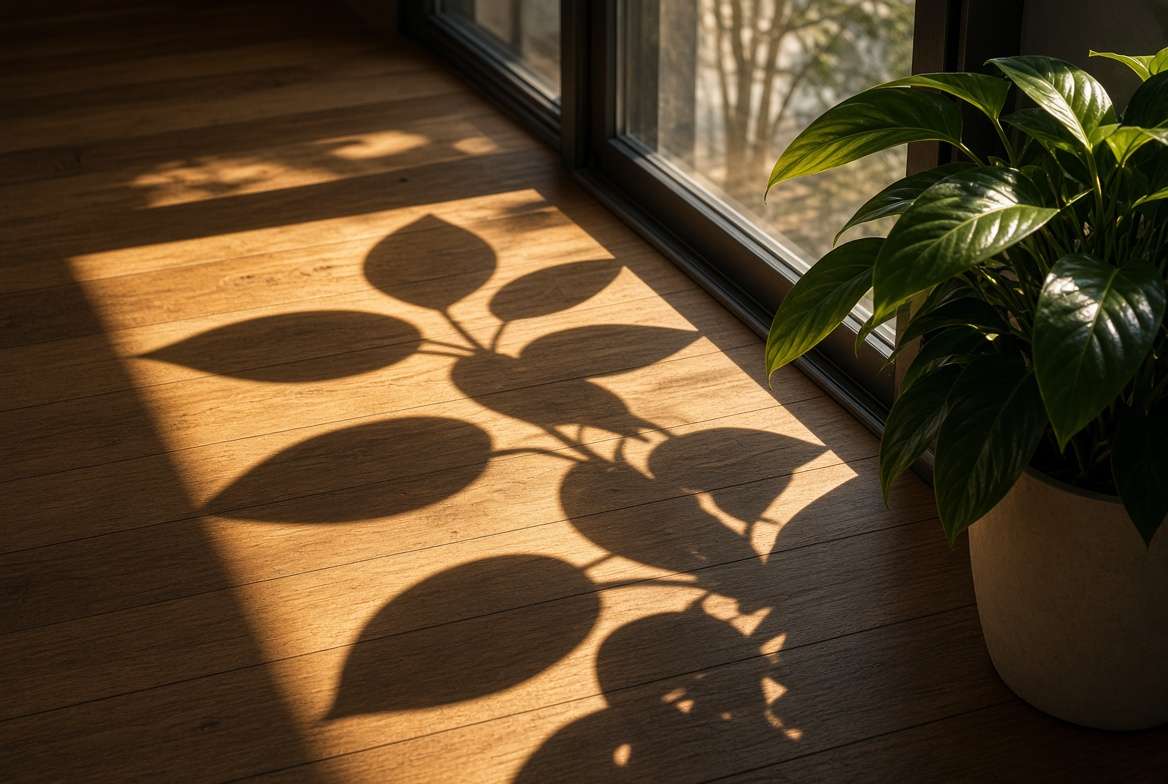
🌵 The Unkillable Sun-Lovers: Desert Natives When dealing with extreme heat and sharp light, the best strategy is to look to nature’s ultimate survivors. Cacti and succulents have evolved specifically to handle searing afternoon temperatures, making them the most reliable west facing window plants.
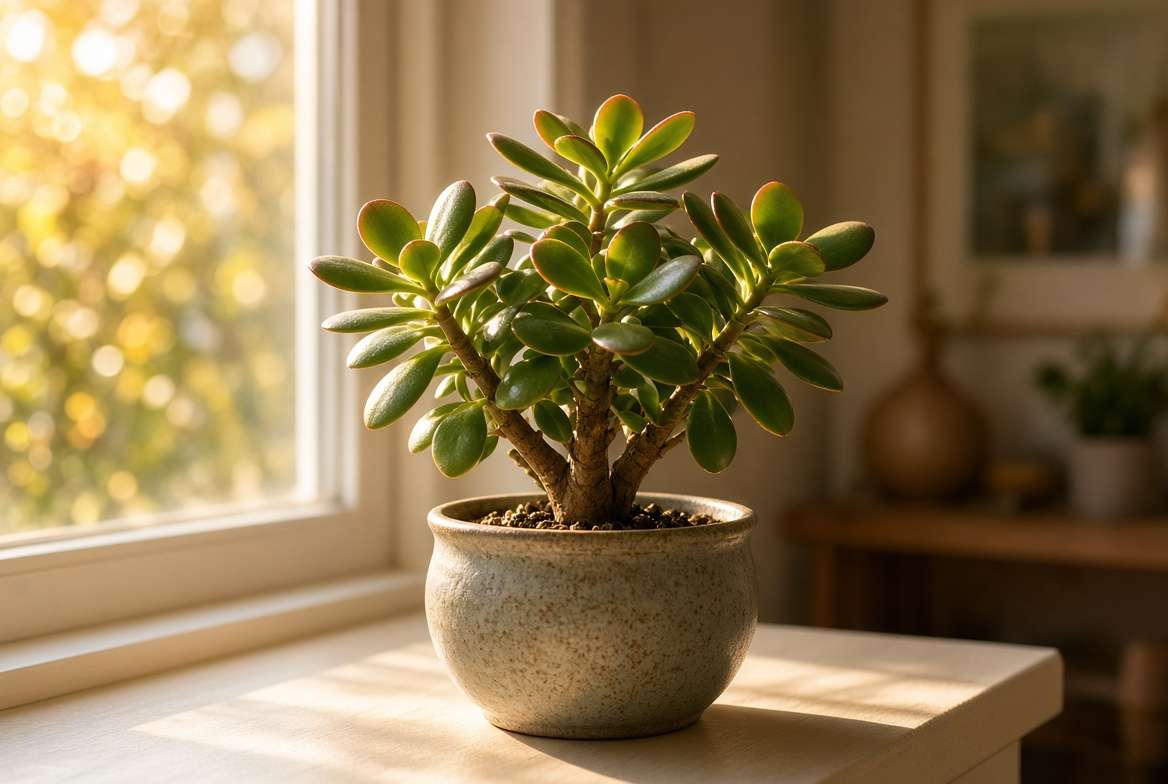
1. Jade Plant (Crassula ovata) 🪴 The Jade Plant is a cornerstone of indoor gardening for a reason. Native to the rocky slopes of South Africa, it features thick, fleshy leaves designed to stockpile water for long droughts.
-
Why it works: When placed in a hot western window, a Jade Plant will synthesize the heavy light into rapid stem growth.
-
Care Secret: In intense afternoon sun, you will notice the edges of your Jade’s leaves turning a beautiful, vibrant red. This is known as “sun stress,” but don’t panic! In succulents, this is a completely healthy and highly sought-after protective response, similar to a human getting a tan.
2. Aloe Vera (Aloe barbadensis miller) 🩹 Famous for its medicinal, soothing gel, Aloe Vera is a highly functional houseplant that demands bright, direct light to keep its heavy leaves upright.
-
Why it works: It thrives in dry, hot air and rarely needs watering, making it perfectly suited for the rapid evaporation rates of a western exposure.
-
Care Secret: While Aloe loves the sun, pushing its leaves directly against hot window glass can cause localized thermal burns. Keep the pot about three to six inches pulled back from the pane to allow for airflow.
3. String of Pearls (Senecio rowleyanus) 📿 If you want a trailing plant for a hanging basket, skip the delicate ivy and opt for a String of Pearls. Its spherical leaves minimize surface area, drastically reducing water loss.
-
Why it works: Hanging plants in western windows often suffer because the crown (the top of the soil) remains in the shade while the vines bake. String of Pearls actually prefers the sun beating down directly on the top of the pot.
-
Care Secret: Because of its incredibly shallow root system, bottom-watering is ineffective. Top-water gently, and only when the pearls begin to look slightly deflated or wrinkled.
4. Euphorbia (Euphorbia trigona / African Milk Tree) 🏜️ Though it looks exactly like a classic desert cactus, the African Milk Tree is actually a succulent. It is an architectural masterpiece that adds incredible vertical height to a room.
-
Why it works: Euphorbias have an incredibly high light threshold. In a west-facing window, they will happily bake in the heat, often growing several inches in a single summer season.
-
Care Secret: Rotate the pot 90 degrees every two weeks; otherwise, the heavy columns will lean sharply toward the glass and eventually topple over.
5. Ponytail Palm (Beaucarnea recurvata) 🌴 Despite its name, this is not a true palm, but a succulent related to the Agave family. It features a massive, bulbous trunk (caudex) topped with cascading, curly green ribbons.
-
Why it works: That swollen trunk is essentially a massive water reservoir. By the time the 4:00 PM sun hits and the soil dries out completely, the plant simply draws moisture from its trunk, completely avoiding heat stress.
🌿 Lush Foliage That Can Take the Heat If you prefer a tropical, jungle aesthetic but do not want to deal with the crispy brown edges that plague Monsteras and Calatheas in direct sun, these robust foliage plants are your best solution.
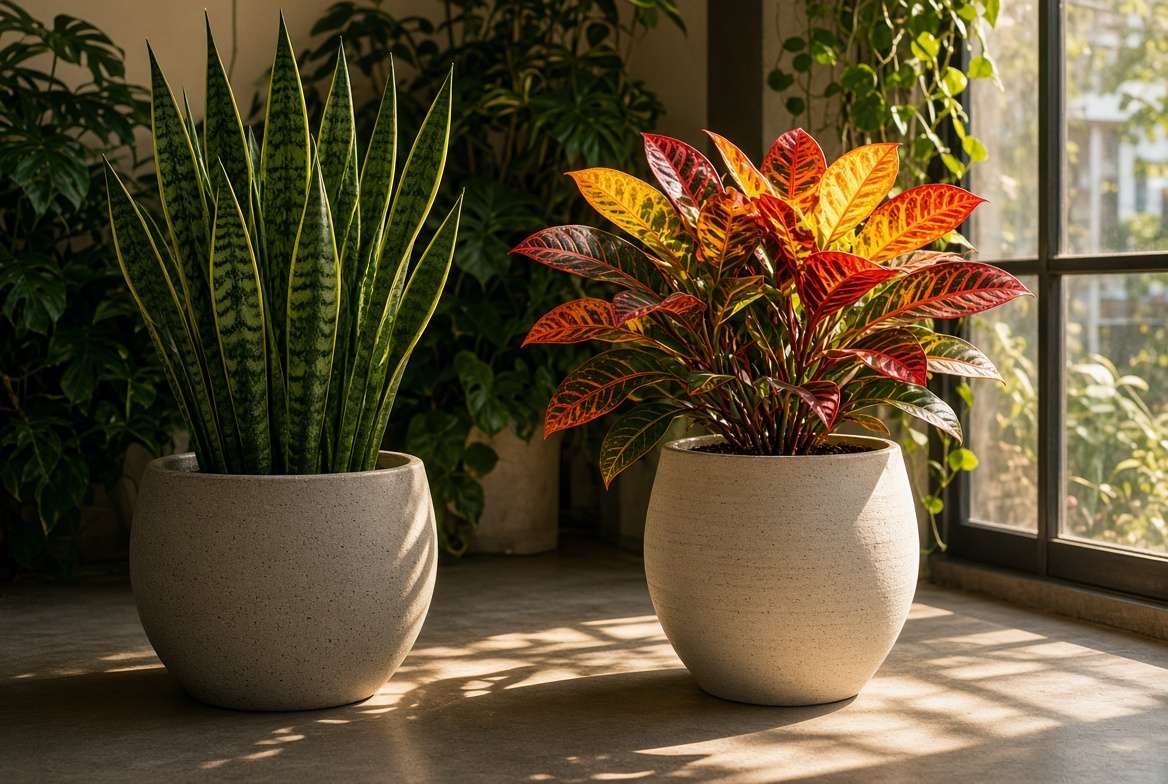
6. Snake Plant (Sansevieria trifasciata) 🐍 Often marketed as a “low light” plant, the Snake Plant is actually a full-sun native of West Africa. It survives in dark corners, but it truly thrives and multiplies in direct light.
-
Why it works: Its stiff, sword-like leaves have a thick cuticle layer that prevents the cellular moisture from evaporating during peak afternoon heat.
-
Care Secret: When kept in a western window, your Snake Plant will metabolize water much faster. You may actually need to water it every two weeks rather than the standard once-a-month advice given for low-light placements.
7. Rubber Plant (Ficus elastica) 🌳 While thin-leafed Ficus varieties (like the Ficus Audrey or Weeping Fig) will easily scorch in the afternoon sun, the Rubber Plant is built like a tank.
-
Why it works: The thick, waxy, rubbery coating on the leaves acts as a natural sunscreen, reflecting excess UV radiation and locking in moisture.
-
Care Secret: To maximize photosynthesis and keep the plant healthy in high heat, wipe the broad leaves down with a damp microfiber cloth once a month to remove dust buildup.
8. ZZ Plant (Zamioculcas zamiifolia) 🌿 Much like the Snake Plant, the ZZ Plant is famous for tolerating dark, windowless offices. However, in its natural habitat in eastern Africa, it grows in bright, open grasslands.
-
Why it works: In a west-facing window, a ZZ Plant will push out massive, thick new stems of bright green foliage at a rate that will shock you. It stores water in potato-like rhizomes beneath the soil, making it impervious to the drying heat of the afternoon.
9. Bird of Paradise (Strelitzia nicolai) 🦜 If you have a large floor space directly in front of a western window, this is your statement piece. With its massive, paddle-shaped leaves, it brings an undeniable tropical resort vibe to your home.
-
Why it works: Native to sunny coastal regions, the Bird of Paradise requires massive amounts of solar energy to maintain its huge leaves and encourage splitting (fenestrations).
-
Care Secret: Unlike the succulents on this list, this plant is incredibly thirsty. When placed in hot western light, you must maintain consistent soil moisture, watering deeply as soon as the top two inches of soil feel dry.
10. Croton (Codiaeum variegatum) 🍁 Known for its explosive, neon foliage featuring veins of crimson, bright orange, and sunshine yellow, the Croton is a showstopper.
-
Why it works: Color requires energy. If you put a Croton in low light, its new leaves will revert to a dull, flat green. It absolutely needs the intense, direct rays of a western window to produce and maintain its signature fiery variegation.
-
Care Secret: Crotons are highly dramatic. If the temperature fluctuates too wildly or the soil dries out completely in the afternoon heat, it may drop leaves in protest. Keep it consistently watered and away from AC vents.
🌸 Blooming & Trailing Beauties If you want your indoor garden to feature cascading vines or vibrant, colorful flowers, a western exposure is highly advantageous. Blooming takes an enormous amount of botanical energy, and the afternoon sun provides exactly the fuel these plants need.
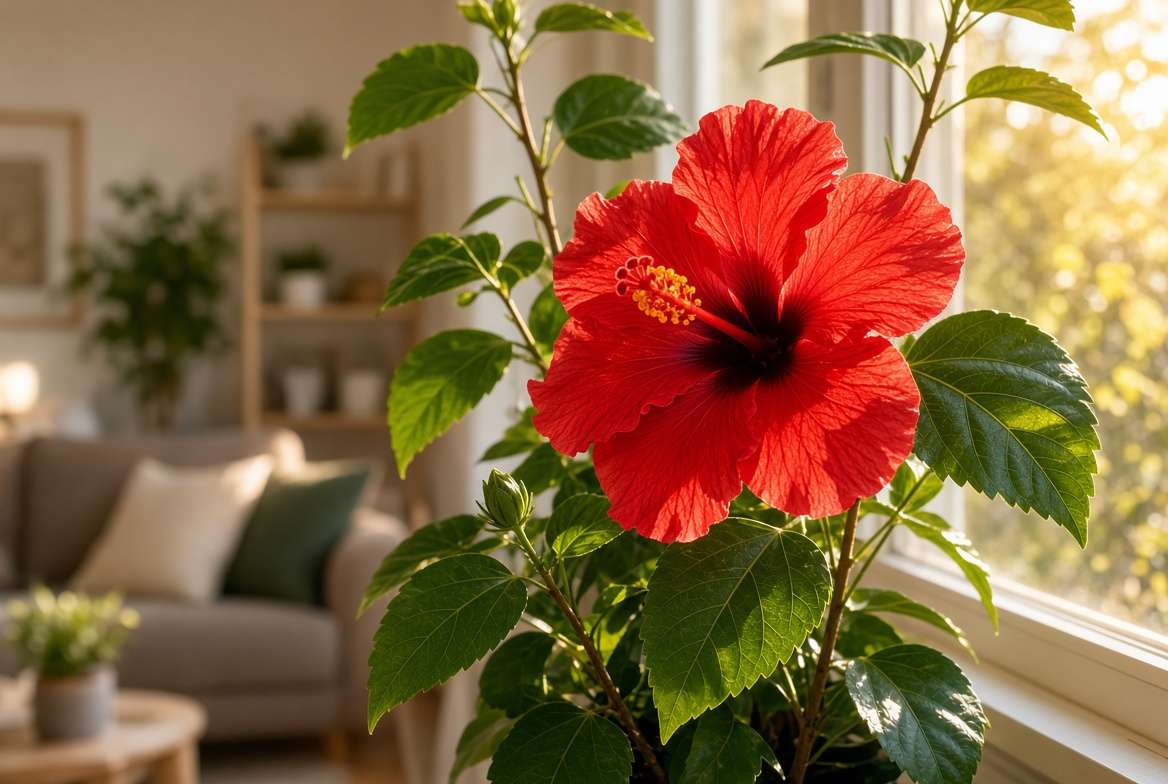
11. Hibiscus (Hibiscus rosa-sinensis) 🌺 Typically grown outdoors in tropical climates, the Hibiscus makes an exceptional, exotic indoor houseplant if you have a massive west-facing window to accommodate it.
-
Why it works: To produce their signature, dinner-plate-sized blooms, these plants need relentless, intense solar energy. The afternoon heat triggers the flowering cycle beautifully.
-
Care Secret: Hibiscus plants are heavy feeders. During the spring and summer months, supplement the intense sunlight with a high-potassium liquid fertilizer every two weeks to keep the blooms coming.
12. Hoyas (Hoya carnosa / Wax Plant) 🕯️ Hoyas have exploded in popularity in the houseplant community, beloved for their trailing vines and clusters of star-shaped, porcelain-like flowers that smell like chocolate or vanilla.
-
Why it works: As their nickname suggests, Wax Plants possess thick, waxy foliage that excellently retains moisture. Furthermore, a Hoya kept in low light will survive but never flower. The intense blast of western light is often the exact trigger needed to initiate a bloom cycle (peduncles).
-
Care Secret: Never prune off the little woody spurs where the flowers bloom; Hoyas will re-bloom from the exact same spot year after year!
13. Geraniums (Pelargonium) 🌸 Often relegated to outdoor porch planters, Geraniums are vastly underrated as indoor windowsill plants.
-
Why it works: These are classic, old-school sun worshippers. They do not just tolerate the baking heat of a hot glass pane; they demand it to maintain their compact growth habit and produce their bright clusters of red, pink, or white flowers.
14. Sweet Potato Vine (Ipomoea batatas) 🍠 Looking for rapid, cascading foliage to drape elegantly off a high shelf? The Sweet Potato Vine, particularly the bright chartreuse “Margarita” variety, is an absolute powerhouse.
-
Why it works: In a hot, sunny window, this vine will grow aggressively, often several inches a week, feeding off the afternoon heat.
-
Care Secret: This plant has a massive metabolism in direct sun. You will need to water it frequently, as it will quickly droop when thirsty—though it famously bounces back within an hour of a good soaking.
15. Crown of Thorns (Euphorbia milii) 👑 This tough-as-nails succulent features woody, thorny stems topped with delicate, colorful bracts in shades of red, pink, and yellow.
-
Why it works: Originating from Madagascar, the Crown of Thorns thrives on neglect and punishing sunshine. When placed directly against a hot western window pane, it is one of the few houseplants that will reliably bloom for you nearly 365 days a year.
👩🌾 Expert Care Guide: Adjusting Your Routine for Western Exposures Choosing the right west facing window plants is only half the battle. To truly master this microclimate, you must adjust your daily plant care routine to account for the unique environmental conditions.
The Watering Equation 💧 In a western window, evaporation rates essentially double compared to an eastern or northern exposure. The intense heat pulls moisture not only from the leaves (transpiration) but directly from the topsoil.
-
The Checklist: Check your non-succulent plants every 3 to 4 days rather than the standard once a week. Stick your finger two inches into the soil; if it feels bone dry, it is time for a deep, thorough soaking until water runs out the drainage holes.
Potting Soil Tweaks 🪴 Standard, out-of-the-bag potting mix dries into a hydrophobic brick under intense heat. For your tropicals and thirsty vines, amend your indoor potting soil with a handful of peat moss or vermiculite. These amendments act like microscopic sponges, holding onto moisture slightly longer and buying your plant extra time between waterings during heat waves.
The “Pull Back” Method 📏 Light intensity drops exponentially the further you move away from the glass (the Inverse Square Law of light). If a plant is scorching on the windowsill, simply moving the pot 2 to 3 feet back into the room drastically reduces thermal heat stress while still providing the plant with excellent, bright light.
Using Sheer Curtains as a Filter 🤍 If you are determined to keep sensitive, jungle-floor plants like Calatheas, Marantas, or Monsteras in a west-facing room, you must utilize a diffuser. Hanging a simple, cheap white sheer curtain over the window transforms the harsh, burning afternoon rays into bright, dappled, indirect sunlight—perfectly mimicking the canopy of a rainforest.
🚑 Troubleshooting: Is Your Plant Sunburned or Thirsty? Even with the best intentions, accidents happen. Here is how to diagnose and fix the two most common western-exposure issues.
☀️ The Symptoms of Sunburn: Look at the topmost leaves, specifically those facing the glass. Are there distinct, crispy, bleached, or pale white spots? Does the damage look like a dry, papery blister? This is sunburn.
-
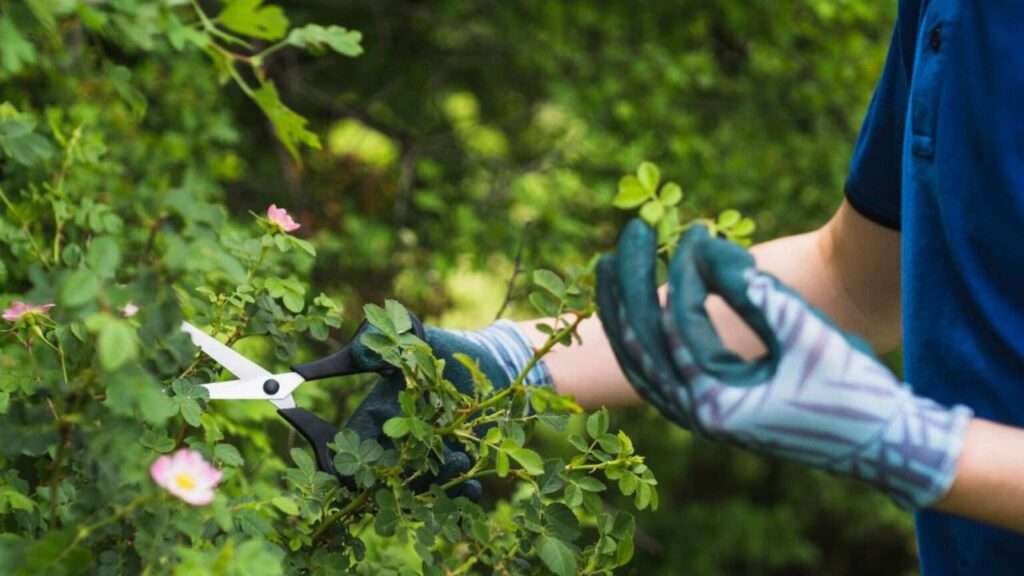
The Fix: Unfortunately, sunburn on a leaf is irreversible. Prune the damaged leaves off with sterile shears for aesthetic purposes, and immediately move the plant a few feet back from the glass.
🥀 The Symptoms of Heat Stress and Underwatering: Are the leaves drooping universally? Are the edges of the lower leaves turning yellow, then brown and crispy? Is the potting soil pulling away from the edges of the nursery pot?
-
The Fix: The plant is severely dehydrated due to the rapid evaporation. Submerge the entire pot in a bowl of room-temperature water for 30 minutes (bottom watering) to allow the dry soil to fully rehydrate and expand.
💡 Expert Insight on Acclimation: Never take a plant from a dark nursery or a low-light corner of your home and shove it directly into a hot west window. Plants get sunburned just like humans do. You must “harden them off” or acclimate them by placing them a few feet away from the window for a week, gradually moving them closer to the glass so they can build up their natural UV defenses.

❓ Frequently Asked Questions (FAQs)
Can a Monstera survive in a west-facing window? Yes, but with caveats. A Monstera Deliciosa loves bright light to produce its iconic splits, but its wide leaves will scorch if pushed directly against hot glass. Either pull the Monstera 3 feet back from the window or use a sheer white curtain to diffuse the afternoon sun.
Do west-facing windows provide direct or indirect light? They provide both, which is what makes them tricky! From sunrise until early afternoon, they offer ambient, bright indirect light. From mid-afternoon until sunset, they provide harsh, direct sunlight.
Why are my plant’s leaves turning yellow in my west window? Yellowing leaves in a western exposure usually indicate a watering imbalance. Because the sun is so intense, the soil dries out rapidly, leading to underwatering stress. Conversely, if you overcompensate by watering too frequently without proper drainage, the roots can rot, which also manifests as yellowing leaves. Always test the soil moisture before reaching for the watering can.
🪴 Conclusion: Master Your Microclimate A western exposure is not a death sentence for your indoor garden; it is simply a high-energy environment that requires the right botanical candidates. By leaning into desert natives like the Jade Plant and Euphorbia, or tough-as-nails tropicals like the Bird of Paradise and ZZ Plant, you can transform that hot, glaring windowsill into a lush, thriving focal point.
Stop fighting the afternoon heat and start utilizing it. Match the right west facing window plants to your space, adjust your watering habits, and watch your indoor jungle explode with unprecedented growth.
Have a thriving plant in a tricky western window? Share a photo of your setup or your favorite sun-loving species in the comments below!