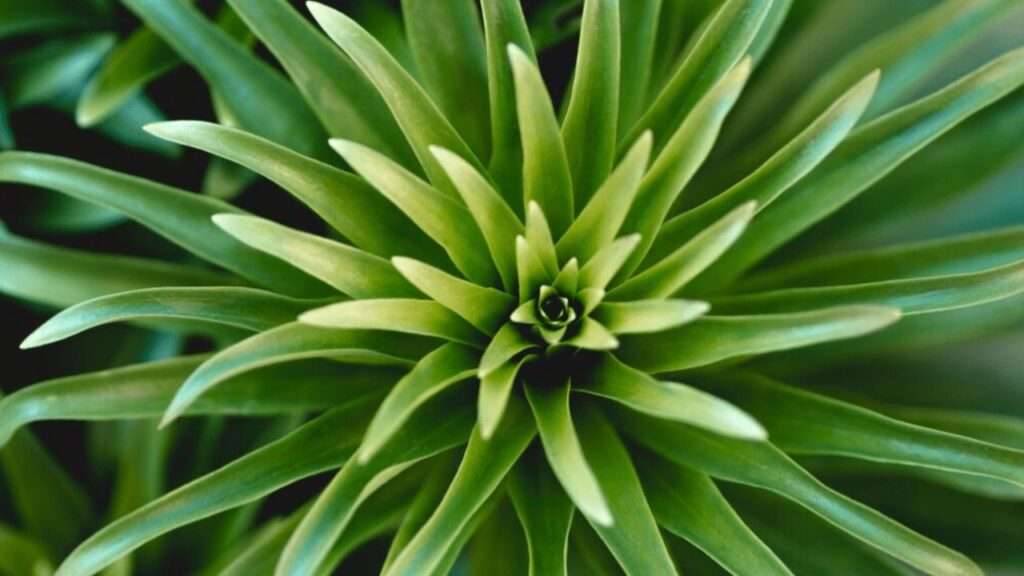
A single, striking structural plant has the almost magical ability to anchor a room, instantly elevating a bland corner into a modern sanctuary or transforming a flat, uninspired yard into a magazine-worthy landscape. For decades, the Yucca plant has been the ultimate go-to choice for this dramatic, spiky silhouette. However, while beloved for its incredible toughness and bold lines, it simply isn’t the perfect fit for everyone. If you are dealing with curious pets, active toddlers, or lower indoor lighting, you might be searching for plants similar to yucca that offer the exact same structural impact without the associated drawbacks.
Whether you are designing a water-wise xeriscape garden outdoors or styling a minimalist, contemporary living room indoors, you don’t have to settle. There are incredible yucca alternatives that deliver that highly sought-after architectural aesthetic, but with vastly different benefits tailored to your specific environment. In this comprehensive guide, we will break down exactly what makes the yucca look so desirable and explore 9 stunning, low-maintenance alternatives that will thrive in your space. Let’s dive into the world of striking structural foliage! 🌿
II. Why Seek Alternatives? Understanding the “Yucca Aesthetic” 🤔
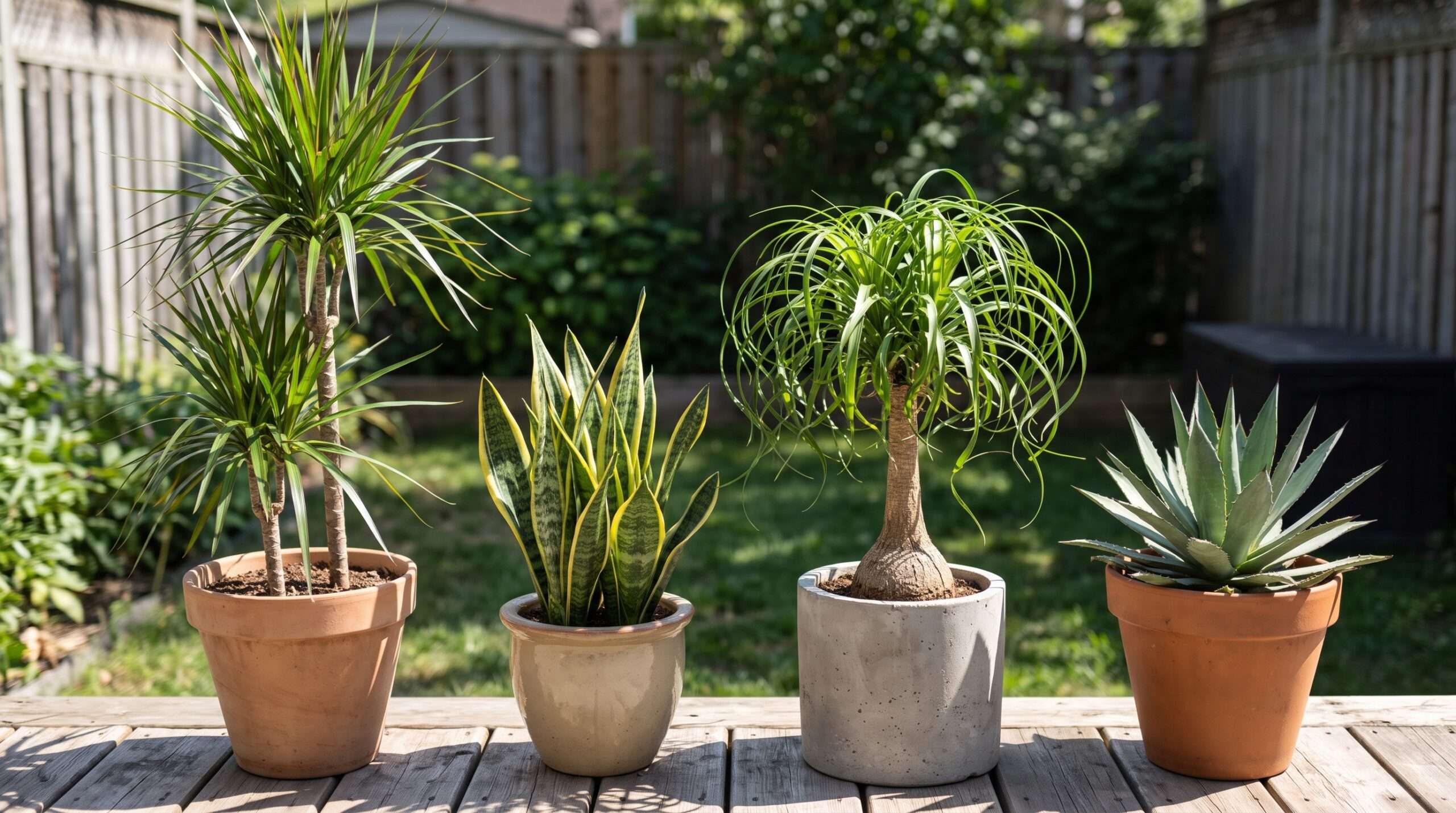
To find the perfect substitute, we first need to understand what makes the Yucca so universally appealing from a botanical design perspective. Yuccas (part of the Asparagaceae family) are prized for their rigid, sword-like evergreen foliage that grows in a mesmerizing rosette pattern. They are the epitome of “architectural plants”—species that rely on strong shapes, distinct forms, and bold geometric lines rather than just colorful flowers to create visual interest.
However, despite their drought tolerance and striking geometry, Yuccas come with a few notable challenges that drive gardeners and indoor plant enthusiasts to look for alternatives:
-
Safety Hazards: Many Yucca species possess incredibly stiff leaves with razor-sharp margins and needle-like terminal spines at the tips. In high-traffic areas, or in homes with young children, these sharp points can be a genuine physical hazard. 🩸
-
Pet Toxicity: This is a major concern for indoor houseplant lovers. Yuccas contain steroidal saponins, which are highly toxic to cats, dogs, and horses if ingested, causing severe gastrointestinal upset, drooling, and weakness. 🐾
-
Climate and Light Restrictions: While Yuccas are incredibly resilient in arid, desert-like conditions, they often struggle with root rot in highly humid environments with heavy rainfall. Indoors, they require massive amounts of direct, bright sunlight to thrive—conditions most average living rooms simply cannot provide. ❄️
If you need a softer leaf, a pet-safe profile, or a shade-tolerant constitution, the following alternatives will give you the look you want with the care requirements you actually need.
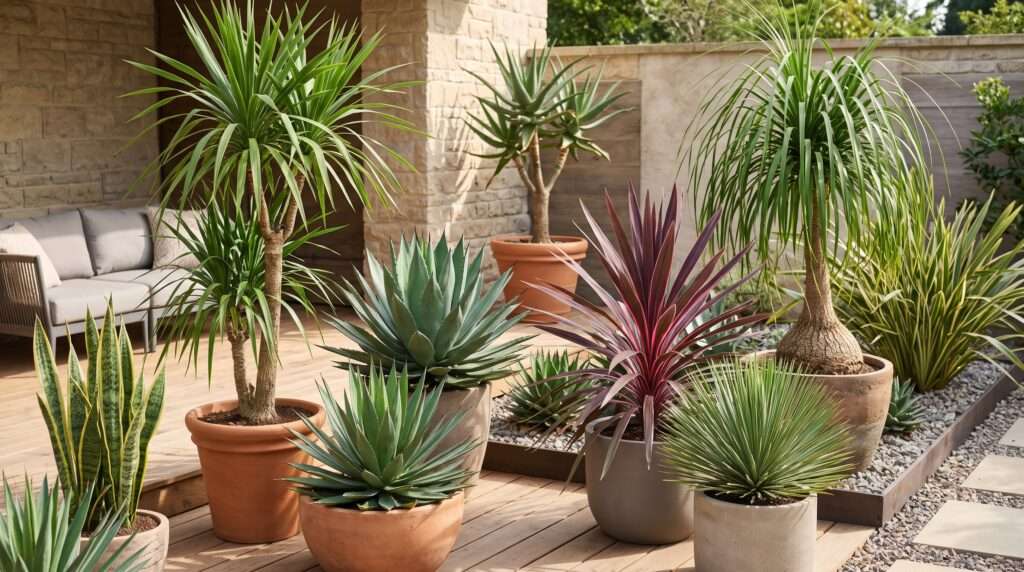
III. 9 Architectural Plants Similar to Yucca 🌿
Below, we have curated a skyscraper-level list of the absolute best plants that mimic the bold, structural form of the Yucca, broken down by their ideal environments and specific care needs.
1. Dracaena (Dracaena marginata / Dracaena fragrans) – The Indoor Twin 🏠
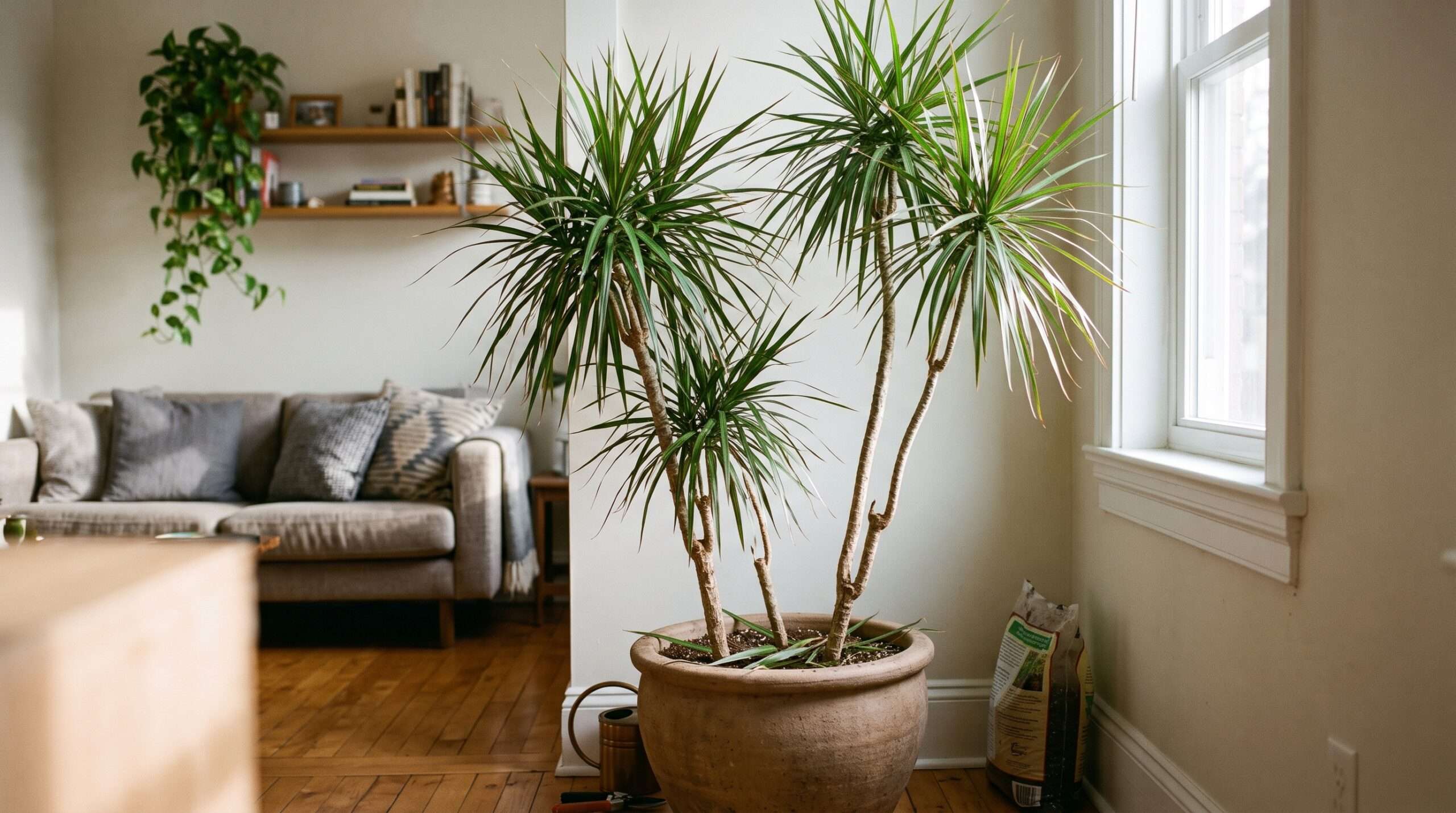
When people envision an indoor plant that looks exactly like a Yucca, they are almost always picturing a Dracaena. Often referred to as the Madagascar Dragon Tree (D. marginata) or the Corn Plant (D. fragrans), this genus shares the same family tree as the Yucca. They feature tall, slender, woody canes topped with explosive tufts of spiky, arching leaves.
The Advantage: The defining benefit of the Dracaena is its adaptability to the indoors. Its leaves are vastly softer and pose no stabbing risk, making it safe to brush against in tight hallways. Furthermore, Dracaenas are exceptionally forgiving when it comes to lighting; they will happily tolerate the medium-to-low indirect light of a standard home, a setting where a true Yucca would quickly stretch, yellow, and die. As a bonus, Dracaenas are renowned as powerhouse air-purifiers, actively removing toxins like formaldehyde and benzene from your indoor environment.
Care Snapshot:
-
Light: Prefers bright, indirect light but adapts exceptionally well to medium or even low light. Direct, harsh sun will scorch the leaves.
-
Water: Allow the top 2 to 3 inches of the soil to dry out completely before watering thoroughly. They are highly sensitive to fluoride in tap water, which can cause brown leaf tips.
-
Soil: A standard, well-draining indoor potting mix amended with a handful of perlite for extra aeration.
💡 Expert Tip: Want a fuller, multi-headed, architectural look? You can carefully prune (cut) a mature Dracaena cane right at the desired height. Within a few weeks, the plant will push out two to three new leaf nodes just below the cut, creating a beautiful, branching silhouette that mimics a mature, desert-grown Yucca tree!
2. Cordyline (Cordyline australis) – The Colorful Cousin 🌺
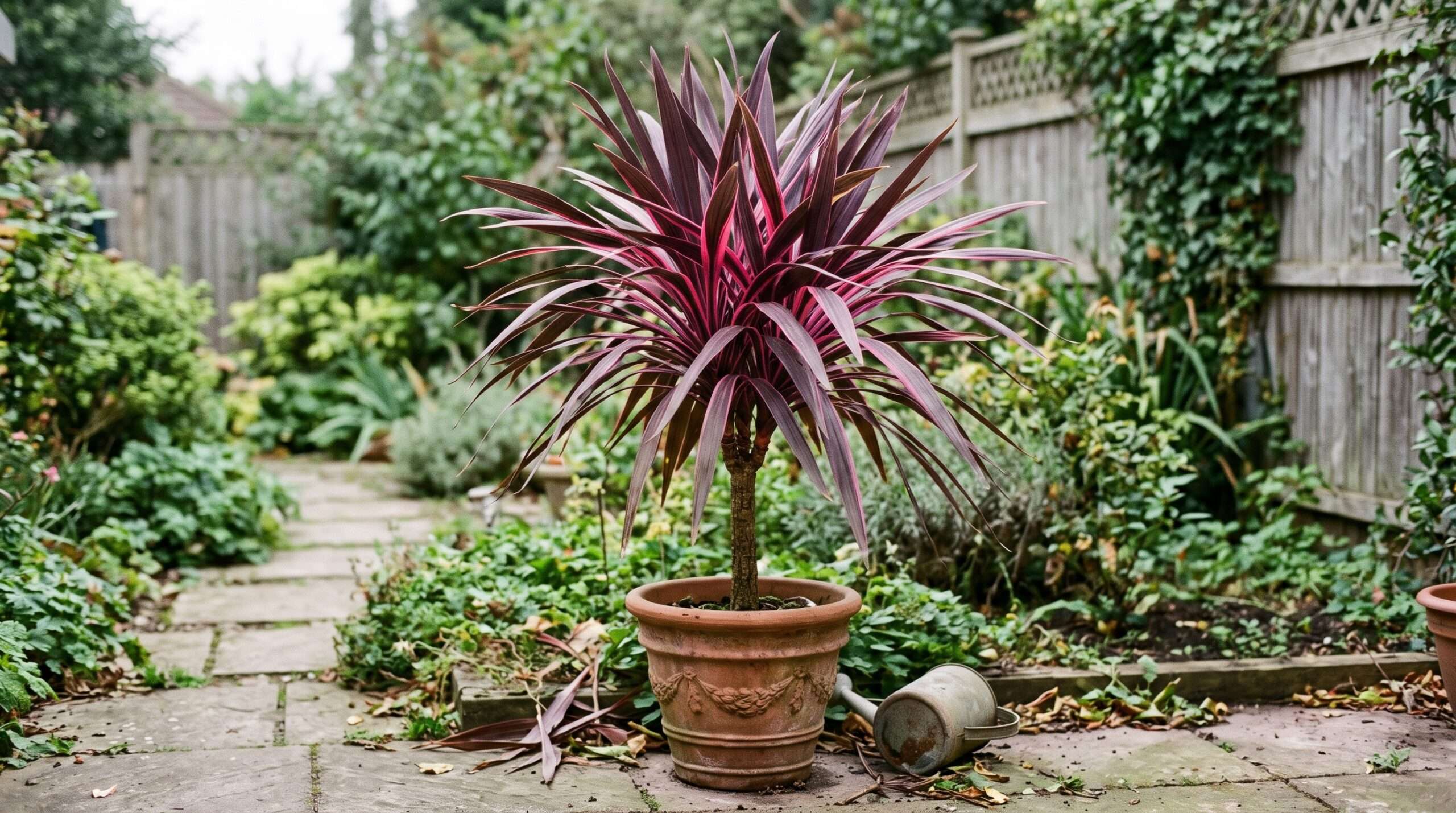
If you love the upright growth habit and sword-shaped foliage of the Yucca but find its standard blue-green color palette a bit dull, the Cordyline (often called the Cabbage Palm or Ti Plant) is your ultimate solution. Growing in a nearly identical rosette formation on top of a slender trunk, the Cordyline provides structural drama with a massive injection of tropical color.
The Advantage: Cordylines are the undisputed kings of vibrant structural foliage. Depending on the cultivar, you can find them in electric hot pinks, deep bruised burgundies, striking chartreuse, and vibrant variegated stripes. They are fantastic for flanking front doors in large container pots, adding a tropical, colorful twist to the traditional Yucca form.
Care Snapshot:
-
Light: Outdoors, they prefer full sun to partial shade. Indoors, they require the brightest light possible; without adequate light, they will lose their vibrant neon colors and revert to a muddy green.
-
Water: Unlike the desert-dwelling Yucca, Cordylines prefer consistently moist (but never soggy) soil. Water when the top inch feels dry.
-
Soil: They thrive in a rich, slightly acidic, loamy soil mixture that retains some moisture while still draining freely.
💡 Expert Tip: Cordyline root systems can be surprisingly sensitive to being waterlogged. If planting in outdoor containers, always ensure the pot has a minimum of three large drainage holes, and elevate the pot slightly on “pot feet” to guarantee water never pools at the base.
3. Agave (Agave spp.) – The Desert King 👑
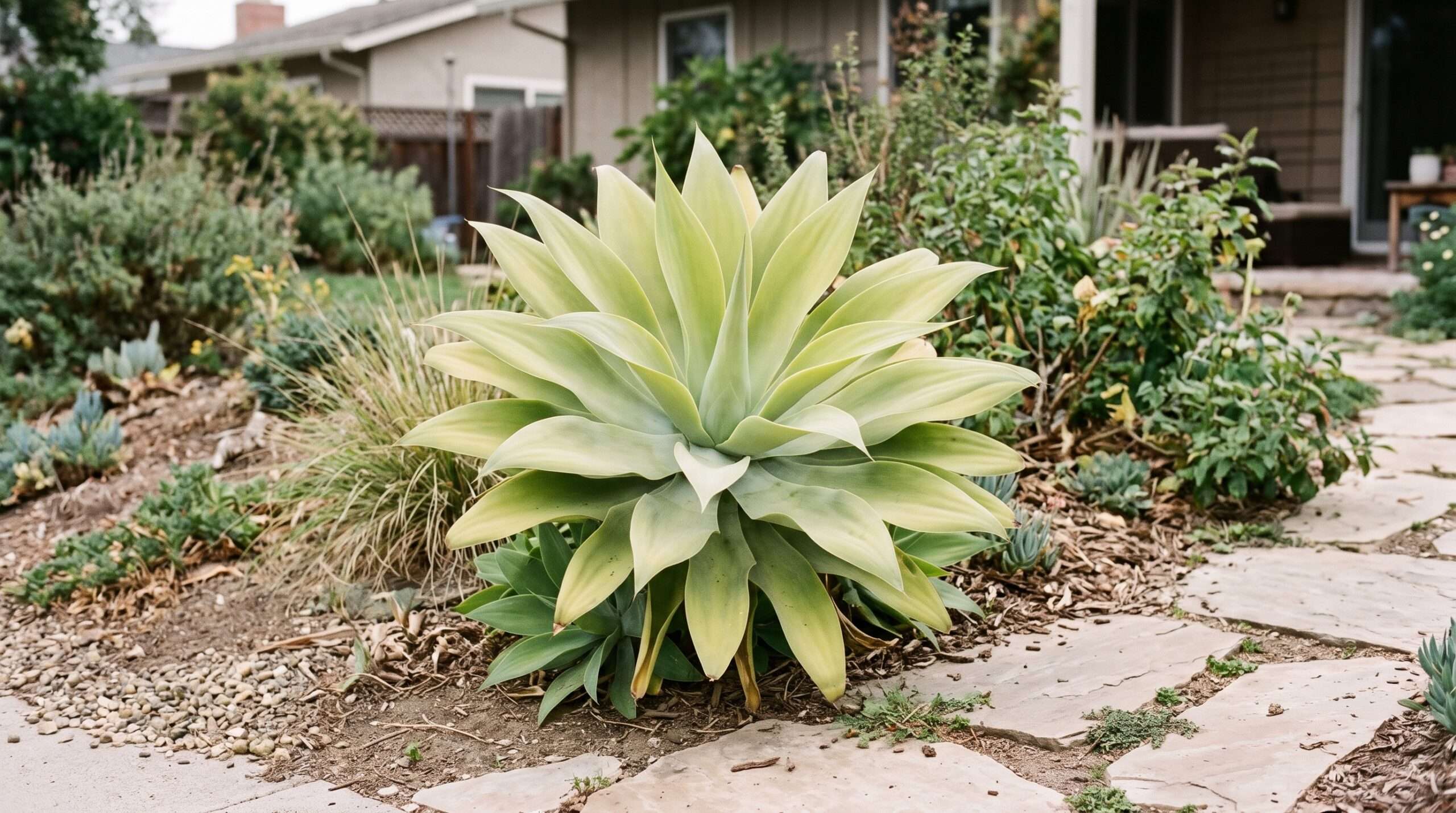
If you are landscaping an outdoor xeriscape or a modern rock garden and want the ultimate structural succulent, you must consider the majestic Agave. While they generally stay closer to the ground rather than growing tall woody trunks like some Yuccas, their rigid, fleshy, architectural leaves provide unparalleled geometric symmetry.
The Advantage: Agaves boast an unbeatable drought tolerance that rivals—and sometimes exceeds—that of the Yucca. Once established in a landscape, they virtually never need supplemental watering, surviving entirely on natural rainfall. They create a mesmerizing, structural focal point that feels deeply rooted in mid-century modern and Southwestern design.
Care Snapshot:
-
Light: Requires absolute full, blazing sun. They will stretch and lose their tight, symmetrical rosette shape if placed in the shade.
-
Water: The “Soak and Dry” method is mandatory. Water deeply, then ignore the plant completely until the soil is bone dry all the way through the root zone.
-
Soil: Requires an incredibly gritty, fast-draining cactus mix. Standard potting soil will quickly lead to fatal root rot.
💡 Expert Tip: Agaves are notoriously sharp, which can deter homeowners. However, the ‘Agave attenuata’ (commonly known as the Foxtail Agave) is a stunning, spineless variety. It features soft, pale green, pliable leaves with absolutely no dangerous teeth or terminal needles, making it perfectly safe for high-traffic pathways and patio borders.
4. Ponytail Palm (Beaucarnea recurvata) – The Quirky Alternative 🌴
Despite its common name, the Ponytail Palm is not a palm tree at all; it is a fascinating succulent closely related to both the Yucca and the Agave. It features a unique, bulbous, woody trunk (called a caudex) that tapers upwards, topped with a cascading explosion of long, thin, strappy green leaves that look exactly like a cheerleader’s ponytail.
The Advantage: This is the holy grail for pet owners! The Ponytail Palm is 100% non-toxic to both cats and dogs (ASPCA certified). Because the thin, grass-like leaves often tempt cats to playfully chew on them, knowing they are perfectly safe brings immense peace of mind. Furthermore, the swollen caudex acts as a massive water reservoir, meaning this plant can be abandoned for weeks on end without a drop of water, making it the ultimate low-maintenance indoor statement piece.
Care Snapshot:
-
Light: Thrives in bright, direct sunlight. A south or west-facing window is its absolute favorite spot in the house.
-
Water: Extremely infrequent. Depending on the size of the pot and the season, you may only need to water a Ponytail Palm every 3 to 4 weeks.
-
Soil: A sandy, gritty cactus and succulent mix is essential to prevent rot at the base of the trunk.
💡 Expert Tip: Because Ponytail Palms store so much heavy water in their foliage and top trunk, they become incredibly top-heavy as they mature. Always plant them in heavy, wide-based terracotta or ceramic pots rather than lightweight plastic, or they will frequently tip over and damage their beautiful cascading leaves.
5. Phormium (New Zealand Flax) – The Grassy Statement 🌾
If you appreciate the stiff, upright verticality of the Yucca but live in a climate where desert plants rot in the damp ground, Phormium is your ideal landscape solution. Native to New Zealand, these clump-forming perennials produce long, stiff, sword-like blades that shoot straight up from the base before gently arching at the tips.
The Advantage: Phormium provides the exact same vertical architectural element in landscaping as a Yucca, but it is vastly more adaptable to damp conditions. It actively thrives in moist soils and is highly tolerant of heavy coastal salt spray and brisk ocean winds. Additionally, modern Phormium cultivars offer a spectacular color range, from deep bronzes and blacks to bright cherry reds and yellows, allowing you to “paint” your landscape with structural color.
Care Snapshot:
-
Light: Full sun to partial shade. In extremely hot inland climates, a bit of afternoon shade prevents the colorful leaves from scorching.
-
Water: Prefers consistent moisture. While somewhat drought-tolerant once mature, they look their best with regular, deep waterings during the dry season.
-
Soil: Highly adaptable, but thrives in rich, loamy, well-draining soil.
💡 Expert Tip: Phormiums grow by expanding their underground rhizomes. Every three to five years, in the early spring, you can dig up the entire clump and divide it with a sharp spade. This not only reinvigorates an overcrowded plant but gives you several brand-new, free architectural plants to spread around your garden!
6. Dasylirion (Desert Spoon) – The Textured Sphere 🌵
For the ultimate geometric statement in a dry landscape, look no further than the Dasylirion, commonly known as the Desert Spoon. It features hundreds of thin, pale-green or silvery-blue serrated leaves that radiate outward from a central core, creating a flawless, symmetrical sphere of prickly texture.
The Advantage: While a Yucca can sometimes look sparse or gangly as it ages, the Dasylirion maintains a tight, dense, perfect globe shape that looks absolutely stunning in modern, minimalist landscape designs. It is the definition of a low-maintenance, high-impact focal point.
Care Snapshot:
-
Light: Requires absolute full sun to maintain its tight spherical shape.
-
Water: Extremely drought-tolerant. Water sparingly only during extended, severe droughts.
-
Soil: Must have excellent drainage; rocky, sandy, or gravel-heavy soils are perfect.
💡 Expert Tip: As the Desert Spoon matures, the lower leaves will naturally dry out and turn tan. Instead of pulling them off, use sharp bypass pruners to snip them off a few inches from the base. Over time, these stacked, snipped leaf bases create a gorgeous, textured “pineapple” trunk that elevates the spherical foliage off the ground.
7. Snake Plant (Sansevieria trifasciata) – The Indestructible Choice 🛡️
If you want the fierce, vertical, sword-like aesthetic of a Yucca inside your home but have a notorious “black thumb,” the Snake Plant (recently reclassified botanically as Dracaena trifasciata) is the undisputed champion. It features stiff, thick, upright leaves that emerge directly from the soil line, heavily variegated with striking bands of silver, green, and yellow.
The Advantage: It is arguably the most indestructible indoor houseplant in existence. It thrives on utter neglect, happily surviving in near-darkness (like a windowless office or a dim bathroom) while requiring water only once every month or two. It gives you that bold, structural desert look without demanding a desert environment.
Care Snapshot:
-
Light: Extremely adaptable. Can survive in low light but will grow faster and display brighter colors in bright, indirect light.
-
Water: Let the soil dry out 100% between waterings. When in doubt, do not water it.
-
Soil: Standard cactus/succulent mix or regular potting soil heavily amended with perlite.
💡 Expert Tip: For an ultra-modern, sculptural look that mimics the starkness of a Yucca, skip the traditional flat-leaved Snake Plant and hunt down a Sansevieria cylindrica. Its leaves are perfectly round, rigid spikes that look like green spears shooting straight out of the modern planter.
8. Aloe (Aloe arborescens / Tree Aloe) – The Healing Sculptor 💚
While most people know the small, medicinal Aloe vera kept on a kitchen windowsill, the broader Aloe family contains massive, tree-like specimens that rival any Yucca. Aloe arborescens (the Krantz Aloe) or Aloidendron barberae (Tree Aloe) grow thick, woody trunks topped with architectural rosettes of fleshy, toothed leaves.
The Advantage: Unlike the deadly, needle-sharp terminal spines of a Yucca, the teeth along the margins of an Aloe leaf are generally much softer and more pliable, making them safer for garden pathways. Furthermore, large Aloes produce magnificent, towering spikes of tubular orange or red winter flowers that act as absolute magnets for hummingbirds and sunbirds.
Care Snapshot:
-
Light: Full sun outdoors; bright, direct light indoors.
-
Water: Low water needs. Soak thoroughly, then let dry completely.
-
Soil: Sandy, rocky, well-draining cactus mix.
💡 Expert Tip: In dry, fire-prone climates (like Southern California or parts of Australia), Aloes are highly recommended as fire-resistant landscaping plants. Their fleshy leaves are packed with watery gel, which can actually help slow the spread of radiant heat and embers around a property line.
9. Nolina (Beargrass) – The Soft and Sweeping Beauty 🌬️
Rounding out our list is the Nolina. Looking very much like a cross between a traditional Yucca and an ornamental fountain grass, Nolina features a robust, woody base with a massive canopy of incredibly long, thin, grass-like leaves that cascade toward the ground.
The Advantage: The primary appeal of the Nolina is movement. While Yuccas are incredibly rigid and static, the weeping foliage of the Nolina catches the breeze, adding kinetic energy and a softer, sweeping aesthetic to the garden. Many species, like Nolina microcarpa, are also incredibly cold-hardy, surviving freezing winters that would turn tropical structural plants to mush.
Care Snapshot:
-
Light: Full sun to light shade.
-
Water: Very drought-tolerant once established in the landscape.
-
Soil: Adapts to most soils as long as drainage is adequate; dislikes boggy winter conditions.
💡 Expert Tip: Nolina looks spectacular when planted in a raised rock garden or at the top of a retaining wall. This elevated positioning allows its sweeping, 3-to-4-foot-long leaves to cascade gracefully over the stone edges, softening hardscaping features beautifully.
IV. Decision Matrix: Choosing the Right Alternative for You 📐
Still not sure which of these structural stunners is the right fit for your home or garden? Use this quick, problem-solving matrix to match your specific need with the perfect plant:
-
🏠 Best for Low-Light Indoors: Snake Plant, Dracaena
-
🐾 Best 100% Pet-Safe Options: Ponytail Palm, Spineless Agave (Always double-check ASPCA lists, as Dracaena, Aloe, and Cordyline are toxic to pets).
-
❄️ Best for Cold/Frost Climates: Nolina (Beargrass), specific cold-hardy Agave species (like Agave parryi).
-
🌧️ Best for Damp Soils or High Humidity: Phormium (New Zealand Flax), Cordyline.
-
🏜️ Best for Extreme Heat & Neglect: Dasylirion (Desert Spoon), Agave.
V. Pro Care Tips for Architectural and Desert Plants 🪴
To ensure your new structural foliage plants thrive, you must shift your mindset away from traditional “houseplant” or “flower garden” care. Here is how the experts keep these plants looking pristine:
-
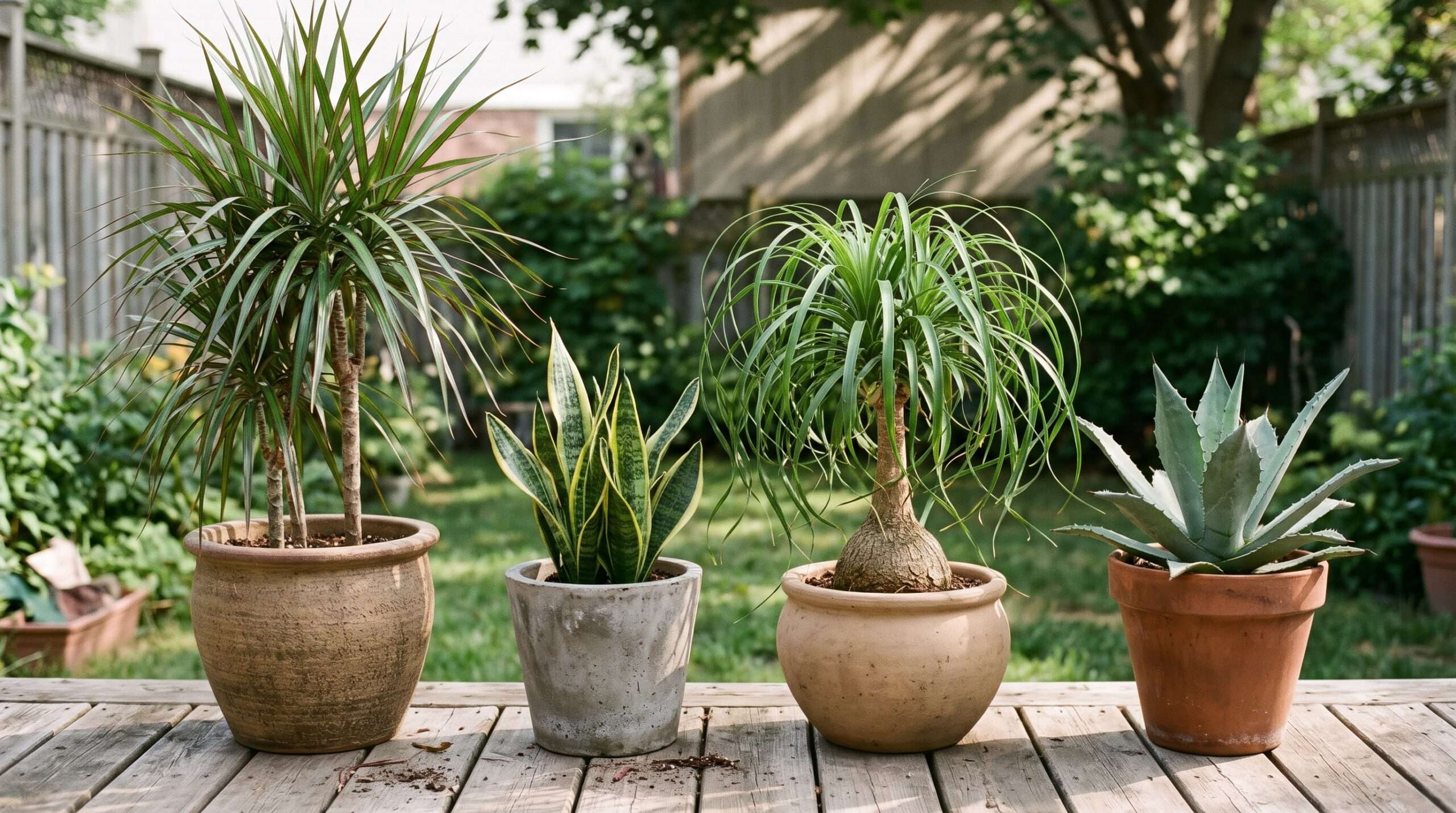
The “Soak and Dry” Method: Most structural plants (like Agave, Ponytail Palms, and Snake Plants) store water in their leaves or trunks. Watering them a little bit every few days will suffocate their roots. Instead, drench the soil completely until water pours out the bottom of the pot, and then do not water again until the soil is completely dry to the touch all the way through.
-
Soil Amendment Magic: Standard, bagged potting soil is often fatal to drought-tolerant plants because it retains too much moisture. Always amend commercial potting soil with at least 30-40% coarse drainage material. Pumice is the gold standard, but perlite or coarse horticultural sand works beautifully to ensure the roots can breathe.
-
Choosing the Right Pot: Architectural plants that grow woody trunks (like Dracaena, Cordyline, and Ponytail Palms) naturally become top-heavy. Always plant them in heavy terracotta or thick ceramic pots. If you use a lightweight plastic pot, the plant is guaranteed to tip over, risking a snapped stem or damaged foliage.
VI. Frequently Asked Questions (FAQs) ❓
What is the indoor plant that looks exactly like a yucca? The Dracaena marginata (Madagascar Dragon Tree) is the most common indoor plant confused with a Yucca. It shares the same woody canes and spiky top-growth but is much softer, shade-tolerant, and better suited to living room conditions.
Are plants similar to yucca toxic to cats and dogs? It depends entirely on the alternative you choose. Cordyline, Dracaena, and Aloe are toxic to pets and can cause stomach issues. However, the Ponytail Palm (Beaucarnea recurvata) is a fantastic structural alternative that is 100% non-toxic and safe for furry friends.
Which yucca alternative grows the fastest? If you want rapid structural growth, Cordyline and Phormium (New Zealand Flax) are your best bets, provided they receive adequate water and rich soil. Desert natives like Agave and Dasylirion are incredibly slow growers, often taking years to add significant size.
Can I grow these yucca alternatives in pots? Absolutely! All 9 plants on this list thrive in containers, provided the pots have large drainage holes. Because many of these plants are slow-growing succulents, they actually prefer to be slightly root-bound and usually only require repotting every 3 to 5 years.
VII. Conclusion: Elevate Your Space 🌟
You do not have to compromise on style to accommodate your lifestyle, climate, or pets. The bold, dramatic lines of a Yucca are iconic, but as we’ve explored, there is an entire world of incredible plants similar to yucca waiting to take center stage in your home or garden.
Whether you opt for the indestructible, shade-loving Snake Plant for your office, the wildly colorful Cordyline for your patio, or a perfectly spherical Desert Spoon for your front yard, these architectural wonders prove that low-maintenance plants can still deliver high-end design impact.
Which of these structural stunners are you planning to add to your collection? Drop a comment below, or tag us in a photo of your new architectural plant setup on social media—we can’t wait to see how you elevate your space! 📸✨