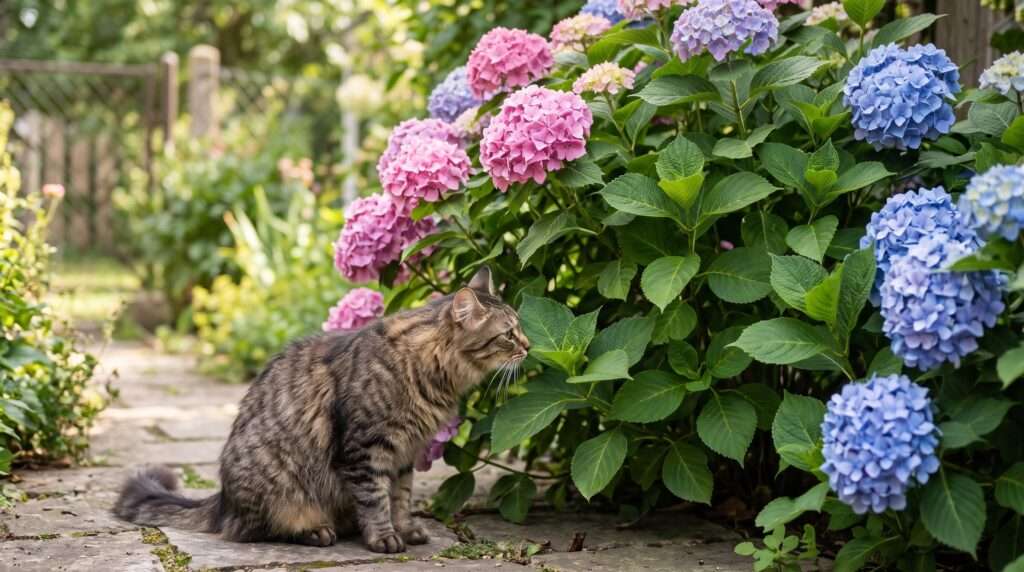
You’ve just spent the weekend curating the perfect garden landscape, complete with massive, colorful blooms. But as you watch your curious kitty sniffing around those lush green leaves, a sudden wave of panic hits you: Wait, is that plant safe?
If you are a pet parent, this is a highly valid concern. When it comes to hydrangea plants and cats, the reality is that these breathtaking flowers are toxic to felines. While they are a staple in outdoor landscaping and indoor floral arrangements, hydrangeas contain hidden chemical defenses that can cause severe gastrointestinal upset if your cat decides to take a bite.
However, before you uproot your entire garden, take a deep breath. While hydrangeas are poisonous to cats, life-threatening emergencies are exceptionally rare. In this comprehensive safety guide, we will break down the exact toxicity risks, the critical symptoms to watch for, the science behind the plant’s defenses, and actionable steps to keep your garden blooming and your furry friend perfectly safe.
Are Hydrangeas Poisonous to Cats? The Short Answer 🛑
The Quick Answer: Yes, hydrangeas are toxic to cats. The plant contains cyanogenic glycosides, which metabolize into hydrogen cyanide when chewed and digested. Ingestion typically leads to feline gastrointestinal distress, including vomiting, diarrhea, and lethargy. If you suspect your cat has eaten part of a hydrangea, monitor them closely and contact your veterinarian or a pet poison helpline.
Which Parts of the Hydrangea Are Toxic? 🍂
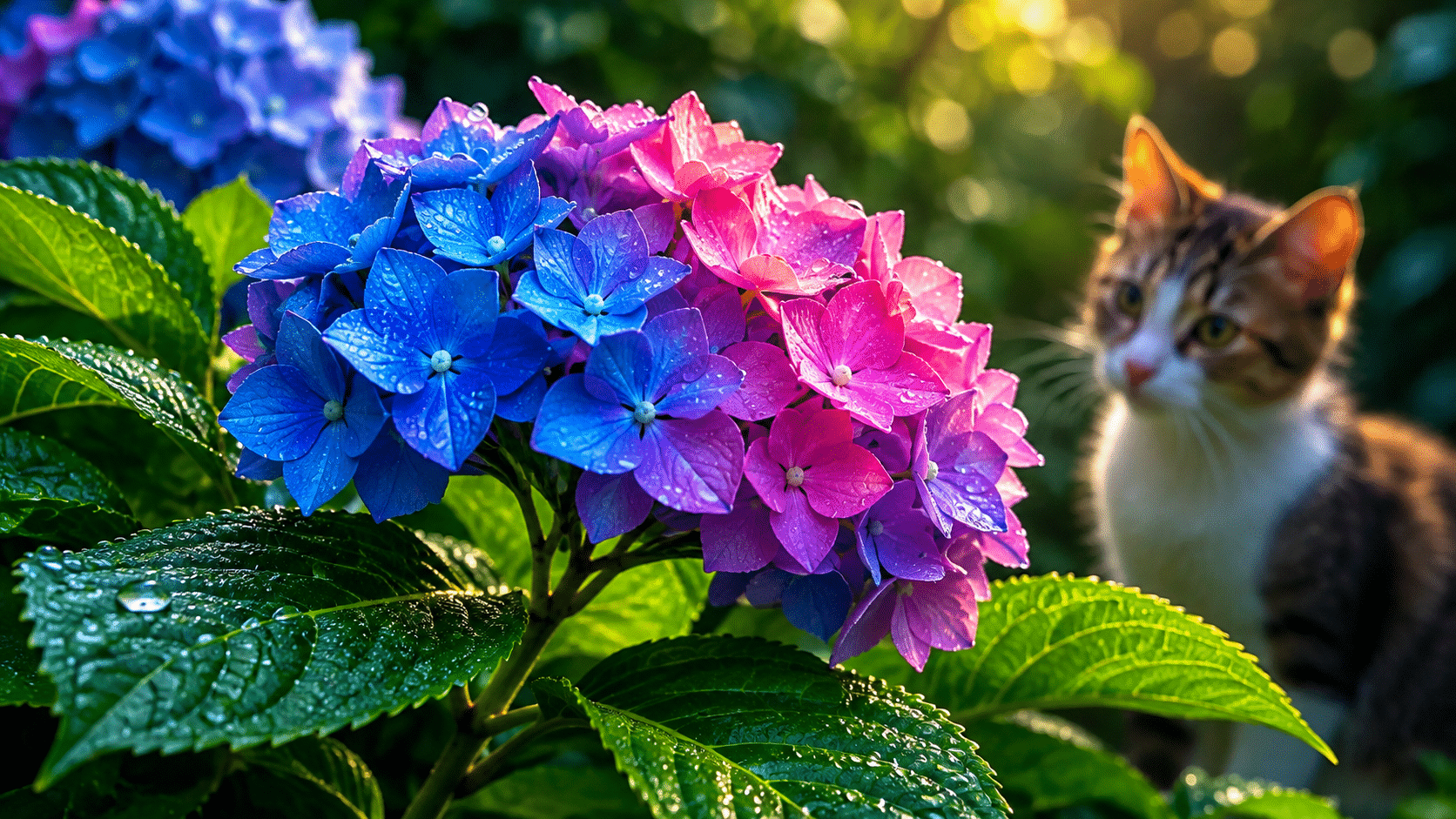
One of the most common questions from panicked pet owners is whether a specific part of the plant is safe. Unfortunately, the answer is no. All parts of the hydrangea plant are toxic to cats.
However, the concentration of toxins varies:
-
The Buds and Leaves: These areas carry the highest concentration of cyanogenic glycosides. Because leaves are fluttery and fun to bat around, they are also the most likely target for a playful cat.
-
The Flowers (Petals): While slightly less toxic than the leaves, the colorful petals still pose a significant risk if ingested.
-
The Stems and Bark: These are tough and less appealing to felines, but they still harbor the toxic compounds.
Are All Hydrangea Varieties Dangerous? 🌺
The Hydrangea genus contains over 70 different species, and the toxicity rule applies across the board. Whether you are growing classic French Hydrangeas (Hydrangea macrophylla) with their famous blue and pink mopheads, towering Panicle Hydrangeas (Hydrangea paniculata), delicate Lacecaps, or native Oakleaf Hydrangeas, they all possess the same toxic chemical profile.
The Science: Why Are Hydrangeas Bad for Cats? 🔬😼
To truly protect your pet, it helps to understand why this plant is dangerous. Hydrangeas aren’t actively trying to harm your cat; their toxicity is a remarkable evolutionary defense mechanism designed to stop herbivores (like deer and insects) from eating them.
What are Cyanogenic Glycosides? Hydrangeas naturally produce chemical compounds called cyanogenic glycosides. While the plant is whole and undamaged, these compounds are harmless and safely stored inside the plant’s cells.
The “Chew Factor” The danger only begins when the plant tissue is damaged. If your cat rubs against a hydrangea, sleeps under it, or merely sniffs the flowers, they are perfectly safe. There are no toxic spores or dangerous pollen to worry about.
However, when a cat chews on the leaves or petals, their teeth break the plant’s cell walls. This releases an enzyme that mixes with the cyanogenic glycosides. Once this mixture hits the cat’s digestive tract, it undergoes a chemical reaction that produces hydrogen cyanide. While the amount of cyanide produced from a small nibble is not enough to be instantly fatal, it is more than enough to trigger a rapid and violent physical rejection by the cat’s body—resulting in sickness.
Signs and Symptoms of Hydrangea Poisoning in Cats 🩺🚨
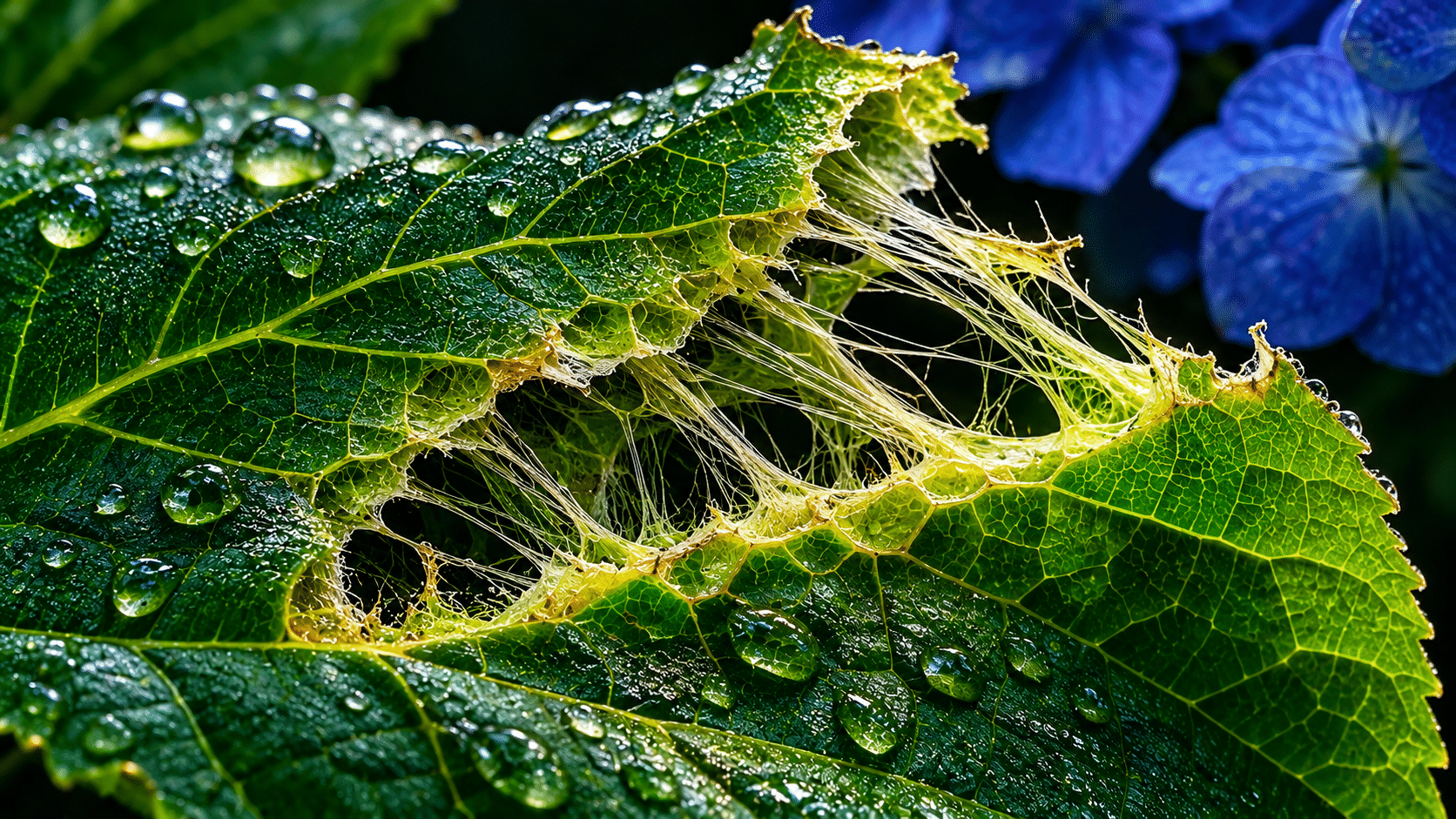
Recognizing the clinical signs of plant poisoning early can make a massive difference in your cat’s recovery. Because the toxins trigger an almost immediate gastrointestinal response, symptoms usually appear within 30 minutes to a few hours after ingestion.
Mild to Moderate Symptoms 🤢
In the vast majority of cases, a cat will only take one or two bites before the bitter taste and immediate stomach upset deter them from eating more. Look out for:
-
Vomiting: This is the most common and immediate symptom. It is actually the body’s helpful way of expelling the toxic plant matter before more cyanide can be metabolized.
-
Diarrhea or Loose Stools: As the toxins move through the digestive tract, they cause severe irritation.
-
Hypersalivation (Drooling): Nausea and the bitter taste of the plant will cause excessive drooling or lip-smacking.
-
Loss of Appetite (Anorexia): Your cat will likely refuse their next meal due to stomach pain.
-
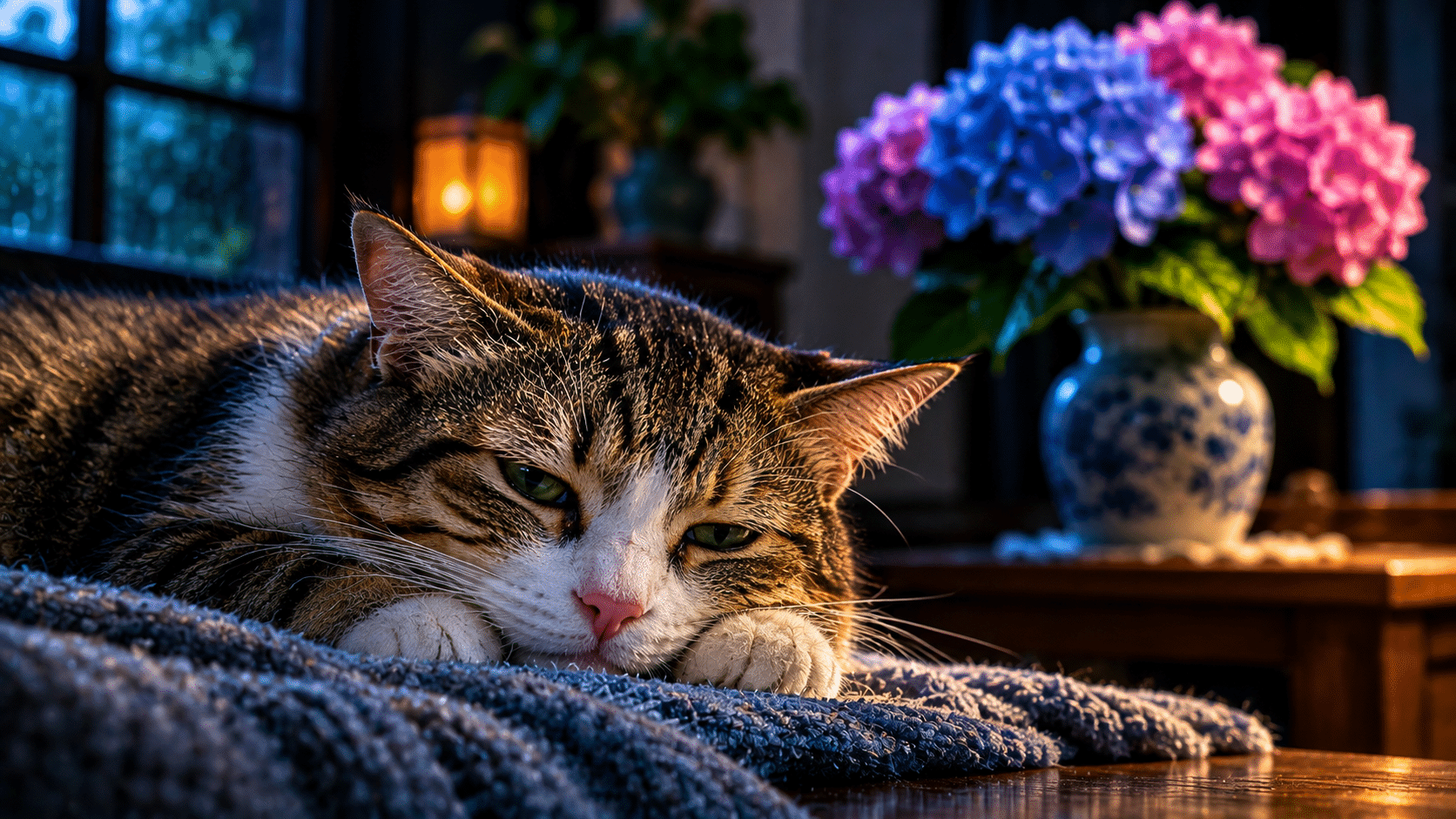
Lethargy and Hiding: Felines naturally hide when they feel vulnerable or sick. A normally active cat that suddenly tucks itself away in a dark closet may be experiencing abdominal pain.
Severe Symptoms (Rare but Possible) ⚠️
Because cats are obligate carnivores, they rarely graze on plants long enough to consume a lethal dose of hydrangeas. However, if a massive amount is ingested (or if the cat is a small kitten, elderly, or immunocompromised), severe cyanide poisoning can occur. Seek emergency care immediately if you notice:
-
Rapid or labored breathing (panting in cats is always a red flag).
-
Significantly increased heart rate.
-
Dilated pupils and sudden disorientation.
-
Muscle tremors, stiffness, or seizures.
What to Do If Your Cat Eats a Hydrangea Plant (Step-by-Step) 🏥📞
Discovering half-chewed leaves and a guilty-looking cat can send any pet parent into a tailspin. However, the most important thing you can do for your feline friend is to remain calm. Elevated stress levels can agitate an already sick cat. If you suspect your cat has ingested hydrangea leaves, buds, or petals, follow this step-by-step emergency protocol immediately.
Step 1: Don’t Panic, but Act Quickly 🛑 Gently approach your cat and immediately remove any remaining plant material from their mouth or paws. If they have coughed up or vomited any plant matter, quickly wipe it away so they don’t attempt to re-ingest it. Move your cat to a safe, quiet, and easily monitorable indoor location (like a bathroom or laundry room) away from other pets.
Step 2: Assess and Document the Situation 📸 Veterinarians and poison control experts need accurate information to calculate the level of toxicity risk. Try to determine:
-
What part of the plant was eaten? (Leaves, petals, stems?)
-
Roughly how much is missing? (A tiny nibble vs. a whole leaf?)
-
When did it happen? (Just now, or while you were at work?)
-
Take a photo: Snap a clear picture of the plant, especially if you have a mixed garden and aren’t 100% positive it was a hydrangea. This helps the toxicologist confirm the exact species.
Step 3: Do NOT Induce Vomiting at Home 🚫 This is a critical rule for feline safety. While dog owners are sometimes instructed to use hydrogen peroxide to induce vomiting, you should never give hydrogen peroxide to a cat. Feline stomachs are incredibly sensitive, and peroxide can cause severe, life-threatening stomach ulcers and internal bleeding. Never attempt home remedies, activated charcoal, or induce vomiting unless explicitly directed by a licensed veterinarian.
Step 4: Contact the Veterinary Experts ☎️ Time is of the essence when dealing with potential cyanogenic glycoside poisoning. Do not wait for severe symptoms to appear. Call for professional guidance immediately.
🚑 Emergency Vet Contact Card (Save to your phone!)
ASPCA Animal Poison Control Center: (888) 426-4435 (Consultation fee may apply)
Pet Poison Helpline: (855) 764-7661 (Consultation fee may apply)
Your Local Emergency Vet: [Insert Your Local 24/7 Clinic Number Here]
What to Expect at the Vet: If the vet recommends bringing your cat in, they will likely provide supportive care. Because there is no direct “antidote” for hydrangea poisoning, the goal is to manage the symptoms. This usually involves administering IV fluids to prevent dehydration from vomiting, anti-nausea medications (antiemetics), and gastrointestinal protectants to soothe their irritated stomach lining.
How to Keep Your Cat Away from Hydrangeas (Outdoor & Indoor Tips) 🏡🐈⬛
You don’t necessarily have to choose between a beautiful, Pinterest-worthy garden and a safe pet. By implementing a few strategic barriers and psychological deterrents, you can safely co-exist with hydrangeas while keeping your curious cat at bay.
Outdoor Garden Strategies 🌳
If your cats have access to your backyard (or if you are trying to protect neighborhood strays), landscaping design is your first line of defense.
-
Strategic Placement and Zoning: Cats are opportunistic nibblers. Don’t plant hydrangeas near your cat’s favorite lounging spots, walkways, or outdoor feeding stations. Consider planting hydrangeas in raised garden beds or using decorative garden fencing to create a physical barrier.
-
Scent Deterrents: Cats possess a highly sensitive olfactory system and detest certain smells. You can naturally deter them by scattering citrus peels (lemon, orange, grapefruit) or used coffee grounds around the base of the hydrangea bushes. Alternatively, commercial pet deterrent sprays formulated with bitter apple or citronella can be sprayed on the lower foliage.
-
Tactile Aversions: Cats hate walking on uncomfortable textures. Laying down chicken wire just under the topsoil around the plant, or using commercial outdoor scat mats (which feature harmless but annoying plastic spikes), will quickly train your cat to avoid that garden bed.
-
Motion-Activated Sprinklers: For the ultimate hands-off deterrent, install a motion-activated garden sprinkler. When a cat approaches the hydrangeas, a harmless burst of water will safely startle them away, reinforcing that the area is off-limits.
Indoor Floral Arrangement Tips 💐
A fresh-cut hydrangea bouquet is a stunning centerpiece, but it acts like a magnet for indoor cats who love to investigate new objects.
-
Elevate and Isolate: Keep vases on high, inaccessible shelves or mantles where your cat cannot jump. Remember that cats are agile, so ensure there are no “launch pads” (like nearby chairs or tables) they can use to reach the flowers.
-
The Foil and Tape Trick: If you must place a vase on a dining table, use your cat’s sensory preferences against them. Place double-sided sticky tape or a crinkly sheet of aluminum foil on the table around the vase. Cats despise the sticky feeling on their paw pads and the loud, unpredictable sound of foil.
-
Supervised Enjoyment Only: The safest indoor strategy is to only display toxic bouquets in rooms where the door can be firmly shut when you are not actively supervising your pet.
The Distraction Method: Cat Grass & Safe Grazing 🌾
Why do cats eat plants in the first place? Felines often seek out foliage out of boredom, to aid digestion, or to act as a natural laxative for hairballs. Instead of just saying “no” to the hydrangeas, say “yes” to a safer alternative!
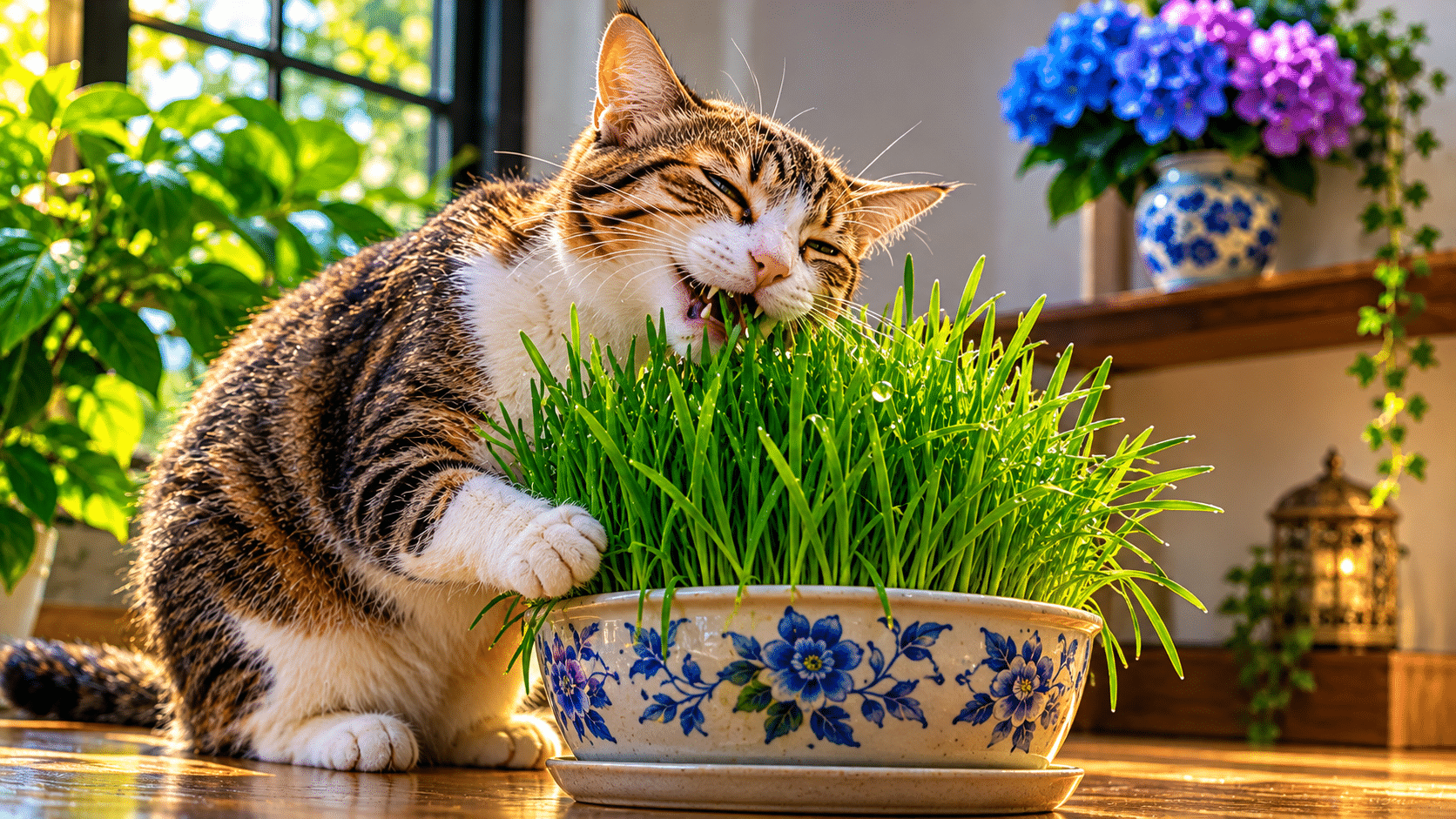
Set up a dedicated “feline garden” by growing organic oat grass, wheatgrass, or barley grass in a shallow, wide pot. Place this safe grazing station far away from your decorative plants. When your cat has a safe, satisfying, and highly accessible source of greens, they are significantly less likely to go looking for trouble in your hydrangea bushes.
Gorgeous, Cat-Safe Alternatives to Hydrangeas 🌼😻
If you decide that the stress of managing toxic plants is simply not worth the risk—especially if you have a young kitten or a highly stubborn cat—there are plenty of stunning, ASPCA-approved alternatives. You can still achieve that lush, voluminous garden aesthetic without compromising your pet’s safety.
Here are some top-tier, non-toxic plant alternatives that offer similar visual appeal to hydrangeas:
| Plant Name | Visual Look & Vibe | Care Level & Ideal Location |
| Camellias (Camellia japonica) | Large, lush, rose-like blooms with dark glossy leaves. Excellent substitute for outdoor hydrangea shrubs. | Moderate. Prefers partial shade and slightly acidic soil. (Outdoor) |
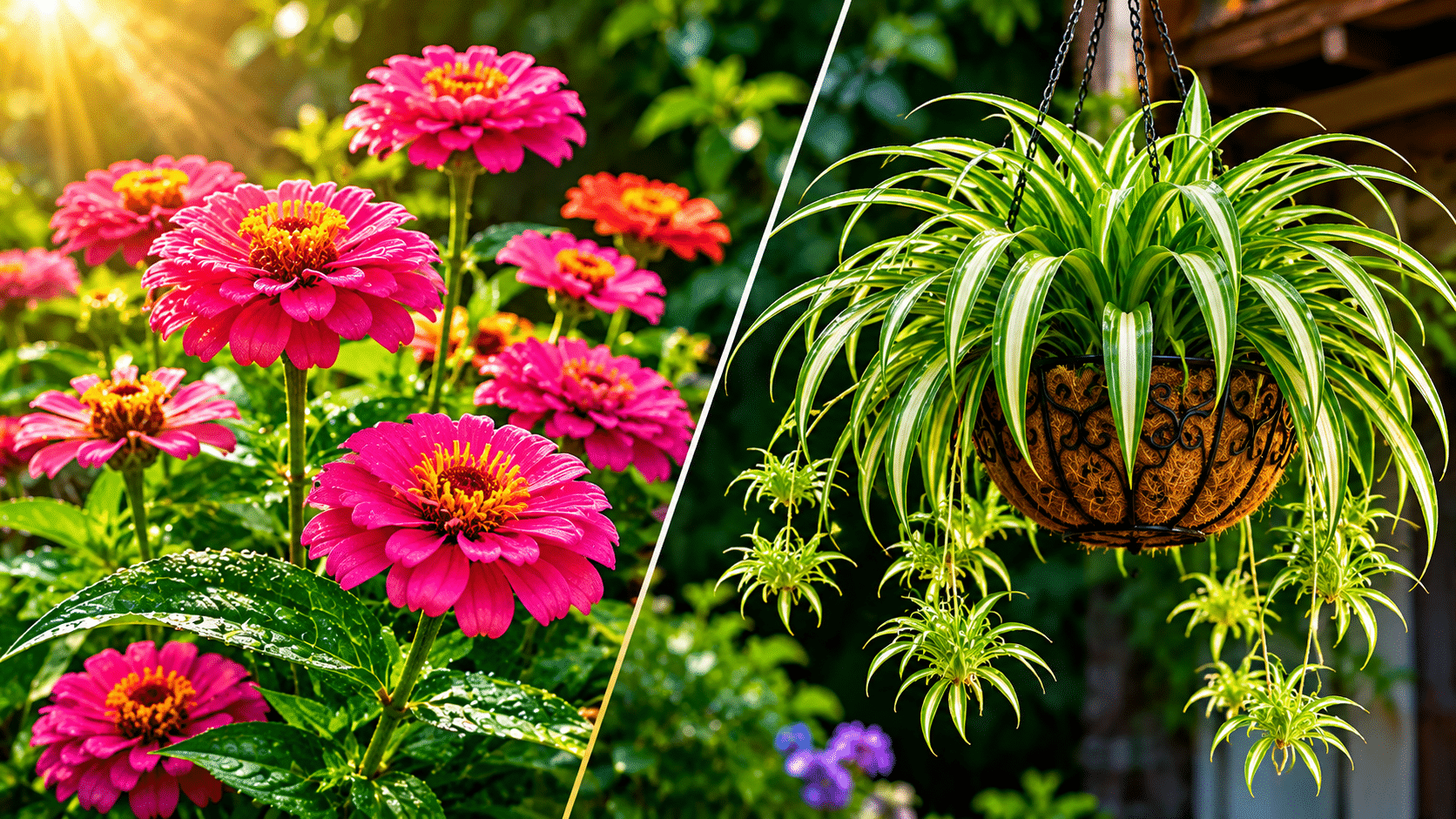
| Zinnias (Zinnia elegans) | Vibrant, massive pom-pom style flower heads that come in a rainbow of colors. | Easy. Loves full sun and blooms heavily in summer. (Outdoor) |
| African Violets (Saintpaulia) | Small but striking clusters of blue, pink, and purple flowers. Perfect replacement for indoor hydrangea bouquets. | Moderate. Requires bright, indirect light and careful watering. (Indoor) |
| Spider Plants (Chlorophytum comosum) | Offers the lush, cascading greenery that large hydrangea leaves provide, minus the toxicity. | Very Easy. Highly adaptable and perfect for hanging baskets. (Indoor/Outdoor) |
| Crape Myrtle (Lagerstroemia) | If you want the massive, showy flower clusters of a panicle hydrangea, this pet-safe flowering tree is an absolute showstopper. | Moderate. Needs full sun and offers gorgeous summer color. (Outdoor) |
Frequently Asked Questions (FAQs) ❓
Can the smell of hydrangeas hurt my cat? No. The scent and pollen of hydrangeas are completely harmless to felines. The danger lies strictly in the ingestion of the plant tissue. Your cat can safely sniff the flowers without risking cyanide poisoning.
Are dried hydrangeas still toxic to cats? Yes, absolutely. Many people love to dry hydrangea flower heads for autumn wreaths and rustic indoor decor. Unfortunately, the cyanogenic glycosides do not disappear when the plant dries out. Dried hydrangeas remain toxic and must be kept out of reach of curious paws.
Will one tiny bite of a hydrangea leaf kill my cat? It is highly unlikely. Because the plant tastes bitter and causes almost immediate stomach cramps and nausea, cats rarely consume enough to cause fatal cyanide poisoning. One bite will likely lead to an upset stomach and vomiting, but a vet consultation is still strongly advised to ensure they don’t become dangerously dehydrated.
Are hydrangeas toxic to dogs, too? Yes. The toxicity of the Hydrangea genus extends to dogs, horses, and even humans if ingested in large quantities. The symptoms in dogs mirror those in cats, primarily manifesting as severe gastrointestinal distress, vomiting, and lethargy.
Conclusion: Creating a Safe Oasis for Your Feline Friend 🌿❤️
Navigating the world of pet-safe landscaping can feel overwhelming, but knowledge is your greatest tool. While hydrangea plants and cats are a toxic combination, understanding the risks allows you to make informed, proactive decisions.
Whether you choose to safeguard your existing hydrangeas with clever deterrents, move your blooming shrubs behind a protective garden fence, or swap them out entirely for gorgeous, pet-safe Camellias and Zinnias, you have the power to create a stunning botanical space.
Your garden should be a place of relaxation and joy, not a source of anxiety. By taking these necessary precautions and saving those emergency vet numbers to your phone, you can ensure that your home remains a beautiful, blooming oasis where your feline friend can safely prowl, play, and purr.