You’ve carefully watered, perfectly positioned, and lovingly watched your Monstera unfurl a stunning new leaf, only to notice something tiny crawling across the stem. Finding bugs on your beloved foliage is every plant parent’s worst nightmare. The reality is that no indoor jungle is completely immune to pests. Whether it’s microscopic webbing spanning across your Calathea or annoying black flies buzzing out of your Pothos, an infestation can escalate from a minor nuisance to a fatal plant crisis in a matter of days. If you are wondering how to get rid of insects in indoor plants before they destroy your collection, you’re in the right place.
With years of hands-on horticultural experience, I’ve developed a foolproof, step-by-step system to eradicate these unwanted guests. In this comprehensive guide, we will dive deep into identifying common houseplant pests, uncovering why they moved in, and applying fast, safe, and completely natural treatments to reclaim your indoor garden. 🌱
Step 1: Identify the Most Common Indoor Plant Pests 🔍
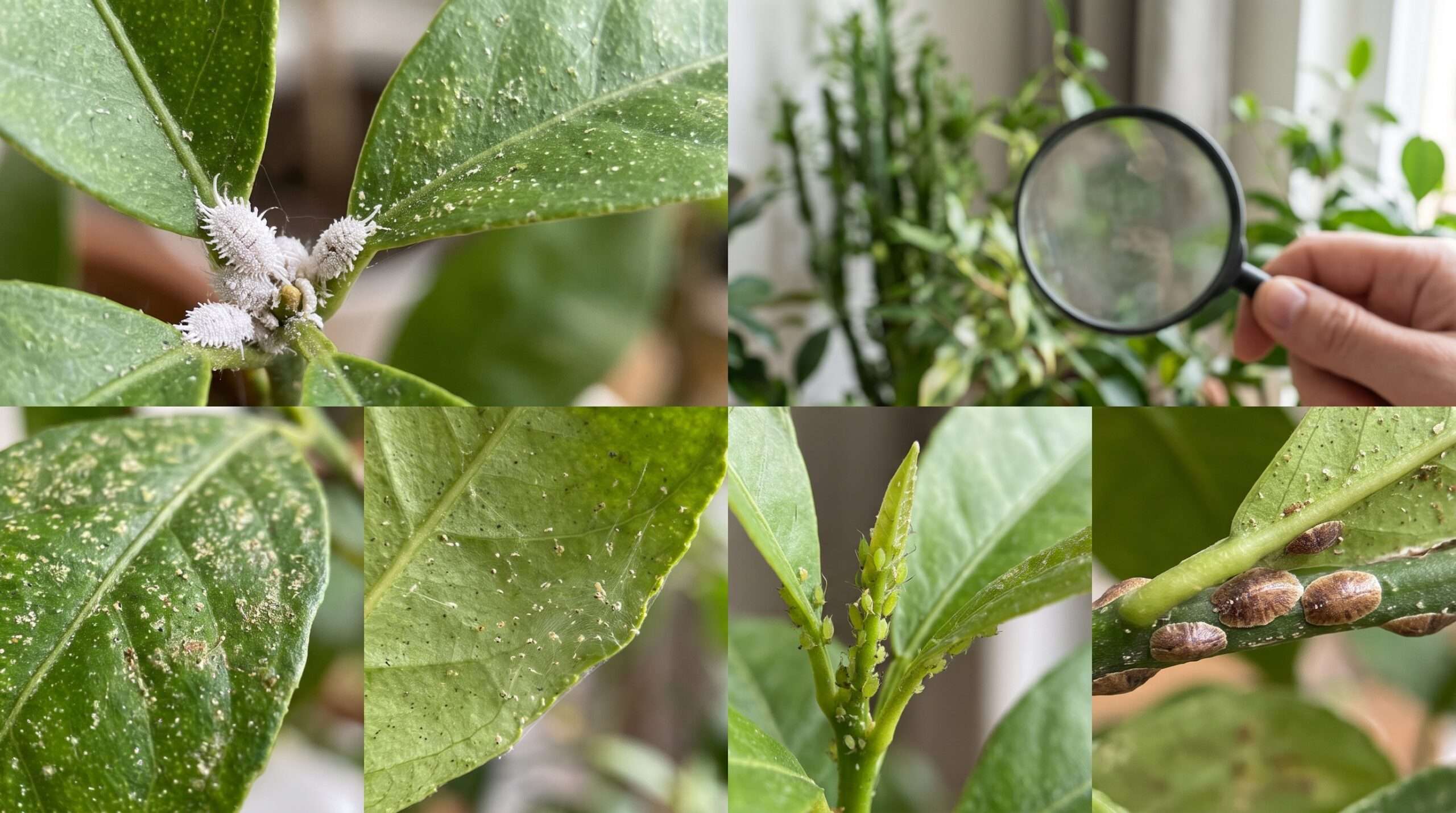
You cannot successfully fight an enemy you don’t understand. Different insects require entirely different eradication strategies. Before you reach for the spray bottle, you must identify exactly what is attacking your plants. Here are the most notorious indoor plant pests, what they look like, and the specific damage they cause to your foliage.
🕷️ Spider Mites
Spider mites are not actually insects; they are microscopic arachnids related to spiders and ticks. Because they are roughly the size of a grain of pepper, you will almost always see their damage before you see the mites themselves.
-
Identifying Features: Look for very fine, dense webbing spun between leaves and stems, particularly on the undersides of the foliage.
-
The Damage: Spider mites pierce the plant cells and suck out the chlorophyll. This leaves the plant with a stippled, dusty, or faded appearance. Leaves will eventually turn entirely yellow and drop off.
-
Favorite Targets: Alocasias, Calatheas, English Ivy, and Palms. They thrive in hot, dry winter air.
🪰 Fungus Gnats
If you notice tiny black flies hovering around the soil surface or darting near your face when you water your plants, you have fungus gnats.
-
Identifying Features: Adult gnats look like miniature mosquitoes. However, the real danger lies beneath the soil. Their larvae are tiny, translucent worms with black heads that live in the top two inches of moist potting mix.
-
The Damage: While adult gnats are primarily a harmless nuisance to humans, the larvae feed on organic matter in the soil, including your plant’s delicate root hairs. A severe larval infestation will stunt plant growth and cause sudden wilting.
-
Favorite Targets: Any plant sitting in constantly soggy, overwatered soil.
🤍 Mealybugs
Mealybugs are incredibly common sap-sucking insects that are easy to spot but notoriously difficult to eradicate due to their protective coating.
-
Identifying Features: They look like tiny, fuzzy, white masses of cotton. They love to wedge themselves into tight crevices, such as where the leaf meets the stem (leaf axils), uncurling new growth, and sometimes even right at the soil line.
-
The Damage: As they drain the sap from your plant, they excrete a sticky substance called “honeydew.” This honeydew often attracts a secondary fungal infection called sooty mold, which coats the leaves in a black ash-like substance, hindering photosynthesis.
-
Favorite Targets: Hoya, Succulents, Orchids, and Pothos.
🟢 Aphids
Aphids are plump, teardrop-shaped insects that multiply at a terrifyingly rapid rate.
-
Identifying Features: Indoors, they are usually light green, yellow, or black. They congregate in dense colonies, almost exclusively on the softest, newest growth of the plant or clustered tightly around flower buds.
-
The Damage: Like mealybugs, aphids suck sap and excrete honeydew. Their feeding causes new leaves to emerge deformed, stunted, or severely curled.
-
Favorite Targets: Fast-growing tropicals, indoor herbs, and flowering houseplants.
🛡️ Scale Insects
Scale insects are the masters of disguise in the houseplant world. They don’t look like bugs at all; they look like a plant disease or natural blemish.
-
Identifying Features: They appear as small, hard, brown or tan oval bumps stuck rigidly to the stems and the undersides of leaves. If you scrape one with your fingernail, it will pop off.
-
The Damage: Scale insects lock onto a single spot, build their armored shell, and continuously drain the plant’s sap. This leads to generalized yellowing, severe leaf drop, and sticky honeydew accumulation on the floor or table beneath the plant.
-
Favorite Targets: Ficus trees, Citrus plants, Ferns, and Olive trees.
Expert Plant Care Tip: The White Paper Shake Test 📄 If you suspect spider mites but can’t see them, take a blank piece of bright white printer paper. Hold it flat beneath a suspect leaf. Tap the leaf sharply a few times. Inspect the paper closely. If you see tiny specks resembling paprika or black pepper moving across the white surface, you have confirmed a spider mite infestation.
Why Are Bugs Attracted to Your Houseplants? (The Root Causes) 🪴
Pests do not magically materialize out of thin air. They are opportunistic scavengers that prey on plants suffering from environmental stress. Understanding why bugs chose your plant is the first step in long-term pest management.
Overwatering and Anaerobic Soil
The number one mistake indoor gardeners make is overwatering. Soil that remains constantly saturated depletes oxygen (becoming anaerobic) and accelerates the decay of organic matter. This creates the absolute perfect breeding ground for fungus gnats. Without soggy soil, fungus gnat larvae cannot survive.
Low Ambient Humidity
Central heating systems and winter drafts strip moisture from the air, creating a bone-dry environment. Spider mites despise high humidity and actively seek out plants suffering in dry, stagnant air. If your home’s humidity drops below 40%, you are ringing the dinner bell for spider mites.
The Trojan Horse: Unquarantined New Plants
The most common way pests enter your home is through the front door, hitching a ride on that gorgeous new plant you just bought from the nursery or big-box store. Commercial greenhouses are massive, humid environments teeming with insects. Bringing a new plant directly into your collection without quarantining it first is a recipe for disaster.
Open Windows and Unscreened Doors
During the spring and summer, leaving windows open without a proper mesh screen allows winged pests like aphids, thrips, and adult whiteflies to simply blow in on the breeze and settle onto your indoor foliage.
How to Get Rid of Insects in Indoor Plants (The Action Plan) 🚀
When you discover an infestation, you must act swiftly. Do not wait to see if the problem resolves itself; insect populations grow exponentially. Follow this expert, step-by-step horticultural protocol to save your plants safely and effectively.
Step 1: Immediately Isolate the Infected Plant 🚫
The very first thing you must do is remove the infested plant from your main collection. Create a “plant hospital” in a separate room, ideally one without any other plants. Bugs like spider mites can easily travel on air currents or by bridging across touching leaves. Quarantine stops the bleeding and prevents a total indoor garden takeover.
Step 2: The Physical Wash-Down 🚿
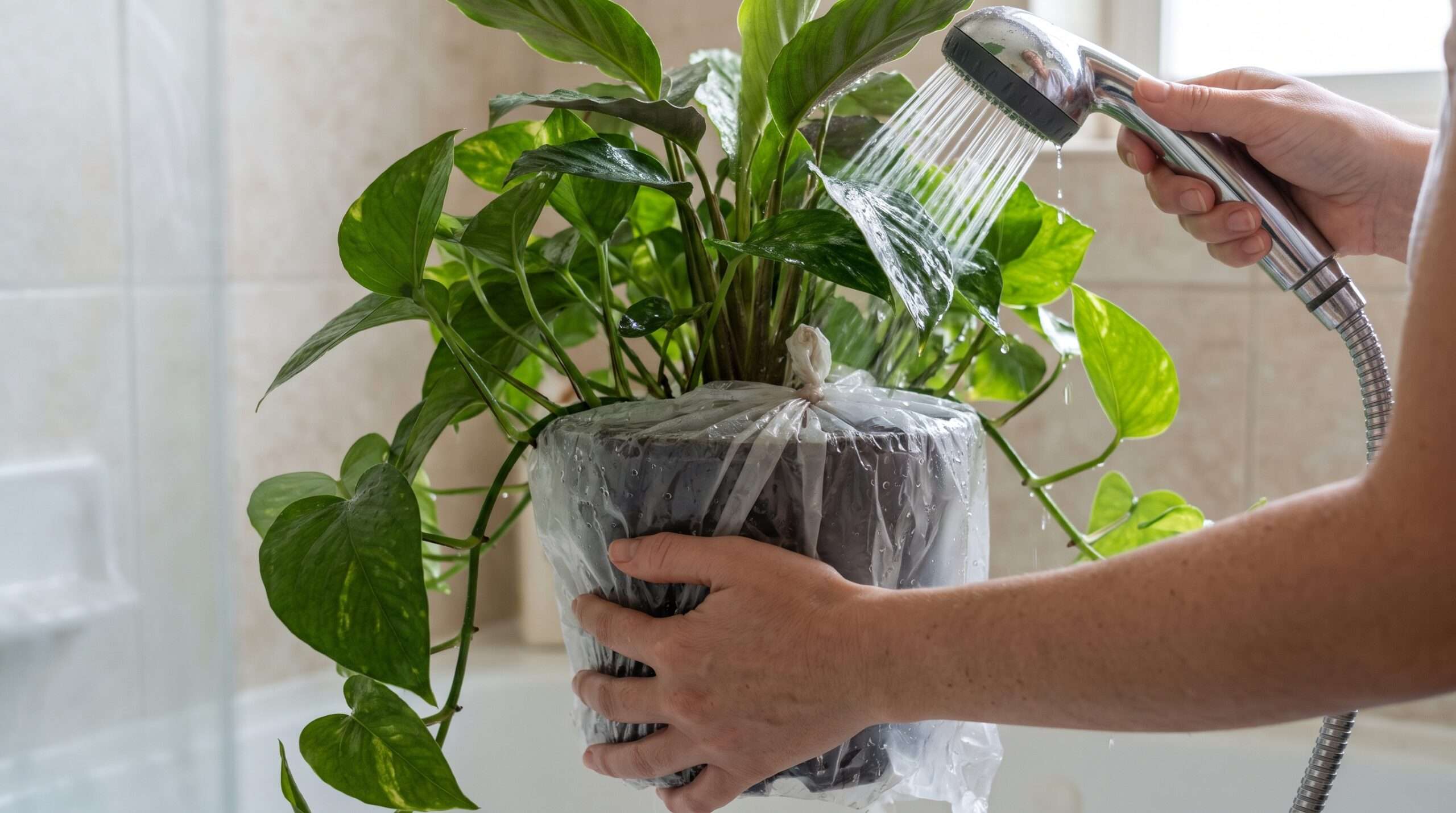
Before applying any sprays, physically remove as many pests as possible. Take the plant to your shower, bathtub, or outdoor hose.
-
Place a plastic grocery bag over the pot and tie it securely around the base of the plant stem. This prevents you from overwatering the soil or washing the bugs directly down into the root system.
-
Turn the water to a lukewarm temperature (never hot or freezing cold).
-
Use a gentle to moderate spray to thoroughly wash the entire plant, paying special attention to the undersides of the leaves and the leaf axils. This physical pressure alone can knock off 70% to 80% of aphids and spider mites.
Step 3: Targeted Spot Treatment with Rubbing Alcohol 🧼
For stubborn pests that cling tightly to the plant—specifically mealybugs and scale insects—water won’t be enough. Take a cotton swab (Q-tip) and dip it in 70% isopropyl rubbing alcohol. Touch the soaked swab directly to the mealybugs or scale bumps. The alcohol instantly dissolves their protective waxy outer coating, killing them on contact. Wipe them away with a paper towel. For severe mealybug infestations, you can wipe down the entire stem with a cotton pad lightly moistened with alcohol.
Step 4: Apply a Safe, Natural Insecticide (Neem Oil) 🌿
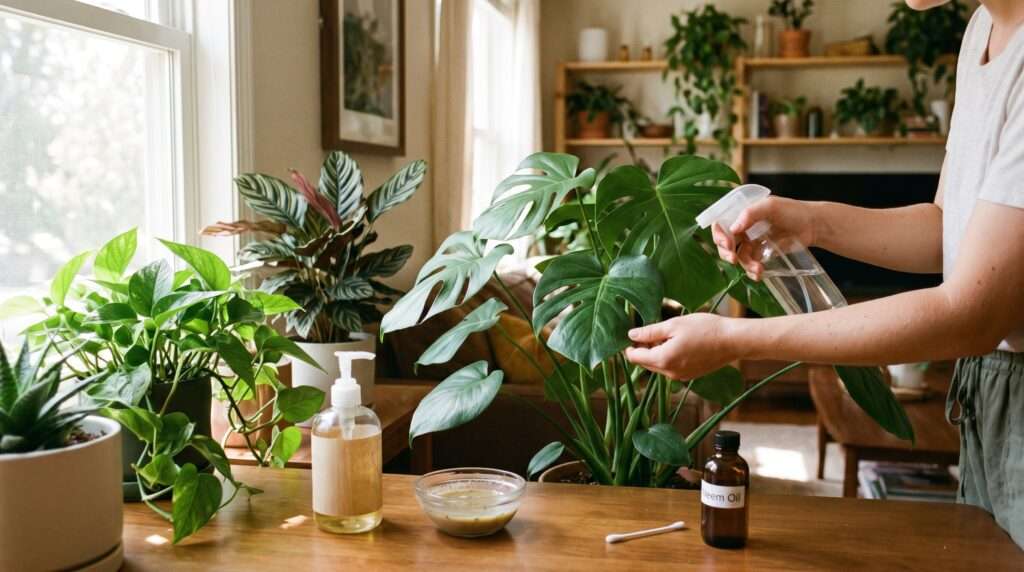
Once the plant is physically clean, you must treat it to kill any microscopic larvae or remaining adults. Neem oil is the gold standard for organic, natural indoor pest control. Cold-pressed Neem oil contains an active compound called Azadirachtin, which disrupts the hormonal life cycle of the insect, preventing them from feeding, molting, and reproducing.
-
How to Apply: Spray the plant thoroughly, ensuring the foliage is dripping wet. You must coat the undersides of the leaves and the stems.
-
Important Safety Note: Neem oil makes leaves photosensitive. Never apply Neem oil and place the plant back in direct sunlight, or the leaves will suffer severe chemical burns. Apply treatments in the evening or keep the plant in dim light until the spray dries completely. Repeat this process every 7 days for three weeks to break the egg-hatching cycle.
Step 5: Treat the Soil (Crucial for Fungus Gnats) 🪱
If you are dealing with soil-dwelling pests like fungus gnats, spraying the leaves will do absolutely nothing. You must attack the larvae in the dirt.
The Best Natural & DIY Bug Sprays You Can Make at Home 🧪
If you prefer to avoid commercial products entirely, you can easily mix highly effective, organic bug repellents using household ingredients. These are safer for indoor air quality, children, and curious pets than harsh systemic chemical pesticides.
The Classic Insecticidal Soap Recipe
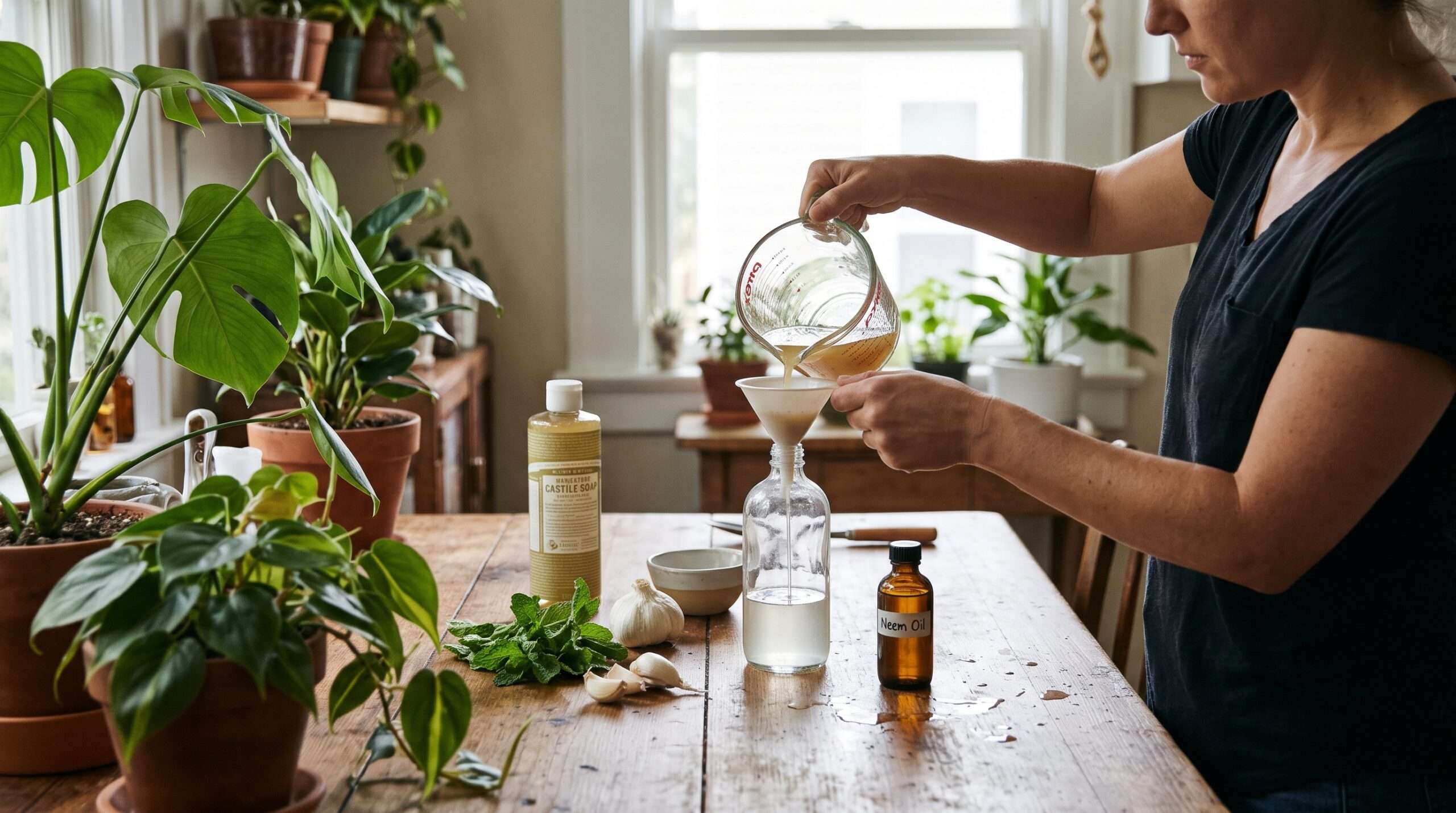
Regular dish soap can sometimes strip the natural protective waxes off plant leaves. Instead, use pure liquid Castile soap (like Dr. Bronner’s Peppermint or Baby Unscented). The fatty acids in Castile soap break down the exoskeleton of soft-bodied insects like aphids and spider mites, dehydrating them instantly.
-
The Recipe: Mix 1 tablespoon of liquid Castile soap into 1 quart of warm water. Put it in a spray bottle, shake gently, and spray directly onto the pests.
The Garlic & Mint Repellent Spray
Insects rely heavily on their sense of smell to locate host plants. The potent sulfur compounds in garlic and the strong menthol in peppermint confuse and repel them.
-
The Recipe: Blend 2 cloves of garlic and a handful of fresh mint leaves with 2 cups of water. Let the mixture steep overnight. Strain it through a fine sieve or cheesecloth into a spray bottle, add a single drop of Castile soap to help it stick to the leaves, and mist your plants.
Preventative Care: How to Keep Bugs Away for Good 🛑
Eradicating an infestation is satisfying, but preventing one from happening in the first place is the true mark of a plant care expert. Implement these four preventative protocols to keep your indoor garden permanently pest-free.
1. The 14-Day Quarantine Rule
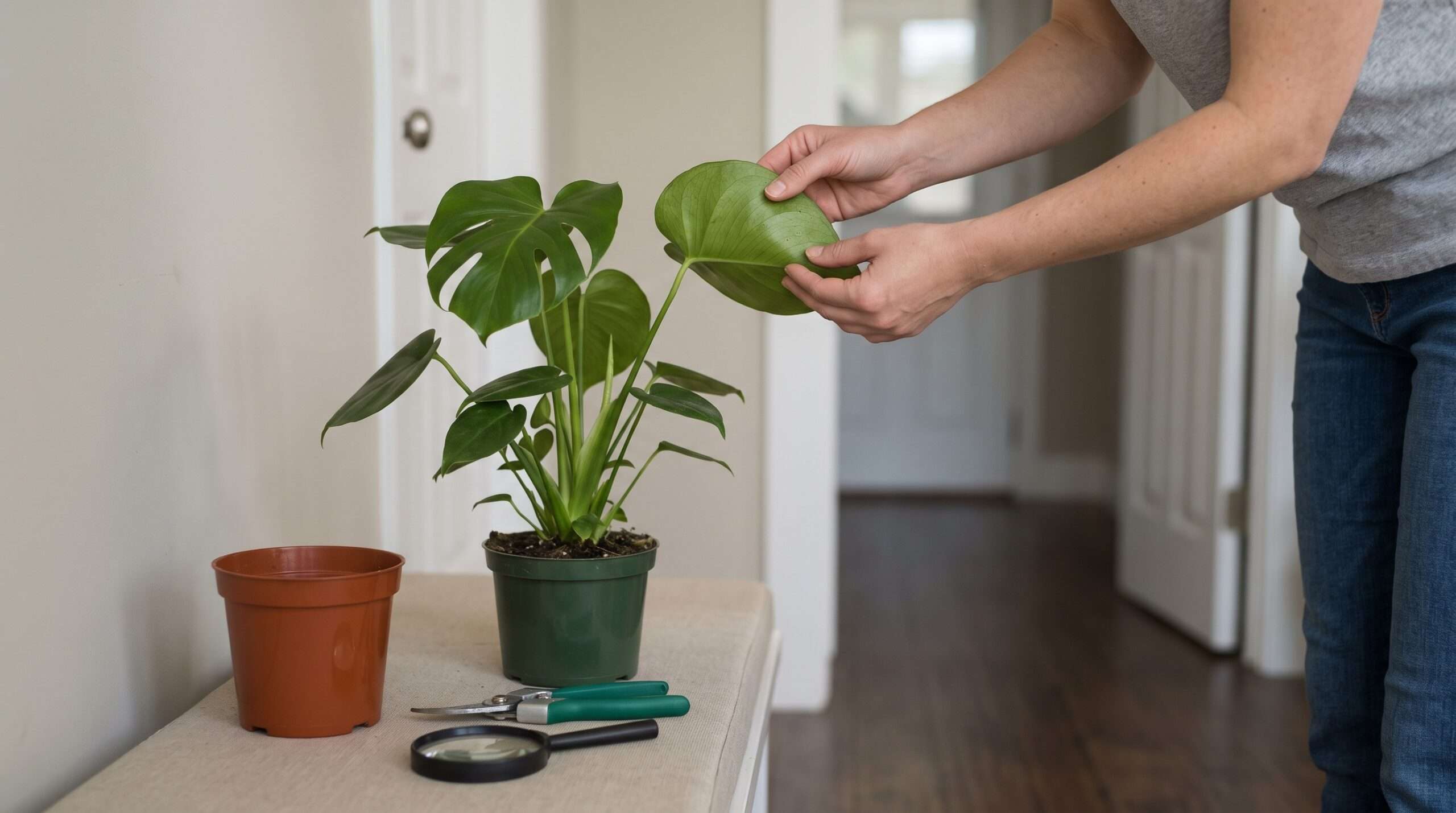
Never, under any circumstances, place a newly purchased plant next to your existing collection. Keep all new arrivals in a separate room for at least 14 days. Inspect them closely every few days. This window gives hidden eggs time to hatch, revealing any lurking infestations before they can spread to your healthy plants.
2. Master Your Watering Schedule
Fungus gnats cannot survive without constantly wet topsoil. Break the habit of watering your plants on a strict calendar schedule (e.g., “every Sunday”). Instead, water based on the plant’s actual needs. Stick your finger into the soil; if the top two inches are moist, do not water. Alternatively, switch to “bottom watering”—placing the nursery pot in a bowl of water and letting the roots drink from the bottom up. This keeps the top layer of soil bone dry, making it inhospitable for gnats.
3. Boost Ambient Humidity
Since spider mites thrive in arid conditions, raising the humidity around your tropical plants acts as a natural deterrent. Invest in a small ultrasonic humidifier for your plant room, group your plants closer together to create a micro-climate, or place them on pebble trays filled with water.
4. Routine Leaf Cleaning
Dust blocks sunlight and reduces photosynthesis, but it also provides a perfect hiding place for microscopic pests. Once a month, wipe down the leaves of your large-foliage plants (like Ficus, Monstera, and Philodendron) with a damp microfiber cloth. You can add a tiny drop of Neem oil to the cloth to act as a preventative leaf polish that leaves the foliage brilliantly shiny and naturally repels insects.
When Is It Time to Throw the Plant Away? 🗑️
Part of establishing a healthy indoor garden is knowing when to cut your losses. Sometimes, an infestation is simply too severe, and the risk of the bugs spreading to your entire collection outweighs the sentimental value of the dying plant.
If you have treated a plant consistently for over a month with no signs of improvement, if the plant has lost more than 60% of its foliage, or if it is suffering from a massive, structural scale infestation, it is time to throw it away. Bag the plant immediately, seal it tightly, and take it to the outdoor trash bin. Do not compost it. Discarding a $15 Pothos to save a $200 rare Thai Constellation Monstera is smart, responsible horticulture.
Frequently Asked Questions (FAQs) ❓
Can bugs in indoor plants infest my house or furniture?
No. The vast majority of houseplant pests, including fungus gnats, spider mites, and aphids, are obligate herbivores. They require living plant tissue to feed, survive, and reproduce. They have zero interest in your furniture, pantry food, or pets, and will die quickly without a plant host.
Does sprinkling cinnamon on the soil keep bugs away?
Cinnamon has fantastic natural anti-fungal properties, making it great for preventing mold on the soil surface, which can theoretically reduce the food source for fungus gnats. However, it is a very mild deterrent and is not strong enough to eradicate an active insect infestation. It should be used as a supplementary preventative, not a cure.
How often should I spray Neem oil on my indoor plants?
For an active infestation, spray Neem oil every 7 to 10 days. This specific timing is critical because Neem oil generally only kills adult and larval stages, not unhatched eggs. Spraying every 7 days ensures you catch the next generation of bugs right after they hatch. Once the plant is pest-free, you can wipe the leaves with a diluted Neem solution once a month as a preventative measure.
Are fungus gnats harmful to humans or pets?
While incredibly annoying as they fly around your face or land in your coffee, fungus gnats are completely harmless to humans, dogs, and cats. They do not bite, they do not carry human diseases, and they do not cause structural damage to homes.
Caring for houseplants is a deeply rewarding journey, and dealing with the occasional pest is simply a rite of passage for every indoor gardener. By staying observant, mastering your watering habits, and keeping a bottle of Neem oil handy in your horticultural toolkit, you can quickly extinguish any outbreak. The key to learning how to get rid of insects in indoor plants is patience and consistency. Stick to the treatments, follow the quarantine rules, and your indoor jungle will be thriving, vibrant, and pest-free in no time.
If you found this guide helpful in saving your foliage, share it with a fellow plant parent, or drop a comment below letting us know which houseplant pest you are currently battling!