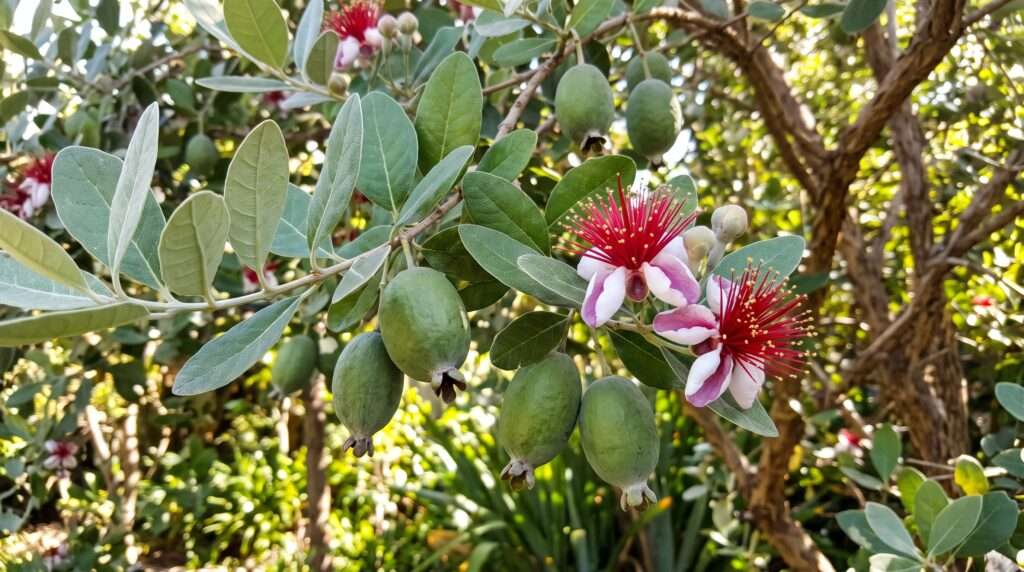
Imagine stepping into your backyard, reaching into a canopy of silvery-green foliage, and plucking a fruit that tastes like a perfect blend of sweet pineapple, ripe strawberry, and a hint of fresh mint. While many traditional orchard fruits require rigorous spraying, heavy pruning, and constant vigilance against pests, the pineapple guava tree (Acca sellowiana, formerly Feijoa sellowiana) breaks all the rules. It is a resilient, low-maintenance gem that offers an exotic harvest without the traditional headache of fruit tree management.
For both novice gardeners and experienced orchardists, growing traditional fruit can often feel like an uphill battle against nature. The pineapple guava solves this problem beautifully. It is highly drought-tolerant, remarkably pest-resistant, and doubles as a stunning ornamental landscape plant.
Expert Insight 🔬: As horticulturists and arboriculturists increasingly pivot toward sustainable, eco-friendly food forests, this South American native has emerged as a top-tier choice. Its ability to thrive in poor soils and its dual-purpose nature—acting as both an evergreen privacy screen and a prolific food source—makes it an unparalleled addition to modern edible landscapes.
Whether you are looking to plant a single specimen in a container or cultivate a dense fruiting hedge, this comprehensive guide will walk you through the exact steps to plant, care for, and harvest from your feijoa tree for decades to come. 🌟
What is a Pineapple Guava Tree? (Feijoa sellowiana) 🌿
Despite its common name, the pineapple guava is not a true guava (genus Psidium), though they share the same botanical family, Myrtaceae. Native to the cool, subtropical highlands of Brazil, Paraguay, Uruguay, and Argentina, it is an adaptable evergreen shrub or small tree that has captured the hearts of permaculture enthusiasts worldwide.
Plant Profile & Ideal Hardiness Zones 🗺️
Unlike strictly tropical fruit trees that perish at the first sign of frost, the pineapple guava boasts impressive cold hardiness.
-
USDA Hardiness Zones: It thrives effortlessly in Zones 8 through 11.
-
Cold Tolerance: Mature trees can withstand winter temperature dips down to 10°F to 15°F (-12°C to -9°C) without suffering terminal wood damage.
-
Pushing the Limits: If you live in Zone 7, you can still cultivate this plant by placing it in a warm microclimate—such as against a south-facing brick wall—or by growing it in a large container that can be moved indoors during extreme freezes.
The plant features striking, oval-shaped leaves that are glossy green on top and a soft, felted silver underneath. When the wind blows, the shimmering foliage provides a beautiful visual texture that rivals the beloved Mediterranean olive tree.
The Dual Harvest: Edible Flowers vs. Tropical Fruit 🌺
One of the best-kept secrets of the pineapple guava is that it provides two distinct harvests from a single plant.
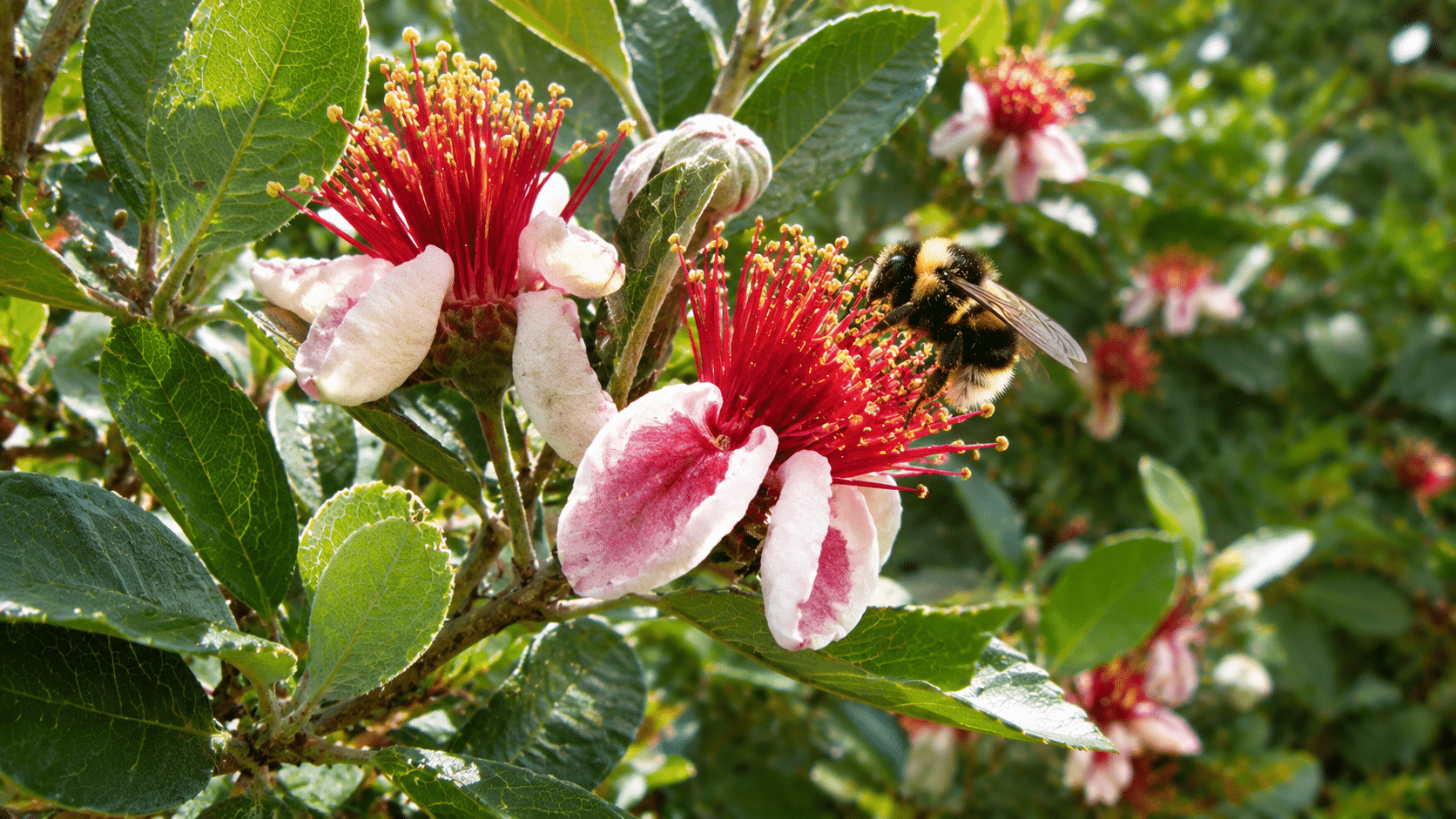
In late spring to early summer, the tree erupts into a spectacular display of showy flowers featuring fleshy, bright white-and-pink petals crowned with a burst of crimson stamens. These petals are entirely edible and possess a sugary, marshmallow-like flavor with a hint of spice.
Pro Tip 💡: You can pluck the fleshy petals right off the tree to toss into summer salads or use as an elegant garnish for desserts. Because the reproductive organs of the flower (the stamen and pistil) remain intact at the base when you carefully pull the petals, harvesting the flowers will not ruin your autumn fruit crop! You truly get to have your cake and eat it, too.
How to Plant Your Pineapple Guava Tree for Long-Term Success 🌱
The foundation of a thriving, highly productive fruit tree is laid on planting day. While the feijoa is incredibly forgiving once established, providing it with the optimal environment early on will significantly accelerate its growth rate and fruit production.
Choosing the Perfect Location ☀️
Sunlight is the primary driver for fruit development. For maximum flowering and a bountiful autumn harvest, site your tree in full sun, meaning it receives a minimum of 6 to 8 hours of direct, unfiltered sunlight daily.
However, context matters. If you are growing your tree in an arid, high-heat climate (such as the American Southwest or interior Australia), providing partial afternoon shade can protect the foliage from scorching and reduce the tree’s water stress during the peak of summer.
Soil Requirements & Preparation 🪱
The pineapple guava is adaptable to a wide range of soil types, from sandy loams to heavier clays, provided there is one non-negotiable factor: excellent drainage. Standing water will suffocate the fibrous root system and rapidly lead to phytophthora root rot.
-
Ideal pH: The tree prefers slightly acidic to neutral soil, right in the pocket of 5.5 to 7.0 pH.
-
Soil Amendment: If you have heavy clay soil, do not simply dig a hole and drop the tree in. Instead, plant the tree on a slight mound or berm to elevate the root zone above the water table. Incorporate generous amounts of organic compost and aged pine bark into the native soil to improve aeration and drainage.
-
Sandy Soil: For overly sandy soils that drain too fast and leach nutrients, amending with rich compost or worm castings will help the soil hold enough moisture and microbiology to support the tree.
Step-by-Step Planting Guide 🪴
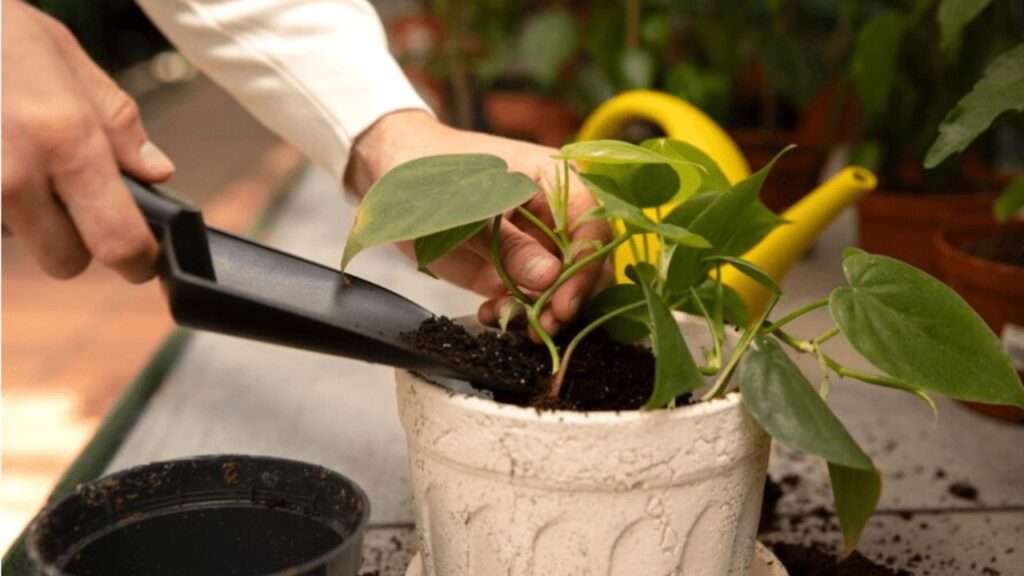
When bringing a nursery-grown plant home, minimizing transplant shock is critical. Follow these expert steps for a seamless transition into the landscape:
-
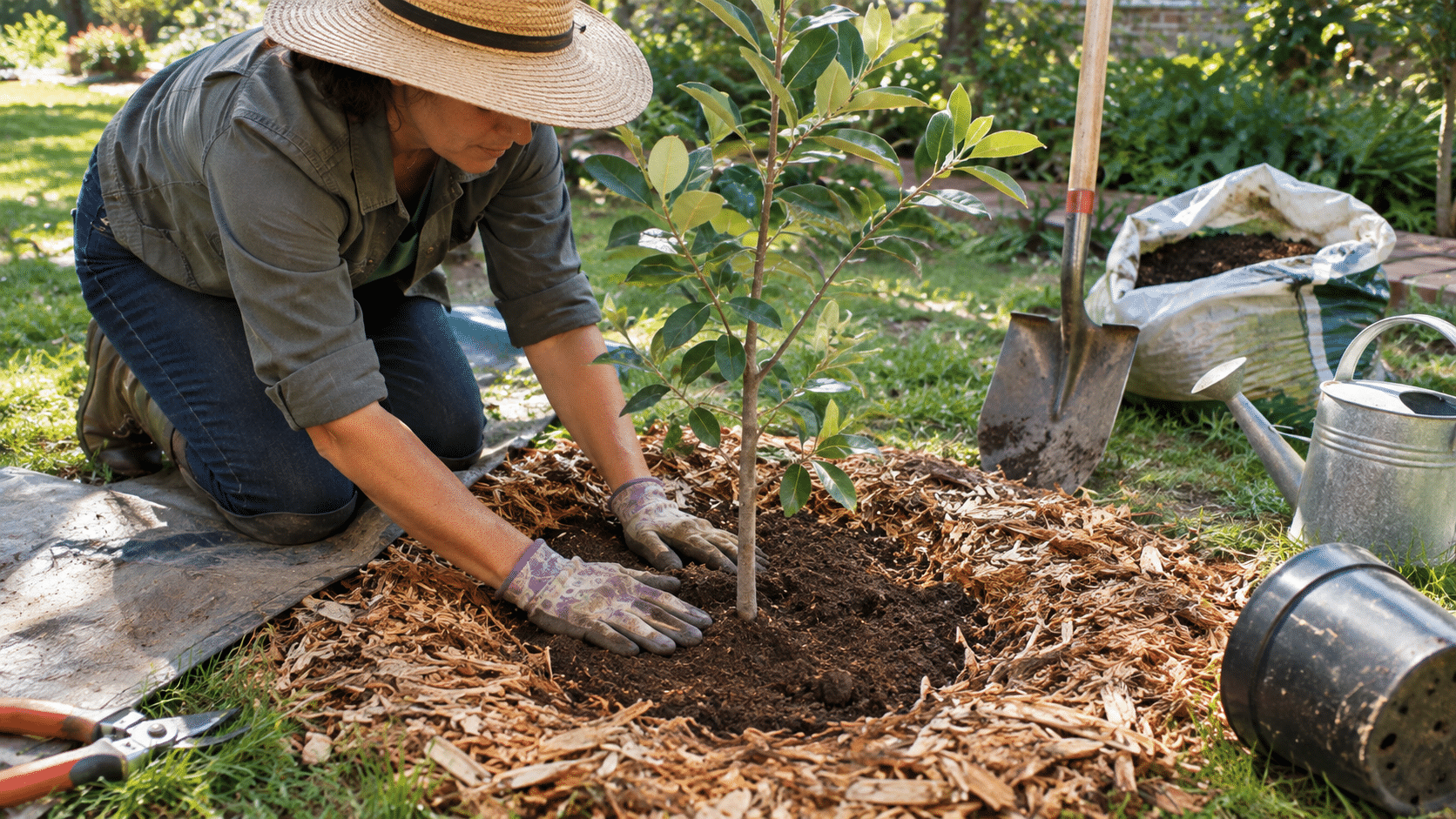
Digging the Hole: Dig your planting hole twice as wide as the nursery container, but exactly the same depth. A wide hole encourages the shallow, horizontal roots to spread easily into the surrounding earth.
-
Root Inspection: Gently remove the tree from its pot. If the roots are circling the bottom (root-bound), use your fingers or a sterilized knife to gently tease them apart. This breaks the circular memory of the roots and encourages them to reach outward.
-
Positioning the Crown: Place the tree in the center of the hole. Crucial rule: The top of the root ball must sit completely flush with, or an inch slightly above, the surrounding soil level. Planting too deep invites soil moisture to sit against the trunk, causing crown rot—a leading cause of early tree mortality.
-
Backfilling and Watering: Backfill the hole with your native or lightly amended soil, tamping it down gently to remove large air pockets. Immediately water the tree deeply to settle the soil around the roots.
-
Mulching: Apply a 3-inch layer of organic mulch (such as wood chips, pine needles, or shredded bark) over the root zone to retain moisture, suppress weeds, and regulate soil temperature. Keep the mulch pulled back at least 2 to 3 inches away from the trunk itself to maintain airflow.
Essential Care Secrets for a Bountiful Harvest 💧
Once your pineapple guava is securely in the ground, its day-to-day maintenance is surprisingly minimal. However, to transition this plant from a simple ornamental shrub to a highly productive fruit tree, you need to master a few critical care techniques.
Watering Mastery: Balancing Moisture and Drainage 🚿
The pineapple guava has a well-deserved reputation for drought resistance, but “drought-tolerant” does not mean “thrives in a desert without help.”
-
Year One (Establishment): During the first 12 to 18 months, the goal is to encourage a deep, robust root system. Water the tree deeply once or twice a week, allowing the top two inches of soil to dry out completely between waterings.
-
Mature Trees and Fruit Swell: Once established, feijoas can survive long dry spells. However, if you want large, juicy fruit rather than small, shriveled ones, consistent moisture is vital during late summer and early autumn when the fruit is swelling. During this critical fruit-fill period, provide deep, supplemental irrigation if you are experiencing a dry spell.
-
Expert Insight 🔬: Always use drip irrigation or a soaker hose at the base of the plant rather than overhead sprinklers. Keeping the silver-green foliage dry is the best preventative measure against foliar fungal diseases.
Fertilizing for Maximum Fruit Yield 🍃
Feeding your tree correctly can double your harvest. The biggest mistake novice growers make is applying high-nitrogen lawn fertilizers near their fruit trees. Excessive nitrogen will trigger an explosion of lush, green vegetative growth at the absolute expense of flowers and fruit.
Instead, utilize a balanced, organic fruit tree fertilizer. An 8-8-8 or 5-5-5 NPK blend is ideal.
-
When to Feed: Apply your first dose of fertilizer in early spring just before new growth pushes out. Follow up with a second, lighter application in mid-summer to support the developing fruit.
-
Soil Health: To naturally boost soil fertility, top-dress the root zone with an inch of high-quality compost every spring. This encourages beneficial earthworms and mycorrhizal fungi, which help the tree uptake essential micronutrients like iron and magnesium.
Mulching and Weed Control 🍂
While we briefly touched on mulching during planting, its ongoing importance cannot be overstated. The shallow, fibrous root system of the pineapple guava intensely dislikes competition from grass and weeds. Maintain a constant 3-inch layer of wood chips, leaf mold, or pine straw under the canopy. As this organic mulch breaks down, it slowly feeds the soil web, regulates extreme soil temperature fluctuations, and drastically reduces your watering chores.
Pruning and Shaping Your Pineapple Guava ✂️
One of the most appealing aspects of Feijoa sellowiana is its versatility. Because it responds incredibly well to pruning, you get to decide its final architecture.
Training as a Tree vs. Growing as a Shrub/Hedge 🌳
-
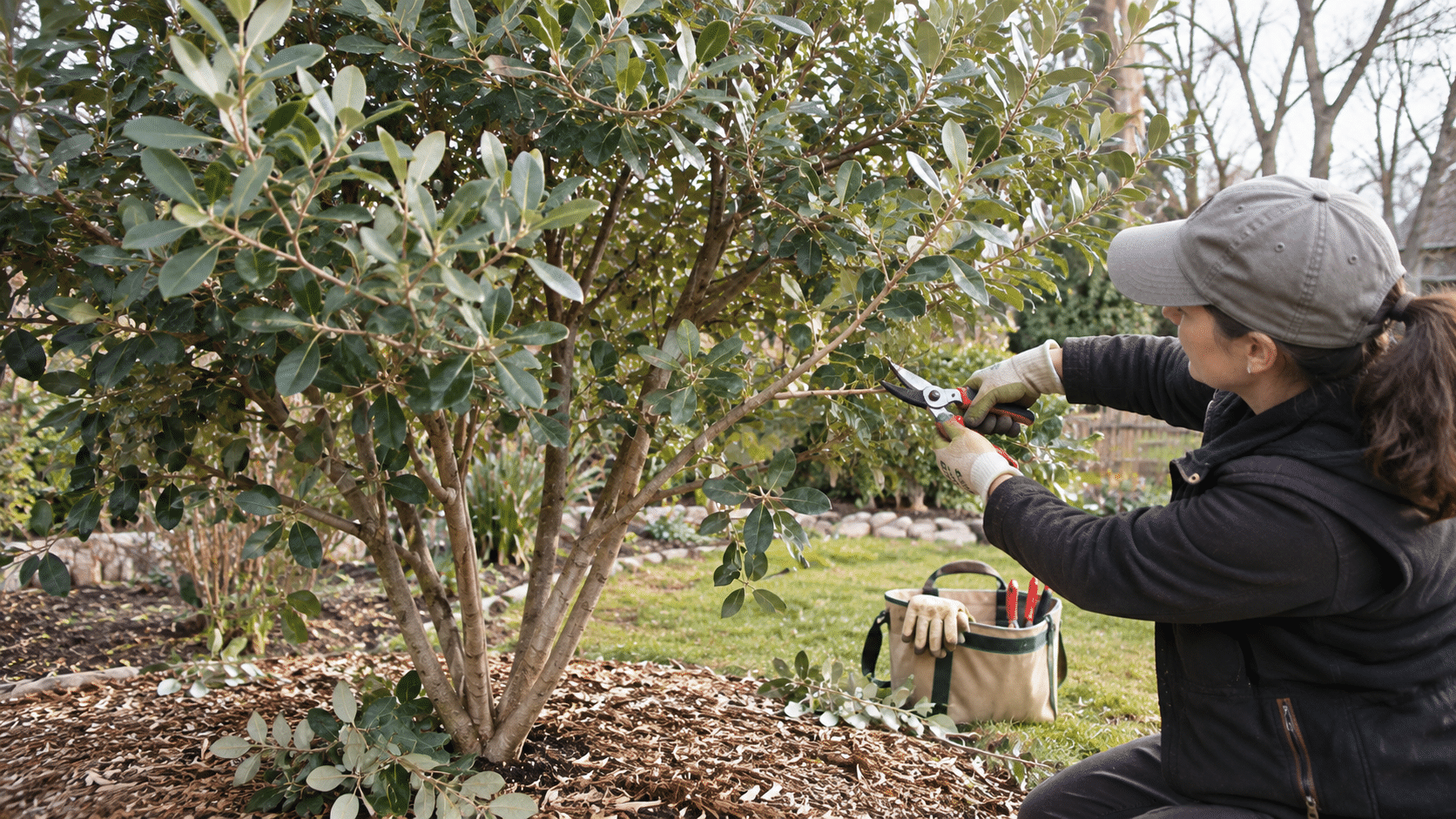
The Tree Form (Standard): To create a classic tree with a single trunk, you must select the strongest, straightest vertical stem (the central leader) when the plant is young. Prune away all other competing basal shoots and gradually remove the lower lateral branches as the tree gains height. This elevates the canopy and creates a stunning sculptural focal point for your landscape.
-
The Shrub or Privacy Hedge: If left to its own devices, the plant will naturally grow into a dense, multi-stemmed bush reaching 10 to 15 feet tall and wide. To create an impenetrable, fruiting privacy screen, plant multiple bushes 5 feet apart and lightly shear the outer foliage in late winter to encourage dense branching.
When and How to Prune for Health 📅
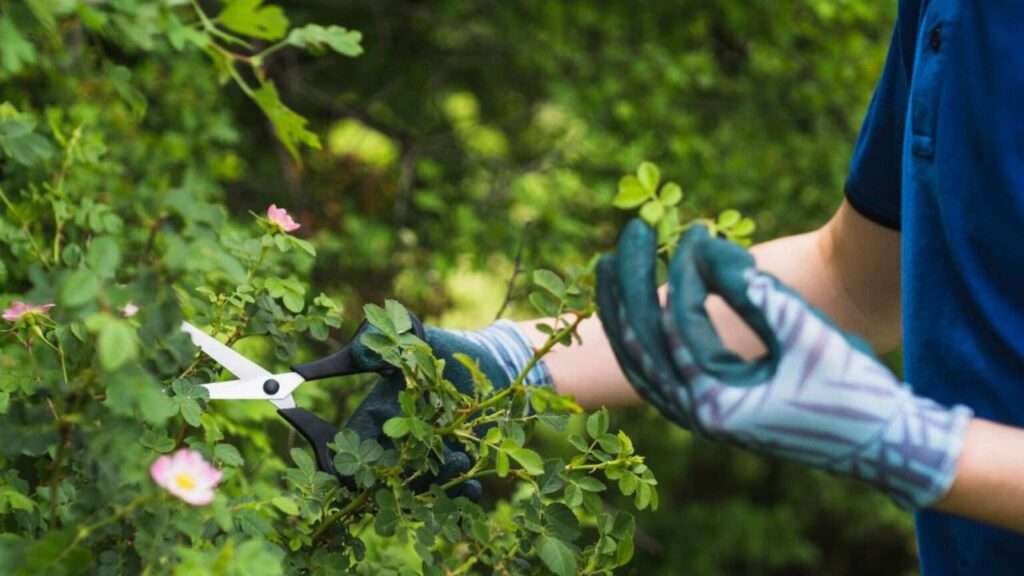
The golden rule of fruit tree pruning applies here: Prune in late winter or very early spring before the new buds begin to swell. The pineapple guava flowers on new growth, so late-season pruning risks cutting off your future harvest.
-
The 3 D’s: Always begin by removing any dead, diseased, or damaged wood. Eliminate branches that are rubbing or crossing each other.
-
The “Open Center” Technique: For optimal fruit ripening and disease prevention, light and air must penetrate the interior of the canopy. Thin out the congested, twiggy growth in the center of the plant. A well-pruned tree should allow a bird to fly straight through the middle without hitting a branch.
The Magic of Pollination: Getting Your Tree to Fruit 🐝
If you have a healthy pineapple guava tree that blooms profusely but never sets fruit, you likely have a pollination issue. Understanding how these trees reproduce is the secret to unlocking a massive harvest.
Self-Fertile vs. Cross-Pollination Needs 🦋
In their native South American habitat, feijoas are heavily pollinated by birds that are attracted to the sweet, fleshy flower petals. As the birds feast on the petals, they brush against the pollen-laden anthers and transfer it to the sticky stigmas of neighboring flowers.
-
Self-Fruitful Varieties: Some popular cultivars, like ‘Coolidge’ or ‘Pineapple Gem’, are partially self-fertile. A single tree will produce fruit on its own.
-
The Cross-Pollination Advantage: Even self-fertile varieties will produce significantly larger fruit, and up to 50% higher yields, if cross-pollinated. For maximum production, always plant at least two genetically different varieties (e.g., pairing a ‘Nazemetz’ with a ‘Trask’ or ‘Apollo’).
Hand-Pollination Techniques 🖌️
If you are growing your tree indoors, in a greenhouse, or in an urban environment lacking natural pollinators, you can step in to play the role of the bird or the bee.
Take a small, soft, dry paintbrush. When the flowers are fully open, gently swirl the brush around the fluffy red stamens to collect the yellow pollen. Then, brush that pollen onto the central, slightly sticky tip of the pistil of a different flower. Repeat this process every couple of days during the bloom cycle. It takes just a few minutes, but it guarantees fruit set!
Harvesting: When is Pineapple Guava Ripe? 🍍
Knowing exactly when to harvest is a unique challenge because the fruit remains stubbornly green even when fully ripe. If you wait for the skin to change color, you will be waiting forever.
The “Drop Test” for Perfect Ripeness 🟢
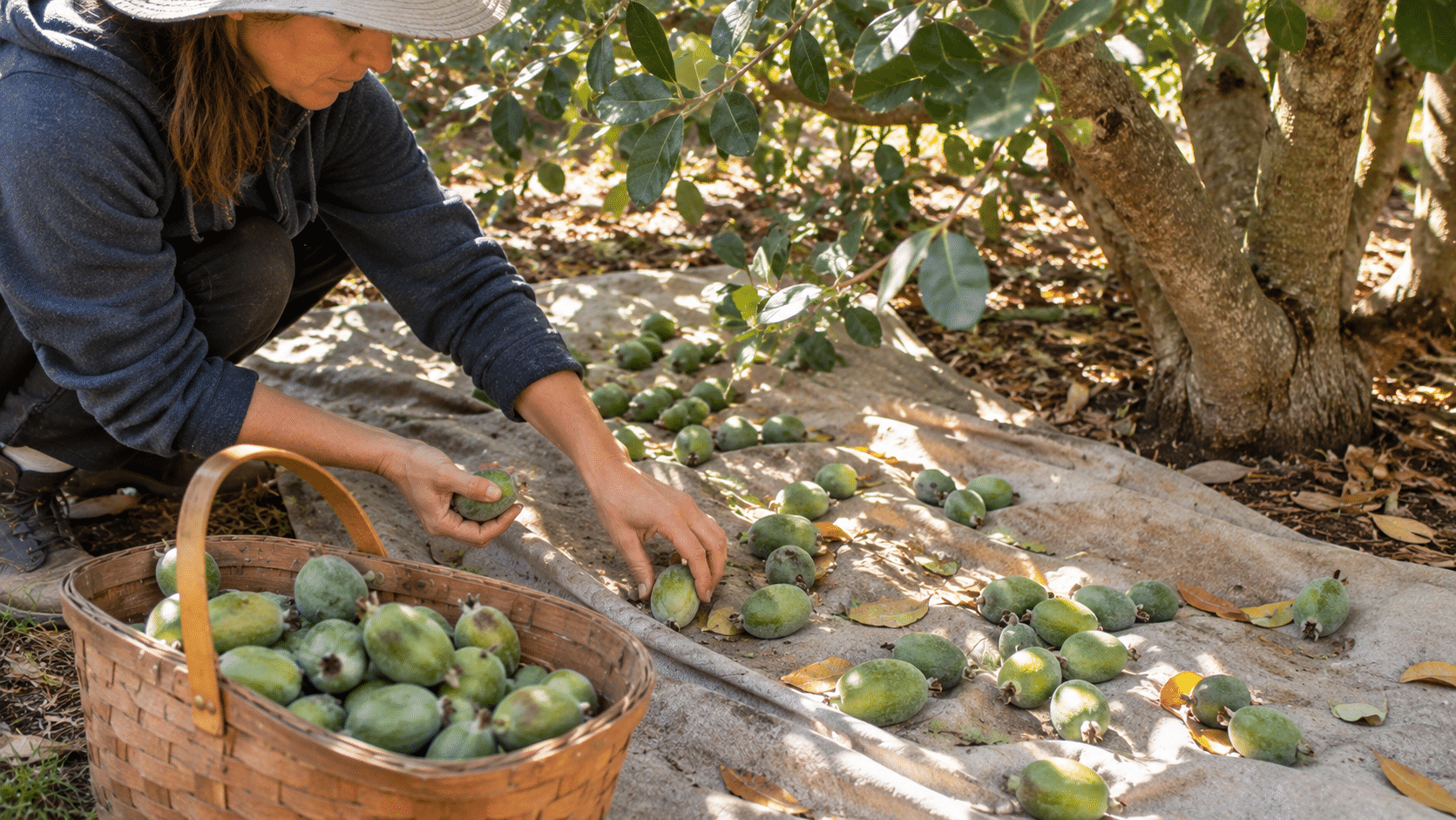
Here is the ultimate arboriculture secret for harvesting feijoas: Never pull the fruit off the branch. If you have to tug, it is not ripe, and it will taste starchy and astringent.
The pineapple guava has a built-in mechanism to tell you it’s ready: it simply drops to the ground.
-
Daily Collection: During the autumn harvest window, check the base of your tree daily. The fallen fruit is perfectly ripe and at peak sweetness.
-
The Tarp Method: To make harvesting easier and prevent the fruit from bruising on hard soil or hiding in thick mulch, lay a clean tarp or a soft harvest net under the canopy. Give the trunk a gentle shake, and gather whatever falls.
How to Store and Eat the Fruit 🥄
Once collected, the fruit has a relatively short shelf life. It will keep at room temperature for about 3 to 5 days, or up to two weeks in the crisper drawer of your refrigerator.
To eat it, simply slice the fruit in half horizontally and use a spoon to scoop out the gelatinous, aromatic center—much like eating a kiwi. It is spectacular eaten fresh, but it also elevates smoothies, fruit salads, jams, and baked crumbles.
Growing Pineapple Guava in Containers 🪴
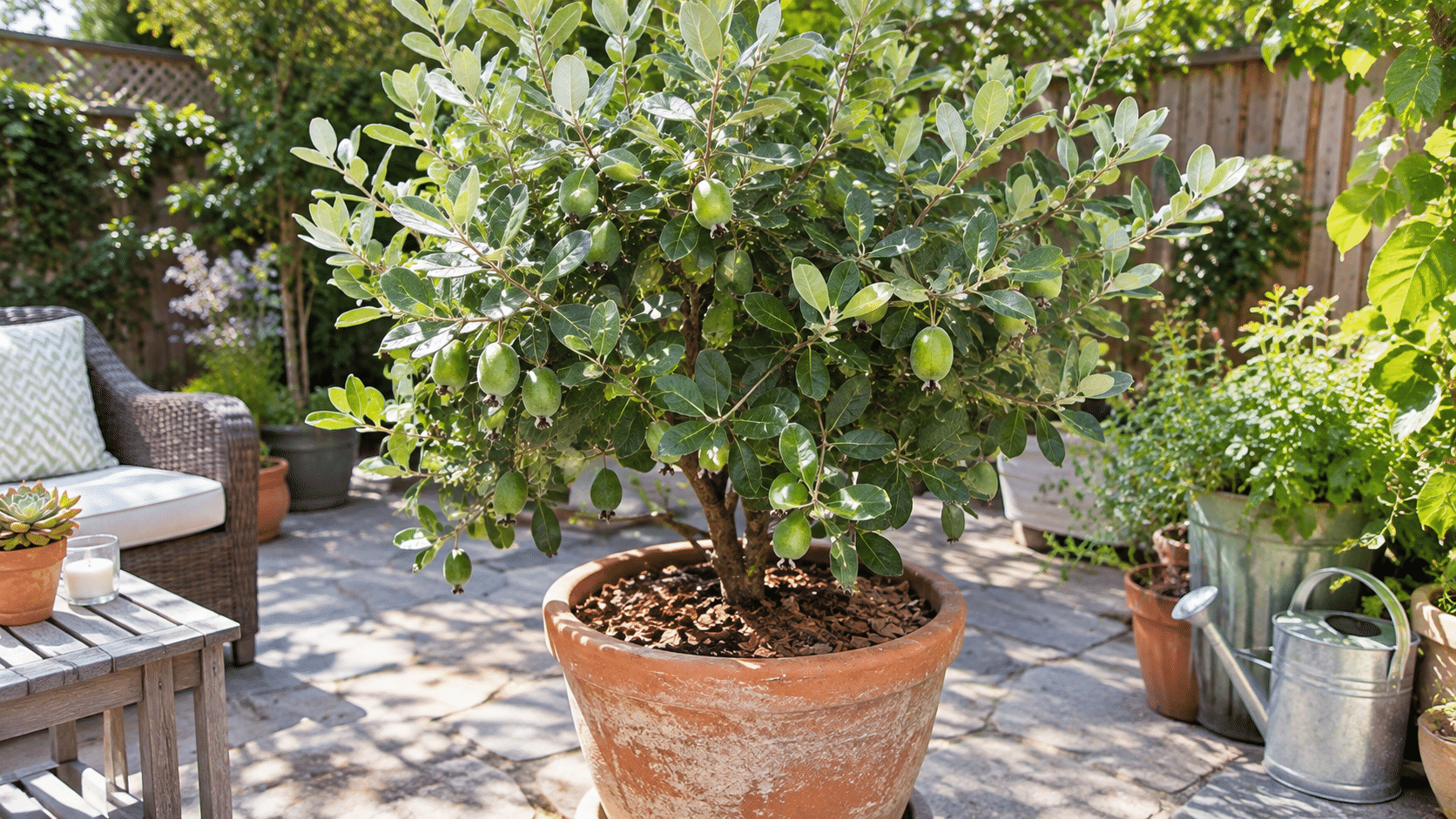
Don’t have a backyard? No problem. The feijoa is an excellent candidate for container gardening, making it perfect for sunny balconies, patios, and urban rooftops.
Best Pot Sizes and Soil Mixes 🏺
Start young plants in a 5-gallon container and gradually pot them up every two years. A mature container-grown tree will eventually require a heavy 15- to 25-gallon pot (like a half-whiskey barrel) to prevent it from tipping over in high winds.
-
The Ideal Potting Mix: Standard garden soil is too dense for pots. Create a custom, well-draining blend by mixing 50% high-quality potting soil with 25% perlite (for drainage) and 25% pine bark fines (for acidic organic matter).
Overwintering Potted Trees ❄️
Containers expose roots directly to ambient air temperatures. While a tree in the ground can survive 15°F (-9°C), a potted tree’s roots will freeze at higher temperatures. If a severe cold snap is forecasted, either wheel the pot into a sheltered garage or greenhouse, or heavily wrap the container in insulating frost blankets and burlap until the danger passes.
Troubleshooting Common Pests and Diseases 🐛
The pineapple guava is celebrated for being largely pest and disease-free, minimizing the need for harsh chemical interventions. However, an observant gardener should keep an eye out for a few minor issues.
Identifying and Treating Black Scale & Sooty Mold 🪰
If you notice a black, powdery substance covering the leaves (sooty mold), look closely at the stems. You will likely find small, dark, dome-like bumps. This is black scale.
-
The Ant Connection: Ants actively “farm” scale insects to harvest the sticky honeydew they secrete. The sooty mold grows on this honeydew.
-
The Fix: Wrap sticky horticultural tape around the trunk to stop the ants. Treat the scale directly by spraying the foliage and stems with organic Neem oil or a horticultural dormant oil in the early evening.
Preventing Root Rot and Fungal Issues 🍄
As mentioned earlier, Phytophthora root rot is the #1 killer of the pineapple guava. Its symptoms present ironically like drought stress: wilting, yellowing leaves, and branch dieback. If this occurs, immediately assess your soil drainage. Cease watering, pull back heavy mulch to let the soil breathe, and ensure the root crown isn’t buried under wet soil.
Frequently Asked Questions (FAQs) ❓
How long does it take for a pineapple guava tree to produce fruit? ⏳
If you grow a tree from seed, patience is required; it can take anywhere from 3 to 5 years (or longer) to see your first bloom. However, if you purchase a grafted nursery tree or one propagated from cuttings, you can often expect flowers and fruit within 1 to 2 years of planting.
Are pineapple guava tree roots invasive? 🏡
Not at all. Unlike aggressive trees like willows or certain figs, the feijoa possesses a shallow, highly fibrous root system. It is incredibly well-behaved and safe to plant near patios, retaining walls, walkways, and house foundations without fear of structural damage.
Do pineapple guavas lose their leaves in winter? 🍂
No! They are fully evergreen. Their silvery-green foliage remains vibrant all year round, making them an excellent choice for a permanent privacy screen or a winter-interest landscape plant.
Conclusion: Enjoying the Fruits of Your Labor 🌟
Cultivating a pineapple guava tree is one of the most rewarding endeavors a gardener can undertake. It perfectly bridges the gap between high-end ornamental landscaping and practical permaculture. By providing excellent drainage, full sun, a bit of strategic pruning, and a cross-pollinating partner, you will be rewarded with a resilient evergreen that produces breathtaking edible flowers in the spring and a heavy crop of exotic, aromatic fruit in the autumn.
If you are ready to elevate your garden with a plant that works hard so you don’t have to, it’s time to plant a Feijoa sellowiana.
Have you planted a pineapple guava in your garden, or do you have questions about pairing it with other tropical fruit trees? Drop a comment below with your experiences, or check out our related guides on companion planting and organic pest control to keep your backyard food forest thriving!