There is nothing quite like the crisp, woodland scent of a real conifer filling your living room to signal the start of the holiday season. However, for many homeowners, the dream of a lush, vibrant centerpiece quickly turns into a frustrating battle against drying branches and relentless needle drop. Whether you have opted for a freshly cut trunk or a rooted, balled-and-burlapped specimen, bringing a pine tree christmas tree into your home introduces a complex set of environmental challenges. Indoor heating, low humidity, and improper hydration can send these resilient outdoor giants into rapid decline.
As a plant care specialist and arboriculture researcher, I have spent years studying conifer physiology and indoor acclimation. The truth is, watching your tree turn brown before Christmas morning is not inevitable—it is a preventable stress response. In this comprehensive guide, we will explore the science-backed care regimen required to keep your living holiday tree hydrated, green, and thriving throughout the entire festive season. ✨
H2: Understanding Your Live Pine Tree Christmas Tree 🌲
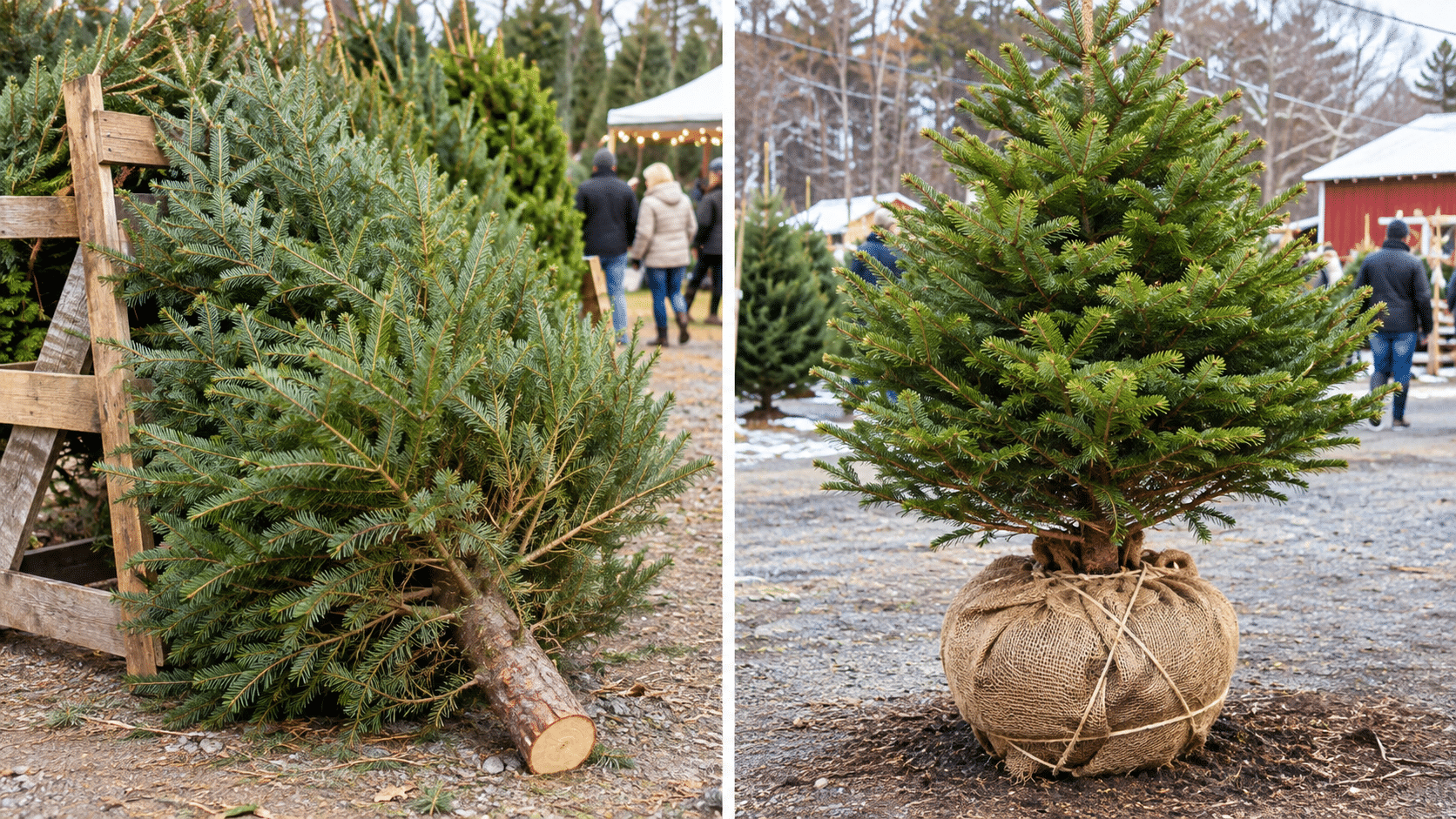
Before you can effectively care for your tree, you must understand its current biological state. The care requirements for a severed trunk are entirely different from those of an intact root system.
H3: Cut vs. Potted (Balled-and-Burlapped) Pines
-
The Cut Pine: Once a tree is severed from its roots, its sole biological imperative is to draw up enough water through its xylem (the vascular tissue) to replace the moisture lost through its needles. It is essentially a giant cut flower. Without roots to regulate moisture intake, a cut tree relies entirely on unbroken capillary action and a constant, unobstructed water source.
-
The Potted/Living Pine: A balled-and-burlapped or container-grown tree is a living, breathing organism that is temporarily pausing its winter dormancy. Because its root system is intact, it is highly susceptible to temperature shock. Bringing a living tree into a 70°F (21°C) house tricks the tree into thinking it is spring, prompting it to break dormancy. If it is kept indoors for too long, returning it to the freezing winter landscape will severely damage or kill the new growth.
H3: Popular Pine Varieties for the Holidays Not all pines behave the same way once brought indoors. Knowing your specific variety helps manage expectations regarding needle retention and decorating capacity.
-
White Pine (Pinus strobus): Known for its incredibly soft, long needles and bluish-green hue. It boasts excellent needle retention and very little aroma, making it ideal for those sensitive to strong scents. However, its branches are highly flexible, meaning it cannot support heavy ornaments.
-
Scotch Pine (Pinus sylvestris): The quintessential traditional choice. It features stiff, robust branches that easily hold heavy heirloom ornaments and lights. It is highly prized for its phenomenal needle retention—even when it begins to dry out, a Scotch pine rarely drops its needles.
-
Virginia Pine (Pinus virginiana): Easily recognizable by its stout, dense foliage and strong, classic pine fragrance. It requires meticulous watering, as its dense branching structure leads to higher transpiration rates (moisture loss) in warm rooms.
H2: Preparation: The Crucial First 48 Hours ⏱️
The steps you take in the first two days dictate whether your tree will last three weeks or three days. Proper preparation prevents the tree’s vascular system from shutting down.
H3: The Acclimation Phase (For Potted/Living Trees) Never move a living tree directly from a freezing lot to a heated living room. This rapid temperature swing causes severe physiological shock.
-
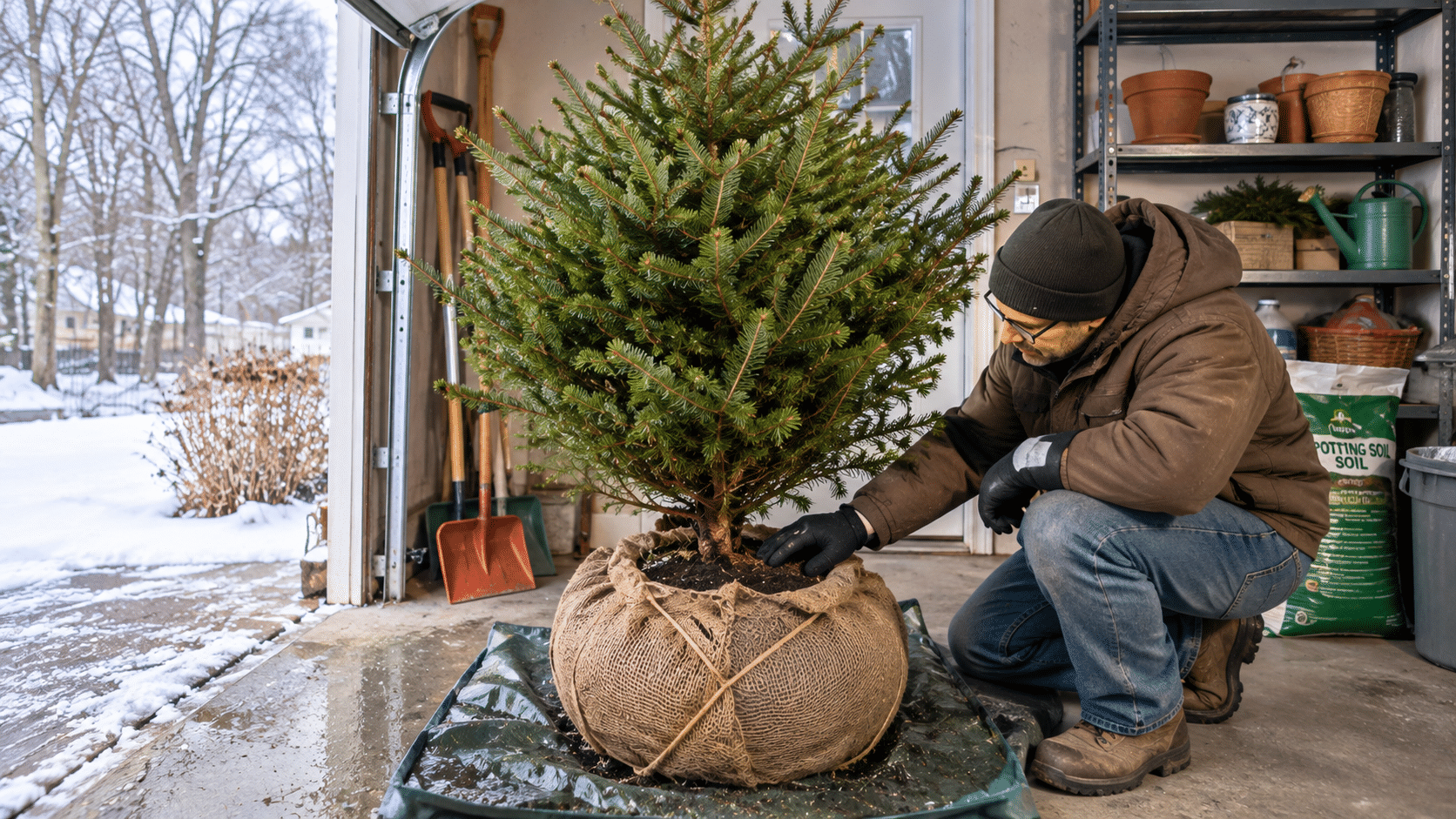
Transition Zone: Place the tree in an unheated but sheltered area, such as a garage, enclosed porch, or shed, for 3 to 4 days.
-
Hydration Check: While in the transition zone, keep the root ball moist but not waterlogged. Ice crystals in the soil must slowly melt before the tree moves indoors.
-
The Time Limit: Plan to keep a living tree indoors for an absolute maximum of 7 to 10 days. Any longer, and the tree will fully break dormancy, making it impossible to safely replant outside until spring.
H3: The Fresh Trunk Cut (For Cut Trees) 🪚Expert Tip 💡: Within minutes of being cut at the farm, a tree begins to exude sap to seal the “wound.” This hardened sap creates an impenetrable cap over the vascular tissue, preventing water absorption.
-
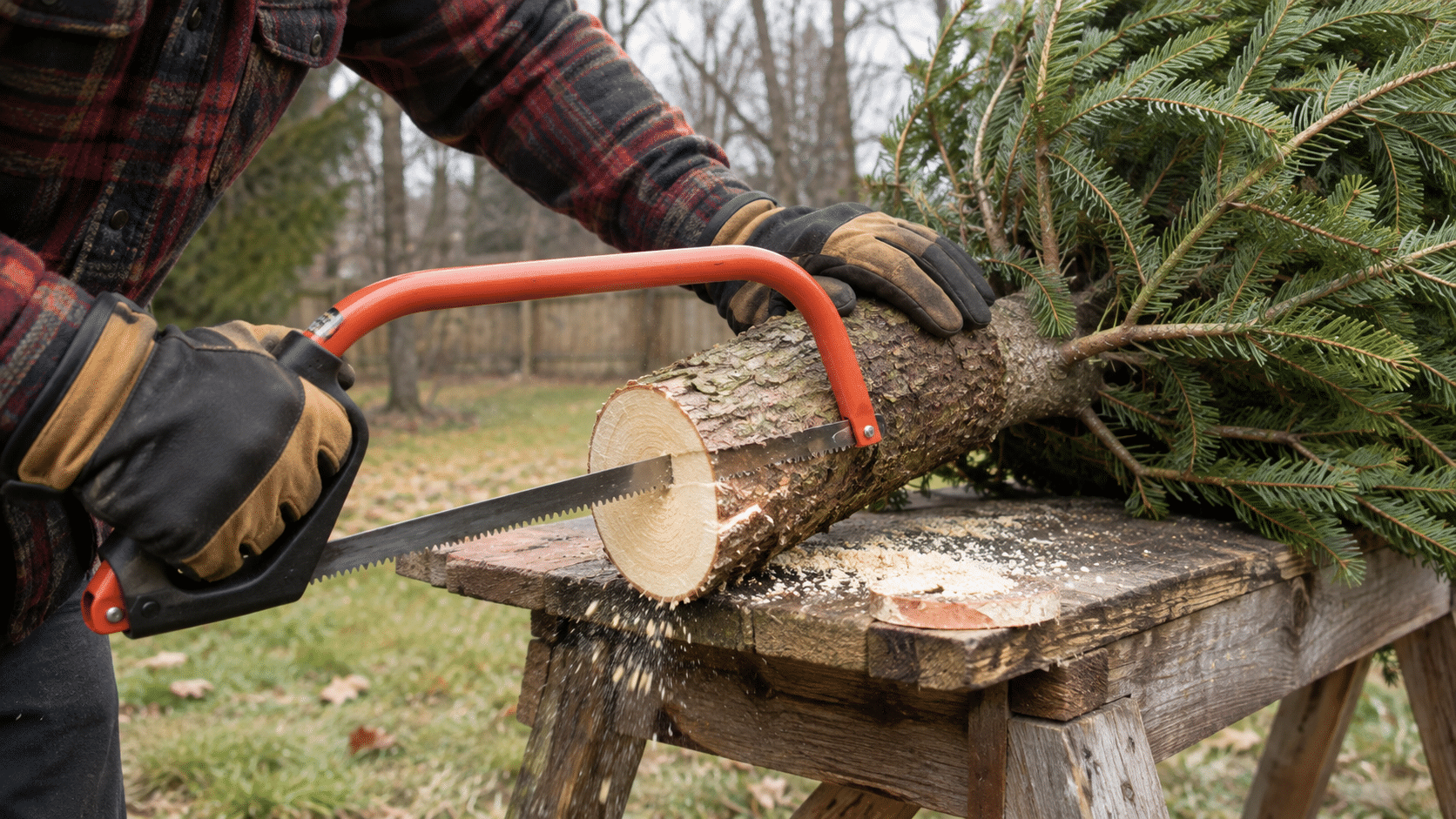
When you get the tree home, you must make a fresh, perpendicular cut, removing at least 1/2 to 1 inch from the base of the trunk.
-
Do not cut the trunk at an angle or drill holes into it; this actually decreases the surface area of the active sapwood (the outer rings of the trunk) that absorbs the most water.
-
Once the fresh cut is made, the tree must be placed in water within 2 hours. If the water drops below the base of the cut at any point during the season, the sap seal will reform, and a new cut will be required.
H3: Choosing the Perfect Location in Your Home 🛋️ Where you place your tree is just as important as how you water it. Pines are naturally adapted to cold, humid environments.
-
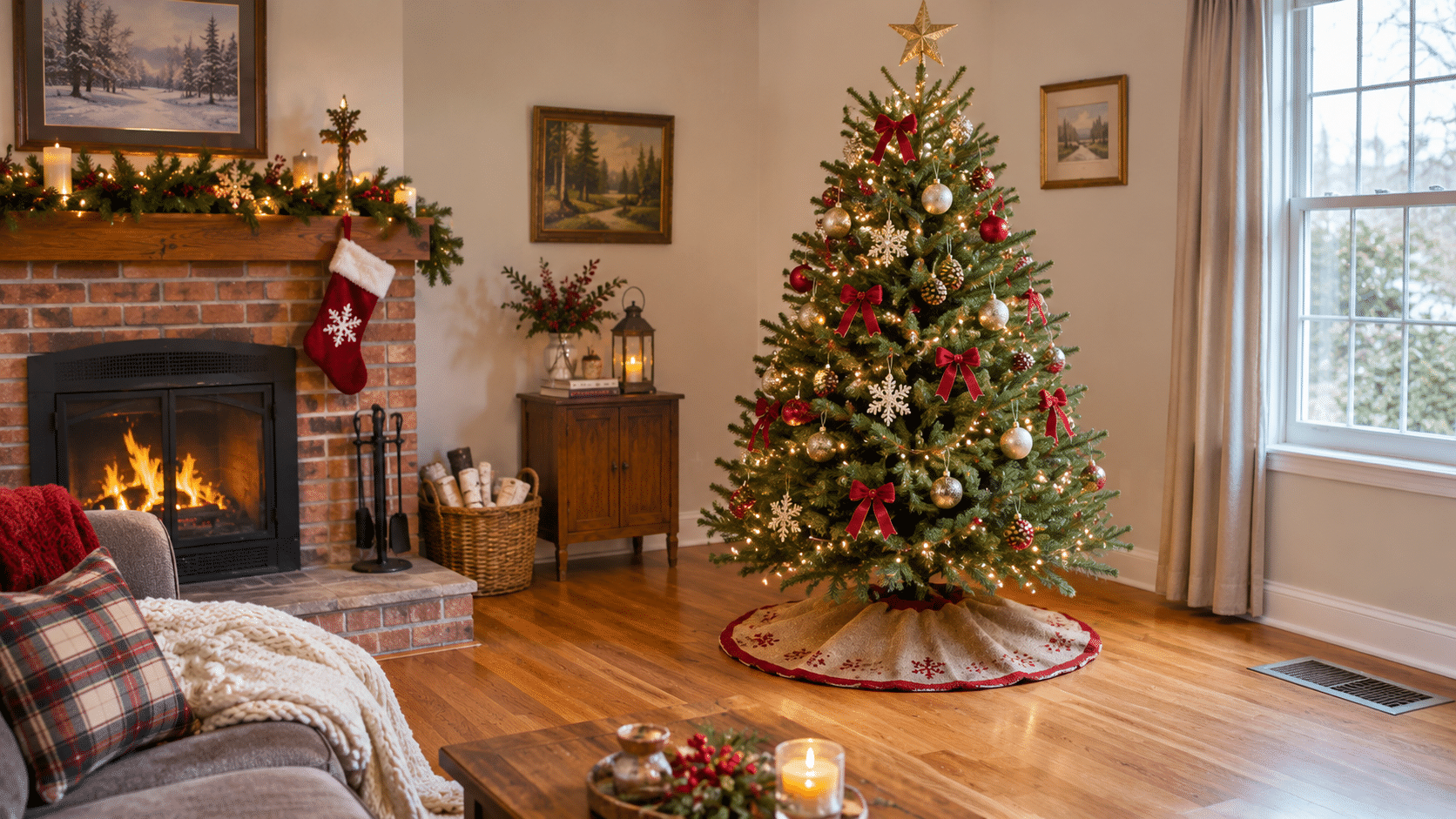
Avoid Heat Sinks: Keep the tree a minimum of 3 to 5 feet away from all active heat sources. This includes fireplaces, space heaters, heating vents, radiators, and even direct, prolonged sunlight from south-facing windows.
-
Draft Control: Constant airflow from a forced-air vent will strip moisture from the needles faster than the trunk can absorb it, leading to rapid desiccation. If a vent is nearby, close it or use a magnetic deflector shield to direct the hot air away from the foliage.
H2: The Golden Rules of Indoor Pine Tree Hydration 💧
The single most critical factor in indoor conifer care is water management. A cut pine tree is a surprisingly voracious drinker, especially during its first week indoors when it is actively trying to compensate for the trauma of being severed from its root system.
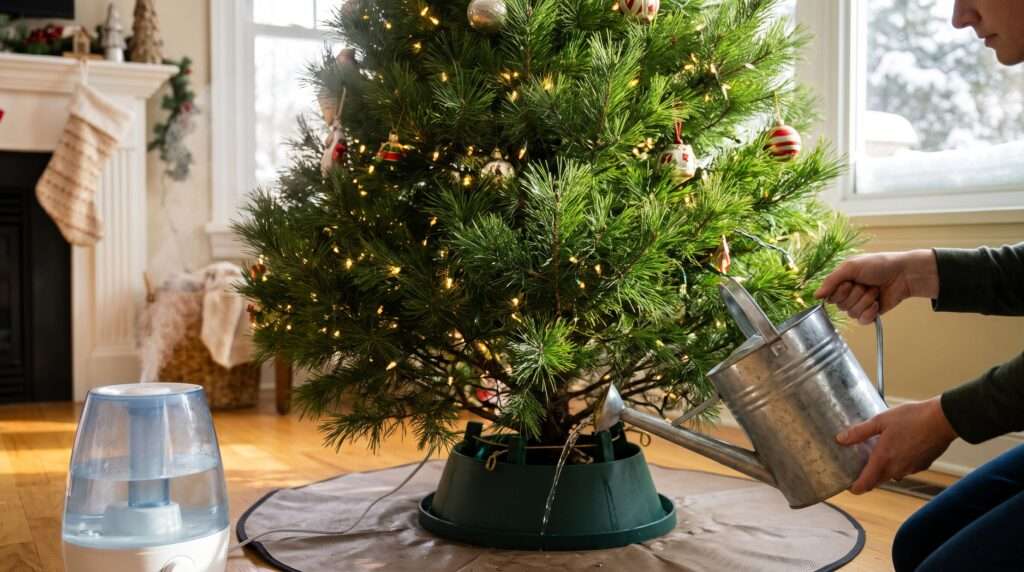
H3: Watering Requirements: How Much is Enough? Forget the tiny teacup—your tree needs serious volume. The industry standard, backed by arboricultural science, is the “Quart per Inch” rule. A cut tree will require approximately one quart (about 1 liter) of water per day for every inch of its trunk’s diameter.
-
For example: A standard Scotch pine with a 4-inch trunk diameter will consume up to a gallon of water every 24 hours during its first few days indoors.
-
The Danger Zone: The water level in your tree stand must never drop below the base of the trunk. If the cut surface is exposed to air for even a few hours, the tree will rapidly form a new resin seal, effectively locking out moisture. If this happens, adding more water will not help; you will have to remove all decorations, take the tree out of the stand, and make a fresh one-inch cut.
-
For Living Trees: If you are caring for a balled-and-burlapped tree, the root ball must remain consistently damp but never sitting in standing water. Use a large galvanized tub filled with a layer of gravel at the bottom to ensure proper drainage while maintaining moisture around the burlap.
H3: The Truth About Tree Preservatives and Additives 🧪Myth Busting 🚫: If you search the internet for Christmas tree care, you will find countless home remedies recommending you add aspirin, bleach, copper pennies, vodka, or lemon-lime soda to the tree water. The theory is that these additives feed the tree, kill bacteria, or acidify the water.
E-E-A-T Insight: Exhaustive research conducted by university forestry extensions—including studies from Washington State University and North Carolina State University—has definitively proven that these additives are unnecessary and often harmful.
-
Sugar/Soda: Encourages rapid bacterial and fungal growth in the water, which can clog the tree’s vascular tissue (xylem) and cause the water to smell foul.
-
Bleach: Destroys the delicate cellular structure of the cambium layer, hindering water uptake.
-
Aspirin: Does not effectively mimic the salicylic acid a tree naturally produces for stress, and provides no measurable benefit to a severed trunk.
The verdict? Plain, fresh tap water is the absolute best and only thing your live pine tree Christmas tree needs to stay hydrated.
H3: Humidity Management for Conifers 🌫️ Pines breathe through microscopic pores on their needles called stomata. In dry, heated indoor air, these stomata open wide, causing the tree to lose moisture rapidly through transpiration. Because indoor winter air can drop to a relative humidity of 15% (drier than the Sahara Desert), you must intervene.
-
Room Humidifiers: Running a cool-mist humidifier near the tree is the most effective way to slow down transpiration and keep the needles supple. Aim for a room humidity of around 40-50%.
-
Avoid Misting: While misting tropical houseplants is popular, do not spray water directly onto a decorated pine tree. Moisture trapped deep in the dense needle clusters can encourage fungal growth, and spraying water near electrical string lights poses a severe safety hazard.
H2: Decorating Without Damaging 🎀
Decorating is the highlight of the holiday season, but improperly adorning a live tree can accelerate its physical decline and create fire hazards.
H3: Choosing the Right Lights 💡 The traditional, incandescent glass bulbs of the past are a live conifer’s worst enemy. Incandescent bulbs emit up to 90% of their energy as heat, baking the surrounding needles, accelerating moisture loss, and significantly increasing the risk of a tree fire.
-
The LED Mandate: You must switch to LED (Light Emitting Diode) string lights. LEDs remain completely cool to the touch, no matter how long they are left on. They are energy-efficient, vibrant, and ensure that your tree’s foliage is not subjected to localized heat stress.
H3: Weight Distribution for Ornaments ⚖️ Different pine varieties have different structural integrity. If you have selected a White Pine, its soft, pliable branches will droop dramatically if loaded with heavy glass or metal ornaments.
-
Inner vs. Outer Placement: For heavier heirloom ornaments, place them closer to the trunk where the branch is thickest and strongest, rather than dangling them at the fragile tips.
-
Tension Wiring: Use flexible florist wire rather than rigid metal hooks. This allows you to secure ornaments snugly against the branch, preventing them from swaying and pulling down on the delicate pine needles.
H2: Troubleshooting Common Pine Tree Stress Signals 🍂
Even with meticulous care, live plants can experience stress. Identifying the root cause early can save your holiday centerpiece.
H3: Why Are the Needles Turning Brown and Dropping? Not all needle drop is a cause for panic.
-
Natural Inner Shedding: If the needles closest to the trunk (deep inside the tree) are turning yellow or brown and dropping, this is entirely normal. Pines naturally shed their oldest inner needles in the late fall.
-
Desiccation (Underwatering): If the needles on the outer tips of the branches are turning brown, brittle, and curling, your tree is suffering from severe dehydration. Check the water basin immediately. If the water level is fine, the sap seal has likely closed, and the tree is no longer drinking.
H3: Dealing with Hitchhiking Pests 🕷️ Live trees are grown in natural agricultural settings, which means they occasionally bring woodland hitchhikers indoors. Common culprits include the Cinara aphid (a large, dark conifer aphid), spider mites, and harmless bark beetles.
-
Do Not Use Aerosol Bug Spray: Never spray flammable, aerosolized chemical insecticides on a live Christmas tree, especially one wrapped in electrical lights.
-
Safe Removal: Most insects found on winter pines will naturally die off in the warm, dry air of a home within a few days. If you notice a cluster of aphids, gently wipe the branch with a damp cloth or a mild Neem oil solution. The best prevention is giving the tree a vigorous shake outside before bringing it through the front door.
H3: Managing Sap Drips and Sticky Floors 🧽 Pine trees, especially Virginia and Scotch pines, are highly resinous. Sap is incredibly sticky and will ruin hardwood floors or carpets if left untreated.
-
Prevention: Always place a heavy-duty, waterproof tree skirt or a plastic drain tray under the tree stand to catch both water spills and sap drops.
-
The Cleanup Hack: If sap gets on your hands, floor, or ornaments, do not use water—resin is hydrophobic. Instead, use a high-proof isopropyl alcohol (rubbing alcohol) or alcohol-based hand sanitizer. The alcohol instantly breaks down the molecular bonds of the tree sap, allowing you to wipe it away cleanly with a paper towel.
H2: Post-Holiday Care: Life After December 🗓️
When the festivities conclude and the ornaments are carefully packed away, your responsibility to your live pine tree Christmas tree enters its final phase. Proper post-holiday management is crucial, whether you are preparing a living tree for the landscape or retiring a cut tree in an environmentally conscious way.
H3: Transitioning Your Potted Pine Outdoors 🪴 If you opted for a balled-and-burlapped or container-grown pine, returning it to the wild requires a delicate reverse-acclimation process. Subjecting a tree that has been sitting in a 70°F (21°C) living room directly to a freezing January night will cause catastrophic shock and cellular damage.
-
The Reverse-Acclimation: Move the tree back into your unheated transition zone (garage, enclosed porch, or shed) for one to two weeks. Keep the root ball slightly moist during this period.
-
Winter Planting: If your ground is not completely frozen solid, you can plant the tree immediately after acclimation. Expert Tip: Forward-thinking arborists dig the planting hole in late November before the frost sets in, storing the excavated dirt in warm garage buckets so it remains loose and ready for January planting.
-
Spring Holding: If the ground is frozen, keep the tree in its container in a sheltered, unheated area (like against the north wall of your home) out of harsh winter winds. Surround the root ball with thick mulch or straw to insulate the roots until the spring thaw allows for proper planting.
H3: Eco-Friendly Disposal for Cut Trees ♻️ A cut evergreen is a valuable piece of organic biomass. Tossing it on the curb for the local landfill is a waste of rich, natural resources.
-
Municipal Mulching: Most cities offer post-holiday tree recycling programs, feeding cut pines through industrial wood chippers to create mulch for public parks and trails.
-
Garden Insulation: Cut the boughs (branches) off the trunk and lay them over your perennial garden beds. The dense pine needles act as an excellent, breathable frost blanket that protects delicate plants from harsh winter winds and soil heaving.
-
Wildlife Habitats: If you have the space, drag the whole tree to the edge of your property or into nearby woods (with permission). A decaying conifer creates an instant, vital winter shelter for birds, rabbits, and beneficial insects.
-
Pond Structures: For private pond owners, sinking a chemical-free, fully denuded Christmas tree into the water creates an exceptional underwater habitat and breeding ground for native fish species.
H2: Frequently Asked Questions (FAQs) ❓
To ensure every base is covered, let us address the most common, pressing questions homeowners face when caring for a winter conifer indoors.
How long can a live, potted pine tree safely stay indoors? You have a strict 7 to 10 day maximum window. The longer a rooted tree stays in a heated environment, the more likely it is to break its winter dormancy and start pushing out new, tender growth. If this new growth is subsequently exposed to freezing outdoor temperatures, the tree will suffer severe dieback and likely perish.
Can a dried-out cut tree be saved if I start watering it again? Unfortunately, no. Once the needles turn brittle and snap when bent, the cellular damage is irreversible. If the water basin dried out only briefly and the needles are still supple, you might be able to save it by pulling the tree out of the stand and making a fresh 1-inch cut off the base, though this is logistically difficult with a fully decorated tree.
Why did my tree drink a gallon of water on day one, and none on day three? This is a very common phenomenon. On day one, the fresh cut is actively taking up massive amounts of water to compensate for the trauma of the harvest and the sudden shift to a dry, warm environment. By day three or four, the tree’s hydration levels usually stabilize, and its vascular system naturally slows down its water uptake. However, if water consumption stops entirely and the needles feel dry, the sap seal has likely closed over the trunk.
Is it safe to trim rogue branches once the tree is inside? Yes, minor pruning for aesthetic shaping is perfectly safe and will not harm the tree. However, keep in mind that cutting live branches will result in dripping sap. Lay down a protective drop cloth before trimming, and avoid cutting major structural branches that could unbalance the tree.
Final Thoughts: A Season of Vibrant Greenery 🌟
Bringing a live pine tree Christmas tree into your home is a cherished tradition that connects us to nature during the darkest days of winter. While indoor environments are inherently hostile to conifers, you now possess the arboricultural knowledge to outsmart these conditions.
By prioritizing that crucial fresh cut, maintaining a strict daily watering regimen without gimmicky additives, utilizing cool-running LED lights, and managing ambient humidity, you can completely halt the rapid decline that plagues so many holiday centerpieces. Proactive care on day one guarantees that your tree will remain a fragrant, lush, and magical focal point for your family from the moment it comes through the door until the very last ornament is packed away.