Imagine stepping into your backyard or sunroom and plucking a massive, spiky green fruit that tastes like a heavenly blend of strawberry, pineapple, and citrus. That is the unmatched magic of cultivating your very own soursop tree. Known botanically as Annona muricata and commonly referred to as guanabana, this broadleaf evergreen offers not only incredibly delicious and nutritious fruit but also stunning, glossy foliage that instantly elevates any landscape. However, tropical fruit trees can be notoriously demanding. While highly rewarding, they are sensitive to cold snaps, improper watering, and poor pollination—issues that leave many passionate gardeners with beautiful, yet completely barren, trees.
Over my years of specializing in tropical plant care and orchard management, I’ve seen countless growers struggle with dropped flowers and stunted growth. The good news is that these challenges are entirely preventable. By understanding the specific environmental, nutritional, and biological needs of this exotic plant, you can transform a struggling sapling into a prolific producer. Whether you are planting directly in a tropical landscape or managing a dwarf variety in a container, this comprehensive guide will walk you through the exact science and hands-on techniques required to grow a healthy, fruit-bearing soursop tree.
Understanding the Soursop Tree (Annona muricata) 🌿
Before putting a shovel into the dirt, it is crucial to understand the biological rhythm and natural habitat of the Annona muricata. Originating from the warm, humid regions of the Caribbean and Central and South America, this plant is hardwired for the tropics.
Ideal Climate and USDA Hardiness Zones ☀️
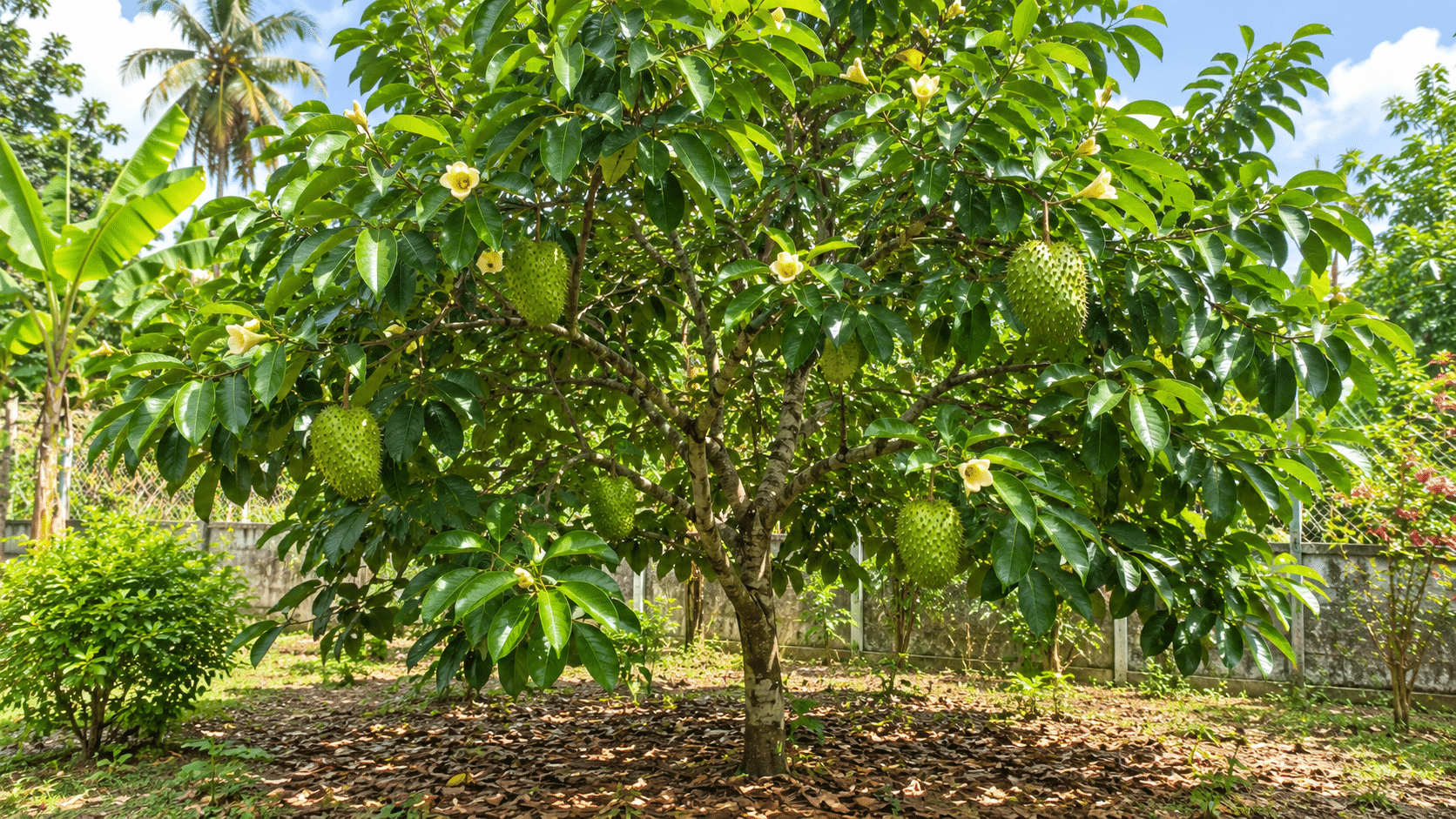
The soursop tree thrives in warm, highly humid environments and is perfectly suited for USDA Hardiness Zones 10 and 11. It demands consistent temperatures ranging between 75°F and 90°F (24°C – 32°C).
Cold is the ultimate enemy of this species. If the temperature drops below 40°F (4°C), the tree will begin to drop its leaves and experience severe stress. At 30°F (-1°C) or below, young trees will suffer fatal frost damage, and even mature trees may die back to the ground.
Expert Insight for Marginal Climates: If you live in Zone 9 (or further north), do not let this discourage you. You can successfully cultivate this tree by utilizing micro-climates. Planting it near a south-facing brick wall can provide radiant heat during cool nights. Alternatively, growing a soursop tree in a large container allows you to move it into a heated greenhouse or a warm, sunny indoor room before the first frost hits.
Tree Size and Growth Rate 📈
When planted in the ground under optimal conditions, a mature soursop tree is relatively compact compared to other fruit trees, typically reaching a height of 15 to 20 feet (4.5 to 6 meters) with a canopy spread of about 10 to 12 feet. This small-to-medium stature makes it an excellent choice for home gardens, urban yards, and high-density planting schemes.
The growth rate is moderate, putting on about 12 to 18 inches of new growth per year when properly fertilized and watered. Container-grown specimens will naturally remain much smaller, usually capping out at around 6 to 8 feet depending on the size of the pot and your pruning habits.
How Long Does It Take to Bear Fruit? ⏳
Patience is a virtue in tropical gardening, but the exact timeline depends entirely on how your tree was propagated.
-
From Seed: Growing from soursop seeds is a fun, highly accessible method, but it requires the most patience. A seed-grown tree typically takes 3 to 5 years to produce its first flowers and fruit.
-
Grafted Saplings: If you want a fast track to harvesting guanabana, purchase a grafted tree from a reputable nursery. Grafted trees often begin flowering and fruiting in just 1 to 2 years, as the scion (the top part of the graft) is taken from an already mature, fruit-bearing tree.
Planting Your Soursop Tree for Ultimate Success 🌱
The foundation of a heavy-yielding tree is established on planting day. Proper site selection and soil preparation dictate how well the root system will establish itself over the first crucial year.
Choosing the Perfect Location 🏡
Sunlight is the engine that drives fruit production. Your tree needs a location that receives full sun—meaning at least 6 to 8 hours of direct, unfiltered sunlight daily. In extremely hot, arid climates, providing a touch of light afternoon shade can prevent the broad leaves from scorching, but in humid zones, full sun is non-negotiable.
Equally important is wind protection. The large, heavy leaves and shallow root system make young saplings vulnerable to strong gusts, which can snap branches or uproot the plant. Planting near a natural windbreak, such as a sturdy fence or a dense hedge, is highly recommended.
Soil Requirements & Preparation 🪨
The quickest way to kill a tropical tree is by planting it in heavy, waterlogged clay. Soursop roots absolutely demand excellent drainage. They thrive in loose, sandy loam that is rich in organic matter.
The ideal soil pH is slightly acidic, hovering between 5.0 and 6.5. If your native soil is highly alkaline (chalky or limestone-heavy), you will need to amend it heavily with elemental sulfur and organic compost, or consider growing the tree in a raised bed or container.
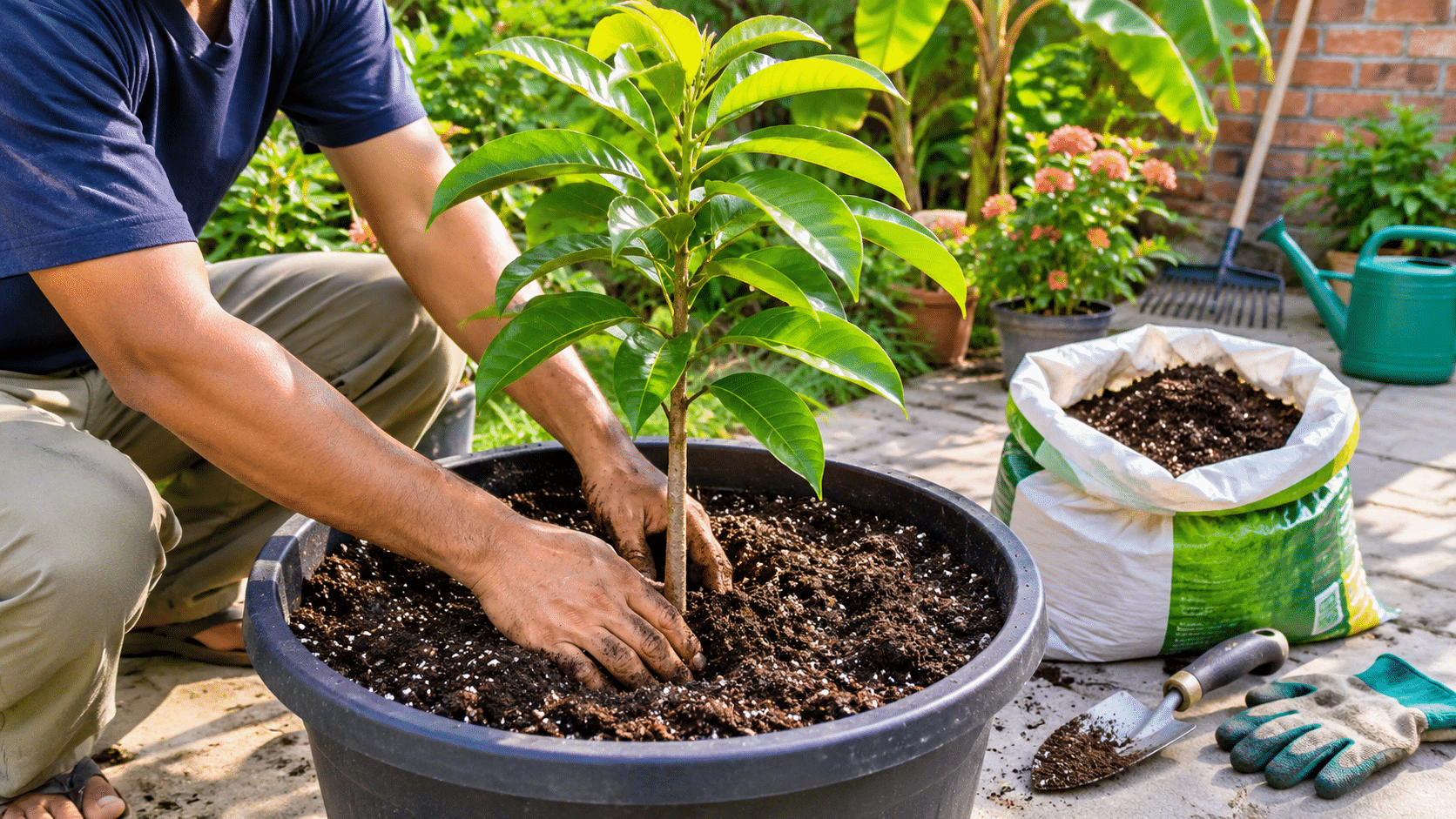
Pro Tip for Container Growing: If you are potting your tree, never use standard garden dirt. Create a high-drainage tropical soil mix by combining:
-
40% high-quality potting soil
-
30% coarse perlite or pumice (for drainage)
-
20% peat moss or coco coir (for moisture retention and acidity)
-
10% rich compost or worm castings (for a biological nutrient boost)
Step-by-Step Planting Guide 🪴
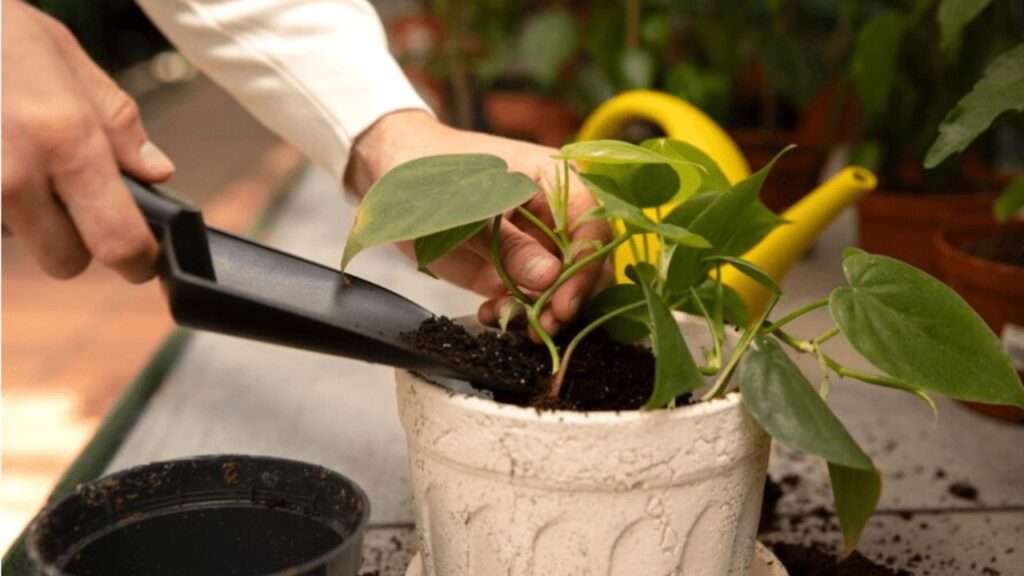
When planting in the ground, follow these expert steps to minimize transplant shock:
-
Dig the Hole: Dig a hole twice as wide as the nursery pot, but exactly the same depth. Planting too deep can cause the trunk to rot.
-
Inspect the Roots: Gently remove the tree from its container. If the roots are tightly bound (root-bound), lightly tease the outer roots apart with your fingers to encourage outward growth.
-
Position the Tree: Place the root ball in the center of the hole. Ensure the graft union (the swollen bump near the base of the trunk, if applicable) remains at least 2 to 3 inches above the soil line.
-
Backfill and Tamp: Fill the hole with your amended native soil. Tamp it down gently to remove large air pockets, but avoid aggressively compacting the dirt.
-
Water Deeply: Immediately flood the planting area to settle the soil around the roots.
-
Mulch: Apply a 2- to 3-inch layer of organic mulch (like pine bark or wood chips) around the base to retain moisture and regulate soil temperature, keeping the mulch a few inches away from the tree trunk to prevent fungal rot.
Essential Soursop Tree Care & Maintenance 💧
Once your tree is securely in its new home, ongoing maintenance will dictate its overall health and yield. The daily and monthly routines revolve around mimicking the tropical rainforest environment.
The Perfect Watering Schedule 🚿
Balancing soil moisture is an art. Because soursop trees hail from regions with heavy rainfall, they crave high humidity and consistent moisture. However, they are incredibly susceptible to root rot if left standing in stagnant water (often referred to as having “wet feet”).
-
Young Trees: During the first six months, water deeply 2 to 3 times a week, ensuring the soil stays evenly moist but never muddy.
-
Established Trees: Once the root system is established, scale back watering to once a week, or whenever the top 2 inches of soil feel dry to the touch. During extended droughts, increase frequency.
-
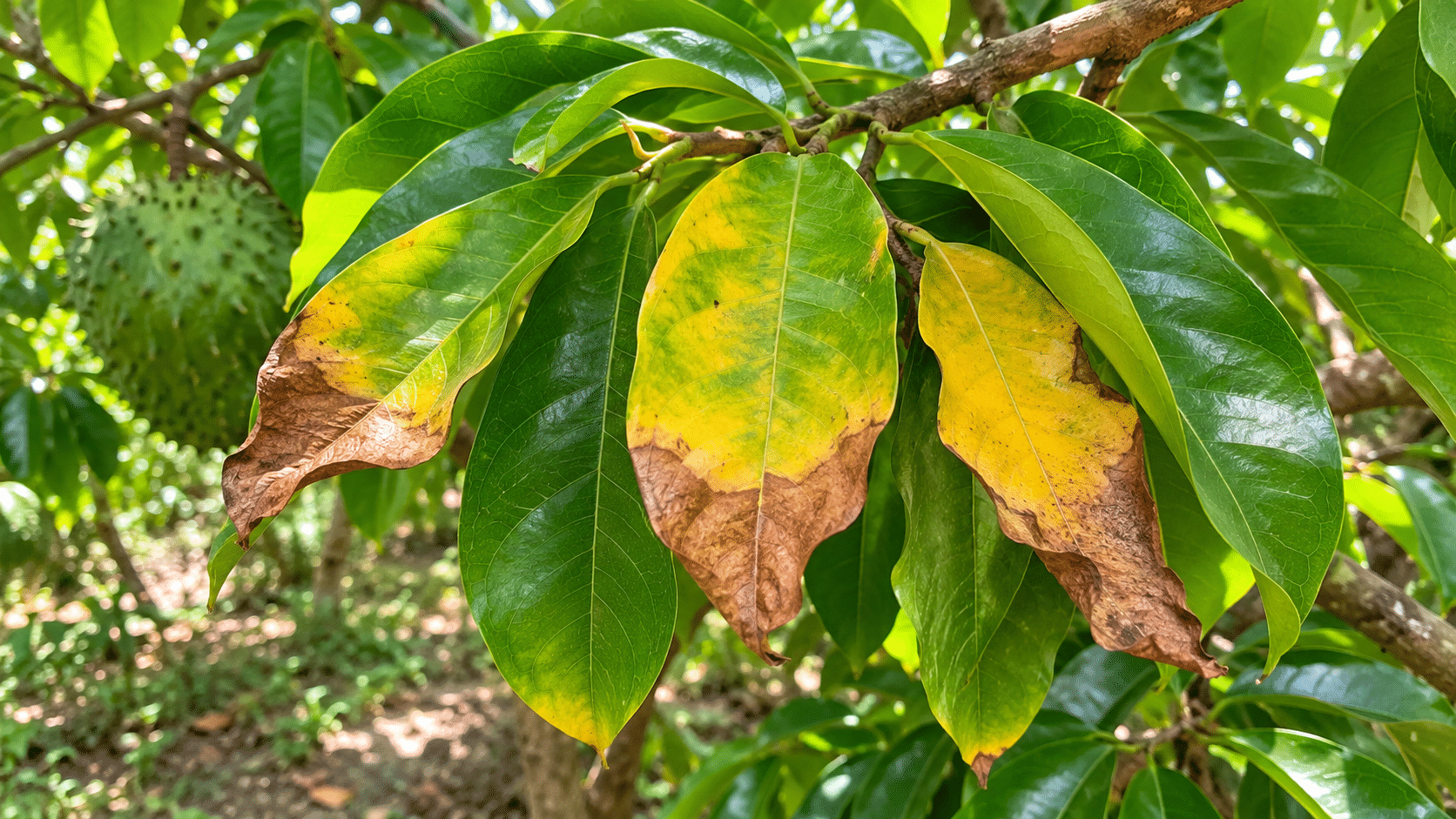
Reading the Leaves: The plant will communicate with you. Yellowing leaves that drop prematurely are a classic sign of overwatering and poor drainage. Conversely, if the leaves look dull, droop, and turn brown at the tips, the tree is underwatered and thirsty.
Fertilizing for Maximum Fruit Yield 🍃
A starving tree will never produce fruit. A robust feeding schedule provides the macronutrients (Nitrogen, Phosphorus, Potassium) and micronutrients (iron, magnesium, zinc) necessary for blooming.
-
Spring and Summer (Growth Phase): Apply a balanced, slow-release granular fertilizer (like an 8-8-8 or 10-10-10 organic citrus/fruit tree mix) every 8 to 12 weeks.
-
Pre-Blooming Phase: To encourage flower and fruit development, switch to a fertilizer higher in phosphorus and potassium (e.g., 4-8-8) as the tree approaches its blooming season.
-
Organic Boosts: Supplement granular feeds with liquid organics. Fish emulsion and liquid kelp provide excellent micronutrients, while top-dressing with worm castings twice a year keeps the soil microbiology thriving.
-
Winter Rest: Stop fertilizing completely during the winter months (or when growth naturally slows down) to allow the tree to rest.
Pruning Techniques for Health and Airflow ✂️
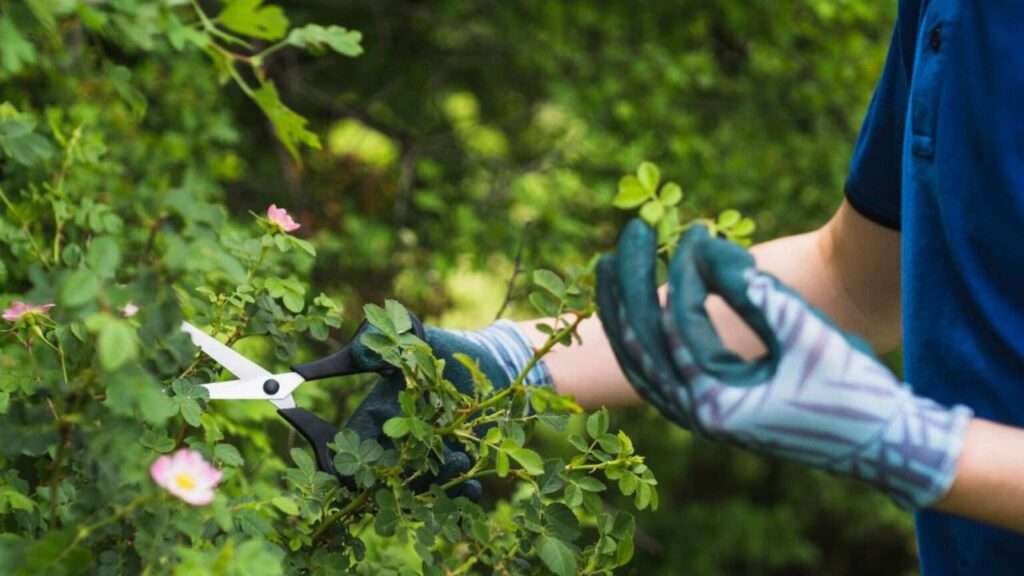
While some fruit trees require aggressive pruning to produce yields, the soursop tree benefits from a lighter, more strategic touch. The primary goals of pruning this tropical beauty are to maintain structural integrity, control the height for easy harvesting, and—most importantly—maximize sunlight penetration and airflow within the canopy.
-
The “Open Center” Method: Train your young tree to have an open, vase-like shape. By selectively removing branches that grow straight up through the middle of the canopy, you allow wind to circulate freely and sunlight to hit the interior branches. This drastic reduction in stagnant, humid air is your first line of defense against fungal diseases.
-
When to Prune: The best time to prune is in late winter or early spring, just before the active flush of new growth begins.
-
What to Cut: Always sterilize your pruning shears with rubbing alcohol before starting. Remove any dead, diseased, or broken branches first. Next, look for branches that are crossing and rubbing against each other, as the friction creates open wounds that invite pests. Finally, trim back overly long branches (tipping) to encourage bushier, lateral growth, which ultimately provides more flowering sites.
The Secret to Abundant Fruit: Mastering Pollination 🐝
If there is one section of this guide that will make or break your harvest, it is this one. Many gardeners grow a massive, healthy soursop tree that blooms profusely, only to watch in frustration as the flowers dry up and fall to the ground. The culprit? Poor pollination.
Understanding Soursop Flowers 🌸
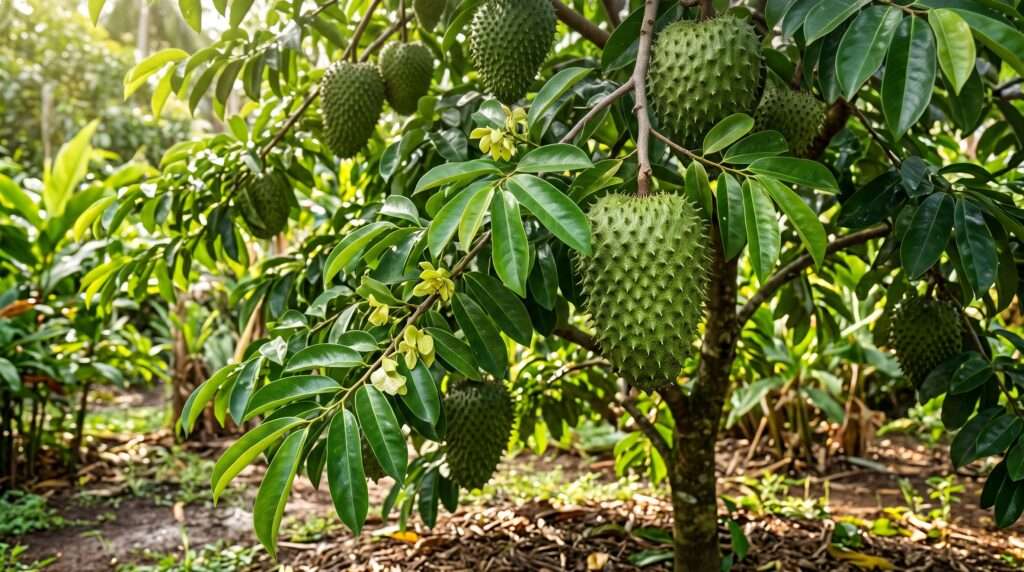
Soursop flowers are biologically fascinating but notoriously difficult to pollinate. They exhibit a trait called dichogamy, meaning the male and female parts of the same flower mature at different times to prevent self-pollination.
-
Female Stage: The flower opens slightly, and the stigma (female part) is receptive to pollen. The petals are thick and pale green.
-
Male Stage: About 12 to 24 hours later, the stigma dries up, the flower opens wider, and the anthers (male parts) release a powdery pollen.
Because a single flower cannot pollinate itself, you need overlapping blooms and the right pollinators to move the pollen from a male-stage flower to a newly opened female-stage flower.
Natural Pollinators vs. Hand Pollination 🖌️
In their native habitat, Annona muricata flowers are not pollinated by bees or butterflies. Instead, they rely on small sap beetles (Nitidulidae) that are attracted to the flower’s distinct, slightly fermented scent. If you live outside the deep tropics, these specific beetles are likely absent from your garden.
To guarantee fruit set, you must step in and play the role of the beetle through hand pollination.
Expert Step-by-Step Hand Pollination Tutorial:
-
Gather the Pollen: In the late afternoon or early evening, locate flowers that are fully open and shedding pollen (the male stage). Hold a small, clean plastic cup under the flower and gently tap the petals. The yellowish pollen and anthers will fall into the cup. Cover the cup and keep it at room temperature overnight.
-
Find a Receptive Flower: Early the next morning, locate a newly opening flower that is in the female stage (petals barely parted, stigma sticky).
-
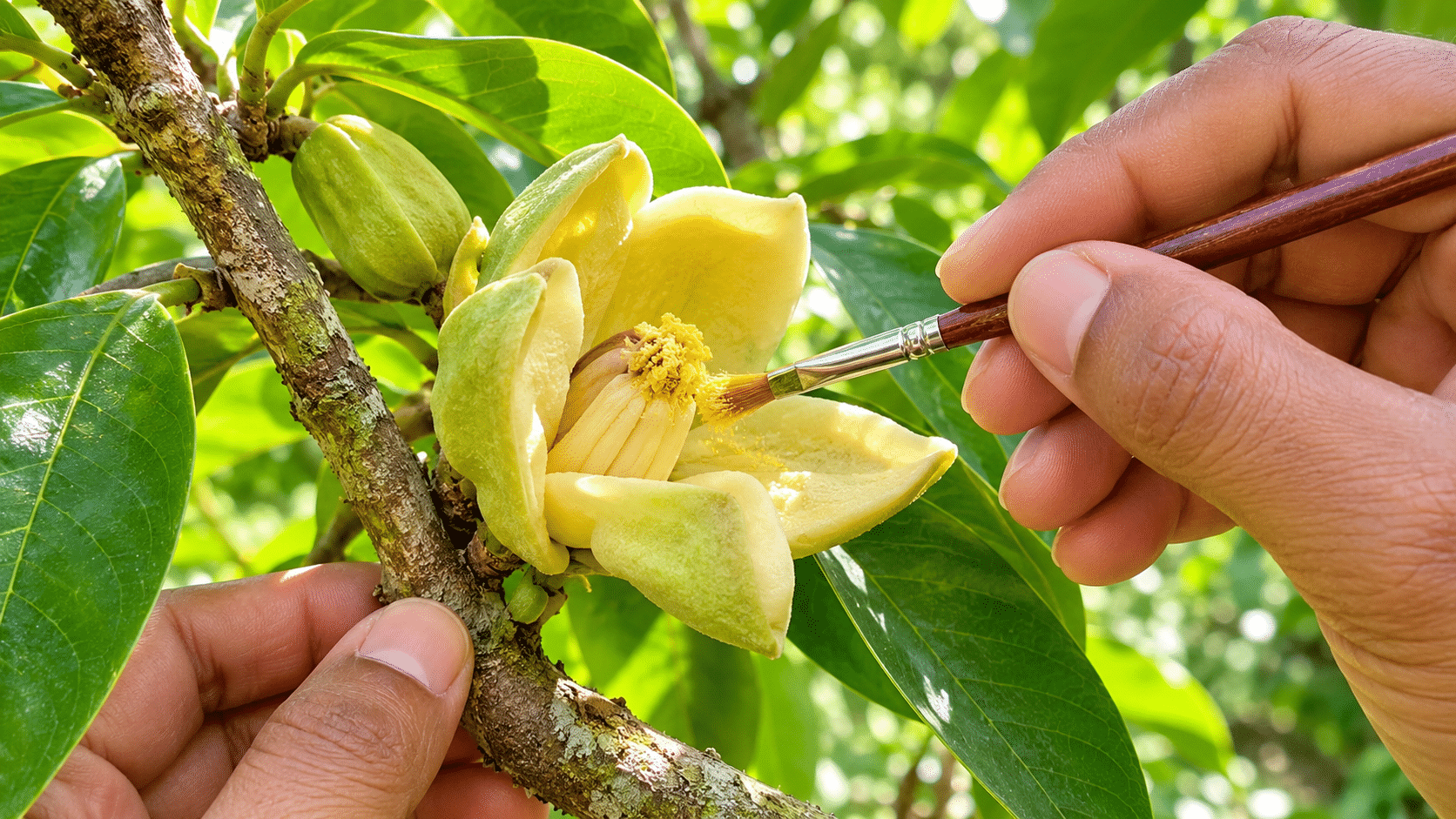
Apply the Pollen: Dip a small, soft, natural-bristle artist’s paintbrush into your collected pollen. Gently pry the fleshy petals of the female flower apart and brush the pollen generously onto the sticky base (the receptacle) inside the flower.
-
Wait and Watch: If successful, the flower petals will drop off in a few days, but the base will remain green and slowly begin to swell into a tiny, spiky fruit! 🎉
Overcoming Common Pests and Diseases 🐛🛡️
Even the healthiest trees can occasionally fall victim to opportunistic bugs and fungi. Early detection and organic interventions are key to protecting your tropical fruit tree.
Defeating Mealybugs, Scale, and Fruit Borers 🐜
-
Mealybugs and Scale: These sap-sucking insects love hiding in the warm crevices of the tree, particularly underneath leaves and along the stems. They excrete sticky honeydew, which leads to black sooty mold.
-
The Fix: Treat minor infestations by dabbing the bugs with a cotton swab dipped in rubbing alcohol. For larger outbreaks, spray the canopy thoroughly with organic cold-pressed Neem oil mixed with a few drops of mild dish soap and water. Apply in the early evening to avoid burning the leaves in the sun.
-
-
Fruit Borers (Annona Seed Borer): These annoying pests lay eggs inside the developing fruit, and the larvae ruin the flesh.
-
The Fix: The most effective, pesticide-free method to protect your harvest is to enclose the young fruits in breathable mesh fruit-protection bags as soon as they reach the size of a golf ball.
-
Preventing Root Rot and Anthracnose 🍄
-
Root Rot (Phytophthora): This soil-borne fungus thrives in waterlogged conditions, causing the roots to decay and the tree to wilt despite wet soil.
-
The Fix: Prevention is the only cure. Ensure your soil drains rapidly and never let the tree sit in standing water.
-
-
Anthracnose: A common tropical fungal disease that causes dark, sunken lesions on leaves, flowers, and fruit, often exacerbated by heavy rainfall.
-
The Fix: Improve airflow through the open-center pruning method. During the rainy season, you can apply an organic copper-based fungicide as a preventative spray, following the manufacturer’s instructions carefully.
-
Harvesting & Enjoying Your Soursop Bounty 🧺
After months of careful cultivation and hand-pollination, the ultimate reward is finally within reach. Soursop fruit can grow massive—sometimes weighing up to 10-15 pounds! However, knowing exactly when to harvest is critical for the best flavor.
How to Tell When Soursop is Perfectly Ripe 🍈
Unlike apples or oranges, soursops are delicate and require a watchful eye. If you let them ripen fully on the branch, they may fall to the ground and smash. Instead, harvest them when they are mature but still firm, and let them soften indoors.
Look for these expert visual and tactile cues:
-
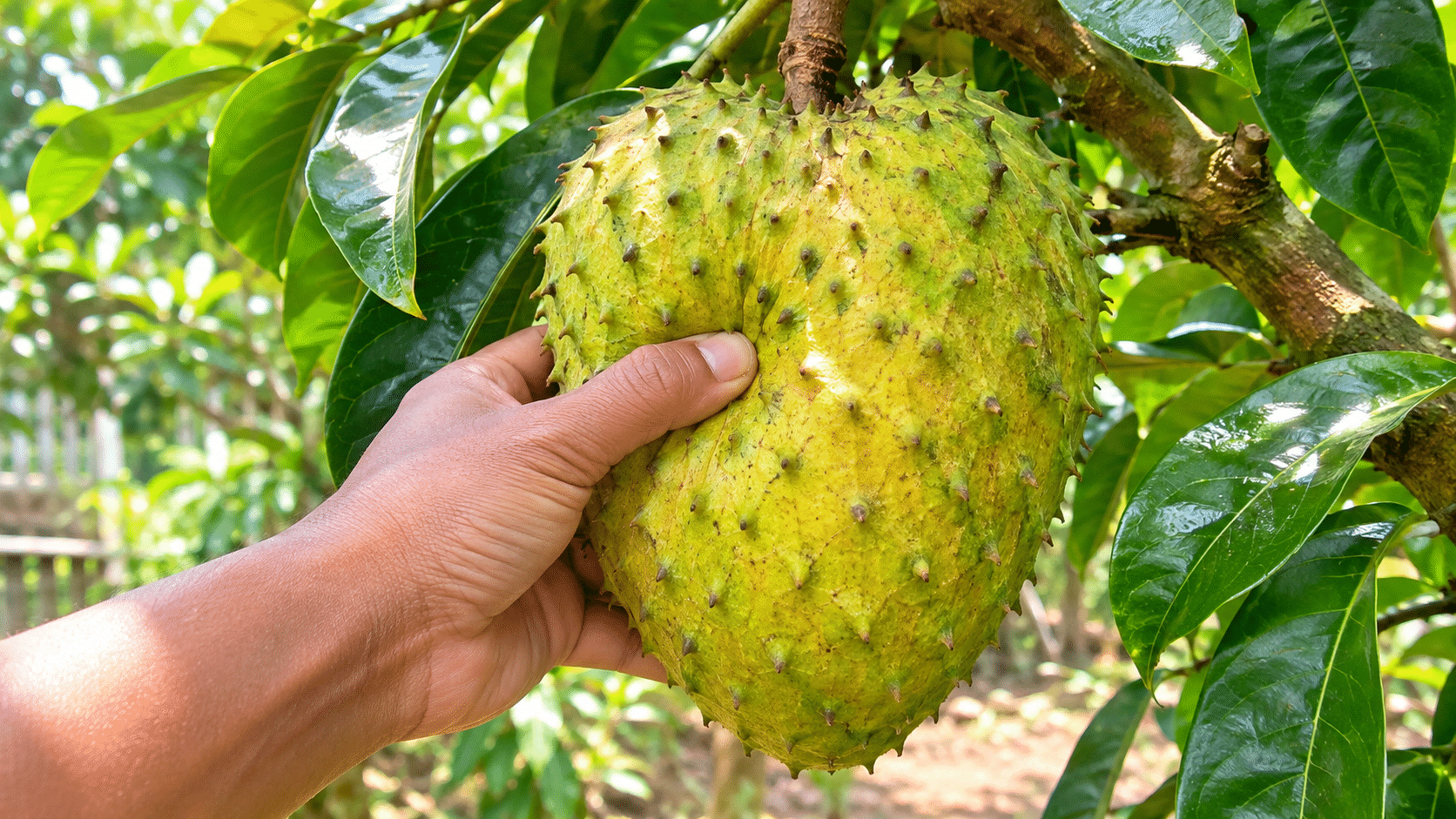
Color Change: The skin transitions from a dark, matte green to a lighter, slightly yellowish-green.
-
Spine Softening: The menacing-looking spikes (areoles) will begin to spread further apart as the fruit expands, and they will become much softer to the touch.
-
The Squeeze Test: Gently press your thumb against the fruit. If it yields slightly (similar to a firm avocado), it is ready to be snipped from the tree with pruning shears.
Post-Harvest Care & Storage 🧊
Place your harvested guanabana on the kitchen counter at room temperature for a few days. Check it daily. When it is extremely soft and yields easily to light pressure, it is perfectly ripe and ready to eat!
-
To Serve: Cut the fruit in half and scoop out the snowy-white, fibrous flesh with a spoon. (Note: Do not eat the black seeds, as they contain neurotoxins and are inedible).
-
Storage: The flesh can be eaten fresh, blended into smoothies, or frozen. To freeze, remove all the seeds, place the pulp in airtight bags, and store it in the freezer for up to 6 months.
Expert FAQs: Your Soursop Troubleshooting Guide 🙋♀️❓
Can I grow a soursop tree in a pot? Absolutely! Cultivating a potted soursop is highly recommended for growers outside Zones 10-11. Start with a 15-gallon container and up-pot as the tree grows, maxing out at a 25- or 30-gallon half-barrel. Use the well-draining potting mix mentioned earlier, and aggressively prune the tree to keep it compact. Potted trees require more frequent watering and fertilizing than in-ground trees.
Why are my soursop flowers falling off without fruiting? As discussed in the pollination section, the primary cause of flower drop is a lack of pollination. Because the male and female parts mature at different times, natural pollination is rare outside its native habitat. Implementing the hand-pollination technique using a paintbrush will almost certainly solve this issue. Additionally, sudden temperature drops or severe drought during blooming can also trigger flower abortion.
Why are the leaves on my soursop tree turning brown? Brown leaves typically indicate one of three environmental stresses:
-
Cold Shock: If temperatures dipped below 45°F (7°C), the leaves will brown and drop.
-
Salt Burn: If you live near the coast, or if you have over-fertilized with synthetic salts, the tips and margins of the leaves will turn brown and crisp. Flush the soil with fresh water to leach out excess salts.
-
Underwatering: A lack of moisture will cause the leaves to wilt, brown at the edges, and fall off.
Conclusion: Start Your Tropical Journey Today 🌟
Growing a soursop tree is undeniably a labor of love, but the immense satisfaction of harvesting your own exotic, incredibly flavorful fruit makes every ounce of effort worthwhile. By mastering the golden rules of tropical care—providing immense warmth, ensuring rapid soil drainage, and taking charge of pollination—you can successfully cultivate this magnificent species almost anywhere.
Don’t let the fear of dropped flowers or winter chills hold you back. Armed with the expert knowledge in this guide, you are fully equipped to transform your garden or sunroom into a thriving tropical oasis.
Now, I’d love to hear from you! What USDA Hardiness Zone are you growing your soursop tree in, and are you planning to plant it in the ground or in a container? Drop a comment below, and feel free to share this guide with fellow tropical fruit enthusiasts! Happy planting! 🌱✨