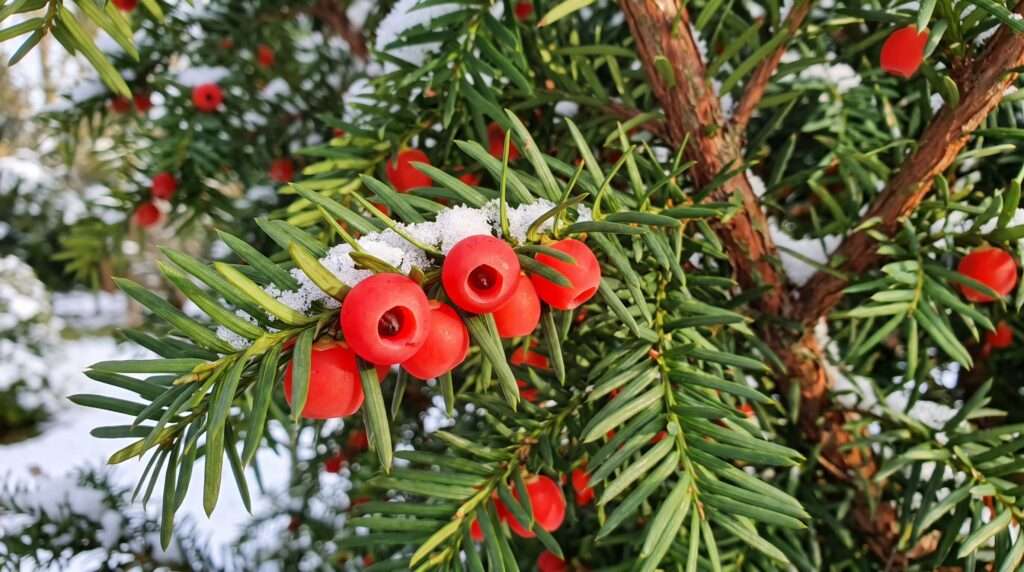
Picture this: You’re out for a crisp winter stroll or surveying the landscaping in your new backyard, and a sudden flash of vibrant red catches your eye. Against a backdrop of dark, needle-like leaves sits a cluster of what looks like juicy, brightly colored fruit. If you have recently spotted a coniferous tree with red berries, you are certainly not alone in wondering what it is—and more importantly, if it is safe to have around your home.
In the world of botany, this stunning plant is a bit of a fascinating paradox. The star of our show is the Yew tree (genus Taxus), which happens to be the most common evergreen shrub or tree fitting this exact description.
While the Yew is a true masterpiece of ornamental landscaping, prized for its lush winter color and dense foliage, it harbors a highly dangerous secret that every homeowner, parent, and pet owner needs to understand.
In this comprehensive guide, we will dive deep into identifying your mystery tree. We’ll uncover the fascinating botanical science behind those red “berries,” issue some critical safety and toxicity warnings, and share pro-level care and pruning tips for keeping your evergreen healthy and beautiful year-round. Let’s solve the mystery of the red-berried conifer! 🕵️♀️✨
2. What is the Coniferous Tree With Red Berries? Meet the Yew (Taxus) 🌿
When trying to identify evergreen shrubs and trees, looking at the foliage and the fruit is the fastest way to get an answer. The Yew is an ancient and incredibly resilient plant that has been used in European and Asian gardens for centuries. Here is how you can positively identify it.
The Anatomy of a Yew Tree 🌲
Unlike a spruce or a pine tree, which have sharp, stiff needles that can prick your fingers, the Yew is famously soft to the touch.
-
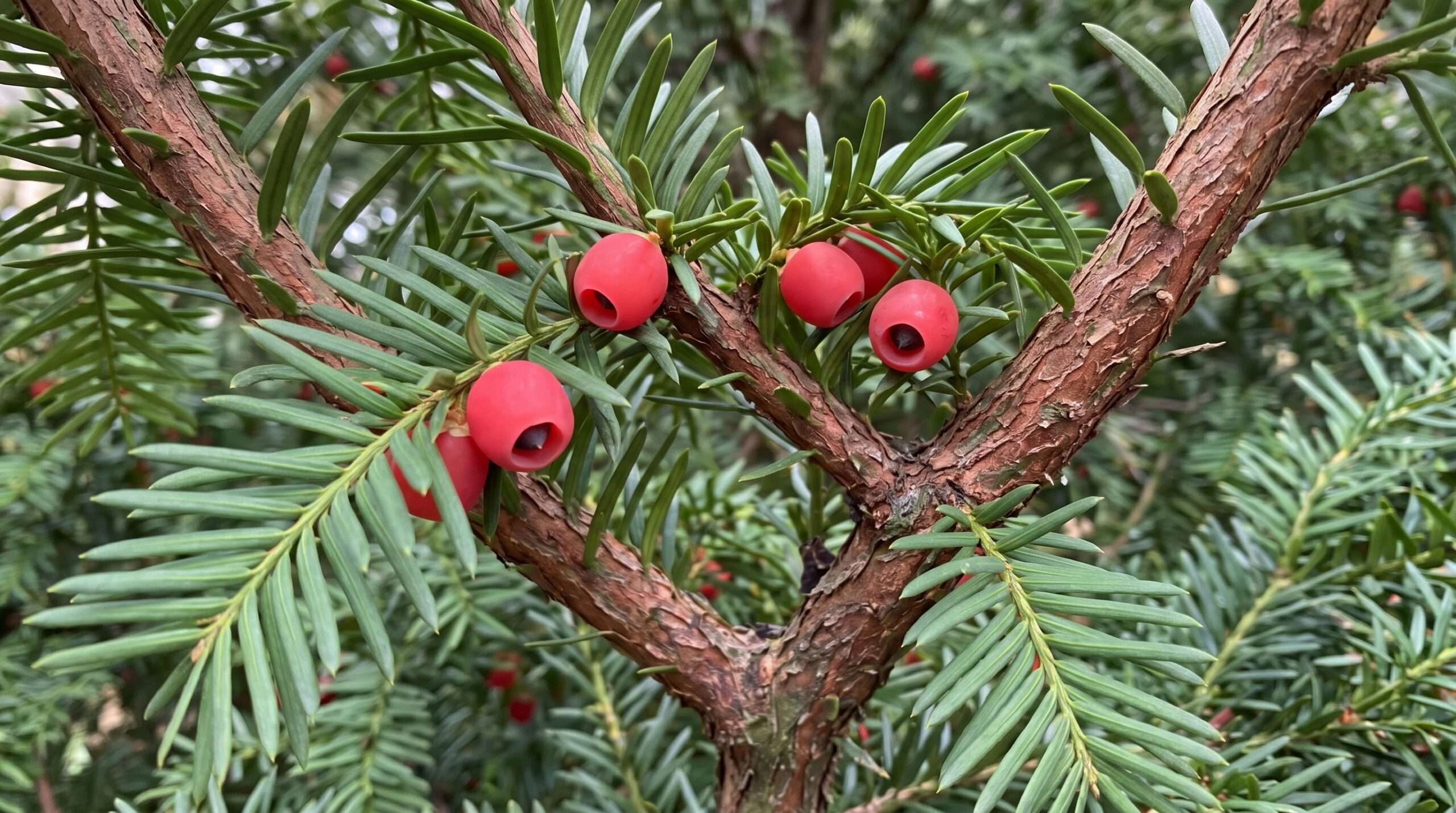
The Needles: Yew needles are flat, flexible, and about an inch long. They are a deep, glossy dark green on top, with a slightly lighter, matte pale green underneath. They grow in a flat, feathery arrangement along the stems.
-
The Bark: If you peek through the dense foliage to the trunk, you’ll notice reddish-brown, scaly bark that tends to peel away in thin, papery strips as the tree matures.
-
The Shape: Yews are incredibly versatile. Depending on the species and cultivar, they might be creeping ground covers just two feet tall, dense pyramidal hedges, or towering, majestic trees reaching up to 60 feet into the sky.
Wait, Those Aren’t Actually Berries! (The Science of the “Aril”) 🍒
Here is where we put on our expert botanist hats. True berries only develop from the flowers of angiosperms (flowering plants). Conifers (gymnosperms) do not produce flowers; they produce cones. So, how does a conifer have berries?
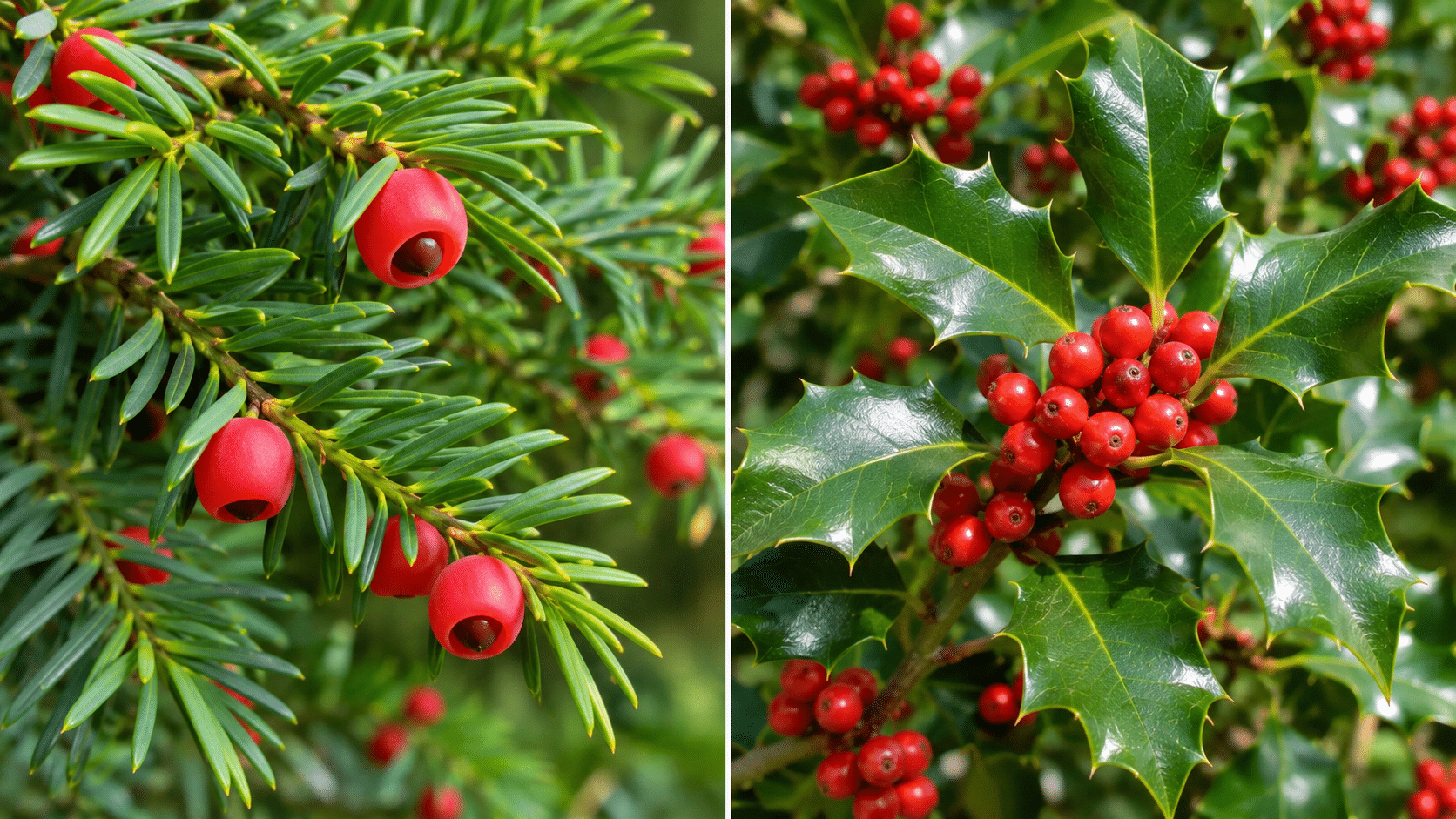
Technically, it doesn’t! The brilliant red, cup-shaped structure you see on a Yew is biologically known as an aril. Unlike a hard pinecone, the aril is a modified, fleshy cone scale that grows to partially encompass a single, dark, hard seed. The aril is open at the tip, making it look exactly like a hollowed-out berry or a brightly colored green pimento olive.
Dioecious Nature: Why Not All Yews Have Berries 🧬
Have you noticed that some of your Yew bushes are covered in red fruit while others right next to them are completely bare? This isn’t a sign of disease; it’s just genetics!
Yew trees are dioecious (a Greek term meaning “two houses”). This means there are distinct male and female plants. The male plants produce small, yellow, pollen-filled cones in the spring. Only the female plants produce the beautiful red arils in the late summer and fall—and they can only do so if the wind carries pollen from a nearby male plant.
3. ⚠️ Critical Safety Warning: Are Yew “Berries” Poisonous? 🛑
(Note: If you have young children, dogs, cats, or livestock, please read this section very carefully.)
The Yew is often described as the “Tree of Death” in historical literature, and for a very good reason. Almost every single part of the Yew tree contains highly toxic alkaloids known as taxines, which can cause sudden cardiac arrest in mammals.
The Danger to Humans (Adults and Children) 🚸
Here is the strange and deceptive truth about the Yew: The red, fleshy aril itself is actually non-toxic, edible, and quite sweet.
However, the hard seed inside the aril is incredibly deadly. Because the seed is hidden inside the sweet-tasting fleshy cup, children are highly attracted to them and may accidentally chew and swallow the seed while eating the “berry.”
Furthermore, the needles, bark, stems, and roots are all heavily packed with taxine toxins. Even chewing on a handful of needles or steeping them in hot water can be fatal to a human. Symptoms of taxine poisoning include dizziness, nausea, abdominal pain, irregular heartbeat, difficulty breathing, and unconsciousness.
Toxicity to Pets and Livestock 🐕🐎
Yews are notoriously fatal to animals. Dogs and cats who like to chew on sticks or foliage are at severe risk. The danger is even greater for grazing livestock like horses, cattle, and sheep. A horse can suffer fatal cardiac failure just minutes after consuming only a small mouthful of Yew foliage. Never plant Yew shrubs near pastures or fence lines where animals graze.
What to Do in Case of Ingestion 🏥
If you suspect that a child or pet has ingested any part of a Yew plant (especially the seeds or needles):
-
Do NOT induce vomiting, as this can cause further complications.
-
For Humans: Immediately call Poison Control (1-800-222-1222 in the US) or head straight to the nearest emergency room. Take a clipping of the plant with you for identification.
-
For Pets/Livestock: Contact an emergency veterinarian or the ASPCA Animal Poison Control Center immediately. Time is absolutely of the essence.
💡 Pro Tip: If you have toddlers who are prone to putting things in their mouths, it is highly recommended to either remove female Yew bushes from your yard or carefully prune them before they can develop arils in the late summer.
4. Lookalikes: Could It Be Something Else? 🔍
Before you panic about having a toxic plant in your yard, let’s make sure you actually have a Yew. There are a couple of common lookalikes in the winter landscape that boast red berries.
Eastern Redcedar (Juniperus virginiana) 🫐
The Eastern Redcedar is another common conifer. While its fleshy seed cones are technically blue or dark purple, they can sometimes take on a reddish-brown or rusty hue in certain winter lighting, causing confusion. However, Redcedar foliage is usually prickly and scale-like, completely unlike the soft, flat needles of the Yew.
Holly (Ilex) 🌿
Holly bushes are world-famous for their bright red winter berries. But Holly is not a conifer. It is a broadleaf evergreen. If your plant has red berries but the leaves are wide, flat, leathery, and have sharp, spiky points on the edges, you are looking at a Holly bush, not a Yew!
5. Why Landscapers Love the Yew Tree (Despite the Risks) 🏡
Given the serious toxicity warnings, you might be wondering why anyone would ever purposely plant a coniferous tree with red berries in their yard. The truth is, in the world of professional horticulture and landscape architecture, the Yew is considered absolute royalty. When placed safely away from grazing livestock and closely monitored around children, its benefits to a landscape are almost unmatched.
Unmatched Evergreen Privacy and Hedging 🧱
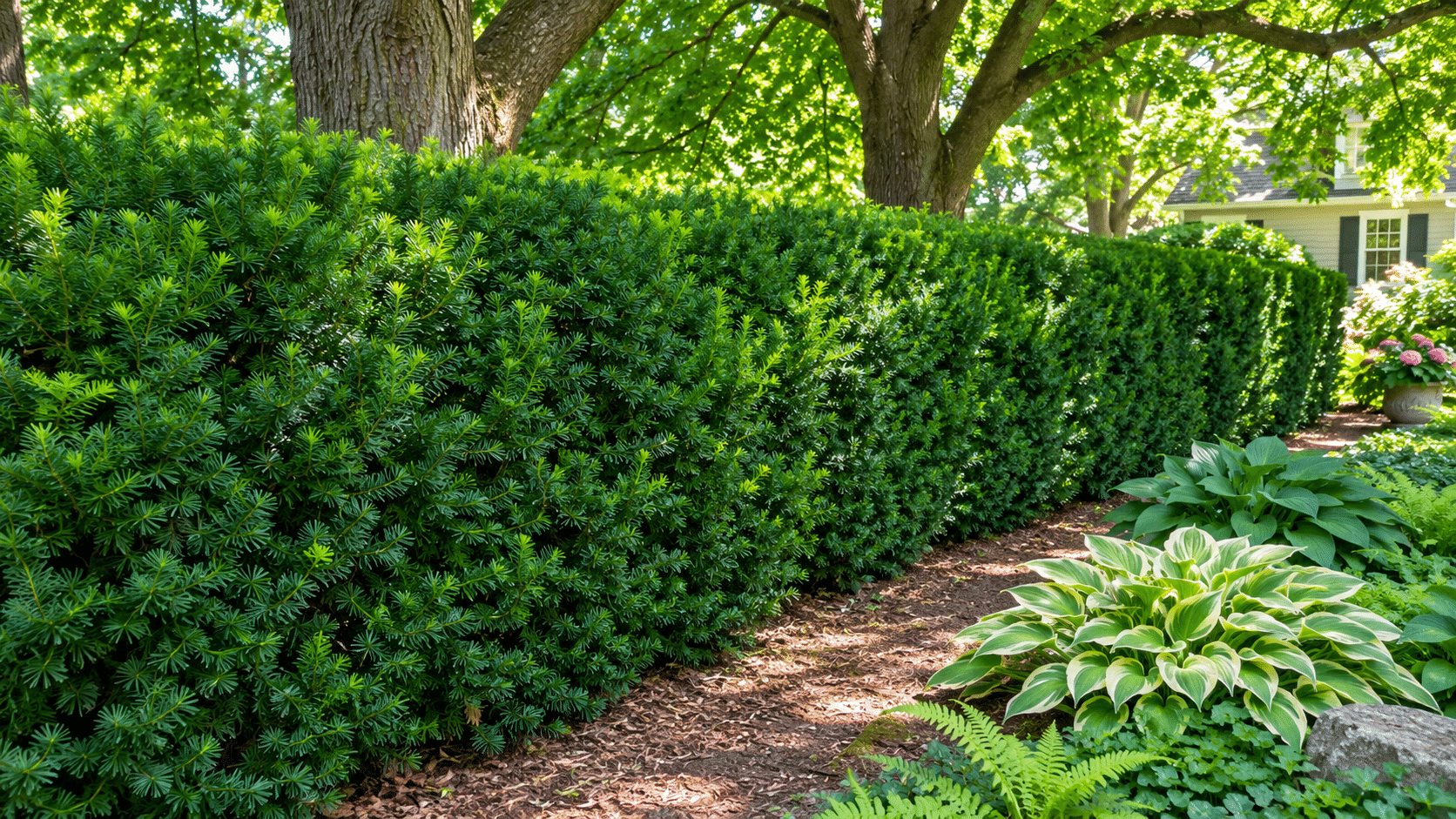
If you want to create a dense, impenetrable, year-round privacy screen, the Yew is your best friend. Its growth habit is naturally thick, and it responds exceptionally well to shearing. A well-maintained Yew hedge acts as a brilliant sound barrier against street noise, a windbreak against harsh winter gales, and a lush green backdrop that makes the colors of your spring-blooming flowers pop.
Shade Tolerance Master ☁️
This is the Yew’s superpower. The vast majority of conifers—like pines, spruces, and junipers—demand full, baking sun to survive. If you plant them in the shade, they become thin, leggy, and eventually die. The Yew, however, evolved as an understory tree in ancient forests. It thrives in deep, heavy shade, making it one of the only reliable evergreen shrubs for the dark north-facing side of a house or under the canopy of larger deciduous trees.
Winter Interest and Wildlife Value 🐦
Winter landscapes can often look barren and gray. The Yew injects a striking dose of emerald green and ruby red into the snowy months. While the seeds are toxic to mammals, the digestive systems of many birds are designed differently. Thrushes, cedar waxwings, and robins flock to Yews in the winter. They consume the fleshy red arils and pass the hard, toxic seeds completely intact, unharmed. Planting a Yew is a fantastic way to support local bird populations when food sources are scarce!
6. How to Care for a Yew Tree in Your Garden 🪴
Yews are famous for their longevity (some English Yews are estimated to be over 2,000 years old!). If you provide them with the right foundation, they are incredibly low-maintenance. Here is your expert guide to keeping your evergreen shrubs vibrant and thriving.
Ideal Soil and Sunlight Conditions ☀️
-
Sunlight: As mentioned, Yews are incredibly adaptable. They will grow beautifully in full sun, partial shade, and full shade.
-
Soil: This is where you must pay attention. Yews prefer a slightly acidic to neutral pH (6.0 to 7.0) and thrive in sandy loam. However, the absolute, non-negotiable rule of growing Yews is excellent soil drainage. They will tolerate drought, but they will not tolerate standing water.
Watering and Fertilization Schedule 💧
-
Watering: Newly planted Yews need deep, regular watering during their first year to establish a strong root system. Once established, they are remarkably drought-tolerant. Only water during prolonged dry spells in the heat of summer.
-
Fertilizing: Yews do not need heavy feeding. A light application of a balanced, slow-release granular evergreen fertilizer (like a 10-10-10) applied at the soil line in early spring just before new growth pushes out is more than enough.
The Number One Yew Killer: Root Rot 🥀
If your Yew tree’s needles are turning yellow, dropping rapidly, and the branches are dying back, it is likely suffering from Phytophthora root rot. This fungal disease attacks when a Yew is planted in heavy clay soil or low-lying areas where water pools. The roots literally suffocate and rot away. To prevent this, always plant your Yew slightly above the soil grade and amend heavy clay soils with organic compost and sand before planting.
Common Pests to Watch Out For 🐛
While generally pest-resistant, keep a lookout for the Black Vine Weevil. These pests notch the edges of the needles, and their grubs feed on the roots underground. You might also encounter Scale insects, which look like tiny brown or white bumps on the stems. Both can be treated with horticultural oils or targeted systemic insecticides applied by a certified arborist.
7. Expert Pruning Strategies for Yew Hedges ✂️
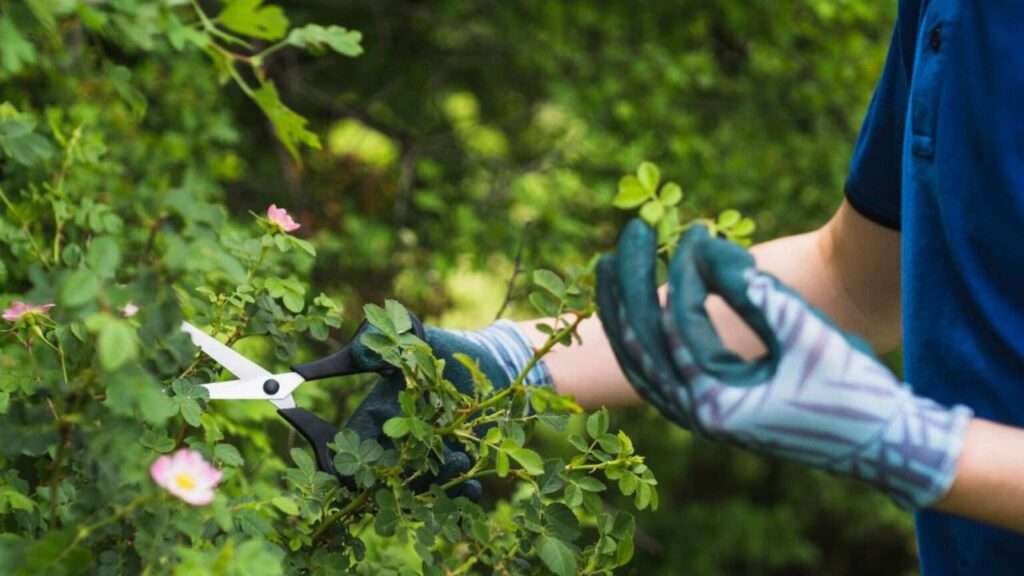
When it comes to pruning, the Yew is the absolute darling of the topiary world. Unlike many conifers, they take beautifully to aggressive shaping.
The Best Time of Year to Prune 🗓️
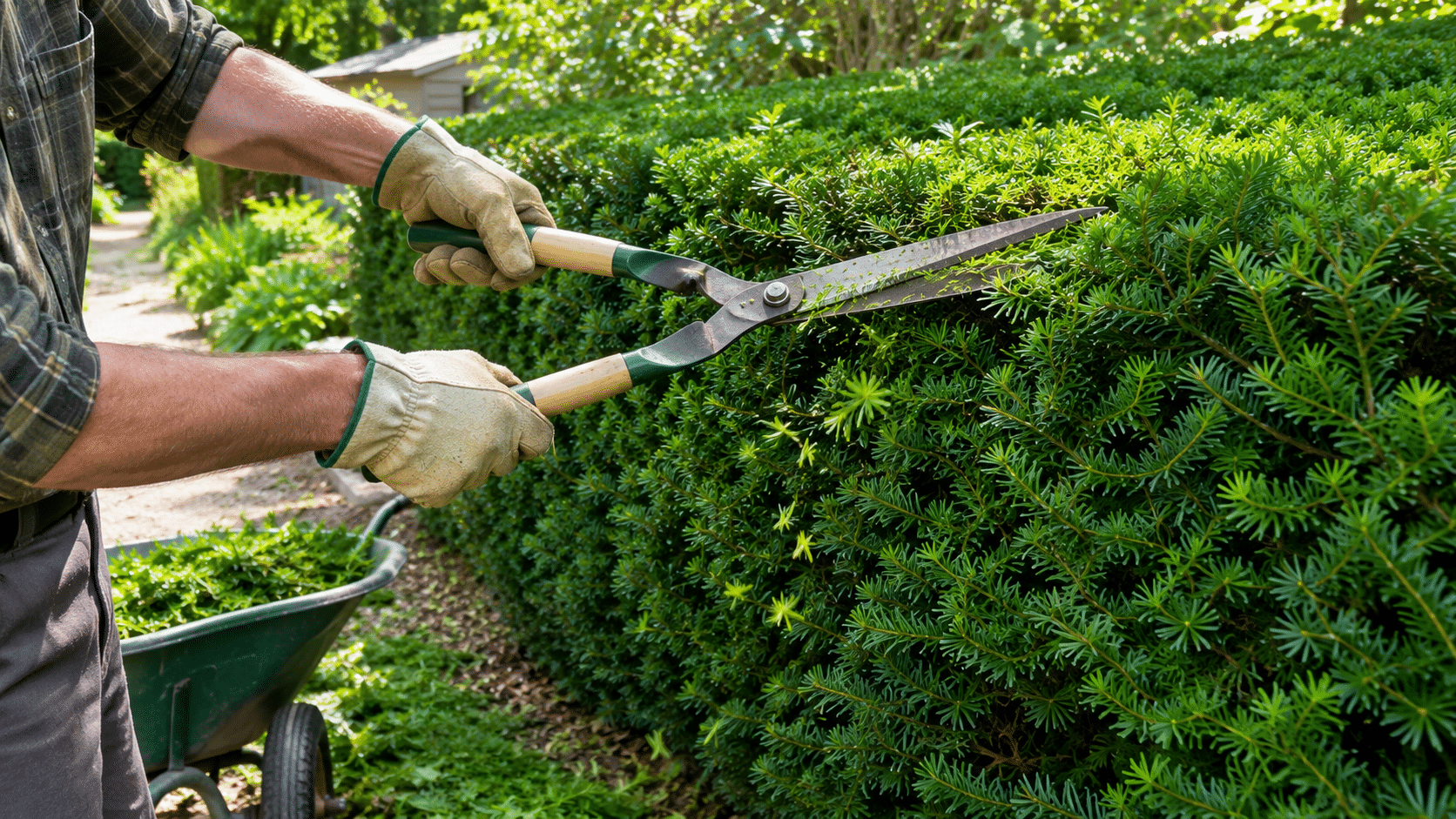
Put your pruning shears away in the fall! Pruning late in the year encourages a flush of new growth that will be instantly killed by freezing winter temperatures. The best time to prune your Yew is in late winter or early spring (March or April) before the new bright green growth (called “candles”) emerges. You can do a very light aesthetic trim in mid-summer to keep formal hedges looking tidy.
Shaping Your Hedge: The Pyramid Technique 📐
Here is a secret that separates professional landscapers from amateurs. When shearing a Yew hedge, never cut it perfectly straight up and down. Always prune a hedge so that the base is slightly wider than the top (an A-frame or pyramid shape). If the top is wider than the base, it blocks the sunlight from reaching the lower branches. Over time, those lower branches will die, leaving you with an ugly, bare, woody bottom.
Rejuvenation Pruning for Overgrown Yews 🪚
Here is a magical trait of the Yew: It is one of the only conifers that can sprout new growth from old, bare wood. If you have an overgrown pine or juniper and you cut it back to bare branches, it will never grow back. But if you inherit a massive, overgrown Yew that is swallowing your house, you can perform “rejuvenation pruning.” You can literally saw the shrub down to stumps just a few inches above the ground in early spring, and within a few years, it will push out entirely new, fresh green growth!
8. Top Yew Varieties for Your Landscape (A Quick Guide) 🏆
If you are looking to purchase a Yew at your local nursery, you’ll likely encounter one of these three main types:
-
English Yew (Taxus baccata): 🇬🇧 The classic European estate tree. It can grow massive (up to 60 feet tall) and is incredibly long-lived. It is best suited for milder climates (USDA Zones 6-7).
-
Japanese Yew (Taxus cuspidata): 🇯🇵 The tough-as-nails alternative. It is highly cold-hardy (down to Zone 4) and handles harsh winter winds much better than its English cousin.
-
Anglo-Japanese Yew (Taxus x media): 🧬 A brilliant hybrid of the English and Japanese varieties, combining cold hardiness with incredible ornamental traits.
-
Cultivar to watch: ‘Hicksii’ grows tall, narrow, and columnar, making it perfect for tall privacy walls.
-
Cultivar to watch: ‘Densiformis’ stays low and spreads wide, perfect for foundation plantings under windows.
-
9. Frequently Asked Questions (FAQs) ❓
Q: How fast do Yew trees grow? A: Yews are generally slow-growing plants. Depending on the variety and soil conditions, you can expect an average growth rate of about 6 to 12 inches per year. Their slow growth is part of why they are so dense and easy to maintain as formal hedges!
Q: Do all Yew trees get red berries? A: No. As mentioned earlier, Yews are dioecious. Only the female bushes will produce the red arils, and only if there is a male bush planted nearby to pollinate them.
Q: Are Yew roots invasive? A: No, Yews have a very well-behaved, fibrous, and relatively shallow root system. They are completely safe to plant near home foundations, sidewalks, and driveways, provided there is adequate soil drainage.
Q: Can you burn Yew wood in a fireplace? A: Yes. The wood of the Yew tree is incredibly dense, beautiful, and highly prized by woodworkers (it was historically used to make medieval longbows!). The wood itself is safe to burn in a fireplace. However, never burn the foliage/needles, as the smoke can contain volatile toxins and severely irritate your lungs.
10. Conclusion: Respecting the Beauty of the Red-Berried Conifer 💚
Spotting a coniferous tree with red berries in the depths of winter is a joyful visual treat. The Yew (Taxus) is a marvel of the botanical world—a plant that offers unmatched shade tolerance, stunning evergreen foliage, and brilliant crimson “berries” that bring life to a sleeping landscape.
However, its beauty must be balanced with a deep respect for its toxic nature. By understanding the dangers of the taxine-laced seeds and needles, you can make informed, safe landscaping choices for your family, pets, and local wildlife.
Whether you are admiring a massive, ancient Yew in a public park or carefully pruning a beautiful ‘Hicksii’ hedge in your own front yard, you now have the expert knowledge to care for, identify, and safely coexist with this legendary red-berried evergreen.
Over to you! Have you recently discovered a Yew tree growing on your property, or are you considering planting a hedge this spring? Share your thoughts (or a photo of your mystery plant!) in the comments below, and let’s keep the gardening conversation growing! 🌱✨