Have you ever stumbled across a legendary plant mentioned in ancient texts and wondered if it still exists today? One of the most famous, yet heavily misunderstood, trees in historical and biblical literature is the sycamine tree. Despite its prominent place in history, modern gardeners often walk right past it without realizing what a botanical treasure they are looking at! 😲
The big reveal? The historic sycamine is actually the beautiful, resilient, and delicious Black Mulberry (Morus nigra). While its name has caused centuries of confusion among translators and botanists alike, its value in the landscape remains undeniable.
If you are a homesteader, a gardening enthusiast, or a history buff looking to cultivate a piece of living history, you are in the right place. By the end of this comprehensive guide, you will not only understand the rich, deep-rooted history behind this magnificent plant, but you will also learn exactly how to plant, prune, and harvest its incredibly sweet fruit right in your own backyard. Let’s dig in! 🍓🌿
🌳 What is a Sycamine Tree? (History & Identification)
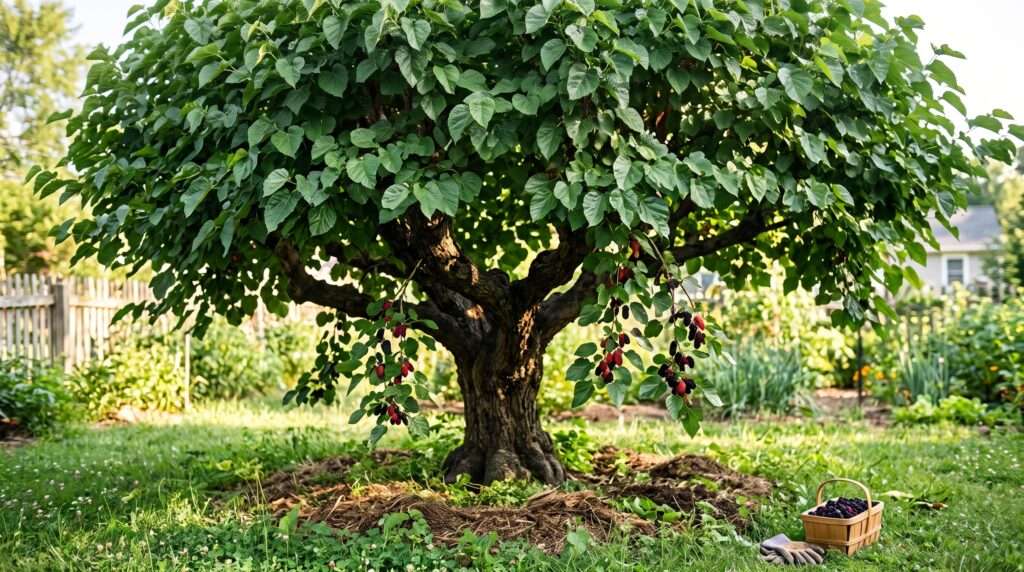
To truly appreciate the sycamine, we have to look past modern nursery tags and dive into its botanical and historical origins. Botanically classified as Morus nigra (the Black Mulberry), this deciduous tree originates from the mountainous regions of southwestern Asia and the Middle East. For thousands of years, it has been cultivated for its incredibly juicy, dark fruit and its dense, shade-providing canopy.
But why is it called a “sycamine” in historical texts, and why do so many people confuse it with other trees?
🧐 Sycamine vs. Sycamore: Clearing the Confusion
If you have ever researched historical trees, you have likely run into a frustrating translation tangle. The sycamine is frequently confused with the “sycamore” tree. However, in ancient contexts, these are two entirely different species with distinct characteristics:
-
The Sycamine Tree: This is the Black Mulberry (Morus nigra). It is renowned for its delicious, blackberry-like fruit and incredibly deep, stubborn root system.
-
The Sycamore Tree: In historical and biblical texts (such as the famous tree Zacchaeus climbed in the ancient city of Jericho), the “sycamore” refers to the Sycamore-fig (Ficus sycomorus). This is a type of fig tree with low-hanging, wide-spreading branches, making it very easy to climb, but its fruit is considered vastly inferior to the sweet mulberry.
The confusion stems from early Greek translations of ancient texts, where the words sykaminos (mulberry) and sykomorea (fig-mulberry) look and sound strikingly similar. As an expert tree grower, knowing the difference ensures you actually get the sweet berries of the Morus nigra rather than the woody figs of the Ficus sycomorus! 💡
📜 The Sycamine Tree in Biblical History
The sycamine holds a fascinating place in biblical history, most notably making an appearance in the New Testament. In Luke 17:6, it is used as a powerful metaphor: “If you have faith as small as a mustard seed, you can say to this sycamine tree, ‘Be uprooted and planted in the sea,’ and it will obey you.”
Why did the author specifically choose the sycamine tree for this metaphor? It all comes down to its horticulture. The Morus nigra is famous for its incredibly robust, deep, and rapid-growing taproot system. In the arid climates of the Middle East, this tree sends its roots plunging deep into the earth to find water, anchoring itself so firmly that uprooting a mature sycamine by human hands is considered nearly impossible.
By understanding the botany of the tree, the historical metaphor suddenly makes perfect sense: it represents something that is stubbornly entrenched and incredibly difficult to remove. 🌱📖
🔍 How to Identify the Black Mulberry (Morus nigra)
If you are out foraging or looking to purchase a sapling from a specialty nursery, you need to know how to distinguish the Black Mulberry from its cousins, the White Mulberry (Morus alba) and the Red Mulberry (Morus rubra). Here are the exact morphological traits to look for.
🍃 Leaves, Bark, and Growth Habit
The sycamine is a sturdy, structural tree that adds incredible visual interest to a landscape.
-
Size and Shape: Typically reaching a mature height of 30 to 35 feet (9 to 10 meters), it develops a beautiful, rounded, and spreading crown. Its stiff branches create a dense canopy that provides excellent, cooling shade during the brutal heat of late summer.
-
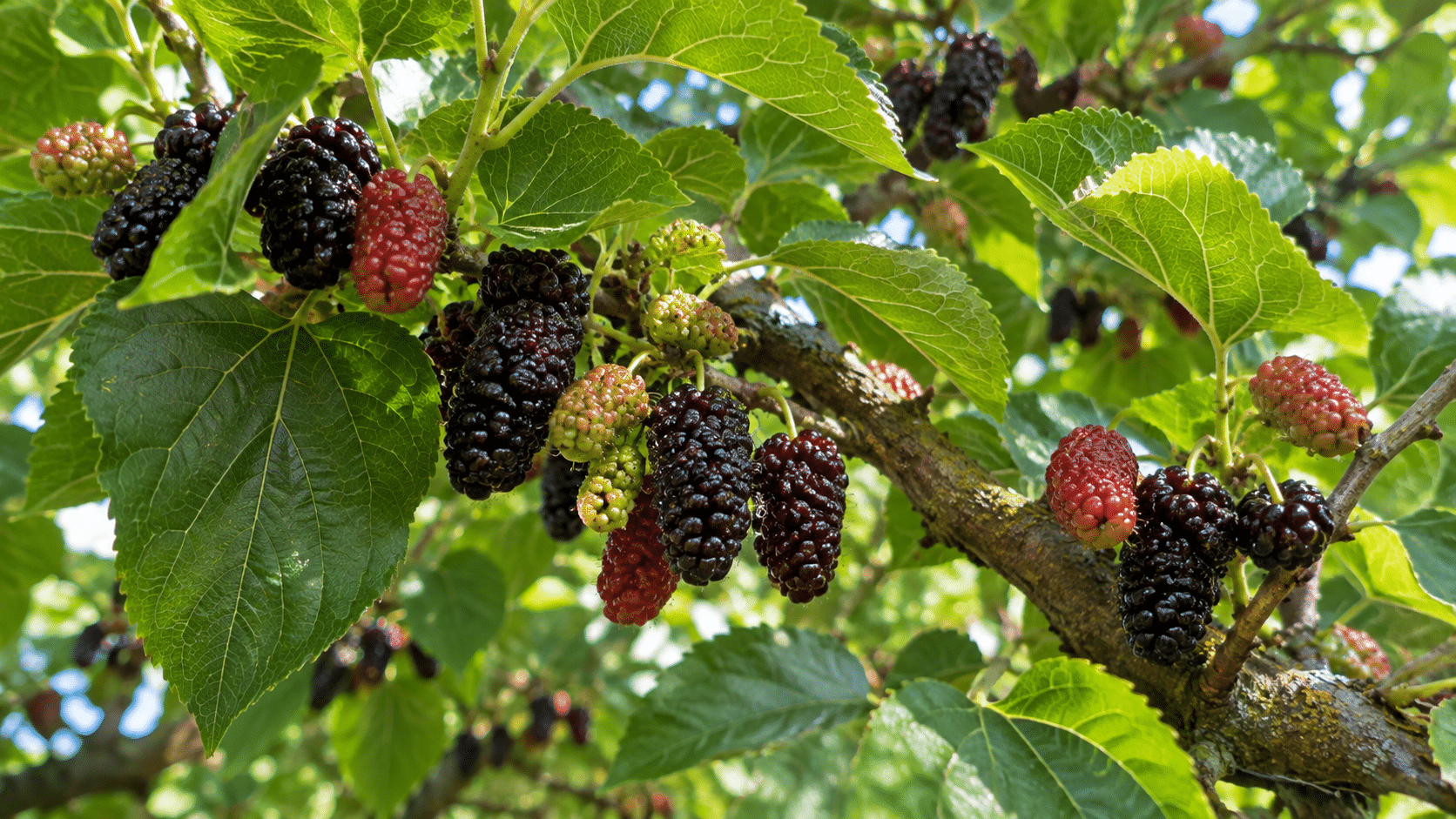
Leaves: The foliage is a dead giveaway. The leaves of the Black Mulberry are broad, heart-shaped (cordate), and noticeably thick. Unlike the smooth leaves of the White Mulberry, sycamine leaves are scabrous—meaning they are remarkably rough on the top, feeling almost like fine sandpaper, while the undersides are covered in soft, fuzzy hairs (pubescent).
-
Bark: On young saplings, the bark is a warm, light brown. As the tree matures, the bark becomes heavily ridged, deeply fissured, and takes on a dark, gnarled appearance that gives older trees a majestic, ancient look. 🌳
🫐 Flowers and the Famous “Blackberry-Like” Fruit
While the flowers of the sycamine are rather inconspicuous—appearing as small, pale green catkins in the early spring—it is the fruit that steals the show.
Mulberries are technically not single berries, but rather drupelets (clusters of tiny fruits growing tightly together, much like a blackberry). As the fruit ripens throughout the summer, it puts on a colorful display, transitioning from a pale green to a bright, striking red, and finally maturing into a deep, glossy purple-black.
When fully ripe, the fruit of the Morus nigra is highly prized by orchardists. It boasts a complex, rich flavor profile that perfectly balances intense sweetness with a bright, tart acidity—a flavor that many culinary experts consider far superior to the bland sweetness of the White Mulberry. 🥧✨
🏡 Why You Should Grow a Sycamine Tree in Your Garden
If you have the space for a medium-to-large shade tree, the sycamine tree deserves a top spot on your planting list. Beyond its fascinating historical roots, the Black Mulberry is a powerhouse in the modern permaculture garden and backyard orchard. Here is why you should consider planting one:
-
Incredible Longevity & Resilience: These trees are legacy plantings. A healthy Morus nigra can easily live for well over a century, providing fruit and shade for generations. Once their deep taproot is established, they are remarkably resilient against harsh winds and poor soil conditions. 🌪️
-
Abundant, Gourmet Fruit Yields: Unlike many fussy fruit trees, the sycamine is a prolific producer. It provides heavy, reliable crops of berries that are highly sought after for artisanal jams, pies, wines, and fresh eating. Because the fruit is so delicate, you will rarely find true Black Mulberries in grocery stores—growing them yourself is the only way to experience their gourmet flavor! 🥧
-
Low Maintenance: Once past its first year of establishment, this tree is incredibly low-maintenance and highly drought-tolerant, making it perfect for water-wise landscaping.
🧑🌾 The Ultimate Sycamine Tree Care & Growing Guide
Growing a sycamine tree is generally straightforward, but because of its vigorous growth habit and unique botanical traits, setting it up for success requires a little bit of strategic planning. Follow these expert-backed horticultural guidelines to ensure your tree thrives.
☀️ Sun, Soil, and the Perfect Planting Site
To maximize fruit production and ensure a healthy canopy, plant your sycamine tree in full sun (at least 6 to 8 hours of direct, unfiltered sunlight per day). While they can tolerate partial shade, fruit yields will noticeably decrease in lower light.
They are highly adaptable to a variety of soil types—including clay, loam, and sandy soils—as long as there is adequate drainage. They prefer a slightly acidic to neutral soil pH (around 6.0 to 7.0).
🚨 E-E-A-T Crucial Placement Warning: Site selection is the single most important decision you will make when planting a sycamine tree. The dark purple fruit drops prolifically when ripe, and it will heavily stain anything it touches. Never plant a sycamine tree near driveways, concrete patios, light-colored wooden decks, or walkways. Choose a spot out in the lawn or at the edge of your property where falling fruit can simply decompose into the grass or be eaten by local birds. 🐦
💧 Watering Requirements
Remember that famous, deep taproot? It is the secret to the sycamine’s drought tolerance.
-
Year 1 (Establishment Phase): Water deeply once a week. The goal is to saturate the soil deeply to encourage the roots to grow downward rather than shallowly along the surface.
-
Mature Trees: Once established, sycamine trees rarely need supplemental watering unless your region is experiencing a prolonged, severe drought. Overwatering can actually lead to root rot, so it is always better to err on the side of underwatering once the tree is mature.
🌱 Feeding and Mulching
Black Mulberries are not heavy feeders. In fact, applying too much high-nitrogen fertilizer can result in an explosion of leafy green growth at the expense of fruit production.
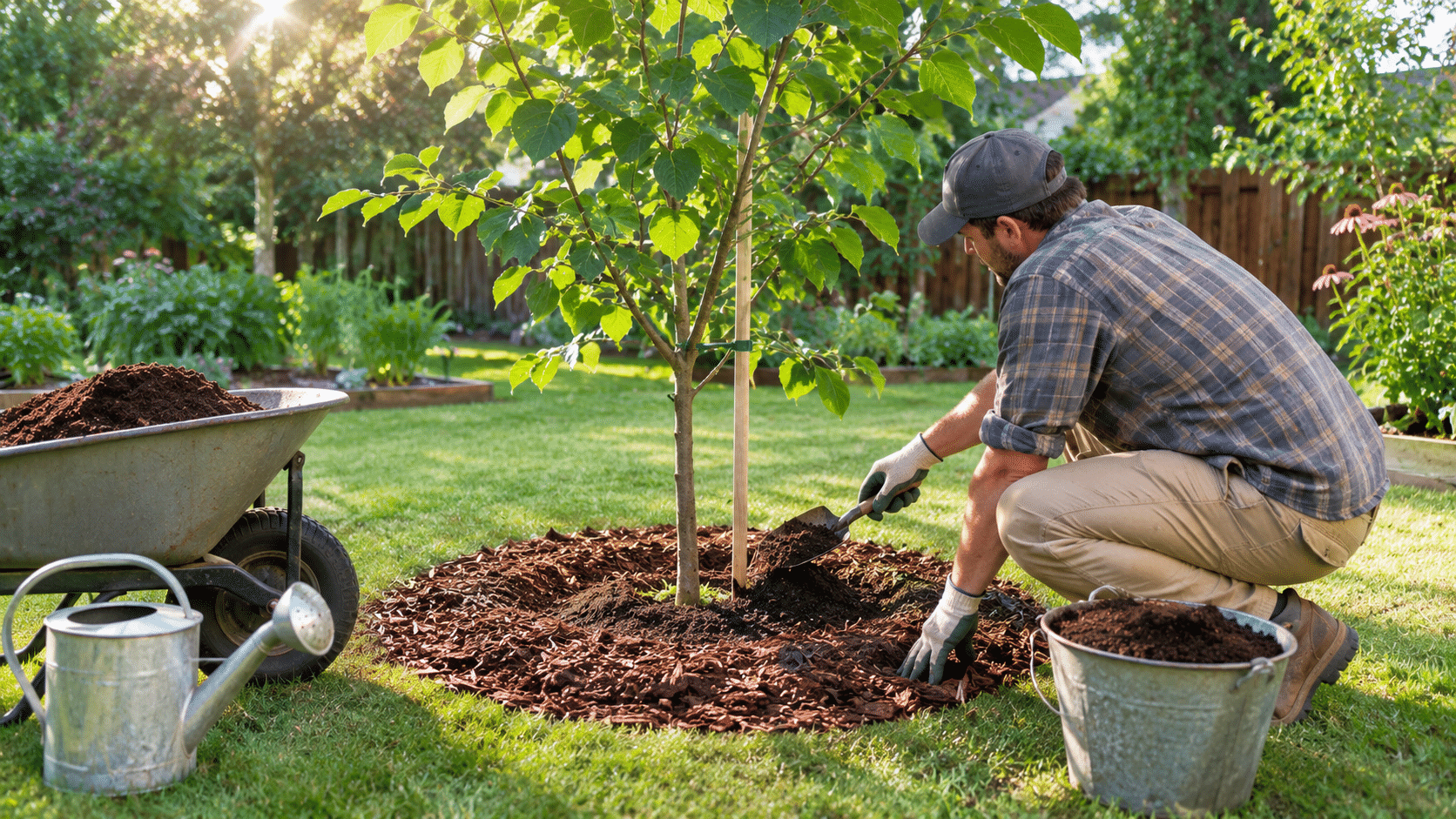
The best approach is top-dressing the root zone with a 2-to-3-inch layer of rich organic compost or well-rotted manure every spring. This provides a slow, steady release of essential nutrients while improving soil structure. Be sure to keep the mulch a few inches away from the tree trunk to prevent bark rot. 🪵
✂️ Pruning Best Practices (Expert Insight!)
Pruning a sycamine tree requires a very specific approach. Because they naturally develop a beautiful, spreading framework, they require minimal structural pruning. However, when you do need to remove dead, damaged, or crossing branches, timing is absolutely critical.
Expert Tip: You must only prune the Black Mulberry in late winter while the tree is fully dormant (typically January or February, depending on your USDA hardiness zone). If you cut a sycamine tree in the spring or summer while the sap is actively flowing, the tree will “bleed” sap profusely from the wounds. This not only weakens the tree but also invites opportunistic pests and fungal diseases. ❄️
🧺 Harvesting and Enjoying Your Mulberries
Harvesting from a sycamine tree is a joyous, albeit messy, late-summer tradition.
🧤 When and How to Harvest
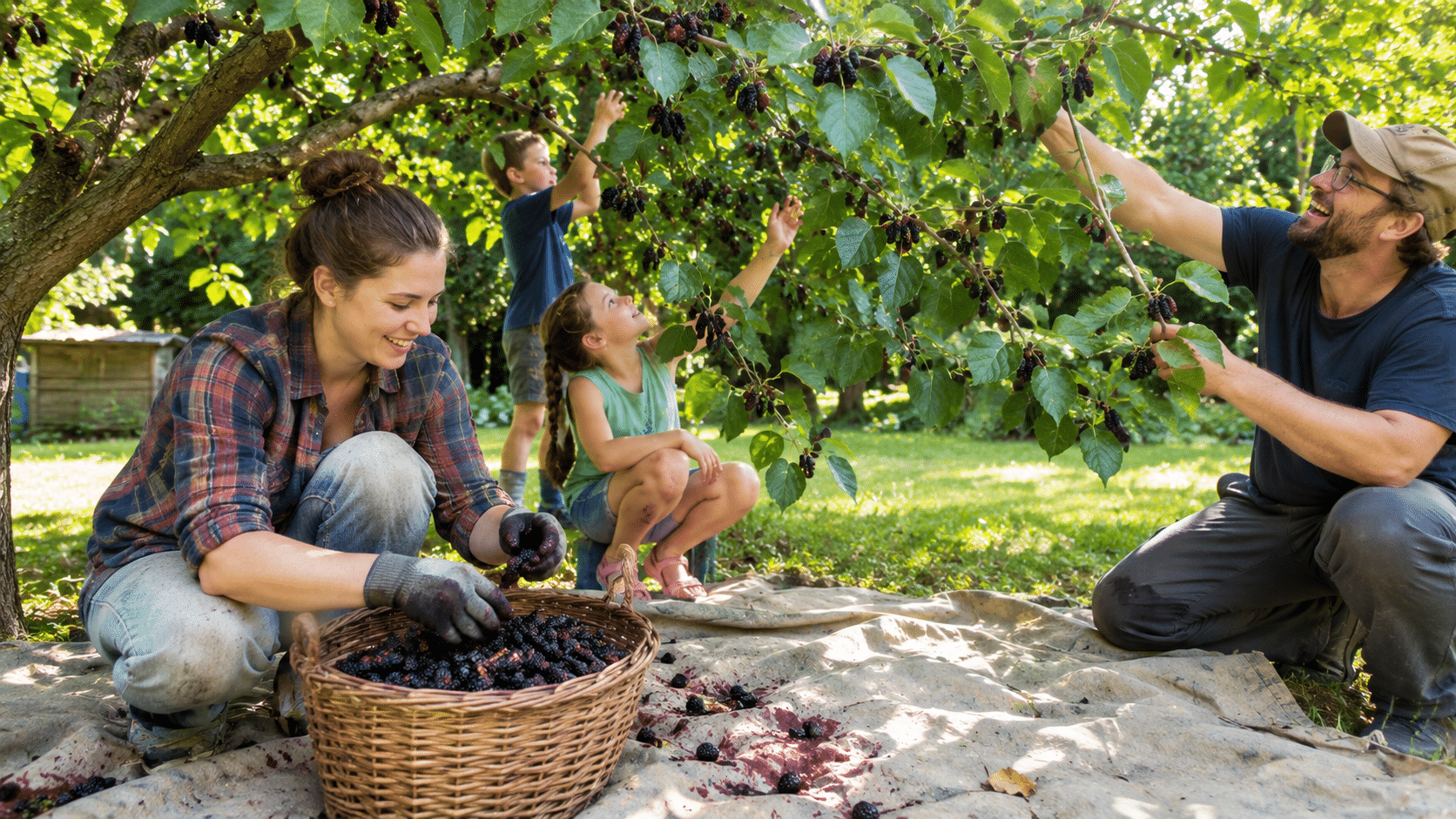
Unlike some fruit trees that ripen their entire crop all at once, the sycamine tree ripens its berries continuously over a period of several weeks (usually late July through August). The berries are fully ripe when they turn a deep, almost black-purple and pull away from the branch with zero resistance.
Because the fruit is incredibly soft and bruises easily, hand-picking can be tedious for large harvests.
-
The Tarp Method: The most efficient way by far to harvest is to lay a large, clean tarp underneath the canopy. Gently shake the branches. Only the perfectly ripe berries will fall off, leaving the unripe ones to continue developing.
-
Note: Wear gloves and old gardening clothes! Mulberry juice is a potent natural dye and will stain your hands red-purple for days. 👚💜
🚨 Safety Warning: The Dangers of Unripe Fruit and Sap
While the ripe fruit is perfectly safe and delicious, it is important to be aware of the tree’s natural defense mechanisms. The leaves, stems, and unripe (green) fruit of the Morus family contain a milky white sap that is mildly toxic. Ingesting unripe berries or raw sap can cause severe stomach upset, cramping, and nausea. Furthermore, skin contact with the sap can cause contact dermatitis (skin irritation) in sensitive individuals. Always wait for the fruit to fully ripen before eating, and keep a watchful eye on young children exploring the garden! 🛑
🐛 Common Pests and Diseases to Watch For
The sycamine tree is generally hardy and pest-resistant, but keeping an eye out for a few common ailments will ensure a bountiful harvest year after year.
-
Winter Moths: The caterpillars of the winter moth love to chew on emerging buds and young leaves in early spring. Organic Solution: Apply sticky grease bands or insect barrier glue around the trunk of the tree in late autumn to trap the flightless female moths before they can climb up to lay their eggs. 🐛
-
Popcorn Disease (Ciboria carunculoides): This is a specific fungal issue that affects mulberry fruit, causing the berries to swell, turn white, and look like popped corn. They remain hard and inedible. Solution: There is no chemical cure; the best prevention is excellent garden hygiene. Always rake up and dispose of any fallen, infected fruit to prevent the fungal spores from overwintering in the soil. 🍂
-
Bacterial Blight: Recognizable by angular black spots on the leaves and distorted foliage. Ensure your tree has good air circulation by thinning out congested inner branches during your winter pruning.
❓ Frequently Asked Questions (FAQs) About the Sycamine Tree
How long does it take for a sycamine tree to bear fruit? If you plant a grafted sapling, you can expect to see your first small harvest in just 2 to 3 years. If grown from seed, it can take up to 10 years for the tree to reach maturity and begin producing fruit. ⏳
Can I grow a black mulberry tree in a large pot or container? Yes, but it requires dedication! Because of their aggressive taproot, you must select a dwarf variety (such as ‘Dwarf Everbearing’) and plant it in a very large, deep container. You will also need to engage in strict dormant-season root and canopy pruning to keep its size manageable. 🪴
Are sycamine trees and standard mulberry trees the exact same thing? In botanical and historical contexts, yes. The word “sycamine” specifically translates to the Black Mulberry (Morus nigra). It should not be confused with the White Mulberry (Morus alba), which is native to China and was historically cultivated for the silk industry.
Can I propagate a sycamine tree from cuttings? Absolutely. Hardwood cuttings taken in mid-winter or semi-hardwood cuttings taken in mid-summer root quite easily when treated with a high-quality rooting hormone and placed in a humid, warm environment. 🌱
🏁 Conclusion
The sycamine tree is far more than just a historical footnote or an ancient biblical metaphor. It is a vigorous, structural masterpiece that provides stunning summer shade, unmatched drought resilience, and some of the most delicious, gourmet berries you will ever taste.
By understanding its true identity as the Black Mulberry (Morus nigra) and following these expert care guidelines—from selecting a stain-safe planting site to mastering the art of winter pruning—you can cultivate a thriving piece of living history right in your own backyard.
Have you ever had the pleasure of tasting a fresh, sun-warmed black mulberry straight from the branch, or are you planning to add a sycamine tree to your landscape this season? Drop a comment below and share your gardening plans—we would love to hear about your orchard journey! 🌳💬