
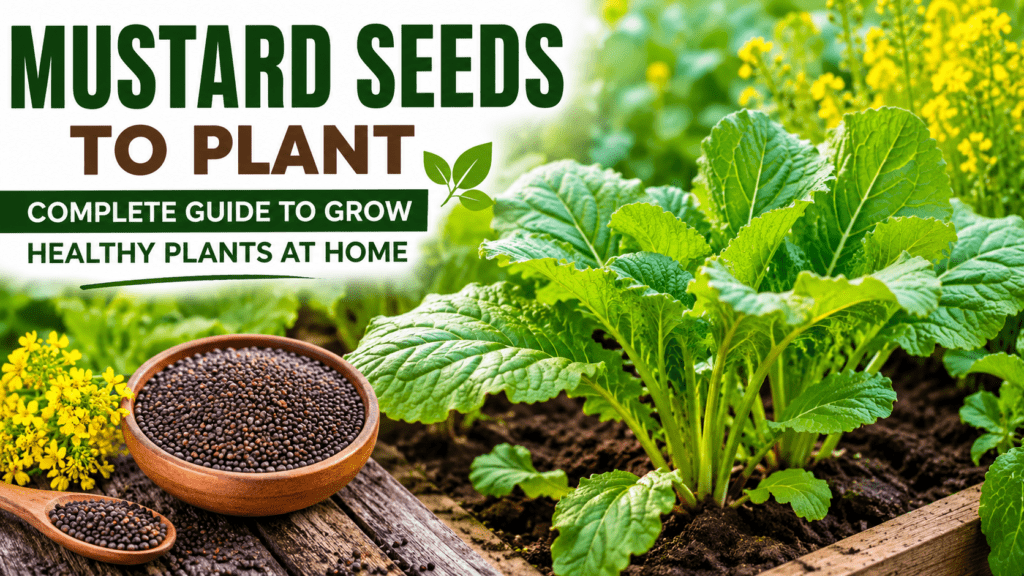
Growing your own vegetables and leafy greens at home is one of the most rewarding gardening experiences 🌿. But if you want a crop that grows quickly, requires minimal maintenance, and delivers both nutritious greens and useful seeds, mustard plants deserve a place in your garden.
Choosing the right mustard seeds to plant can make the difference between weak, bitter plants and a thriving harvest full of tender leaves and healthy seed pods. Whether you are a beginner gardener starting your first raised bed or an experienced grower looking to maximize yields, mustard plants are surprisingly easy to grow when you understand their needs.
In this complete guide, you’ll learn:
- How to choose the best mustard seeds 🌾
- The ideal time and method for planting
- Soil, sunlight, and watering requirements ☀️
- Common mistakes gardeners make
- How to harvest mustard greens and seeds successfully
- Expert tips for growing larger, healthier plants naturally 🌱
By the end of this article, you’ll have everything you need to grow productive mustard plants right from your backyard, balcony, or container garden.
What Are Mustard Seeds? 🌾
Mustard seeds come from plants in the Brassica family, which also includes cabbage, broccoli, kale, and cauliflower. These fast-growing plants are cultivated for both their edible leaves and flavorful seeds.
Many gardeners grow mustard for:
- Tender mustard greens 🥗
- Homemade spice production
- Soil improvement and cover cropping
- Pollinator-friendly flowers 🐝
- Organic pest management
Mustard plants are especially popular because they mature quickly and adapt well to different garden conditions.
Understanding Mustard Plant Varieties 🌱
Not all mustard plants are the same. Choosing the right variety is important depending on your gardening goals.
Yellow Mustard
Yellow mustard is the most common variety used for culinary mustard condiments. It has mild-flavored seeds and grows well in home gardens.
Brown Mustard
Brown mustard produces stronger-flavored seeds often used in Asian and Indian cooking. It tolerates warmer temperatures better than yellow mustard.
Black Mustard
Black mustard has intense flavor and produces highly aromatic seeds. However, it can spread aggressively in some climates.
Leaf Mustard Varieties 🥬
Some mustard plants are specifically grown for their leafy greens rather than seeds. Popular leaf mustard types include:
- Red Giant
- Southern Giant Curled
- Mizuna
- Tatsoi
These varieties are excellent for salads, stir-fries, and healthy homegrown meals.
Culinary Mustard Seeds vs Seeds for Planting ⚠️
A common beginner question is whether grocery store mustard seeds can be planted.
Technically, some culinary seeds may germinate. However, many store-bought seeds are:
- Heat-treated
- Irradiated
- Old or low-quality
- Poor in germination rate
For best results, always buy high-quality gardening seeds from reputable suppliers. Planting-specific seeds are selected for:
- Strong germination
- Disease resistance
- Better yields
- Consistent plant growth 🌿
Benefits of Growing Mustard Plants at Home 🌼
Mustard plants offer far more benefits than many gardeners realize.
Fast Growth
Most mustard greens are ready for harvest in as little as 30–45 days ⏳.
Nutritious Harvest
Mustard greens are rich in:
- Vitamin A
- Vitamin C
- Calcium
- Potassium
- Antioxidants
Great for Small Spaces 🪴
You can grow mustard successfully in:
- Raised beds
- Containers
- Balcony gardens
- Small backyard plots
Excellent Companion Plant
Mustard can help suppress weeds and attract beneficial insects to your garden.
Beginner-Friendly
Few plants are as forgiving and productive for first-time gardeners.
How to Choose the Best Mustard Seeds to Plant 🛒
Selecting the right seeds is one of the most important steps for successful gardening.
Factors to Consider Before Buying
Climate Compatibility ☀️
Some mustard varieties perform better in cool weather, while others tolerate heat better.
- Cool climates → Yellow mustard
- Warm climates → Brown mustard
Growing Purpose
Ask yourself:
- Do you want leafy greens?
- Are you harvesting seeds?
- Do you want ornamental foliage?
Different varieties serve different purposes.
Organic vs Non-Organic Seeds 🌱
Organic seeds are produced without synthetic chemicals and are ideal for eco-friendly gardening.
Heirloom vs Hybrid Seeds
Heirloom Seeds
- Open-pollinated
- Excellent flavor
- Good for seed saving
Hybrid Seeds
- Improved disease resistance
- Uniform growth
- Higher productivity
Best Mustard Varieties for Beginners 🌿
If you’re new to gardening, these varieties are reliable and easy to grow:
Southern Giant Curled
- Mild flavor
- Excellent leaf production
- Fast-growing
Red Giant Mustard ❤️
- Beautiful purple-red foliage
- Cold-tolerant
- Great for salads
Florida Broadleaf
- Heat-tolerant
- Large leaves
- Easy maintenance
Mizuna
- Delicate flavor
- Excellent for containers
- Quick harvest cycle
Where to Buy High-Quality Mustard Seeds 🌾
Reliable sources include:
- Local garden centers
- Organic seed companies
- Farmer seed swaps
- Trusted online nurseries
When buying seeds, check:
✅ Packaging date
✅ Germination percentage
✅ Disease resistance information
✅ Climate recommendations
Expert Tip 🌟
Avoid purchasing seeds with damaged packaging or unclear labeling. Fresh seeds provide much better germination rates.
Best Time to Plant Mustard Seeds 📅
Timing is critical when growing mustard successfully.
Mustard is a cool-season crop that thrives in mild temperatures.
Ideal Growing Seasons by Climate
Spring Planting 🌸
Plant mustard 2–4 weeks before the last expected frost.
Fall Planting 🍂
In many regions, fall planting produces sweeter, more tender leaves because cooler temperatures reduce bitterness.
Temperature Requirements for Germination 🌡️
Mustard seeds germinate best when soil temperatures stay between:
Ideal growing temperatures:
- 45°F–75°F (7°C–24°C)
High heat may cause:
- Premature bolting
- Bitter leaves
- Reduced harvest quality
Indoor vs Outdoor Planting 🏡
Direct Sowing Outdoors
Most gardeners sow mustard seeds directly into garden soil because the plants grow quickly and dislike root disturbance.
Starting Indoors
Indoor seed starting works well if:
- Your climate has late frosts
- You want earlier harvests
- You garden in containers
Preparing Soil for Mustard Plants 🌍
Healthy soil is the foundation of healthy plants.
Best Soil Type for Mustard Plants
Mustard grows best in:
- Loose soil
- Well-draining soil
- Nutrient-rich soil
The ideal soil pH is:
pH=6.0 to 7.5pH = 6.0 \text{ to } 7.5
Loamy soil with compost provides the best balance of:
- Moisture retention
- Drainage
- Nutrient availability
How to Improve Soil Before Planting 🌿
Before sowing seeds:
- Remove weeds and debris
- Loosen soil 6–8 inches deep
- Add compost or aged manure
- Mix organic matter thoroughly
Adding compost improves:
- Soil fertility
- Water retention
- Root development 🌱
Choosing the Right Planting Location ☀️
Mustard plants prefer:
- Full sun (6+ hours daily)
- Good airflow
- Moderate moisture
In hotter climates, partial afternoon shade helps prevent heat stress.
Step-by-Step Guide to Planting Mustard Seeds 🌱
Planting mustard seeds correctly improves germination and plant health dramatically.
How Deep to Plant Mustard Seeds
Plant seeds shallowly for best results.
Recommended planting depth:
0.6 cm to 1.3 cm0.6\text{ cm to }1.3\text{ cm}
Planting too deeply can slow or prevent germination.
Proper Seed Spacing 📏
Spacing depends on whether you grow mustard for:
- Baby greens
- Mature leaves
- Seed production
Recommended Spacing
- Baby greens → 2–4 inches apart
- Mature plants → 8–12 inches apart
Good spacing improves:
- Air circulation
- Disease prevention
- Larger leaf production
Direct Sowing Instructions 🌾
Step 1: Prepare Soil
Rake soil smooth and remove rocks.
Step 2: Sow Seeds
Scatter seeds lightly or plant in rows.
Step 3: Cover Lightly
Cover with a thin layer of soil.
Step 4: Water Gently 💧
Keep soil consistently moist during germination.
Step 5: Thin Seedlings
Once seedlings reach a few inches tall, thin crowded plants.
Growing Mustard in Containers 🪴
Mustard grows beautifully in pots and containers.
Best Container Size
Use pots at least:
- 6–8 inches deep
- With proper drainage holes
Ideal Potting Mix
Choose lightweight, nutrient-rich potting soil.
Balcony Gardening Tips 🌇
- Place containers in sunny locations
- Water more frequently during warm weather
- Rotate pots for even growth
Essential Mustard Plant Care Tips 💧
Once your seedlings emerge, proper care helps maximize growth and harvest quality.
Watering Requirements
Mustard plants prefer evenly moist soil.
How Often to Water
Generally:
- 1–1.5 inches of water weekly
- More during hot weather
Signs of Overwatering 🚨
- Yellow leaves
- Wilting despite wet soil
- Root rot smell
Signs of Underwatering
- Dry, crispy leaves
- Slow growth
- Premature bolting
Fertilizing Mustard Plants Naturally 🌱
Mustard plants benefit from nitrogen-rich fertilizers because they produce leafy growth.
Best Organic Fertilizers
- Compost tea
- Fish emulsion
- Worm castings
- Aged manure
Avoid over-fertilizing, which may encourage excessive leaf growth with poor flavor.
Mulching and Weed Control 🍂
Mulch helps:
- Retain moisture
- Prevent weeds
- Regulate soil temperature
Excellent mulch choices include:
- Straw
- Shredded leaves
- Grass clippings
Supporting Fast and Healthy Growth 🌿
Healthy mustard plants need:
- Good airflow
- Consistent moisture
- Crop rotation
- Proper spacing
Avoid planting mustard repeatedly in the same location to reduce disease risk.
Common Problems When Growing Mustard Plants 🚨
Even easy crops face occasional challenges. Knowing how to identify and solve problems early can save your harvest.
Pests That Attack Mustard Plants 🐛
Aphids
These tiny insects suck sap from leaves, causing curling and weak growth.
Natural Solutions:
- Neem oil spray
- Ladybugs 🐞
- Strong water spray
Flea Beetles
Small jumping insects that create tiny holes in leaves.
Prevention Tips:
- Use row covers
- Apply mulch
- Keep plants healthy
Caterpillars 🐛
Cabbage worms and loopers love mustard leaves.
Hand-picking and natural biological controls work well.
Diseases and Common Mustard Plant Problems 🌿
Healthy mustard plants are naturally resilient, but poor growing conditions can still lead to diseases and growth issues. Learning how to prevent these problems early is the key to maintaining vigorous plants and larger harvests.

Downy Mildew 🌫️
Downy mildew is one of the most common fungal diseases affecting mustard plants, especially in damp or overcrowded gardens.
Symptoms
- Yellow patches on leaves
- Gray or fuzzy undersides
- Weak plant growth
Prevention Tips
✅ Water at soil level
✅ Avoid overcrowding
✅ Improve airflow
✅ Rotate crops annually
Expert Insight 🌟
Morning watering is far better than evening watering because leaves dry faster, reducing fungal growth.
Root Rot 🚫
Root rot usually develops when mustard plants sit in soggy soil for too long.
Signs of Root Rot
- Wilting plants despite moist soil
- Brown, mushy roots
- Slow growth
- Yellow leaves
How to Prevent It
- Use well-draining soil
- Avoid overwatering
- Never let containers sit in standing water
Healthy drainage is one of the most overlooked aspects of mustard plant care.
Leaf Spot Disease 🍂
Leaf spot appears as dark spots or lesions on leaves and spreads quickly in humid conditions.
Prevention Strategies
- Remove infected leaves immediately
- Sanitize gardening tools
- Avoid wetting foliage unnecessarily
Organic copper fungicides may help in severe cases.
Why Mustard Plants Bolt Early 🌡️
Bolting occurs when mustard plants suddenly produce flowers and seeds earlier than expected.
Once bolting begins:
- Leaves become bitter
- Growth slows
- Harvest quality declines
Common Causes of Bolting
Excessive Heat ☀️
Mustard prefers cool weather. High temperatures trigger flowering.
Inconsistent Watering 💧
Periods of drought stress encourage premature seed production.
Overcrowding
Poor airflow and competition stress the plants.
How to Prevent Bolting 🌱
Plant During Cool Seasons
Spring and fall are ideal.
Water Consistently
Keep soil evenly moist.
Harvest Frequently ✂️
Regular leaf harvesting encourages continued growth.
Provide Afternoon Shade
Especially helpful in warm climates.
How Long Do Mustard Plants Take to Grow? ⏳
One reason gardeners love mustard is its rapid growth cycle.
Germination Timeline 🌾
Most mustard seeds germinate within:
4 to 10 days4\text{ to }10\text{ days}
Warm soil and consistent moisture improve germination speed.
Leaf Harvest Timeline 🥬
Baby mustard greens are usually ready within:
20 to 30 days20\text{ to }30\text{ days}
Mature leaves develop in approximately:
40 to 50 days40\text{ to }50\text{ days}
Seed Harvest Timeline 🌾
If growing mustard for seeds, allow plants to mature fully.
Most seed pods develop within:
80 to 100 days80\text{ to }100\text{ days}
Signs Your Mustard Plants Are Ready to Harvest 🌿
For Leaf Harvest
- Leaves are tender and vibrant
- Plants reach 6–8 inches tall
For Seed Harvest
- Seed pods turn dry and brown
- Pods begin rattling slightly
Harvesting Mustard Greens and Seeds ✂️
Harvesting correctly helps extend the life of your plants and improves future production.

Best Time to Harvest Leaves 🥗
You can harvest mustard leaves at almost any stage.
Baby Greens
- Mild flavor
- Tender texture
- Excellent for salads
Mature Leaves
- Stronger taste
- Better for cooking
- Higher productivity
Morning harvesting usually provides the best flavor and crispness.
How to Harvest Without Damaging the Plant 🌱
Use the “cut-and-come-again” method.
Steps:
- Harvest outer leaves first
- Leave the center growing point intact
- Continue harvesting regularly
This method allows multiple harvests from one planting.
Harvesting Mustard Seeds 🌾
When seed pods dry naturally on the plant:
- Cut stalks carefully
- Hang upside down in a dry location
- Place paper bags underneath to catch seeds
After drying:
- Crush pods gently
- Separate seeds from debris
- Store in airtight containers
Can You Save Mustard Seeds for Replanting? 🌱
Absolutely! Mustard is one of the easiest crops for home seed saving.
How to Store Seeds Properly 🫙
Good storage conditions dramatically improve seed longevity.
Ideal Storage Conditions
- Cool temperatures
- Low humidity
- Airtight containers
Glass jars work especially well.
Seed Viability and Shelf Life ⏳
Properly stored mustard seeds remain viable for:
2 to 5 years2\text{ to }5\text{ years}
Label containers with:
- Variety name
- Harvest date
- Source information
Common Seed-Saving Mistakes 🚫
Avoid:
- Storing damp seeds
- Using plastic bags without ventilation
- Exposing seeds to direct sunlight
Moisture is the biggest enemy of seed storage.
Companion Plants for Mustard 🌼
Companion planting improves garden health naturally.
Best Companion Plants 🌱
Lettuce
Both crops thrive in cool conditions.
Spinach
Similar watering and soil needs.
Radishes
Fast-growing companions that maximize garden space.
Marigolds 🌼
Help deter harmful insects naturally.
Plants to Avoid Near Mustard 🚫
Avoid planting mustard close to:
- Broccoli
- Cabbage
- Cauliflower
- Kale
These crops share similar pests and diseases.
Growing Mustard Microgreens Indoors 🌱
Mustard microgreens are becoming incredibly popular because they grow quickly and contain concentrated nutrients.

Why Mustard Microgreens Are Popular 🥗
They are:
- Peppery and flavorful
- Rich in nutrients
- Ready within days
- Perfect for indoor gardening
Simple Indoor Growing Method 🪴
Supplies Needed
- Seed tray
- Potting mix
- Spray bottle
- Mustard seeds
Basic Steps
- Fill tray with moist soil
- Scatter seeds evenly
- Mist lightly
- Place near bright light
- Keep moist
Harvesting Microgreens ✂️
Most mustard microgreens are ready within:
7 to 14 days7\text{ to }14\text{ days}
Cut just above the soil line using scissors.
Nutritional Benefits of Mustard Greens 🥬
Mustard greens are considered a nutrient-dense superfood.
They contain:
- Fiber
- Vitamins A, C, and K
- Antioxidants
- Calcium
- Magnesium
These nutrients support:
- Immune health
- Bone strength
- Heart health ❤️
- Healthy digestion
Homegrown mustard greens are often fresher and more nutritious than store-bought produce.
Expert Tips for Growing Bigger and Healthier Mustard Plants 🌟
Professional gardeners often use small techniques that create dramatically better results.
Succession Planting 🌱
Plant small batches every 2–3 weeks for continuous harvests throughout the season.
Thin Seedlings Properly ✂️
Crowded plants compete for:
- Sunlight
- Water
- Nutrients
Proper spacing leads to larger, healthier leaves.
Feed Plants Naturally 🌿
Organic compost provides slow-release nutrients and improves long-term soil health.
Monitor Plants Daily 👀
Early detection of:
- Pests
- Diseases
- Water stress
can prevent major garden problems.
Rotate Crops Annually 🔄
Avoid planting mustard or other brassicas in the same location every year.
Crop rotation reduces:
- Soil-borne diseases
- Pest populations
- Nutrient depletion
Frequently Asked Questions About Mustard Seeds to Plant ❓
Can I Grow Mustard Plants From Grocery Store Seeds?
Sometimes, yes. However, germination rates are unpredictable. Planting-specific seeds are much more reliable.
How Much Sunlight Do Mustard Plants Need? ☀️
Mustard grows best with:
- 6–8 hours of sunlight daily
Partial shade can help in warmer climates.
Are Mustard Plants Easy for Beginners? 🌱
Absolutely! Mustard is one of the easiest and fastest-growing vegetables for beginner gardeners.
How Often Should I Water Mustard Plants? 💧
Water consistently enough to keep soil lightly moist but never soggy.
Can Mustard Grow in Pots? 🪴
Yes! Mustard grows very well in containers, raised beds, and balcony gardens.
Why Are My Mustard Leaves Turning Yellow? 🍂
Possible causes include:
- Overwatering
- Nutrient deficiency
- Poor drainage
- Disease
How Many Days Does Mustard Take to Harvest? ⏳
Depending on the variety:
- Baby greens → 20–30 days
- Mature leaves → 40–50 days
- Seeds → 80–100 days
Conclusion 🌿
Growing mustard plants at home is one of the simplest and most rewarding gardening projects for beginners and experienced growers alike. With the right mustard seeds to plant, proper soil preparation, consistent watering, and a little seasonal planning, you can enjoy fresh greens, flavorful seeds, and healthier garden soil all from a single crop 🌱
Whether you grow mustard in raised beds, containers, or small backyard gardens, these fast-growing plants offer incredible versatility and nutrition. They require minimal maintenance, adapt well to many climates, and provide continuous harvest opportunities throughout the growing season.
By following the expert techniques in this guide — from seed selection and planting depth to pest prevention and harvesting — you’ll be well on your way to growing thriving mustard plants with confidence 🌼
Start planting today, experiment with different mustard varieties, and enjoy the satisfaction of harvesting fresh, homegrown greens right from your own garden 🥬











