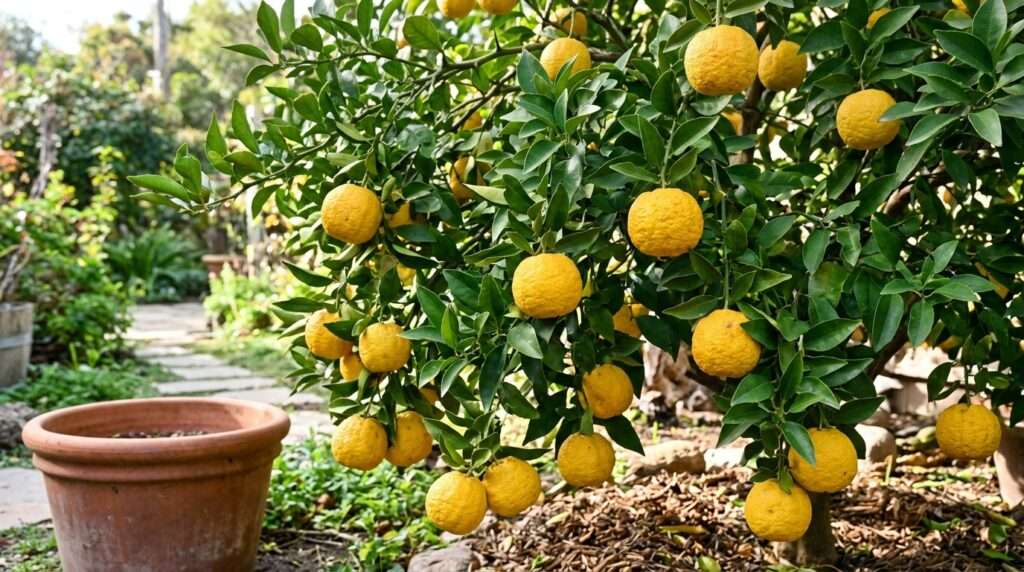
Imagine stepping into your garden on a crisp autumn morning, reaching past deep green leaves, and plucking a bumpy, golden fruit that smells like a mesmerizing blend of mandarin orange, wild grapefruit, and sweet pine. This is the magic of the yuzu. Highly sought-after by top-tier chefs and famously expensive at specialty grocery stores—if you can even find it fresh—this aromatic fruit is a culinary treasure.
But here is the best-kept secret of the gardening world: you don’t need to live in the tropics to grow it. Cultivating a yuzu citrus tree in your own backyard or patio is not only possible, but it is surprisingly easy once you know a few expert techniques.
As the ultimate cold-hardy citrus, the yuzu defies the fragile reputation of standard lemons and limes. In this comprehensive skyscraper guide, we will walk you through everything you need to know to grow a thriving tree. From selecting the perfect grafted sapling and mixing the ideal soil to overwintering techniques and harvesting your fragrant bounty, this guide will solve your biggest citrus-growing challenges and set you up for decades of successful harvests. ✨
What Makes the Yuzu Citrus Tree So Special? 🌟
Before you dig your first hole or buy your first pot, it helps to understand exactly what you are planting. The yuzu (Citrus junos) is not your average backyard fruit tree; it is a botanical marvel with a rich history and a unique genetic makeup that gives it unparalleled resilience.
A Brief Botanical & Culinary History
The yuzu tree originated in the rugged, mountainous regions of Central China and Tibet, adapting over millennia to survive harsh, unpredictable climates. It was later introduced to Japan and Korea during the Tang Dynasty, where it became deeply embedded in both culinary and cultural traditions.
In the kitchen, yuzu juice and zest are the starring ingredients in traditional Japanese ponzu sauce, marinades, and artisanal desserts. But its uses go far beyond food. In Japan, celebrating the winter solstice involves taking a yuzuyu—a hot bath filled with whole, floating yuzu fruits. The essential oils released from the rind are said to ward off winter colds, soothe dry skin, and relax the mind. 🛁
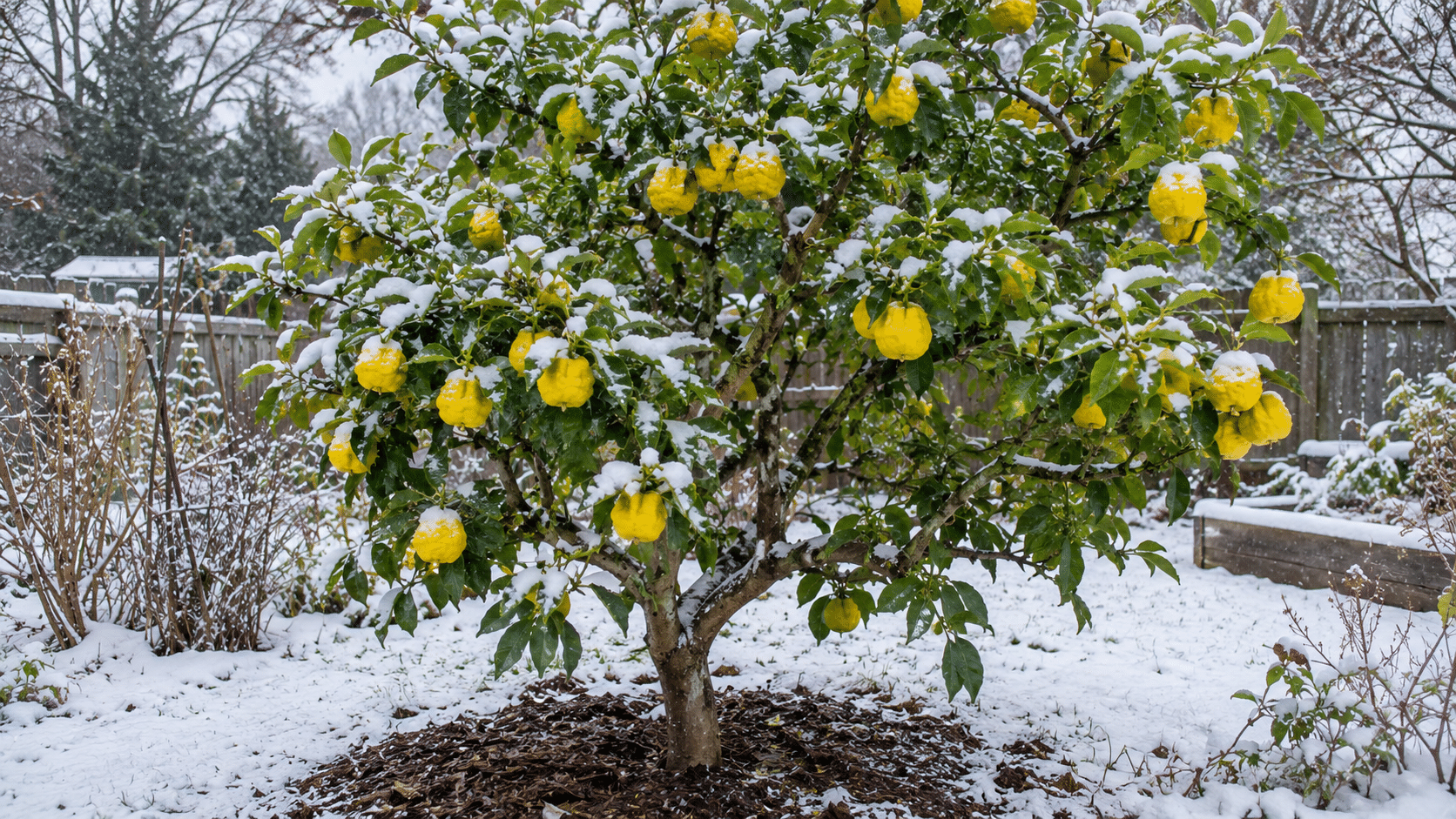
The Cold-Hardy Superpower (Why It Beats Lemons and Limes)
If you have ever tried to grow a Meyer lemon or a Key lime in a temperate climate, you know the panic of a sudden winter frost. Most citrus trees begin to suffer tissue damage when temperatures dip below freezing (32°F / 0°C).
The yuzu citrus tree, however, has a superpower: exceptional cold tolerance.
-
Expert Insight: When purchased from a reputable nursery, a quality yuzu tree is almost always grafted onto a hardy rootstock—most commonly Poncirus trifoliata (the trifoliate orange) or “Flying Dragon.” This specialized rootstock acts as the tree’s engine, pushing its cold tolerance down to a staggering 15°F (-9°C) once the tree is mature and established. ❄️
Compared to other citrus varieties, the yuzu’s ability to endure freezing temperatures, snow, and frost makes it the undisputed champion for growers in cooler climates who want to experience the joy of home-grown citrus.
Ideal Growing Conditions for Your Yuzu Citrus Tree ☀️
While the yuzu is tough, it still relies on a specific set of environmental conditions to produce lush foliage and heavy fruit yields. Setting up the right microclimate from day one is the secret to avoiding stunted growth and leaf drop.
Sunlight Requirements for Optimal Fruiting
Like all citrus, the yuzu is a sun-worshipper. To photosynthesize efficiently and develop the sugars and essential oils that give the fruit its signature aroma, the tree requires 6 to 8 hours of direct, unfiltered sunlight daily.
-
Pro Tip for Cooler Climates: If you live in a region with shorter growing seasons, plant your yuzu against a south-facing or west-facing brick, stone, or concrete wall. These structures act as thermal masses, absorbing the sun’s radiant heat during the day and gently releasing it at night, creating a warm, cozy microclimate that your tree will love.
Soil Preferences: Drainage is Everything
The number one killer of home-grown citrus trees is not pests or cold—it is “wet feet” caused by poor drainage. In their natural habitat, yuzu trees grow on sloped, rocky terrain where water washes past their roots rather than pooling around them.
Your yuzu requires well-draining, slightly acidic soil with a pH level between 6.0 and 6.5.
-
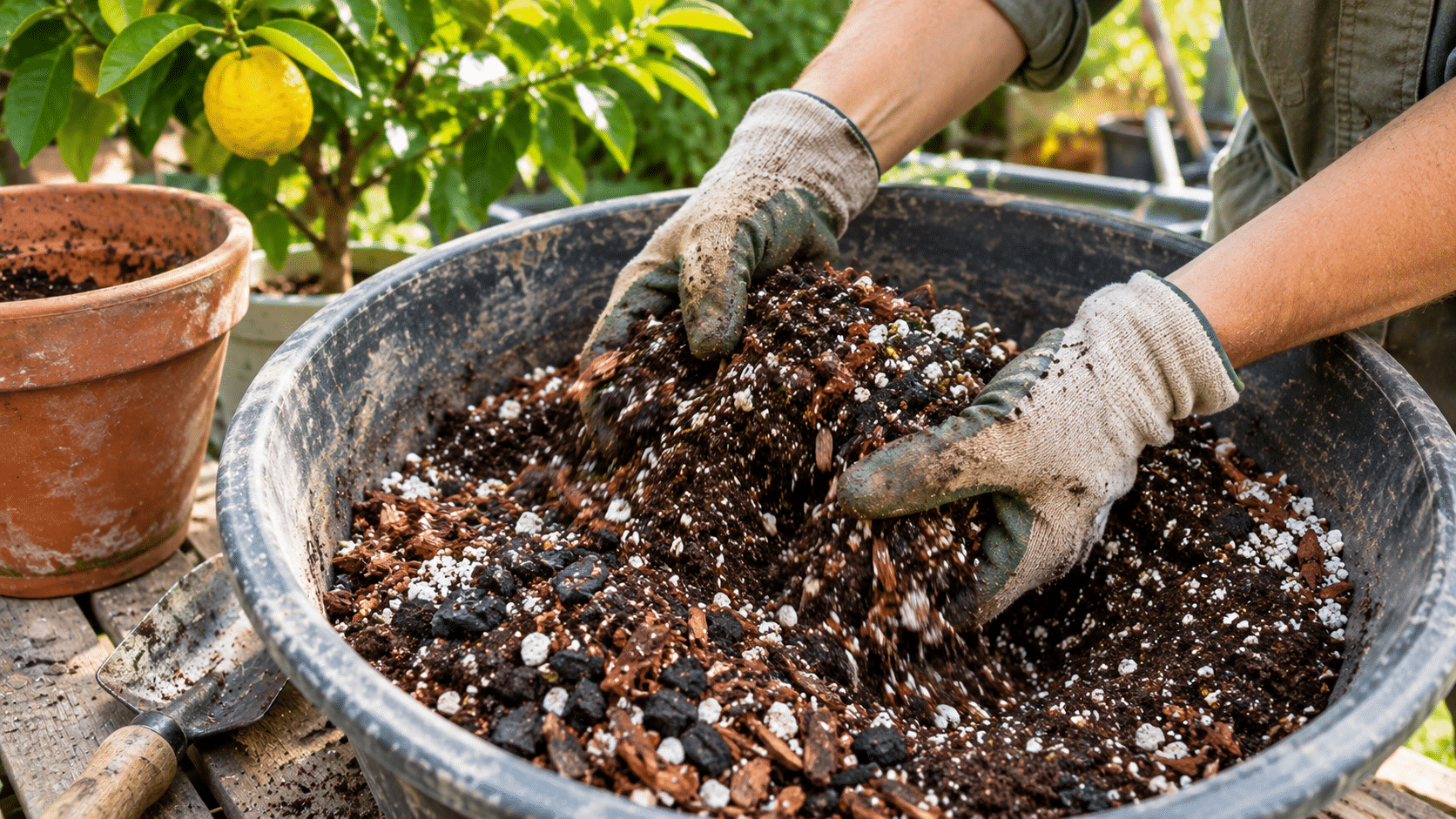
The “Expert Citrus Soil Mix” Recipe: If you are planting in a container, do not use standard, heavy potting soil straight from the bag. Instead, create a custom, high-drainage blend:
-
40% High-quality organic potting mix
-
30% Pine bark fines (adds acidity and structure)
-
20% Perlite or pumice (ensures rapid drainage and aeration)
-
10% Horticultural charcoal or compost (for nutrient retention) 🪴
-
Climate Zones (USDA Zones 8–11)
The yuzu thrives outdoors year-round in USDA Hardiness Zones 8 through 11. If you live in Zone 8, you will still need to provide some basic winter protection during extreme, anomalous freezes.
If you live in USDA Zone 7 or below, do not despair! The yuzu adapts beautifully to container growing, allowing you to wheel it out onto a sunny patio during the spring and summer, and transition it indoors to a bright sunroom or greenhouse before the first hard frost hits.
Step-by-Step Planting Guide 🌱
Planting your tree correctly is the foundation of its entire lifespan. Rushing this step often leads to root rot, suffocated trunks, and failure to fruit.
Choosing the Right Tree (Nursery vs. Seeds)
-
E-E-A-T Warning: While it is tempting to extract a seed from a store-bought yuzu and plant it, do not do this if you want fruit anytime soon. Seed-grown citrus trees are notoriously unpredictable, lack the cold-hardy benefits of a specialized rootstock, and can take anywhere from 10 to 15 years to produce their first harvest.
-
The Solution: Always purchase a 2- to 3-year-old grafted yuzu citrus tree from a certified, reputable nursery. Look for a tree with deep green leaves, no visible pests, and a clean, healthy graft union (the small “bump” near the base of the trunk where the yuzu scion meets the rootstock).
In-Ground Planting Instructions
If you are in Zone 8 or higher, planting in the ground allows your tree to reach its maximum size (up to 10-12 feet tall).
-
Dig the Right Hole: Dig a hole that is twice as wide as the nursery pot, but exactly the same depth. Digging too deeply causes the tree to sink over time.
-
Expose the Root Flare: The “root flare” is the area where the trunk widens at the base before becoming roots. This must remain exposed above the soil line to prevent fungal diseases.
-
Avoid “Volcano Mulching”: Apply a 2-inch layer of organic mulch (like pine needles or wood chips) around the drip line of the tree to retain moisture, but keep the mulch at least 3 to 4 inches away from the trunk itself. Piling mulch against the trunk will cause the bark to rot.
Container Planting (Perfect for Patios and Balconies) 🪴
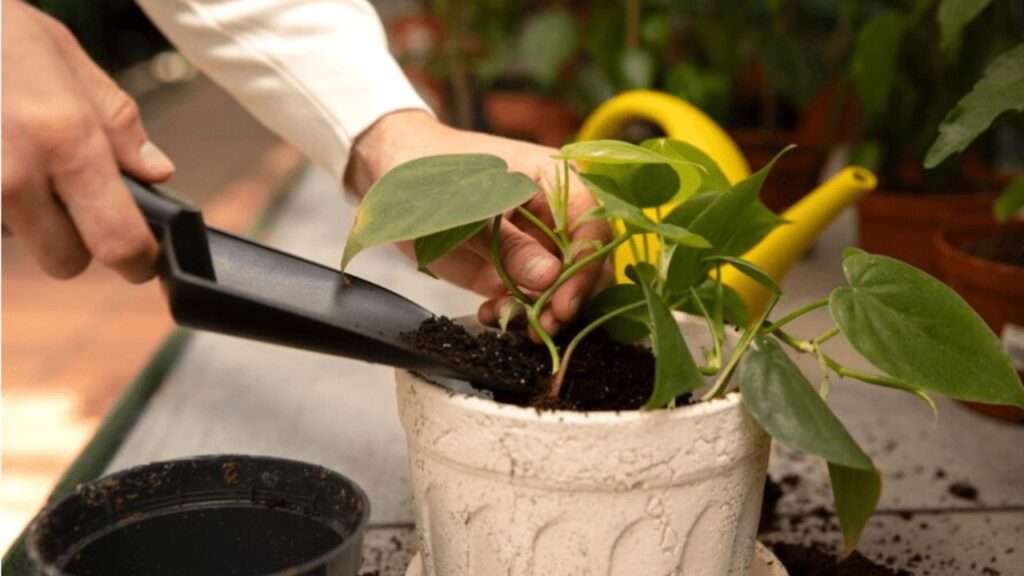
For container growers, choosing the right housing is critical.
-
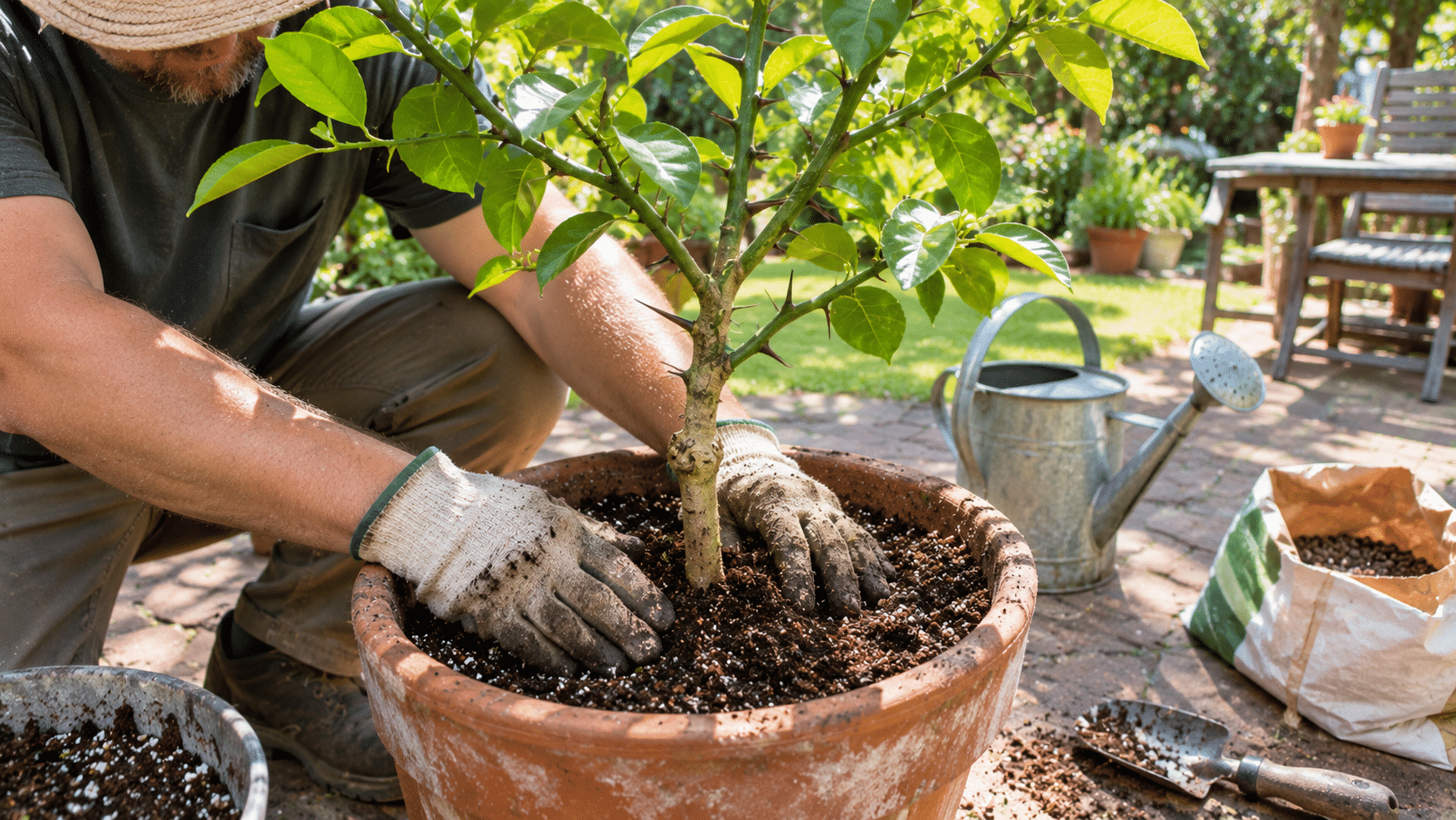
Pot Sizing: Do not put a small sapling into a massive pot. A pot that is too large holds excess wet soil that the tree’s roots cannot access, leading to root rot. Choose a container only 2 inches wider in diameter than the nursery pot, and plan to “pot up” gradually every two years.
-
Material Matters: Terracotta or unglazed clay pots are the absolute best choice for citrus. Because clay is porous, it allows the soil to “breathe” and excess moisture to evaporate from the sides, drastically reducing the risk of overwatering. Ensure the pot has at least one large drainage hole at the bottom.
Ongoing Care & Maintenance for a Heavy Harvest 🚿
Once your yuzu citrus tree is properly planted, the real journey begins. Citrus trees are famously heavy feeders and require a consistent, well-monitored routine to produce those highly prized, aromatic fruits. Master these three pillars of maintenance, and your tree will reward you with decades of vigorous growth.
Mastering the Watering Schedule
If there is one golden rule in citrus care, it is this: never let a citrus tree sit in soggy soil. Overwatering suffocates the root system, leading to rapid root rot and sudden leaf drop.
-
The “Knuckle Test”: Throw away your rigid watering calendar. Environmental factors like humidity, wind, and temperature change daily. Instead, rely on the knuckle test. Insert your index finger into the soil up to your second knuckle (about 2 to 3 inches deep). If the soil feels moist, walk away. If it feels completely dry, it is time to water.
-
Deep, Infrequent Watering: When you do water, do so deeply and thoroughly until water runs freely out of the container’s drainage holes (or deeply saturates the ground). This encourages the roots to grow downward in search of moisture, creating a stronger, more drought-resistant tree.
Feeding Your Yuzu: The Best Fertilizers
Yuzu trees expend an enormous amount of energy producing their dense foliage and complex, essential-oil-rich fruit. To support this, they require a specialized diet high in nitrogen and specific micronutrients.
-
Understanding N-P-K: Choose a high-quality, organic citrus-specific fertilizer with an N-P-K (Nitrogen-Phosphorus-Potassium) ratio resembling 5-2-3 or 2-1-1. Nitrogen is critical for healthy, deep-green leaf production.
-
The Magic of Micronutrients: Citrus trees are highly susceptible to micronutrient deficiencies. Ensure your chosen fertilizer includes essential trace minerals like iron, zinc, and magnesium.
-
The Feeding Schedule: Begin fertilizing in early spring just as you see new growth emerging. Continue feeding every 4 to 6 weeks through the late summer. Stop fertilizing by early fall. Pushing new growth late in the season leaves the tender new branches vulnerable to winter frost damage.
Pruning and Shaping (Beware the Thorns!) ✂️
Unlike a neatly manicured boxwood, yuzu trees have a somewhat wild, sprawling growth habit.
-
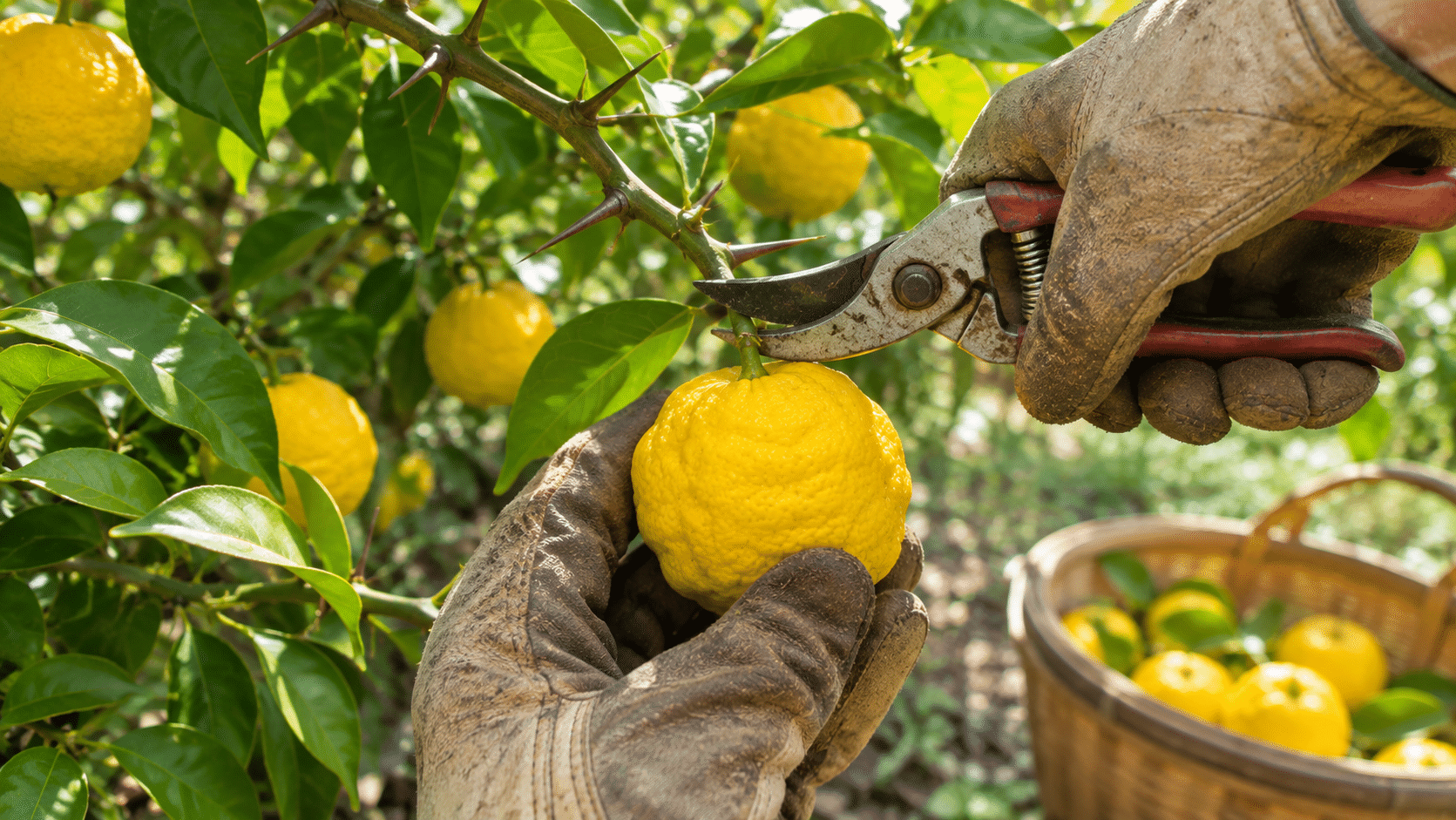
Expert Safety Tip: Before you reach for your pruning shears, put on heavy-duty leather gardening gloves. The yuzu tree is armed with notoriously sharp, rigid thorns that can easily puncture skin and standard cloth gloves. 🧤
-
Pruning for Airflow: Prune in late winter or early spring before the active growing season begins. Your goal is to open up the center canopy of the tree. Crossing branches or dense clusters block sunlight and trap stagnant air, inviting fungal diseases.
-
Suckers and Water Sprouts: Keep a vigilant eye on the base of the trunk. Any rapid, straight-up growth emerging from below the graft union is a “sucker” from the rootstock. These aggressive shoots will steal energy from the yuzu scion and must be snipped off flush with the trunk immediately.
Overwintering Your Yuzu Citrus Tree (Crucial for Cold Climates) 🌨️
While the yuzu boasts impressive cold hardiness (surviving down to 15°F / -9°C), young trees under three years old are still vulnerable. Proper overwintering is the difference between a thriving tree and a tragic spring discovery.
Protecting In-Ground Trees
If an unusual arctic blast is forecasted for your region, take proactive steps:
-
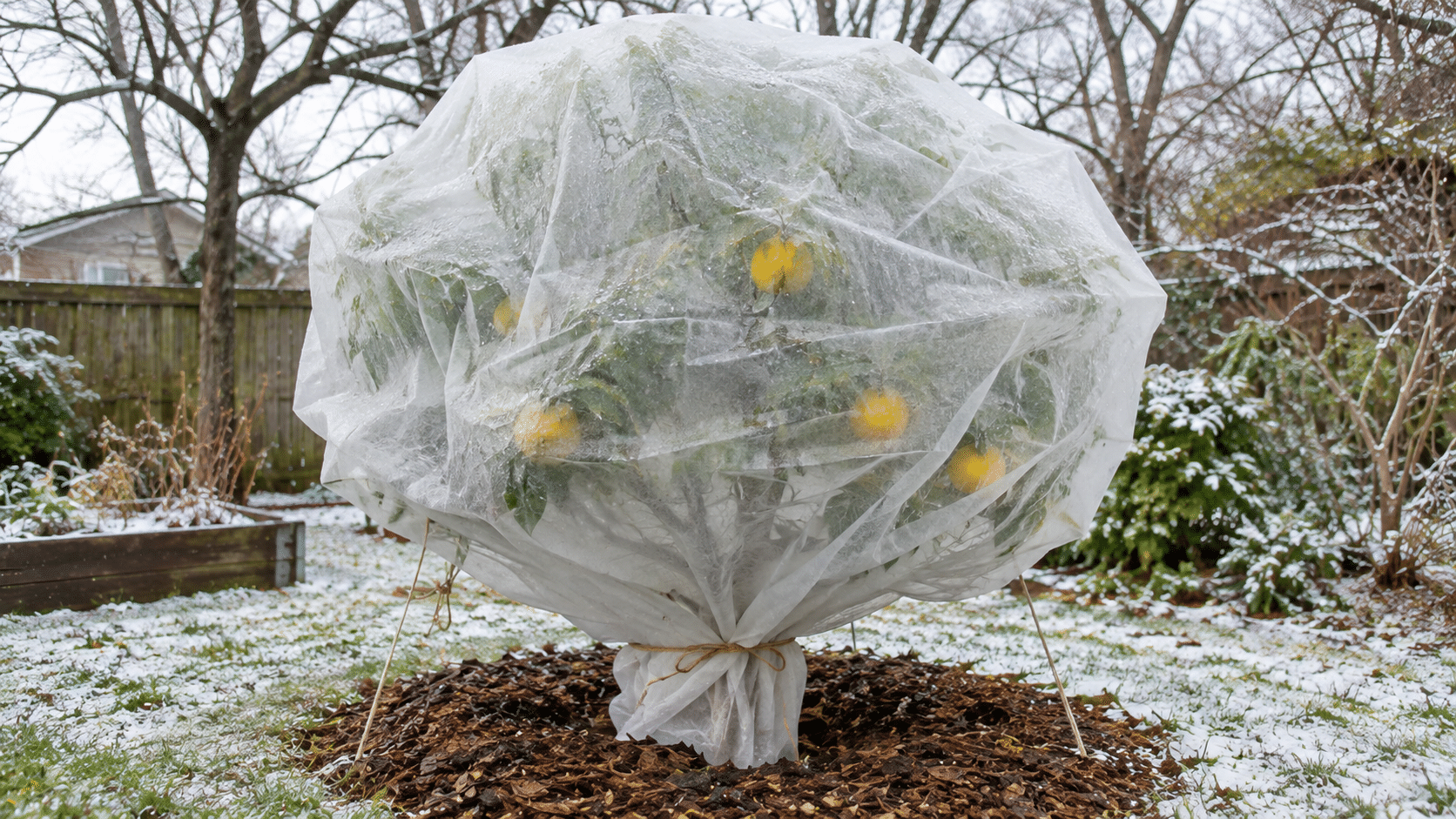
Thermal Blankets: Wrap the canopy in a breathable horticultural frost blanket (never use plastic, which traps moisture and freezes the leaves).
-
The Holiday Light Hack: For extreme dips in temperature, string standard C9 incandescent holiday lights (not LEDs, as they do not produce heat) through the inner branches before wrapping the tree in its frost blanket. This creates a gentle, ambient heat pocket that can raise the temperature by several life-saving degrees.
-
Heavy Mulching: Pile extra mulch over the root zone to insulate the soil, pulling it back once the frost danger has passed.
Transitioning Container Trees Indoors
For growers in Zone 7 and below, bringing your yuzu indoors is mandatory. However, sudden changes in environment can trigger “leaf drop shock.”
-
Gradual Acclimation: Do not wait for a freezing night to abruptly move the tree into a heated living room. Two weeks before the first expected frost, move the container to a shaded patio, then into a garage or sunroom, gradually lowering its light exposure before bringing it into the house.
-
Indoor Humidity: Homes with central heating are painfully dry in the winter. Place your container on a humidity tray (a shallow tray filled with pebbles and water) and keep the tree far away from direct HVAC vents or drafty doors. Place it in the brightest south-facing window you have, supplementing with a full-spectrum LED grow light if necessary.
Troubleshooting: Common Pests, Diseases, and Leaf Issues 🐛
Even the most well-tended yuzu citrus tree will occasionally face a hurdle. Recognizing the early warning signs allows for swift, organic intervention.
Yellowing Leaves (Chlorosis)
Yellowing leaves are the tree’s way of crying for help, but the pattern of the yellowing tells the specific story:
-
Overwatering: If the entire leaf turns a pale, sickly yellow and drops off while still slightly fleshy, the roots are suffocating from too much water.
-
Nitrogen Deficiency: Older leaves turn evenly yellow from the tip inward, while newer leaves remain green.
-
Iron Deficiency: The leaves turn bright yellow, but the veins remain dark green. This is easily fixed with an organic iron chelate foliar spray or a soil drench.
Battling Citrus Pests
-
Citrus Leafminer: If you see silvery, winding trails etched into the surface of tender new leaves, you have leafminers. Treat early by spraying the foliage with organic cold-pressed Neem oil in the early evening.
-
Aphids and Spider Mites: These sap-sucking insects cause leaves to curl and stipulate. Spider mites thrive in dry indoor winter air. Combat them with regular applications of insecticidal soap or by physically wiping the leaves down with a damp cloth. 🐞
-
Scale: Appearing as hard, brown, or white bumps on the stems and leaves, scale armor protects them from standard sprays. Treat scale by wiping them off with a cotton swab dipped in rubbing alcohol, followed by a horticultural oil spray.
The Reward: Harvesting and Using Your Yuzu 🍋
After years of careful watering, feeding, and winterizing, the ultimate reward is the harvest. The yuzu offers a unique, dual-stage harvest that provides two completely different culinary experiences.
When and How to Harvest
-
Green Yuzu (Late Summer / Early Fall): You can harvest the fruit while the rind is still deep green and hard. At this stage, the zest is incredibly sharp, spicy, and fragrant.
-
Yellow Yuzu (Late Fall / Early Winter): Left on the tree, the fruit will ripen to a bright, slightly bumpy yellow. At this mature stage, the fruit yields more juice, and the flavor mellows into that famous, complex mandarin-grapefruit profile.
-
How to Clip: Never pull or twist the fruit off the branch, as this can tear the peel and invite rot. Use sharp, sterilized pruning snips to cut the stem just above the fruit.
Creative Ways to Use Your Harvest
The effort of growing this tree pays off entirely in the kitchen.
-
Blend green yuzu zest with sea salt and fiery green chilies to create yuzu kosho, a vibrant Japanese condiment perfect for grilled meats and sashimi.
-
Use yellow yuzu to make a world-class marmalade, as the high pectin content in the thick rind sets beautifully.
-
Mix the juice into craft cocktails, or follow Japanese tradition and toss a few whole, bruised fruits into a hot winter bath for a spa-like aromatherapy experience. 🍹
Frequently Asked Questions (FAQs) ❓
How long does it take for a yuzu citrus tree to produce fruit? If you purchase a 2- to 3-year-old grafted nursery tree, you can expect your first small harvest within 2 to 3 years of planting. Seed-grown trees can take over a decade.
Can a yuzu tree survive freezing temperatures? Yes! Once established, a yuzu tree grafted onto hardy rootstock can survive temperatures as low as 15°F (-9°C).
Why is my yuzu tree dropping its leaves? Sudden leaf drop is usually caused by environmental shock (moving it indoors too quickly), extreme temperature swings, or overwatering. Ensure the pot has proper drainage and avoid placing it near dry heating vents.
Does a yuzu tree need a pollinator? No, yuzu trees are self-fertile, meaning a single tree will produce fruit on its own. However, if you are overwintering your tree indoors while it is blooming, gently shaking the branches or using a small paintbrush to transfer pollen from flower to flower will significantly increase your fruit yield! 🐝
Conclusion: Start Your Citrus Journey Today 🌳
Growing a yuzu citrus tree is a deeply rewarding endeavor that bridges the gap between ornamental gardening and gourmet culinary cultivation. While it requires attention to drainage, a structured feeding schedule, and a little winter TLC, the yuzu’s legendary cold-hardiness makes it the most accessible and forgiving citrus tree for growers outside the tropics.
By following the expert strategies outlined in this guide—from creating the perfect well-draining soil mix to mastering the knuckle test and managing winter transitions—you are completely equipped to grow a vigorous, heavy-yielding tree.
Are you ready to experience the incredible aroma of fresh yuzu in your own home? Let us know in the comments below if you plan to grow your tree in a container or in the ground! Don’t forget to sign up for our weekly plant-care newsletter for more expert gardening tips, and check out our top recommendations for citrus fertilizers and premium terracotta pots to get your yuzu journey started off right. 👇