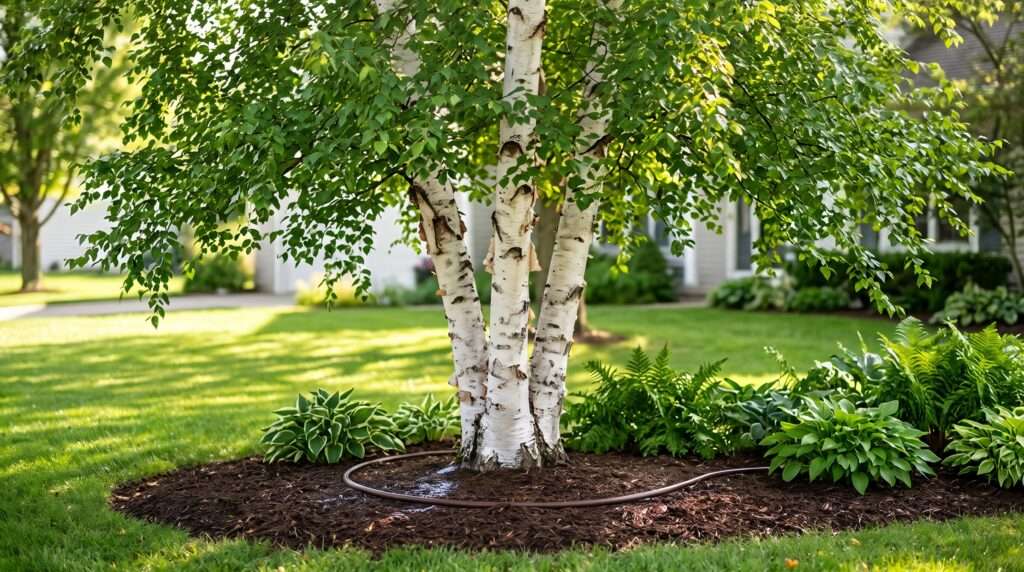
Picture your front yard. In the center stands a majestic tree with striking, peeling bark and delicate, fluttering leaves. It is a landscaping dream—until mid-summer hits, and suddenly, those vibrant green leaves turn crispy and brown. If you are struggling with a fading canopy, early leaf drop, or dying branches, you are not alone. Betula trees, commonly known as birch trees, are undoubtedly stunning, but they are also notoriously sensitive to heat, drought stress, and aggressive insect pests.
Fortunately, a struggling birch does not have to be a lost cause. Arborists have spent decades studying exactly what makes these trees tick. By mimicking their natural environment and staying proactive against common threats, you can transform a stressed sapling into a resilient, towering centerpiece.
In this comprehensive guide, we will walk you through expert, E-E-A-T-backed care tips to stop leaf browning, prevent fatal pest infestations, and keep your betula trees thriving for years to come. 🌳✨
Understanding Your Betula Trees: Know What You Grow 📖
Before you can properly care for a plant, you have to understand where it comes from. Most betula species are native to cool, northern climates, often growing naturally alongside riverbanks or deep within moist, shaded forests. In the wild, their roots are kept consistently cool and damp by layers of natural forest debris and underbrush.
When we transplant them into suburban front yards, they are often subjected to compacted soil, intense direct sunlight, and heat radiating off nearby driveways. This stark contrast causes immediate environmental stress, making them vulnerable to disease and pests. Understanding this “transplant shock” and environmental mismatch is the first step in mastering birch tree care.
Popular Varieties and Their Resilience Levels 🍂
Not all betula trees are created equal. Depending on your local climate, the specific species of birch you plant will largely dictate how much maintenance it requires.
-
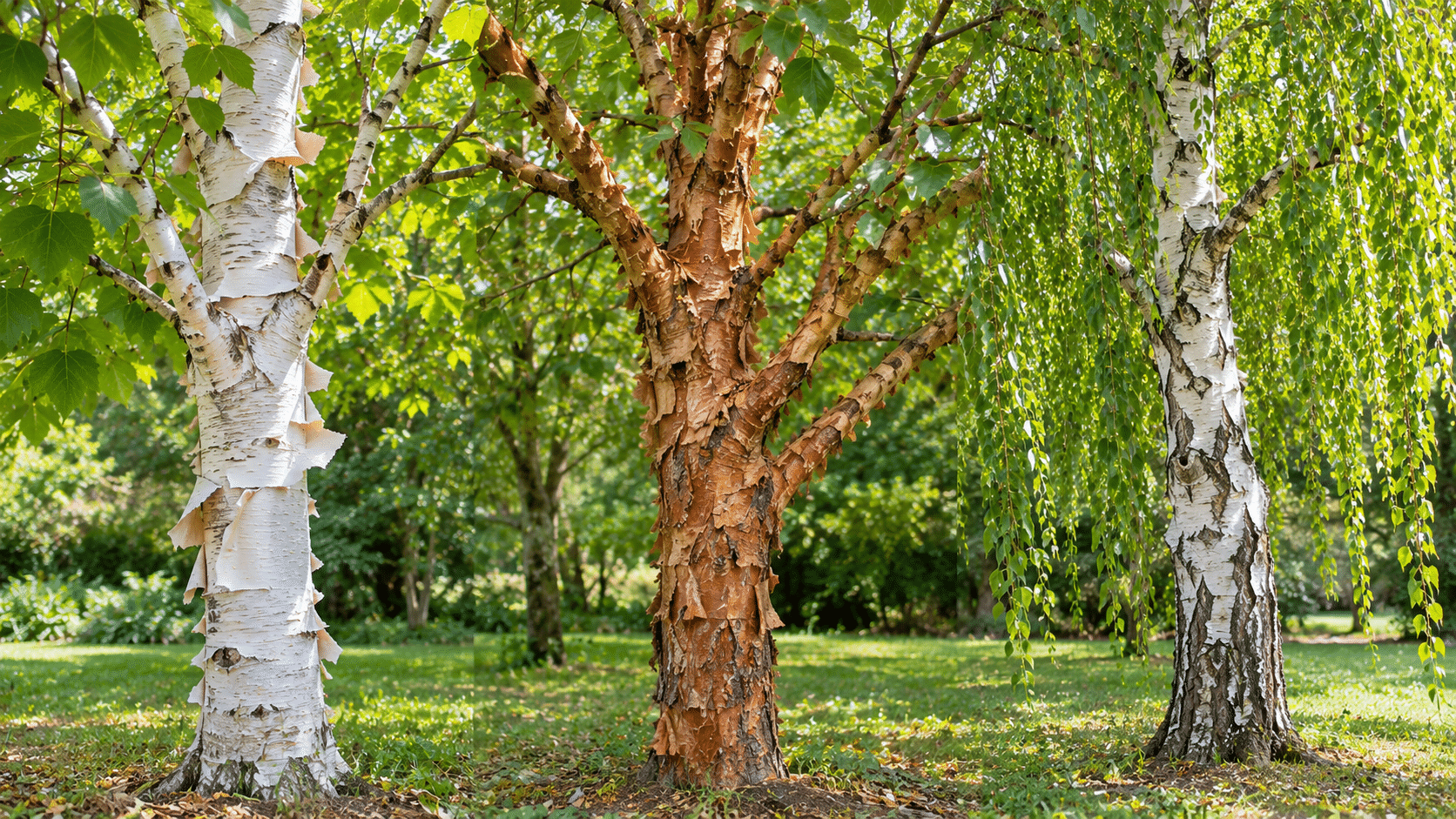
Paper Birch (Betula papyrifera): Famous for its stark white, peeling bark. While visually breathtaking, the paper birch is highly susceptible to heat stress and is generally not recommended for climates with long, hot summers.
-
River Birch (Betula nigra): The ultimate survivor. Featuring gorgeous, cinnamon-colored peeling bark, the river birch is incredibly heat-tolerant and highly resistant to the deadly bronze birch borer. If you live in a warmer climate, this is your best option.
-
Weeping Birch (Betula pendula): Known for its elegant, cascading canopy. However, this European native is highly susceptible to both leaf miner insects and borers, requiring strict monitoring and care.
🧠 Expert Insight: Always check your USDA Hardiness Zone before selecting a birch species. A paper birch thrives in cool Zones 2 through 6, while a resilient river birch can comfortably handle the heat of Zones 4 through 9. Planting the right tree in the right zone is half the battle won.
The Foundation of Health: Ideal Planting and Soil Conditions 🌱
There is an old arboriculture mantra specifically coined for betula trees: “Cool feet, warm head.”
To thrive, a birch tree needs its canopy (the head) to bask in full sunlight to synthesize energy, while its root system (the feet) must remain heavily shaded, cool, and moist. Replicating this delicate balance in a standard residential landscape requires some strategic soil management.
Soil pH and Composition Requirements 🪨
Birches are naturally adapted to loamy, well-draining, and slightly acidic soils. They prefer a soil pH ranging between 5.0 and 6.5.
If your soil is highly alkaline (a pH above 7.0), your tree may develop a condition called iron chlorosis. In alkaline soils, the tree’s roots physically cannot absorb the iron present in the dirt. You can easily spot iron chlorosis if the tree’s leaves turn a pale, sickly yellow while the leaf veins remain dark green. If you notice this, you will need to amend the soil around the drip line with elemental sulfur or apply an iron chelate soil drench to restore the balance.
The Magic of Mulching for Moisture Retention 🪵
Because you likely do not have a lush forest undergrowth shading your tree’s roots, mulch is your best friend. A proper mulch layer insulates the soil against scorching summer heat and drastically reduces water evaporation.
-
The Right Way: Apply a 3- to 4-inch thick layer of organic mulch (such as shredded hardwood or pine bark) extending outward to the tree’s “drip line” (the outer edge of the leaf canopy).
-
🚨 The Red Flag Warning: Avoid creating a “mulch volcano.” This is the common, highly damaging practice of piling a thick mound of mulch directly against the tree trunk. Mulch volcanoes trap moisture against the bark, leading to crown rot and creating a perfect, hidden entry point for burrowing insects. Always leave a 2- to 3-inch gap of bare soil directly around the base of the trunk.
Solving the Biggest Aesthetic Problem: How to Stop Leaf Browning 🍂🚫
One of the most common and frustrating issues for birch tree owners is mid-summer leaf browning. A tree that looked perfectly healthy in May can suddenly look like it is dying by late July. Understanding why this happens and how to intervene early is critical for the long-term survival of your betula trees.
Why Are My Betula Tree Leaves Turning Brown?
When foliage begins to turn brown, it is the tree’s way of communicating that it is under severe stress. The most frequent culprits are drought, excessive heat, and shallow root systems that cannot pull up enough moisture to sustain the canopy. When a birch tree transpires (sweats) water from its leaves faster than its roots can absorb water from the soil, it will intentionally dry out and drop leaves to conserve moisture.
The Difference Between Leaf Scorch and Fungal Disease 🔬
Before you can treat the problem, you need to properly diagnose it. Browning can be caused by environmental stress (scorch) or a pathogen (fungal disease).
-
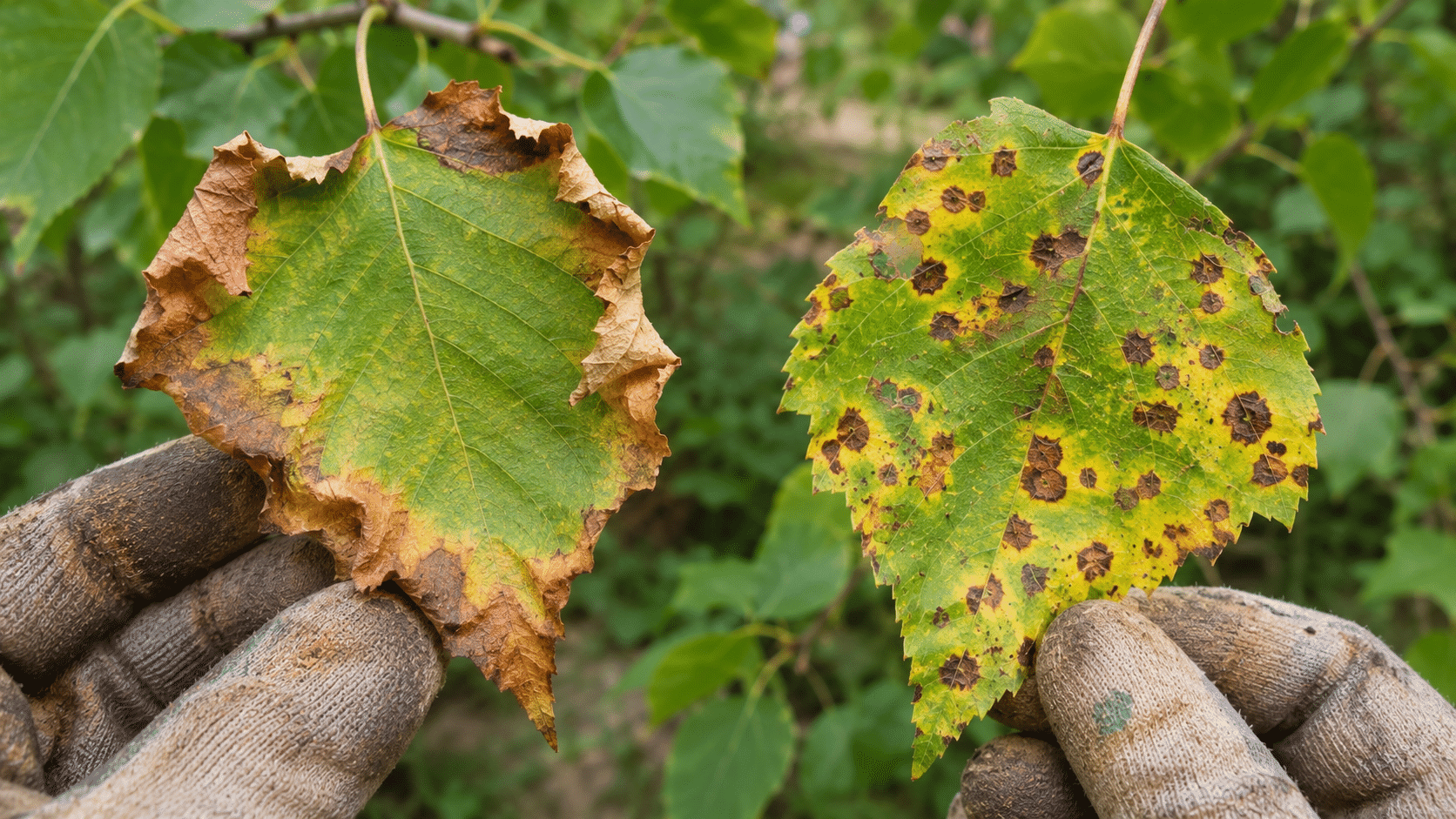
Leaf Scorch (Environmental Stress): If the browning starts at the very outer edges of the leaves and works its way inward, turning the margins crispy and brown while the center remains green, you are dealing with leaf scorch. This is a direct result of heat and drought stress.
-
Fungal Leaf Spot (Disease): If you see irregular brown, black, or dark purple spots scattered across the surface of the leaf, often surrounded by a yellow halo, your tree is likely suffering from a fungal infection like Marssonina leaf spot. Fungal issues are exacerbated by high humidity, poor air circulation, and overhead watering that leaves the foliage wet overnight.
The Ultimate Watering Schedule for Thriving Birches 💧
If your tree is suffering from leaf scorch, adjusting your watering habits is the immediate cure. Standard lawn sprinklers are completely inadequate for betula trees. Sprinklers only wet the top inch of soil, which encourages the tree to grow a shallow root system that dries out instantly during a heatwave.
Instead, you must utilize a deep soaking method:
-
Use a Soaker Hose: Snake a soaker hose in concentric circles around the drip line of the canopy (not right up against the trunk).
-
Water Low and Slow: Run the hose on a slow trickle for 1 to 2 hours. The goal is to allow water to penetrate at least 8 to 12 inches deep into the root zone.
-
Frequency During Summer: During periods of drought or extreme heat, deeply soak your mature betula trees once every 7 to 10 days. For newly planted saplings, this should be done twice a week.
Pest Defense: Protecting Your Tree from the Bronze Birch Borer 🪲🛡️
While drought and heat can make a tree look ugly, the bronze birch borer (Agrilus anxius) is what will actually kill it. This native metallic wood-boring beetle is the absolute worst enemy of the birch tree.
Borers possess a highly evolved ability to detect the chemical signals emitted by a stressed, drought-stricken tree. Once they locate a weakened birch, the adult females lay eggs in the bark crevices. When the eggs hatch, the larvae burrow into the trunk and begin feeding on the cambium layer (the vital vascular tissue that transports water and nutrients). As they feed, they essentially girdle the tree from the inside out, choking it to death.
How to Spot the Early Warning Signs of Borers 🕵️♀️
Catching a borer infestation early is the only way to save the tree. Check your betula trees regularly for these three distinct warning signs:
-
Crown Dieback: Borers typically start at the top of the tree. If you notice the uppermost branches are suddenly bare and dying while the lower canopy is still green, this is a massive red flag.
-
D-Shaped Exit Holes: When adult beetles emerge from the trunk to mate, they chew perfectly shaped “D” exit holes (about 1/8 inch wide) in the bark.
-
Swollen Ridges: As the tree tries to heal over the zigzagging larval feeding galleries beneath the bark, it often forms raised, lumpy ridges or bumps on the trunk.

Expert Treatment and Prevention Strategies 🛡️
-
Cultural Prevention: The single best defense against borers is vigorous health. Borers rarely successfully attack a well-watered, properly mulched, and unstressed tree.
-
Chemical Intervention: If you live in an area with high borer activity, or if your tree has suffered drought stress, preventative chemical treatments are highly recommended. An arborist can apply a systemic insecticide (such as imidacloprid) as a soil drench or via direct trunk injection in the early spring. The tree’s vascular system pulls the chemical up into the canopy, effectively killing any larvae that attempt to feed on the cambium layer.
Pruning and Maintenance: Timing is Everything ✂️📅
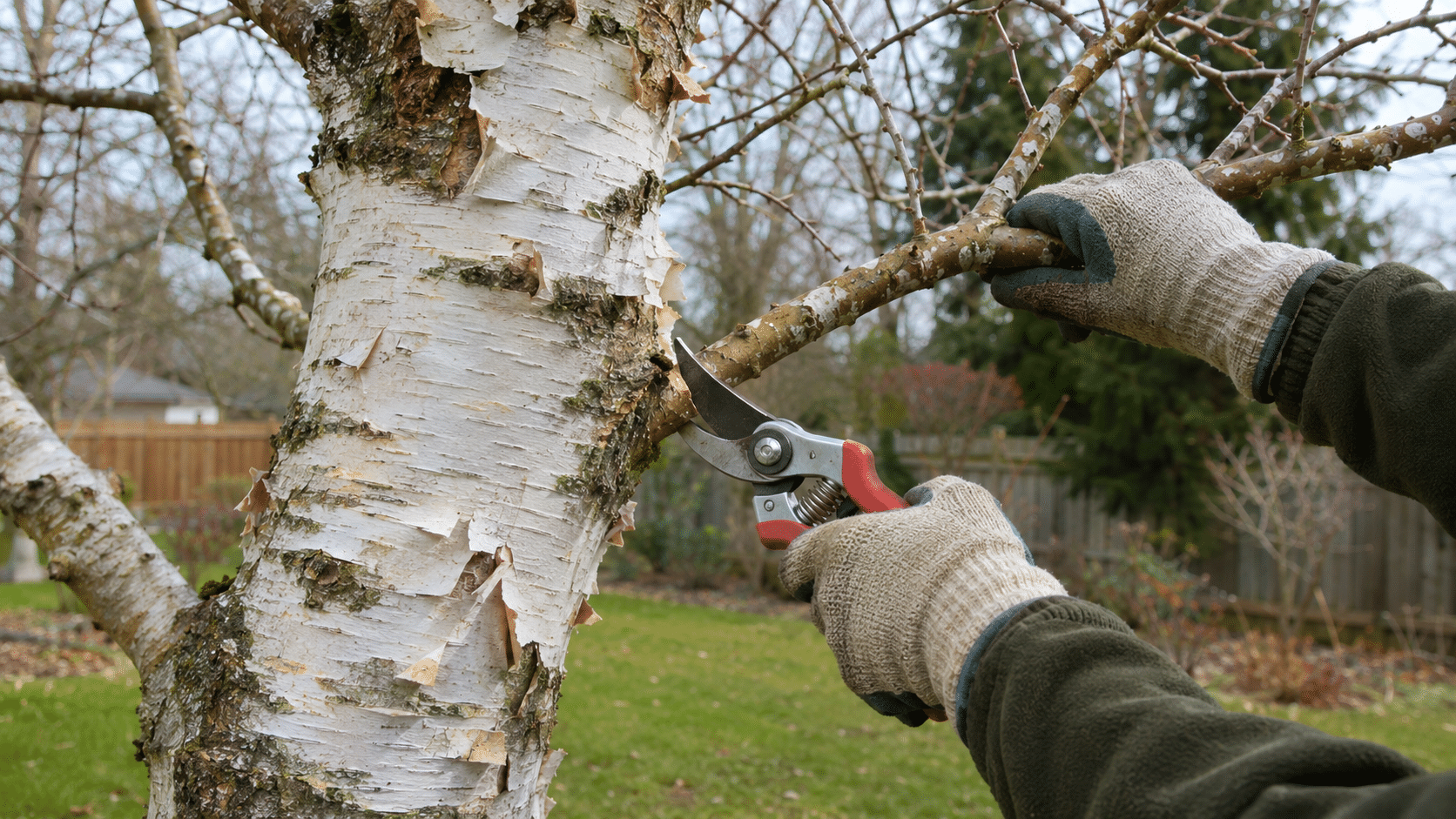
Proper pruning improves air circulation (which reduces fungal diseases), removes dead wood, and shapes the canopy. However, when it comes to betula trees, when you prune is infinitely more important than how you prune.
The “No Prune” Spring Rule 🚫🌸
Never, under any circumstances, prune a birch tree in the spring. Betula trees are known as “bleeders.” When they break dormancy in the spring, their sap pressure is incredibly high. If you cut a branch in April or May, the wound will bleed copious amounts of sap. This sticky sap acts as a massive dinner bell, attracting aggressive insects—including the dreaded bronze birch borer—straight to your tree.
The Safe Pruning Window 🍂❄️
The safest time to prune is during late summer to early autumn (after the summer flight season of the adult borer beetle has ended) or during late winter when the tree is fully dormant.
Step-by-Step Pruning Technique for Better Airflow
When you do prune, follow standard arboriculture best practices. Focus on removing the 3 D’s: Dead, Damaged, or Diseased branches. Next, identify and remove branches that are crossing or rubbing against each other, as the friction creates open bark wounds. Finally, thin out the dense inner canopy just enough to allow dappled sunlight and wind to pass through, which dries out wet foliage rapidly and prevents fungal spores from taking hold.
E-E-A-T Spotlight: Pro Tips from Arborists 🎓✨
To truly elevate your landscape and guarantee the longevity of your birches, consider implementing these advanced, arborist-approved strategies:
-
Companion Planting for Root Shade: Instead of just using mulch, consider planting a “living mulch.” Plant shallow-rooted, shade-loving perennials like hostas, ferns, or coral bells in a wide ring beneath the canopy. These plants naturally shade the soil, keeping the birch roots wonderfully cool without competing heavily for deep soil nutrients.
-
Annual Soil Testing: Don’t guess your soil’s pH; test it. An inexpensive soil test kit can tell you exactly if your soil is becoming too alkaline, allowing you to amend it before iron chlorosis turns your leaves yellow.
-
Winterizing Young Trees: Young betula trees have very thin bark that is susceptible to “sunscald” or “frost cracks.” In late fall, wrap the trunks of young saplings with a commercial tree wrap to protect the bark from extreme temperature fluctuations and hungry winter wildlife like rabbits and deer.
Frequently Asked Questions (FAQs) ❓
Can a dying Betula tree be saved? It depends on the cause and severity. If the tree is dying due to a lack of water (leaf scorch), deep watering can often revive it for the following season. However, if more than 30% of the canopy has died off due to a severe bronze birch borer infestation, the tree is usually beyond saving and should be professionally removed to protect neighboring trees.
How long do Betula trees usually live? In their natural, cool woodland habitats, betula trees can live for 50 to 100 years. However, in urban or suburban landscapes where they face heat stress and compacted soils, their lifespan is typically much shorter, often averaging between 30 and 40 years.
Should I fertilize my birch tree every year? Not necessarily. Over-fertilizing can actually stimulate rapid, weak growth that attracts aphids and borers. Only fertilize if a soil test indicates a specific nutrient deficiency, or if the tree is displaying stunted growth. If needed, use a slow-release, granular organic fertilizer in early spring.
Why is the bark peeling off my birch tree? Don’t panic! Peeling bark (exfoliation) is a completely natural, healthy, and highly desirable trait of many birch species, especially the paper birch and river birch. The tree sheds its outer layers as the trunk expands and grows. Never peel the bark off forcefully, as this can damage the living tissue underneath.
Conclusion: Enjoying Your Backyard Oasis 🌅
Betula trees are a breathtaking addition to any landscape, offering year-round visual interest—from their lush summer canopies and brilliant golden autumn foliage to their striking bark textures against the winter snow. While they do require a bit more strategic care than your average shade tree, the effort is entirely worth it.
By remembering the golden rule of “cool feet, warm head,” mastering the art of deep watering, and staying vigilant against the bronze birch borer, you can ensure your birch tree remains a healthy, vibrant centerpiece for decades.
Over to you! 📣 Do you have a spectacular river birch in your yard, or are you currently trying to nurse a stressed paper birch back to health? Let us know in the comments below, and don’t forget to share photos of your beautiful betula trees! If you found this guide helpful, be sure to bookmark it and share it with your fellow gardening enthusiasts. Happy planting! 🌱✨